Begonia – cane, rex & rhizome foliage without the drama
Begonia indoors – what you are really buying
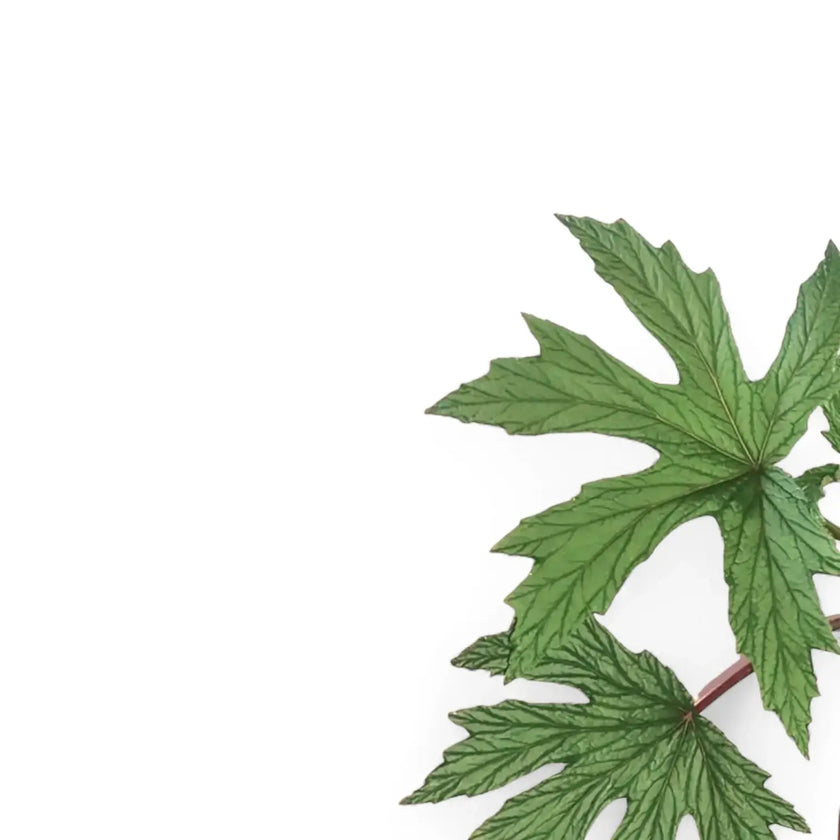
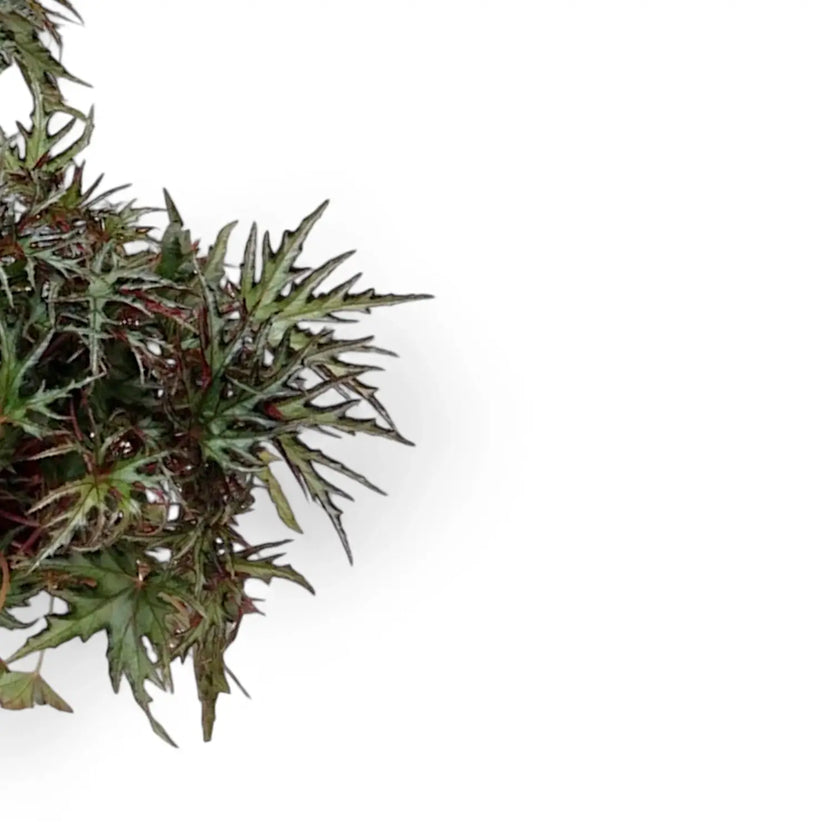
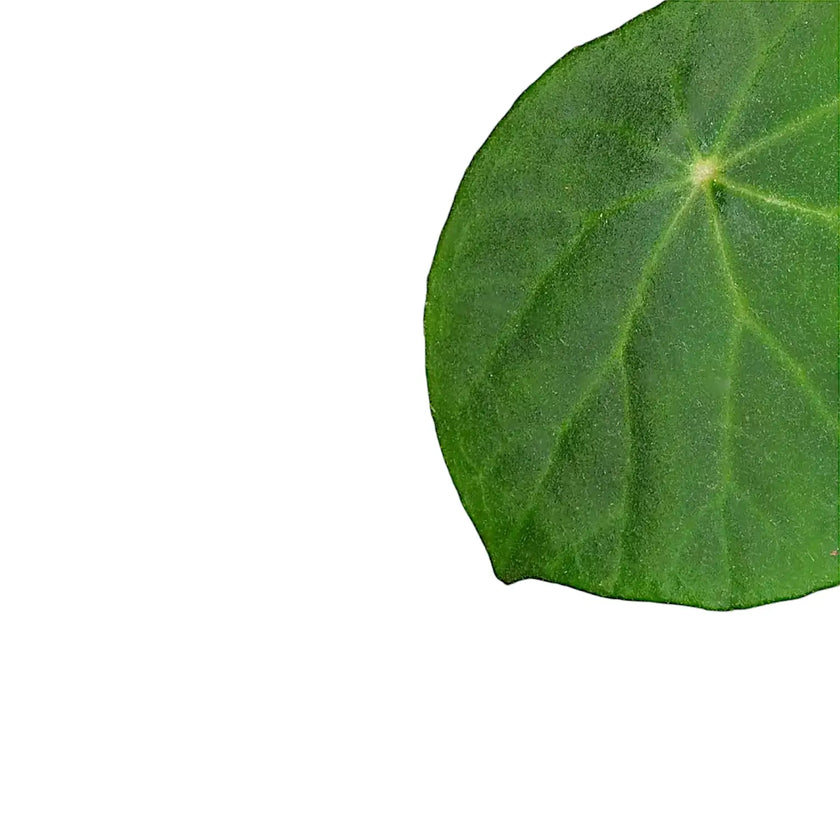
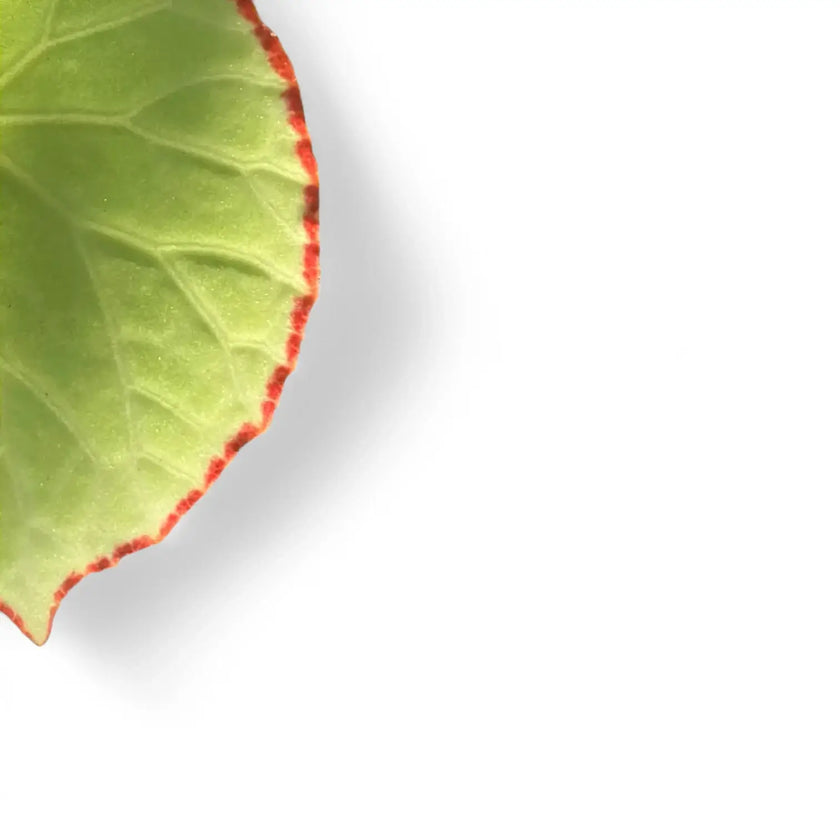
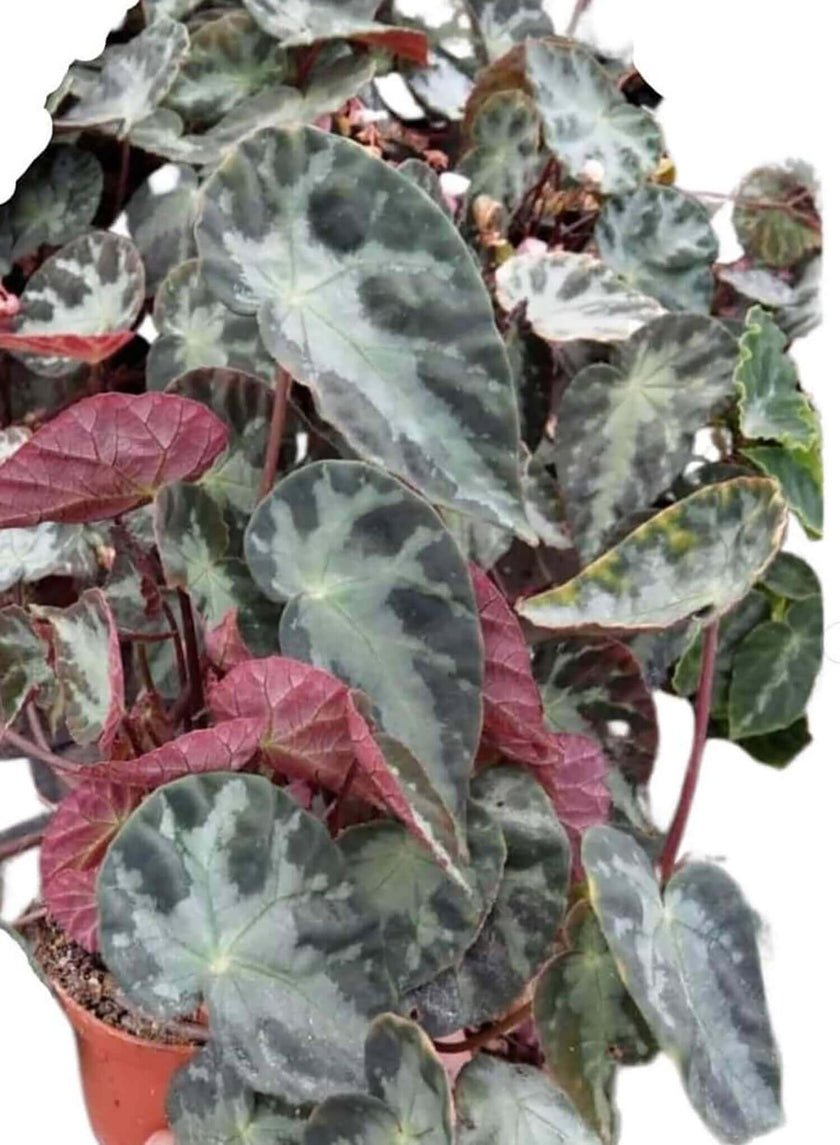
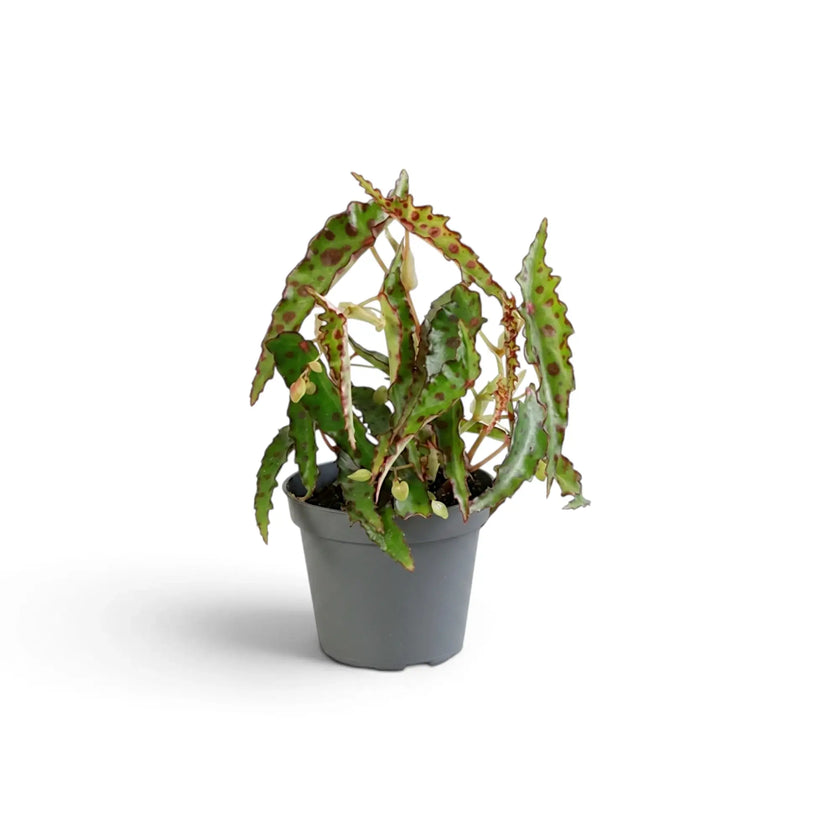
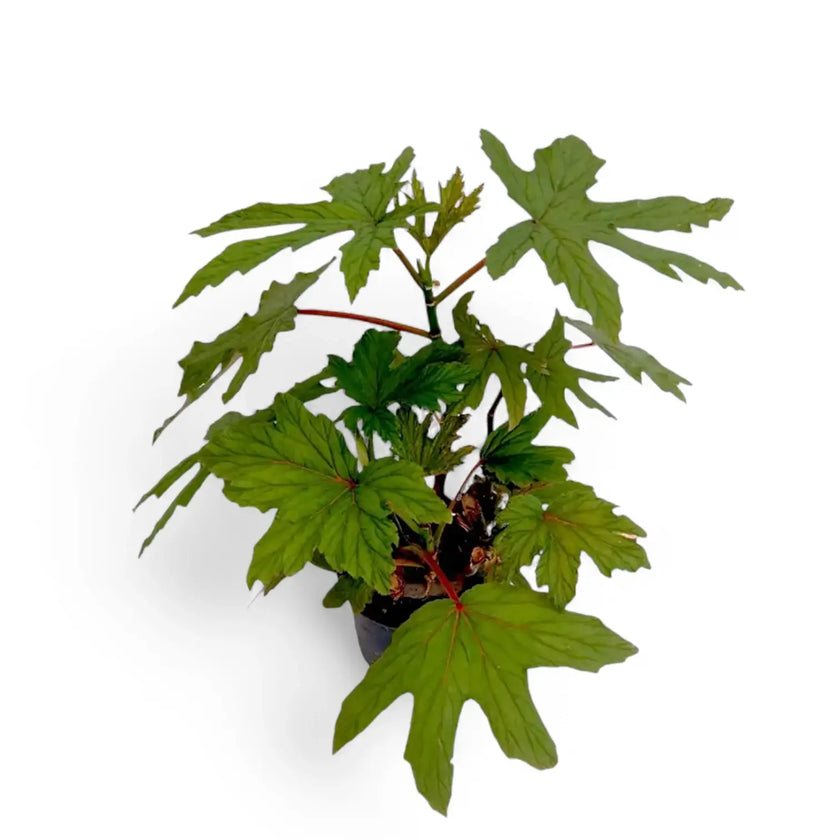
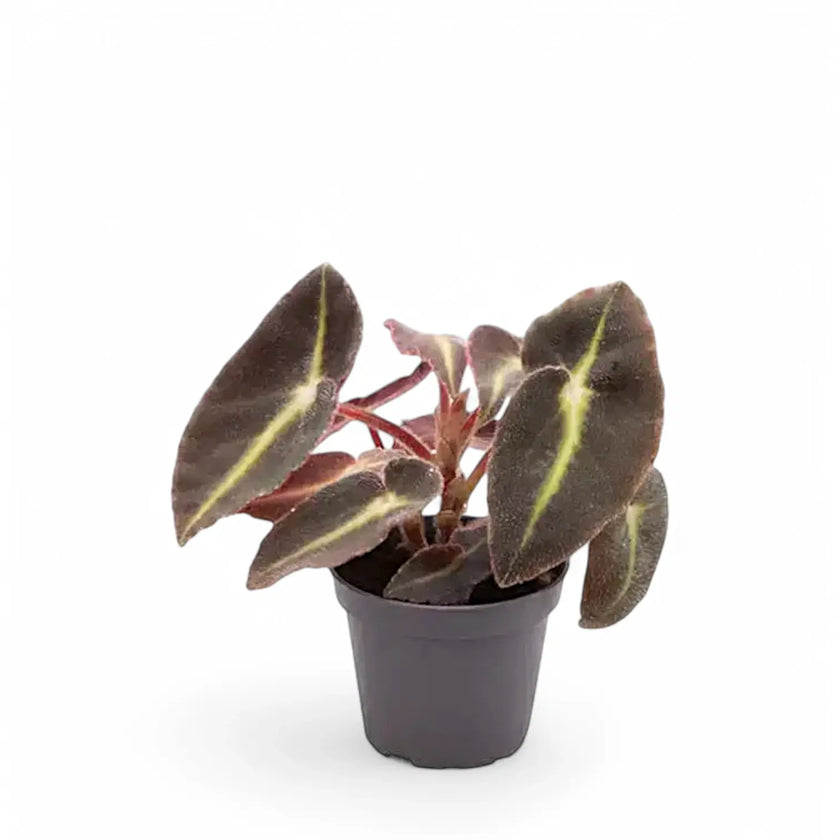
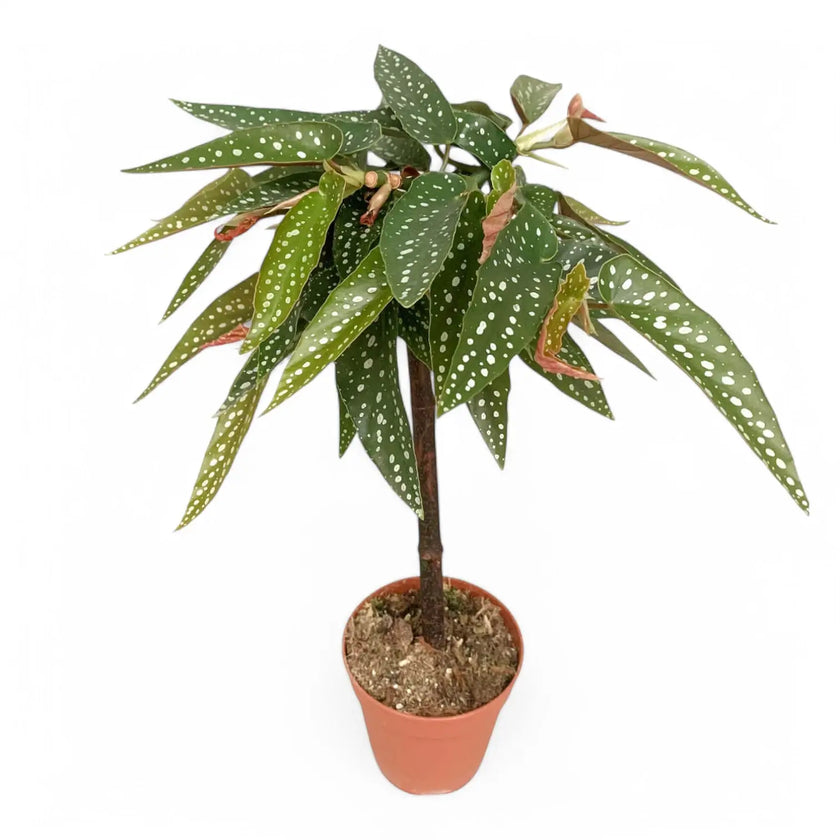
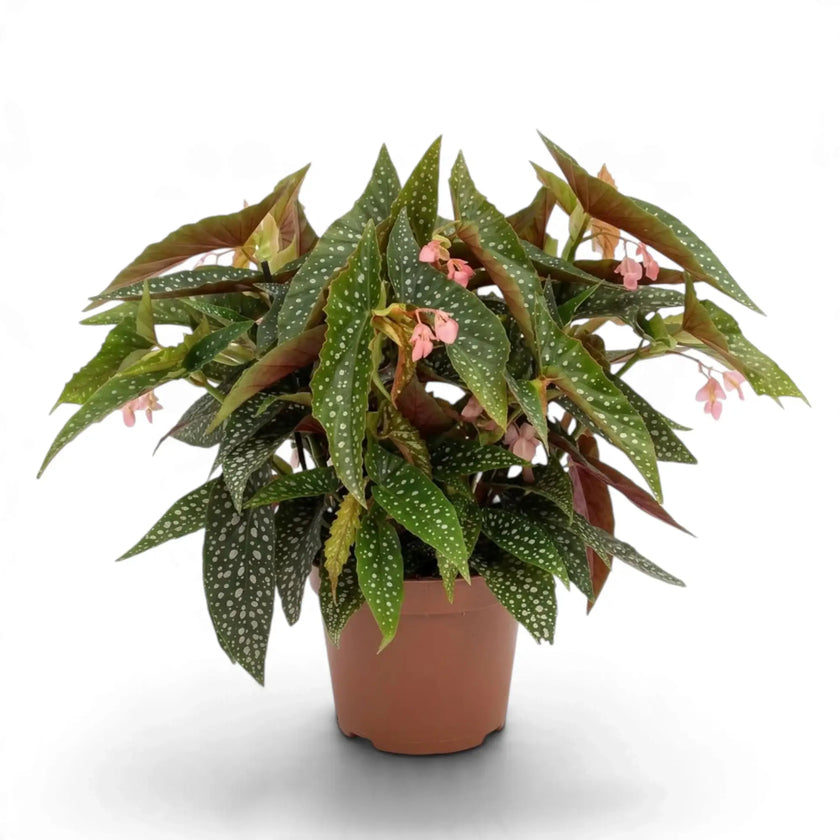
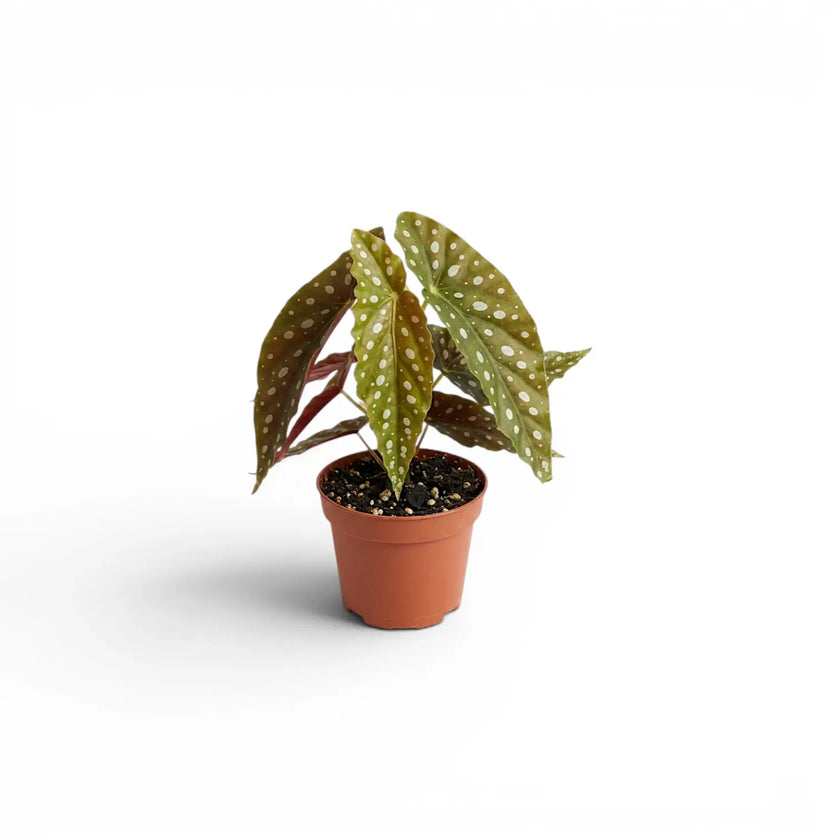
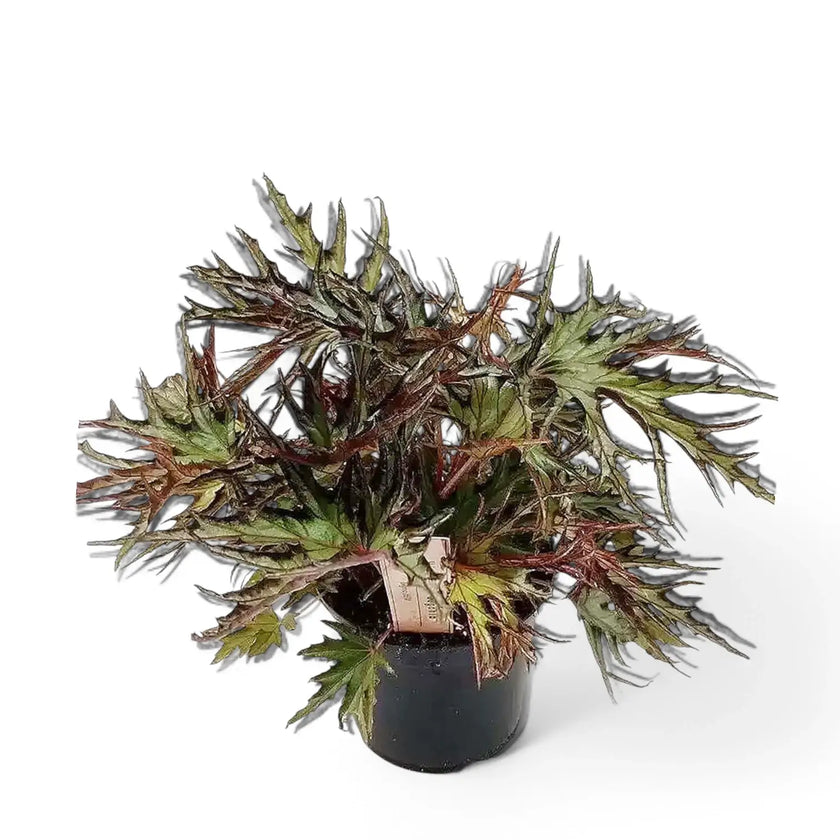
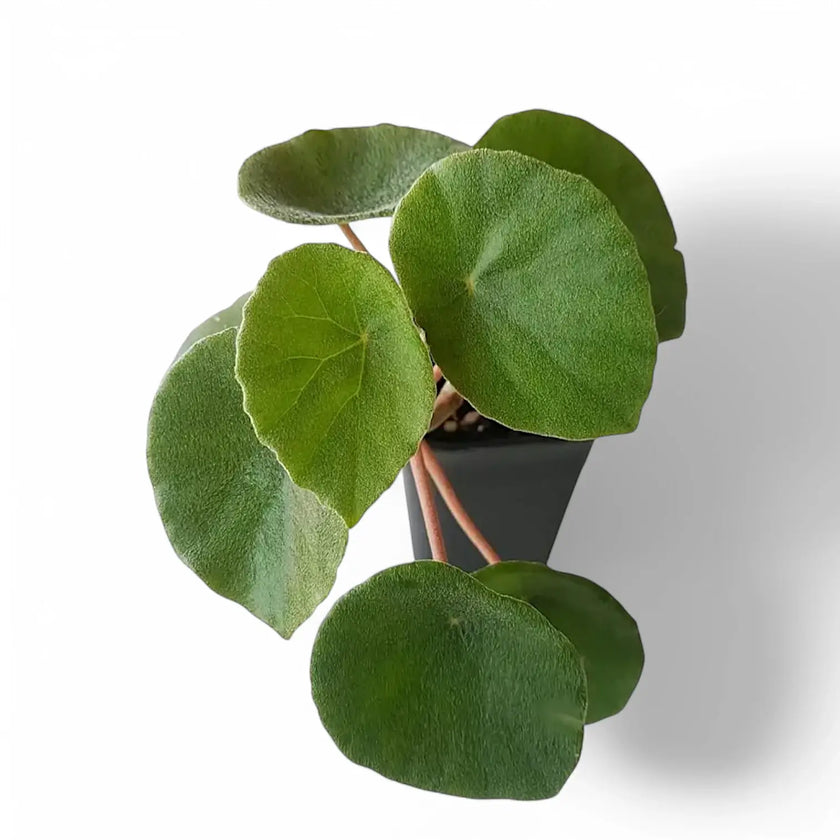
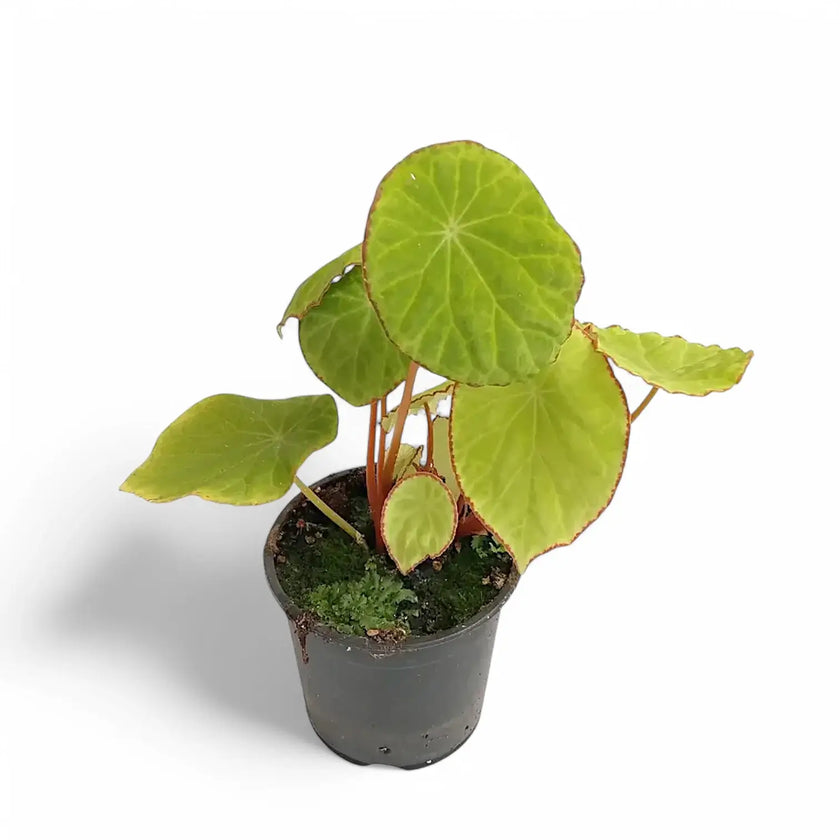
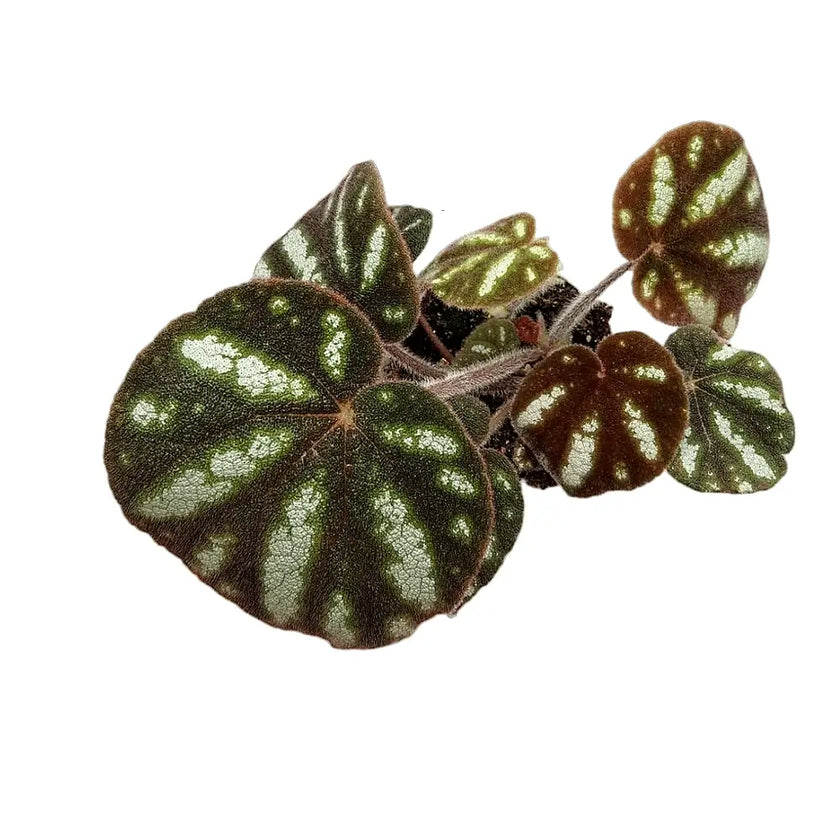
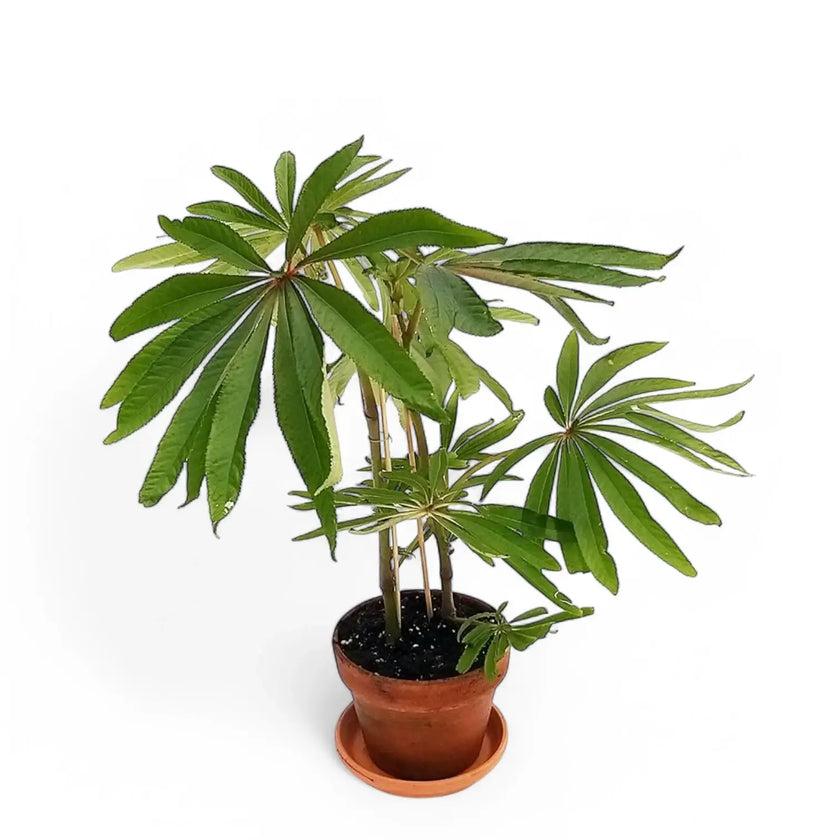
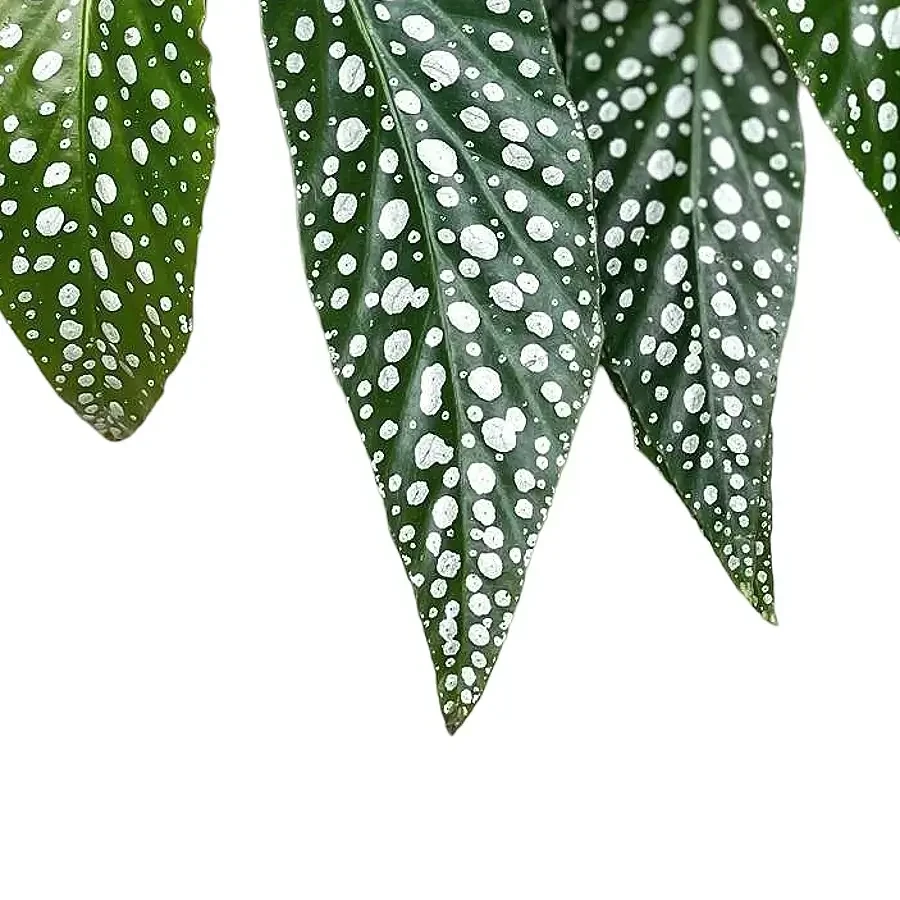
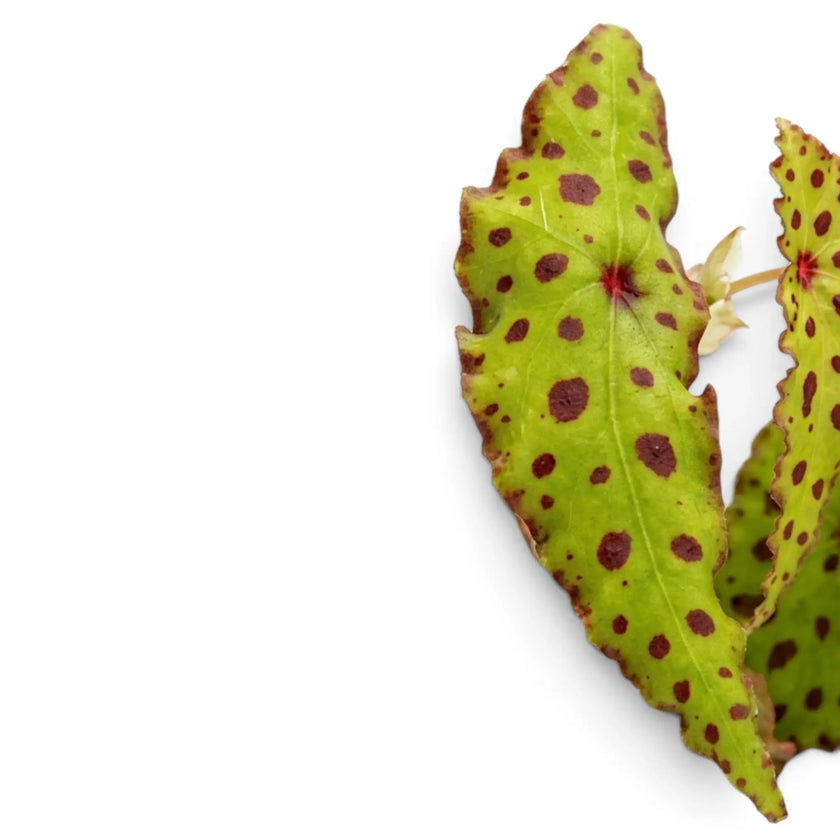
Begonia is not one single plant type. In an indoor collection you mostly deal with cane Begonia with tall, jointed stems, low-growing rhizomatous Begonia that creep over the substrate and bold rex Begonia bred for dramatic colour and texture. Each group reacts differently to light, water and pot choice, even though all sit under the same genus.
In our Begonia range you will mostly find foliage-focused houseplants rather than bedding or tuberous types grown for a single outdoor season. These Begonia are meant to stay in pots for years, changing shape over time and rewarding good care with stronger colour and denser crowns of leaves.
Cane, rex and rhizomatous Begonia – choosing the right style
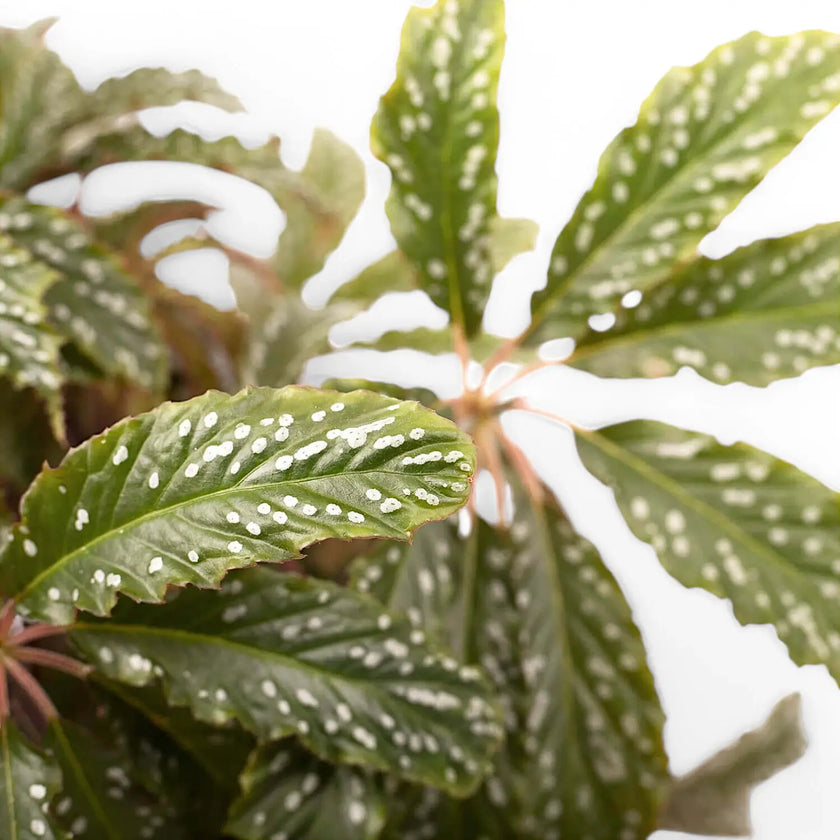
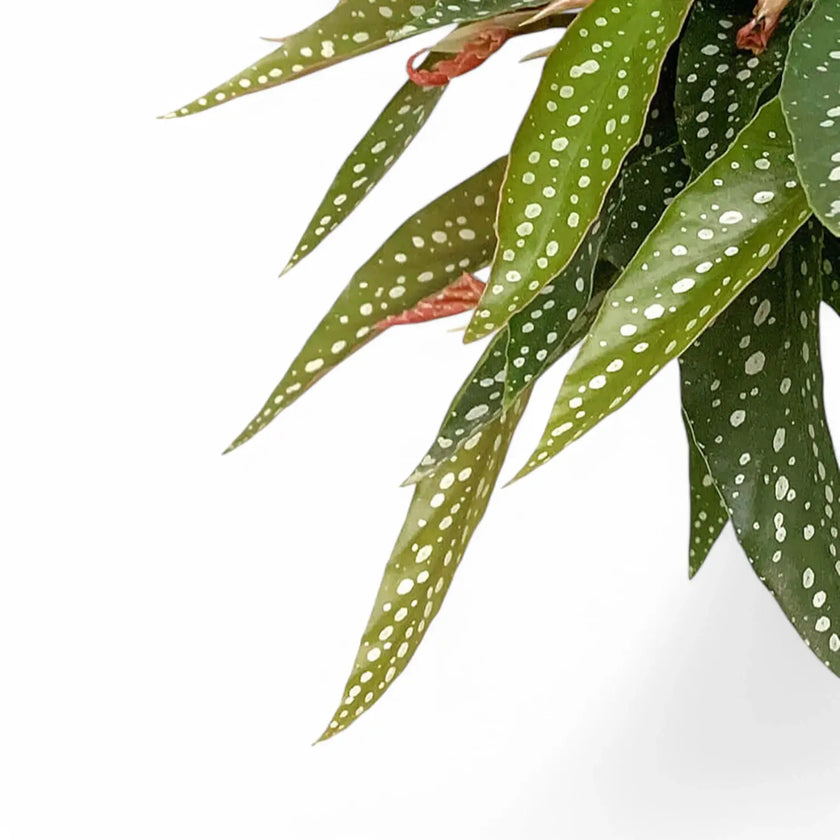
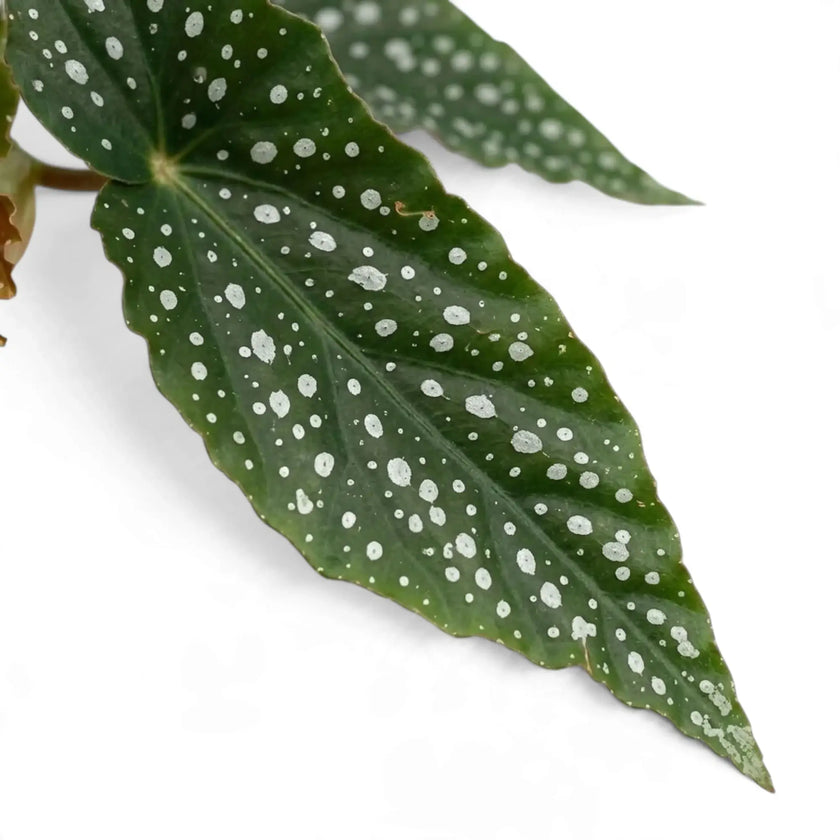
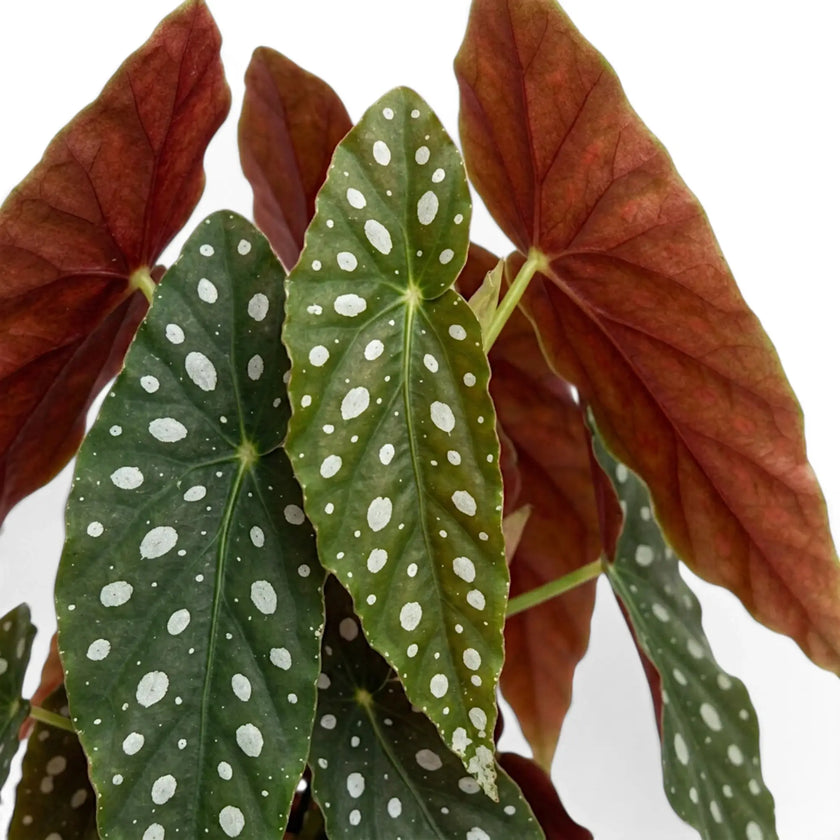
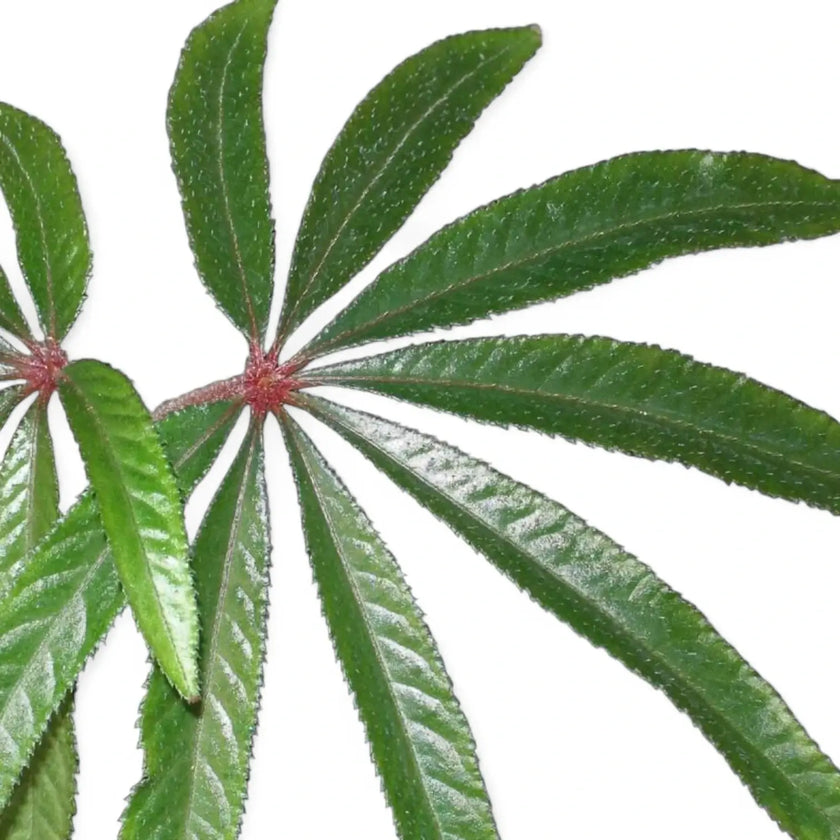
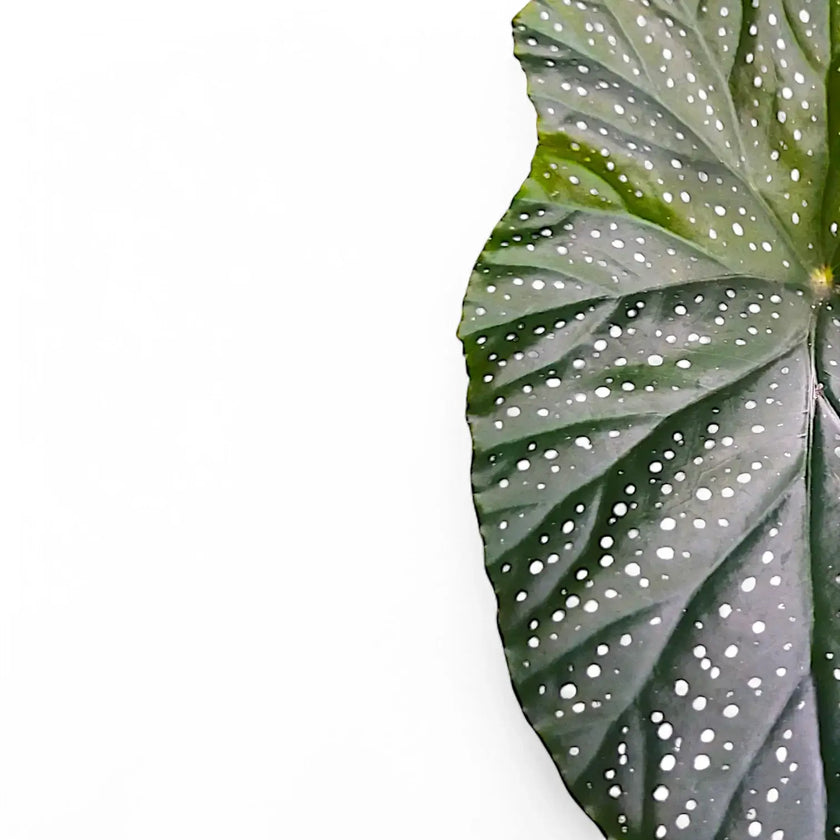
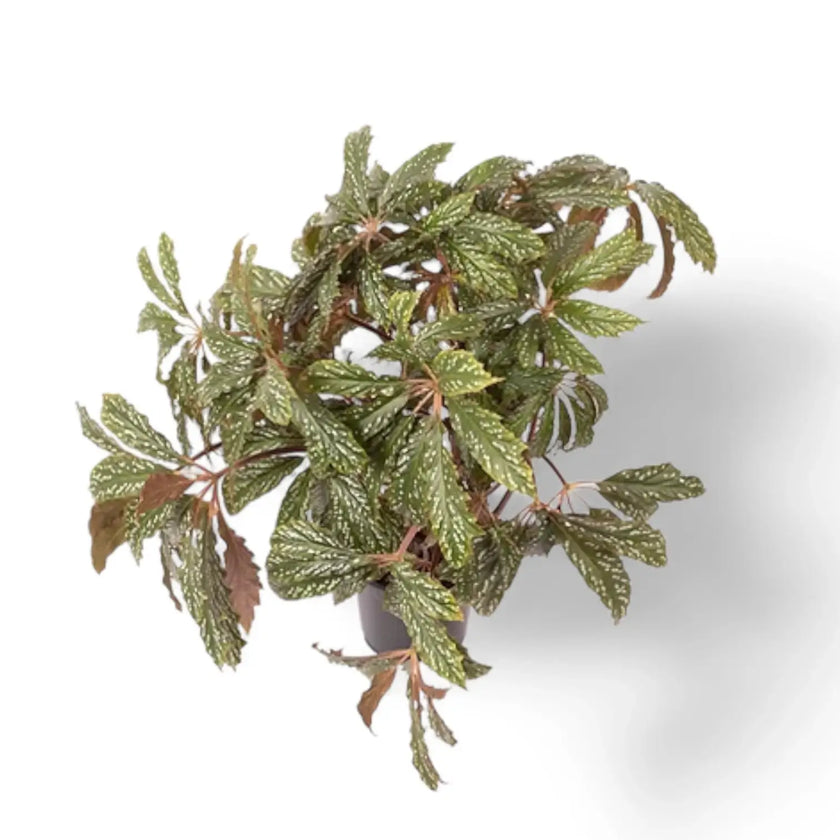
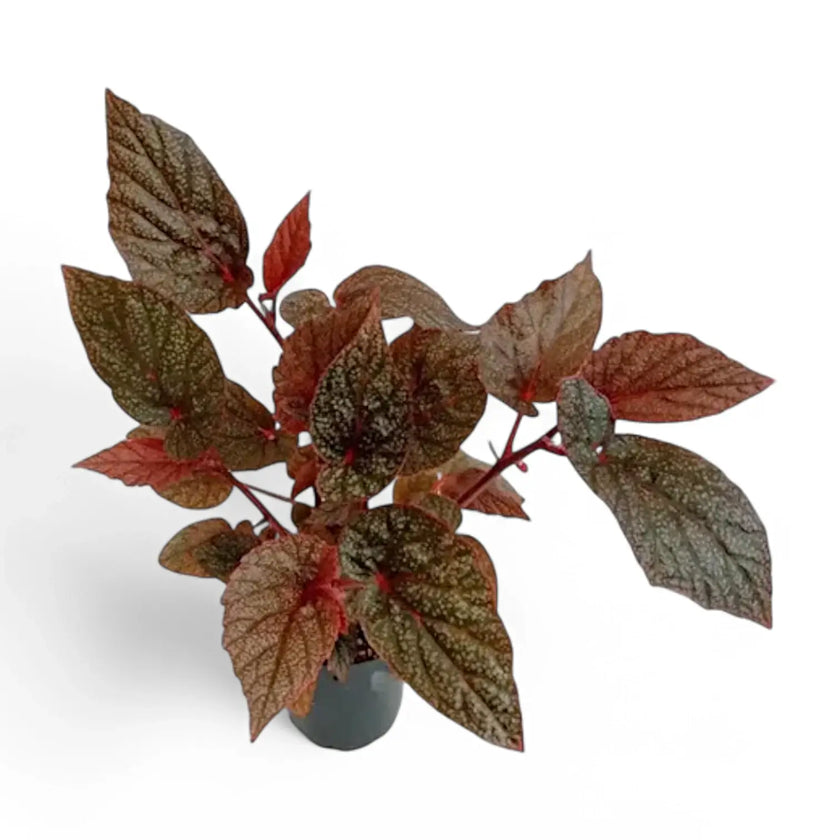
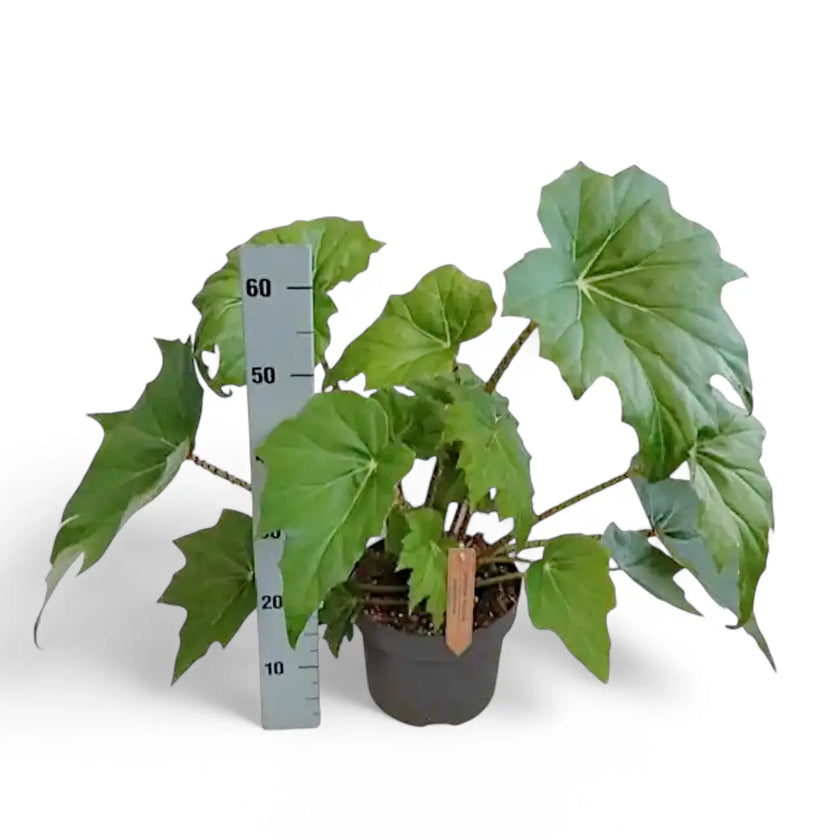
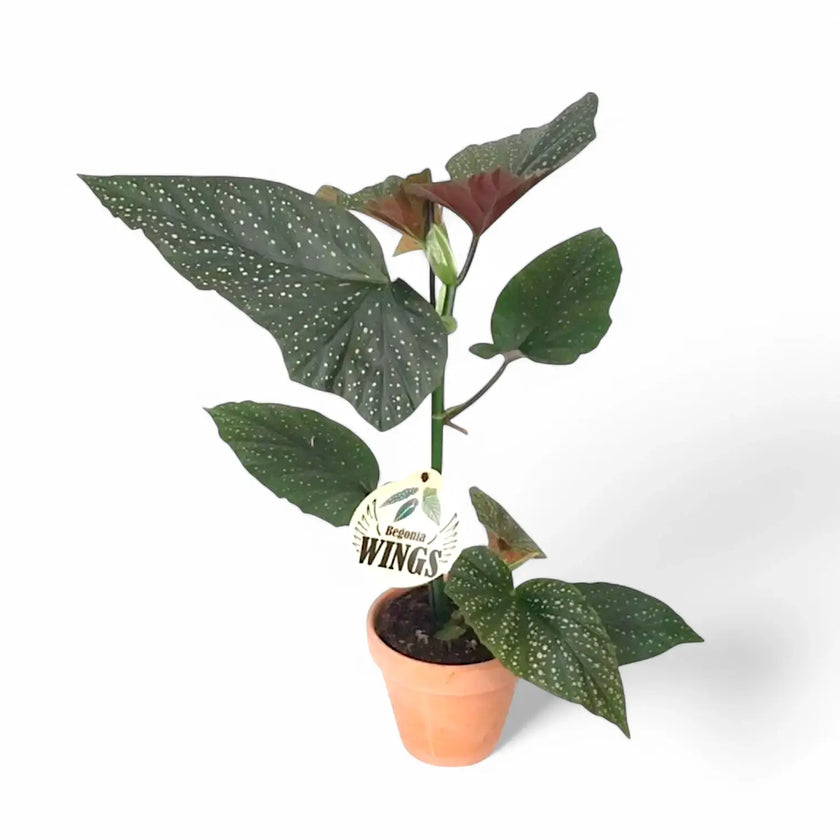
- Cane Begonia: upright, bamboo-like stems with leaves held out along each segment. Need good light to stay sturdy and benefit from regular pinching to avoid bare lower sections.
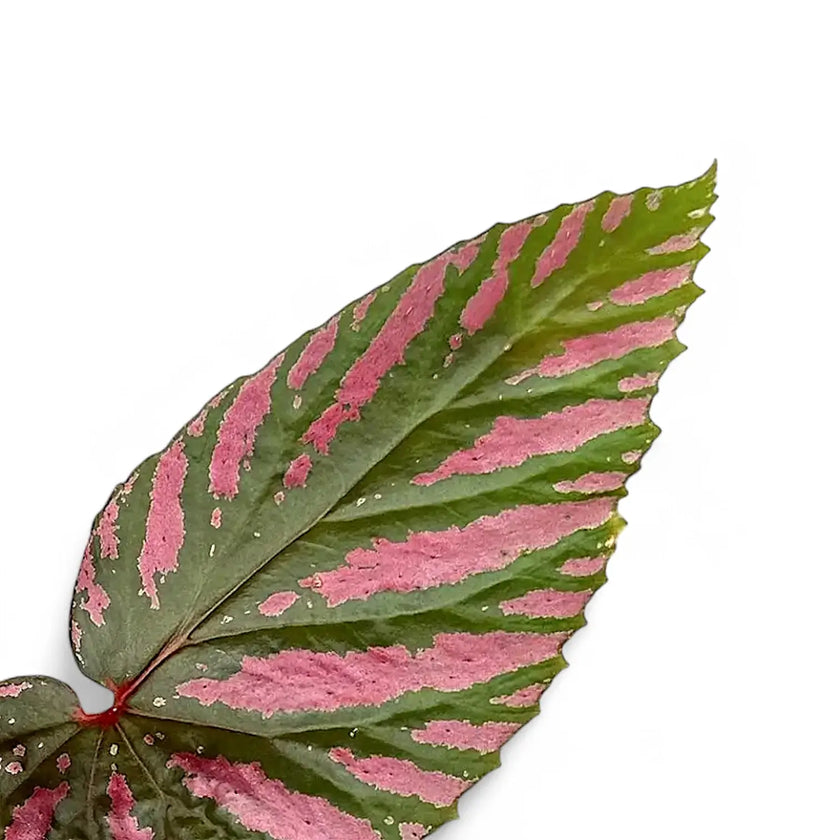
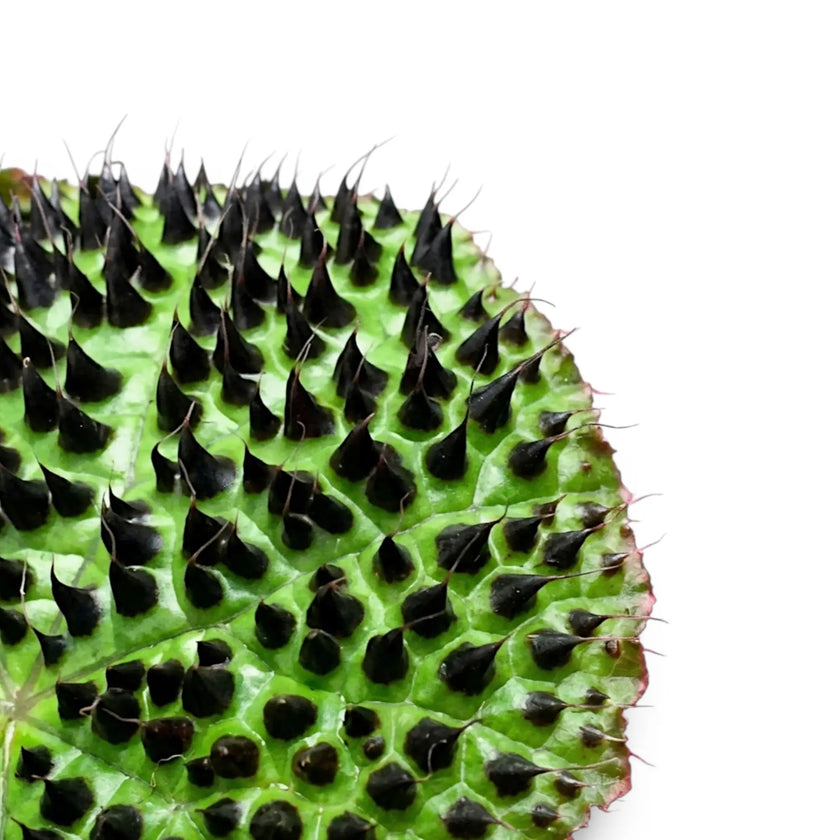
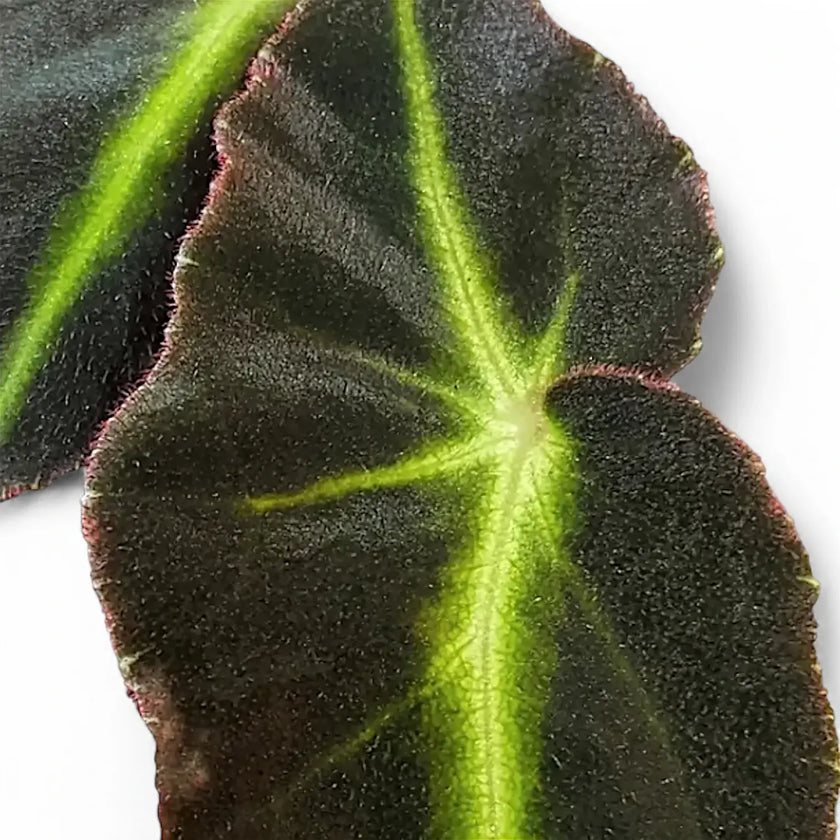
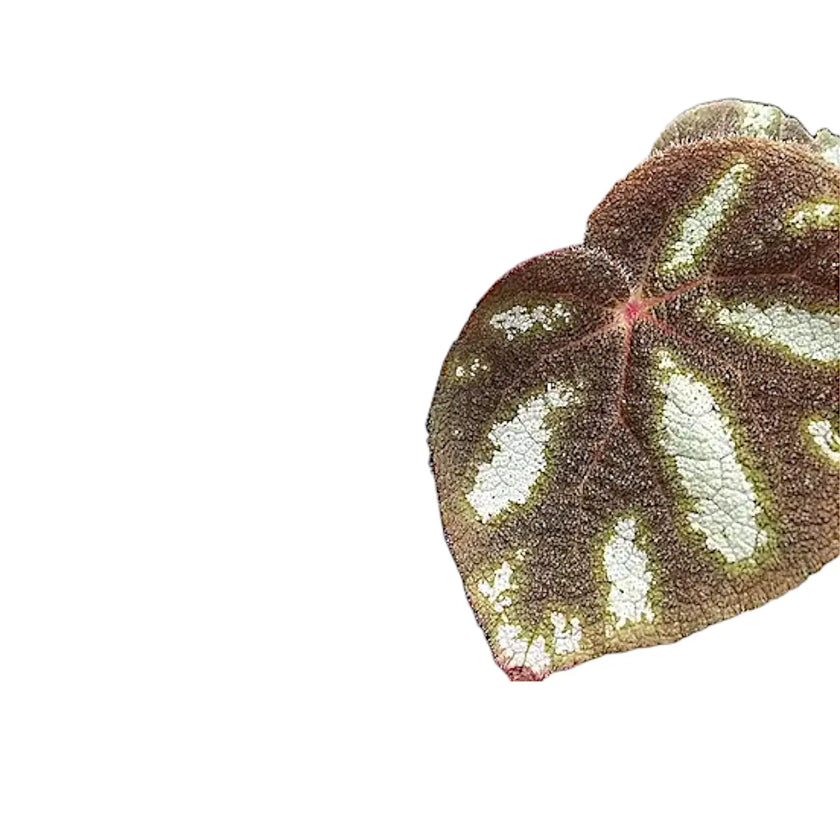
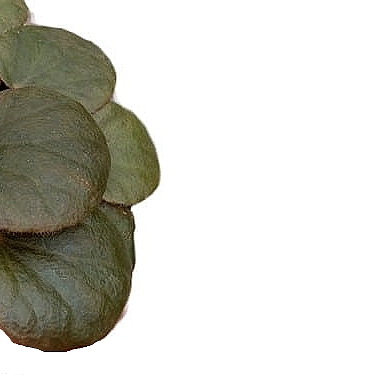
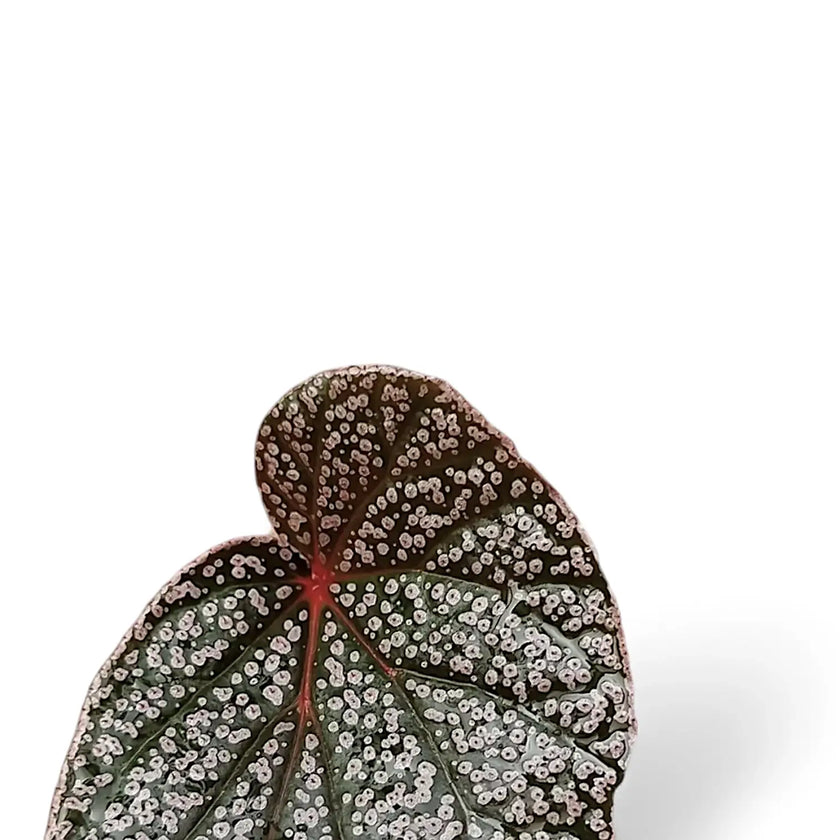
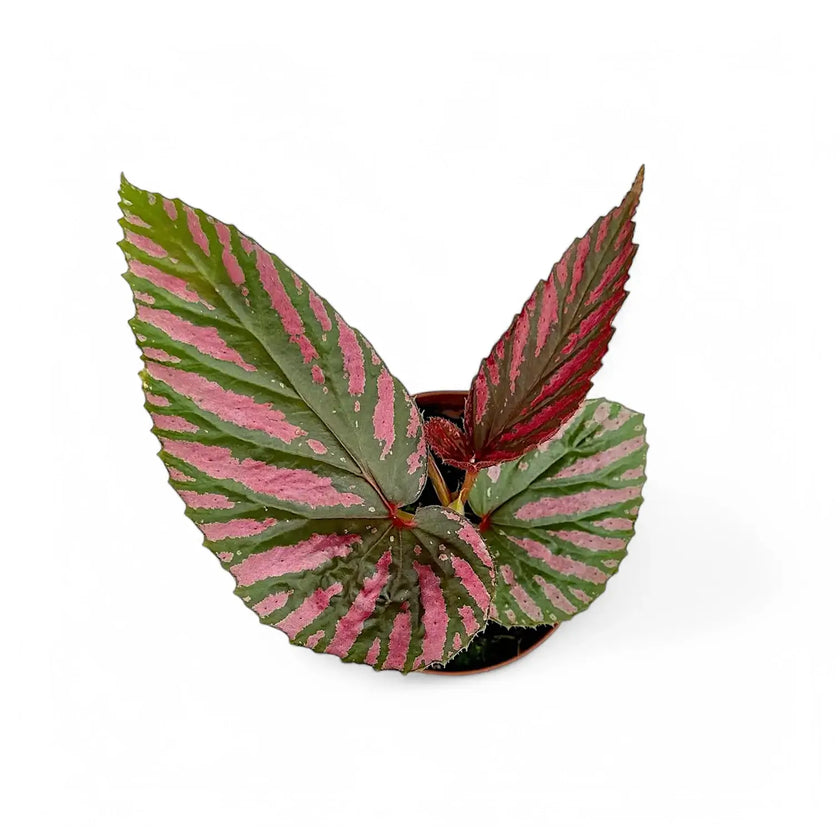
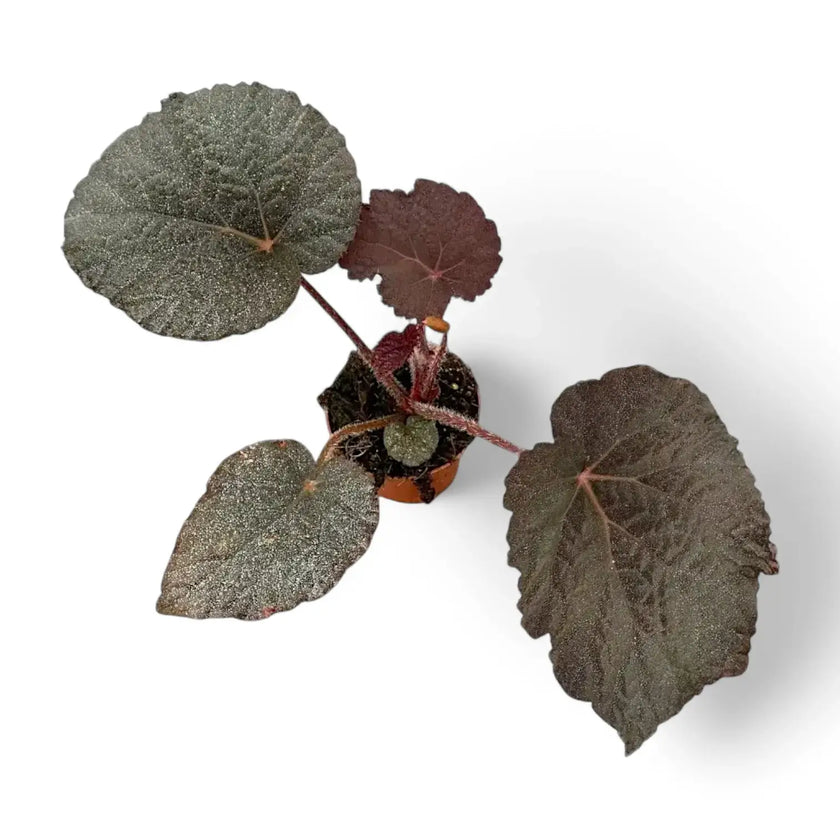
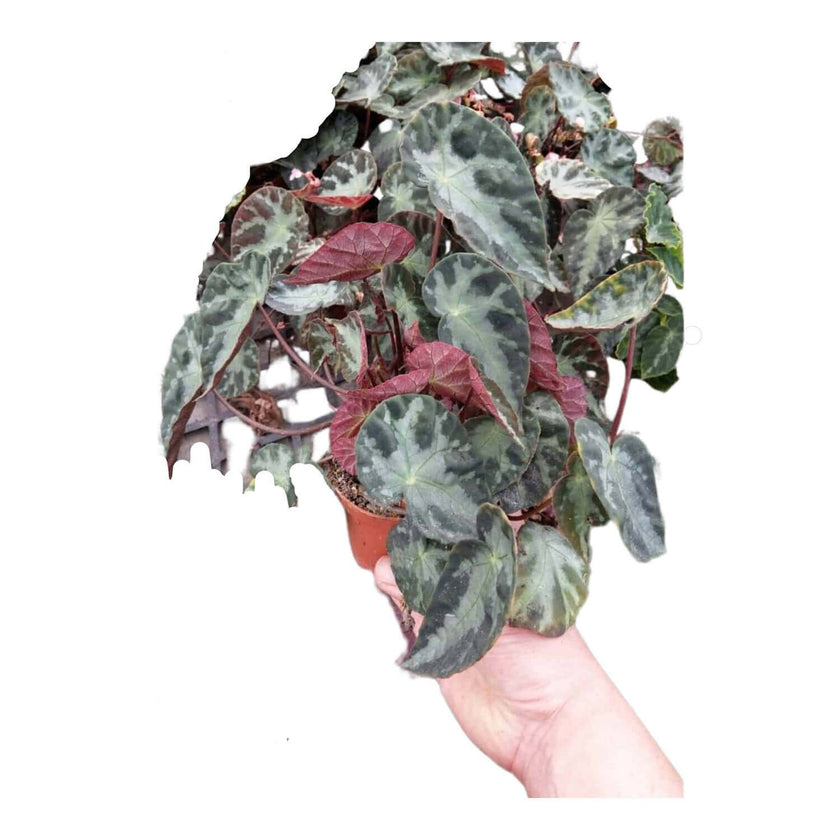
- Rex Begonia: compact, often spiralled foliage with metallic or patterned surfaces. Leaf blades are thinner and roots are shallow, so shifts in moisture and humidity show up quickly.
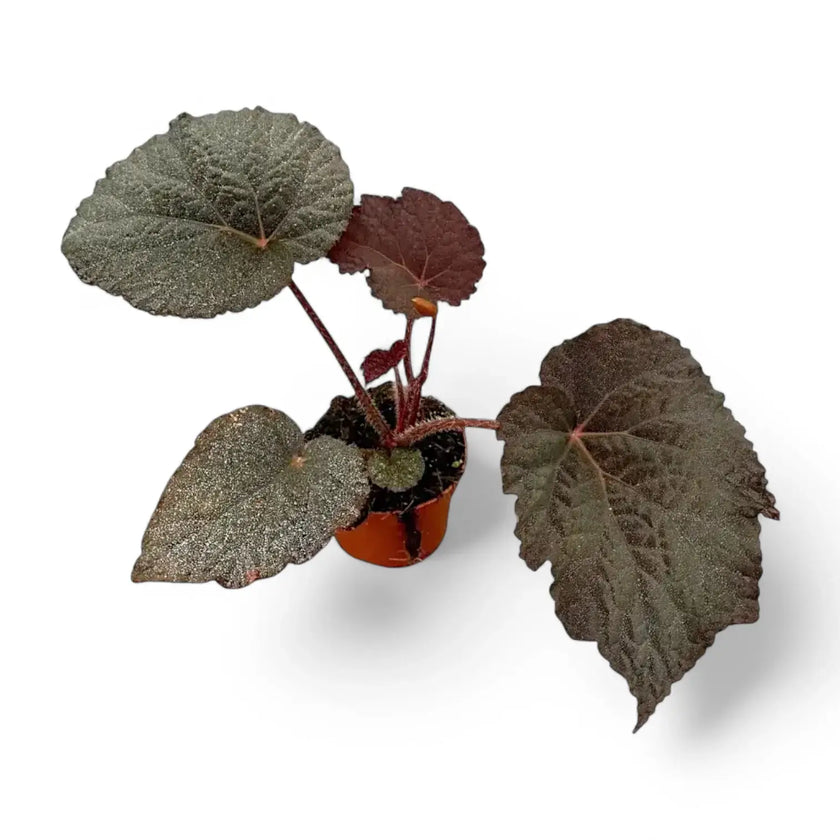
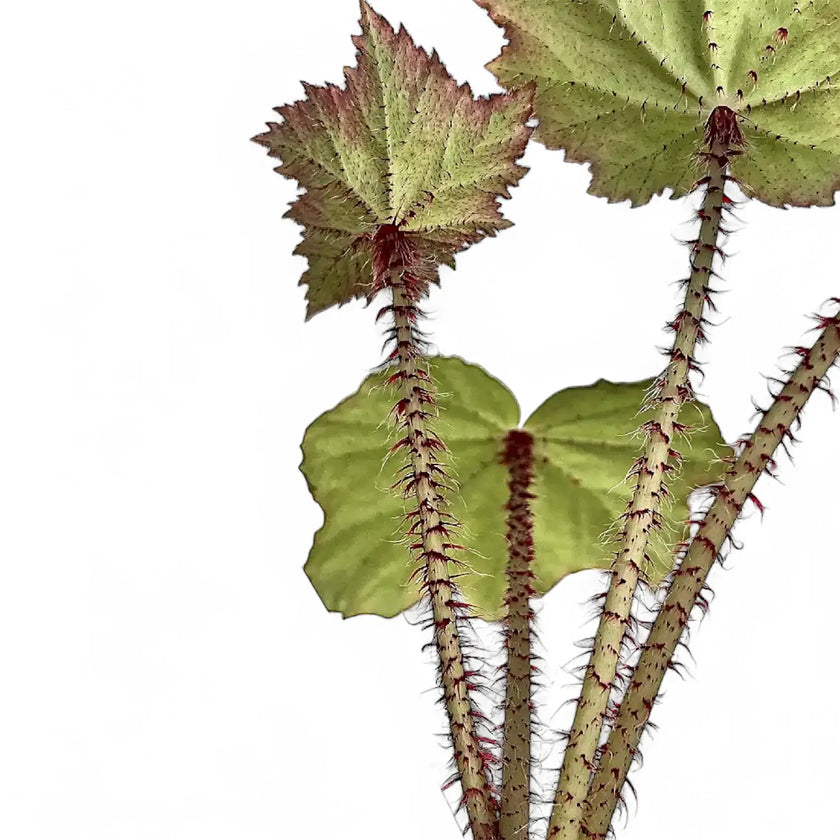
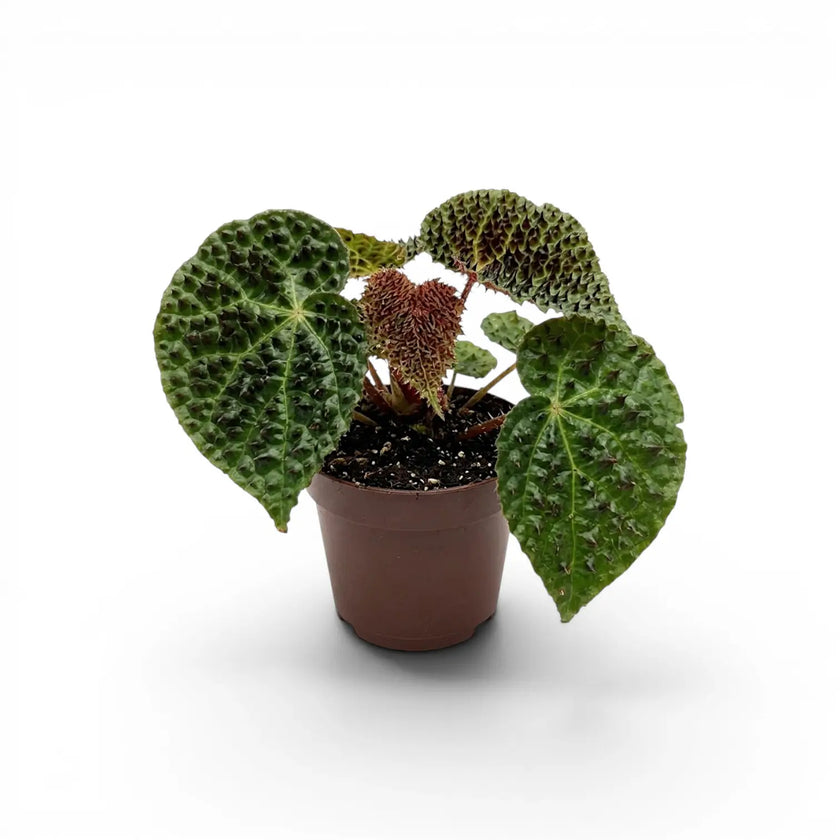
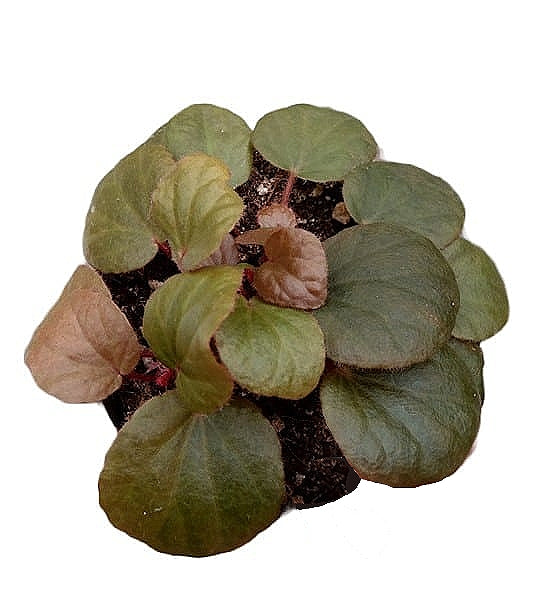
- Rhizomatous Begonia: thick, creeping stems that sit on or just under the substrate and push leaves outward. Prefer wide, shallow pots and a mix that never turns into a soggy slab.
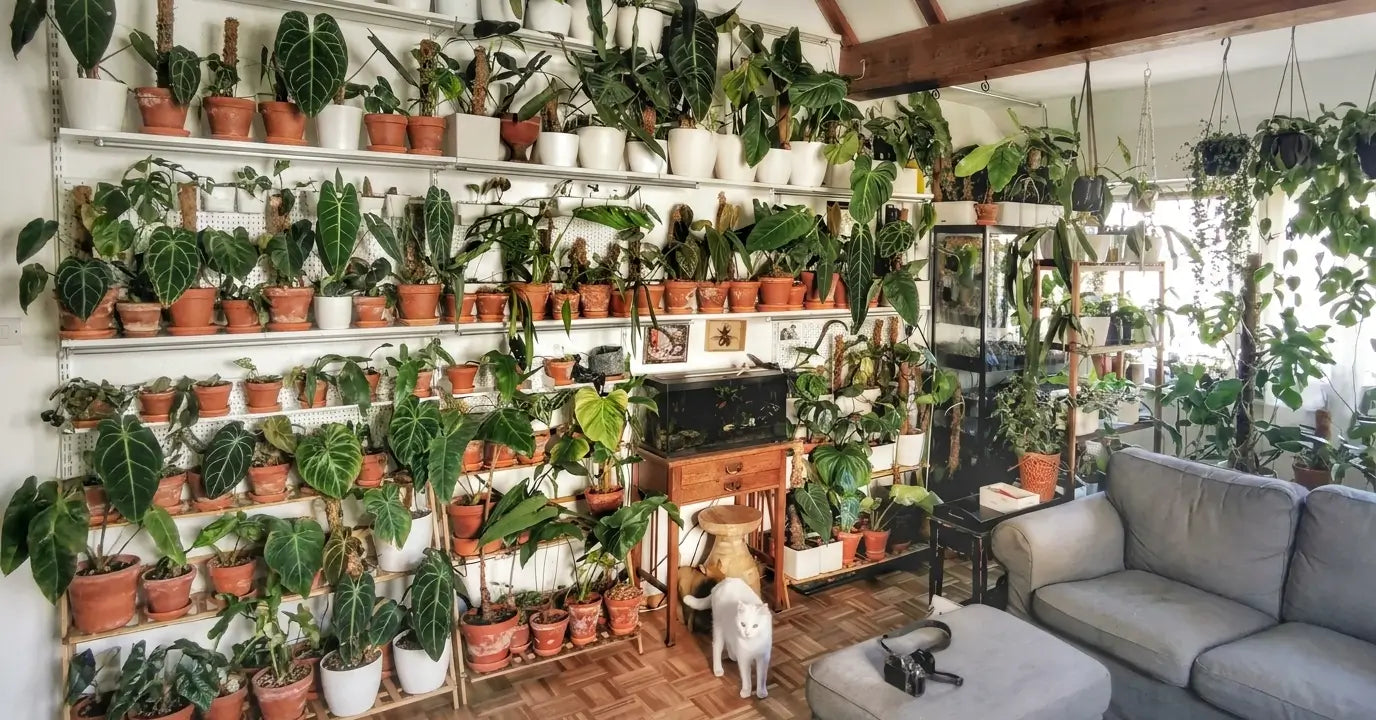
Before adding Begonia to a cart, match the type to your setup. Tall cane Begonia ask for more vertical space and stronger light; rex and rhizomatous Begonia suit shelves, cases and wider, low containers where humidity stays a little higher.
Light and placement for Begonia houseplants
Most indoor Begonia stay compact and colourful in bright, filtered light rather than in harsh beams. A position near an east window, just back from a south exposure or to the side of a bright west window usually works well. Leaves should feel cool to the touch even in the middle of the day.
Cane Begonia in too little light run upwards, with long bare sections between leaves. Rex and rhizomatous Begonia in the same conditions fade and flatten, with patterns that look washed out. In overly strong sun, all groups risk pale, papery scorch patches. If you want a more objective sense of which window suits Begonia, compare your room to the examples in our bright-indirect light guide and pick a placement from the medium to higher end of that range.
Begonia potting mix, pots and watering habits
Roots of Begonia are fine and dislike sitting in heavy, stagnant substrate. A practical indoor Begonia potting mix combines a humus-rich base with plenty of structure: think quality houseplant soil blended with perlite or pumice, fine bark and a little fibrous material such as coconut chips. When you squeeze a handful, it should hold shape briefly then spring apart, not smear into a paste – the principles in our substrates guide are directly relevant here.
Water once the upper few centimetres of mix feel dry and the pot is noticeably lighter than just after watering. Then water slowly until liquid runs out of the drainage holes and tip away anything that collects in a cachepot. Cane types grown in strong light and warmer rooms dry out faster; rex and rhizomatous Begonia in cooler, lower positions often need more time between waterings even in the same pot size.
Very deep drought leads to crisp edges, dropped older leaves and slow recovery, but permanently wet mix is worse. Mushy stems at soil level, a sour smell and grey or black roots point to ongoing oversaturation. For a deeper look at how to balance moisture and airflow in containers, see our watering guide.
Temperature, humidity and airflow around Begonia
Warm, steady rooms suit Begonia best. Temperatures between about 18 and 26 °C keep growth moving. Chilly spells below roughly 15 °C, especially right after watering, can trigger leaf drop and stem collapse, so avoid cold window ledges or draughty doorways in winter.
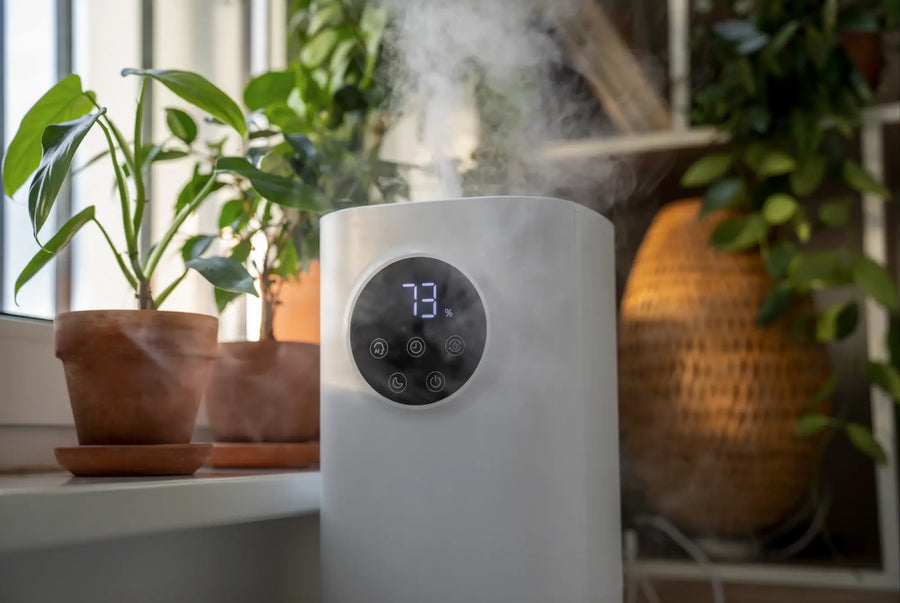
Moderate humidity, around 50–70 %, keeps foliage more stable and reduces edge crisping, particularly for rex Begonia. Very dry air from heaters encourages spider mites and tired-looking leaves. Misting gives only short-lived relief and can help powdery mildew spread if foliage stays damp. It is more effective to raise background humidity slightly, group plants and make sure a gentle air current passes through the area so leaves dry after watering.
Long-term growth, shaping and feeding Begonia
Begonia often grow in bursts. A cane Begonia might push several leaves on one stem, then pause, while a rhizomatous plant thickens its stem and sends new points around the pot rim. Rex Begonia tend to stay compact but replace older leaves fairly regularly once established.
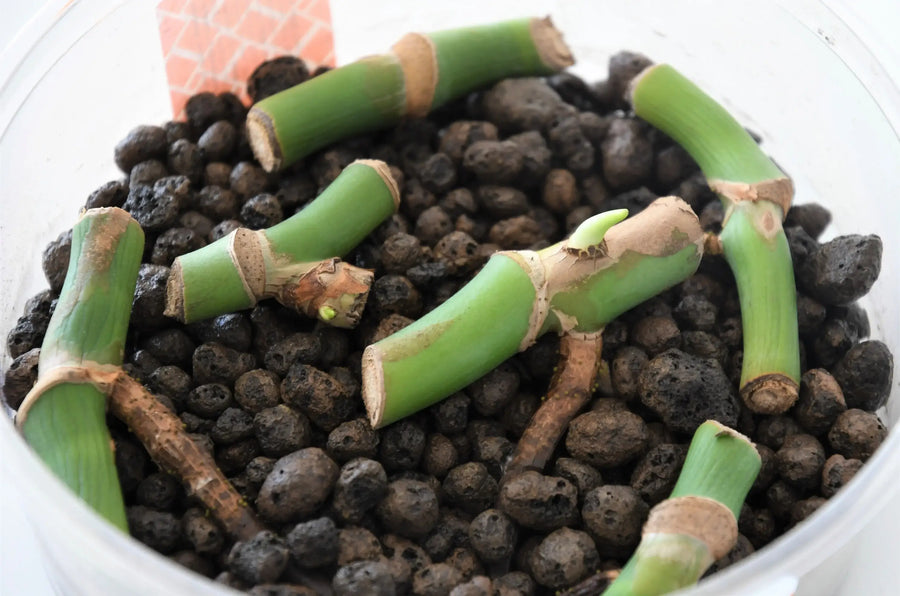
Shaping depends on type. Cane Begonia look better if you pinch or cut tips above a node to force side shoots rather than letting a single stem run tall and bare. Rhizomatous and rex Begonia can be refreshed by cutting and replanting healthy rhizome sections closer to the pot edge, which encourages a broader crown of leaves instead of a single congested centre.
During active growth, a balanced, well-diluted fertiliser every few waterings is enough. Apply only onto already moist substrate. Heavy feeding in poor light, or into constantly wet mix, does more harm than good; burnt tips and dull, tired foliage usually point to salt build-up rather than a lack of nutrients.
Typical Begonia problems and what they often signal
- Stems at soil level turning soft and dark: usually a sign of rot from waterlogged, airless mix. Remove damaged sections, improve drainage and let the remaining mix dry closer to “lightly moist” before watering again.
- Brown, crispy leaf margins on many leaves: commonly tied to irregular watering or very dry air. Review your watering rhythm, flush the pot thoroughly with room-temperature water and move Begonia away from radiators or hot air vents.
- Pale, stretched growth with large gaps between leaves: indicates that light is insufficient. Shift Begonia nearer to a suitable window or adjust curtains so plants receive more hours of indirect brightness.
- White, powdery coating on leaf surfaces: typical powdery mildew, encouraged by stagnant air and foliage that stays damp. Increase airflow, remove badly affected leaves and avoid overhead watering.
- Sudden leaf drop after a cold night: often follows temperature shock combined with wet substrate. Move the plant to a more stable, warm position, let the mix dry slightly and wait for new buds before cutting back hard.
Toxicity and handling Begonia safely indoors
Begonia is generally treated as toxic if eaten. Underground parts in particular can contain irritating oxalate crystals that upset the mouth and digestive system of pets and people. Place pots where cats, dogs and children are unlikely to chew leaves or dig in the substrate, and wash hands after handling roots or larger broken stems.
How Begonia usually behaves after shipping
After a spell in a dark box, Begonia can look sulky: some older leaves may yellow, a few petioles can droop, and patterns might appear slightly dull. This does not automatically mean poor health; plants are responding to transport and a sudden change in climate.
Once unpacked, move Begonia straight into its intended bright, indirect position. Check the rootball; if the upper layer is still clearly moist and the pot feels heavy, wait before watering. If mix has dried during transit, water slowly once and let excess drain completely. Delay major repotting until you see fresh, stable growth, unless substrate is obviously collapsing or sour.
FAQ – Begonia Are rex Begonia really harder to grow than cane Begonia?
Rex Begonia react faster to low humidity and uneven watering, so they show stress sooner. Cane Begonia usually cope better with small mistakes as long as light is strong and substrate is not constantly wet. If you are new to Begonia, cane and tougher rhizomatous types are usually more forgiving starting points.
Should indoor Begonia ever dry out completely?
Allowing the very top of the mix to dry is fine and often helpful. Letting the entire rootball become hard and dusty on a regular basis stresses fine roots and slows growth. Aim for a cycle where substrate goes from evenly moist to just lightly dry in the upper layer, then back to moist with a thorough watering.
Can Begonia live in a terrarium or cabinet?
Many rex and rhizomatous Begonia perform very well in cases, cabinets and roomy terrariums where humidity stays higher and temperatures are stable. Good airflow and careful watering are still important; closed spaces that are permanently wet and stagnant cause more problems than they solve.
Is standard multipurpose compost enough for Begonia?
Straight multipurpose compost holds too much water and compacts quickly in pots. Mixing it with mineral and chunky components to create a more open Begonia substrate greatly lowers the risk of root problems and keeps structure stable for longer.
How often should Begonia be repotted?
Repot when roots clearly fill the pot or substrate breaks down and stays wet for a long time after watering. Moving up by one pot size and refreshing the mix is usually enough; very large pots around a small rootball keep the root zone wet and unstable for too long.
Back to top Scroll back up, decide whether cane, rex or rhizomatous Begonia fits your light and routine best, and let a few favourites join your collection ↑