Skip to content

Cart

Your cart is empty

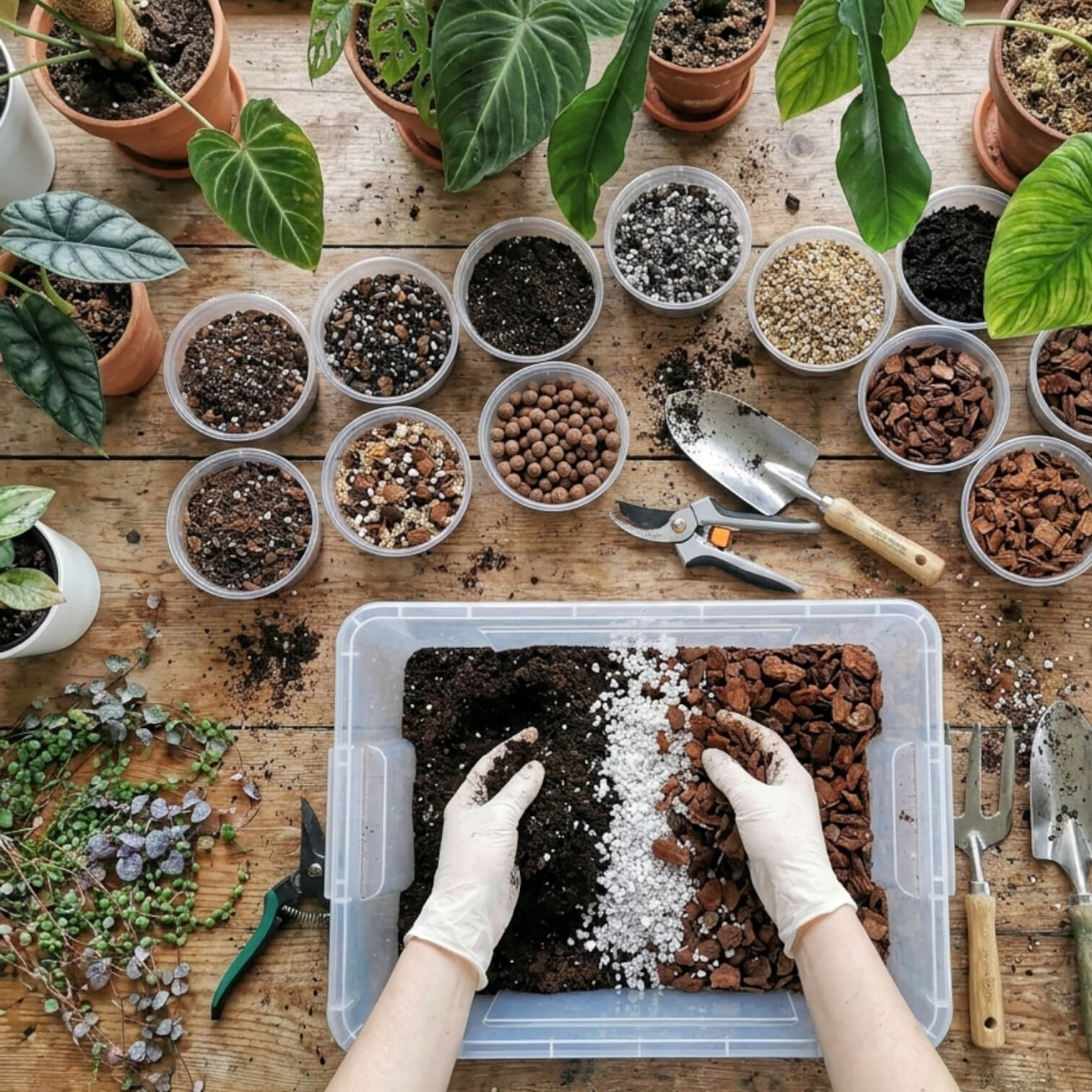
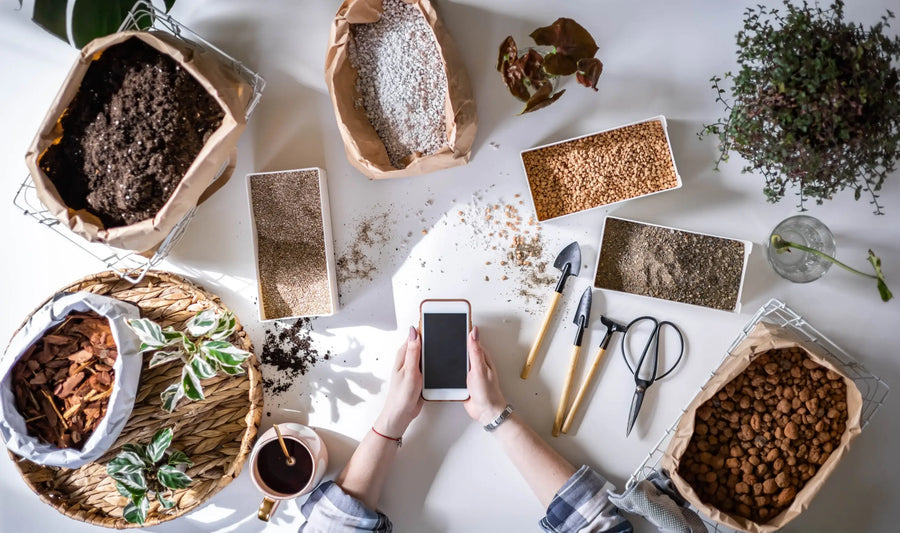
Person preparing soil mix with gardening tools and plants on a wooden table
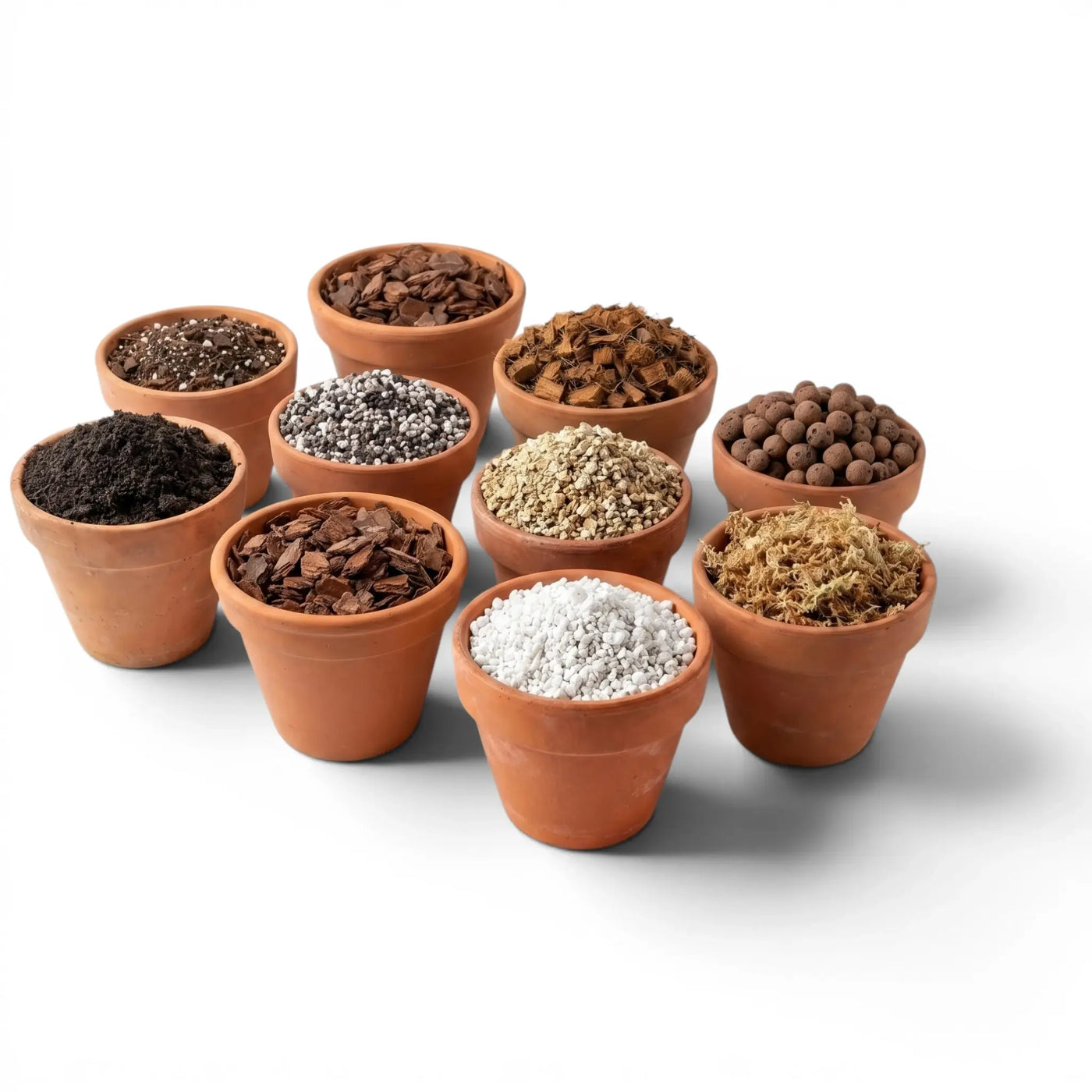
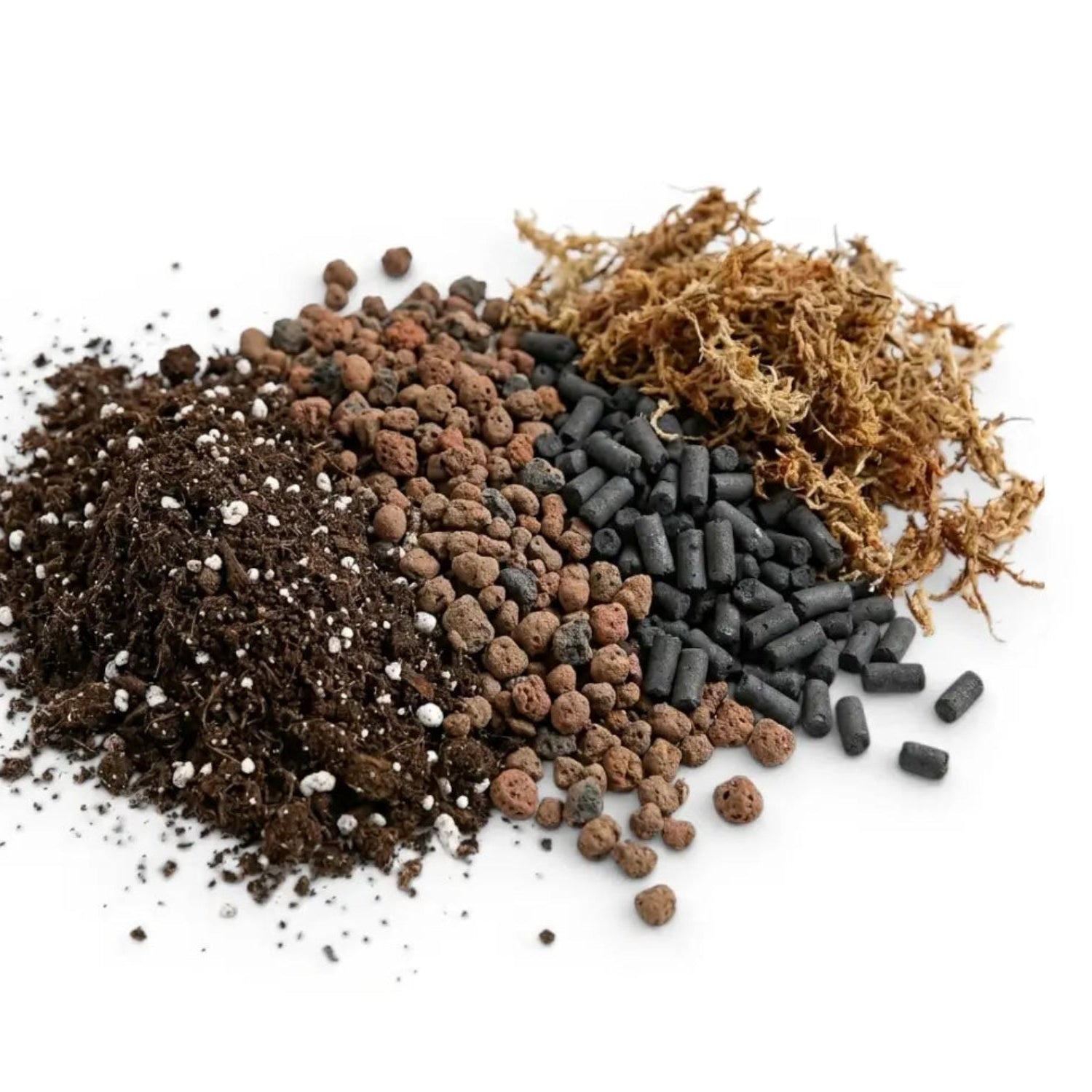
Terrarium substrate mix ingredients: soil, lava granules, sphagnum moss and activated carbon pellets on white backround

Need more context?

Need deeper substrate guidance?

Build a better houseplant mix
For particle size, water retention, texture and dry-down speed.

Fine-tune a chunky aroid mix
For Monstera, Philodendron, Anthurium, Syngonium and other chunky-mix growers.

Understand semi-hydro before switching
For inert substrates, reservoirs, nutrients and what changes when soil is removed.

One rule before adding anything

More ingredients do not automatically make a better potting mix. Pot size, root size, warmth, light level, watering volume, airflow, humidity and pot material all change how a mix behaves.

Choose the smallest change that solves the problem first. Add what the mix actually needs, not everything at once. If a plant is already sitting in an oversized pot, cold conditions, old collapsed substrate or a pot without drainage, substrate ingredients alone will not fix the root-zone problem.

Most substrate ingredients adjust structure, moisture behaviour, weight or airflow. They are not complete plant nutrition. Fertilising still depends on plant type, substrate type, watering routine and whether the plant is growing in soil, a mineral mix or semi-hydro.

➜ What are you buing?

  • Substrate ingredient: one material used to change how a potting mix behaves. Perlite, coco coir, pine bark, lava rock, vermiculite, sphagnum moss and activated carbon can adjust texture, moisture, weight, structure or airflow.
  • Substrate Set: separate substrate components selected for one clear use case. They arrive as individual components, so you mix or layer them yourself depending on plant type, root size, pot size and growing conditions.
  • Substrate mix or potting mix: a ready-made or pre-blended growing medium. Some mixes work as a general base, while others are designed for a specific plant group or setup.

Choose Better Houseplant Substrate Ingredients & Mixes

Not sure what to add to houseplant soil or potting mix? Start with what the mix is doing: staying wet too long, drying too fast, feeling dense, losing structure, or needing a better base for aroids, Hoya, succulents, cuttings or terrariums.

Choose substrate ingredients or base mixes when you only need to adjust one part of a mix. Choose a Substrate Set when you want separate components selected for one clear job, such as opening dense soil, building a chunkier aroid mix, rooting cuttings or preparing a closed terrarium base.

Single ingredient or Substrate Set?

Use this section to choose the right starting point. Pick an individual ingredient or base mix when you know the exact adjustment your mix needs. Pick a Substrate Set when you want selected components for one use case without choosing every material from scratch.

Start with what your potting mix is doing

Pick the closest situation. Each card shows single ingredients to consider and the clearest Substrate Set match. Use the ratio guidance in the Substrate Sets section when you are ready to mix.

Issue

My potting mix stays wet too long

Heavy or compacted mixes can keep roots wet for too long, especially in oversized pots, plastic pots, cooler conditions or lower airflow.

Single ingredients to use:

  • Perlite
  • Pine bark
  • Lava Rock Granules

Best Substrate Set:

Airflow & Drainage Substrate Set

Use carefully:

Vermiculite, packed sphagnum moss and large amounts of coco coir, because they can keep an already-wet mix wet for longer.

Compare substrate ingredients, soil bases and base mixes

Use this section when you want to adjust one part of your mix: open texture, moisture retention, weight, structure or drying speed. Single ingredients change one behaviour at a time, while soil bases and ready mixes give you a starting medium to build from.

White perlite granules for loosening houseplant potting mix

Perlite

Perlite is a light mineral aggregate for loosening dense mixes and speeding dry-down.

  • Best for: dense soil, cuttings, aroids and general mix adjustment.
  • Water behaviour: holds little water and helps a mix dry faster.
  • Watch out for: very light pots, top-heavy plants, mixes that already dry too quickly and dust when dry. Moisten before handling if dust is an issue.
  • Pairs well with: coco coir, pine bark and Universal Soil.
  • Nutrition note: structural only; perlite does not feed plants.
Coco coir substrate for moisture-holding plant soil mixes

Coco coir

Coco coir is a peat-free material that holds moisture and works well as a soft base in custom houseplant mixes.

  • Best for: aroid blends, prayer plant mixes and plants that need more moisture retention.
  • Water behaviour: holds moderate to high moisture depending on how much is used.
  • Watch out for: using it without structural ingredients; it can become compacted and moisture-heavy in slow-drying pots.
  • Pairs well with: perlite, pine bark, Lava Rock Granules and vermiculite.
  • Nutrition note: works as a moisture-holding base, not as complete plant food.
Pine bark pieces for chunky aroid and Hoya potting mix

Pine bark

Pine bark adds chunky organic structure, open texture and air pockets to tropical plant mixes.

  • Best for: aroids, Hoya, orchids, airflow correction and chunky tropical blends.
  • Water behaviour: holds some moisture on its surface but mainly improves structure and texture.
  • Watch out for: tiny roots, very small pots or bark pieces that are too coarse for plant size.
  • Pairs well with: perlite, coco coir and Lava Rock Granules.
  • Nutrition note: structural ingredient first; it does not replace fertiliser.
Lava Rock Granules for mineral structure and drainage support

Lava Rock Granules

Lava Rock Granules add porous mineral structure, weight and stability without making a mix moisture-heavy.

  • Best for: airflow correction, aroids, Hoya, succulents, terrarium bases and mineral structure.
  • Water behaviour: low to moderate moisture holding; mainly structural.
  • Watch out for: very fine roots, tiny plants or particles that are too coarse for pot size. Rinse dust before use if needed.
  • Pairs well with: perlite, pine bark, Universal Soil and coco coir.
  • Nutrition note: mineral structure, not fertiliser.
Vermiculite flakes for moisture-retentive propagation mixes

Vermiculite

Vermiculite is a moisture-retentive mineral flake for young roots, seedlings and fine-rooted plants.

  • Best for: propagation, prayer plants, seedlings, cuttings and fine-rooted plants.
  • Water behaviour: holds a lot of moisture compared with many other substrate ingredients.
  • Watch out for: plants that need fast dry-down, very mineral conditions or airy root zones.
  • Pairs well with: Universal Soil, perlite, coco coir and Lava Rock Granules.
  • Nutrition note: moisture-retentive structure, not complete plant food.
Sphagnum moss for terrariums, moss poles and node rooting

Sphagnum moss

Sphagnum moss is a high-moisture material for terrariums, moss support and node rooting.

  • Best for: terrariums, propagation, moss poles, rooting nodes and humid setups.
  • Water behaviour: holds a lot of water; it stays airier when loose and becomes riskier when packed tightly.
  • Watch out for: drying out in open setups, compression at the bottom of pots and poor airflow.
  • Pairs well with: activated carbon, live moss and terrarium planting layers.
Activated carbon for closed terrariums and planted glass

Activated carbon

Activated carbon is a porous carbon ingredient for damp enclosed systems, especially closed terrariums.

  • Best for: closed terrariums and planted glass.
  • Water behaviour: holds little water and does not replace drainage or structure.
  • Watch out for: expecting it to fix overwatering, rot, compacted soil or decaying plant material. It is not a cure-all.
  • Pairs well with: Lava Rock Granules, Seedling & Cutting Soil and sphagnum moss.
  • Nutrition note: not a fertiliser and not a substitute for removing decaying plant material.
Expanded clay pebbles for semi-hydro and reservoir setups

Expanded clay

Expanded clay is an inert clay medium for reservoir systems, semi-hydro setups and terrarium base layers.

  • Best for: semi-hydro, mineral setups and water-reservoir growing.
  • Water behaviour: holds some surface moisture depending on setup, but does not behave like soil.
  • Watch out for: treating semi-hydro as a simple soil swap. Reservoir depth, flushing, root adaptation and fertilising routine all matter.
  • Pairs well with: mineral substrates and a complete nutrient routine for semi-hydro growing.
  • Nutrition note: expanded clay is inert and does not feed plants.
Seedling and Cutting Soil for young roots and propagation

Seedling & Cutting Soil

Seedling & Cutting Soil is a fine base for young roots, cuttings and terrarium planting layers.

  • Best for: propagation, seedlings, cuttings, seeds, prayer plants and terrarium base layers.
  • Water behaviour: holds moderate moisture and gives young roots close contact.
  • Watch out for: mature plants that need a chunkier, more open mix.
  • Pairs well with: perlite, vermiculite, coco coir, Lava Rock Granules and activated carbon.
Universal Soil as an adjustable base for houseplant mixes

Universal Soil

Universal Soil is an everyday potting soil for simple soil-based houseplant mixes. Use it when you want a familiar ready soil base that can be made lighter or chunkier with mineral and structural ingredients.

  • Best for: common indoor plants that do not need a specialist aroid, cactus, orchid, terrarium or semi-hydro setup.
  • Water behaviour: moderate moisture retention, depending on pot size, airflow and how much structure you add.
  • Watch out for: using it unchanged for plants that need much faster dry-down, stronger aeration or a soil-free root zone.
  • Pairs well with: perlite, pine bark and Lava Rock Granules.

Important: Universal Soil is a useful base, not a one-size-fits-all solution for every plant or every setup.

Live moss for closed terrariums and humid planted glass

Live moss

Live moss is a living surface material for humid terrarium displays, not a general potting mix ingredient.

  • Best for: closed terrariums and planted glass accents.
  • Water behaviour: holds surface moisture in humid setups.
  • Watch out for: dry setups, poor airflow, arid plants or normal houseplant pots.
  • Pairs well with: Terrarium Base Substrate Set, sphagnum moss and small tropical terrarium plants.
Base Soil Mix for custom houseplant substrate blends

Base Soil Mix

Base Soil Mix is a simpler blending base for custom substrate recipes. Choose it when you want to build your own mix from a soil base instead of starting with a more general ready potting soil.

  • Best for: custom houseplant mixes where you want to control the added structure, drainage and moisture retention yourself.
  • Water behaviour: moderate moisture retention before extra ingredients are added.
  • Watch out for: recipes that should stay soil-free, very mineral-led or highly specialised from the start.
  • Pairs well with: perlite, pine bark, Lava Rock Granules and coco coir, depending on plant type.

Choose Substrate Sets by use case

Substrate Sets arrive as separate components selected for one clear job: opening dense soil, building a chunkier aroid mix, preparing a Hoya mix, supporting fine roots, rooting cuttings or building a closed terrarium base. Mix or layer the components yourself according to the plant, pot and conditions.

Ratio note: all ratios are starting points, not fixed recipes. Higher humidity, cooler rooms, plastic pots, oversized pots and low airflow slow drying. Terracotta, warmth, stronger airflow and smaller pot volumes usually speed it up. Adjust the mix by how the pot actually dries, not by the recipe alone.

Fertiliser note: most substrate components change structure, water behaviour or airflow. They are not complete plant nutrition. Fertilising still depends on plant type, substrate type, watering routine and whether the plant is growing in soil, a mineral mix or semi-hydro.

Airflow and Drainage Substrate Set with perlite, pine bark and Lava Rock Granules

Fix an existing mix

Airflow & Drainage Substrate Set

For opening dense soil with perlite, pine bark and Lava Rock Granules. Use it when an existing potting mix stays wet too long, feels flat, or needs more open structure around roots.

  • Includes: perlite, pine bark and Lava Rock Granules as separate components.
  • Starting ratio: mix the three components in roughly equal parts, then add that blend to about 20–40% of the final potting mix.
  • Adjust drier: use more of the blend if pots stay wet too long, especially in plastic pots, cool rooms or lower airflow.
  • Adjust gentler: use less for small pots, fine roots or plants that already dry quickly.
  • Limit: this set improves structure and dry-down; it does not fix an oversized pot, active root rot or a pot without drainage.
Universal Substrate Set for adjusting everyday houseplant potting soil

Adjustable soil base

Universal Substrate Set

For making Universal Soil lighter, looser and easier to adjust for common soil-based indoor plants. Use it when you want a familiar potting soil base with more structure and better dry-down.
  • Includes: Universal Soil, perlite, pine bark and Lava Rock Granules as separate components.
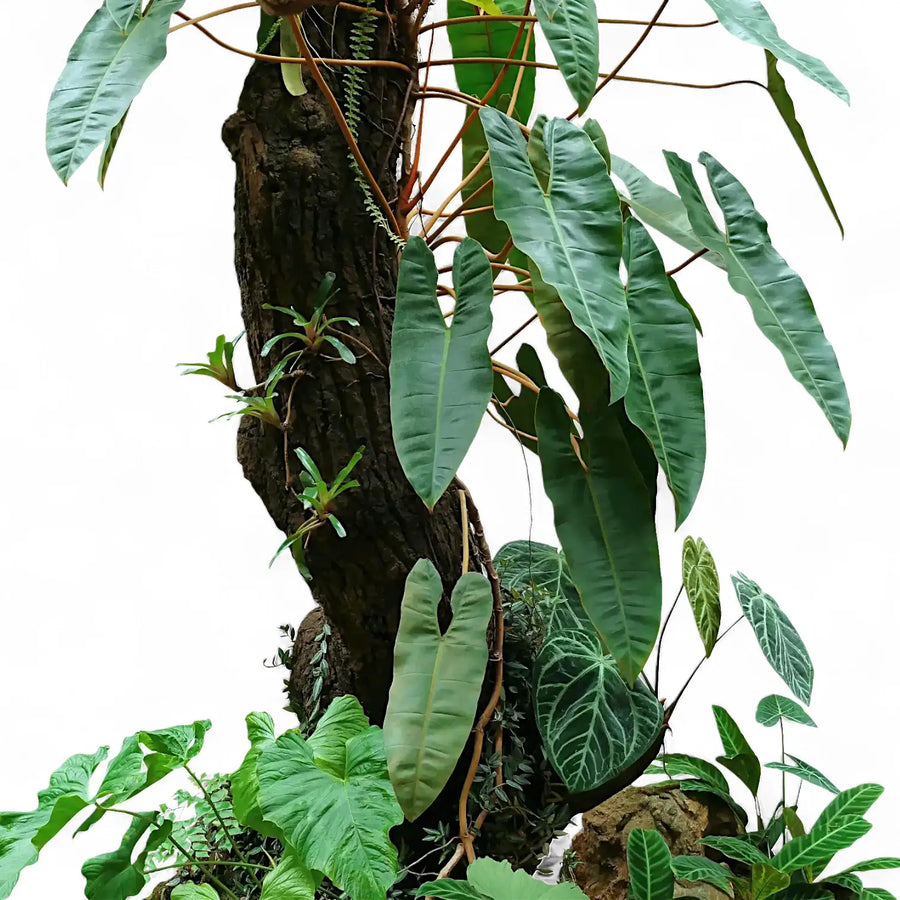
  • Starting ratio: 2 parts Universal Soil, 1 part perlite, 1 part pine bark and ½–1 part Lava Rock Granules.
  • Adjust drier: use the higher lava rock amount when pots stay wet, conditions are cool or airflow is limited.
  • Adjust softer: use the lower mineral amount when your home is warm, dry or the plant has a smaller root system.
  • Reality check: Universal Soil is useful, but universal does not mean suitable for every plant or every setup.
Aroid Substrate Set with coco coir, perlite, pine bark and Lava Rock Granules

Plant group

Aroid Substrate Set

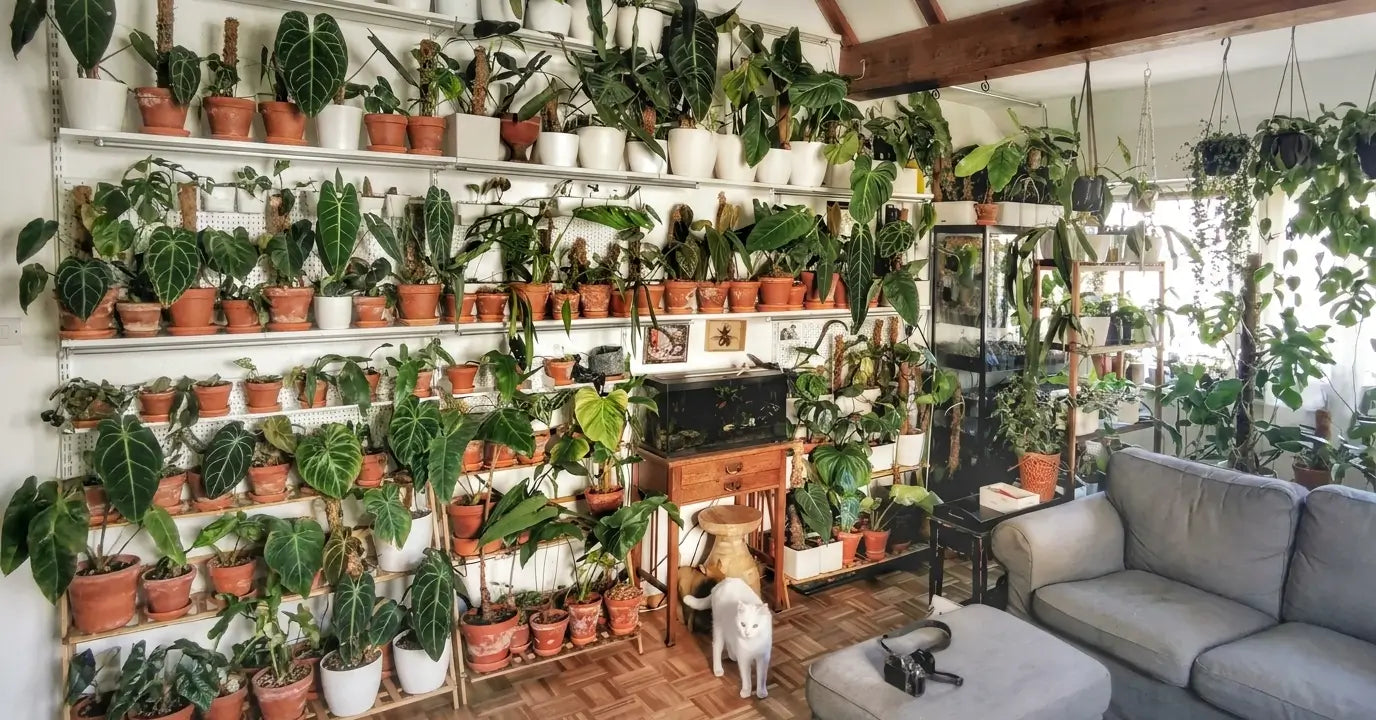
Soil-free set for chunky aroid blends with moisture, structure and open space around roots. Use it for many Monstera, Philodendron, Epipremnum, Syngonium and Anthurium grown in a chunky mix.
  • Includes: coco coir, perlite, pine bark and Lava Rock Granules as separate components.
  • Starting ratio: 2 parts pine bark, 1 part coco coir, 1 part perlite and 1 part Lava Rock Granules.
  • Adjust wetter: add a little more coco coir for finer roots, smaller plants or homes where pots dry too quickly.
  • Adjust chunkier: add more pine bark or Lava Rock Granules for larger plants, thicker roots or slower-drying conditions.
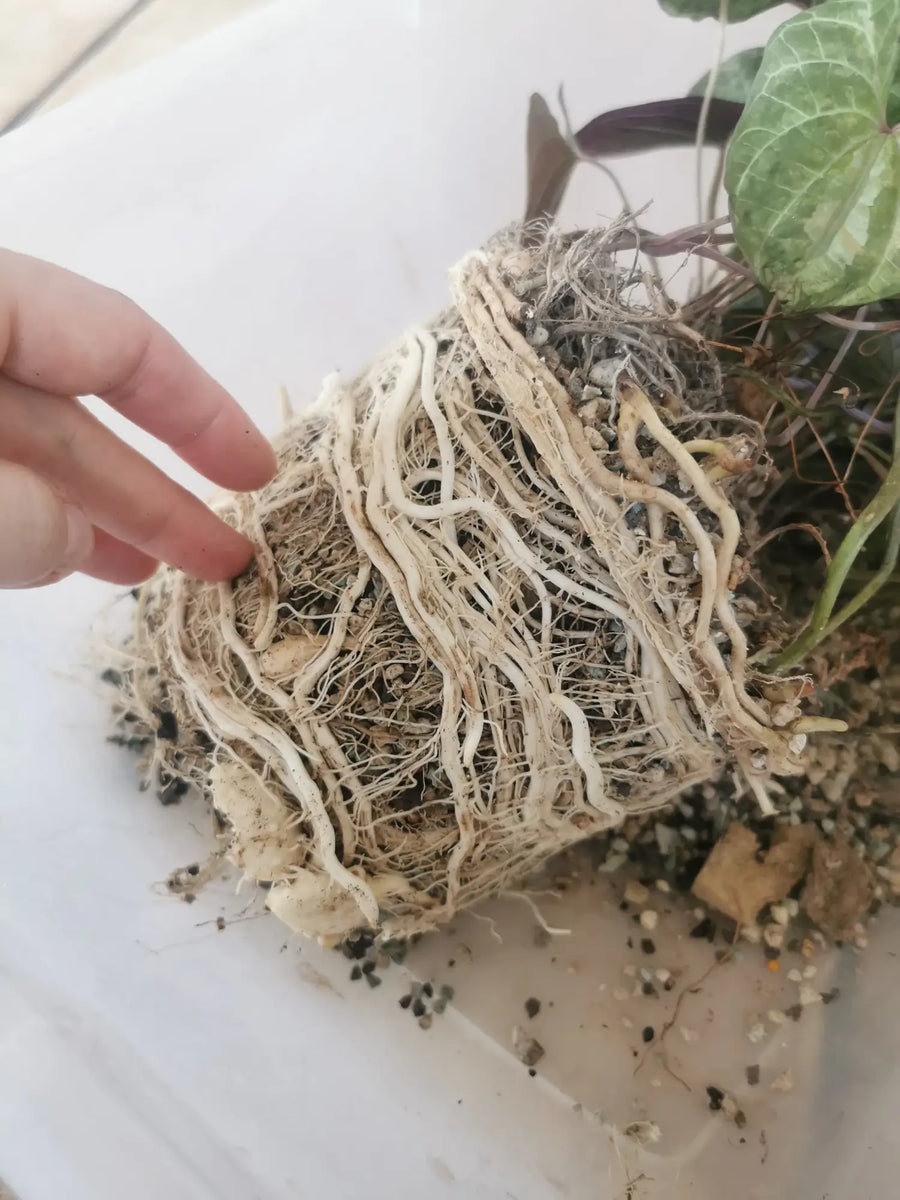
  • Root detail: a small Anthurium seedling and a large Monstera do not need the same texture, even though both are aroids.
Hoya Substrate Set with pine bark, perlite and Lava Rock Granules

Plant group

Hoya Substrate Set

Bark-led set for Hoya plants that prefer an airy, fast-draining root zone. Use it when you want strong structure and faster dry-down without turning the potting mix moisture-heavy.

  • Includes: pine bark, perlite and Lava Rock Granules as separate components.
  • Starting ratio: 2 parts pine bark, 1 part perlite and 1 part Lava Rock Granules.
  • Adjust finer: use a smaller particle balance for small cuttings, small pots or finer root systems.
  • Adjust chunkier: use a coarser balance for established Hoya plants with stronger roots and faster dry-down needs.
  • Important: Hoya plants still need watering and nutrition; a fast-draining mix should not become a permanently dry root zone.
Prayer Plant Substrate Set for Goeppertia, Maranta, Ctenanthe and Stromanthe

Fine-root plants

Prayer Plant Substrate Set

Fine-root set for Calathea/Goeppertia, Maranta, Ctenanthe and Stromanthe that need steady moisture without a heavy, airless pot. The goal is even moisture with enough structure for oxygen around roots.

  • Includes: Seedling & Cutting Soil, coco coir, perlite and vermiculite as separate components.
  • Starting ratio: 2 parts Seedling & Cutting Soil, 1 part coco coir, 1 part perlite and ½ part vermiculite.
  • Adjust wetter: keep the vermiculite amount if pots dry very quickly in a warm, airy space.
  • Adjust drier: reduce vermiculite if pots dry slowly, humidity is high or the plant is in plastic.
  • Moisture cue: the mix should stay evenly moist, not stagnant or constantly wet.
Succulent Substrate Set with Universal Soil, perlite and Lava Rock Granules

Plant group

Succulent Substrate Set

Mineral-leaning set for many common succulents that need a faster-drying base than standard indoor potting soil. Use it for soil-based succulent mixes that need more mineral structure and less moisture hold.

  • Includes: Universal Soil, perlite and Lava Rock Granules as separate components.
  • Starting ratio: 1 part Universal Soil, 1 part perlite and 1–2 parts Lava Rock Granules.
  • Adjust drier: use the higher lava rock amount for plastic pots, cooler spaces or plants that need faster dry-down.
  • Adjust softer: use the lower mineral amount for smaller plants or homes where pots dry very quickly.
  • Species note: very arid species, cactus-heavy pots, Lithops and split rocks may need an even leaner mineral mix.
Propagation Substrate Set for cuttings, plugs, seedlings and young roots

Young plants

Propagation Substrate Set

For cuttings, plugs, seedlings and young roots that need close contact, gentle moisture and enough air. Use it when the root system is still small and a chunky adult mix would dry unevenly around roots.

  • Includes: Seedling & Cutting Soil, perlite and vermiculite as separate components.
  • Starting ratio: 2 parts Seedling & Cutting Soil, 1 part perlite and ½ part vermiculite.
  • Adjust wetter: keep the vermiculite amount for seedlings or plugs that dry quickly.
  • Adjust drier: reduce vermiculite for cuttings that rot easily or propagation setups that already stay humid.
  • Root-stage note: young roots usually need close contact and gentle moisture, not a coarse adult plant mix.
Terrarium Base Substrate Set for closed terrariums and humid planted glass

Closed terrariums

Terrarium Base Substrate Set

Layering set for closed terrariums and humid planted glass. It gives you separate base components for drainage, carbon layer and planting layer.

  • Includes: Lava Rock Granules, activated carbon, Seedling & Cutting Soil and sphagnum moss as separate components.
  • Layering guide: use Lava Rock Granules as the drainage layer, add a thin layer of activated carbon above it, then use Seedling & Cutting Soil as the planting layer.
  • Moisture adjustment: add a small amount of loosened sphagnum moss where extra moisture-holding texture is useful.
  • Watch out for: packing sphagnum too tightly, overwatering the planting layer or using arid plants in closed glass.
  • Use boundary: not for cactus terrariums, succulent terrariums or open arid terrariums.

SUBSTRATE FAQ

Substrate Sets, Ingredients & Potting Mixes FAQ

Clear answers before you choose, mix or adjust a houseplant substrate.

Substrate Sets, ingredients & potting mixes

SUBSTRATE GUIDES

Need more potting mix guidance?

Use these guides for more detail on potting mix structure, root health, plant-group needs, drainage, aeration and semi-hydro growing.

The Complete Aroid Substrate Guide: Match Mix to Roots

The Complete Aroid Substrate Guide: Match Mix to Roots

Most aroids don’t fail from bad light — they fail in the wrong mix. This guide shows how to build root-first substrates for Anthurium, Philodendron, Monstera, Alocasia and other aroids by matching their growth habits and root types to the right structure, moisture retention, and aeration, with practical templates, semi-hydro notes and troubleshooting for compacted or failing mixes.

Drainage ≠ Aeration: Why Pots Still Kill Roots

Drainage ≠ Aeration: Why Pots Still Kill Roots

Most houseplants don’t rot because you “overwatered” once — they rot because their potting mix can’t breathe. This guide breaks down the real physics behind drainage vs aeration, perched water tables, and air-filled porosity, then shows you how to choose ingredients, mixes, and pots that keep roots oxygenated, stable, and growing for the long term.

From Soil to Semi-Hydro: How to Convert Houseplants Safely

From Soil to Semi-Hydro: How to Convert Houseplants Safely

Semi-hydroponics replaces soil with inert mineral substrates and a reservoir-based watering system. This guide covers choosing LECA vs Pon mixes, transitioning plants safely, feeding and flushing, and diagnosing common problems like root rot, yellowing, and droop.