

Aroid Substrate Guide: How to Choose and Adjust Potting Mix
Aroids are often associated with very coarse, “chunky” potting mixes. Coarse particles can add useful structure, while the complete mix determines how water and air move around the roots.
A suitable substrate has to supply water, let oxygen reach the roots after watering and hold its structure as the plant grows. The pot matters too, along with the amount of root in it, the way you water and the conditions around the plant.
As a plant develops more roots and foliage, its water use often changes. Pot material and watering method also influence what happens between one watering and the next.
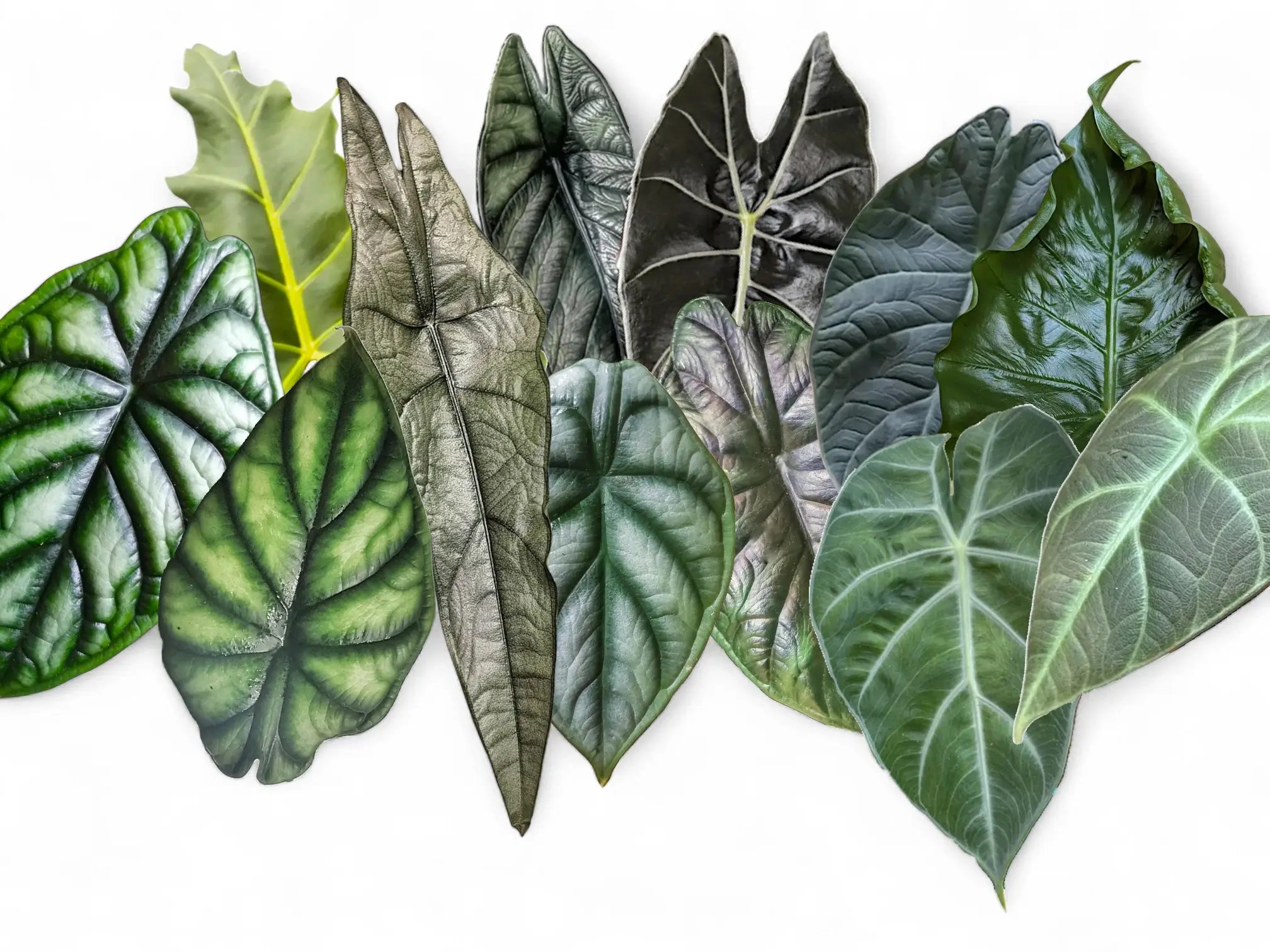
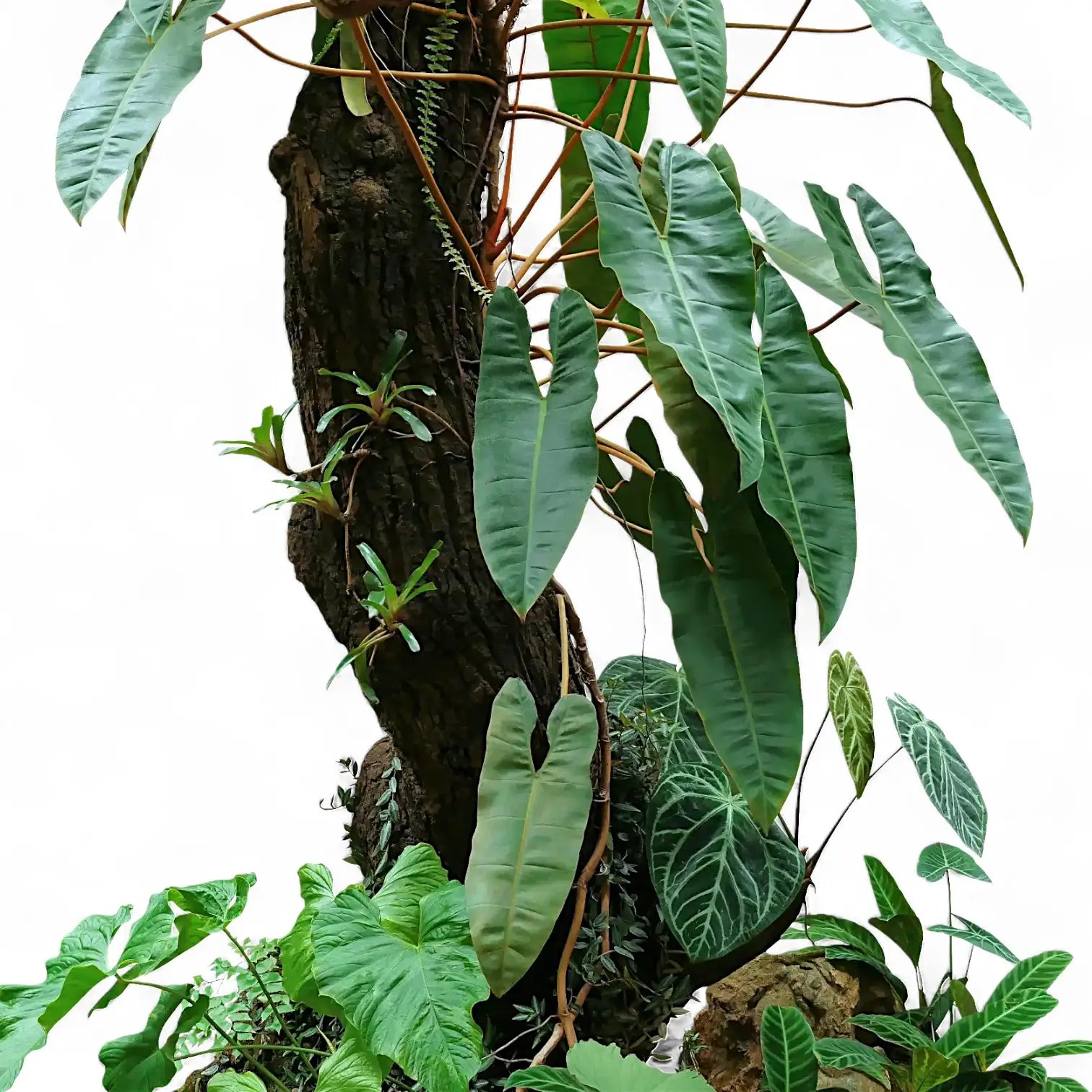
Aroids vary widely in growth habit and habitat. Monstera, Philodendron, Anthurium, Alocasia and other aroids may climb, creep, grow from underground storage structures or occupy very different environments. Those traits can help with decisions such as pot shape, stem position and support. The substrate still needs to suit the roots, pot and way the plant is grown.
Start with the plant, its roots, the substrate around them, the pot and what happens when you water.

What a good aroid root zone needs to do
Supply water the roots can use
A good substrate needs to hold enough water to support the plant between waterings. It also needs to keep supplying that water to the roots as they use it.
A very coarse mix can release excess water quickly and store a limited amount for later use. As a coarse mix dries, water can move less easily from wetter parts of the pot towards the roots. Moisture may still be present elsewhere while the roots have limited access to it.
Particle size changes how much water a material holds and how easily water moves through it.
The mix also needs to wet evenly.
Some organic substrates become difficult to wet evenly again after becoming very dry. Water may run down gaps at the edge of the pot or follow established channels while parts of the root ball remain dry. You can water until liquid leaves the drainage holes and still have dry pockets around the roots.
Fast runoff shows that water found a quick route through the pot. Check the centre of the root ball as well so you know the roots actually received water.
Let oxygen reach the roots after watering
Roots need oxygen to function normally. After watering, some of the spaces in a substrate contain water and some contain air. As roots use water and the substrate begins to dry, more of those spaces fill with air again.
Large particles can create bigger spaces. Fine material can settle between them, roots occupy spaces as they grow, and water temporarily fills air spaces after watering. Air also needs connected spaces through the wet mix so oxygen can move through the whole root ball.
For home care, practical observations are the clearest guide. A good root zone wets evenly and dries at a fairly consistent pace when the plant and conditions stay similar.
Keep a workable structure
Potting mix changes while a plant grows in it.
Fine particles can move and settle. Organic materials slowly break down. Roots spread through the available spaces. Some substrates shrink after drying, and repeated watering changes how particles sit together.
These changes are normal parts of container growing.
They become important when water starts moving through the pot differently. A root ball may stop taking up water evenly, remain moist for much longer under similar conditions or settle enough that water begins taking new routes through it.
Use these changes to decide when fresh substrate would help. A mix that continues to wet evenly and provides suitable water and air can stay in use.

Start with the plant, roots and pot you have
Look at the roots and existing substrate
The amount of root in the pot has a large effect on water use.
When only a small root system occupies a large pot, the stored water may be used slowly and the substrate can remain moist for longer. As roots spread through the pot and the plant develops more foliage, water use often increases.
When you have a reason to inspect the roots, look at the condition of the whole root system. Healthy roots vary in colour between species and growing methods, so colour gives only part of the picture. Firm living roots and intact growing tips are useful signs. Soft, collapsing or extensively deteriorating roots deserve closer investigation.
Also look at the substrate already around them.
Many nursery-grown aroids arrive in fine peat- or coir-based media. Healthy plants can grow well in these materials when pot size, watering and nutrition suit the roots.
After repotting, the original root ball and fresh surrounding mix may wet and dry at different rates. Pay particular attention when the old and new materials have very different textures.

Notice how the plant occupies the pot
Growth habit matters when it changes how the plant sits in the container or how much water it uses.
Creeping Philodendron and similar plants produce stems that travel horizontally. Give the stem enough surface area to continue growing naturally across the pot.
Climbing Monstera, Epipremnum and many Philodendron often benefit from suitable support above the substrate. Their buried roots still need a mix chosen for conditions inside the pot.

Some aroids have underground storage structures and go through periods of faster and slower growth. As growth slows or leaf area decreases, water use can fall sharply. The same pot may then remain moist for longer even though the substrate itself has barely changed.

Water use also varies widely among aroids. In a controlled study, Alocasia ‘Bambino’ grew strongly with a consistently moist root zone.1 Use the plant and how quickly its root zone dries to decide how often to water.
Consider the pot and watering system
Pot size and shape affect how water is stored and distributed through the substrate.
Pot depth affects where water is held in the mix. The amount of space available for the roots also affects growth.2 Choose a container that gives the existing roots room to continue growing while keeping the amount of mix around them suited to the plant’s water use.
Pot material affects drying too. Unglazed terracotta allows evaporation through the pot wall. Plastic and glazed pots largely prevent evaporation through the wall. This changes how quickly water leaves the container.
Watering method changes water movement as well. Top watering, bottom watering and reservoir systems each supply the root zone in their own way. In a self-watering pot, watch how long the mix stays moist when water remains available from the reservoir and adjust care from there.
In an ordinary pot, excess irrigation water needs a clear way out of the container. Drainage holes provide that route. A layer of coarse material at the bottom serves a separate purpose.
Watch what happens in the root zone
Watering shows you what is happening around the roots.
Watch what happens when you water
When you water, notice whether:
- water soaks across the surface and through the root ball;
- water pools on the surface before disappearing through one area;
- water travels along a gap between the substrate and pot wall;
- some parts of the root ball remain dry after watering;
- water reaches the drainage holes very quickly.
When water exits almost immediately, check the centre of the pot. Very dry organic substrate can shrink away from the pot or resist taking up water again, allowing water to bypass areas around the roots.
After repotting, check both the original root ball and the fresh substrate around it. The outer layer may feel dry enough to water again while the older centre is still moist. The centre can also stay relatively dry after water has moved readily through the fresh material.
For more detail on watering technique, watering a dry root ball evenly and water quality, see our watering houseplants guide.
Watch what happens between waterings
Once the root ball has been watered evenly, learn how quickly it usually dries.
Pot weight is useful because it gives you a simple sense of how much water remains. Learn how the same pot feels when freshly watered, partway through its drying cycle and approaching its next watering.
Check below the surface as well. The top layer can dry while the centre still contains plenty of moisture.
A noticeable change in drying time often tells you that something else has changed.
A pot that suddenly stays heavy much longer may be using less water because light levels dropped, temperatures changed, growth slowed or the plant lost leaves. The substrate itself may still be physically unchanged.
As the plant grows, the same pot may begin drying faster. A larger leaf area and fuller root system can increase water use substantially.
Moisture-meter readings depend on the substrate and where the probe is placed.3 Use the reading as one clue alongside pot weight, watering history and what you observe in the root ball.
Decide what needs changing
A change in the plant can have several causes. Check the whole plant and pot before deciding what needs attention.
| What you notice | What could be happening around the roots | What else to check |
|---|---|---|
| Water runs quickly down the sides | Shrinkage, dry water-repellent areas or established channels | Check whether the centre became evenly wet |
| Parts of the root ball stay dry | Uneven wetting or very different substrate zones | Water more slowly and check more than one area |
| The pot stays wet much longer than usual | Lower plant water use, a large pot for the current root system, changed structure or deteriorating roots | Light, temperature, leaf loss, growth rate and watering frequency |
| The pot dries much faster than before | Larger root system, greater water demand, a mix that holds little water or uneven wetting | Plant size, temperature, light, pot material and actual wetting |
| The mix has sunk noticeably | Settling, breakdown or shrinkage | Check whether its drying time has changed too |
| Fungus gnats are present | Moist organic material is supporting larvae | Assess the roots separately |
| Leaves are yellowing | Root stress is one possibility | Light, watering history, nutrition, pests, temperature and normal leaf ageing |
| Roots are deteriorating | Roots may be damaged by low oxygen, physical injury or disease | Inspect the roots and surrounding medium before choosing a treatment |
| The root zone smells unusual | Decaying organic material or damaged roots may be present | Inspect the roots and substrate more closely |
Roots can be damaged when too little oxygen reaches them. Fungi and other pathogens can also damage roots, and the visible symptoms can look similar. Fungal root and leaf-stalk rot is documented in Spathiphyllum.9 Look at the roots, substrate, growing conditions and signs of tissue decay together when deciding what is happening.
For detailed root-rot diagnosis and treatment, see our root-rot guide.

Water bypasses parts of the root ball
When water bypasses parts of the mix, water slowly across the whole surface and give a very dry mix time to absorb the first pass. If the substrate has pulled away from the pot wall, direct water towards the centre so it reaches the root ball. If dry pockets or channels keep returning, the substrate itself may need replacing.
The root zone dries too quickly
Frequent watering can have several causes.
A large, actively growing plant with roots throughout the pot can use water quickly. Warm temperatures, bright conditions and porous terracotta can shorten the time between waterings as well.
Check these factors first.
When the substrate itself supplies too little water for the plant and conditions, choose a mix that holds enough water between waterings while still leaving air around the roots.
The root zone stays wet much longer than expected
Start with the plant’s current water use.
Lower light, cooler conditions, reduced leaf area and slower growth can all lengthen the time between waterings. Continuing the previous watering schedule can then leave the substrate moist for longer.
Pot size matters too. When a small root system sits in a large volume of substrate, the stored water may be used slowly.
After checking light, temperature, current growth and the amount of root in the pot, inspect the substrate itself. The mix may have settled, crumbled into finer particles or changed enough to hold water differently.
When the substrate is contributing to the problem, choose a pot and mix that suit the roots you have and the amount of water the plant uses.
The pot has become hard to water
Repotting may help when roots fill the pot, the mix no longer wets evenly or the plant has run out of suitable room.
The roots may fill most of the available space. The substrate may have settled enough to make watering unreliable. A creeping stem may have reached the edge of a pot that no longer gives it room to continue naturally.
Use the roots, pot and drying time together when deciding whether to repot.
Roots appearing from a drainage hole show that the root system has reached that part of the container. Check how much of the pot is occupied, how easily you can water it and whether the plant has enough room to continue growing.
Replace older substrate when it has lost useful structure, become difficult to wet evenly or started making consistent watering difficult.
Choose a substrate for the plant and pot
Once you know what needs changing, ingredient choices become much easier.
You can use a suitable ready-made substrate or mix your own. In either case, judge the finished mix by how evenly it wets, how much water it holds and whether it stays open around the roots.

| Material | What it can contribute | What varies between products |
|---|---|---|
| Peat and coir | Store and distribute water through the mix | Particle size, processing, salt content, compression and how easily the material takes up water again |
| Bark | Adds larger structural particles and can help the mix retain its shape | Particle size, amount of fine material, processing and ageing |
| Perlite and pumice | Change the spaces in the mix, its weight and how it holds water | Particle size, grade and amount used |
| Compost and vermicompost | Add organic material and nutrients | Maturity, nutrient content, salt levels and texture |
For a wider overview of container-substrate materials and their properties, see our general houseplant substrate guide.
Ready-made mix or your own blend?
A good ready-made houseplant mix can work well for an aroid.
Commercial potting mixes vary in their physical and chemical properties.4 Use the product label to understand its ingredients, then watch how the mix performs in your pot. A suitable product should wet evenly, supply enough water for the plant and hold its structure during use.
If the mix wets evenly, holds enough water and keeps its structure, use it as supplied.
For a simple DIY starting point, begin with a suitable peat- or coir-based potting mix. Add bark, perlite or pumice when you need to change how much water the mix holds, how evenly it takes up water again or how well it keeps its structure. Use only the ingredients that serve a clear purpose in that pot.
Choose each ingredient for the property you want to change in the finished mix.

Peat- and coir-based materials
Peat and coir are commonly used as the finer, water-retentive part of container substrates. They help store water and spread it through the root ball.
Coir varies between products in particle size, salt content and nutrient content.5 Processing also affects the finished material.
Choose horticultural-grade coir from a reliable supplier, especially when it will form a large part of the substrate. Product information about washing and buffering—a treatment used to improve the coir’s mineral balance—can help you understand how the material was prepared.
Coir-based media have supported healthy growth in Spathiphyllum and Anthurium when irrigation and nutrition were managed for those growing conditions.6, 7 Coir can therefore form a large part of a conventional substrate when its grade and care suit the plant.
Peat also varies with grade, how broken down it is, how tightly it has been compressed and what it is mixed with. Judge a peat-based substrate by how evenly it wets, how long it supplies the plant with water and whether it keeps its structure in the pot.
Bark
Bark adds larger structural particles to a substrate.
Fine bark particles change how much water the mix holds and how much space remains between particles. Larger pieces can help the substrate resist settling.
Choose horticultural-grade bark with a particle size suited to the container. In a small pot, the mix still needs enough contact between particles for water to spread through the root ball evenly.
Fresh woody materials can affect nitrogen availability while microorganisms break them down. Horticultural bark is graded and prepared for container growing, making it easier to use consistently.
Bark is useful when it helps the mix stay open and lets water spread evenly through the root ball.
Perlite and pumice
Perlite and pumice can change the weight of a mix, the spaces between particles and the way water moves through it.
Particle size affects how much water these materials hold and the size of the spaces they create in the mix.
Perlite is very light and can reduce the overall weight of a substrate. Pumice adds more weight and can help stabilise a pot.
Particle size, the amount you use and the rest of the mix all affect the result.
Optional compost or vermicompost
Mature compost and vermicompost can add organic material and nutrients.
Their composition varies considerably. Some products contain enough nutrients or dissolved salts to change how the plant should be fertilised.
Compost also contains living microbes. Their effects vary with the compost, plant and other organisms present, so choose compost for its known physical and nutritional properties.
For indoor aroids, compost or vermicompost is optional. When you use either, choose a mature horticultural product and account for the nutrients it already provides when you fertilise.
If a plant develops yellow leaves or slows down, identify the cause before adding more nutrient-bearing material.
Aim for a mix that wets evenly, provides enough water for the plant, leaves air around the roots after watering and holds its structure during normal use.
Shop substrates and growing media
When handling dry materials, avoid creating clouds of dust. Lightly dampening very dusty ingredients before mixing can make them easier to handle.
Repot and change substrates carefully
Repotting changes the relationship between roots, substrate and container. It can also place old and new media beside each other, where they may absorb and release water at different rates.
Protect healthy roots and change only as much as the situation requires.
When repotting is actually useful
Repotting makes sense when there is a clear practical reason, such as:
- the roots need more room to continue growing;
- the current pot no longer suits the plant’s growth habit;
- the substrate has changed enough to make watering consistently difficult;
- the root ball repeatedly fails to wet evenly;
- a root or disease problem requires closer inspection and removal of damaged material.
A healthy plant that is growing well and remains easy to water can stay in its current substrate.
Choose the next pot
Choose the new container before disturbing the root ball.
Give the roots enough room for continued growth and keep the amount of fresh substrate in proportion to the root system.
When roots densely fill the current container and the plant needs room to continue growing, choose a new pot with some fresh space around the root ball.
Pot depth affects how water is held through the substrate, and creeping plants may need enough horizontal space for continued stem growth.

How much old substrate should you remove?
Leave healthy roots and firmly attached substrate largely intact during a routine repot.
Remove loose material gently where it comes away easily. If outer roots are densely congested, loosen them carefully where needed and preserve healthy root tissue.
More old substrate may need to come away when the material around the roots is causing the problem. Substrate that has badly broken down, areas that repeatedly stay dry after watering and deteriorating roots that need inspection are good reasons for removing more material.
Any original root ball left in place may handle water differently from the fresh material around it. Check both areas during the first watering cycles. The outer mix may feel dry enough to water again while the centre is still moist. The centre can also stay relatively dry after water has moved readily through the fresh substrate.
Do you need a drainage layer?
A separate layer of gravel, clay pebbles or another coarse material at the bottom of an ordinary houseplant pot is optional.
Coarse bottom layers produced lower or similar water retention in the tested pots and mixes.8 The study measured water retention; plant growth would need separate testing.
Focus on the substrate around the roots and a clear route for excess irrigation water to leave the container.
Reusing old substrate
Substrate from a healthy plant can sometimes be used again if it still holds its structure, wets evenly and suits the next plant.
Used mix may contain old roots, finer decomposed particles and fertiliser left from the previous plant. Check its condition before using it again.
For a plant with suspected infectious root disease, use fresh substrate and discard the old material. This keeps potentially contaminated material away from another plant.
What to watch after repotting
The first few waterings show how the original root ball and fresh substrate are drying together.
Make sure the root ball wets properly, then check how quickly the centre and outer mix dry over the next few waterings. Pay particular attention when a substantial part of the original root ball remains intact because the centre and outer substrate may dry at different rates.
Water demand can also change as new roots grow into the fresh substrate.
Give the plant and pot a few watering cycles before making another major change. Check whether the centre and outer mix are drying more evenly and whether the plant is using water at a steady rate.
Keep the root zone working over time
The roots and substrate around them keep changing after the plant settles into its pot. Water, fertiliser, root growth and the surrounding conditions all influence what happens there.
Water and fertiliser change the root zone over time
Irrigation water brings dissolved minerals into the substrate.
Water with high alkalinity can gradually raise substrate pH when used repeatedly. Hardness and alkalinity describe different properties of water. If substrate pH keeps rising over time, alkalinity is the useful number to look for in your water report.
Different fertilisers can gradually raise or lower substrate pH. Fertiliser salts can also build up when they enter the pot faster than the plant uses them or watering carries them out.
The substrate affects how nutrients and dissolved minerals are held around the roots. The same fertilising routine can therefore create different conditions around the roots in peat, coir, bark-rich and compost-amended substrates.
Irrigation method also affects nutrient movement and plant response. Spathiphyllum ‘Sensation’ has shown different nitrogen responses under different growing media and irrigation methods.6
Electrical conductivity (EC) is a way of estimating the amount of dissolved salts in the water held in the substrate. If you measure EC, interpret the reading using the testing method, substrate and growing system involved.
For a fuller explanation of fertilisers, substrate chemistry and salt build-up, see our houseplant fertiliser guide.
Reassess when the plant or conditions change
A substrate that was easy to water several months ago may need a different routine later even when the mix itself has changed very little.
The plant may have grown substantially. Its roots may now occupy most of the container. Changes in light and temperature can alter water use, and temperature around the roots also affects root activity.
When the pot starts drying at a different rate, check:
- the size and condition of the plant;
- how much of the pot contains roots;
- current light and temperature;
- how much and how often you water;
- whether the substrate has settled or changed;
- whether the pot or watering method has changed.
Aroid substrate questions
Can I grow an aroid in coco coir?
Yes. Coir-based substrates can work well when the grade, watering and nutrition suit the plant.
Coir-based cultivation has supported healthy Spathiphyllum and Anthurium.6, 7 Choose horticultural-grade material from a reliable source, particularly when coir will make up most of the substrate, and adjust fertilising to suit it.
Can I use orchid mix for an aroid?
It depends on what is in the product.
Some orchid mixes are based mainly on coarse bark. Others include coir, peat, perlite or other materials. Check the ingredient list and how much water the finished product supplies in your pot.
Orchid mix can be useful as one component when its bark or other coarse material gives the substrate the structure you need.
Can I use normal houseplant potting mix?
Yes.
A good general houseplant mix can be a suitable starting substrate. Check how the product wets, how long it remains moist in your pot and how well it keeps its structure.
Add other materials when you have a specific property to change.
Can I use garden soil in a pot?
Purpose-made container substrates are designed to balance water and air in pots.
Ordinary mineral garden soil can settle and hold water in ways that depend strongly on the soil itself. Mixing it casually with lightweight potting materials also makes the final result difficult to predict.
For most indoor aroids, a substrate designed for container growing gives you a reliable starting point.
Do aroids need a chunky mix?
Aroids need a root zone that supplies enough water, leaves air around the roots after watering and keeps a stable structure.
Large particles can contribute to that structure. The useful amount depends on the complete mix, the pot and the plant.
Can I use a self-watering pot for an aroid?
Yes, when the plant and substrate suit that watering system.
A reservoir changes how water is supplied to the root zone. Watch how long the mix stays moist after the switch and adjust the substrate and watering routine from there.
Our self-watering pot guide covers reservoir pots, suitable substrates and common problems in more detail.
Can aroids grow in LECA or pon?
Some commonly grown aroids can be cultivated in mineral or semi-hydro systems.
LECA and pon are part of a different way of growing, with their own watering and feeding routine.
For guidance on mineral substrates, see our semi-hydro substrate guide. For moving an established plant from potting mix into a reservoir system, use our soil-to-semi-hydro transition guide.
What should I use if I do not know which aroid I have?
Start with a good-quality container substrate that wets evenly, supplies water at a sensible rate and keeps its structure in the pot.
Watch how the plant and root zone respond. Identification matters more when the plant has a specialised growth habit, clear periods of faster and slower growth or other needs that affect how it grows in a pot.
Conclusion
A good aroid substrate works because the plant, roots, pot, water and materials suit one another.
Watch what happens around the roots before changing the mix. Use ingredients to correct a real need, choose a pot that suits the roots you have and preserve healthy roots when you repot.
A suitable mix keeps watering predictable and supports healthy root growth in your actual growing conditions.
References and further reading
- Hsieh, C.-W. & Yeh, D.-M. (2025). Effects of Substrate Volumetric Water Content, Nutrient Solution Concentration, and Irrigation Method on Growth and Photosynthesis of Alocasia. HortScience, 60, 1372–1378. Direct cultivation work on substrate moisture, irrigation method and nutrition in Alocasia ‘Bambino’. Source
- Poorter, H., Bühler, J., van Dusschoten, D., Climent, J. & Postma, J.A. (2012). Pot size matters: a meta-analysis of the effects of rooting volume on plant growth. Functional Plant Biology, 39, 839–850. A large analysis of rooting-volume effects on plant growth. Source
- van Iersel, M.W., Chappell, M. & Lea-Cox, J.D. (2013). Sensors for Improved Efficiency of Irrigation in Greenhouse and Nursery Production. HortTechnology, 23, 735–746. A review of substrate-moisture sensing and the factors affecting interpretation of sensor readings. Source
- Clark, M.J. & Zheng, Y. (2020). Evaluation of Nine Canadian Retail Consumer Potting Mixes for Growing Container Plants. HortTechnology, 30, 88–95. A comparison of the physical and chemical properties of retail potting mixes. Source
- Abad, M., Noguera, P., Puchades, R., Maquieira, A. & Noguera, V. (2002). Physico-chemical and chemical properties of some coconut coir dusts for use as a peat substitute for containerised ornamental plants. Bioresource Technology, 82, 241–245. A comparison of coir materials from different sources and processing backgrounds. Source
- Mak, A.T.Y. & Yeh, D.-M. (2001). Nitrogen Nutrition of Spathiphyllum ‘Sensation’ Grown in Sphagnum Peat- and Coir-based Media with Two Irrigation Methods. HortScience, 36, 645–649. Research on growing medium, irrigation method and nitrogen supply in Spathiphyllum ‘Sensation’. Source
- Gasparini, A.R. & Souza, C.F. (2026). Reclaimed water combined with targeted nutrient management improves water and fertilizer use efficiency in greenhouse cultivation of Anthurium andraeanum. Agricultural Water Management, 330, 110401. A two-year soilless Anthurium study using coconut-fibre substrate and managed irrigation and nutrition. Source
- Rowe, A. (2025). Effect of drainage layers on water retention of potting media in containers. PLOS ONE, 20, e0318716. Experimental work on coarse bottom layers and water retention in several container-media combinations. Source
- Schoch, C.L. & Crous, P.W. (1999). First report of Cylindrocladium root and petiole rot of Spathiphyllum in South Africa. South African Journal of Botany, 65, 208–211. The pathogen was isolated from commercially cultivated Spathiphyllum and confirmed as the cause of root and petiole rot. Source
Growing-media physics and material behaviour
- Handreck, K.A. (1983). Particle size and the physical properties of growing media for containers. Communications in Soil Science and Plant Analysis, 14, 209–222. Experimental work on particle-size distribution, air-filled porosity and water supply in container media. Source
- Michel, J.-C. (2009). Physical Properties of Growing Media: State of the Art and Future Challenges. Acta Horticulturae, 819, 65–72. Review covering water retention, water movement, gas movement and changes in substrate properties during cultivation. Source
- Michel, J.-C. (2015). Wettability of Organic Growing Media Used in Horticulture: A Review. Vadose Zone Journal, 14. Review of hydrophobicity, preferential flow and rewetting in organic horticultural substrates. Source
- Caron, J. & Michel, J.-C. (2017). Overcoming physical limitations in alternative growing media with and without peat. Acta Horticulturae, 1168. Review of water availability, aeration, wettability, particle size and gas diffusivity in growing media. Source
- Lee, K.-S., Lee, D.-S., Lim, C.-S., Lee, S.-P., Yang, J.-E. & Chung, D.-Y. (2022). Water Retention Characteristics of Various Sizes of Expanded Perlite Produced from Two Different Types of Rocks. Horticulturae, 8, 805. Experimental work on particle-size effects in horticultural perlite. Source
- Schabauer, J., Streit, E., Korjenic, A., Peterková, J., Zach, J. & Sulejmanovski, A. (2026). Water Retention and Evaporation Dynamics of Mineral Growing Media for Indoor Horticulture Systems. Horticulturae, 12, 501. Comparative work on mineral substrates, particle size and water behaviour. Source
Containers, layering and changing root zones
- Criscione, K.S., Fields, J.S., Owen, J.S. Jr., Fultz, L. & Bush, E. (2022). Evaluating Stratified Substrates Effect on Containerized Crop Growth under Varied Irrigation Strategies. HortScience, 57, 400–413. Research on water distribution and irrigation behaviour in containers with distinct substrate layers. Source
- Heller, H., Bar-Tal, A., Assouline, S., Narkis, K., Suryano, S., de la Forge, A., Barak, M., Alon, H., Bruner, M., Cohen, S. & Tsohar, D. (2015). The effects of container geometry on water and heat regimes in soilless culture: lettuce as a case study. Irrigation Science, 33, 53–65. Experimental work on container dimensions, substrate water and temperature. Source
- Ingram, D.L., Ruter, J.M. & Martin, C.A. (2015). Review: Characterization and Impact of Supraoptimal Root-zone Temperatures in Container-grown Plants. HortScience, 50, 530–539. Review of root-zone temperature effects in container-grown plants. Source
Chemistry, reuse and root health
- Johnson, C.N., Fisher, P.R., Huang, J., Yeager, T.H., Obreza, T.A., Vetanovetz, R.P., Argo, W.R. & Bishko, A.J. (2013). Effect of fertilizer potential acidity and nitrogen form on the pH response in a peat-based substrate with three floricultural species. Scientia Horticulturae, 162, 135–143. Experimental work on fertiliser formulation, nitrogen form and container-substrate pH. Source
- Vandecasteele, B., Claerbout, J., Denaeghel, H. & Craeye, S. (2024). The repeatability of reusing peat as horticultural substrate and the role of fertigation for optimal reuse. Waste Management, 190, 296–305. Commercial trials on repeated reuse of spent horticultural substrate and its remaining physical and nutrient properties. Source
- Vandecasteele, B., Blindeman, L., Amery, F., Pieters, C., Ommeslag, S., Van Loo, K., De Tender, C. & Debode, J. (2020). Grow – Store – Steam – Re-peat: Reuse of spent growing media for circular cultivation of Chrysanthemum. Journal of Cleaner Production, 276, 124128. Research on residual nutrients, substrate reuse and controlled steam sanitation. Source
Aroid cultivation and root biology
- Singleton, P., Lichty, J. & Kim, H.J. (2014). Anthurium productivity is limited by water and nutrient availability in volcanic cinder medium. Acta Horticulturae, 1037, 445–450. Anthurium grown in coarse volcanic cinder showed increased water uptake and yield when water was made more readily available, illustrating the importance of water supply in freely draining media. Source
- Sheeran, L. & Rasmussen, A. (2023). Aerial roots elevate indoor plant health: Physiological and morphological responses of three high-humidity adapted Araceae species to indoor humidity levels. Plant, Cell & Environment, 46, 1873–1884. Research on aerial and soil-root nutrient uptake in three commonly grown aroids and the effects of humidity on root and plant growth. Source
- Werner, J.C., Albach, D.C., Can, L. & Zotz, G. (2024). The Velamen Radicum Is Common in the Genus Anthurium, Both in the Epiphytic and Terrestrial Species. Diversity, 16, 18. A broad survey of velamen across terrestrial and epiphytic Anthurium. Source


Leave a comment