

Aroid Plants: Araceae, Growth Forms and Care
Aroid plants are easy to recognize in homes: Monstera, Philodendron, Anthurium, Alocasia, Epipremnum, Syngonium, Spathiphyllum, Aglaonema, Dieffenbachia and Zamioculcas all belong here. They sit inside Araceae, the aroid or arum family. The same family also includes edible root crops, aquarium plants, streamside species, temperate woodland plants, giant heat-producing inflorescences and duckweeds, some of the smallest flowering plants on Earth.
That range matters for indoor growing. A climbing Monstera, a crawling Philodendron, a tuberous Alocasia, swamp-grown taro and aquarium-grown Cryptocoryne are all aroid plants, but their roots do different jobs. Some climb, some creep, some store energy underground, and some belong in water. Care starts with the plant’s structure, not with the family name alone.
The easiest way to understand aroids is to connect their structure with the places they grow and the way their roots behave indoors.

Araceae Family Snapshot
| Feature | Details |
|---|---|
| Family | Araceae |
| Common names | Aroids, arum family |
| Order | Alismatales |
| Scale | About 151 accepted genera in POWO. The 2025 IAS Überlist records 4,604 currently accepted species and 8,453 anticipated species under its specialist aroid treatment. |
| Distribution | Worldwide except Antarctica, with the highest diversity in tropical regions |
| Main diversity regions | Tropical Central and South America, Southeast Asia, New Guinea and tropical Africa |
| Typical defining structure | A spadix associated with a spathe, with the structure extremely reduced in duckweeds |
| Growth forms | Climbers, crawlers, terrestrials, epiphytes, lithophytes, aquatics, rheophytes, geophytes and free-floating duckweeds |
| Human relevance | Houseplants, food crops, aquarium plants, culturally important species, research plants and conservation-sensitive plants |
Araceae is not a style category for tropical-looking leaves. It is a botanical family with very different plant bodies. Members of the family climb trees, root in forest soil, rest underground during dry seasons, live in flowing streams or float as tiny green plants on still water. That is why care advice works best when it starts with growth form, not just the word “aroid.”
What Makes an Aroid an Aroid?
Most aroids are recognized by their inflorescence: a spadix paired with a spathe. This structure is easy to see in Anthurium, Spathiphyllum, Zantedeschia, Arum and Amorphophallus. Duckweeds also belong inside Araceae, but their plant bodies and flowers are so reduced that they do not resemble familiar houseplant aroids.
Spadix and spathe
The spadix is a fleshy spike carrying many tiny flowers. In some aroids, these flowers are arranged in clear zones, with female flowers lower down, male flowers above and sterile flowers between or around them. In other aroids, the arrangement is less visibly divided.
The spathe is a modified bract connected with the spadix. It may wrap around the flowers, open like a hood, form a chamber, protect the young inflorescence or guide pollinators. In peace lilies and flamingo flowers, the showy “flower” people notice is really the full spathe-and-spadix structure.

Duckweeds and reduced aroids
Duckweeds sit inside Araceae in modern classification. Genera such as Lemna, Spirodela and Wolffia are tiny free-floating aquatics with highly reduced bodies and flowers. Their placement keeps the definition accurate: the spadix-and-spathe structure is typical for aroids, but it is not equally visible across the whole family.
Other shared traits
Aroids are monocots, the same broad flowering-plant group that includes orchids, palms and grasses. Many produce adventitious roots, which means roots can grow from stems or nodes instead of only from the plant base. That root flexibility is central to climbing, creeping and epiphytic aroids.
Many aroids also contain calcium oxalate crystals called raphides. These needle-like crystals defend the plant and can irritate the mouth, throat, stomach, skin or eyes when plant tissue is chewed, swallowed or when sap reaches sensitive areas. Sap differs across the family: some aroids produce watery sap or mucilage, and some have latex-producing tissues, but milky latex is not universal in Araceae.
In a pot: Monstera, peace lily, taro, duckweed and Amorphophallus can all sit inside the same family while needing very different care.
Evolution and Classification
Araceae is an old monocot family with deep Cretaceous roots. The family began diversifying long before today’s houseplant genera became familiar in cultivation. That long history gave aroids time to occupy forests, wetlands, streams, rocky habitats and seasonally dry landscapes.
Classification has also changed. Duckweeds were once separated as Lemnaceae, but modern classification places them inside Araceae. DNA work has clarified relationships that leaf shape alone could not explain. In this family, similar-looking plants are not always close relatives, and close relatives can look very different after adapting to different habitats.
Leaf shape can help with identification, but it rarely tells the whole story. A heart-shaped leaf, an arrow-shaped leaf or a split leaf may point in the right direction; roots, stems, growth habit and flowering structure usually give the stronger clues.
Aroid Anatomy: Leaves, Roots, Stems and Storage Organs
Aroid diversity becomes easier to understand when the plant is read through its structure. Leaves show light and maturity patterns. Roots reveal whether the plant climbs, anchors, stores energy or expects wet ground. Stems and storage organs explain why some aroids spread sideways, climb upward or disappear underground for part of the year.
Leaves: shape changes with habitat and maturity
Aroid leaves range from small and simple to enormous, split, peltate, velvety, leathery, strap-like, arrow-shaped or heart-shaped. These shapes are linked to habitat, light, water movement, plant age and growth form.
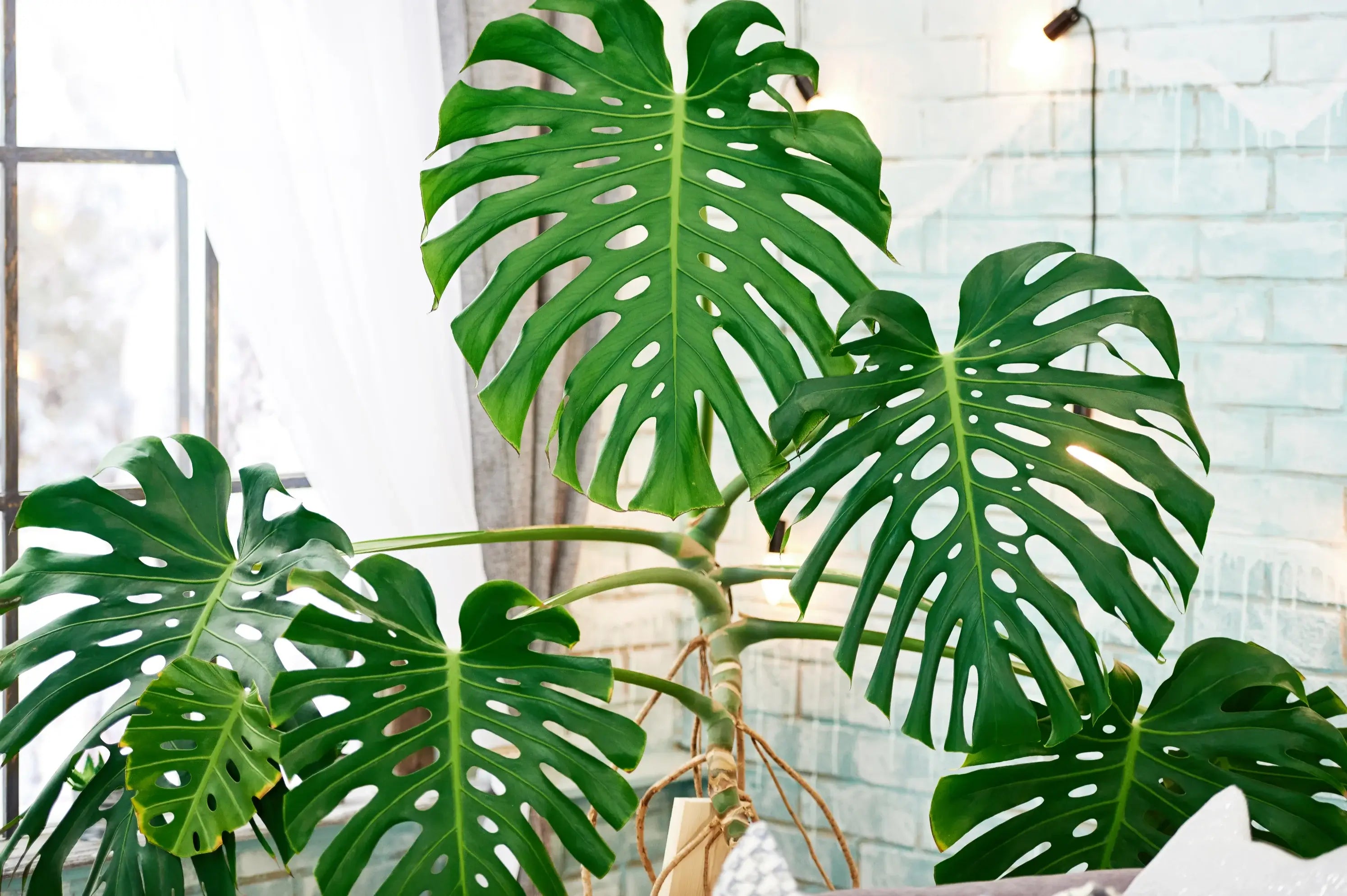
Monstera, Rhaphidophora and some related climbers are known for fenestrated leaves, with holes, splits or deep divisions. There is no single settled explanation for every fenestrated leaf. One strong hypothesis links holes in Monstera leaves with uneven forest light and short sunflecks. Airflow, rain movement and mechanical stress may also play roles in some contexts, but they are not fixed rules for every species.
Many aroids show heteroblasty, which means juvenile and adult leaves can look very different. Young Monstera, Philodendron, Epipremnum, Rhaphidophora, Amydrium and Syngonium may begin with small, simple leaves before producing larger, divided or more complex foliage. Indoors, a plant often stays juvenile when it lacks enough light, support or root strength.
For the common houseplant side of this, see our guide to heteroblasty in houseplants.
Roots: anchoring, climbing and breathing
Aroid roots do different jobs depending on growth form. Terrestrial species root into organic forest-floor material. Climbers produce roots from nodes and stems. Epiphytes and lithophytes anchor to bark, moss, rock or pockets of plant debris. Wetland and aquatic species may develop air-filled tissue that moves oxygen through waterlogged plant parts.
In climbing aroids, aerial roots help the plant attach to trees or supports. These roots also take up moisture and nutrients when they have contact with bark, moss, substrate or humid surfaces. A root hanging in dry room air behaves differently from one pressed into a moist support.
Velamen, or velamen-like root tissue, occurs in some aroids and is especially well known from many Anthurium species. It is not a universal feature of every epiphytic aroid. Root anatomy varies across the family.
In climbing aroids, growth direction can also show what the new shoot is trying to reach. Skototropism describes why some young stems grow toward a wall or dark vertical support before they attach.

Stems and storage organs
Several aroids survive stress through modified stems or underground storage organs. Zamioculcas grows from thick rhizomes. Alocasia, Colocasia, Caladium, Amorphophallus and related plants use corms, tubers, cormels, stolons or thickened stems, depending on genus and species. These structures store energy and allow regrowth after drought, cold, flooding, disturbance or seasonal rest.
This has a direct effect indoors. A leafless Amorphophallus tuber may simply be resting. A stressed Alocasia may lose leaves while the corm remains alive. A crawling Philodendron can decline if the stem is buried too deeply, because the growth point and nodes need air and space.
Root-care point: Many tropical foliage aroids need moisture and oxygen at the same time. Dense, stale, constantly wet substrate causes more problems than a careful dry-down between waterings.
Growth Forms Across Araceae
Growth form is the best starting point for aroid care. It shows where the plant expects to place its roots, how the stem moves, whether it stores energy and how much air or water the root system expects.
| Growth form | Examples | What it means | Care consequence |
|---|---|---|---|
| Climbing / hemiepiphytic | Monstera, Epipremnum, Rhaphidophora, many Philodendron | Roots attach to trees and stems mature upward | Provide support, bright indirect light and airy substrate |
| Crawling | Philodendron gloriosum-type plants | Stem creeps horizontally along the ground | Use wider pots; keep the growth point above the substrate |
| Terrestrial understory | Aglaonema, Dieffenbachia, Homalomena | Roots grow in warm, organic forest-floor material | Keep warm, evenly moist and protected from compacted substrate |
| Epiphytic / lithophytic | Many Anthurium, some Philodendron | Roots cling to bark, moss, rock or debris | Use chunky mix, airflow and careful watering |
| Tuberous / geophytic | Alocasia, Caladium, Amorphophallus, Arum, Typhonium | Storage organs survive seasonal stress | Reduce watering when growth slows or stops |
| Wetland / marginal aquatic | Colocasia, Lasia, Cyrtosperma | Adapted to wet ground or water margins | Do not use these plants as the care model for all aroids |
| Aquatic / rheophytic | Cryptocoryne, Anubias, Lagenandra, Bucephalandra | Adapted to submerged, streamside or flood-scoured habitats | Aquarium and paludarium care differ from pot-grown aroids |
| Free-floating reduced aroids | Lemna, Wolffia, Spirodela | Miniaturized aquatic flowering plants | Shows extreme reduction inside Araceae |
Grower takeaway: A climbing Monstera, a crawling Philodendron, a tuberous Alocasia and aquarium Cryptocoryne all belong to Araceae, but their roots, stems and seasonal rhythms differ. Treat the growth form first.
Where Aroids Grow in Nature
Aroids occur across many habitats, though most familiar houseplant genera come from warm, humid tropical regions. Even there, they do not all grow in the same layer of the forest. Some live on the ground, some climb trunks, some root into mossy branches, some grow in swamp edges, some cling to stream rocks and some retreat underground during dry seasons.
Rainforest understory
Many indoor aroids reflect shaded tropical forest conditions. Light is filtered by taller vegetation, humidity is often high and air still moves through the forest. Leaves may be broad and thin to catch limited light, and many species have pointed tips that move rain away from the blade and petiole.
Philodendron, Monstera, Anthurium, Rhaphidophora, Aglaonema, Dieffenbachia and Homalomena all include species linked to shaded forest habitats. That does not make them darkness plants indoors. It means many tolerate filtered light, while stronger growth still needs bright indirect light.
Canopy, epiphytic and lithophytic habitats
Epiphytic and lithophytic aroids grow on trees, moss, bark, rocks or pockets of organic debris. Their roots meet air, rain, condensation, leaf litter and short pulses of moisture. They are not sitting in dense, stagnant soil.
This is especially important for many Anthurium species and some Philodendron. Indoors, these plants usually prefer chunky, airy substrates that hold some moisture while leaving oxygen around the roots. The same root logic appears in the Anthurium care guide and many climbing Philodendron care notes.

Wetlands and floodplains
Some aroids are wetland plants. Colocasia, Lasia, Cyrtosperma, Pistia, Cryptocoryne and Lagenandra include species from wet ground, water margins, swamps or aquatic habitats. Some form aerenchyma, air-filled tissue that moves oxygen through waterlogged plant parts.
Wetland adaptation should not be applied to the whole family. A taro plant may tolerate wet roots in a way that many epiphytic or tuberous indoor aroids cannot.
Rheophytes and streamside aroids
Rheophytes are plants adapted to fast-flowing water or flood-scoured stream margins. Several aquarium-familiar aroids belong to these habitats or nearby wet rock and river-edge environments. Bucephalandra, Cryptocoryne, Anubias and some Schismatoglottis-related plants show the streamside side of Araceae.
These plants often anchor firmly and tolerate changing water levels. Their care belongs closer to aquarium, paludarium or streamside cultivation than to normal houseplant potting.
Seasonally dry forests and geophytes
Not all aroids come from constantly moist rainforest. Zamioculcas comes from East African regions where drought tolerance matters. Arum, Typhonium, Caladium and Amorphophallus include geophytes that store energy underground and grow seasonally.
Seasonal rhythm matters indoors. Some aroids slow down or shed leaves when light, temperature or moisture changes. Rest periods are not always plant failure, but watering should change when growth slows.
Cloud forests
Cloud forests are cool, humid, misty habitats with frequent moisture and narrow ecological conditions. Some high-elevation Anthurium, Philodendron and related aroids grow in these conditions. Many grow slowly and react badly to heat, dry air or root stress.

Limestone and karst habitats
Limestone and karst habitats are especially important for Southeast Asian Araceae. Some aroids grow in very small ranges on limestone hills, cliffs or rock systems. These habitats can be damaged quickly by quarrying, land conversion or collection pressure. A plant with a tiny native range may become conservation-sensitive before it is well understood in cultivation.
Indoor consequence: Aroids from airy tree habitats usually fail in dense wet soil, while wetland aroids may tolerate moisture levels that would rot epiphytic or tuberous species.
Pollination, Thermogenesis and Reproduction
Aroid inflorescences rely on timing, scent, structure and visitor behaviour. Some are subtle, some are colourful and some are famous for smelling like carrion. The dramatic examples are real, but they do not represent the whole family.
Flowering sequence
Many aroid inflorescences are protogynous: the female flowers are receptive before the male flowers release pollen. This timing reduces self-pollination and encourages pollen movement between separate inflorescences. It is not a perfect barrier against selfing in every species.
Heat and scent
Some aroids produce heat during flowering. This thermogenesis can release scent compounds, warm a floral chamber or influence pollinator behaviour. It is especially known from genera such as Arum, Amorphophallus, Philodendron and Symplocarpus, but it is not universal across Araceae.
Strong-smelling aroids are often the most famous. Amorphophallus titanum and some relatives mimic decaying material to attract flies and beetles. Other aroids use different scents and different pollinator relationships.

Pollinator diversity
Aroid pollinators include beetles, flies, bees, gnats, midges and other insects, depending on genus and species. Some systems involve deception. Others provide pollen, floral tissue, shelter, mating sites or scent cues. Many species still lack detailed field observations, and pollination differs sharply across the family.
Fruits and dispersal
After pollination, many aroids produce berries on the spadix. These fruits may turn bright colours and attract birds or mammals. Some aroids also spread vegetatively through rhizomes, cormels, stolons, offsets or division of storage organs, which helps them persist in unstable habitats.
Edible Aroids: Food Crops, Preparation and Raw-Toxicity Risk
Several aroids are important food plants. Their importance is regional rather than evenly global, but in parts of the Pacific, tropical Asia, West Africa, the Caribbean and tropical America, edible aroids are staple, subsistence or culturally important crops.
Edible aroids should not be confused with ornamental aroids from the houseplant trade. Many aroids are irritating or unsafe raw, and safe use depends on correct identification and proper preparation.
| Plant | Common use | Edible part | Important note |
|---|---|---|---|
| Colocasia esculenta | Taro / kalo | Corms; leaves when cooked | Major staple and cultural crop in many tropical regions |
| Xanthosoma species | Malanga / tannia / cocoyam | Cormels; sometimes leaves depending on local use | Important in tropical America, the Caribbean and West Africa |
| Cyrtosperma merkusii | Swamp taro | Corm | Important Pacific and atoll crop |
| Alocasia macrorrhizos | Giant taro | Stem/corm in some regions | Requires careful processing |
| Amorphophallus paeoniifolius | Elephant foot yam | Corm | Acrid raw; cooked or processed before eating |
| Amorphophallus konjac | Konjac | Corm | Source of glucomannan |
| Lasia spinosa | Regional vegetable | Shoots and petioles | Used in parts of South and Southeast Asia |
| Monstera deliciosa | Fruit | Fully ripe infructescence only | Unripe fruit irritates strongly |

Why raw aroids irritate
Many edible aroids contain insoluble calcium oxalate raphides. Raw or underprocessed plant tissue can irritate the mouth, throat and digestive tract. Some edible aroids also contain acrid compounds, proteolytic enzymes or enzyme inhibitors, which makes preparation part of safe use.
Traditional preparation
Traditional food use depends on knowledge built around each crop. Boiling, baking, soaking, fermentation, grating, drying or repeated washing reduce irritation and make specific edible aroids usable as food. Preparation differs by species, plant part and local food culture.
Food safety note: Do not eat ornamental or wild-collected aroids unless the plant is correctly identified and its preparation method is known. Many aroids are irritating or toxic when raw or incorrectly prepared.
Aroids Indoors: Care by Growth Type
Many popular aroid houseplants adapt well to indoor growing because they tolerate containers, filtered light and vegetative propagation. They still need care matched to their growth form. Climbers, crawlers, terrestrial plants, epiphytes, tuberous plants, wetland plants and aquatic species do not behave the same way in a pot.
Light
Most tropical foliage aroids grow best in bright indirect light. Lower light may keep a plant alive, but it often slows growth, reduces leaf size and delays mature leaf features. Climbing plants such as Monstera, Epipremnum and Rhaphidophora usually need stronger light and stable support before larger adult foliage develops.
Thin-leaved plants can scorch in harsh direct sun behind glass. Variegated plants often need brighter light than green forms because pale tissue contains less chlorophyll, but light does not create genetic variegation or change a stable pattern into a new one. For a broader light breakdown, see the bright indirect light guide.
Water
Watering depends on pot size, root mass, substrate, temperature, light and season. A fixed weekly rule is unreliable. Many indoor aroids prefer a rhythm where the substrate loses some moisture but does not stay dry for long periods. Constant saturation is risky because roots still need oxygen.
Wetland aroids are exceptions, not the model for the whole family. Colocasia may tolerate wetter roots than Anthurium, Monstera or tuberous Alocasia.
Substrate
Climbing and epiphytic aroids usually need chunky, airy substrate. Bark, coco chips, perlite, pumice and similar materials create air pockets while holding some moisture. Terrestrial understory aroids tolerate more moisture-retentive mixes, but the substrate should still resist compaction.
Tuberous and geophytic aroids need more caution when growth slows. A wet, cold, inactive corm or tuber rots more easily than an actively growing plant with a strong root system. Aquatic and rheophytic aroids need their own setup and should not be forced into normal pot-plant logic.
For more detail on mineral and airy growing setups, see the semi-hydro substrate guide and the aroid substrate guide.
Humidity and airflow
Moderate to higher humidity improves many tropical aroids, especially thin-leaved or cloud-forest species. Humidity is not a substitute for root health. Humid, stagnant air can increase fungal problems, and wet substrate without oxygen still causes rot.
Many common aroids acclimate to normal homes when light, watering and substrate are right. More demanding species may need controlled humidity, warmer roots or more stable airflow. The humidity guide for houseplants explains the indoor side in more detail.
Support and maturity
Climbing aroids often mature better when they grow upward. Moss poles, boards or trellises are most useful when nodes stay in steady contact with the support. A dry pole may hold a stem upright without encouraging strong root attachment.
Crawling plants such as Philodendron gloriosum need horizontal space. Their stem should move across the substrate surface instead of being forced up a pole or buried under dense mix.
Dormancy and slowdown
Alocasia, Caladium, Amorphophallus, Arum and related geophytes may slow down, shed leaves or rest seasonally. Leaf loss does not always mean the plant is dead. Check the storage organ and roots before discarding the plant, and reduce watering when growth is inactive. The Alocasia indoor care guide covers this pattern for common cultivated species. For a broader explanation of seasonal rest, see the houseplant dormancy guide.
Grower takeaway: Start with growth form before choosing care. Ask whether the plant climbs, crawls, grows from a tuber, lives terrestrially or comes from wet habitats. That answer matters more than the label “aroid.”
Common Problems and Pests
Most indoor aroid problems come from poor root oxygen, incorrect light, unstable watering, cold stress, pests or treating every genus the same way. Roots, substrate and new growth usually give the clearest clues.
| Problem | Likely causes | What to check first |
|---|---|---|
| Yellow leaves | Overwatering, compact substrate, cold, old leaves, nutrient imbalance | Roots, substrate depth and recent temperature changes |
| Root rot | Soggy mix, low oxygen, oversized pot, cold wet roots | Root texture, smell, pot size and drainage |
| Brown tips | Dry air, inconsistent watering, salt buildup, root stress | Watering rhythm, root health and fertilizer strength |
| No fenestration | Plant too young, too little light, no climbing support | Plant maturity, light level and support |
| Alocasia leaf drop | Stress, cold, dormancy, root issues, pests | Corm, roots and newest leaves |
| Small new leaves | Low light, weak roots, no support, nutrient shortage | Light, root system and feeding rhythm |
| Thrips | Pest feeding on young tissue | New growth, leaf undersides and silvery scarring |
| Spider mites | Dry stress and pest pressure | Fine stippling, webbing and leaf undersides |
| Mealybugs / scale | Pests hiding around nodes and petioles | Leaf bases, stems, petioles and crevices |
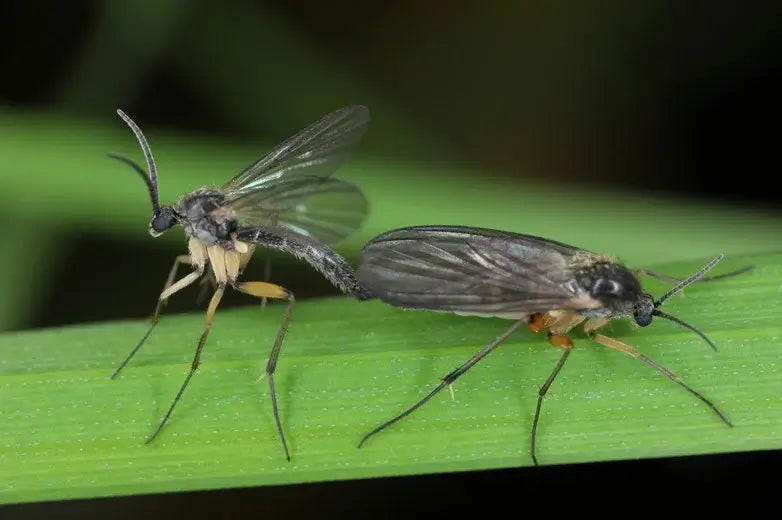
| Fungus gnats | Wet organic substrate | Substrate moisture and root condition |
One yellow leaf is not enough for a diagnosis. Older leaves naturally age. New damage, distorted growth, blackened roots, spreading lesions or pests on new leaves give better evidence. For pest-specific help, use the pest control guides.
Safety Around Pets and Children
Many ornamental aroids contain insoluble calcium oxalate crystals. When a pet or child chews leaves, stems or petioles, those crystals can irritate the mouth, tongue, throat and stomach. Sap may also irritate sensitive skin or eyes.
An aroid standing in a room is not the same as an ingestion risk. The main concerns are chewing, swallowing, eye exposure and sap contact after cutting. Keep aroids away from pets and children who chew plants, wash hands after pruning irritating species and avoid touching eyes after handling cut stems.
Common ornamental aroids with irritation risk include Philodendron, Monstera, Epipremnum, Dieffenbachia, Alocasia, Anthurium, Spathiphyllum, Syngonium and Zamioculcas. Severity depends on amount, plant part and individual sensitivity. For safer plant choices, see the houseplants safe for cats guide.
Notable Aroid Genera by Growth Type
Araceae contains far more genera than a single guide can cover in detail. The genera below are grouped by growth form because that is more useful than a long alphabetical list. Each one shows a different part of the family’s biology, cultivation or human use.
Climbers and hemiepiphytes
Monstera
Monstera shows how strongly aroid leaves can change with maturity. Young plants often produce small, entire leaves. Mature climbing plants may produce large leaves with splits or holes. Indoors, that adult foliage usually depends on bright indirect light, stable support and a strong root system.
Philodendron
Philodendron cannot be reduced to one care pattern. The genus includes climbers, crawlers and upright forms. A climbing Philodendron may need vertical support; a crawling species such as Philodendron gloriosum needs horizontal room and a stem that stays above the substrate.
Epipremnum
Epipremnum is often grown indoors in its juvenile form. Epipremnum aureum and Epipremnum pinnatum can trail in small pots, but mature plants outdoors or in greenhouses climb high and develop much larger, divided leaves. In warm regions, some species can become invasive outdoors. For a closer look at pothos naming and history, read the Epipremnum aureum story.
Rhaphidophora
Rhaphidophora is often confused with Monstera because some species also develop fenestrated leaves. The genus is mainly Asian and includes fast climbers that respond well to vertical support indoors. Rhaphidophora tetrasperma is widely sold as “Mini Monstera,” but it is not a Monstera.
Scindapsus and Amydrium
Scindapsus and Amydrium show how many climbing aroids are sold before their adult form appears. Scindapsus is known in cultivation for matte, silver-patterned juvenile leaves. Amydrium can develop more complex adult foliage when allowed to climb.
Terrestrial and upright foliage aroids
Alocasia
Alocasia is grown for upright, shield-shaped or arrow-shaped leaves, but its behaviour is tied to tuberous or cormous growth. Cold, root stress, pests or inconsistent watering can trigger leaf loss. That does not always mean the storage organ is dead.
Aglaonema
Aglaonema includes compact terrestrial understory plants and many colourful hybrids. They tolerate lower light better than many dramatic foliage aroids, which explains their long use indoors. Lower-light tolerance does not mean no-light growth; stronger colour and healthier roots still need enough filtered light.
Dieffenbachia
Dieffenbachia grows as an upright, cane-like terrestrial aroid with broad patterned leaves. It can grow quickly indoors when warm and well rooted. Its tissues contain irritating raphides, so it needs sensible placement around pets, children and pruning work.
Homalomena
Homalomena is a warm-growing terrestrial rainforest genus with shallow roots and often aromatic foliage. Many cultivated plants prefer steady warmth, even moisture and airy substrate that does not dry too sharply or stay compacted.
Schismatoglottis
Schismatoglottis includes compact Asian rainforest plants and streamside species. It is sometimes compared with Homalomena, but the genus has its own leaf, venation and habitat diversity. Many cultivated forms prefer warmth, humidity and careful root moisture.
Zamioculcas
Zamioculcas zamiifolia, the ZZ plant, is an East African aroid with thick rhizomes and strong drought tolerance. It survives lower light and dry indoor air better than most tropical foliage aroids, but it still grows better with bright indirect light and careful watering. CAM-type behaviour has been reported under drought stress, but that is only one part of its survival strategy.
Epiphytic and collector aroids
Anthurium
Anthurium is one of the largest and most varied aroid genera. It includes velvet-leaf plants, bird’s-nest forms, strap-leaved species, terrestrial species, epiphytes and lithophytes. Many cultivated Anthurium need moisture, airflow and oxygen around the roots rather than dense wet soil.

Rhodospatha
Rhodospatha adds Neotropical climbing diversity without needing a long care section. Its value here is botanical context: Araceae contains many climbing lineages beyond the familiar houseplant names.
Aquatic, wetland and rheophytic aroids

Cryptocoryne
Cryptocoryne brings the aquatic side of Araceae into view. Many species shift between submerged and emersed growth as water levels change, which is why aquarium and paludarium care suit them better than standard pot culture.
Anubias
Anubias is a rhizomatous African aroid widely used in aquariums. It tolerates low light and slow-moving water, but the rhizome should not be buried deeply. The genus shows why some aroids need exposed stems or rhizomes rather than deep potting.

Lagenandra
Lagenandra sits close to the wetland and water-margin side of the family. Its inclusion helps separate true aquatic or marginal aroids from foliage aroids that only tolerate brief moisture stress.
Bucephalandra
Bucephalandra shows rheophytic adaptation clearly. It anchors to rock or hard surfaces near moving water, so its cultivation is closer to aquarium and paludarium work than ordinary houseplant potting.
Pistia
Pistia stratiotes, water lettuce, is a free-floating aquatic aroid that forms rosettes on still water. It can spread aggressively in warm regions, so responsible descriptions should mention its invasive potential.
Duckweeds: Lemna, Wolffia and Spirodela
Duckweeds show how far reduction can go inside Araceae. They do not resemble houseplant aroids, but their placement in the family is essential for accurate classification.
Geophytes and dramatic inflorescences
Amorphophallus
Amorphophallus includes tuberous geophytes with seasonal growth and some of the most dramatic inflorescences in Araceae. Several species produce strong odours and heat during flowering. Some, including Amorphophallus paeoniifolius and Amorphophallus konjac, also have food uses after proper processing.
Arum
Arum brings temperate, seasonal aroids into the picture. Its underground growth cycle, trap-style inflorescences and heat-producing flowers show that Araceae is not only a tropical foliage family.
Typhonium
Typhonium includes small geophytic aroids, many with scent-based pollination. Some species have local uses, but acridity and toxicity concerns make broad edible-use claims unreliable.
Arisaema
Arisaema, often called cobra lily, is known for hooded spathes and seasonal growth. Some species can shift sex expression as plant size and stored energy change, making the genus useful for explaining aroid reproductive flexibility.
Caladium
Caladium is grown for thin, colourful leaves and tuberous seasonal growth. Many cultivated plants are hybrids selected for leaf colour and pattern. Indoors, they need warmth and careful watering, especially as growth slows. For seasonal foliage care, see the Caladium care guide.
Edible and culturally important aroids
Colocasia, Xanthosoma, Cyrtosperma, Alocasia macrorrhizos, Amorphophallus paeoniifolius and Amorphophallus konjac show the food-crop side of Araceae. They connect the family to regional food security, traditional preparation and long-standing crop knowledge.
Aroids in Culture, Design and Traditional Use
Aroids have been part of human life as food plants, cultivated ornamentals, symbolic flowers, medicinal plants and design motifs. Their cultural roles show how far Araceae reaches beyond indoor foliage.
Taro and cultural identity
Colocasia esculenta, known as taro or kalo, has deep cultural importance in many Pacific societies. In Hawai‘i, kalo is connected with genealogy, land, food and identity. Its cultural context matters alongside its food use.
Regional food systems
Edible aroids support regional food systems in parts of the Pacific, tropical Asia, West Africa, the Caribbean and tropical America. Their value often comes from shade tolerance, wet-soil tolerance, local adaptation and long-established preparation knowledge.
Symbolism and design
Zantedeschia, often called calla lily, is an aroid used in floral design, religious symbolism and funeral arrangements. Arum species appear in European botanical history and seasonal garden traditions. Modern interiors often use Monstera, Alocasia and Anthurium as shorthand for tropical foliage, but the family’s real range is much broader than décor.
Traditional medicine
Some aroids have traditional medicinal uses. Traditional use does not make a plant safe for home treatment. Correct identity, preparation, dose and local knowledge matter, and many aroids are irritating or toxic when misused.
Research, Taxonomy and Conservation
Aroids remain active subjects of botanical research. New species are still described, classification continues to shift and many pollination systems are poorly documented. Houseplant demand has also increased public interest in rare species, making conservation and naming accuracy more important.
Taxonomy is still changing
Aroids can be difficult to classify because leaf shape changes with maturity, flowering material is often missing and similar-looking species may not be closely related. DNA work has clarified relationships that older morphology-based systems could not resolve. Trade names, cultivar names and misapplied species names add confusion in horticulture.
Pollination research
Pollination is known in detail for only part of the family. Aroid flowering can be brief, seasonal and hard to observe in the field. Scent, heat, trapping structures, floral rewards and insect behaviour remain active research topics.
Food-crop research
Edible aroids deserve more attention than they often receive. Taro, tannia, cocoyam, swamp taro, elephant foot yam and konjac matter for regional food security, crop diversity and cultural food systems. Research on disease resistance, crop conservation, processing and germplasm movement helps protect these crops.
Horticultural research
Houseplant demand has increased interest in tissue culture, controlled-environment growing, substrate performance, light levels, humidity management and variegation stability. Tissue culture can reduce pressure on wild plants when used responsibly, but it is not a complete conservation solution by itself.
Conservation
Many aroids are threatened by habitat loss, especially species with narrow ranges in cloud forests, islands, limestone hills, stream systems or small forest fragments. Illegal collection can add pressure when rare plants become valuable in the trade. Living collections, legal propagation, seed work, tissue culture and habitat protection all have roles, but habitat protection remains central.
Limestone and streamside aroids show the problem clearly. In parts of Southeast Asia, some Araceae occur on narrow limestone systems, river margins or isolated forest patches. A quarry, road project, plantation expansion or sudden collecting pressure can damage a large share of a local population before the plant is well known in cultivation. That is why accurate names, nursery propagation and habitat protection belong together.

Key names in aroid research: Schott laid important foundations for aroid taxonomy. Engler shaped early systematic classification. Bogner, Mayo and Boyce contributed major family-level and genus-level work. Croat is central to Neotropical Anthurium and Philodendron research. Hetterscheid is closely associated with Amorphophallus. Deni Bown made aroid knowledge more accessible to a wider horticultural audience.
Ethical Collecting and Sustainable Propagation
Rare aroids are not always rare for the same reason. Some have tiny native ranges. Some are difficult to propagate. Some are new to cultivation. Some are simply caught in a demand spike. Price alone does not tell the conservation story.
Wild collection can damage small populations, especially when plants come from narrow habitats such as limestone outcrops, isolated forest fragments or cloud forests. Habitat loss is often the larger threat, but collection pressure becomes serious when a plant is newly hyped or poorly propagated.
Better buyer choices include nursery-propagated plants, seed-grown plants, tissue-cultured plants and legally sourced material with clear names. Vague labels such as “wild form,” “field collected” or unverified new names deserve caution. Accurate naming matters for care, buyer trust and conservation.
Shopping takeaway: The safest rare aroid is not always the most expensive one. The better choice is a clearly named, legally propagated plant with care information that matches its growth form.
Related aroid guides
- Monstera care
- Philodendron care
- Anthurium care
- Alocasia care
- Epipremnum aureum history
- propagation
- humidity
- air-purifying myth
- semi-hydro substrates
- aroid substrate
Aroid FAQ
What is an aroid plant?
An aroid is a plant in the family Araceae. Familiar aroid houseplants include Monstera, Philodendron, Anthurium, Alocasia, Epipremnum, Spathiphyllum and Zamioculcas.
Are all aroids part of Araceae?
Yes. “Aroid” is the common term for members of Araceae, also called the arum family.
Are duckweeds really aroids?
Yes. Modern classification places duckweeds inside Araceae. They look very different from typical houseplant aroids because their bodies and flowers are extremely reduced.
Do all aroids have a spathe and spadix?
Typical aroids have a spadix associated with a spathe. In duckweeds, this structure is so reduced that it is not obvious in the way it is in Anthurium, Spathiphyllum or Arum.
Are all aroids toxic?
Many ornamental aroids contain insoluble calcium oxalate crystals that irritate when plant tissue is chewed or sap contacts sensitive skin or eyes. Risk varies by plant, amount and exposure.
Are aroids safe around pets?
Aroids are safest when pets cannot chew them. Many common genera, including Philodendron, Monstera, Epipremnum, Dieffenbachia, Alocasia and Anthurium, can irritate the mouth and stomach if chewed.
Do aroid plants need high humidity?
Many tropical aroids grow better with moderate to high humidity, but common houseplant genera often acclimate to normal homes if light, watering and substrate are right. Humidity without airflow can create new problems.
Do all aroids climb?
No. Some climb, some crawl, some grow upright, some form tubers, some grow in wetlands and some live fully or partly in water.
Why is my Monstera not splitting?
Fenestration usually needs maturity, enough light and often climbing support. Young plants commonly produce simple leaves before adult leaf forms appear.
Why is my Philodendron making smaller leaves?
Smaller leaves often point to low light, weak roots, no support on climbing species or insufficient nutrients. First check light level, root health and whether the plant’s growth form is being supported correctly.
Why is my Alocasia dropping leaves?
Alocasia can drop leaves after cold stress, root stress, pest pressure, inconsistent watering or seasonal slowdown. Check the corm and roots before assuming the whole plant is dead.
What substrate do aroids need?
It depends on growth form. Climbers and epiphytes usually need chunky, airy mixes. Terrestrial aroids can use more moisture-retentive mixes. Tuberous plants need caution during rest periods, and aquatic aroids need separate setups.
Can aroid plants grow in semi-hydro?
Many aroids can adapt to mineral or semi-hydro setups if roots have oxygen and the plant receives nutrients through the water. Transition stress is possible, and tuberous or dormant plants need extra care.
Can I propagate aroids in water?
Many node-forming aroids, including Monstera, Philodendron, Epipremnum and Syngonium, can root in water. A cutting needs a node; a leaf without a node will not grow into a new plant.
Are edible aroids safe to eat?
Only correctly identified edible aroids prepared in the right way are safe to eat. Many are irritating or unsafe raw because of calcium oxalate raphides and other compounds.
Do aroids clean indoor air?
Not in a meaningful real-home sense. Plants can remove some compounds in sealed test chambers, but normal homes have air exchange and room volume that make the effect of potted plants far too small to rely on. The air-purifying houseplants myth explains this in more detail.
Why do some aroids smell bad?
Some aroids mimic carrion, dung or fermentation scents to attract specific pollinators. This is common in some dramatic genera such as Amorphophallus and Arum, but it is not how all aroids pollinate.
Why are some aroids rare or expensive?
Some are rare because they have narrow native ranges or are difficult to propagate. Others become expensive because demand rises faster than production. Legal propagation and accurate names matter more than hype.
Aroid Glossary
| Term | Meaning |
|---|---|
| Aerenchyma | Air-filled tissue that helps plants move oxygen through waterlogged or aquatic parts. |
| Adventitious roots | Roots that grow from stems, nodes or other non-root tissue. |
| Anthesis | The active flowering period when flowers are functional. |
| Araceae | The botanical family that contains aroids. |
| Aroid | A common name for any plant in Araceae. |
| Corm | A swollen underground stem that stores energy. |
| Cormel | A smaller corm-like offset that can develop around a parent corm. |
| Drip tip | A pointed leaf tip that helps water run off the blade. |
| Endozoochory | Seed dispersal after animals eat fruit and pass seeds elsewhere. |
| Epiphyte | A plant that grows on another plant for support without being parasitic. |
| Fenestration | Natural holes, splits or openings in leaves. |
| Geophyte | A plant that survives unfavourable periods through underground storage organs. |
| Heteroblasty | A strong difference between juvenile and adult plant form. |
| Hemiepiphyte | A plant that spends part of its life connected to the ground and part growing on support structures such as trees. |
| Inflorescence | A complete flowering structure made of many smaller flowers. |
| Infructescence | A fruiting structure formed from an inflorescence. |
| Laticifer | A plant cell or tissue that produces latex. |
| Lemnoideae | The duckweed group inside Araceae in modern classification. |
| Lithophyte | A plant that grows on rock. |
| Monocot | A major flowering-plant group with one seed leaf and other shared structural traits. |
| Raphides | Needle-like calcium oxalate crystals that can irritate tissue. |
| Rhizome | A horizontal stem, often underground or at the substrate surface, that stores energy or spreads growth. |
| Rheophyte | A plant adapted to fast-flowing water or flood-scoured stream margins. |
| Spadix | The fleshy spike that carries many tiny aroid flowers. |
| Spathe | A modified bract associated with the spadix. |
| Stolon | A horizontal stem that can produce new plantlets. |
| Thermogenesis | Heat production by plant tissue, especially during flowering in some aroids. |
| Velamen | A spongy root covering found in some plants, including many Anthurium species. |
References and Further Reading
Core taxonomy and morphology
- Royal Botanic Gardens, Kew. Plants of the World Online: Araceae Juss. Kew Science. Used for current accepted family treatment, accepted genera and duckweed placement within Araceae.
- Boyce, P. C., Croat, T. B. & Hay, A. (2025). The Überlist of Araceae: Totals for Published and Estimated Number of Species in Aroid Genera. International Aroid Society. DOI: 10.13140/RG.2.2.24068.64646.
- Mayo, S. J., Bogner, J. & Boyce, P. C. (1997). The Genera of Araceae. Richmond: Royal Botanic Gardens, Kew.
- Bown, D. (2000). Aroids: Plants of the Arum Family. 2nd ed. Portland: Timber Press.
- Bogner, J. & Nicolson, D. H. (1991). A revised classification of Araceae with dichotomous keys. Willdenowia, 21(1/2), 35–50.
Evolution and phylogeny
- Nauheimer, L., Metzler, D. & Renner, S. S. (2012). Global history of the ancient monocot family Araceae inferred with models accounting for past continental positions and previous ranges based on fossils. New Phytologist, 195(4), 938–950. DOI: 10.1111/j.1469-8137.2012.04220.x.
- Friis, E. M., Pedersen, K. R. & Crane, P. R. (2004). Araceae from the Early Cretaceous of Portugal: Evidence on the emergence of monocotyledons. Proceedings of the National Academy of Sciences, 101(47), 16565–16570. DOI: 10.1073/pnas.0407174101.
Pollination and thermogenesis
- Díaz Jiménez, P., Hentrich, H., Aguilar-Rodríguez, P. A., Krömer, T., Chartier, M., MacSwiney, M. C. & Gibernau, M. (2019). A review on the pollination of aroids with bisexual flowers. Annals of the Missouri Botanical Garden, 104(1), 83–104. DOI: 10.3417/2018219.
- Wagner, A. M., Krab, K., Wagner, M. J. & Moore, A. L. (2008). Regulation of thermogenesis in flowering Araceae: The role of the alternative oxidase. Biochimica et Biophysica Acta, 1777(7–8), 993–1000. DOI: 10.1016/j.bbabio.2008.04.001.
Leaves, roots and structure
- Muir, C. D. (2013). How did the Swiss cheese plant get its holes? The American Naturalist, 181(2), 273–281. DOI: 10.1086/668819.
- Werner, J. C., Albach, D. C., Can, L. & Zotz, G. (2024). The velamen radicum is common in the genus Anthurium, both in the epiphytic and terrestrial species. Diversity, 16(1), 18. DOI: 10.3390/d16010018.
Edible aroids
- Opara, L. U. & Mejía, D., eds. (2003). Edible Aroids: Post-harvest Operations. FAO / INPhO Post-harvest Compendium.
- Global Crop Diversity Trust. Edible Aroid Conservation Strategies. Crop Trust.
- Fang, Q., Matthews, P. J., Grimaldi, I. M., de Jong, J. H. S. G. M., van de Belt, J., Schranz, M. E. & van Andel, T. R. (2025). The Invisible Tropical Tuber Crop: Edible Aroids (Araceae) Sold as “Tajer” in the Netherlands. Economic Botany, 79(1), 44–64. DOI: 10.1007/s12231-024-09624-y.
Indoor air and safety
- Cummings, B. E. & Waring, M. S. (2020). Potted plants do not improve indoor air quality: A review and analysis of reported VOC removal efficiencies. Journal of Exposure Science & Environmental Epidemiology, 30, 253–261. DOI: 10.1038/s41370-019-0175-9.
- ASPCA Animal Poison Control Center. Insoluble calcium oxalate houseplant safety information for pets.
- National Capital Poison Center. Dieffenbachia and Philodendron: oxalate safety information.
Specialist and cultivation resources
- International Aroid Society. Aroideana: Journal of the International Aroid Society.
- International Aroid Society. Publications and genus resources.
- Botanical garden and herbarium resources for current taxonomy, nomenclature and conservation context.


Leave a comment