

Caladium Care Guide: Watering, Growing Indoors, and Storing Tubers
Caladium (cultivated caladiums are most often sold under Caladium bicolor labels and are frequently treated horticulturally as Caladium × hortulanum) is a tropical, tuber-grown foliage plant built for a warm season of growth followed by a real rest phase. When conditions are right, Caladium pushes fast, colourful leaf production. When conditions are wrong — especially when the root zone stays wet and cool — the tuber is quick to fail.
Success comes down to a simple pairing: steady warmth + an oxygen-rich mix that stays evenly moist during active growth without turning swampy. After that, dormancy is normal. Leaves fading and disappearing is not automatically a problem — tuber firmness tells the truth.
Important safety note: Caladium contains insoluble calcium oxalate crystals. Pets vary: some cats ignore foliage completely, others will nibble. Treat Caladium as chewable and keep it out of reach of pets and children. Wear gloves if sap irritates skin.

Caladium: Origins, Naming, and What’s in Cultivation
Caladium is a genus in Araceae, native to tropical regions of the Americas. Wild species occur from Central America into South America, with many species tied to warm, seasonally wet habitats. In cultivation, Caladium is overwhelmingly grown for leaf colour and pattern, propagated from tubers, and managed as a warm-season canopy plant.
The name “Caladium”
“Caladium” is widely linked to the Malay word keladi, a traditional name used for tuberous aroids. The genus was established by Étienne Pierre Ventenat around 1800. Naming history matters mainly because trade labels, horticultural naming, and botanical taxonomy don’t always line up neatly on retail tags.
What “bicolor” means in practice
Bicolor literally means “two-coloured.” It is a descriptive epithet anchored in early taxonomy, not a promise that modern cultivars will show exactly two colours. Many cultivated lines carry complex patterning: contrasting veins, speckles, margins, overlays, and translucent zones.
Why you’ll see different botanical names
Many ornamental plants are sold as Caladium bicolor cultivars. Horticultural and production literature often treats cultivated ornamental caladiums as Caladium × hortulanum (or Caladium hortulanum) to reflect breeding history. For care, the practical takeaway stays consistent: tuber-grown, warm-driven foliage production with a dormancy phase.
Common names (helpful, but not specific)
- Angel wings and heart-of-Jesus are common names used for cultivated caladiums.
- Elephant ear is shared across multiple aroid genera (Alocasia, Colocasia, Xanthosoma, and Caladium). “Elephant ear” alone is not an ID feature.
Araceae traits: spathe and spadix
Caladium produces a classic aroid inflorescence (spadix wrapped by a spathe). Indoors, flowering is often rare or short-lived, and flowers are ornamentally insignificant compared to foliage. If an inflorescence appears early in the season on a smaller tuber, removing it is sometimes preferred in container culture to keep resources focused on leaf production.

Caladium Basics & Varieties
Caladium grows from a tuber (often called a “bulb” in retail language). There is no permanent above-ground stem. Each leaf emerges from the tuber on a petiole, forming a seasonal canopy that can look lush and bushy when conditions stay warm and growth is steady.
What Caladium needs to thrive
- Warmth: Caladium is a warm-season grower. Cool spells slow growth sharply and amplify rot risk.
- Root oxygen: an airy, fast-draining mix prevents tuber and root failure.
- Even moisture (in growth): steady hydration without waterlogging.
- Acceptance of dormancy: leaf loss can be normal as the plant shuts down.
Key cultivated types
Fancy-leaf Caladiums
Large, heart-shaped leaves, often 30–75 cm tall depending on cultivar, tuber size, and warmth. Fancy-leaf types typically perform best in strong filtered light or bright shade. Many scorch in harsh direct sun, especially pale or thin-leaved cultivars.
Strap / lance-leaf Caladiums
Narrower leaves, shorter petioles, and often more leaves per tuber. Strap types are frequently more tolerant of brighter outdoor exposure than fancy-leaf types, but they still benefit from acclimation and steady moisture.
Tuber size: the hidden driver of “fullness”
Bigger tubers usually have more buds (“eyes”), which often means more shoots and a fuller canopy. Smaller tubers can still look great, but they have less buffer: cold, wet substrate and inconsistent watering show up faster.
- Large tuber: faster fill, more shoots, typically more forgiving.
- Small tuber: slower fill, fewer shoots, higher sensitivity to overwatering and cool conditions.
De-eyeing (optional): more leaves, tighter shape
In container production, tubers are often “de-eyed” (dominant central bud removed) to encourage more shoots and a more compact, fuller-looking plant. The trade-off is common: more leaves, often smaller leaves, and sometimes a slower finishing time.
Popular Caladium Cultivars
Cultivars vary in leaf thickness, vigour, sun tolerance, and how clean the pattern stays under indoor light. Pale, thin leaves look spectacular but punish harsh sun and wet/cool substrate faster. Darker or denser foliage tends to be more forgiving in real homes.

'Candidum' usually performs best with strong filtered light so the canopy stays dense and the white background remains clear. Thin, pale tissue scorches easily in direct sun. Keep warmth stable and avoid slow-drying substrate.

'Carolyn Whorton' often looks best in bright, filtered light where pink stays vivid and leaves remain substantial. Weak light tends to open the canopy and stretch petioles.

Pattern-heavy cultivars like 'Frog in a Blender' are less “all-or-nothing” than pale white types: minor cosmetic marks are less obvious. Growth still depends on warmth and an oxygen-rich mix.

'Red Flash' reads well under a wider range of indoor light because the darker base stays strong. It still benefits from bright indirect light, but it is often more forgiving than very pale cultivars — provided the mix never stays cold and wet.

'White Queen' is spectacular and sensitive: thin, pale tissue plus strong venation. Indoors, it usually performs best with bright, filtered light, steady warmth, and controlled watering. Sudden sun exposure and slow-drying substrate show up fast as scorch or decline.
Caladium Care at a Glance
This quick reference focuses on what actually changes outcomes: light strength, root-zone oxygen, warmth, and how watering shifts during growth versus dormancy.
| Aspect | What to aim for | Practical tip |
|---|---|---|
| Light | Strong indirect light; bright shade outdoors | Pale cultivars scorch easily in direct midday sun |
| Watering | Even moisture in active growth; drier as dormancy starts | Water when top 20–30% of pot depth is drying |
| Substrate | Rich but airy; fast-draining | Oversized pots + fine mix = slow drying and rot risk |
| Humidity | Moderate to higher humidity helps leaf edges | Keep airflow decent; avoid repeatedly wetting leaves |
| Temperature | Warm growth (21–29°C) | Cool + wet is the main failure combination |
| Feeding | Light, consistent feeding during active growth | Overfeeding often stresses roots and muddies colour |
| Dormancy | Expected; store tubers dry and breathable | Inspect stored tubers every 4–6 weeks |
| Safety | Toxic if chewed/ingested | Keep away from pets and children |

Light Requirements for Caladiums
Caladium grows under broken canopy light in nature: bright, filtered, and warm. Indoors, “bright indirect light” has to be genuinely bright to prevent stretched petioles and an open canopy.
Indoors: what works
- Strong indirect light close to a window with minimal direct sun on leaves.
- Sheer curtains when sun is intense.
- Grow lights as a real substitute when natural light is weak (often 10–14 hours per day for foliage production).
Outdoors: what works (summer season)
- Bright shade or gentle morning sun with protection from harsh midday sun.
- Strap/lance-leaf cultivars often tolerate brighter exposure than fancy-leaf types.
- Acclimate gradually when moving outdoors to avoid scorch.
Acclimation (simple, repeatable)
- Days 1–3: bright shade only.
- Days 4–7: add short morning sun if cultivar tolerates it.
- After day 7: settle into the final spot, with midday protection as needed.
Common light-related problems
| Issue | Likely cause | Fix |
|---|---|---|
| Brown scorch patches | Direct sun on thin/pale tissue | Move into filtered light; acclimate outdoors gradually |
| Long petioles, sparse canopy | Light too weak | Increase indirect light or add a grow light |
| Duller patterning | Often low light or heavy feeding | Raise light first; keep feeding modest |
Practical tip
When growth is slow and nights are cool, adding more light rarely fixes the problem. Warmth and a breathing substrate matter more.
Soil and Planting for Caladiums
Caladium success depends on substrate structure. A tuber in a fine, compact mix that stays wet is sitting in the exact conditions that trigger rot. Aim for a rich mix that still drains quickly and holds air.
What an ideal mix does
- Holds moisture evenly without staying saturated
- Drains freely so the root zone can re-oxygenate
- Stays open over time instead of collapsing into a dense plug
Container mix options (practical, not precious)
- Balanced: quality potting mix + generous perlite/pumice + fine bark for structure.
- Faster-drying: potting base + more bark + perlite/pumice for high airflow setups.
Garden beds: drainage first
Outdoor caladiums can thrive in beds when soil drains well and stays warm. Heavy, water-retentive soils are risky. Raised beds, added organic matter, and structural amendments can improve performance, but drainage and temperature still decide outcomes.
Planting tubers
Timing
- Outdoors: plant once soil is reliably warm (often 18–21°C).
- Indoors: start tubers early if warmth and light are available.
Depth and orientation
- Plant about 4–5 cm deep.
- Eye side up when obvious; sideways works when the eye is unclear.
Spacing (beds and large containers)
- Space tubers about 20–30 cm apart for a full look (cultivar size varies).
- Closer spacing creates a denser mass effect but can reduce individual leaf size and airflow.
Watering right after planting
- Water once to settle mix around the tuber, then keep moisture light until shoots and roots are active.
- A dormant tuber sitting in wet mix is high-risk. Moist, airy, warm is the safer start.
Pot size: a common hidden failure
- Choose a pot that fits tuber size and root volume. Avoid oversized pots for small tubers.
- More soil volume dries slower; slow drying + cool spells is the rot recipe.
Pre-sprouting for a faster start
- Warmth matters: 21–27°C speeds sprouting.
- Keep moisture light until shoots and roots are active.
- Increase watering only once growth is clearly underway.
Mulch outdoors (optional, but useful)
A 2–3 cm mulch layer can buffer moisture swings and soil temperature in summer plantings. Keep mulch off the crown zone so the base stays airy.

Common planting mistakes
| Issue | Cause | Fix |
|---|---|---|
| Tuber softens early | Mix too wet; pot too large; soil too cool | Use an airier mix, smaller pot, warmer conditions |
| Slow sprouting | Cool soil | Increase warmth; keep moisture light until roots form |
| Weak early growth | Low light or unstable warmth | Increase indirect light and stabilise temperature |

Watering and Humidity for Caladiums
Caladium wants steady moisture in active growth, but tubers and roots fail in low-oxygen, waterlogged substrate. A good watering routine is about substrate condition, not a fixed schedule.
Watering during active growth
- Water when the top 20–30% of pot depth is drying.
- Water thoroughly, then let excess drain completely.
- Never leave the pot standing in water.
Watering during sprouting
Before roots are active, keep moisture lighter. A dormant tuber sitting wet is high-risk. Once leaves are unfolding and growth is clearly underway, keep moisture steadier.
How to adjust without guessing
- Pot stays heavy for days: mix is staying too wet → reduce watering and improve aeration.
- Top dries fast but lower mix stays wet: add structure (bark/perlite) and reconsider pot size.
- Hot bright weather: drying accelerates → check more often, but still avoid “always wet” soil.
Self-watering planters: workable with guardrails
- Use only with an airy mix that can re-oxygenate.
- Keep reservoirs conservative when temperatures dip or growth slows.
- Persistent wetness at the bottom of the pot is a rot trigger.
Water quality (practical)
- Avoid ice-cold water on a warm-growing tuber plant.
- If salts build up (white crust, edge burn that doesn’t match light), flush the pot occasionally with plain water and scale feeding back.
Humidity: useful, but not the main lever
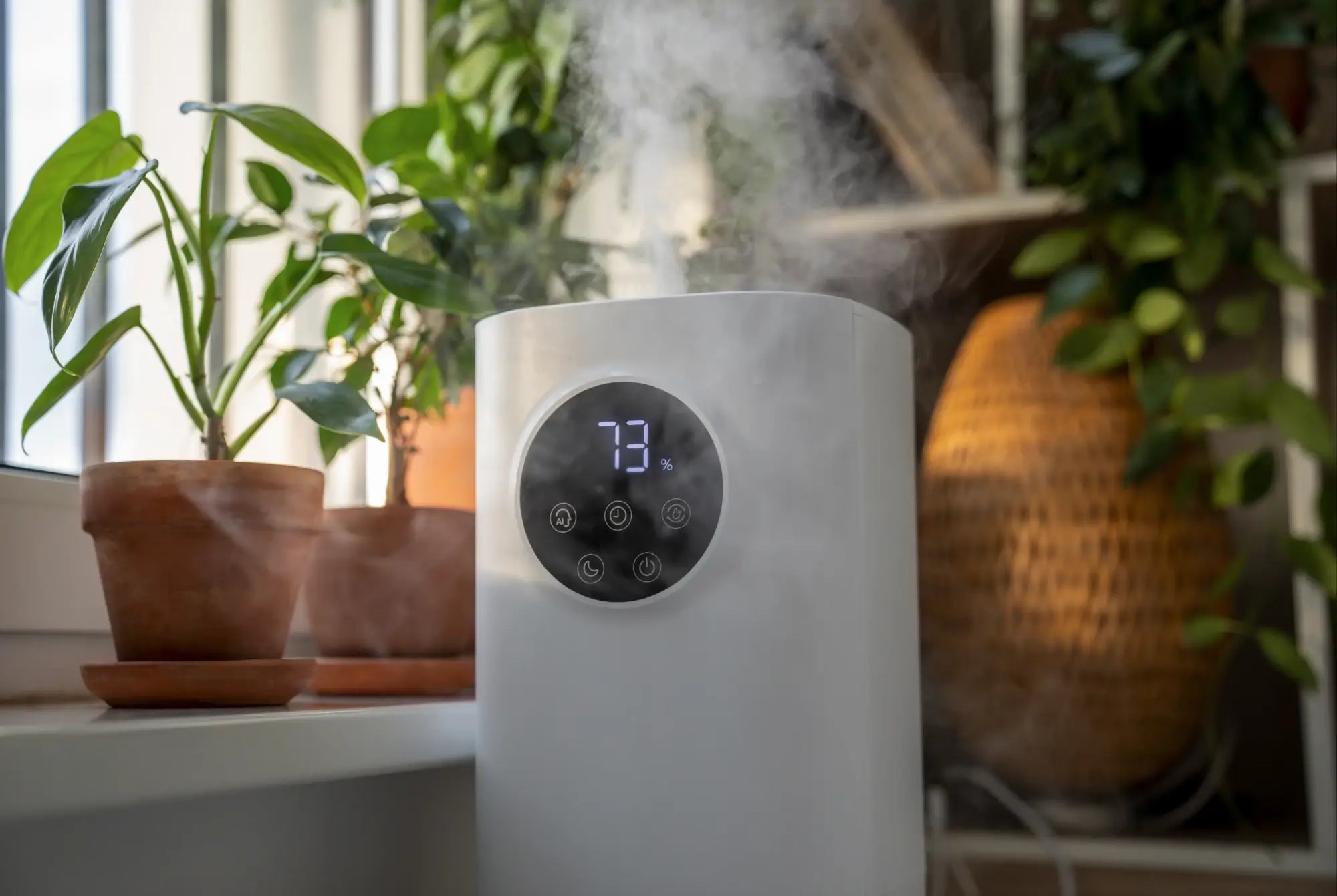
Moderate to higher humidity can reduce crispy edges, especially on thin-leaf cultivars. Humidity does not compensate for an airless, wet root zone. Stable humidity and decent airflow usually outperform extreme humidity swings.
- Reliable options: humidifier, stable indoor climate, grouping plants for mild buffering.
- Risky approach: frequent wet foliage (raises disease pressure).
Tracking humidity without guessing
A small hygrometer near plants is often more useful than assumptions. Leaf edge crisping can come from moisture swings and salt stress as much as low humidity.
Common watering mistakes
| Mistake | What happens | Fix |
|---|---|---|
| Watering on a fixed schedule | Overwatering in cool periods; underwatering in heat | Use substrate condition as the trigger |
| Keeping soil constantly wet | Root oxygen drops; tuber decline starts | Let top layer dry slightly; increase mix aeration |
| Cool + wet | Growth stalls; rot risk spikes | Reduce watering immediately and raise warmth |

Temperature and Climate for Caladiums
Caladium is strictly warm-growing. Light helps, but warmth drives sprouting speed, leaf size, and how quickly the canopy fills in. Cool conditions also change the watering equation: less warmth means slower drying and higher rot risk.
Working temperature ranges
- Active growth: 21–29°C
- Slowdown begins: prolonged periods below ~18°C
- High risk: near 10°C and below, especially with wet substrate
Hardiness (outdoors year-round)
Landscape references often list cultivated caladiums for warmer regions (commonly USDA zones 8–11), but foliage is frost-sensitive and tubers should not be exposed to freezing soil. Anywhere winter soil can freeze, tubers are better lifted and stored dry.
Indoor season vs outdoor season (temperate climates)
Indoors: keeping growth steady
- Warmth at pot level matters: cool window zones slow the root zone even if the room feels fine.
- If light drops sharply (season shift), growth often slows; watering should slow too.
- Grow lights can extend the active season, but they don’t replace warmth.
Outdoors: summering Caladium
- Move outside once nights stay reliably warm (often above ~16°C).
- Bright shade is the safest baseline; add gentle morning sun gradually if cultivar tolerates it.
- Rain is fine when the mix drains fast and temperatures stay warm. Prolonged cool rain + wet soil is where trouble starts.
Returning indoors: preventing the usual crash
- Inspect leaf undersides and petiole joints before bringing inside (pests hitchhike).
- Rinse leaves and isolate briefly if possible, especially after outdoor time.
- Once indoors, expect drying to slow; adjust watering immediately rather than after yellowing begins.
Common temperature-related problems
| Issue | Cause | Fix |
|---|---|---|
| Yellowing during cool spells | Temperature stress + wet substrate | Increase warmth; reduce watering; keep mix airy |
| Stalled sprouting | Cool soil | Warm the pot/soil; keep moisture light until roots form |
| Sudden collapse outdoors | Heat/sun spike or cold shock | Stabilise exposure; protect from extremes; keep moisture even |

Fertilizing Caladiums
Caladium responds well to steady nutrition during active growth, but overfeeding stresses roots and can muddy colour contrast. Feeding should support growth, not attempt to force pattern intensity.
What works
- Slow-release fertilizer: stable, convenient, often safer than strong frequent liquid feeding.
- Liquid feeding: effective at low strength on a consistent cadence during active growth.
Timing
- Start: once leaves are unfolding and growth is clearly active.
- Stop: as growth slows and dormancy approaches.
Salt buildup prevention
- Apply fertilizer to already moist substrate.
- Occasionally flush the pot with plain water to reduce salt accumulation (especially in small pots).
- If leaf edges burn and the mix smells “sharp,” reduce feeding and reassess watering.

Common fertilizing mistakes
| Mistake | Result | Fix |
|---|---|---|
| Over-fertilizing | Root stress, leaf edge burn, salt crust | Flush substrate; reduce strength/frequency |
| Feeding during shutdown | Unused salts accumulate while growth slows | Stop feeding as dormancy begins |
| Fertilizer against dormant tubers | Burn risk and rot risk | Keep concentrated fertilizer away from tubers |
Dormancy & Tuber Storage for Caladiums
Dormancy is normal for Caladium. Leaves yellow, soften, and disappear as the plant shuts down and the tuber becomes the “storage mode” version of the plant. Handling dormancy well is what makes Caladium repeat reliably year after year.
How dormancy starts (and how it looks)
- Leaf yellowing and gradual decline
- Slower leaf emergence, fewer new leaves
- Canopy collapses as resources move into the tuber
Cool conditions and seasonal daylength shifts often trigger dormancy. Stress can also trigger shutdown, so tuber firmness is the decision point.
Pre-dormancy transition
- Stop fertilizing as growth slows.
- Reduce watering gradually; keep the mix on the drier side as leaves decline.
- Let leaves die back naturally so remaining resources move into the tuber.
Storage option 1: in-pot dormancy
- Stop watering once foliage is gone.
- Store the pot in a dry, temperature-stable place.
- Restart in spring with warmth and light; water lightly until growth resumes.
Storage option 2: lift, cure, store (classic method)
Lift
- Lift tubers before frost in climates with freezing risk.
- Dig wide to avoid cutting tubers.
- Brush off loose soil; avoid washing unless absolutely necessary and only if thorough drying follows.
Cure
- Cure in a warm, dry, shaded place with airflow for 7–14 days.
- Remove dried foliage after curing.
Store
- Use breathable containers (paper bags, cardboard boxes, mesh sacks).
- Pack with dry material (coconut coir, vermiculite, perlite) so tubers don’t touch.
- Keep storage conditions dry and temperature-stable (mild, not cold).
- Inspect every 4–6 weeks; discard anything soft, moldy, or off-smelling.
Re-starting after dormancy
- Plant once warmth is stable.
- Water lightly until shoots and roots are active.
- Increase watering gradually as leaves unfold; begin gentle feeding once growth is established.
Common dormancy and storage mistakes
| Mistake | What happens | Fix |
|---|---|---|
| Storing tubers wet | Rot spreads fast | Cure fully; store breathable with dry packing |
| Airtight containers | Moisture buildup → mold | Use paper/cardboard/mesh for airflow |
| Very cold storage | Chilling injury and rot risk | Keep storage mild and stable |
| Never inspecting | Small failures spread to others | Check every 4–6 weeks; remove problems early |

Common Issues & Solutions for Caladiums
Most Caladium failures trace back to root-zone oxygen, temperature, and watering rhythm. Pests and foliar disease usually follow stress. Use symptom pattern and substrate condition to choose the right fix.
Root-zone triage: fastest way to stop a decline
When Caladium declines quickly, tuber and roots are the priority. Leaves lag behind the actual problem.
- Pot stays wet for days: mix is too fine, pot is too large, or conditions are too cool.
- Fungus gnats appear: substrate is staying too wet (treat moisture first, gnats second).
- Wilting with wet substrate: roots are failing — act fast.
Emergency repot protocol (when the pot won’t dry)
- Stop watering immediately.
- Unpot and inspect roots and tuber. Firm tissue is good; soft or foul-smelling tissue signals rot.
- Trim rotted roots and mushy tuber sections with clean tools.
- Allow cut surfaces to dry/callus briefly in airy shade.
- Repot into a fresh, airier mix in a correctly sized pot.
- Keep warm, in bright filtered light, and water lightly until growth stabilises.
Disease patterns that matter
At home, the practical split is: rot diseases (root/tuber failure) versus foliar diseases (spots/blight).
Rot patterns (root and tuber)
- Trigger: wet substrate + low oxygen, especially when temperatures dip.
- Symptoms: sudden collapse, persistent wilting with wet soil, soft tuber, brown/mushy roots.
- Action: reduce water, increase warmth, repot into a breathable mix, discard severely affected tubers.
Bacterial blight / leaf spot patterns
- Trigger: leaf wetness, splash, crowded foliage, poor airflow.
- Symptoms: water-soaked lesions that expand, yellow halos, rapid spread across leaves.
- Action: remove heavily affected leaves, keep foliage dry, improve airflow, isolate to avoid spread.
Virus suspicion (rare, but worth recognising)
- Pattern: persistent mosaic/mottling plus distortion that doesn’t match nutrition/light patterns.
- Action: isolate; if symptoms persist across new leaves under stable care, discard to protect the rest of a collection.
Pest management that actually works indoors
One-off treatments rarely solve infestations. Short repeated cycles do.
Step 1: isolate and wash
- Isolate the plant.
- Rinse foliage thoroughly (top and underside) to physically remove pests and eggs.
Step 2: treat and repeat
- Use a suitable control method (insecticidal soap, horticultural oil, or a targeted product) and repeat at set intervals (often weekly) for several cycles.
- Re-check undersides and petiole joints; that’s where pests hide.
Common pest patterns (quick ID)
- Spider mites: fine speckling, webbing, worse in hot/dry air. Wash thoroughly and treat repeatedly; stabilise humidity and plant condition.
- Mealybugs: cottony clusters in joints. Remove manually first, then follow with repeated treatment.
- Scale: hard bumps on petioles and undersides. Physically remove and treat repeatedly.
- Aphids: sticky residue and distorted new growth. Rinse hard and repeat treatment.
- Fungus gnats: symptom of wet substrate. Let top layer dry more and use traps/BTi.
Fast diagnosis list (mobile-friendly)
Yellowing leaves
Looks like: yellowing, droop, leaf drop.
Most likely: wet substrate, cool stress, or dormancy starting.
Do this: check moisture + warmth; reduce watering when conditions cool; if timing matches dormancy, dry down gradually.
Brown edges / crispy tips
Looks like: edge crisping, tip burn.
Most likely: moisture swings, salt buildup, low humidity, or a mix that alternates between wet and dry.
Do this: stabilise moisture; scale feeding back; flush occasionally with plain water; raise humidity gently if air is very dry.
Scorched patches
Looks like: brown patches, bleached pale tissue.
Most likely: direct sun or abrupt outdoor move.
Do this: shift to filtered light; acclimate gradually; protect pale cultivars from harsh midday sun.
Leggy, open canopy
Looks like: long petioles, fewer leaves, canopy looks “stretched.”
Most likely: light too weak for compact growth.
Do this: increase indirect light or use a grow light; keep warmth stable so extra light can be used.
Wilting with wet soil
Looks like: droop that doesn’t improve after watering.
Most likely: root/tuber failure from low oxygen.
Do this: stop watering; increase airflow and warmth; repot into an airier mix if the pot stays wet for days.
Tuber rot
Looks like: soft tuber, odor, sudden canopy collapse.
Most likely: wet + cool conditions, slow-drying substrate, oversized pot.
Do this: discard severe cases; prevent with airy mix, correct pot size, and fast response when temperatures dip.

Additional Notes for Caladium Care
Small choices — pot size, airflow, and how watering changes when growth slows — decide whether Caladium finishes a season strong or collapses into rot.
Pruning and cleanup
Remove yellowing or damaged leaves by cutting the petiole close to the base with clean scissors. Cleanup improves airflow and reduces disease pressure, especially in dense canopies.
Repotting timing
Repot at the start of the growth cycle (as the tuber wakes up). Fresh, open substrate helps oxygen reach new roots and prevents a compacted mix from staying wet too long.
Propagation by division
Division is typically done by separating tubers or tuber sections that each include at least one viable eye. Keep cuts clean, allow wounds to dry/callus in airy shade, then plant into a warm, lightly moist, airy mix.
Toxicity warning
Caladium is toxic if chewed or ingested. Insoluble calcium oxalate crystals can cause oral irritation, drooling, vomiting, and swelling. Pets vary: some ignore foliage, some chew. Keep Caladium out of reach of pets and children.
Long-term performance
- Strong seasons come from warm growth and stable moisture.
- Dormancy is normal; storage quality determines next season’s canopy.
- Airy substrate and correct pot size prevent most mid-season collapses.

FAQs About Caladium Care
These answers focus on the practical realities that decide whether Caladium thrives: warmth, root-zone oxygen, watering rhythm, and dormancy.
Can Caladium grow indoors year-round?
Caladium can be grown indoors, but foliage often does not persist year-round because dormancy is part of the plant’s cycle. Warmth and strong indirect light can extend the season. When decline begins, reduce watering gradually and stop feeding. Restart growth with warmth and light when the tuber wakes up.
Is Caladium a bulb?
Retail often calls them bulbs, but Caladium grows from a tuber. Tuber rot risk is higher when substrate stays wet and cool, so mix structure and temperature matter.
How often should Caladium be watered?
Use substrate condition rather than a fixed schedule. Water when the top 20–30% of pot depth is drying, then water thoroughly and let excess drain. Reduce watering when conditions cool or growth slows.
Are Caladiums annuals or perennials?
Caladium is a tender perennial. In frost-free climates, tubers can persist in ground if soil drains well. In climates with frost, tubers are lifted and stored or the plant is grown in containers and overwintered dry.
Are Caladiums toxic to pets and humans?
Yes. All parts contain insoluble calcium oxalate crystals. Pets vary: some ignore foliage, some chew. Keep Caladium out of reach of pets and children and seek veterinary/medical help if ingestion is suspected.
Why are leaves smaller and less colourful than last season?
Common causes include a smaller or depleted tuber, light that is too weak for dense growth, and stress from cool/wet conditions. Prioritise warmth and strong indirect light, keep substrate airy, and feed lightly during active growth.
How should tubers be stored over winter?
After foliage dies back, cure tubers dry and airy for 7–14 days, then store in a breathable container with dry packing material so tubers do not touch. Keep storage dry and mild, and check every 4–6 weeks for softness or mold.
Can tubers stay in the ground over winter?
Only where winters are reliably frost-free and soil does not stay wet and cold for long periods. In climates with freezing risk, lift and store tubers.
Why are leaves turning yellow?
Mid-season yellowing often points to wet substrate, cool stress, or root oxygen problems. Late-season yellowing can be normal dormancy. Check substrate moisture and temperature and match the response to timing.
How can a wilting Caladium be revived?
Check substrate first. If dry, water deeply and stabilise moisture. If wet, pause watering and increase airflow; repot into an airier mix if the pot stays wet for days. Protect from harsh sun and temperature spikes while recovering.
When should Caladium be brought out of dormancy?
Restart when warmth is stable. Pot tubers into an airy mix, keep warm, and water lightly until shoots and roots are active. Increase watering gradually as leaves unfold and begin gentle feeding once growth is established.
Conclusion
Caladium thrives when conditions stay warm and the root zone stays oxygen-rich. Keep moisture even during active growth, avoid wet-and-cool combinations, and accept dormancy as part of the cycle. Stored well, a healthy tuber returns with a stronger, cleaner canopy next season.
Order Caladium plants and tubers today and choose cultivars that match light and seasonal setup.
 |
 |
 |
 |
|
 |
 |
|
|
|
 |
 |
|
 |
 |
 |
 |
 |
References, Sources & Further Reading
International Aroid Society
The Genus Caladium (International Aroid Society)
Aroid.org (International Aroid Society)
Botanical nomenclature and taxonomy
Caladium bicolor (Plants of the World Online, Kew)
Caladium (genus) (Plants of the World Online, Kew)
Caladium bicolor (Aiton) Vent. (IPNI)
Caladium hortulanum Birdsey (IPNI)
CABI Compendium
Rojas-Sandoval, J. Caladium bicolor (heart of Jesus). CABI Compendium Publication ID: 121808.
https://doi.org/10.1079/cabicompendium.121808
Peer-reviewed research
Cao, Z., Sui, S., Yang, Q. et al. A single gene controls leaf background color in caladium (Araceae) and is tightly linked to genes for leaf main vein color, spotting and rugosity. Hortic Res 4, 16067 (2017).
https://doi.org/10.1038/hortres.2016.67
Deng, Z., Harbaugh, B. K., & Peres, N. A. Caladium Cultivars Cosmic Delight, Fiesta, and Hearts Desire. HortScience 51(6), 766–771 (2016).
https://doi.org/10.21273/HORTSCI.51.6.766
Zhou, Y., Xu, Y., Zhu, G.-F. et al. Pigment Diversity in Leaves of Caladium × hortulanum Birdsey and Transcriptomic and Metabolic Comparisons between Red and White Leaves. Int J Mol Sci 25(1), 605 (2024).
https://doi.org/10.3390/ijms25010605
Hussain, R., Younis, A., Riaz, A. et al. Evaluating sustainable and environment friendly substrates for quality production of potted Caladium. Int J Recycl Org Waste Agricult 6, 13–21 (2017).
https://doi.org/10.1007/s40093-016-0148-0
Budiarto, R., Mubarok, S., Hamdani, J.S. et al. Physiological characteristics of ornamental caladiums (Caladium × hortulanum Birdsey, Araceae) through leaf colour diversity. S Afr J Bot (2024).
https://doi.org/10.1016/j.sajb.2024.08.054
University and extension resources
Kirk-Ballard, H. It’s time to harvest caladium bulbs. LSU AgCenter Gardening, October 1, 2020.
https://www.lsuagcenter.com/profiles/rbogren/articles/page1601586530368
Caladiums for the Home Landscape. North Carolina State Extension.
https://content.ces.ncsu.edu/caladiums-for-the-home-landscape
Gilman, E.F. & Wilson, S.B. (eds). Caladium (Caladium × hortulanum). UF/IFAS Publication FPS-83 (FP083).
https://ask.ifas.ufl.edu/publication/FP083
Stauderman, K. Growing Caladiums in the Landscape. UF/IFAS Extension – Volusia County (2019).
https://blogs.ifas.ufl.edu/volusiaco/2019/05/22/growing-caladiums-in-the-landscape/
Diseases and diagnostics
Bowman, H.M., Polston, J.E., & McGovern, R.J. Diseases of Caladium. In: McGovern, R., Elmer, W. (eds) Handbook of Florists' Crops Diseases. Springer (2016).
https://doi.org/10.1007/978-3-319-32374-9_40-1
Deng, Z. Caladium. In: Van Huylenbroeck, J. (ed.) Ornamental Crops. Handbook of Plant Breeding, vol 11. Springer (2018).
https://doi.org/10.1007/978-3-319-90698-0_12
De-eyeing (container production practice)
Deng, Z. New Caladium Cultivars 'Dots Delight' and 'Wonderland' (UF/IFAS, EP641).

%20is%20a%20tropical,%20tuber-grown%20foliage%20plant%20built%20...)
Leave a comment