Skip to content

Cart

Your cart is empty

Aftercare Guide:

What To Do With Your New Houseplant


You’ve just brought a new plant home. The first weeks after delivery decide how well it adapts to your space. This guide shows you what to do in the first minutes, days, and weeks after purchase so your new houseplant can settle in with as little stress as possible.Everything here applies to plants ordered online and shipped from our greenhouse, including rare collector plants, baby plants, and plug plants.

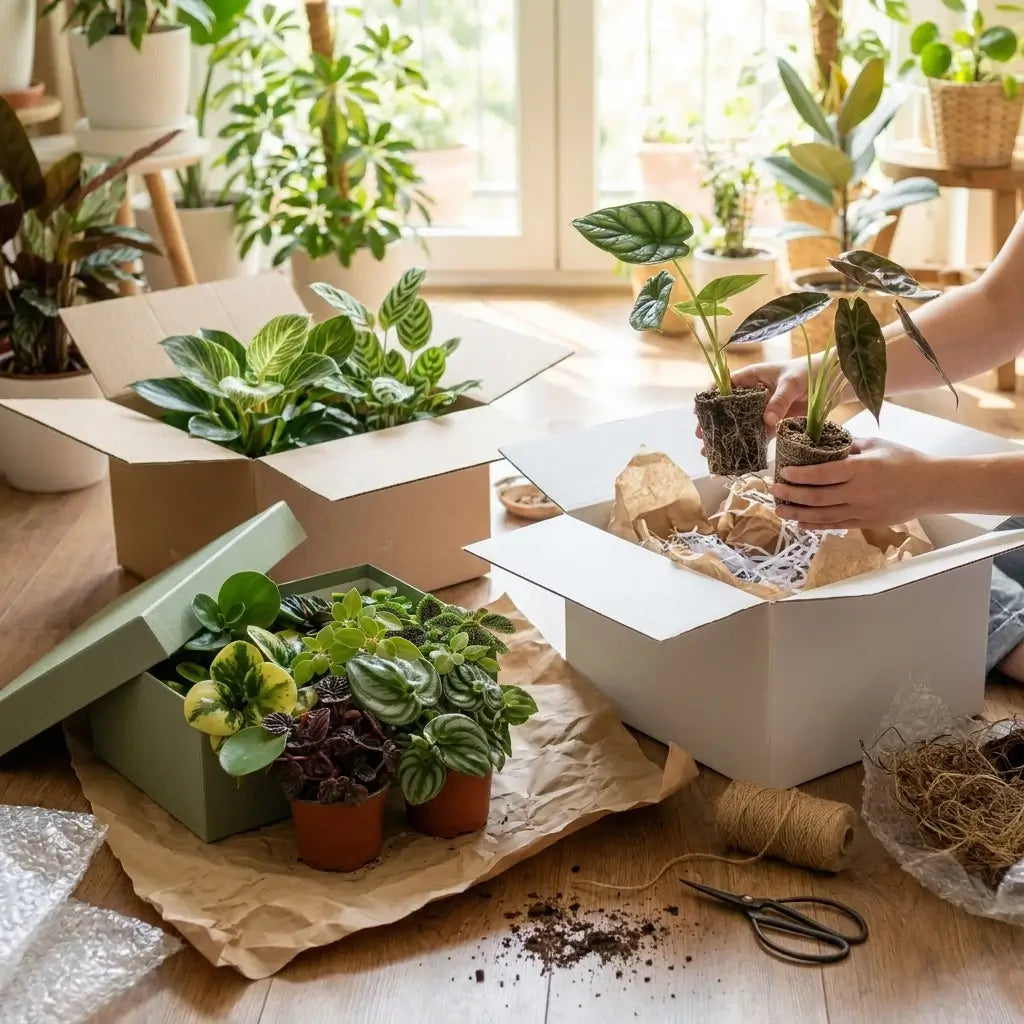
Repotting tools and materials on a wooden table, potted plants

First days are about observation, not action.

Give your plant one stable spot for a few days so you can see how it responds before you change anything. Rushing to “fix” things often causes more stress than the shipping did.


Is This Normal?

Quick Check After Delivery


Use this quick comparison to decide whether what you are seeing is normal shipping stress or something that needs attention under the guarantee.


Usually normal after shipping (no claim needed):

✓ One or a few yellowing leaves, especially older leaves low on the plant.

✓ Slight droop or limpness that improves after a day or two in stable conditions.

✓ Small scars, bent tips, or minor tears from movement in the box.

✓ Substrate a bit drier or a bit wetter than ideal, while stems and most roots still feel firm.


Needs a closer look – contact us with photos during the guarantee period:

✗ Several stems or a large part of the plant turning mushy or collapsing within a few days.

✗ A strong sour, rotten, or swampy smell from the pot or substrate.

✗ Large areas of black, soft tissue at the base of stems or around the crown.

✗ Heavy pest presence on arrival (for example, many mealybugs or spider mites already spread over several leaves).


If you’re unsure, treat it as “needs a closer look”, take clear photos, and contact us. Acting early is always easier than trying to rescue a plant that has already collapsed.


TL;DR

First Month With Your New Plant

  • Keep your plant in the original pot and substrate for at least 28 days. Early repotting adds stress and can void the 28-day plant health guarantee.
  • Stabilise first: bright, soft light, no drastic changes, and water only when the root zone is actually drying out – not just because the parcel arrived.
  • Some shipping stress is normal: a few yellow leaves, mild droop, small scars. Serious problems look different: collapsing stems, rotten smell, or widespread mushiness.


For species-specific care, check the product page of your exact plant, then use this guide as the general framework.


Decorative image

Your 28-Day Plant Health Guarantee

Our 28-day plant health guarantee protects both you and your plant, as long as a few key conditions are met:

  • The guarantee covers your plant for 28 days from delivery, as long as it stays in the original pot and substrate during that time.

  • Repotting in the first 28 days adds extra stress and makes it impossible to tell whether damage came from shipping, your environment, or the repot itself.

  • For that reason, repotting during the first 28 days can void the guarantee. Leave the plant in its current pot until the guarantee period has passed and you can see stable new growth.

  • If you notice serious issues such as severe wilt, soft stems, clear rot, or heavy pests, contact us as soon as possible within the 28 days and include clear photos of the whole plant, the pot, and the substrate surface.

  • Cosmetic shipping marks – single yellow leaves, small tears, bent edges – are common in shipped plants and usually not a sign of long-term problems.


Keep the original pot (and, if possible, the label) until the 28 days are over.

For the full policy including returns and refunds, see our Guarantee & Returns page.

Person tending to potted plants in a home setting

If you’re torn between watering and waiting, lean toward waiting and checking the root zone again later. Most plants tolerate a short, slightly dry phase better than a day sitting in cold, soggy substrate. The exception is a plant that is clearly limp and bone-dry right through the pot.

First 28 Days With Your New Houseplant

Step-by-Step Guide


Step 1 – First 10–15 Minutes: Unpack and Check Right after delivery:

  • Open the box carefully and remove any padding around plant and pot. Cut tape and ties instead of pulling.
  • Check that the plant label and name match your order.
  • Health check – leaves and stems: look for obvious breaks, black mushy spots, or crushed tissue.
  • Health check – substrate surface: look for mould, unusual colour, moving insects, or a strong unpleasant smell.
  • Health check – drainage holes (if visible): glance for black, slimy roots, which can indicate rot.
  • If you see severe breakage, heavy rot, or clear pest infestation, take photos immediately while the plant is still exactly as it arrived.
  • Avoid repotting, heavy pruning, washing roots, or other big interventions at this stage. The goal now is to stabilise, not overhaul.


Step 2 – First 24–48 Hours: Light, Quarantine and Water Check


Once your plant is unpacked:

  • Place it in bright but gentle light, close to a window with soft daylight. Avoid deep shade and harsh midday sun on bare glass.
  • Keep it away from radiators, direct hot air, and cold draughts from doors or tilted windows.
  • Start a short quarantine: keep the new plant a bit away from the rest of your collection for at least a week to reduce pest risk.


“Should I Water Now?” – Simple Rules


Wait before watering if:

  • The pot feels medium weight – not extremely heavy, not feather-light.
  • The top layer is only slightly dry and the root zone is still lightly moist.
  • Leaves are mostly firm with only mild droop that is not getting worse.


Water now if:

  • The pot feels very light and “hollow” when you lift it.
  • The substrate is dry not just on the surface but all the way through the root zone.
  • The plant is clearly limp and does not improve after a few hours in its new position.


If you do water, do it once and properly: water until you see a steady trickle from the drainage holes, let the pot drain fully, and empty any excess from the saucer.


Step 3 – First 7 Days: Acclimation Week


In the first week, your plant is adjusting from greenhouse conditions and transport to your home:


What you can expect:

  • A pause in growth or slightly slower growth.
  • A few yellow or tired leaves, usually older ones.
  • Minor cosmetic imperfections that do not spread.


How to care during this week:

  • Keep the plant in the same general spot instead of moving it every day.
  • Check moisture in the root zone regularly and water only when needed – not on a fixed calendar.
  • For moisture-loving tropical foliage, aim for a lightly moist substrate with a short dry phase at the top.
  • For succulents, many Euphorbia, and cacti, let the substrate dry more deeply between waterings.


What not to do:

  • Do not repot during this week; your guarantee and the plant’s stress level both depend on this.
  • Avoid heavy pruning unless there is clearly dead or mushy tissue that needs to be removed.


If you see rapid collapse, bad smell from the substrate, or large parts of the plant turning mushy, refer back to the “Is this normal?” section and contact us with photos within the guarantee period.


Step 4 – Days 8–28: Build a Stable Routine


After the first few days, build a consistent pattern that fits the plant group you’re dealing with:


Light:

  • Tropical foliage plants (many aroids, ferns, Calathea/Ctenanthe types) often do best in bright, indirect light near a window, without long stretches of harsh midday sun.
  • Sun-adapted plants (succulents, many Euphorbia, cacti, some shrubs) can be introduced to stronger light stepwise over time to avoid sunburn on tissue grown in softer light.
  • If you want more precision, our light guide “How Much Light is ‘Plenty of Bright, Indirect Light’ EXACTLY?” breaks light levels down into simple ranges.


Watering:

  • For moisture-loving tropical plants, keep a cycle where the top layer dries slightly between waterings while the deeper root zone stays evenly moist, not saturated.
  • For arid, desert-adapted plants, allow more of the pot volume to dry before watering again; staying constantly wet is a bigger risk than brief dryness.
  • Always pour off standing water from saucers so roots are not sitting in stagnant water.


Air and temperature:

  • Avoid very dry, hot air directly above radiators – it can cause crispy edges and sluggish growth in many tropical species.
  • Ensure gentle air movement around your plants, but do not place them in direct cold draughts.


Feeding:

  • Your plant was fertilized before shipping. In most cases it does not need extra fertiliser in the first weeks.
  • Once growth is steady in your home and you see new leaves or shoots, you can start with a dilute, balanced fertiliser suitable for that plant group.
  • Additives or tonics cannot fix wrong light, overwatering, or unsuitable temperatures; they are an optional extra, not a main treatment.


Step 5 – After 28 Days: When and How To Repot


Once the first 28 days have passed and the plant shows clear signs of new growth, repotting becomes safer:


Signs your plant may want a new pot:

  • Roots clearly visible in the drainage holes or circling just inside the pot.
  • The plant drying out much faster than when it arrived, under the same conditions.
  • Substrate breaking down into a dense, compact mass that no longer drains well.


Choosing a pot:

  • Go only one or two sizes up; very large pots stay wet for too long and increase the risk of rot.
  • Always use a container with proper drainage holes.


Choosing a substrate:

  • Use airy, coarse mixes for many aroids and epiphytic species.
  • Use fast-draining, largely mineral mixes for succulents, many Euphorbia, and cacti.
  • Use fine but still breathable mixes for many baby plants and species with finer roots.


Repotting basics:

  • Gently loosen the outer layer of roots if they are very compacted.
  • Keep the healthy core of the root ball as intact as possible.
  • After repotting, water once to settle substrate around the roots, then let excess water drain completely.


For a detailed, step-by-step walkthrough, use the “Guide to Repotting Houseplants” as a more in-depth reference and keep this step list as your quick overview.

Four plug plants/ starter plants with different leaf patterns on a white background


Special Cases:


Baby Plants

  • Smaller plants have fewer stored reserves and can react faster to extremes in water, light, or temperature.
  • Provide bright, gentle light and avoid blasting them with strong midday sun.
  • Check moisture more often but water in moderate amounts – smaller, regular waterings are safer than rare heavy soakings.
  • Avoid major jumps in pot size or radical substrate changes in the first weeks.


Plug Plants


  • Plug plants arrive as a young root system in a small plug, often within a biodegradable filter.
  • Pot them into a small container only slightly wider than the plug, using a suitable, airy mix for that plant group.
  • Keep the plug filter intact to protect fine roots; it will break down over time.
  • Pack substrate lightly rather than pressing it hard – roots need air spaces.


What Acclimatization Means for Indoor Plants


When a plant moves from a controlled greenhouse into a shipping box and then into your living space, several things change at the same time:

  • Light intensity and duration usually drop or shift, so the plant must adjust how much energy it can capture with its current leaves.
  • Air humidity and temperature become more variable, so the plant re-balances water loss through leaves with absorption through the roots.
  • Air movement, background CO₂ levels, and how quickly the substrate dries all differ from the nursery environment.


The plant responds by adapting:

  • It may shed some older leaves that are less efficient under the new conditions.
  • It often slows growth while new tissue that suits your light and climate develops.
  • New leaves may differ slightly in size, thickness, or colour compared to the ones grown in the greenhouse.


This is why a certain amount of yellowing, minor leaf loss, and a growth pause is expected in the first weeks after arrival. Your job during acclimatization is to avoid extra shocks so the plant can complete this adjustment.


If you’d like to see more examples and a deeper breakdown of this process, you can read our ➜ Houseplant Acclimatization Guide.

Person holding a potted Chinese Money plant Pilea peperomioides with a polka dot pattern on their clothing


Start With the Plant Care Basics


If you want to build a solid foundation beyond this aftercare guide, these core resources are a good place to start:


Hand holding a brown leaf with a blurred plant background


Common Mistakes To Avoid in the First Month


Avoiding a few key mistakes prevents most new-plant problems:

  • Repotting in the first weeks “to give it more space” – wait until after the 28-day period and clear new growth.
  • Watering immediately on arrival without checking the root zone – many plants arrive in slightly moist substrate and do not need more water right away.
  • Putting a stressed plant straight into harsh direct sun – tissue grown in softer light can burn quickly.
  • Treating all plants the same – tropical foliage, ferns, succulents, cacti, and plug plants follow different watering and substrate patterns.
  • Ignoring early warning signs – persistent mushy stems, foul smell from the substrate, or rapid collapse need quick action during the guarantee window.

FAQ – New Plant Aftercare


How do I know if my plant needs more light?


Look for stretched, leggy growth, very small new leaves, dull colouring, and substrate that stays wet for a long time because the plant is not using much water. If you see this pattern, move the plant to a brighter spot with gentle, indirect light and use our light guide for more concrete ranges.


What level of yellowing is still normal after shipping?


A few yellow or tired leaves, especially older ones, are normal in the first weeks. Large areas of mushy, dark tissue, a bad smell from the substrate, or most leaves failing at once are not. If in doubt, compare with the “Is this normal?” section above and contact us with photos.


Should I fertilize my new plant right away?


No. The plant was fertilized before shipping and does not normally need extra fertilizer in the first weeks. Once it has adjusted to your home and shows steady new growth, you can start with a dilute, balanced fertiliser suitable for that plant group.


What does the 28-day guarantee mainly cover?


The guarantee is designed for serious health issues that are not caused by incorrect care after delivery, such as severe hidden rot, significant pest infestation that was not visible on unpacking, or sudden collapse despite appropriate conditions. Damage from early repotting, chronic under- or overwatering, or unsuitable light is not covered.

If you have broader questions about ordering, shipping, payments, or promotions, please visit our main FAQ.

Close-up of large green leaves with a blurred indoor plant setting, collection of potted plants


Need Help With Your New Plant?


Caring for plants is a learning process, even if you already own a large collection. Conditions differ in every home, and sometimes a plant behaves in ways that raise questions.


If something feels off and you are not sure how to interpret the symptoms, reach out – we’re happy to help you work out what your new plant needs so it can settle in and grow well over the long term.


Contact Us ➜

FAQ Arrival Issues