On smaller screens, scroll sideways to view the full notice at a readable size.
Legal guarantee.
Minimum two-year legal guarantee protection for goods sold in the European Union.
Consumers can claim their rights under the legal guarantee of conformity, for example if goods:
do not match the description;
do not function as intended.
Sellers are liable for any lack of conformity which existed when the goods were delivered, and which becomes apparent within the legal guarantee period. Sellers in such a situation are required to offer:
free repair or free replacement;
in some cases, a price reduction or full reimbursement.
Some countries have a longer legal guarantee period. For second-hand goods, a shorter period may apply, but not less than one year.
For more information on your rights in a specific country, scan the QR code below or ask the seller. europa.eu/youreurope/guarantees
What to do if you receive non-conforming goods:
Contact the seller as soon as possible to report the issue;
Provide proof of purchase, such as a receipt, invoice, or bank statement.
Sellers and producers may also offer commercial guarantees, which apply independently from the legal guarantee. For example, you may see this GARAN label representing a commercial guarantee of durability offered by the producer at no additional cost and covering the entire good.
10 Low-Light Houseplants That Actually Thrive Indoors
What “Low Light” Really Means
When people say “low light,” they often mean no direct sun touches the leaves. For houseplants, that can describe very different situations: a bright north-facing windowsill, a shelf two metres from a window, a shaded hallway, or a room with no natural light at all. Those differences matter. One spot may allow slow growth, while another only allows a plant to stay alive.
Indoor light is much weaker than outdoor light, even beside a window. Move a plant just one or two metres back, and usable light drops quickly. At very low levels, a plant may still photosynthesise, but only just enough to maintain existing leaves and roots. That is not active growth. It is maintenance on a tight energy budget.
This is where light-compensation point becomes useful. It describes the point where photosynthesis produces roughly as much energy as a plant uses through respiration. Below that level, decline begins over time. Just above it, growth may be almost invisible. For low-light houseplants, success means choosing species that can stay stable near that threshold without collapsing.
Season also changes the picture. In winter, shorter days and lower sun angles reduce the total light a plant receives each day. A plant that grows slowly in the same spot in June may simply hold steady from November to February. That pause is not automatically a problem; it is often a normal response to lower energy.
Shade-tolerant plants like Philodendron hederaceum 'Micans' still need measurable light. Low light means less energy, not no energy.
Not sure how dim your corner really is?
Use a free lux-meter app at plant height. Phone apps are not perfectly precise, but they are useful for comparing one indoor spot with another.
Below 500 lux: true low light, usually maintenance only
Around 1 000–2 000 lux: low-to-medium light, where slow growth becomes more realistic
No natural window: artificial light is required if you want a plant to live long-term
📌 Rule of thumb: the farther a plant sits from a window, the less it builds. In very dim spots, a good result often means healthy, stable, slow growth rather than constant new leaves.
Low-Light Houseplants That Actually Cope Indoors
Shade-tolerant houseplants are not magic. They still need photons, oxygen around their roots, and care that matches their slower pace. What makes them useful is their ability to stay attractive and functional in places where faster-growing tropical plants stretch, yellow, or stall.
Strong low-light choices tend to share a few traits: slow growth, durable leaves, efficient light use, tolerance of irregular watering, and the ability to remain stable without constant repotting or feeding. Some are best for darker corners. Others prefer a little more brightness but still cope well in north-facing rooms or shaded interior spaces.
➜ Quick Reference: What Low Light Usually Means Indoors
Indoor Position
Likely Result
Best Approach
0.5–1 m from a north-facing window
Slow but visible growth for tolerant species
Rotate occasionally and water only when needed
1.5–2 m from a window or along an interior wall
Maintenance mode for true shade survivors
Choose very tolerant plants and avoid overwatering
Windowless room or dark hallway
Not suitable long-term without added light
Use a daylight LED, 4000–6500 K, for 12–14 hours daily
Best Low-Light Plants by Space and Use
Situation
Best Choices
Why They Work
Darkest usable corner
Aspidistra elatior, ZZ Plant
Slow metabolism, durable leaves, strong tolerance of neglect
Aspidistra elatior is one of the strongest choices for genuinely dim interiors: slow, tough, and stable.
Aspidistra elatior is the benchmark for low-light resilience. Its broad, leathery leaves hold well in shaded interiors, and slow growth makes it far less demanding than many tropical foliage plants. It can sit away from a north-facing window for long periods without dramatic decline, as long as the soil is not kept constantly wet.
Care: Low to medium indirect light; water when the top few centimetres of soil are dry.
Why it works: Slow growth and durable leaves help it maintain itself at light levels where faster plants struggle.
Best use: Shaded corners, offices, hallways with some daylight, and low-maintenance plant displays.
ZZ Plant stores water in thick rhizomes and stems, which makes it unusually forgiving in dim, dry indoor spaces.
ZZ Plant is ideal when light is low and watering is easy to forget. Thick underground rhizomes and fleshy stems store water, while glossy leaflets keep their structure even when growth is slow. In very dim rooms, ZZ Plant may look almost unchanged for months. That stability is useful, but it should not be confused with fast growth.
Care: Low to medium indirect light; let the mix dry well before watering again.
Useful detail: Dark cultivars such as ‘Raven’ are naturally slow and can look stable for long periods, but they still grow better with measurable indirect light.
Best use: Desks, shaded offices, shelves, and corners where watering needs to stay minimal.
Caution: Toxic if chewed; keep away from pets that nibble plants.
Chamaedorea elegans is a compact palm for gentle indoor light. It does best close to a window with filtered brightness, but it also tolerates lower light better than many palms. Fine fronds add height and movement without becoming bulky, making it useful for narrow spaces and quieter interior corners.
Care: Low to medium indirect light; keep soil lightly and evenly moist, never soggy.
Why it works: Naturally adapted to filtered forest light, with a slow growth rate indoors.
Best use: North-facing rooms, shaded desks, plant groups, and pet-safe indoor displays.
Dracaena fragrans brings height to lower-light interiors, especially when watering stays restrained.
Dracaena fragrans is a reliable choice when you want height without demanding high light. Long, arching leaves rise from woody canes, giving shaded rooms structure and scale. In low light, it grows slowly and may shed older lower leaves over time, but it usually remains attractive if roots are allowed to breathe.
Dragon Tree keeps a narrow, architectural outline in low-to-medium light.
Dragon Tree is a good fit when a shaded space needs shape rather than dense foliage. Slim leaves, upright canes, and a narrow footprint make it useful in modern interiors. It tolerates lower light, but prolonged dimness can lead to thinner crowns and gradual lower-leaf drop.
Care: Low to medium indirect light; let the potting mix dry halfway before watering.
Shape tip: Rotate occasionally so new growth does not lean strongly toward the window.
Reality check: Move slightly brighter if the crown becomes sparse or stems stretch.
Aglaonema brings pattern and fullness to shaded rooms, provided warmth and drainage stay consistent.
Aglaonema is one of the best options for colour and pattern in lower light. Green and silver cultivars usually cope better with shade than pink or red types, which often need a little more brightness to grow well. Keep it warm, avoid cold drafts, and let the upper soil dry slightly before watering again.
Care: Low to medium indirect light; water once the upper soil begins to dry.
Best use: Shaded tabletops, shelves, and plant groups where patterned leaves add visual interest.
Common mistake: Constantly damp soil leads to root problems, especially in cool rooms.
Dieffenbachia seguine gives low-light rooms broad leaves and strong pattern, but compact growth needs some brightness.
Dieffenbachia seguine remains popular for good reason. It handles lower light better than many large-leaved tropical plants and keeps a full look when care stays moderate. In very dim positions, stems can stretch and leaves may become smaller, so it performs best in low-to-medium indirect light rather than deep shade.
Care: Low to medium indirect light; water when the top few centimetres of soil are dry.
Maintenance: Rotate monthly and prune older canes if the plant becomes top-heavy.
Best use: Spots with gentle daylight where a fuller, broad-leaved plant is wanted.
Caution: Sap is irritating; wear gloves when cutting and keep away from pets.
Philodendron hederaceum is a forgiving trailing plant for low-to-medium indoor light.
Philodendron hederaceum is one of the easiest trailing plants for lower light. It tolerates shade, irregular watering, and normal indoor humidity, while remaining easy to prune, trail, or train. In dimmer rooms, growth slows and spacing between leaves may increase; brighter indirect light gives fuller vines.
Care: Low to bright indirect light; water when the top layer of substrate dries.
Growth tip: Trim long bare stems to encourage fuller growth near the pot.
Substrate note: Adapts well to mineral or semi-hydro substrates if moisture and oxygen stay balanced.
Epipremnum aureum survives lower light well, but stronger indirect light supports fuller, more vigorous growth.
Epipremnum aureum is famous for being forgiving, but low light still changes how it grows. In dim rooms, new leaves may become smaller, vines may extend more slowly, and leaf pattern can appear less pronounced depending on the plant and cultivar. Better indirect light supports stronger growth, but variegation should not be treated as a simple light switch.
Care: Low to medium indirect light; let the topsoil dry before watering again.
Useful detail: If growth becomes weak or widely spaced, move the plant closer to a window or add a daylight LED.
Best use: Shelves, cabinets, hanging planters, and shaded trailing displays.
Rhapis excelsa is slow-growing, long-lived, and well suited to shaded rooms with steady care.
Rhapis excelsa is a refined palm for shaded interiors, especially where a plant needs to look good for years rather than grow quickly. Fan-shaped fronds stay tidy with moderate care, and the plant usually prefers a snug pot. It tolerates lower light, but steady indirect brightness keeps fronds stronger and denser.
Care: Low to medium indirect light; keep evenly moist but never wet.
Maintenance: Wipe fronds occasionally so dust does not block limited indoor light.
Best use: North-facing rooms, offices, shaded living areas, and pet-safe plant corners.
Pet safety: Considered pet-safe.
These plants cope with low light in different ways. Some store water, some grow slowly, some tolerate shade through durable leaves, and some simply remain stable where more demanding plants decline. Care pattern matters as much as plant choice: in dim rooms, less often means better.
🔗 Learn the Science Behind “Low Light”
For a deeper explanation of indoor light levels, plant adaptation, and common low-light myths, read the low-light guide.
Simple Care Rules for Dim Interiors
Low light changes the whole care routine. It slows photosynthesis, but it also slows water use, root growth, nutrient demand, and drying time inside the pot. That is why many plants in dim rooms fail from too much care rather than neglect.
The goal is not to push low-light plants into fast growth. The goal is to keep the root zone airy, the leaves clean, and the light level just high enough for long-term stability.
➜ Quick Reference Table: Care in Low Light
Task
What Changes in Low Light
What to Do
Watering
Soil dries more slowly because growth and transpiration are reduced.
Check the soil first. Wait until the top few cm are dry, and lean slightly dry rather than wet.
Fertilising
Nutrient use slows because light limits growth.
Feed lightly only when new growth appears. Avoid routine feeding in winter.
Pot Size
Roots expand slowly, and excess substrate can stay wet too long.
Repot one size up at most. Choose an airy mix and reliable drainage.
Cleaning Leaves
Dust reduces already limited usable light.
Wipe leaves gently every few weeks, especially large or glossy leaves.
Seasonal Position
Winter days are shorter and weaker.
Move plants closer to windows in winter, then adjust again when spring brightness returns.
Artificial Light
No-window spaces cannot support plants naturally.
Add a daylight LED, 4000–6500 K, for 12–14 hours daily.
Water less often, but keep checking.
In dim rooms, substrate stays moist longer because plants use less water.
Overwatering is the most common reason low-light plants fail.
Before watering, press your finger into the mix or use a moisture meter as a second check.
If the top few centimetres still feel cool or damp, wait.
Roots need oxygen as much as moisture. Stagnant, wet substrate suffocates fine roots.
💡 Quick cue: when unsure, waiting an extra day is usually safer than watering too soon.
Feed gently because light is the real limit.
Fertiliser cannot replace photons.
When light is scarce, plants cannot use nutrients quickly, and excess salts can build up around roots.
Use diluted fertiliser only when a plant is actively producing new growth.
Skip routine feeding during winter pauses or when a plant is only maintaining existing leaves.
Keep pots snug, not spacious.
In shade, roots grow slowly.
A pot that is too large holds excess wet substrate around a smaller root system.
When repotting, move up only one pot size and use a mix that holds moisture without becoming dense.
Snug pots often give slow-growing plants a more stable root environment.
Clean leaves because every photon counts.
Dust blocks light from reaching the leaf surface.
Large, glossy leaves show dust quickly, but smaller leaves collect it too.
Use a soft, damp cloth every few weeks and support the leaf from below while wiping.
Clean leaves also make it easier to spot pests before they spread.
Adjust with the seasons.
Winter brings shorter days and weaker light, especially in northern Europe.
Move low-light plants slightly closer to windows from November to February if temperatures near the glass remain safe.
Pull sensitive shade plants back again if spring or summer sun begins to hit the leaves directly.
Keep gentle airflow around dense plant groups so moisture does not sit on leaves or in the substrate.
Use artificial light when natural light is not enough.
A windowless room cannot support houseplants long-term without added light.
Use a daylight LED in the 4000–6500 K range for a neutral white light that works well for indoor plant setups.
Set lights on a timer for 12–14 hours per day.
Measure at leaf height if possible. The useful number is the light that reaches the plant, not the brightness printed on the bulb box.
A simple daylight bulb close to the plant is often more effective than a powerful lamp placed too far away.
Use reflective surfaces, but keep expectations realistic.
Pale walls, light shelves, mirrors, and glossy surfaces can increase reflected light around a plant.
A plant beside a white wall usually receives more usable ambient light than one surrounded by dark furniture.
Reflective surfaces help, but they do not replace a window or a grow light in truly dark rooms.
Do not rely on misting in low light.
Misting is not a reliable humidity strategy. It wets the leaf surface briefly, then evaporates.
In dim, still rooms, wet leaves dry more slowly and may become more prone to spotting.
Use a damp cloth for dust instead of spraying leaves repeatedly.
If a plant needs higher humidity, use a humidifier, group compatible plants, or place sensitive species in a brighter, ventilated setup.
Respect the slower pace.
Low-light plants are efficient, not fast.
Heavy feeding, constant repotting, and frequent watering usually cause more stress than benefit.
Many shade-tolerant species grow slowly because they are balancing limited energy with long-term survival.
Some houseplants also enter a seasonal pause when light and temperature drop. That can look like inactivity, but it is not automatically decline. 🔗 Read more in the dormancy article.
For more on root habits and why substrate choice matters, see the epiphyte guide.
💡 Low light does not mean no growth. It means slower water use, slower nutrient use, and slower visible change. Match that rhythm, and plants stay healthier for much longer.
Quick FAQs About Low-Light Houseplants
Can plants really live in rooms with no windows?
Only with artificial light. Without photons, photosynthesis stops. For windowless rooms, use daylight LEDs between 4000 and 6500 K for 12–14 hours per day on a timer. Even simple LED bulbs or strips can help if they provide enough light at leaf height.
How can I tell how dark my space actually is?
Use a free lux-meter app and measure where the plant will sit. Anything below ~500 lux is true low light and usually means maintenance mode. Around 1 000–2 000 lux, many tolerant plants can start producing slow, visible growth.
💡 Quick tip: measure several spots. Moving one metre away from a window can reduce usable light dramatically.
Why are new leaves smaller in low light?
Smaller leaves often mean limited energy. In dim light, many plants reduce growth speed, leaf size, or internode density. Fertiliser will not fix this if light remains the limiting factor.
Does low light change variegation?
Low light mainly slows growth. Some plants may produce smaller leaves or less strongly marked new growth depending on species and cultivar, but variegation should not be treated as a simple light-controlled feature. Better indirect light supports stronger growth, but it does not reliably create or restore variegation.
The stems are stretching. What is happening?
Stretching usually means a plant is reaching for more usable light. Stems lengthen, spaces between leaves increase, and growth becomes weaker. Move the plant closer to a window or add a daylight LED to support denser new growth.
Do not use misting as a main humidity method. It briefly wets leaves but does not provide stable humidity, and in dim rooms leaves may stay wet too long. Wipe dust with a damp cloth instead. For humidity-sensitive plants, use a humidifier, group plants, or choose a more suitable brighter setup with gentle airflow.
Rarely. Feed lightly only when new growth is visible. In low light, plants cannot use nutrients quickly, so excess fertiliser can build up in the substrate and damage roots.
Do low-light plants grow faster in brighter light?
Usually, yes, as long as the brightness is still suitable for the species. Moving from very dim light to stronger indirect light often improves leaf size, root activity, and growth rate. Sudden direct sun can scorch shade-adapted leaves, so increase light gradually.
Which low-light plants are pet-safe?
Good pet-safe options include Aspidistra elatior, Chamaedorea elegans, and Rhapis excelsa. Avoid ZZ Plant, Aglaonema, Philodendron, Epipremnum, and Dieffenbachia if pets are likely to chew leaves or stems.
Can I keep plants in a north-facing room?
Yes. North-facing rooms often provide soft, consistent light, especially close to the glass. Aspidistra elatior, ZZ Plant, Parlor Palm, Lady Palm, Philodendron hederaceum, and Epipremnum aureum can all work well, provided watering is adjusted to slower drying.
Can I put low-light plants closer to a window in winter?
Yes, and it often helps. Just avoid cold drafts, freezing glass, and sudden direct sun. In spring, check the same spot again because sunlight angle and intensity can change quickly.
💡 Good light is measurable. Once you stop guessing and start adjusting, shaded rooms become much easier to manage.
Key Takeaways for Low-Light Success
Low light does not have to mean empty corners or struggling plants. It does mean slower growth, less frequent watering, and more careful plant choice. The strongest low-light setups work because plant, position, and care routine all match the available energy.
Choose true survivors:Aspidistra elatior, ZZ Plant, Parlor Palm, Lady Palm, Aglaonema, Dieffenbachia, Philodendron hederaceum, and Epipremnum aureum are reliable low-light options.
Measure, do not guess: below ~500 lux usually means maintenance mode; around 1 000–2 000 lux gives many plants a better chance of visible growth.
Water less often: dim rooms slow drying, so always check substrate before watering.
Feed only during active growth: nutrients cannot replace light.
Keep leaves clean: dust matters more when light is already limited.
Adjust seasonally: move plants closer to windows in winter, then watch for stronger direct sun in spring and summer.
Add light when needed: a daylight LED, 4000–6500 K, for 12–14 hours per day can move a plant from maintenance mode into steadier growth. 🔗 Learn more about spectrum, distance, and timing in the grow-light guide.
💡 Plants do not need perfect conditions. They need enough light, enough oxygen around the roots, and care that matches the pace they can actually sustain.
Build Your Low-Light Collection
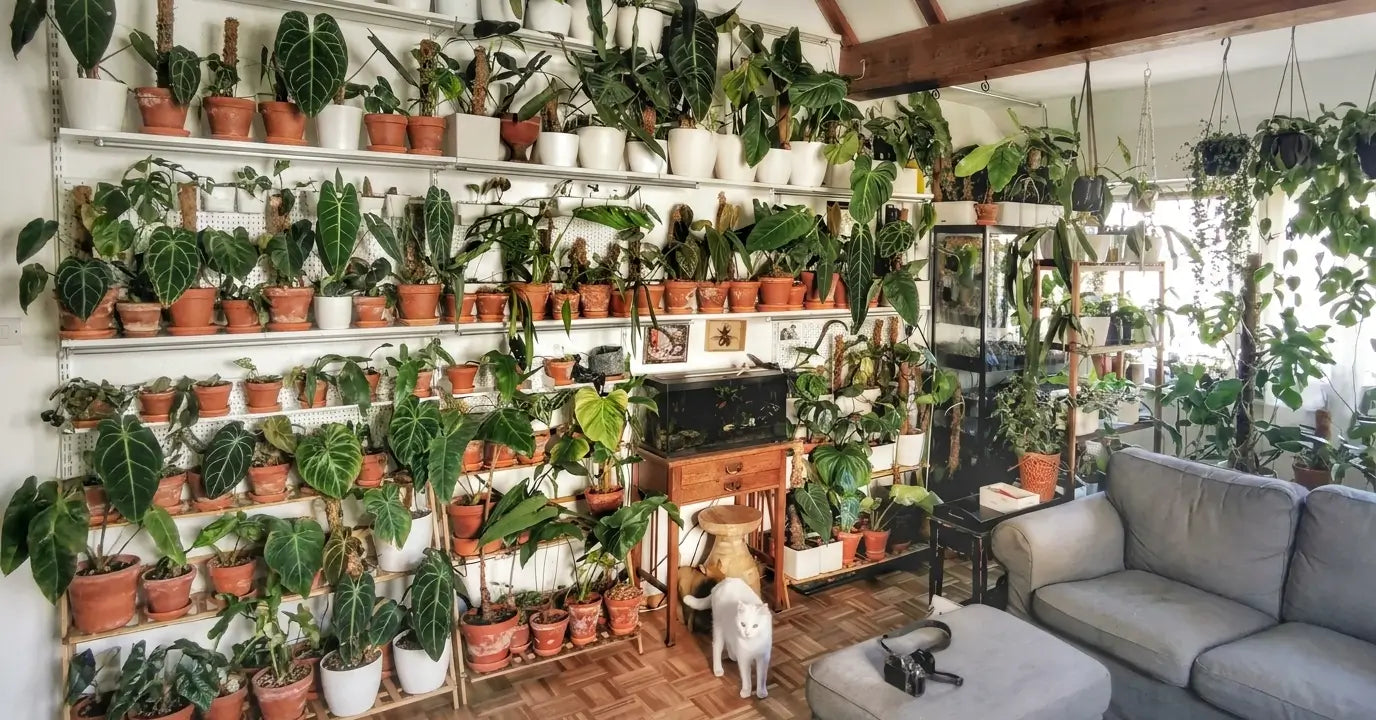
Ready to bring more green into shaded rooms, north-facing windows, and quieter indoor corners?
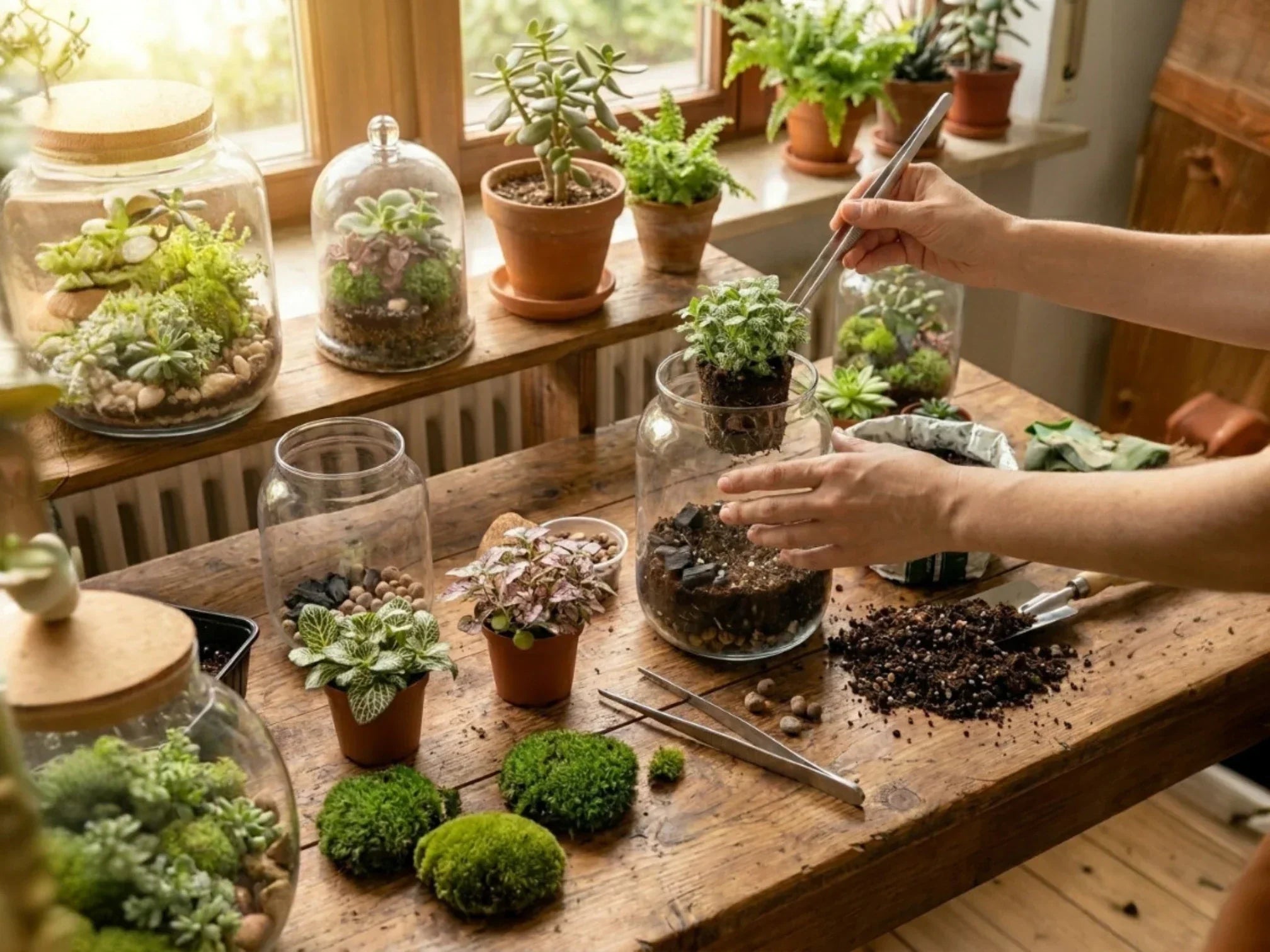
A starter terrarium works when plant choice, container size, substrate layers, moisture and airflow all fit together. Build a setup that stays balanced instead of turning soggy, stagnant or too dry.
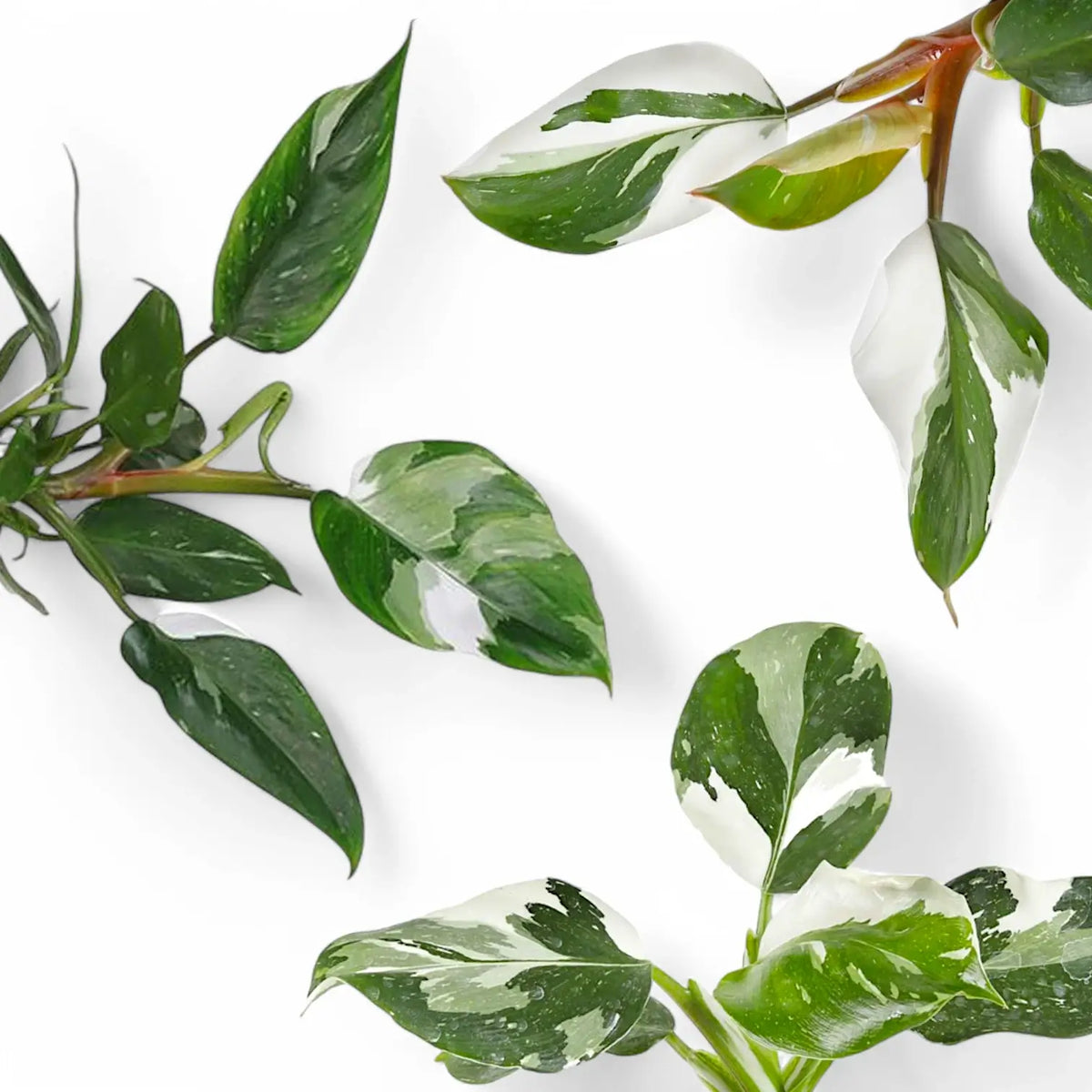
White Princess, White Wizard and White Knight share unpredictable white variegation, while their stem colours and growth habits give each plant its own character. Learn how their leaves change, how...
Die Pflanzen waren prima verpackt und ein heatpack war im Paket enthalten. Die Lieferzeit hat 2 bis 3 Tagen gedauert, was aus meiner Sicht wirklich gut ist. Alle drei Pflanzen haben die Lieferung gut überstanden. Ich habe mich auf Hoyas spezialisiert und habe schon die nächsten Pflanzen meiner Wunschliste auf der Website gefunden. Daher wird die nächste Bestellung nicht lange auf sich warten lassen.
Marion
★★★★★
The plants are carefully packaged and arrive in great conditions (I’m based in Spain) and they’re always there to help in any way they can with your purchase.I have and will always recommend Foliage Factory to every friend I can. I’m not only satisfied with their plants and prices, but their customer service is exceptional.
José
★★★★☆
Very healthy and well packed plant. Unfortunately there was one plant that ordered couldn’t be delivered as it was out of stock hence 1 star less.
Sam
★★★★☆
Die Sendung kam leider in keinem guten Zustand bei mir an, kann passieren. Habe mich darauf hin sofort an Foliage Factory gewandt und habe selten einen so guten, schnellen, freundlichen und kulanten Kundendienst erlebt.
Frauke
★★★★★
Everything arrived in good condition and very well packed - it wasn't easy with a fragile plant and a heavy bag of substrate. I recommend it!
Lia
★★★★★
Bester online-Pflanzenhandel den ich kenne (habe davor 4 andere ausprobiert). Eine teure Pflanze wurde beim Transport beschädigt und mir ersetzt. Der Kontakt dabei war auch sehr nett (danke Jan) und hat mir gut geholfen. Die anderen Pflanzen sind in einem sehr guten Zustand, keine Schädlinge, super Bewurzelung. Nur zu empfehlen! :)
C L
★★★★★
Super Service, Gute Auswahl, Preise sind fair. Eine Pflanze kam kaputt an, hab sofort Ersatz bekommen. Danke an den unkomplizierten (und blitzschnellen) Kundenservice!!
Sarah
★★★★★
Envoie très rapide (2 jours), plantes parfaitement emballées et super offres ! Je suis une habituelle j'ai passé 6 ou 7 commandes et je n'en peut être plus satisfaite du service client et de la qualité et variété des plantes offertes
Iris
★★★★★
The plants have arrived in perfect condition, the roots and the foliage so so healthy! I had problem with 1 plant out of 16 and they have responded to my email almost instantly and the issue was resolved straight away. I'm really impressed and satisfied, definitely getting more plants from them again!
Patricija
★★★★★
I received perfectly heathy and absolutely beautiful plants, even bigger than expected. The delivery within Europe was really fast. I think Foliage Factory has one of the best plant web shops in the internet. It‘s just great to get so much informations about the plants. I will definitely order again :)





Leave a comment