

Growth slows. Leaves fade. Caladium disappears into its tuber. Oxalis collapses almost overnight. Monstera, Philodendron or Epipremnum may simply stop pushing new leaves for weeks. In autumn and winter, this can look alarming — especially when there are no pests, no obvious rot and no clear care mistake.
Sometimes that pause is true dormancy. Sometimes it is only a seasonal slowdown. Sometimes it is stress that needs quick attention.
Plant dormancy is not one single behaviour across all houseplants. It depends on species, growth form, storage organs, natural habitat and indoor conditions.
This guide explains how dormancy works, which houseplants genuinely need a rest phase, how to separate dormancy from decline, and how to adjust watering, light and feeding without pushing a resting plant into trouble.

1. What dormancy really means
Dormancy is a temporary reduction in active growth that helps plants survive periods when normal growth would cost too much energy or water. In nature, those periods may be cold, drought, heat, deep shade or seasonal change. Indoors, signals are usually softer: shorter days, weaker light, cooler windowsills, slower-drying substrate and drier heated air.
That does not mean every winter pause is true dormancy. A tropical evergreen that stops growing in December is often not resting in the same way as Caladium, Catasetum or Venus flytrap. It may simply have too little light to keep producing leaves at summer speed.
Care depends on the type of pause. A dormant tuber may need dry storage. A tropical aroid may need less frequent watering but still needs warmth, light and root stability. A plant with mushy roots is not dormant at all.
Key rule: Dormancy is stable. Decline keeps moving. A resting plant holds firm storage tissue, firm roots or a firm crown. A struggling plant gets softer, wetter, smellier, patchier or worse over time.
2. True dormancy, slowdown and stress
Botanical dormancy is usually grouped by where the growth restriction comes from. For houseplant care, the practical difference matters more than terminology.
| Type | What controls it | Houseplant relevance | Care meaning |
|---|---|---|---|
| Endodormancy | Internal plant signals | Common in bulbs, tubers, deciduous orchids and temperate plants | The plant may not restart just because conditions improve |
| Ecodormancy | External conditions such as light, temperature or water | Common as winter slowdown in tropical houseplants | Improve conditions gradually, but reduce water while growth is slow |
| Paradormancy | Signals from another part of the plant | Seen in bud inhibition or stalled side shoots | Usually not a whole-plant rest phase |
| Stress pause | Root damage, cold, drought, rot, pests or depleted substrate | Very common indoors | Diagnose the cause instead of treating it as dormancy |
How hormones fit in
Dormancy is regulated by plant hormones. Abscisic acid is linked with stress responses, water conservation and dormancy maintenance. Gibberellins are linked with renewed growth. Ethylene can contribute to leaf ageing and shedding. Cytokinins and auxins help coordinate new shoot and root activity once growth resumes.
Indoor growers cannot control these hormones directly. Care changes still matter because light, warmth, water availability and root health influence how strongly those internal signals are expressed.
Seed dormancy is different
Seed dormancy prevents premature germination. Houseplant dormancy usually refers to paused growth in leaves, roots, buds, stems, bulbs, corms, tubers or pseudobulbs. The two topics overlap biologically, but care decisions for a potted plant are different from seed germination treatment.

3. What triggers seasonal pauses indoors?
Indoor dormancy and winter slowdown usually start when several small changes line up. Shorter days reduce photosynthesis. Cooler root zones slow water uptake. Substrate dries more slowly. Heated rooms can lower humidity around sensitive new growth. The plant’s energy budget changes, even when the room still feels comfortable.
Reduced light and shorter days
Light is the biggest seasonal change for most indoor plants. When daily light drops, plants produce less energy. Tropical foliage plants may stop making new leaves, while species with built-in rest cycles may begin proper dieback.
- Common signs: slower leaf production, smaller leaves, longer internodes, delayed flowering or no visible change for weeks.
- Care response: move plants closer to suitable light, clean dusty leaves, rotate pots carefully and use grow lights only for species that do not require a true rest.
For more detail on light levels, see the bright indirect light guide.
Cooler indoor temperatures
Many tropical houseplants slow noticeably below 18 °C. Below 15 °C, root activity can stall. Below 12 °C, many warm-growing evergreens begin to show stress, especially when substrate stays wet.
- Common signs: stalled buds, limp petioles, sudden leaf yellowing, slow-drying pots and higher rot risk.
- Care response: keep sensitive plants away from cold glass, draughts, unheated floors and night temperature drops.
For seasonal care adjustments, see the winter care guide.
Dry substrate or withheld water
Some plants need a dry rest. Caladium tubers, dormant Oxalis bulbs and resting Catasetum pseudobulbs can tolerate or require sharply reduced watering. That logic should not be applied to all plants.
- True dry-rest plants: let foliage finish yellowing naturally, then keep storage organs dry or barely protected from shrivelling depending on species.
- Tropical evergreens: water less often because uptake is slower, but do not force a hard dry period.
Dry air and low humidity
Low humidity is better understood as stress, not true dormancy. It can slow growth because plants reduce water loss, but crispy edges and distorted new leaves are environmental symptoms, not a healthy rest phase.
- Common signs: crispy leaf tips, brown margins, stuck new leaves, curled tender growth.
- Care response: use a humidifier, group compatible plants or use a cabinet/vitrine for humidity-sensitive species. Do not compensate with extra watering.
For moisture management, see humidity for houseplants. For edge damage, see brown leaf tips in houseplants.
Root stress and depleted substrate
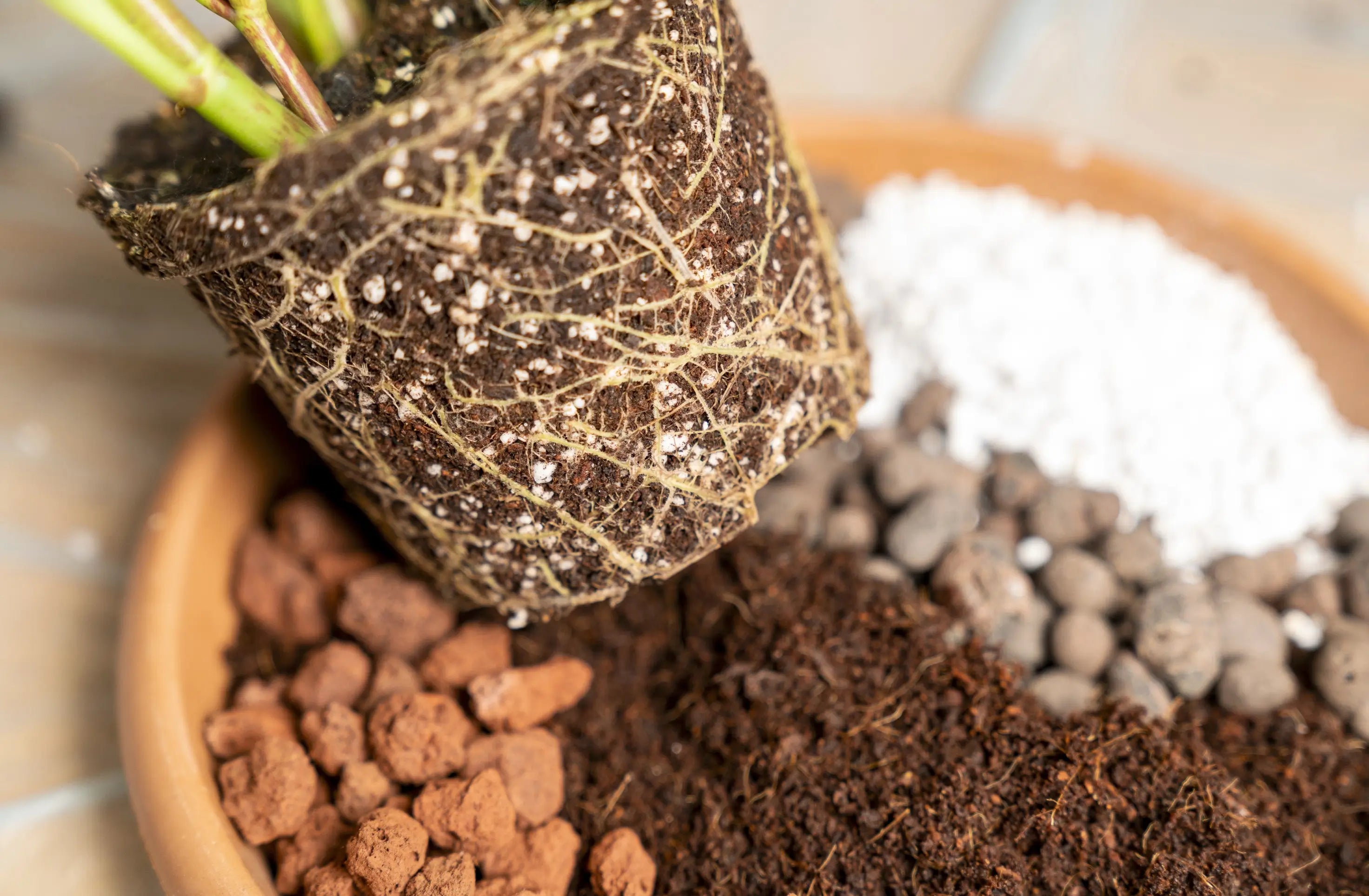
A plant that cannot support new growth may look dormant, but root restriction, damaged roots, salt buildup or depleted substrate are not dormancy. They are limitations. If light and warmth are good but growth is weak, pale or distorted, inspect root health before changing the whole care routine.
Shipping, repotting and relocation pauses
A recently shipped, moved or repotted plant may also stop growing for a while. That pause is adjustment stress, not seasonal dormancy. Keep conditions stable, avoid fertilising immediately, and check root or crown firmness before making bigger changes.
| Trigger | Usually means | Care response |
|---|---|---|
| Shorter days | Lower photosynthesis | Increase usable light or accept slower growth |
| Cool root zone | Slower water uptake | Keep warmer and reduce watering frequency |
| Dry storage organ | Possible true dormancy | Follow species-specific dry-rest care |
| Low humidity | Water-loss stress | Improve air moisture; do not overwater |
| Mushy roots or crown | Rot or decline | Unpot, inspect and treat quickly |
4. Dormancy or decline: how to tell
Dormancy and decline can both look quiet from above the pot. The difference is direction. Dormancy stabilises. Decline progresses.

Signs of a stable rest phase
- Growth slows gradually over one to three weeks.
- Older leaves yellow first while newer growth remains firm.
- Bulbs, corms, tubers or pseudobulbs stay firm and weighted.
- Roots are pale, tan or white, with no sour smell.
- The plant looks similar from week to week instead of worsening daily.
Signs of active decline
- New leaves yellow, collapse or turn translucent.
- Leaf drop is sudden, patchy or top-down.
- Stem base, crown, bulb or corm feels soft or hollow.
- Roots are dark, mushy, slimy or sour-smelling.
- Spots, wet patches or soft tissue spread from week to week.
If roots are mushy or smell sour, treat it as root rot, not dormancy. If leaves are dropping but roots and stems are firm, compare symptoms with common causes of leaf drop.
| Check | Resting plant | Declining plant |
|---|---|---|
| Growth | Gradually slows or pauses | Stops suddenly or worsens unevenly |
| Leaves | Older leaves fade first | New leaves fail, curl, spot or collapse |
| Roots | Firm, pale to tan, neutral smell | Dark, mushy, hollow or sour-smelling |
| Storage organs | Firm, dense, not leaking | Soft, hollow, mouldy or wet |
| Timeline | Stable for weeks | New damage appears repeatedly |
Before intervening: check root firmness, crown firmness, substrate moisture and recent temperature changes. Watering, fertilising or repotting just in case often creates the problem you were trying to avoid.
5. Which houseplants go dormant — and which only slow down?
Houseplants do not share one dormancy pattern. Growth form gives the best clue: plants with bulbs, tubers, corms or pseudobulbs often handle rest differently from evergreen tropical climbers, ferns or epiphytes.
Tropical foliage plants
Examples: Monstera, Philodendron, Epipremnum, Spathiphyllum, Aglaonema, many Anthurium and many Ficus.
Most tropical foliage plants do not require true dormancy indoors. They may slow down in winter because light and warmth are lower. Keep them warm, reduce watering frequency and pause fertiliser if growth has clearly stopped. Do not force a dry rest.
Bulbous, tuberous and corm-forming plants
Examples: Caladium, Oxalis, Cyclamen, Hippeastrum, Gloriosa and some Alocasia under cool or dry stress.
These plants can retreat into storage organs. Let foliage yellow naturally, then reduce or stop watering according to the species. Storage organs should remain firm, not wet and not completely desiccated.
Store firm tubers, bulbs or corms dry, airy and frost-free. Do not seal them wet in plastic. Check occasionally for mould, soft spots or severe shrivelling. Remove fully dry dead leaves, but do not cut yellowing leaves too early if they are still naturally draining energy back into storage tissue.
For Caladium-specific storage and restart guidance, see the Caladium care guide.
Succulents and cacti
Examples: Lithops, Aloe, Euphorbia, Crassula, Echeveria and Mammillaria.
Succulent dormancy is species-specific. Some slow in winter, some rest in summer heat, and Lithops follows a strict leaf-replacement rhythm. Avoid generic “water all succulents less in winter” rules. Use the plant’s active growth cycle, not the calendar alone.
Orchids
Examples: Phalaenopsis, Dendrobium nobile, Catasetum and Cymbidium.
Orchid dormancy depends strongly on genus and growth type. Phalaenopsis does not need a dry dormancy. Dendrobium nobile often needs a cooler, brighter rest to set buds. Catasetum drops leaves and rests on stored water in pseudobulbs; proper watering should resume only when new growth has started and new roots are several centimetres long. New top growth alone is not enough.

Ferns
Examples: Nephrolepis, Asplenium, Microsorum and many indoor Blechnum relatives.
Most indoor ferns do not need dry dormancy. Brown tips, crispy edges and stalled fronds usually point to dry air, cold draughts, inconsistent moisture or root issues. Keep substrate evenly moist without waterlogging and avoid cold, dry air.
Epiphytes and semi-epiphytes
Examples: Hoya, Dischidia, Rhipsalis, many Anthurium and Tillandsia.
Many epiphytes slow during lower-light months, especially flowering and root activity. That does not usually mean a full shutdown. Keep airflow, warmth and light appropriate, and let substrate or mounts dry at a species-appropriate pace.
Temperate carnivorous plants
Examples: Venus flytrap and many Sarracenia.
Temperate carnivorous plants need a cool winter rest. Growth becomes smaller, older traps decline and rhizomes conserve energy. They should not be kept warm and actively growing all year. Cold rest must still be managed carefully: keep plants cool, damp rather than dry, and protected from stagnant water, hard freezing or mouldy dead traps.
| Plant group | Dormancy pattern | Main care adjustment |
|---|---|---|
| Tropical foliage plants | Mostly seasonal slowdown | Less frequent watering; maintain warmth and light |
| Bulbs, corms and tubers | Often true rest | Reduce or stop water after natural dieback |
| Succulents and cacti | Species-specific | Match watering to active growth cycle |
| Catasetum orchids | Leafless dry rest | Wait for new growth and active new roots before watering fully |
| Ferns | No dry dormancy indoors | Prevent dry air, drought and cold root stress |
| Temperate carnivorous plants | True cool dormancy | Cool, damp rest for long-term health |
6. How plants wake up again
Dormancy ends when internal timing and external conditions line up. Longer days, stronger light, warmer roots and renewed moisture can all be signals, but the right trigger depends on the plant.

Light and daylength
For many indoor plants, better light is the first signal that growth can resume. Tropical plants often restart when daylength and usable brightness improve. Grow lights can support tropical evergreens through low-light months, but they should not be used to suppress necessary rest in plants such as Caladium, Catasetum or temperate carnivorous plants.
Warmth
Warmer root zones improve water uptake and enzyme activity. Many tropicals restart more reliably when night temperatures stay around 18–20 °C or warmer. Increasing warmth without improving light can create weak, stretched growth, so both factors should rise together.
Water
For dry-rest plants, water is often the final cue — but only after visible activity begins. Look for swelling buds, new shoot tips, fresh root tips or firm new growth. Watering a dormant storage organ too early can cause rot before roots are ready to function.
In semi-hydro, lower or empty the reservoir during slow growth if roots are not actively drinking. A full reservoir under cool, low-light conditions can keep inactive roots too wet for too long.
Species-specific timing
Some plants restart on an internal rhythm even before conditions look ideal. Oxalis, Caladium and Catasetum may begin to sprout in storage. When that happens, move them into suitable warmth and light, then reintroduce moisture gradually.
Avoid early fertilising. Dormant or barely active roots cannot use fertiliser efficiently. Wait until new leaves or roots are clearly growing, then restart feeding lightly.
For watering adjustments during the restart phase, see the watering guide.
7. Why forcing growth can backfire
Grow lights, heating and fertiliser can keep many tropical foliage plants active. That does not mean every houseplant benefits from nonstop growth. Plants that evolved with a dry season, cool rest or storage-organ cycle may weaken when rest is skipped repeatedly.
Weak, stretched growth
When warmth, water and fertiliser increase before light is strong enough, new growth can become pale, soft and elongated. This is common in succulents, bulbs and tropical plants pushed through low-light months. For more on this, see leggy plant growth.
Reduced flowering
Some plants use rest as part of their flowering cycle. Hippeastrum often needs a dry rest after a strong growing period before reliable reblooming. Dendrobium nobile may need a cooler, bright rest. Catasetum depends on its growth-and-rest rhythm to rebuild pseudobulbs and flower well.
Root damage from excess water or fertiliser
Inactive roots absorb less water and fewer nutrients. A pot that stayed safe in summer can remain wet too long in winter. Fertiliser salts can also build up when growth is slow, especially in semi-hydro setups or compacted media.
Higher pest and disease pressure
Soft growth produced under weak light is more vulnerable to pests and physiological damage. Overwatered, slow-growing plants are also more prone to fungus gnats, root rot and sour-smelling substrate.
| Forcing mistake | What can happen | Better approach |
|---|---|---|
| Watering dry-rest plants before new roots | Rot in bulbs, corms or pseudobulbs | Wait for visible growth and species-specific restart cues |
| Adding fertiliser during a pause | Salt buildup and root tip damage | Resume feeding after active growth returns |
| Adding warmth without enough light | Weak, stretched growth | Increase warmth and usable light together |
| Keeping temperate plants warm all winter | Long-term weakening | Provide the cool rest the species needs |
8. Common dormancy myths
Myth: all houseplants need dormancy
False. Many evergreen tropical houseplants can grow year-round when light, warmth and root conditions stay suitable. Winter slowdown is common, but that is not the same as a required rest phase.
Myth: dormant plants need no water at all
Sometimes true, often false. Leafless Caladium tubers and resting Catasetum need much less water. A leafy tropical plant in slow growth still needs careful watering when the substrate has dried enough. Ferns and many evergreen orchids should not be dried hard just because it is winter.
Myth: dormant plants do not need light
Leafless, dry-stored bulbs or tubers can rest away from bright light. Leafy plants still need usable brightness, even when growth slows. Low light combined with warmth and water is a common reason plants stretch, rot or lose strength.
Myth: fertiliser wakes a dormant plant
Fertiliser does not restart dormancy. Growth resumes when the plant has the right internal timing and external conditions. Feeding too early can damage inactive roots.
Myth: if it looks dead, it is dead
Caladium, Oxalis and Catasetum can look empty above the pot while storage organs remain alive. Always check firmness before discarding a plant. Firm and dense usually means wait. Soft, hollow, mouldy or sour-smelling means trouble.
9. Dormancy FAQs
Why is my houseplant not growing in winter?
Most indoor winter pauses come from lower light, cooler roots and slower water use. If the plant is firm, roots are healthy and symptoms are stable, reduce watering frequency and wait for brighter conditions. If leaves, stems or roots keep worsening, diagnose stress instead.
Can grow lights prevent dormancy?
Grow lights can keep many tropical foliage plants growing more steadily. They should not be used to override necessary rest in plants with a true dormancy cycle, such as Caladium, Catasetum, many temperate carnivorous plants and some seasonal bulbs.
Should I water a dormant plant?
It depends on the plant. Leafless dry-rest plants may need little to no water. Leafy plants in slow growth usually need less frequent watering, not no watering. Always base watering on substrate moisture, root activity, storage-organ firmness and species.
My Oxalis disappeared. Is it dead?
Usually not. Oxalis often collapses after an active growth cycle and rests as bulbs. Stop regular watering, keep the pot dry to barely dry depending on conditions, and wait for new shoots. If bulbs are firm, the plant is still viable.
Do Alocasia go dormant indoors?
Alocasia do not follow one universal indoor dormancy rule. Some may retreat to a firm corm after cool, dry or low-light stress, while others stay evergreen when warmth, light and roots remain stable. Do not force leaf loss. If crown tissue is firm, reduce water while growth is slow. If crown tissue is soft or smells sour, treat it as rot.
How long does dormancy last?
Duration varies. Oxalis may pause for several weeks. Caladium can rest for a few months. Catasetum may remain leafless for two to four months. Temperate carnivorous plants often need a cool rest of roughly two to three months. Tropical foliage slowdown may last only as long as indoor light remains low.
When should I restart fertiliser?
Restart lightly when new leaves, shoots or roots are clearly active. Do not fertilise storage organs, leafless pseudobulbs or plants sitting in cold, wet substrate.
Can I repot during dormancy?
Avoid repotting during deep rest unless rot or severe substrate failure forces action. Inactive roots establish slowly. Repot when new growth begins, or when the species naturally enters its active rooting phase.
How do I care for Lithops during its resting phase?
Lithops care follows the plant’s leaf cycle. During winter and spring, new leaves form inside old leaves and draw water from them. Keep the plant dry until old leaves have fully shrivelled into papery remains. Watering too early interrupts that process and can cause rot. Summer heat can also bring a rest period, so water only when the plant’s cycle and condition justify it.
Does Hippeastrum need fridge chilling?
Usually no. Hippeastrum, often sold as “amaryllis”, is generally rested cool and dry after a strong growing period. It is not treated like tulips or daffodils that require a cold-chilling programme. Keep the bulb firm, dry and protected from rot, then restart when growth appears.
10. Quick diagnostic charts
Watering by dormancy type
| Plant situation | Watering approach | Watch for |
|---|---|---|
| Leafless dry-rest bulb, corm or tuber | Keep dry or barely protected from shrivelling | Softness, mould, excessive shrivelling |
| Tropical foliage plant in winter slowdown | Water less often, only after appropriate drying | Cold wet substrate, yellowing new leaves |
| Fern or leafy evergreen orchid | Keep lightly and consistently moist as species requires | Crispy fronds, dry roots, cold draughts |
| Catasetum after leaf drop | Little to no water until new growth and new roots develop | Severe pseudobulb shrivelling or rot |
| Lithops during old-leaf absorption | No water until old leaves are dry and papery | Old leaves staying plump, rot, splitting damage |
| Semi-hydro plant in slow growth | Lower or remove reservoir if roots are not actively drinking | Cold wet roots, sour smell, yellowing from root stress |
Dormant, stressed or diseased?
| Symptom | Dormant or resting | Stressed | Diseased or rotting |
|---|---|---|---|
| Growth | Gradual pause | Sudden stall after environmental change | Erratic and worsening |
| Leaves | Older leaves fade first | Edges crisp, curl or yellow unevenly | Wet spots, translucent tissue, collapse |
| Roots | Firm and pale to tan | Dry, limp or stalled | Dark, mushy, hollow or sour-smelling |
| Stem, crown or bulb | Firm and stable | Wrinkled but not soft | Soft, leaking, hollow or mouldy |
| Progress | Stable for weeks | Improves when conditions improve | Keeps spreading |
Common groups at a glance
| Group | Likely winter behaviour indoors | Main mistake to avoid |
|---|---|---|
| Monstera, Philodendron, Epipremnum | Slowdown if light drops | Calling root stress “dormancy” |
| Caladium, Oxalis | True rest after dieback | Watering tubers or bulbs too much |
| Alocasia | Species- and condition-dependent pause | Forcing dry dormancy on a still-leafy plant |
| Catasetum | Leafless rest on pseudobulb reserves | Watering before new roots are active |
| Lithops | Leaf-cycle rest and old-leaf absorption | Watering while old leaves are feeding new leaves |
| Venus flytrap, Sarracenia | Cool winter dormancy | Keeping them warm all year |

11. Final takeaway: check the plant before changing the care
A plant that stops growing is not automatically dying. It is also not automatically dormant. Species, season, storage organs, root condition, temperature and light all matter.
True dormancy needs patience. Seasonal slowdown needs lighter care and better timing. Stress needs diagnosis. Rot needs action.
Start with the physical checks: firm roots, firm crown, firm bulb, firm tuber or firm pseudobulb are reassuring. Softness, sour smell, spreading damage and wet collapse are not dormancy. They are signals to intervene.
Best winter rule: match care to active growth. Water less often when uptake slows, pause fertiliser when growth stops, keep warm-growing plants away from cold stress, and let dormancy-prone plants complete their rest before restarting full care.


Leave a comment