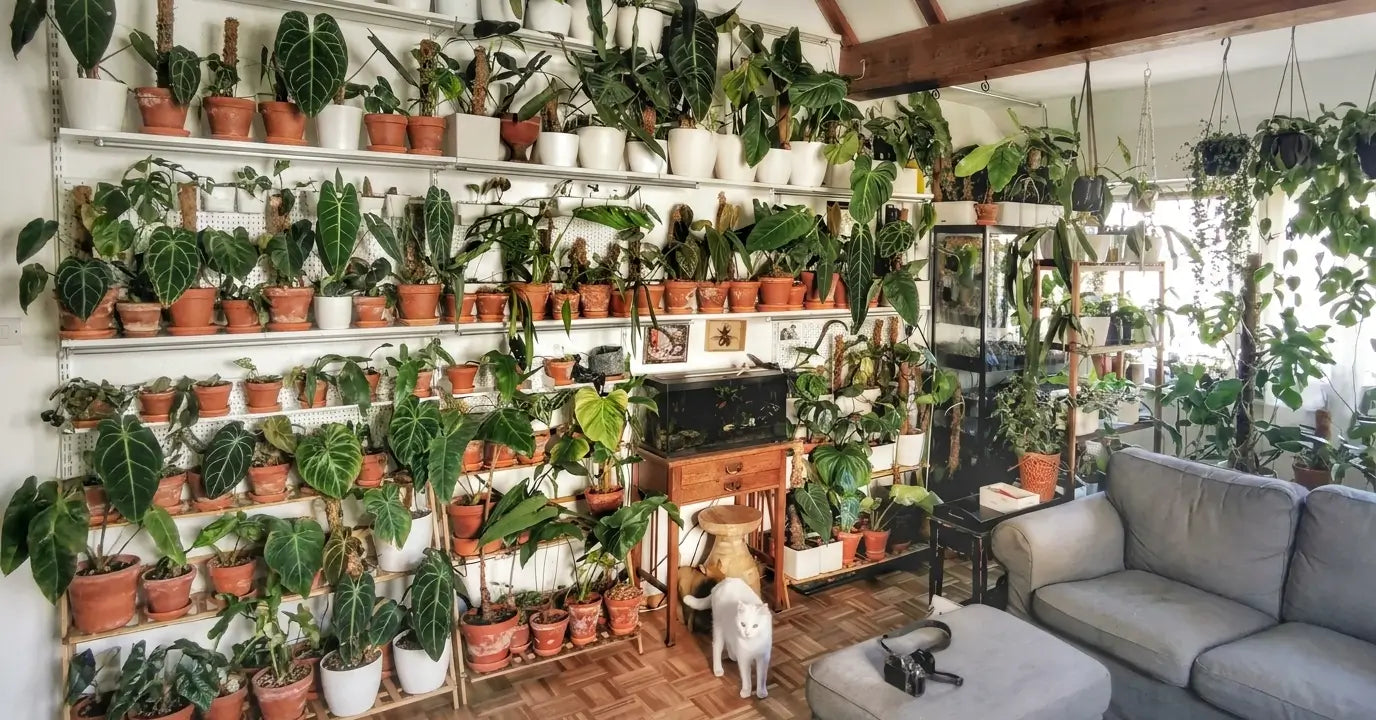
Step 1
Pick your route
Mixed indoor plants, leafy aroids, coco, LECA, mineral substrates, organic soil, cuttings, orchids, water correction or additives.


Find the right houseplant fertilizer or indoor plant food by plant type, substrate and water quality. Start with one suitable base feed for regular growth, then add CalMag, root support, enzymes, silicon or pH correction only when your routine needs that extra layer.
Step 1
Mixed indoor plants, leafy aroids, coco, LECA, mineral substrates, organic soil, cuttings, orchids, water correction or additives.
Step 2
This supplies the main nutrients your plant uses for regular growth.
Step 3
Root products, CalMag, enzymes, silicon, pH products and vitality additives solve specific jobs. They are not automatic extras.
Start here
Start with your plant type, substrate or water routine. The right product depends less on the brand name and more on how the plant is actually growing.
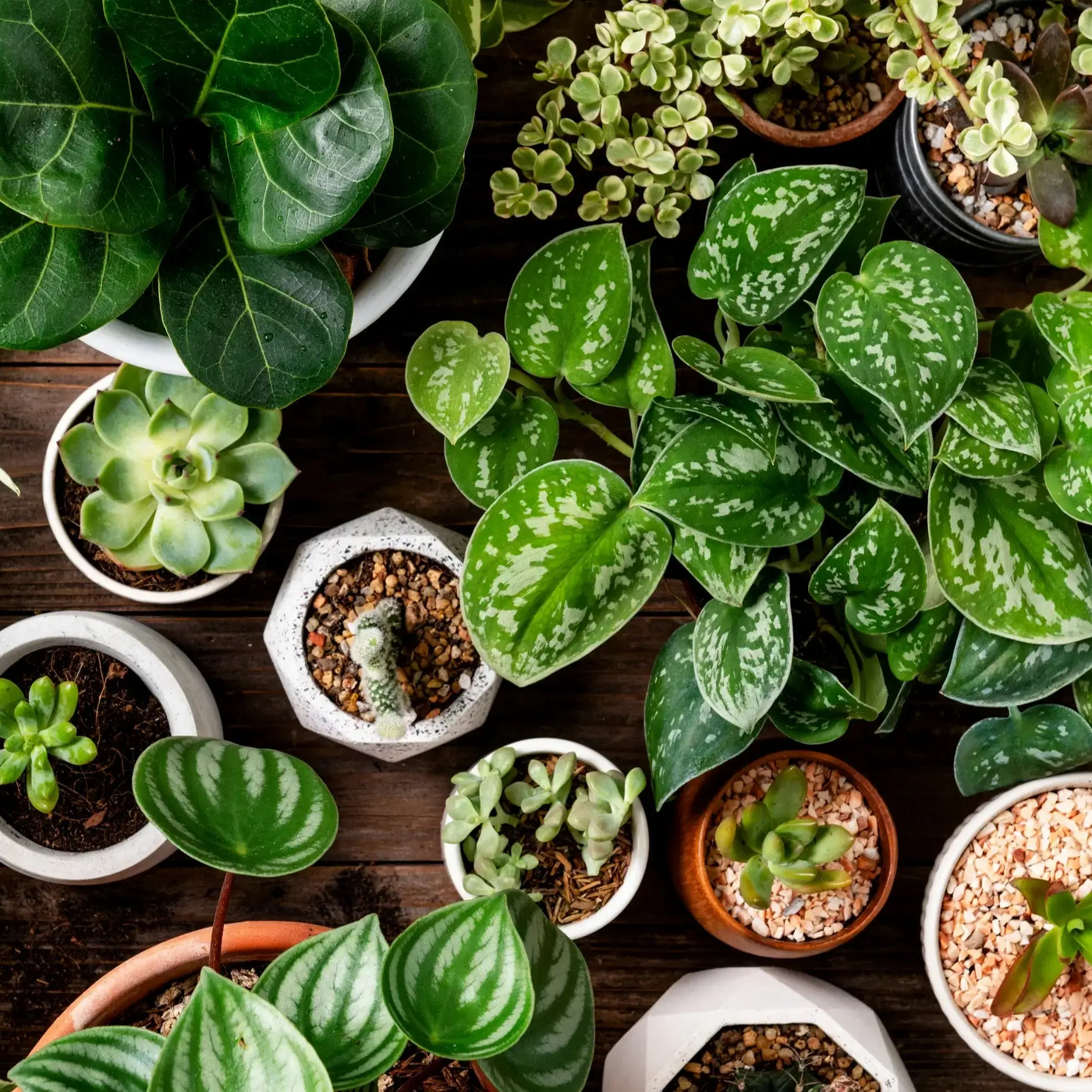
Easy feed for mixed indoor plants
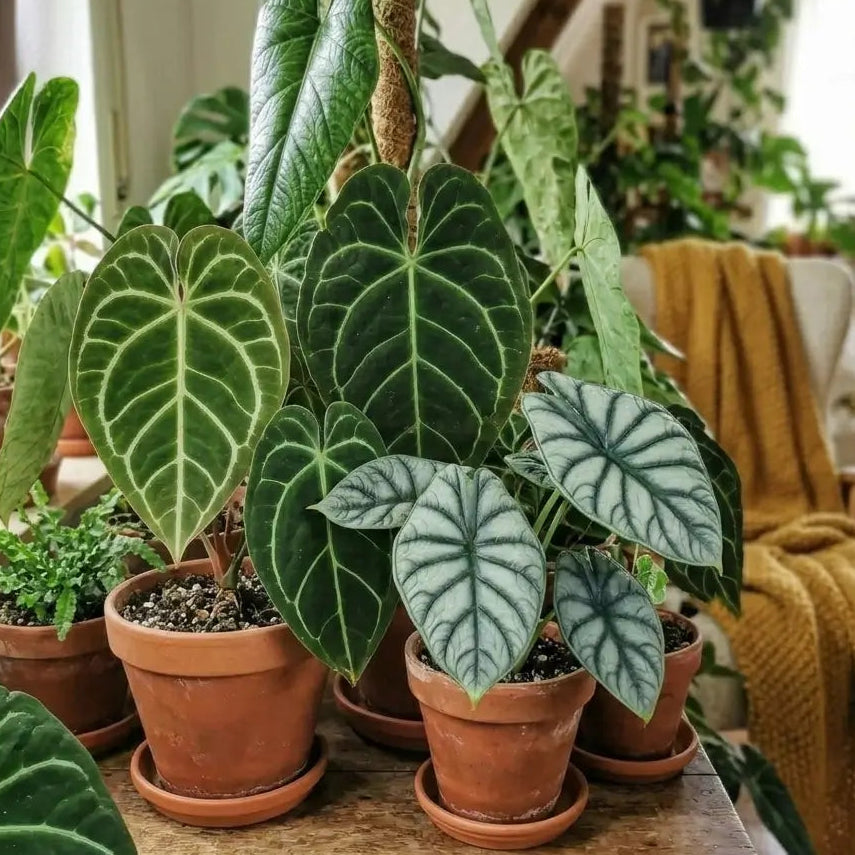
Aroids & leafy plants in soil
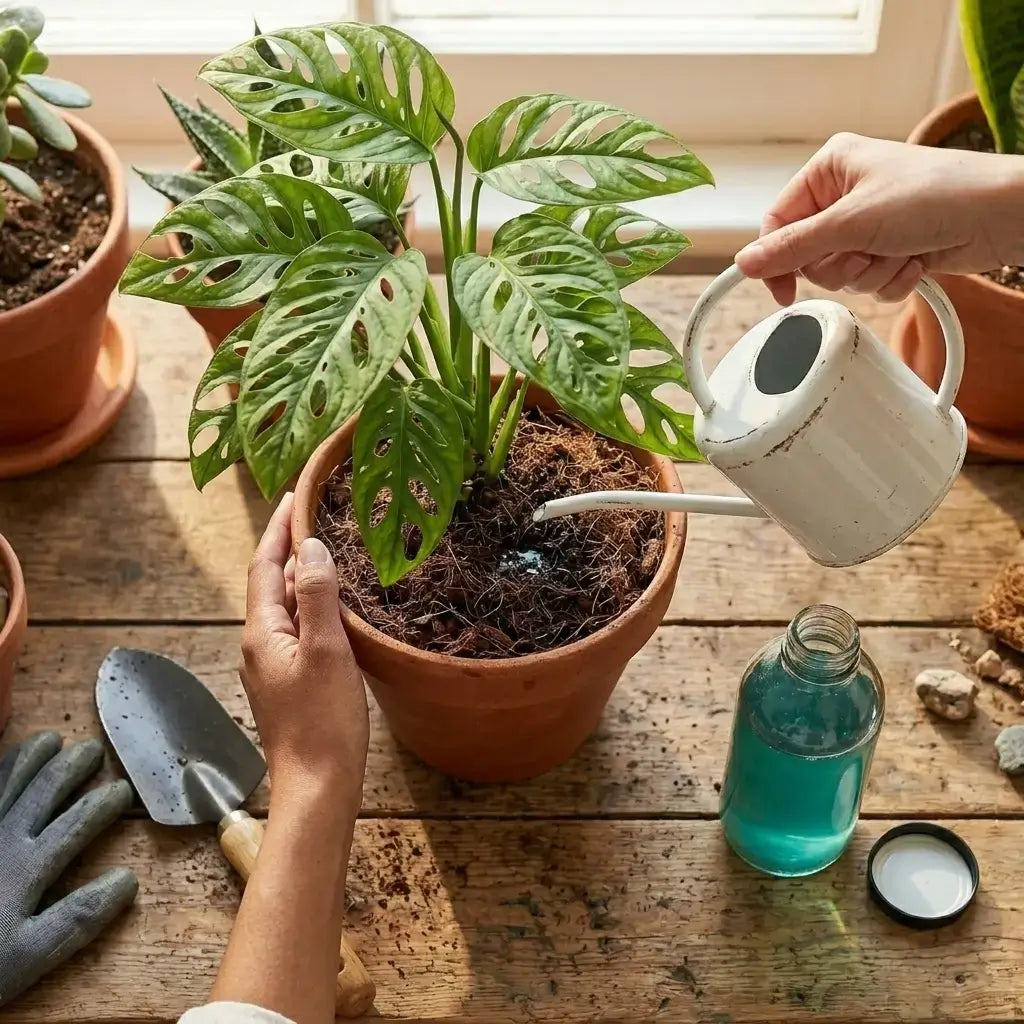
Coco-heavy mixes
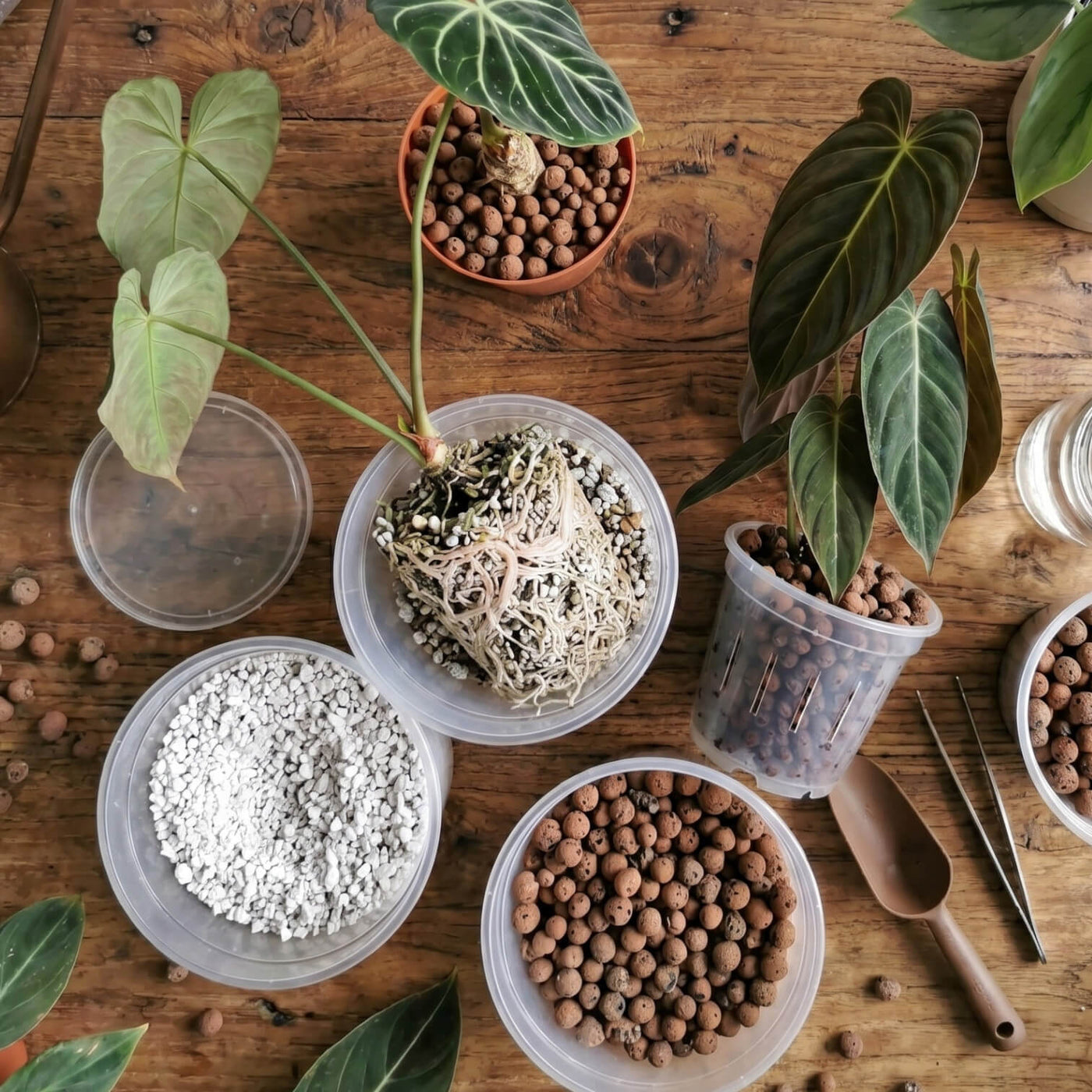
LECA, pon & semi-hydro
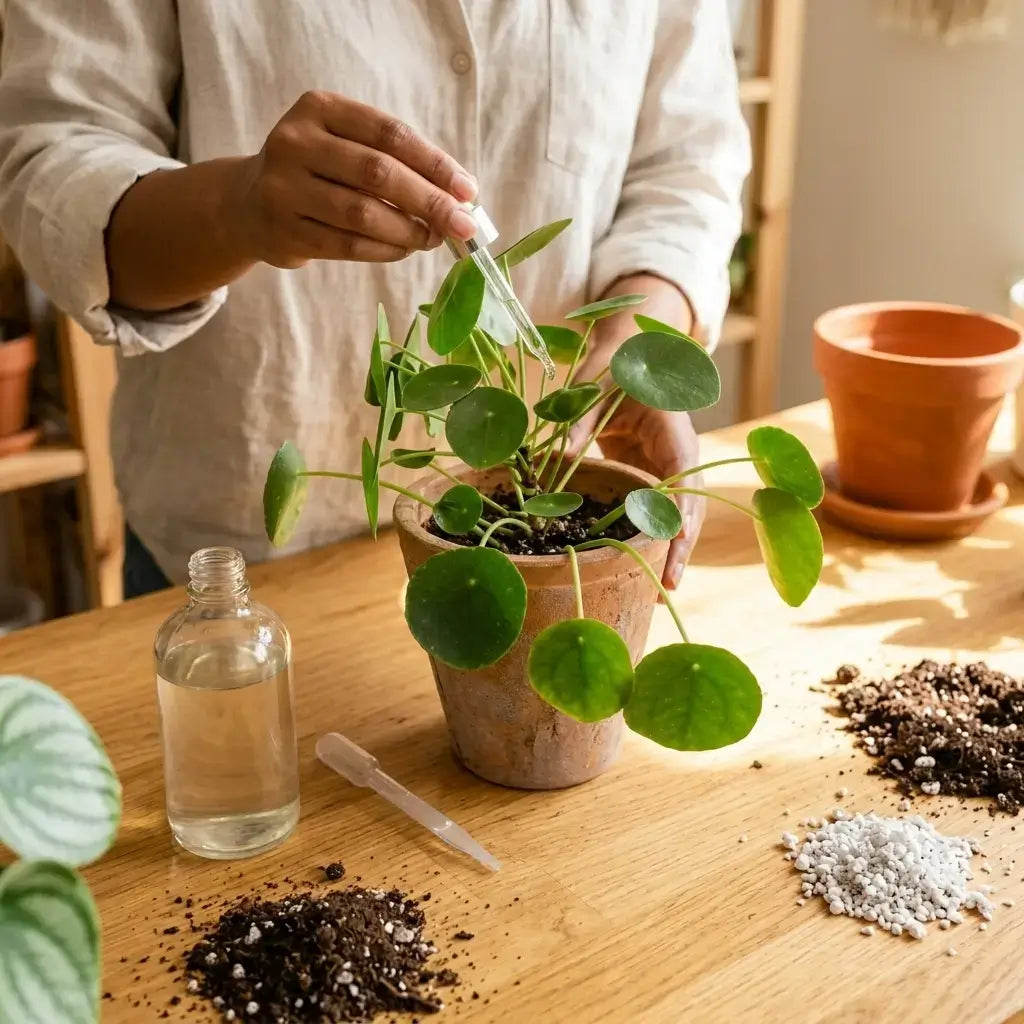
Organic soil feeding
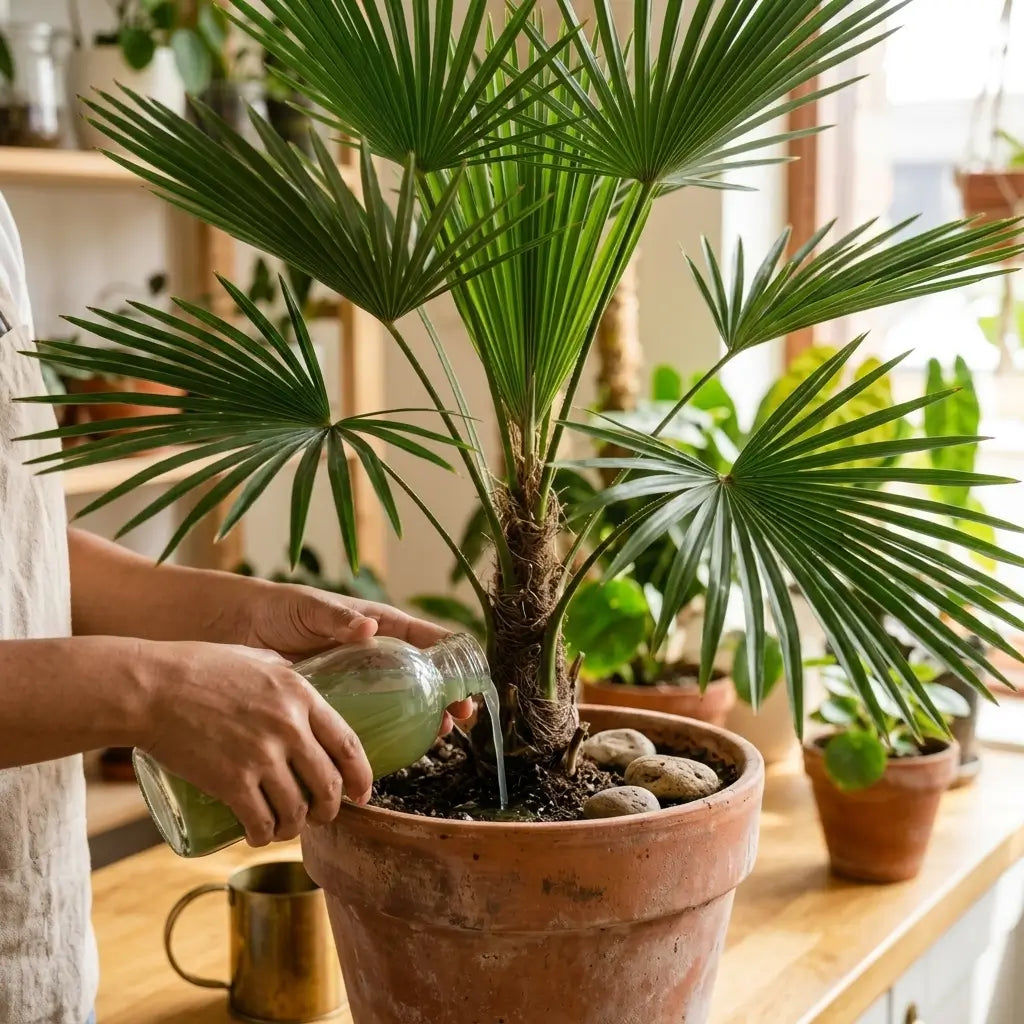
Orchids, palms & flowering pots
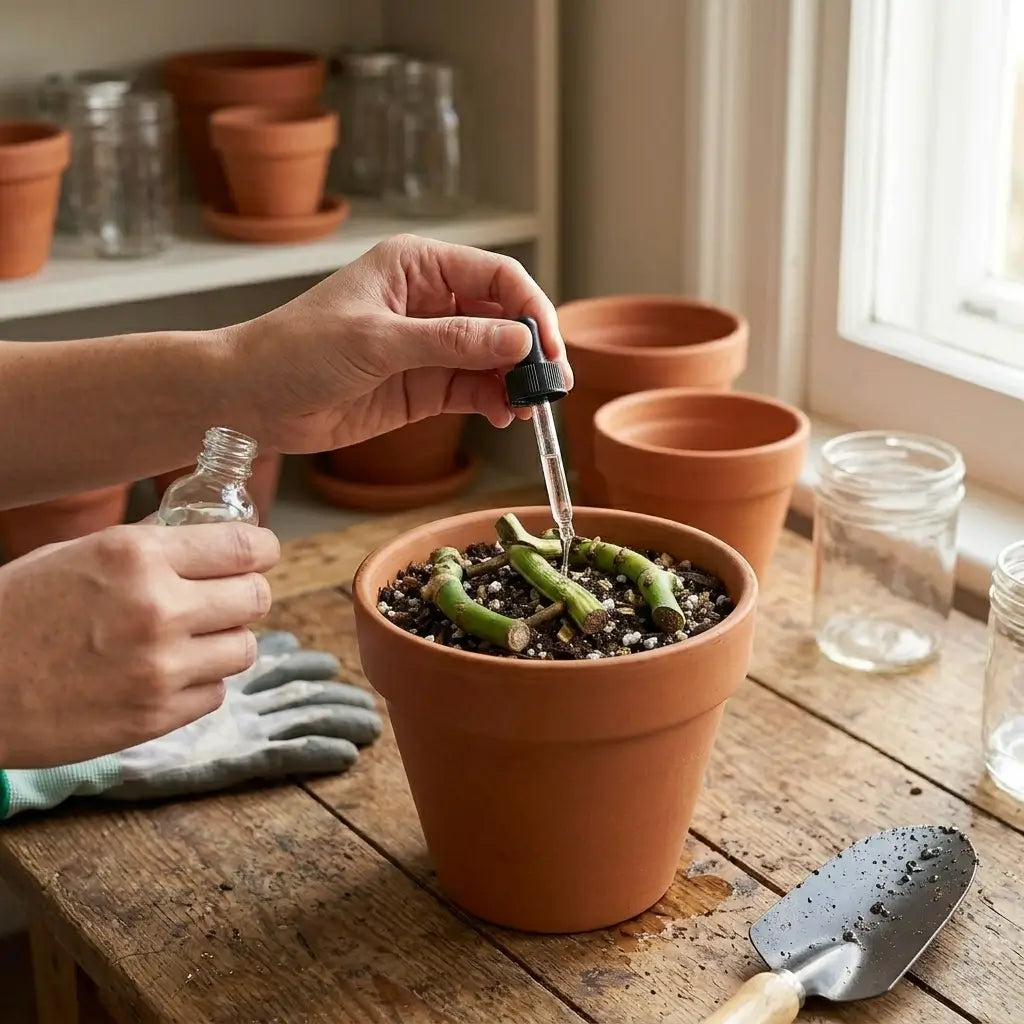
Cuttings, seedlings & repotting

CalMag, soft water & pH
Additives, enzymes & plant vitality
Most feeding routines start with one suitable base fertilizer. That is the product that supplies the main nutrients for regular growth. Support products belong around that base feed only when the plant stage, substrate, water quality or growing method gives them a clear role.
Main feed
This is the main feed. It supplies the core nutrients for regular growth. Choose it by substrate, plant type and growing method.
Specific job
This helps with roots, substrate maintenance, CalMag correction, silicon, enzymes or plant vitality. It does not replace the base feed.
Measured routine
This belongs to a measured routine or adjusts nutrient water. pH products, A+B nutrients and many hydro feeds need careful label use and, often, pH/EC checks.
Choose the route that matches your plant and growing setup. Each section separates base feeds from support products, technical nutrients and water-correction products.
Easy starting points
Best for: Mixed indoor plants · Small pots · Simple dosing · Beginner routines
Choose this route when: You want one straightforward houseplant fertilizer for mixed indoor plant care without building a technical feeding routine. New to feeding? Read the beginner guide to fertilizing houseplants.
Choose another route for: Pure coco routines, advanced hydro systems, pH-controlled reservoirs or plants that need a very specific feed.

Easy everyday plant food
Use as one main feed where the product supports the setup. Follow label dosage.
View product
Simple houseplant feed
Use for soil-grown houseplants. Confirm exact SKU version before locking fixed dosage.
View product
Foliage plant food
Label-dose feed for green, leafy soil-grown plants.
View product
Concentrated houseplant fertilizer
Use label dosage for soil-grown plants.
View product
Small-dose organic plant food
Small-dose feed for water-grown plants and small pots. Follow bottle dosage.
View productSoil & foliage feeds
Best for: Monstera · Philodendron · Anthurium · Epipremnum · Syngonium · Ficus · Leafy plants in soil-style mixes
Choose this route when: You want a stronger base feed for actively growing leafy plants in soil, aroid mix or chunky potting mix.
Choose another route for: Cuttings, seedlings, weak roots, pure coco routines, hydro systems or the simplest possible product.

Stronger foliage base feed
5 ml/L; use as one stronger base feed and reduce for young plants or frequent long-term use.
View product
Soil base nutrient
Max. 5 ml/L; soil/potting-mix feed for active leafy growth.
View product
Mineral soil base feed
Max. 5 ml/L; mineral base fertilizer for actively growing soil plants.
View productCoco nutrients
Best for: Coco · Coco-heavy mixes · pH-aware routines · Coco-specific feeding
Choose this route when: Your plant grows in coco or a coco-dominant substrate and needs a coco-specific nutrient routine.
Choose another route for: Standard potting soil, casual mixed plant shelves, bark-heavy orchid mixes or one-bottle all-round feeding.

Coco base fertilizer
5 ml/L; check pH after mixing and adapt for indoor plants.
View product
Two-part coco nutrient
Max. 4 ml/L; add A first, then B. Use in a measured coco routine.
View product
Two-part coco base feed
Max. 4 ml/L A plus same amount B; use as coco base nutrition.
View productMineral substrates
Best for: LECA · Pon · Mineral substrate · Passive semi-hydro · Hydro-style routines
Choose this route when: Your plant grows in inert or mineral media where the nutrient solution does most of the feeding. For pH, EC and reservoir basics, read the semi-hydro fertilizing guide.
Choose another route for: Soil-grown mixed plants, organic soil routines or customers who do not want pH/EC awareness, unless the product is specifically a simple hydroculture option.
Concentrated houseplant fertilizer
Use label dosage for soil-grown plants.
View product
Hydro / semi-hydro base nutrient
5 ml/L; use in a measured hydro or inert-media routine.
View product
Two-part hydro nutrient
Max. 2.5 ml/L A plus same amount B; measured hydro routine only.
View product
Run-to-waste hydro nutrient
4 ml/L A + 4 ml/L B; use only in a measured hydro routine.
View product
Recirculating hydro nutrient
Max. 2 ml/L; for recirculating hydro systems, not simple houseplant feeding.
View productOrganic soil feeding
Best for: Organic base feeds · Soil-grown plants · Living substrates · Organic soil routines
Choose this route when: You want an organic base fertilizer for soil-style substrates.
Choose another route for: Long-standing hydro reservoirs, pH-controlled inert media, odour-sensitive routines or the cleanest reservoir option.

Organic base feed
5 ml/L; organic base feed for soil-style or label-supported coco routines.
View product
Organic growth nutrient
Max. 2 ml/L; organic base feed for soil-style growth routines.
View product
Organic base fertilizer
Use label/schedule as reference and adapt for indoor plants.
View product
Organic soil base feed
Max. 4 ml/L; organic base feed for soil routines.
View product
Organic growth feed
1–4 ml/L depending on substrate; foliar use only where label-supported.
View productSpeciality feeds
Best for: Orchids · Palms · Flowering pots · Patio containers · Balcony planters
Choose this route when: You are feeding a plant group or container setup with more specific nutrient needs than a standard foliage shelf.
Choose another route for: Coco, hydro, LECA, mineral substrates or technical inert-media routines unless the product label clearly supports that use.

Orchid & epiphyte feed
1–2 ml/L for slow growth, 3–5 ml/L for faster growth.
View product
Palm feed
Label-dose feed for palms in soil or containers.
View product
Flowering pot feed
Label-dose feed for flowering soil-grown pots.
View product
Outdoor container feed
Container feed for outdoor pots and balcony planters. Follow label dosage.
View productRooting & starter support
Best for: Cuttings · Seedlings · Root establishment · Repotting · Starter phase
Choose this route when: You need root support, starter feeding, rooting powder, rooting gel or early-stage plant care.
Choose another route for: Long-term feeding of established plants. Root products and starter products do not replace a suitable base fertilizer.
Use these around cuttings, fresh roots, repotting or restart after root disturbance. They support a root-focused stage; they are not regular maintenance food.

Root & repotting support
5 ml/L; use half dose for frequent long-term use.
View product
Root stimulator
4 ml/L in the first week, then reduce once roots develop.
View product
Organic root support
4 ml/L in the first week, then reduce after strong roots develop.
View product
Organic root support
1–4 ml/L; root support only, not regular plant food.
View product
Root stimulator
1 ml/L; root support for soil/coco hand-watering routines.
View product
Hydro root support
1 ml/L; root support for hydro-style routines.
View productStarter feeds belong to seedlings, rooted cuttings and early growth stages. Move to a suitable base fertilizer once the plant is established and actively growing.

Starter nutrient
Max. 4 ml/L; starter feed for seedlings and rooted cuttings.
View product
Seedling starter product
7 drops/L for seed moistening; starter phase only.
View productRooting powder and rooting gel are propagation aids. They are not fertilizers and should not be used as weekly plant food.

Rooting gel
0.3 ml per cutting; dip cutting before placing in plug.
View product
Rooting powder
Dip cutting and follow label directions.
View productWater correction
Best for: Soft water · RO water · Demineralised water · Coco · Hydro · Semi-hydro · Measured nutrient water
Choose this route when: You need to correct water quality, add calcium/magnesium where the routine calls for it, or adjust measured nutrient-water pH.
Choose another route for: Complete plant food. CalMag and pH products are correction tools, not normal base fertilizer.
CalMag products support calcium and magnesium levels in soft, RO or demineralised water, and in some coco, hydro or semi-hydro routines. They are not complete plant food.

Calcium + magnesium correction
Dose by EC/water quality; RO water approx. 0.6–0.8 ml/L.
View product
Mineral correction
Use to correct low-mineral water; not needed automatically.
View product
Organic CalMag correction
Dose by water quality or schedule; correction product only.
View product
Calcium + magnesium support
Max. 1 ml/L; use for RO/soft-water correction.
View productpH down products lower nutrient-water pH. Mix nutrients first, measure pH, adjust gradually, then measure again.

Technical pH down
Dose by measurement only; not plant food.
View product
pH down correction
Add drop by drop to target pH 5.5–6.5.
View product
Technical pH down
Add drop by drop to target pH 5.5–6.5.
View productpH up products raise nutrient-water pH. Use them only with pH measurement and label instructions.

Technical pH up
Dose by measurement only; not plant food.
View product
Technical pH up
Add drop by drop to target pH 5.5–6.5.
View productAdditives
Best for: Enzymes · Microbes · Silicon · Vitamins · Vitality support · Optional additives
Choose this route when: You already have the base feed covered and want a specific support product for root-zone care, substrate maintenance, silicon, vitality or label-supported foliar use. For a deeper breakdown, read the plant additives guide.
Choose another route for: Your first base fertilizer.
Root-zone products support substrate or root-zone maintenance alongside a suitable base feed. They are not pest control, disease treatment, root-rot cures or fertilizer replacements.

Enzyme support
2 ml/L; substrate and root-zone support only.
View product
Enzyme additive
2.5 ml/L; enzyme support alongside a base feed.
View product
Microbial support
0.2–0.4 g/L weekly; microbial support only.
View product
Enzyme support
1 ml/L; enzyme support for soil/coco routines.
View productVitality, vitamin and silicon products are optional support. Use them with a clear reason and follow the label. Foliar-use products should be treated as application-specific support, not as substrate fertilizer. Read the plant additives guide if you are comparing additives, enzymes, vitamins and root-zone products.

Vitamin / vitality additive
1 drop/4.5 L; concentrated additive only.
View product
Silicon support
Max. 0.5 ml/L; silicon support via root or foliar use.
View product
Vitality additive
1–4 ml/L; optional vitality support.
View product
Vitality additive
5 ml/L watering or 1–2 ml/L foliar use.
View product
Premium additive
2–5 ml/L; additive only, not base food.
View product
Silicon support
Max. 1 ml/L; silicon support with low-pH caution on product page.
View product
Foliar vitality support
Max. 5 ml/L foliar spray; not root-zone base food.
View product
Plant-strength support
Support capsules only; avoid pest/disease cure language.
View productNot every bottle is plant food. Use this comparison to separate regular feeding from support products and technical correction tools. For more background on fertilizer formats, NPK, micronutrients and salt buildup, read the full houseplant fertilizer guide.
Main feed
Main job: Supplies the main nutrients for growth.
Best for: Regular feeding.
Watch out: Do not stack two complete base feeds in the same routine.
Organic
Main job: Feeds plants in soil-style organic routines.
Best for: Soil-grown plants and living-substrate routines.
Watch out: Organic does not automatically mean cleaner or better for reservoirs.
Coco
Main job: Feeds plants grown in coco or coco-heavy substrates.
Best for: Coco routines.
Watch out: pH, water quality and consistent feeding matter more than in soil.
Hydro
Main job: Feeds plants grown in inert media or nutrient water.
Best for: LECA, mineral substrates, hydro and measured routines.
Watch out: pH and EC should be checked.
Correction
Main job: Corrects calcium and magnesium levels.
Best for: Soft water, RO water, coco and some hydro/semi-hydro routines.
Watch out: Not complete plant food.
Roots
Main job: Supports rooting, cuttings, seedlings and repotting.
Best for: Young plants, fresh roots and root establishment.
Watch out: Not a regular maintenance fertilizer.
Root-zone
Main job: Supports root-zone or substrate maintenance.
Best for: Specific substrate routines.
Watch out: Not pest control, not disease treatment and not a base feed.
pH
Main job: Adjusts nutrient-water pH.
Best for: Measured coco, hydro, LECA or semi-hydro routines.
Watch out: Not fertilizer. Use only with pH measurement.
Optional
Main job: Adds optional support such as vitamins, silicon or label-supported foliar use.
Best for: Specific routines after the base feed is already covered.
Watch out: Optional, not essential.
A good feeding routine does not need many bottles. Start with the base feed that fits the plant and substrate, then add support only when the plant stage, water quality or growing setup makes it useful.
Start with: One complete houseplant fertilizer or foliage base feed.
Optional support: Root support after repotting, if the plant is slow to restart.
Skip unless: CalMag and pH products are only relevant when your water or setup calls for them.
Watch out: Do not combine two complete base fertilizers in the same watering.
Start with: A suitable foliage base feed for soil, aroid mix or chunky potting mix.
Optional support: Root support after repotting or root disturbance.
Skip unless: Additives are not a substitute for suitable light, watering and substrate.
Watch out: Use one base feed at a time. More bottles do not automatically mean better growth.
Start with: A coco-specific base fertilizer.
Optional support: CalMag where water quality or the product routine calls for it.
Skip unless: Keep coco on a coco-aware feeding routine instead of treating it like ordinary potting soil.
Watch out: A+B products must be mixed separately according to the label.
Start with: A hydro, semi-hydro or inert-media nutrient.
Optional support: CalMag if your water is soft, RO or demineralised.
Skip unless: Organic liquids, additives and CalMag should have a clear reason in reservoir-style routines.
Watch out: pH and EC matter more than in soil because the medium does not buffer nutrients in the same way.
Start with: Root support, rooting gel/powder or starter feed depending on the plant stage.
Optional support: Gentle feeding after roots form and the plant starts growing.
Skip unless: Starter products belong to the starter phase, not long-term maintenance feeding.
Watch out: Switch to a suitable base fertilizer once the plant is established and actively growing.
Start with: An organic base feed for soil-style substrates.
Optional support: Microbes, root support or vitality additives where the routine supports them.
Skip unless: Reservoir-style setups need extra care with organic liquids and freshly mixed solutions.
Watch out: Do not treat every organic additive as essential.

Brand feeding schedules are useful references for coco, LECA, hydro and measured nutrient routines. For mixed indoor plants, leafy houseplants and soil-grown collections, treat them as starting points, not automatic weekly programmes.
Many schedules are built around crop phases, strong growth, flowering, harvest timing or reservoir systems. That does not always translate directly to a mixed indoor plant collection.
Start with one suitable base fertilizer, follow the product label, and adjust strength to active growth, substrate, plant size, light level and water quality. Add CalMag, root products, enzymes, silicon or pH correction only when your setup calls for them.
Exact dosage, compatibility and safety notes for each of the mentioned products can be found on the individual product pages.
Start with an easy houseplant food if most plants are in potting mix, aroid mix or another soil-style substrate. Choose one complete base feed first, then add support products only when the plant stage, substrate or water quality gives them a clear role.
For leafy aroids in soil, aroid mix or chunky potting mix, choose a foliage base feed or easy houseplant fertilizer. Use one base feed at a time and adjust strength to active growth, plant size and substrate.
Sometimes, but not always. Soil buffers nutrients differently from coco or LECA. Coco and inert media usually need more specific feeding and more attention to pH, EC and water quality.
Not automatically. CalMag is most relevant with soft, RO, distilled or demineralised water, and often in coco, hydro or semi-hydro routines. If your water and base fertilizer already supply enough calcium and magnesium, adding more is not helpful.
No. Root products can support cuttings, seedlings, repotting or root establishment, but they do not replace a suitable base fertilizer for established plants.
Yes, when the roles make sense. Do not combine two complete base fertilizers in the same watering. A base feed can sometimes be paired with a compatible support product, such as root support, enzymes or CalMag where needed.
Usually not for simple soil-grown houseplant care. pH products are mainly for measured nutrient solutions in coco, hydro, LECA or semi-hydro setups. They are correction tools, not plant food.
The easiest route is one complete houseplant fertilizer with clear label dosing. Avoid A+B nutrients, strong pH products and advanced additive stacks until you know your substrate, water quality and feeding rhythm.
Not automatically. Organic feeds can work well in soil-style substrates, but they are not automatically cleaner, easier or better for every setup. Choose by growing method first, then decide whether organic feeding fits the routine.
Need more background before choosing a product? These guides explain the feeding basics, semi-hydro nutrient routines and support products in more detail.
Beginner
Start here if you want the simple version before comparing stronger nutrients, additives or technical routines.
Deep guide
Use this guide for the deeper background on liquid feeds, slow-release products, micronutrients, salt buildup and label logic.
Semi-hydro
Read this before choosing nutrients for inert media, reservoirs, pH-aware routines or EC-based feeding.
Additives
Use this guide when you are comparing CalMag, enzymes, root products, vitamins, silicon and other support products.

Start with your plant type or growing setup, pick one suitable base fertilizer, then add support products only when your routine needs them. That keeps feeding clearer, easier to adjust and less likely to turn into an unnecessary bottle stack.
Sign up for Foliage Factory newsletter for early access to new arrivals and practical care tips that work in real homes.