

Low-Light Houseplants: Real Light Levels, Lux & Plant Choices
Low-light houseplants are often sold as if they can grow anywhere. That sounds convenient, but it leaves out the most important part: low light usually means slower growth, not effortless thriving. A dim corner can work for some species, but it will not behave like a bright window.
No green plant prefers darkness. Some plants tolerate reduced indoor light because they grow slowly, store water or carbohydrates, or naturally come from shaded habitats. Others stretch, weaken, stop flowering, or decline when light drops too far.
Low-light houseplants are best understood as tolerant houseplants for reduced indoor light, not plants for dark rooms without usable daylight. This guide explains what “low light” really means indoors, how to measure it, which plants can handle dim spaces, which plants should not go there, and when a daylight LED makes more sense than choosing another plant.
Core rule: low light is usually a maintenance setup. For visible new growth, compact shape, flowering, or stronger variegated growth, most houseplants need more usable light over the day.
Want a quick shortlist first? See our low-light plant list.

1. Reality Check: Low Light Is Still Light
Human eyes adjust quickly. Plants do not. A corner that looks bright to us can still measure below 300 lux at plant height. That may keep tough foliage plants presentable, but it is rarely enough for steady growth.
Light drops sharply with distance from a window. Moving a plant 1 m closer to glass can make more difference than changing fertilizer, pot size, or watering routine. Window direction, outdoor shade, balcony overhangs, neighbouring buildings, curtains, trees outside, and winter day length all change how much light actually reaches leaves.
Low light is not no light. Rooms without meaningful daylight need artificial light if real plants are expected to grow, not just slowly decline.
When a plant keeps leaning, stretching, pausing, or making smaller leaves, start with light before changing everything else. In many homes, the plant is not hungry; it is under-lit.

2. Light Basics for Houseplants
Lux, PPFD and DLI without the headache
- Lux: brightness as human eyes perceive it. Easy to measure with a phone app or simple light meter. Useful for comparing spots at home.
- PPFD: plant-usable photon flux, measured in µmol·m⁻²·s⁻¹. More relevant for grow-light setups.
- DLI: Daily Light Integral. This is the total amount of usable light a plant receives in one day. It combines intensity and duration.
- LCP: Light Compensation Point. At this point, photosynthesis only balances respiration. A plant may stay alive, but real growth sits above it.
For home use, lux is the most practical starting point. It is not perfect because lux is weighted for human vision, not plant photosynthesis, but it gives a useful reality check. A phone app can be inaccurate, yet it still shows whether a spot is closer to 250 lux or 2,000 lux.
Rough indoor light bands
|
Indoor light band |
Typical lux at plant height |
What it usually means |
|---|---|---|
|
Very low light |
Below 500 lux |
Maintenance for tough species; little to no visible growth. |
|
Low to medium indoor light |
500–2,000 lux |
Slow growth for tolerant foliage plants, especially near the upper end. |
|
Bright indirect indoor light |
2,000–5,000 lux |
Steadier growth for many tropical houseplants. |
|
High indoor light |
5,000+ lux |
Better starting point for flowering attempts, compact growth, Hoyas, many succulents, and stronger collector setups. |
Use these ranges as practical indoor decision bands, not exact biological thresholds. Plant response depends on species, season, spectrum, duration, window distance and acclimation.
For rooms that are dim but still clearly daylit, our low and medium light houseplants are often a better fit than plants chosen for the darkest corners.
Light duration matters as much as brightness
A plant receiving 1,000 lux for 4 hours does not get the same daily light as a plant receiving 1,000 lux for 12 hours. This is why growth often slows in winter even when a plant stays in the same place. Day length shortens, sun angle changes, and total daily photons drop.
A daylight-spectrum LED on a timer can be the difference between a plant that simply sits there and one that starts making new growth again.
Variegation and low light
Variegation pattern is mostly genetic. Adequate light supports growth; it does not force extra white, cream, yellow, or pink tissue.
In weak light, unstable variegated plants may produce greener growth because green tissue carries more of the photosynthetic load. Fixed variegates may not revert, but they can stall because less green tissue means lower energy production overall. For a deeper explanation, read the variegation guide.
3. How to Measure Indoor Light
The easiest way to choose a plant is to measure the spot first. Place a lux meter or phone app at plant height, take readings around midday and later in the afternoon, then repeat on a darker day. The lower reading matters more than the brightest moment.
- Measure exactly where the plant will sit, not directly at the window.
- Keep the phone or meter at leaf height.
- Check the same spot at different times of day.
- Move 1 m closer to the window and measure again.
- Repeat in winter before assuming a plant has suddenly become difficult.
What to do with your reading
- Below 500 lux most of the day: choose a plant that can sit there with little change, such as ZZ plant, Aspidistra or snake plant, or add a daylight LED.
- 500–1,500 lux: choose tolerant foliage plants and expect modest growth.
- 1,500–3,000 lux: many tropical foliage plants have a better chance of regular new leaves.
- 3,000+ lux: a better starting range for Hoyas, flowering attempts, many variegated collector plants and stronger indoor growth.
If your reading is closer to the brighter end, compare with our bright indirect light plants instead of choosing from low-light plants by default.
Quick check: if the spot stays below 500 lux most of the day, do not expect flowers, fast growth, or dense compact form there. Choose a tolerant plant or add a timer light.
Indoor vs. outdoor light
- Outdoor summer sun: often tens of thousands of lux.
- Bright indoor windowsill: commonly a small fraction of outdoor light.
- One or two metres from glass: often much dimmer than it looks.
- Curtains, tinted glass, balconies and tree shade: can reduce usable light heavily.
This is why houseplants may stretch indoors even when a room feels bright. Indoor light is weaker, shorter in winter, and different from outdoor light.

4. Best Low-Light Houseplants for Dim Rooms
The best low-light houseplants are not plants that love darkness. They are plants that tolerate a reduced light budget without collapsing quickly. For dim interiors, choose slow growers, shade-adapted foliage plants, or species with storage organs that help them coast through lean conditions.
You can also browse our low-light houseplants collection for plants suited to softer indoor light.
|
Plant group |
Best low-light role |
What to expect |
Better setup |
|---|---|---|---|
|
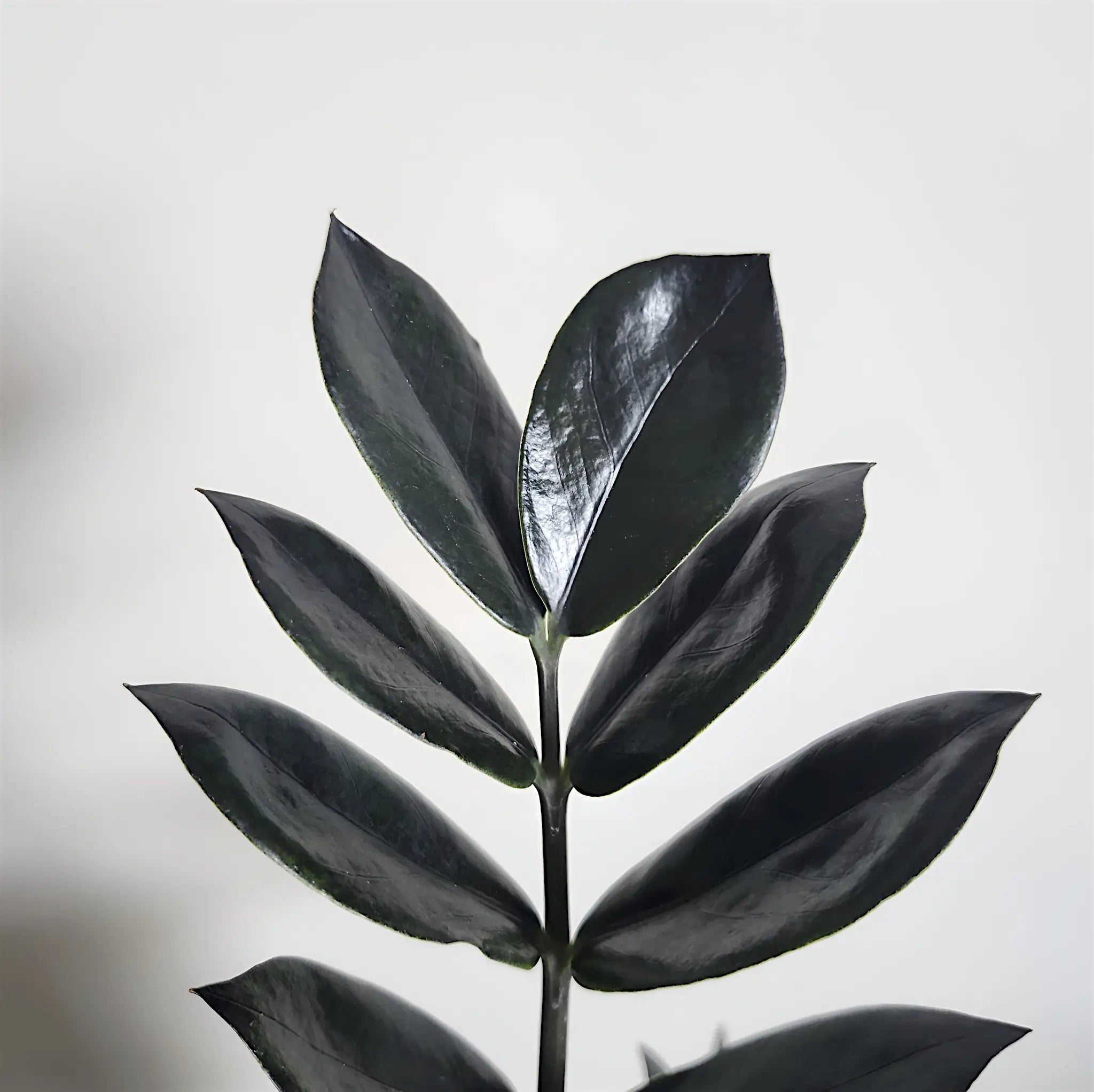
ZZ plant |
Tough plant for dim rooms; aroid with thick storage structures |
Can stay presentable in dim rooms, but new shoots are usually slow. |
Bright indirect light or a timer light for more active growth. |
|
Aspidistra |
Classic dim-room survivor |
Handles low light better than most houseplants, but may barely change for long periods. |
Moderate filtered light for more reliable new leaves. |
|
Snake plant |
Tough, slow-growing foliage plant |
Can tolerate dim placement, but growth slows and markings may look less crisp. |
Bright indirect to brighter filtered light for stronger growth. |
|
Aglaonema, Epipremnum, Philodendron, Spathiphyllum |
Tolerant tropical foliage |
Can cope with lower light, but growth becomes slower and shape may loosen. |
Bright indirect light for stronger growth; more light for Spathiphyllum flowers. |
|
Chamaedorea elegans |
Slow, shade-tolerant palm for softer indoor light |
Can remain attractive in modest light, but growth is slow. |
Bright filtered light for fuller growth. |
|
Maranta and selected Goeppertia types |
Filtered-light plants, not dark-corner plants |
Can work in soft light if moisture and humidity are stable. |
Bright filtered light, stable humidity and careful watering. |
Quick picks by situation
- Dark corner with no LED: ZZ plant, Aspidistra or snake plant if you mainly want the plant to stay presentable, not actively grow.
- Dim desk with long office lighting: ZZ plant, Aglaonema, Epipremnum.
- Soft north-facing window: Aglaonema, Philodendron, Chamaedorea elegans, selected Maranta.
- Pet household: check each plant before buying; many classic low-light choices can irritate pets if eaten.
- Want flowers or fast growth: use bright indirect light or LEDs instead of a dim spot.
Taxonomy note: ZZ plant is an aroid because Zamioculcas zamiifolia belongs to Araceae. Snake plant and Aspidistra are also useful low-light survivors, but they are not aroids; both sit in Asparagaceae.
Pet safety: many common low-light houseplants, including ZZ plant, Aglaonema, Dieffenbachia, Spathiphyllum and many Philodendron species, can irritate pets if ingested. Check each plant individually before buying for a home with pets.
For homes with pets, our pet-friendly houseplants collection is a safer starting point than choosing classic low-light plants first.
For more on aroid growth habits and indoor care, read the aroid overview. For fern-specific care, see our Fern Care Guide. For Hoya lighting and flowering, visit our Hoya Indoor Care Guide.

5. Plants to Avoid in True Low Light
Some plants are regularly placed too far from light because they look good in styled interiors. That does not mean the placement works long term. If the spot stays below 500 lux most of the day and you do not want to use a grow light, avoid plants that need much more usable light.
- Succulents and cacti: most need far more light than typical indoor shade provides. In low light, they often stretch, weaken or decline.
- Echeveria and compact rosette succulents: especially poor candidates for dim rooms because their shape depends on strong light.
- Most Hoyas: vines may stay alive in medium light, but compact growth and flowering need brighter conditions.
- Flowering orchids: foliage may hold in lower light, but flowering usually needs a brighter filtered setup.
- Highly variegated collector plants: reduced green tissue makes low light harder. Many will stall unless given bright indirect light or a properly placed grow light.
- Large fast-growing tropicals: plants such as Strelitzia and many large Ficus types usually need more light than a deep room provides.
When not to use a real plant
If a spot has no daylight and you do not want to use a timer light, choose preserved, dried or artificial styling instead. A real plant placed there will not stay healthy for long.
6. Low-Light Plant Myths
Myth 1: Low-light plants grow in darkness
No green plant grows without usable light. ZZ plant, snake plant and Aspidistra can remain presentable for a long time in weak light, but they are not feeding on darkness. They are growing slowly, using stored resources, and reducing activity.
Myth 2: Low-light plants prefer shade
Shade tolerance is not shade preference. Most tolerant houseplants grow better with brighter filtered light. Low light simply means they decline more slowly than plants adapted to open, sunny habitats.
Myth 3: Humidity replaces light
Humidity can reduce stress for ferns, prayer plants and terrarium species, but it does not replace photons. A humid windowless room still needs LEDs if plants are expected to grow.
Myth 4: Fertilizer fixes low light
Fertilizer cannot replace energy. In dim light, growth slows, water use drops, and nutrient uptake often slows too. Adding more fertilizer can increase salt buildup without solving the real bottleneck.
Myth 5: If it looks fine now, the spot is fine
Low-light decline is often slow. A plant may hold old leaves for months before smaller new growth, longer internodes, leaf drop, or weak stems become obvious.
7. How to Make Low Light Work Indoors
Choose for survival or choose for growth
Before choosing a plant for a dim spot, decide whether you want a plant that stays presentable or a plant that actively grows. Those are not the same goal. If you want very little change, choose a plant known to tolerate lower light. If you want fresh leaves, trailing growth, flowers, compact vines, or stronger variegated growth, plan for brighter indirect light or LEDs from the start.
Move closer to light before changing care
A plant that is stretching, shrinking, leaning or not producing new growth usually needs more light over the day before it needs more fertilizer. Move it closer to a window, use a brighter but filtered exposure, or add a daylight LED.
- Rotate pots: helps reduce one-sided leaning.
- Clean leaves: dust reduces light capture.
- Use pale surroundings: light walls and surfaces can reflect some light back toward plants.
- Adjust in winter: shorter days often require plants to move closer to glass or under LEDs.
For placement by window direction, see the window orientation guide.
Slow care down in low light
Low light slows growth and water use. Substrate stays wet longer, roots use oxygen more slowly, and nutrient demand drops. Care should match that slower pace.
Low-light watering trap: the darker the spot, the longer substrate stays wet. In dim rooms, overwatering usually comes from watering too often, not from giving too much water once.
- Watering: check the substrate before watering. Do not water on a fixed calendar.
- Fertilizer: use light feeding only when the plant is actively growing.
- Pot size: avoid oversized pots in dim spots because excess substrate stays wet too long.
- Repotting: wait until roots genuinely need more space.
- Humidity: use a humidifier, grouping, or a vitrine where appropriate for humidity-sensitive plants.
For humidity-sensitive foliage plants, see Humidity for Houseplants.
Use daylight LEDs when the room cannot provide enough light
Artificial light is not a cheat. Indoors, it is often the most controlled way to give plants usable light every day.
If the room itself is too dim, grow lights can add usable light on a timer without moving the plant from place to place.
- Spectrum: choose broad-spectrum white/daylight LEDs around 4,000–6,500 K.
- Duration: use a timer, usually around 12–14 hours daily for foliage plants in low-light setups.
- Distance: place lights close enough to be useful, often 15–45 cm from foliage depending on beam strength and heat.
- Acclimation: increase duration or intensity gradually to avoid stress.
- Coverage: use even light across the plant, not one harsh narrow beam on a few leaves.
If a grow light is too far away, it may look bright to your eyes while delivering very little usable light to the plant. Start close, check for heat, and adjust gradually.
Practical LED test: if a plant starts producing shorter internodes, firmer leaves and more regular new growth after adding a timer light, the previous spot was too dim for the result you wanted.
Troubleshooting signs of too little light
- Long gaps between leaves: common shade-avoidance response. See the leggy growth guide.
- Smaller new leaves: often a sign of reduced energy intake.
- No flowers: common in Spathiphyllum, orchids and Hoyas kept below their flowering light needs.
- Lower leaf loss: can happen when light, watering, pests or root stress combine. See the leaf-drop guide.
- Stretching succulents: a strong sign the plant needs much more light than the spot provides.

8. Low-Light Houseplant FAQs
Can plants survive in a room with no windows?
Not reliably without artificial light. Use broad-spectrum daylight LEDs on a timer if the room has no meaningful natural light.
What is the difference between low light and bright indirect light?
Low light is usually a survival or maintenance range. Bright indirect light gives many tropical houseplants enough light over the day for steadier growth without direct sun scorch risk.
Why is my low-light plant not growing?
It may be close to its light compensation point, where energy production only covers basic maintenance. Move it closer to a window or add LEDs if you want visible new growth.
Can ZZ plant live under office lighting?
ZZ plant can remain presentable under many office-light setups, especially where lights run for long hours. Growth is usually slow unless light intensity is higher.
Why is my peace lily not flowering?
Light is usually the limiting factor. Spathiphyllum can hold foliage in lower light, but flowering needs more usable light over the day.
Do variegated plants need more light?
They need enough light to support growth, especially when large areas of the leaf contain less chlorophyll. More light does not create more variegation, but too little light can slow growth badly.
Can fertilizer compensate for poor light?
No. Fertilizer supplies nutrients, not energy. Without enough light, extra fertilizer can create more problems than progress.
Are succulents low-light plants?
No. Most succulents and cacti need far stronger light than typical indoor shade provides. Without bright sun or strong grow lights, they often stretch, weaken or decline.
Which low-light plant is easiest for beginners?
ZZ plant, Aspidistra and snake plant are among the most forgiving choices for dimmer rooms. They still grow better with more light, but they tolerate slow, low-light conditions better than most houseplants.
9. Final Takeaways
- Measure first: a spot that looks bright may still be below 500 lux at plant height.
- Low light means maintenance: many plants stay alive there, but few grow well there.
- Match plant to spot: ZZ plant, Aspidistra and snake plant tolerate dim placement better than succulents, Hoyas, orchids and many collector variegates.
- Adjust care downward: low light means slower watering, lighter feeding and more caution with oversized pots.
- Use LEDs when needed: daylight LEDs on a timer can turn a weak indoor spot into a usable plant setup.
“Low-light houseplant” should never mean “plant for darkness.” It means a plant with enough tolerance to handle reduced light without collapsing quickly. Once you know the difference between survival and growth, plant choice becomes much easier: choose lower-light tolerant plants for dim spots, move plants you want to actively grow closer to real light, and use LEDs where the room cannot provide enough usable light.
Need a safer starting point? Begin with ZZ plant, Aspidistra, snake plant, Aglaonema, or parlor palm for dimmer spaces. For growth, flowers, compact vines, or variegated collector plants, plan for bright indirect light or a daylight LED setup from the start.
10. Sources and Further Reading
- University of Minnesota Extension. Lighting for Indoor Plants and Starting Seeds. Practical guidance on indoor light levels, symptoms of insufficient light, plant placement and supplemental lighting.
- Sugano, Soma; Ishii, Masahisa; Tanabe, Shin-ichi. Adaptation of Indoor Ornamental Plants to Various Lighting Levels in Growth Chambers Simulating Workplace Environments. Scientific Reports 14, Article 17424, 2024. Study on low-light workplace-style LED conditions, day length, PPFD and growth responses in indoor ornamental plants.
- Royal Botanic Gardens, Kew. Plants of the World Online: Zamioculcas zamiifolia (G.Lodd.) Engl.. Accepted taxonomy, family placement and native range for ZZ plant.
- Royal Botanic Gardens, Kew. Plants of the World Online: Dracaena trifasciata (Prain) Mabb.. Accepted taxonomy for snake plant.
- Royal Botanic Gardens, Kew. Plants of the World Online: Aspidistra elatior Blume. Accepted taxonomy for cast-iron plant.
- ASPCA Animal Poison Control. Toxic and Non-Toxic Plants List. Pet-toxicity reference for commonly grown houseplants, including aroids, Dracaena/snake plant and other indoor foliage plants.


Leave a comment