Skip to content

Cart

Your cart is empty.

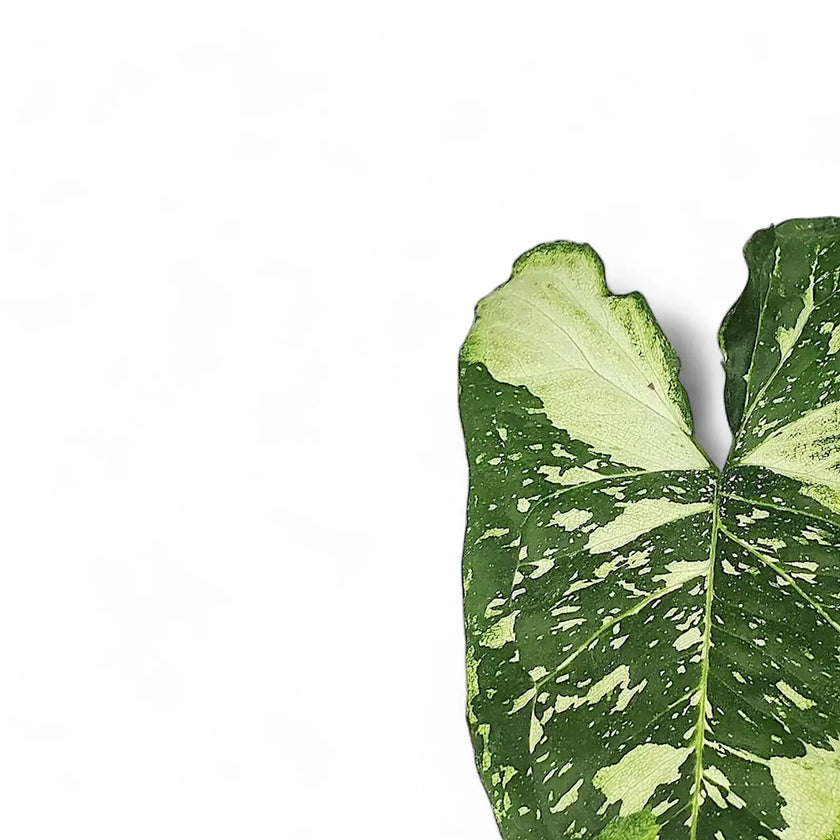
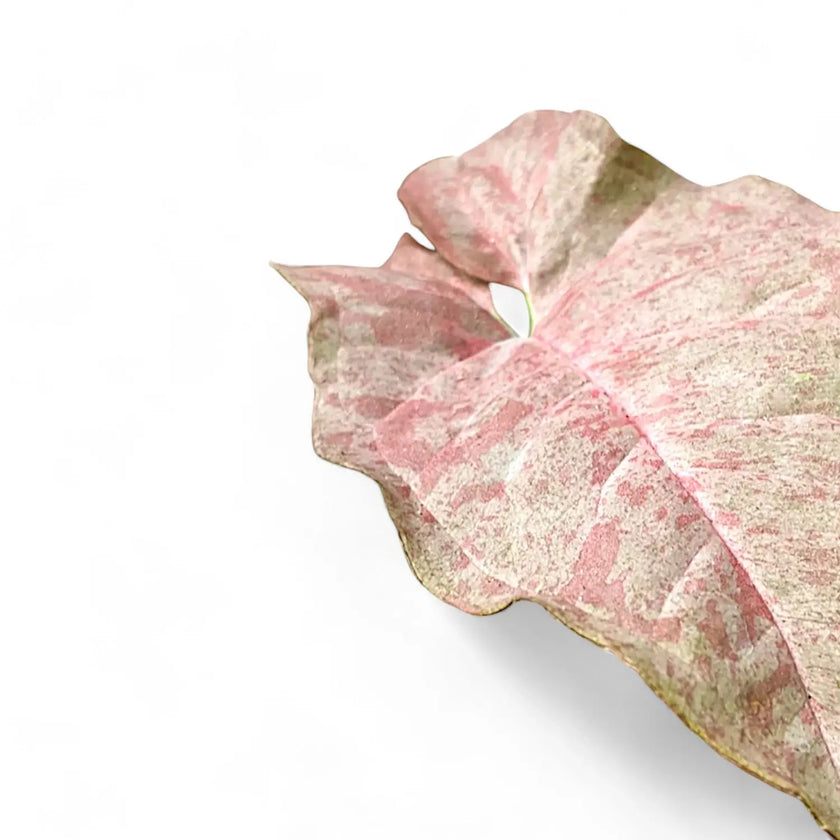
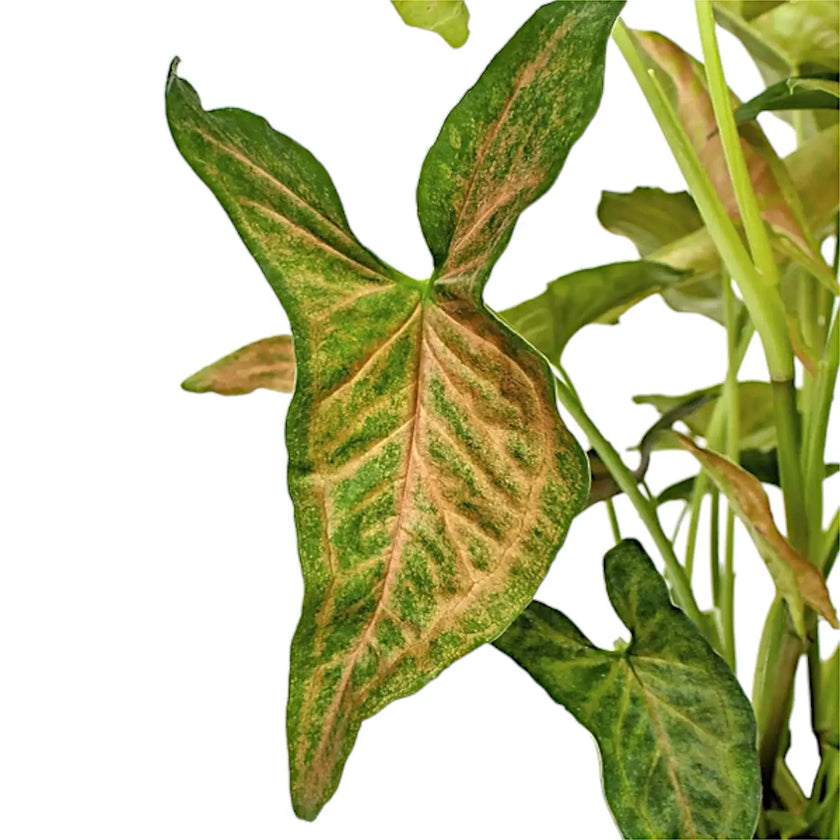
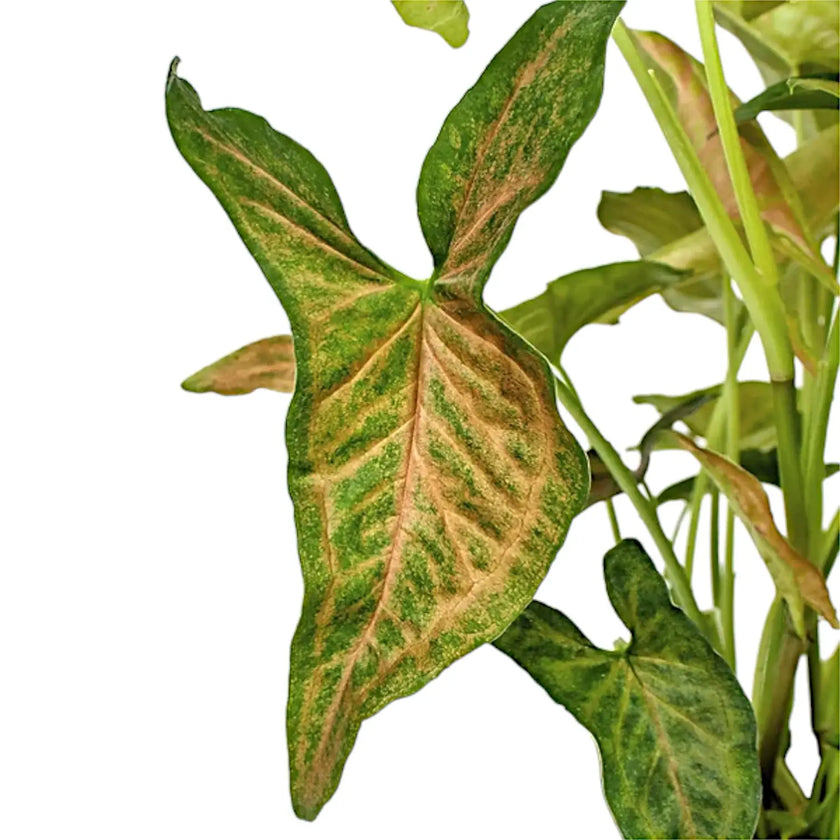
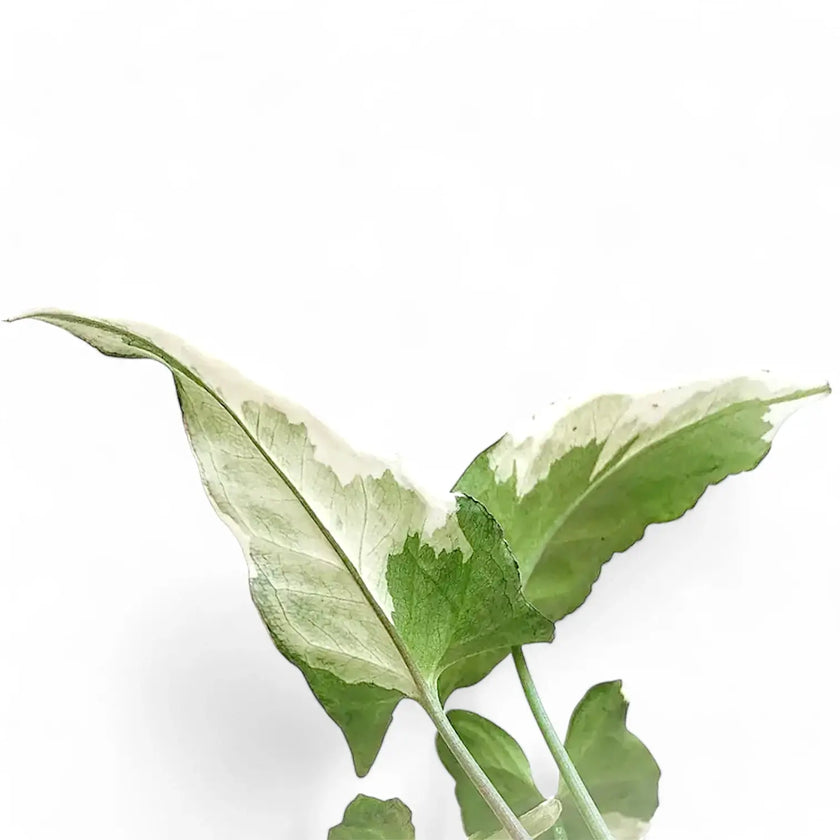
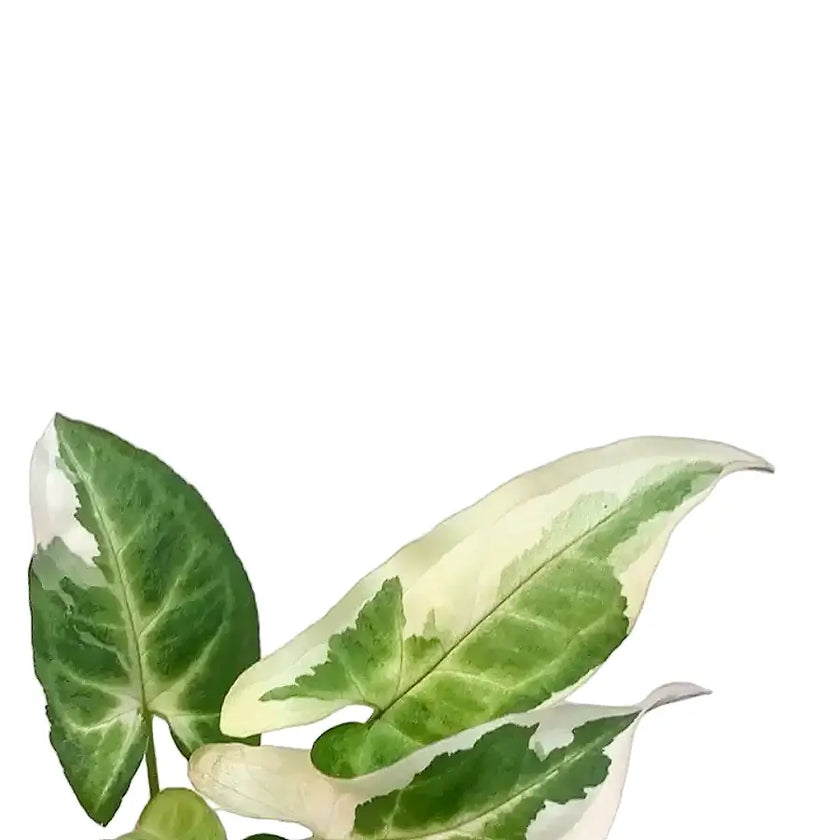
Syngonium steyermarkii  leaf on a white background
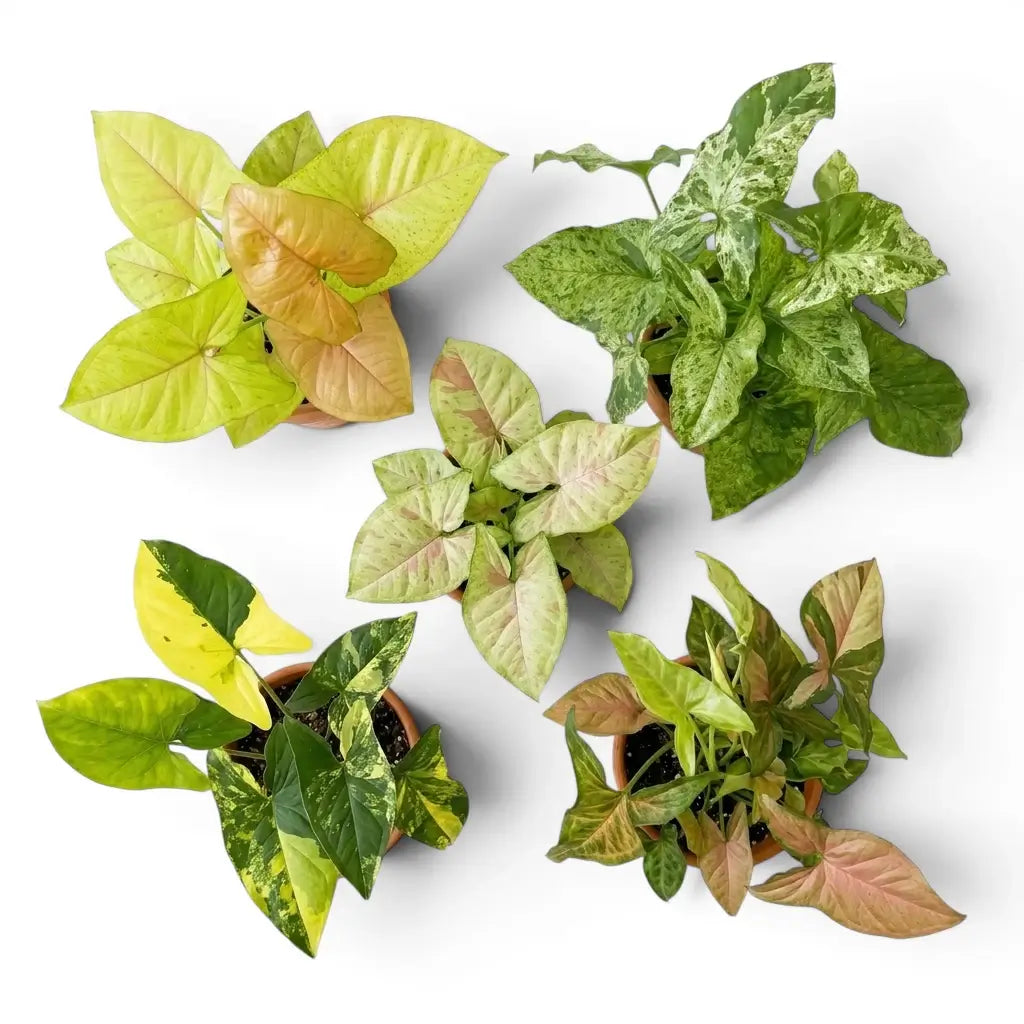
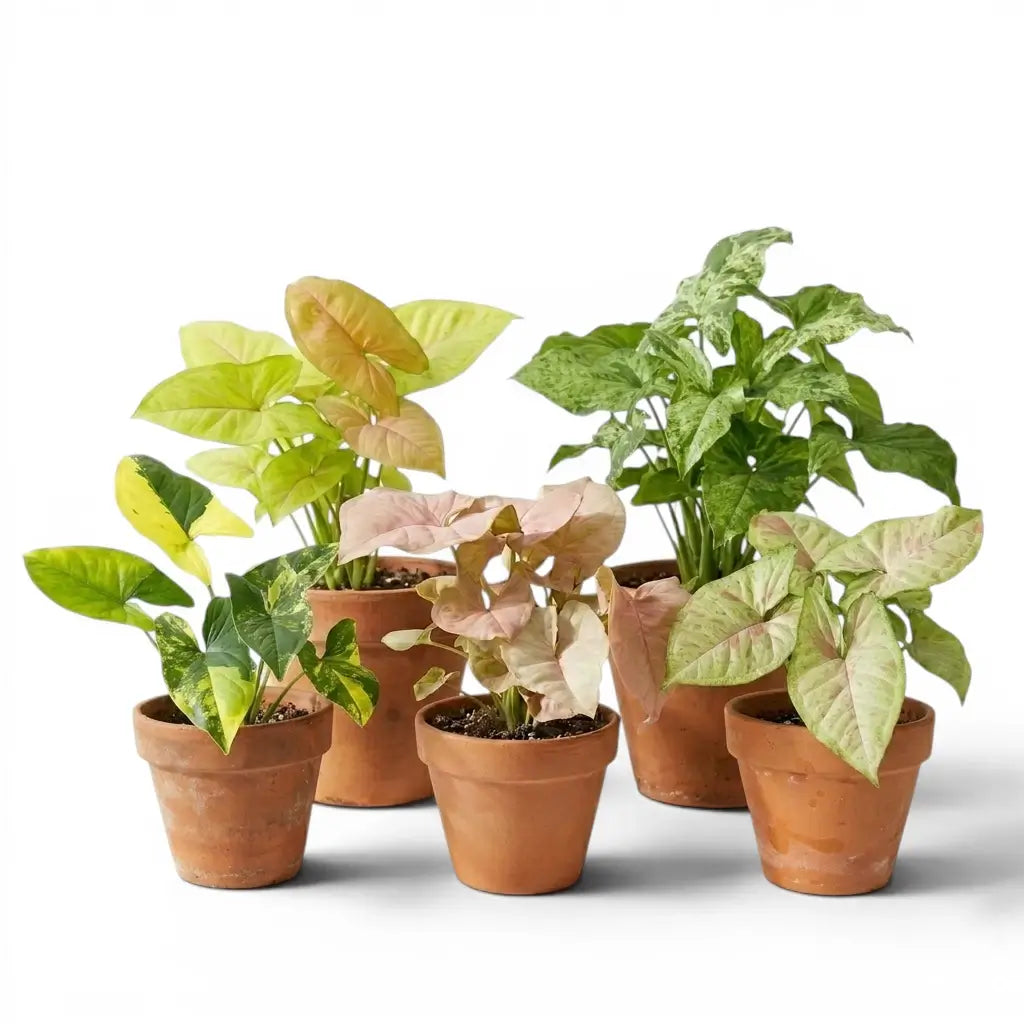
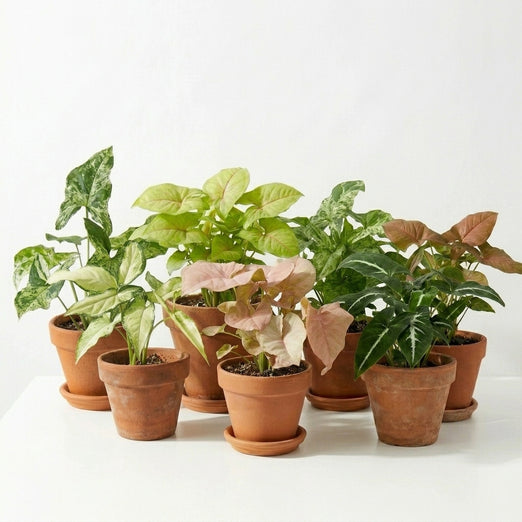
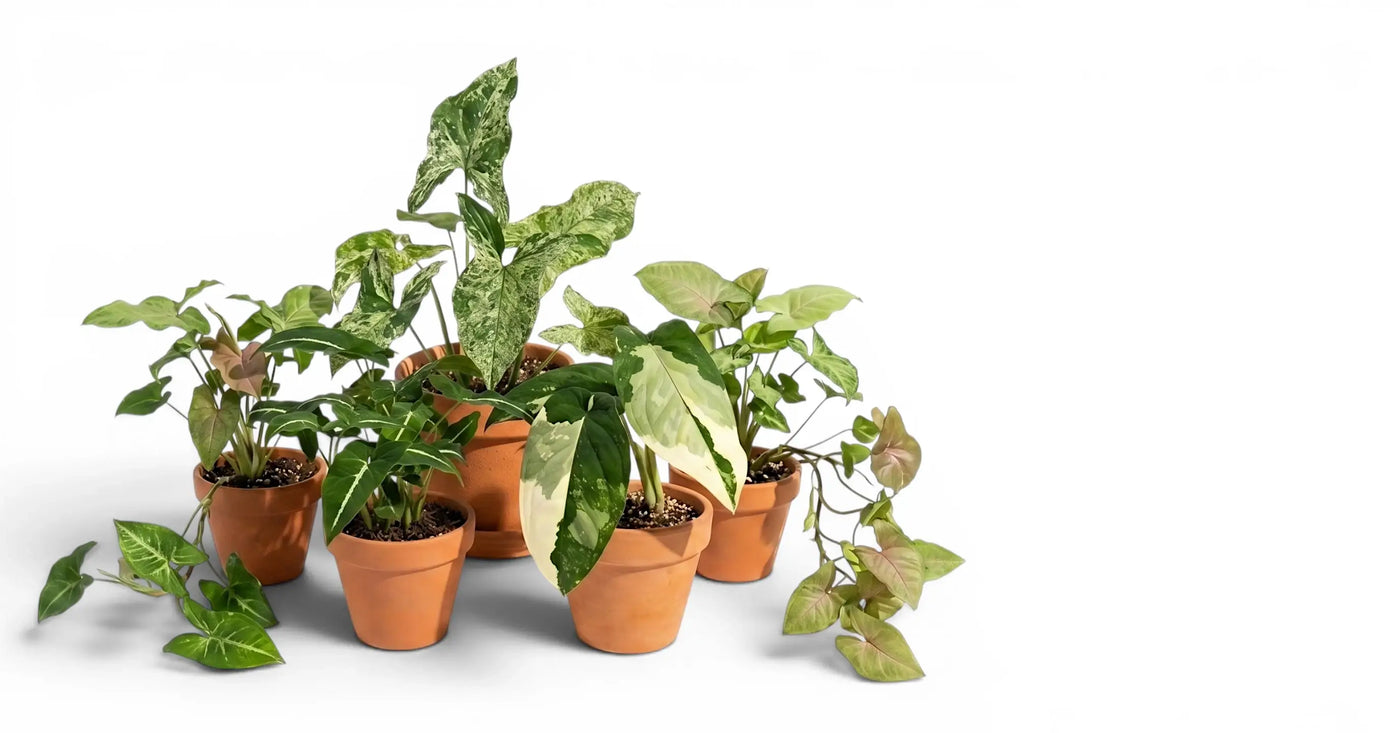
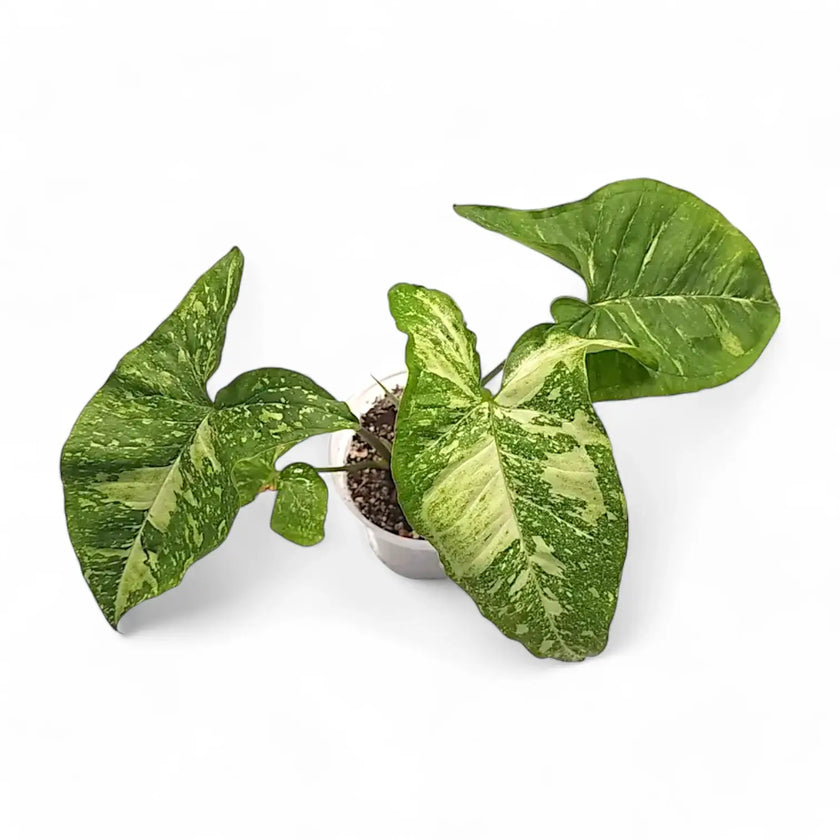
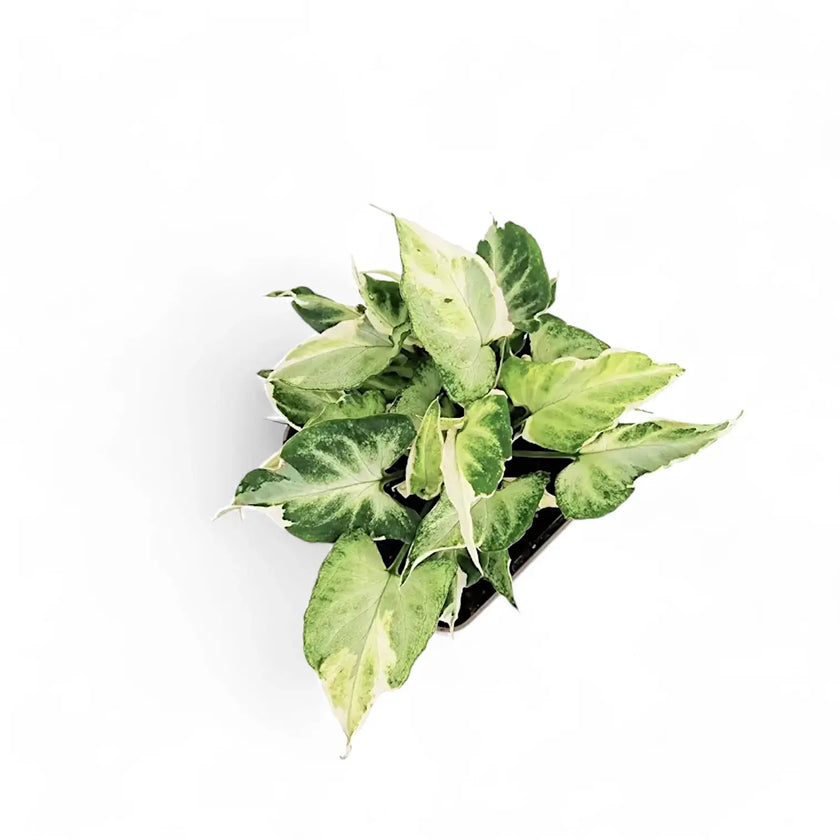
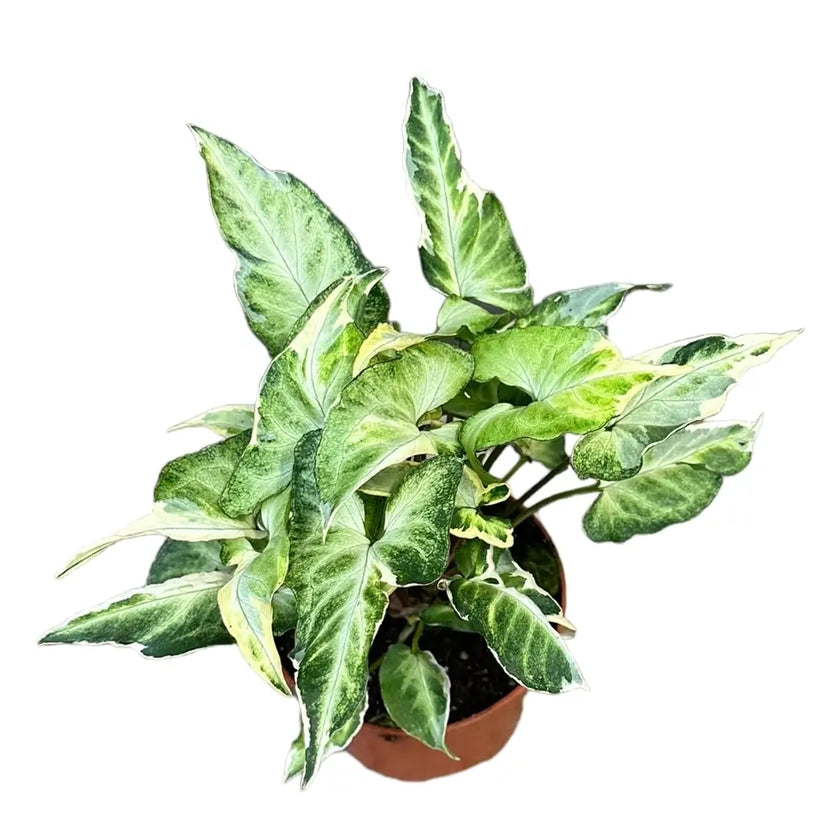
Five Syngonium varieties with variegated leaves on a white background
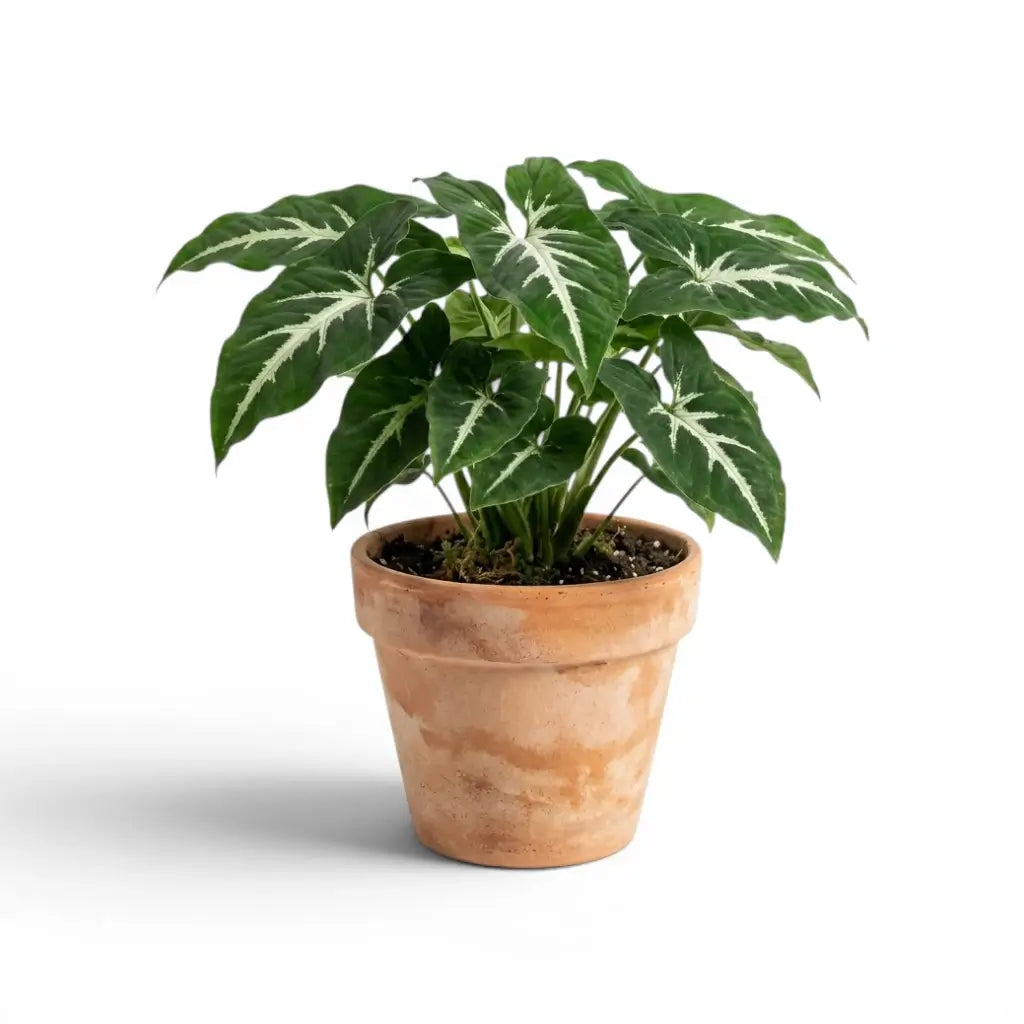
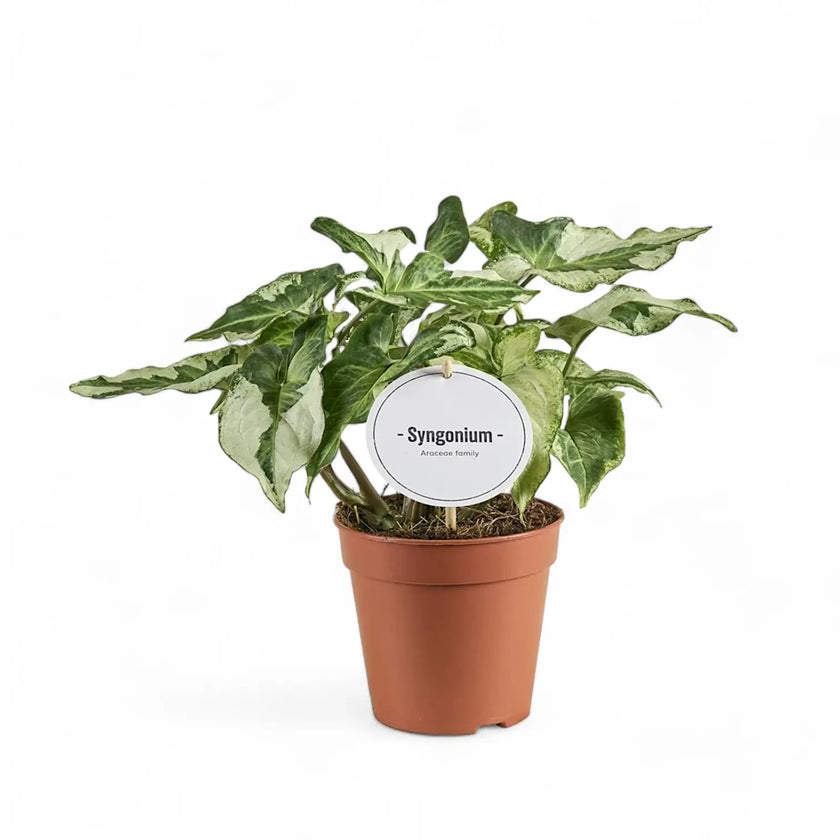
Syngonium wendlandii with green leaves on a white background

Syngonium plants are grown for arrowhead-shaped juvenile leaves, shifting mature leaf forms, varied colours and climbing stems that root at nodes. Many arrive as neat young pots. As stems extend, the same plant can be pruned for density, allowed to hang from the pot or guided upward on support.

The natural habit is climbing or root-climbing. Indoor presentation is the grower’s choice: a pruned compact pot, a hanging vine or a support-grown plant with stronger vertical structure. That choice shapes pruning, pot size, support, watering rhythm and long-term appearance.

Compare Syngonium varieties by species background, leaf shape, colour, pattern and training style. From green and pink Syngonium podophyllum cultivars to mottled variegates and larger species-led vines, healthy growth starts with warm stable conditions, useful indirect light and roots that stay lightly moist, aerated and active.

Shop Syngonium plants

Syngonium Plants: Arrowhead Leaves, Varieties, Climbing Growth and Care

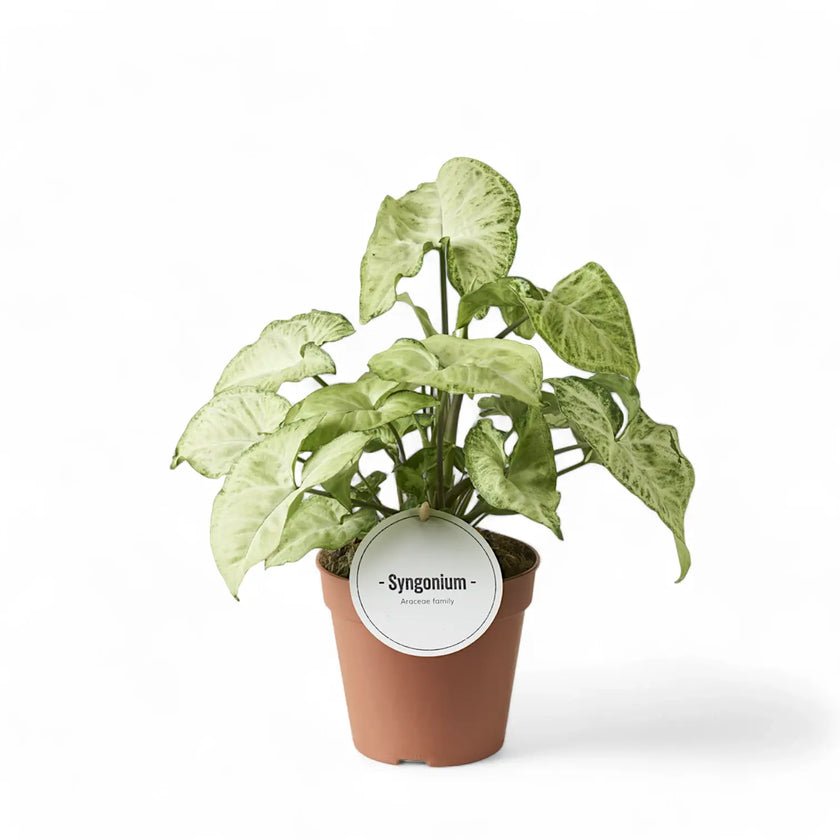
Five Syngonium varieties potted in terracotta pots on a white background
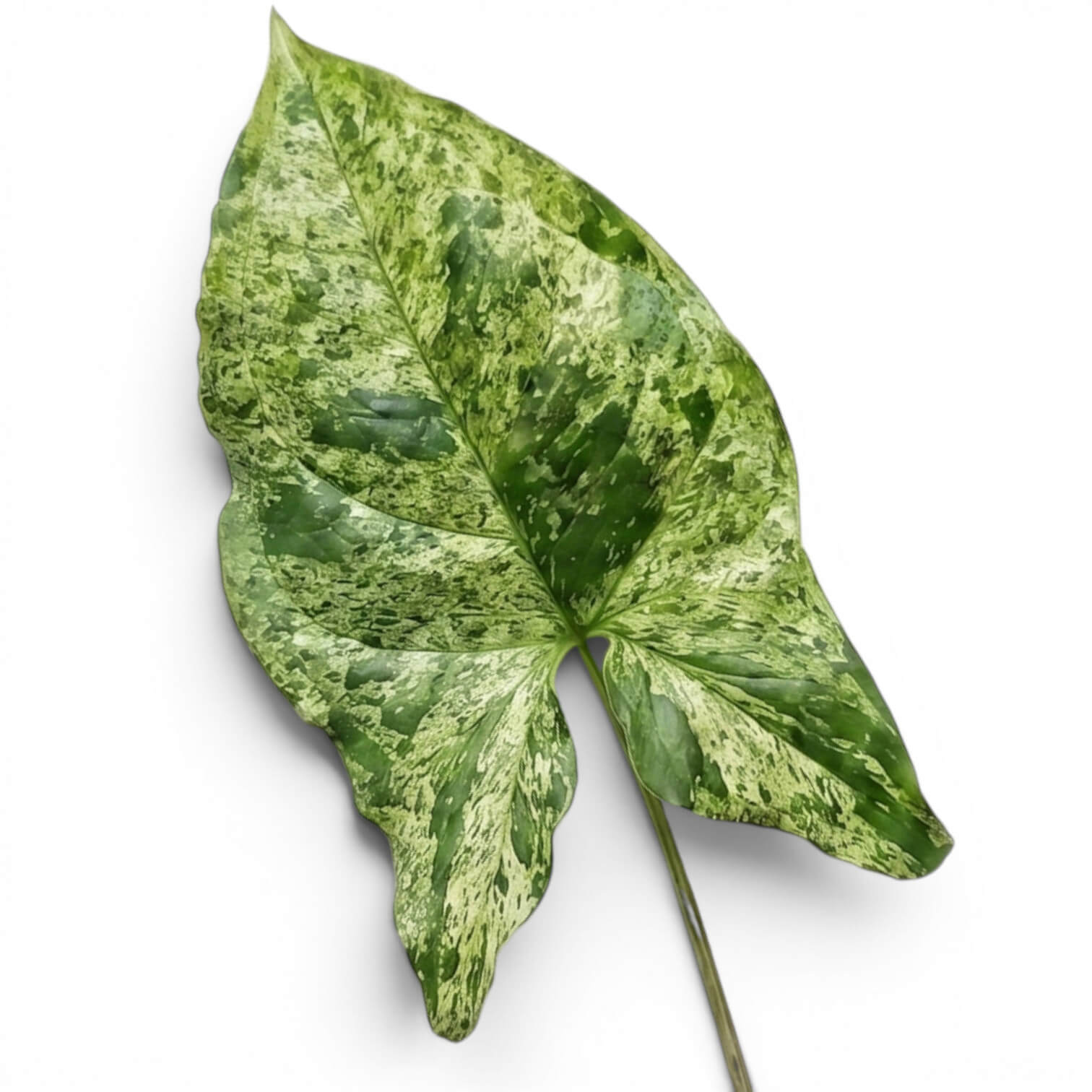
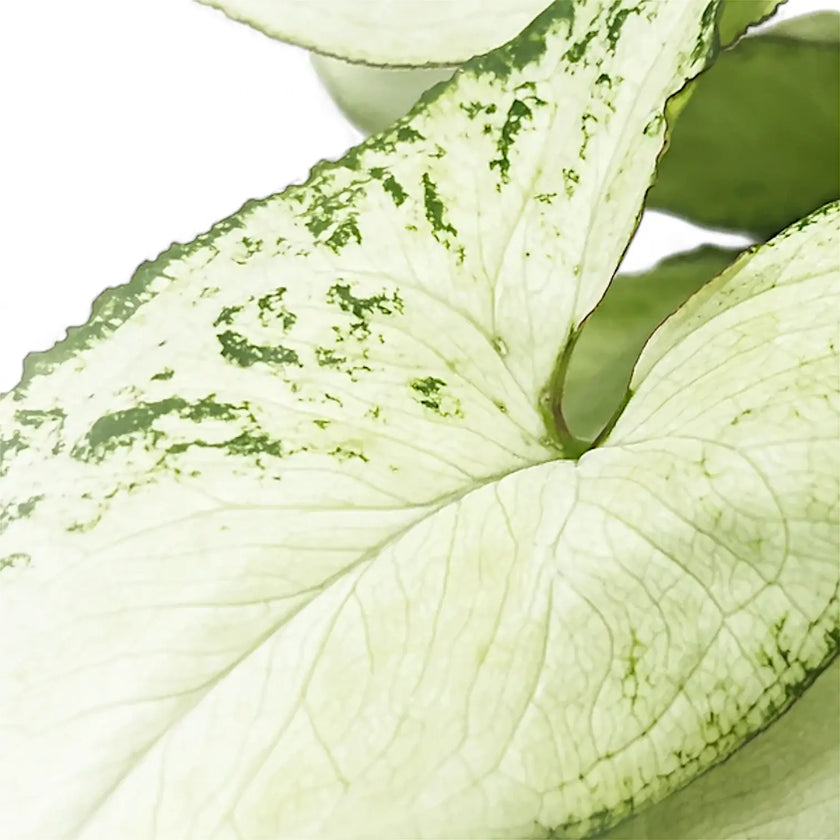
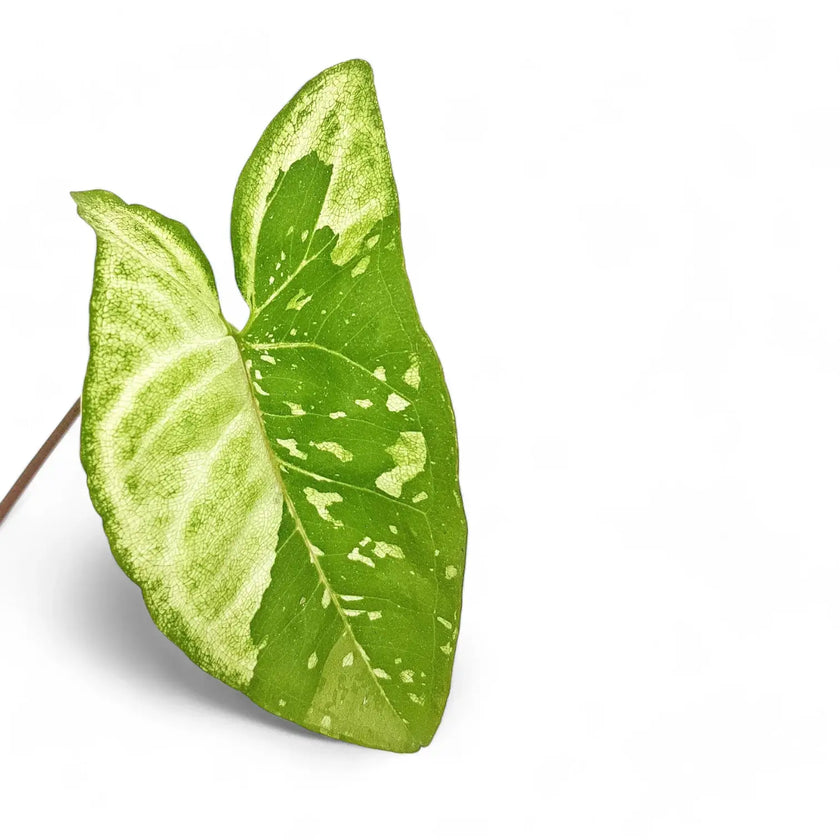
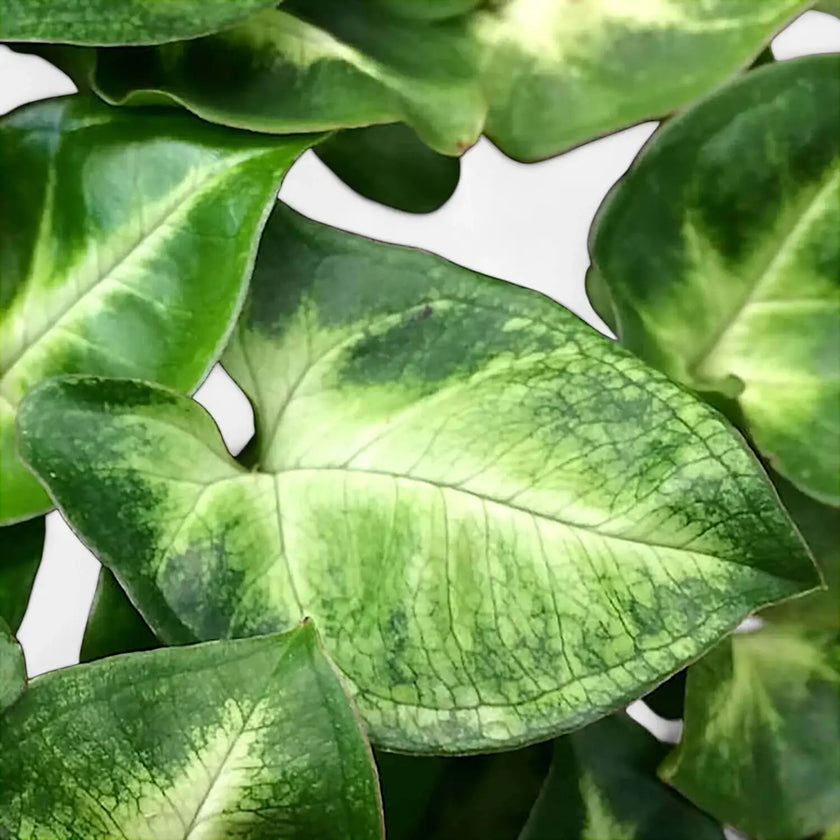
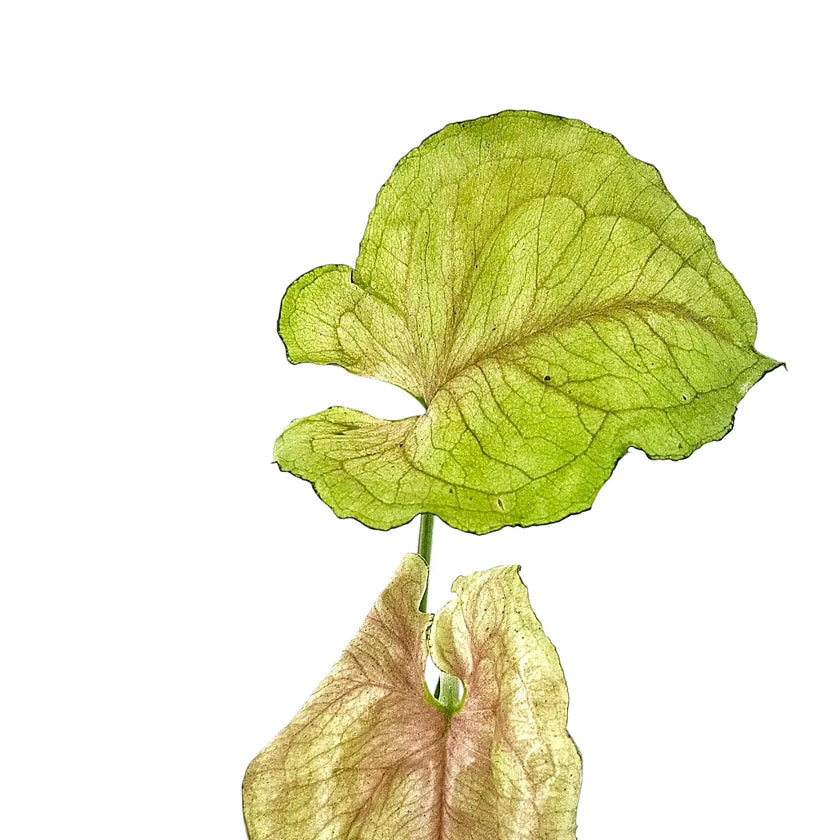
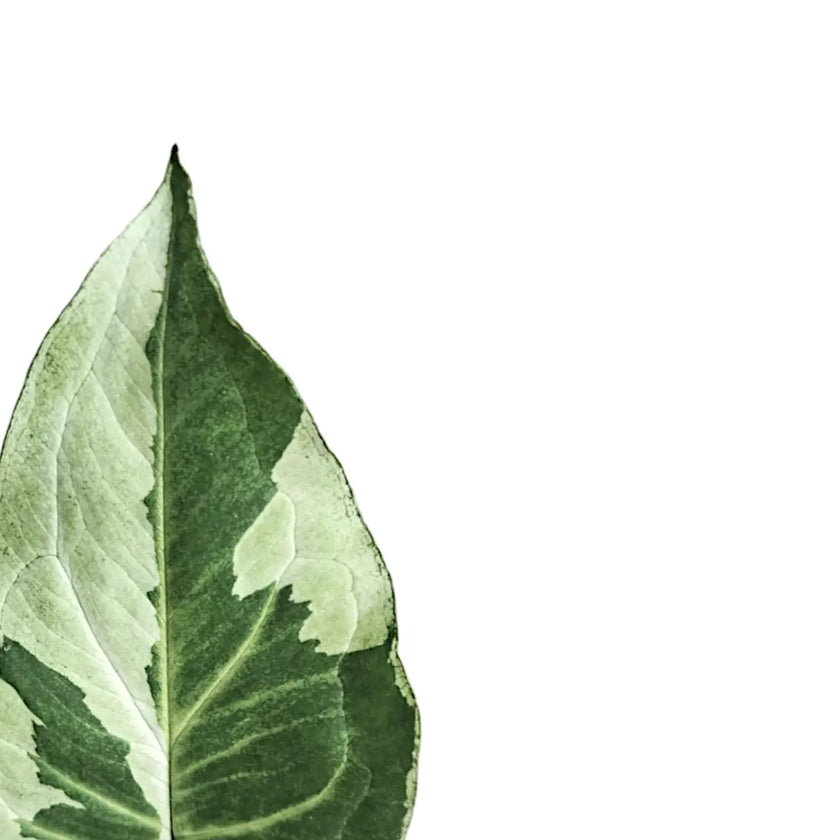
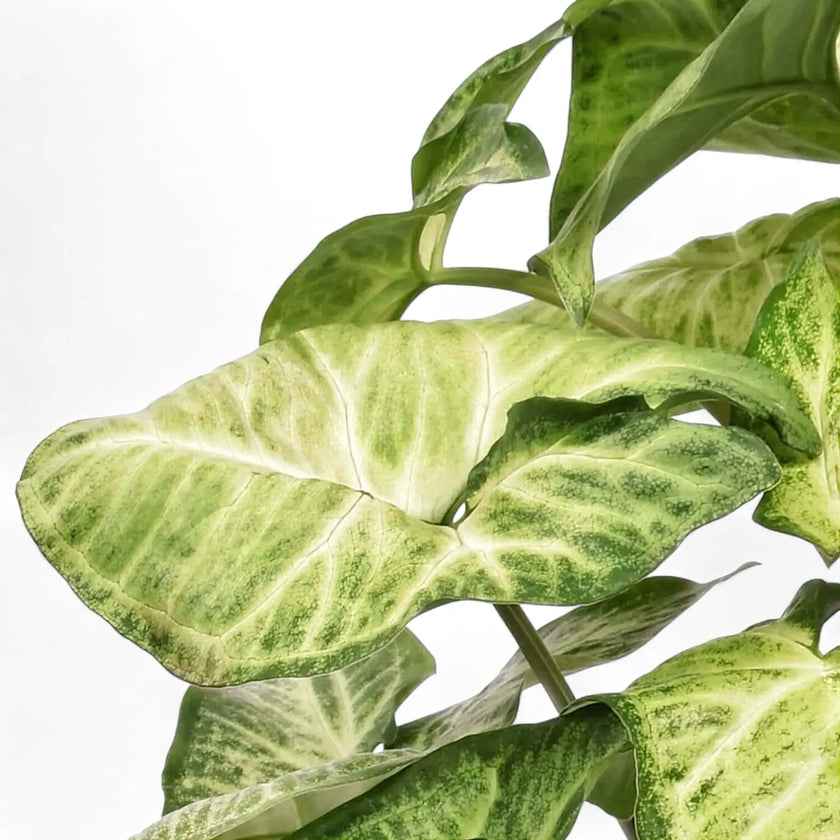
Variegated leaf of Syngonium podophyllum 'Mottled' on a white background

Syngonium at a Glance

Key facts for comparing Syngonium indoors:

  • Genus: Syngonium
  • Family: Araceae
  • Common names: arrowhead plant and arrowhead vine
  • Native range: Mexico to tropical America at genus level; individual species have narrower ranges
  • Natural growth habit: climbing or root-climbing aroids with stems that root at nodes
  • Young leaves: usually arrowhead-shaped, giving the plant its common name
  • Older growth: stems lengthen and, with support, some species and forms can produce larger, lobed or more divided leaves
  • Indoor display choices: prune for a fuller pot, let stems hang, or train stems upward on textured support
  • Care baseline: bright usable indirect light, stable warmth and an airy, moisture-buffered substrate that drains and stays oxygenated
  • Safety: Syngonium is not pet-safe if chewed; plant tissue can irritate the mouth and digestive tract

Once the climbing habit is clear, colour and pattern are easier to compare. A pruned pot, a hanging plant and a supported vine are different indoor presentations of the same basic stem structure.

Why Syngonium Leaves and Stems Change Over Time

Most indoor Syngonium plants are sold young. At this stage, leaves sit close together, the arrowhead shape is clear and the plant presents easily as a neat pot.

As stems extend, the climbing structure becomes more visible. Nodes, aerial root initials and longer internodes show where the plant can root, attach and continue upward when it meets support.

Juvenile Syngonium leaves

Young Syngonium usually has the classic arrowhead leaf shape. Leaves are smaller, internodes are shorter and the plant can be kept dense with pruning. This juvenile stage is the familiar arrowhead plant look.

Nodes, internodes and climbing stems

Syngonium grows from jointed stems. Nodes carry buds, roots and leaf attachments; internodes are the stem sections between them. A cutting needs a node because new roots and shoots develop from this stem tissue. As stems lengthen, those nodes also give the plant places to attach when support is available.

Hanging or unsupported stems

Extending stems can hang from the pot when they are left unsupported. This is a display choice within the natural climbing habit. Hanging stems stay fuller with pruning and rooted cuttings because density comes from multiple active growing points.

Support-grown Syngonium

When stems are guided upward on textured support, some Syngonium can produce stronger, larger or more mature-looking foliage over time. Support gives aerial roots a surface to follow and keeps growth vertical, especially in species-led plants and vigorous forms.

Mature Syngonium leaves

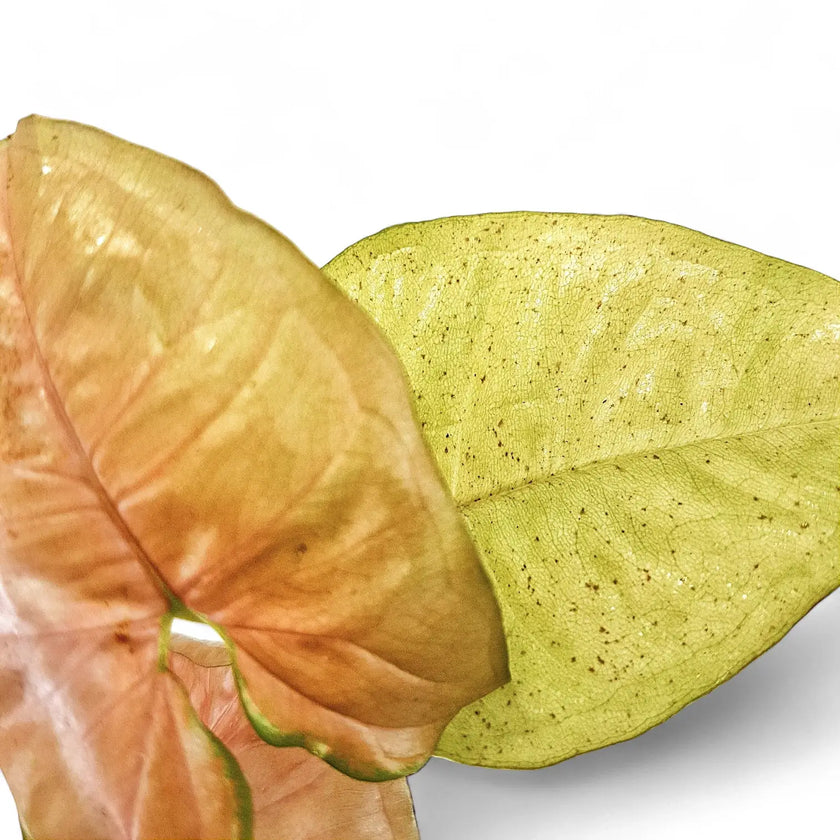
Some Syngonium forms move beyond simple juvenile arrowhead leaves as they age. Leaves may become larger, more lobed or more divided, depending on species, cultivar, support, warmth, light, root health and time. This leaf-shape shift is heteroblastic growth: the plant can produce different leaf forms at different stages of development.

For indoor growing, the main decision is training. The same climbing plant can be pruned into a fuller pot, allowed to hang, or grown upward for a more structural plant.

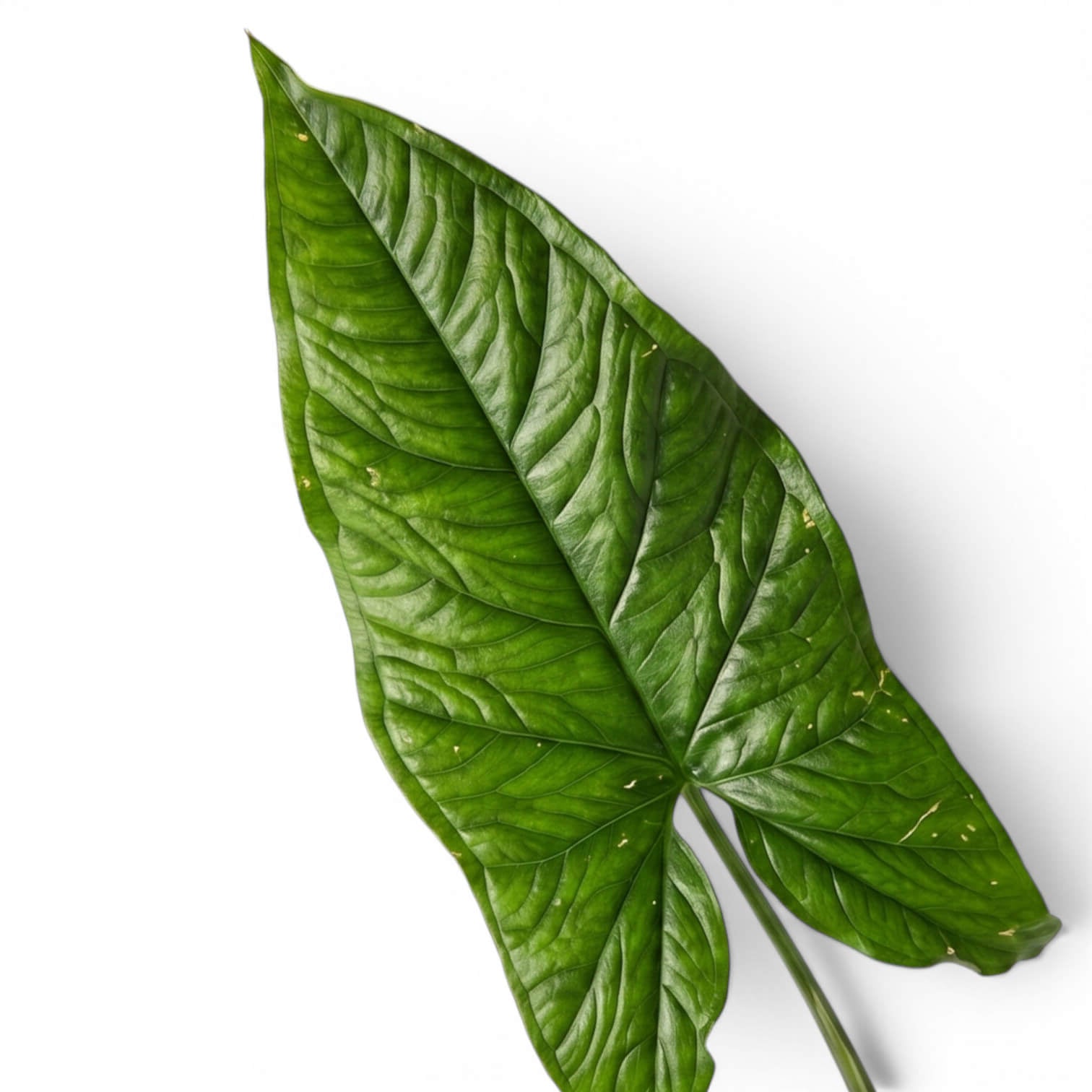
Syngonium leaf development from juvenile arrowhead leaves to more mature divided growth

Compact Pot, Hanging Stems or Support-Grown Vine

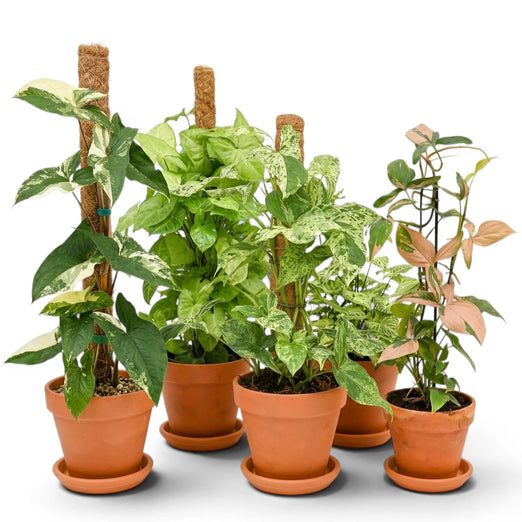
Syngonium is naturally a climbing or root-climbing aroid. Indoors, the same stem habit can be trained in three practical ways: pruned for a fuller pot, allowed to hang from the container or guided upward on textured support.

Syngonium grown with longer stems and arrowhead foliage

Pruned compact Syngonium

A compact-looking Syngonium is usually a young or pruned climbing plant with short visible stems. Cut above a node when growth gets long, then root healthy cuttings and plant them back to build a fuller pot.

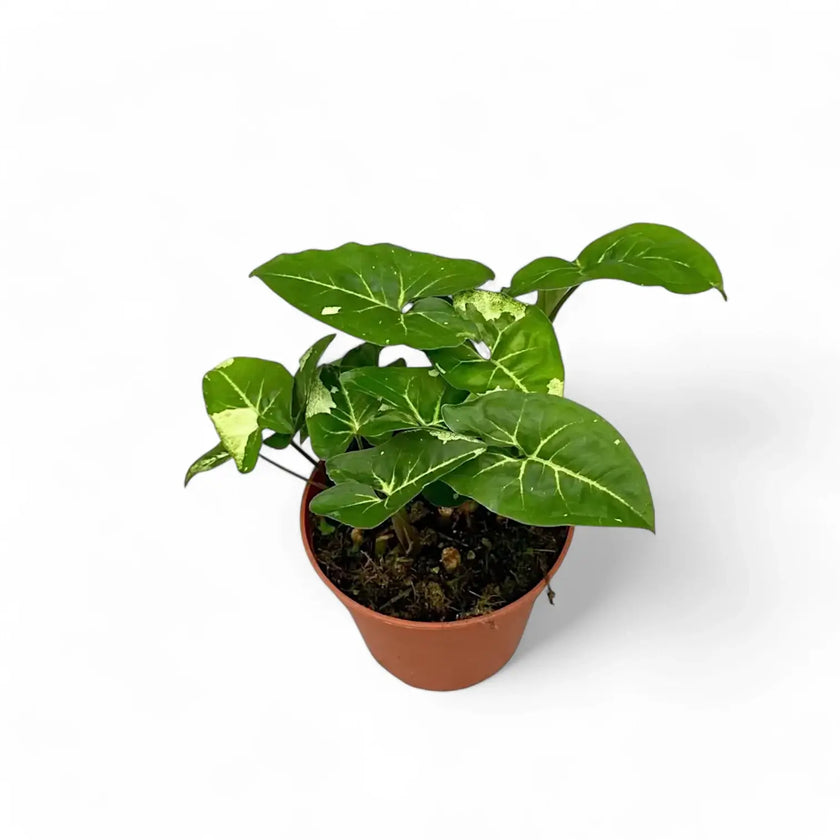
Forms such as 'Pixie' aka 'Nana' suit smaller pots and tighter styling. They still grow from stems and stay balanced with useful indirect light, steady roots and occasional shaping.

Compact Syngonium foliage in an indoor pot

Support-grown Syngonium

Support-grown Syngonium gives stems a route upward and gives aerial roots a surface to follow. Bark, cork, a plank or another textured support offers better contact than a smooth decorative stake that only holds the stem in place.

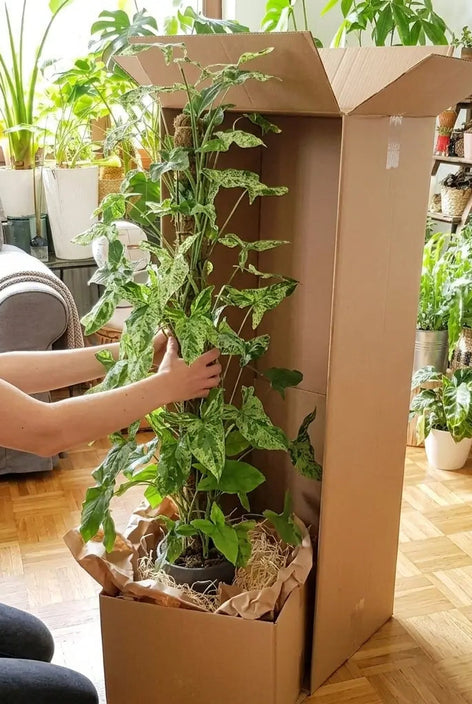
Species-led plants such as Syngonium chiapense show their scale, leaf size and vertical structure clearly when they have space to climb.

Syngonium growth habit comparison with support-grown foliage

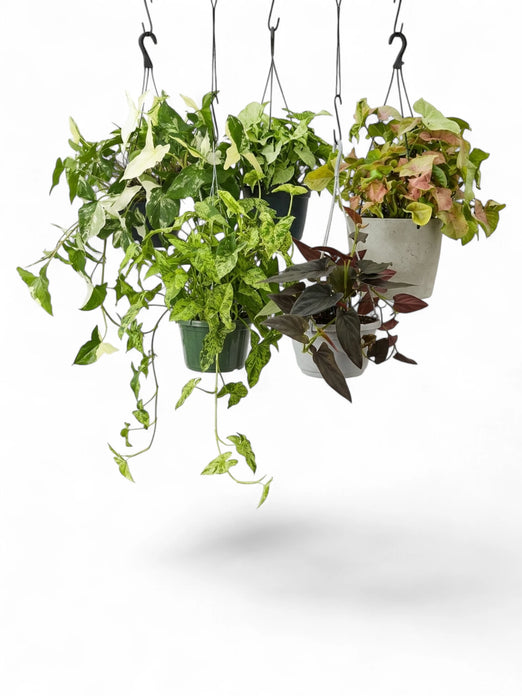
Hanging Syngonium

Hanging Syngonium displays extending stems as they spill from the pot. Many Syngonium podophyllum cultivars suit this presentation, especially in setups without a pole, board or trellis.

Fullness comes from active growing points. Older hanging stems can be shortened above nodes, rooted and planted back once roots are established. Keep bare stem sections above the substrate and use rooted cuttings for surface density.

Syngonium Habitat & Botanical Profile

Syngonium is a genus in Araceae, the aroid family. The genus is native from Mexico to tropical America, with individual species occupying narrower ranges within that broader region. Wild Syngonium species grow as climbers, root-climbers or lianas in warm wet-tropical habitats.

Natural conditions explain much of their indoor care. Stems root at nodes, attach to tree trunks or other rough surfaces and grow through filtered forest light. Roots receive moisture, organic matter, airflow and oxygen. Indoors, that points to warm stable conditions, bright indirect light, breathable moisture-buffered mix and support when vertical growth is wanted.

Syngonium podophyllum has the broadest retail presence and is native from Mexico to tropical America. Syngonium chiapense is a Mexico-to-Guatemala species. Syngonium macrophyllum ranges from southern Mexico to Ecuador. These are accepted botanical species; many pink, compact, mottled and variegated houseplants are cultivated selections derived from species such as Syngonium podophyllum.

The common names arrowhead plant and arrowhead vine describe visible growth stages. “Arrowhead plant” fits juvenile leaves. “Arrowhead vine” fits the extending climbing stems that develop with time.

Syngonium podophyllum and cultivar names

Many familiar indoor Syngonium plants are sold as Syngonium podophyllum cultivars or horticultural selections. This includes green, pink, red, cream, white, mottled, compact and confetti-type forms. These names help with colour and appearance, while botanical species names explain natural background and growth structure.

Species identity, scale and climbing behaviour define plants such as Syngonium chiapense. Pattern and colour define cultivated foliage selections such as 'Confetti'.

How to read Syngonium names

  • Genus name: Syngonium keeps the whole group clear.
  • Common name: arrowhead plant is familiar for searches and everyday wording.
  • Species names: useful for plants such as Syngonium chiapense, Syngonium wendlandii and Syngonium macrophyllum.
  • Cultivar or trade names: useful for colour, pattern, compactness or unusual leaf form.
  • Comparison order: species background and climbing structure first, then foliage colour, pattern, size and support style.
Syngonium foliage showing arrowhead-shaped leaves

Syngonium among other aroids

Syngonium belongs to Araceae, alongside many familiar foliage plants. It is a separate genus from Philodendron, Epipremnum, Caladium and Alocasia. Arrow-shaped juvenile leaves and climbing stems can look similar across aroids; genus identity keeps comparison, naming and long-term growth expectations accurate.

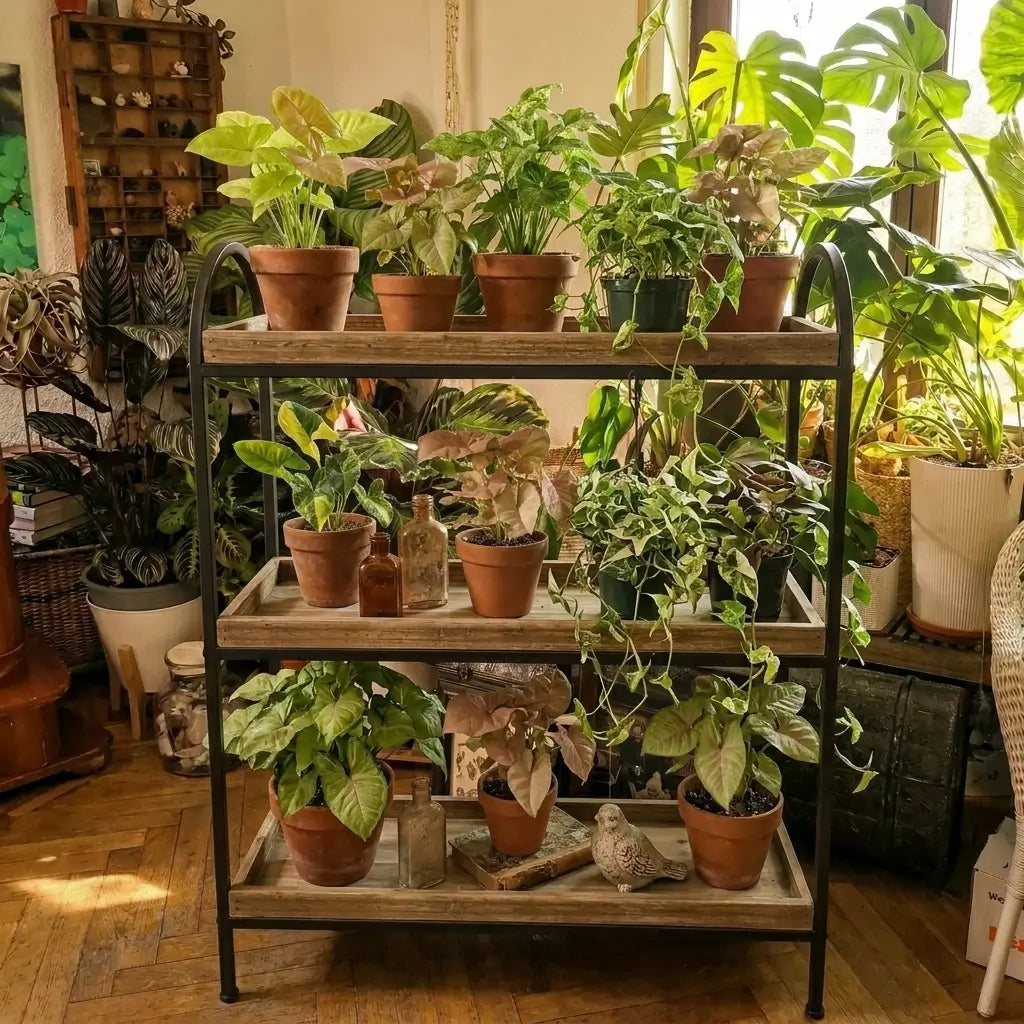
Green metal shelf with various Syngonium plants against a white wall

Training choices

  • Pruned compact pot: prune above nodes and replant rooted cuttings for density.
  • Hanging display: let stems extend over the pot edge and trim when the plant needs renewal.
  • Support-grown vine: guide stems upward when larger leaves and vertical structure are the goal.

All three approaches work with the same climbing stem structure. The right setup depends on space, support and the amount of shaping planned for the plant.
Mixed Syngonium varieties showing different colours and arrowhead leaf patterns

Syngonium Groups and Varieties to Compare

Syngonium range covers compact juvenile arrowhead plants, warm-toned foliage cultivars, mottled and variegated selections, and species-led climbers with stronger mature leaf character. Some are best compared by species identity, leaf structure and mature climbing growth. Others are Syngonium podophyllum cultivars or trade selections chosen for colour, compact presentation, mottling, speckling or unusual juvenile leaf form.

The natural habit stays consistent at genus level: these are climbing or root-climbing aroids. Indoor presentation changes the result. A variety can be kept fuller by pruning, displayed with hanging stems or trained upward when support-grown foliage is the goal.

Green, pink and warm-toned Syngonium podophyllum forms

Familiar Syngonium podophyllum selections bring arrow-shaped juvenile leaves, manageable stems and strong indoor adaptability. Their natural habit is still climbing; pruning, hanging stems and support-grown culture create different displays from the same vine structure.

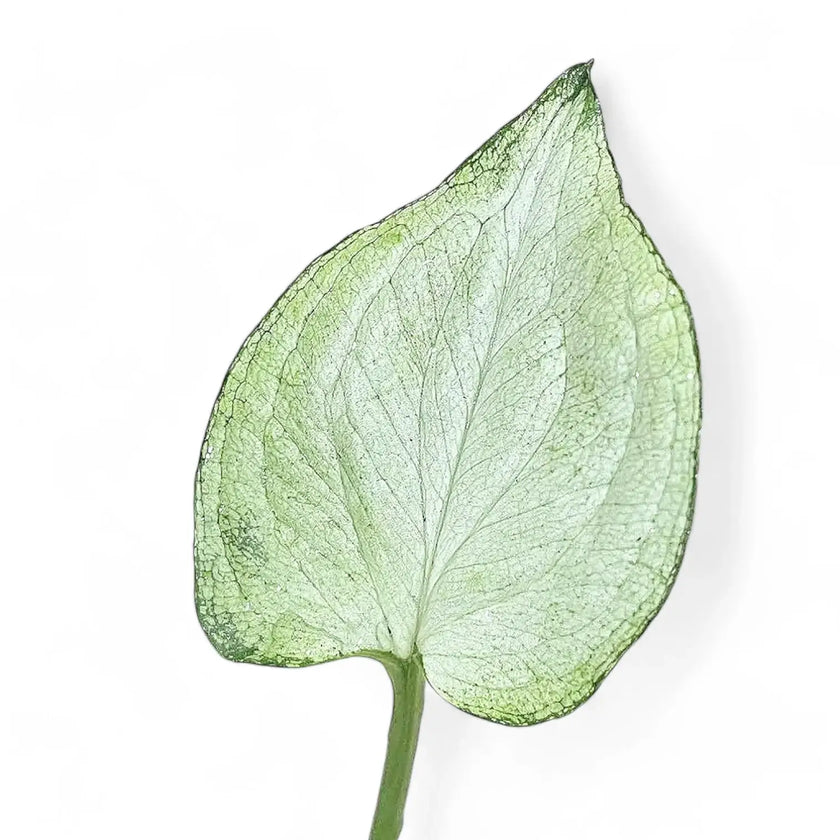
Green and pale-centred forms such as 'Arrow', 'White Butterfly' and 'Pixie' aka 'Nana' are clear references for classic arrowhead growth. Warm-toned selections such as 'Neon', 'Yellow Neon', 'Aom Nak', 'Brocante', 'Pink Spot', 'Mango Allusion' and 'Regina Red' add colour while keeping the same stem structure and care rhythm.

Syngonium podophyllum Arrow with green arrowhead leaves

Syngonium podophyllum ‘Arrow’

A clean reference point for classic juvenile arrowhead growth, with soft green contrast and visible veining. It works well pruned, hanging or guided up a simple support.

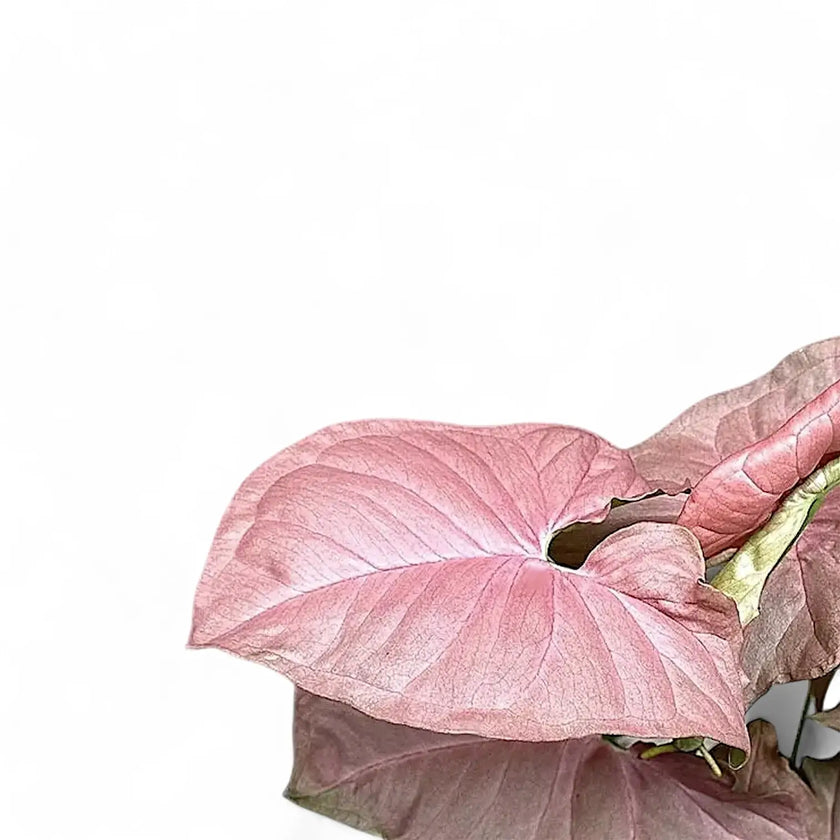
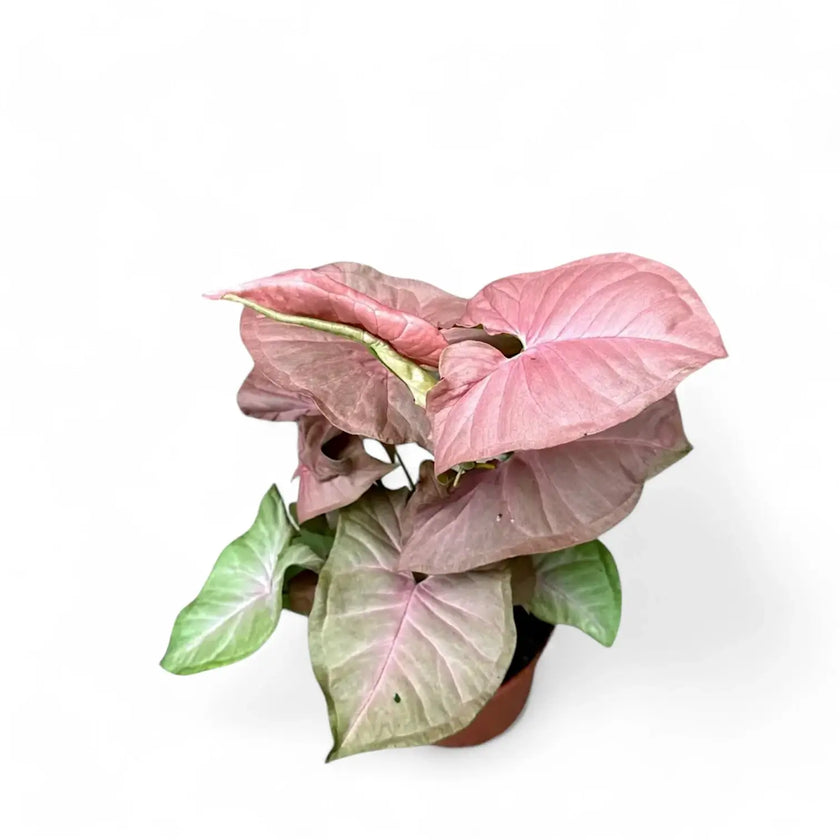
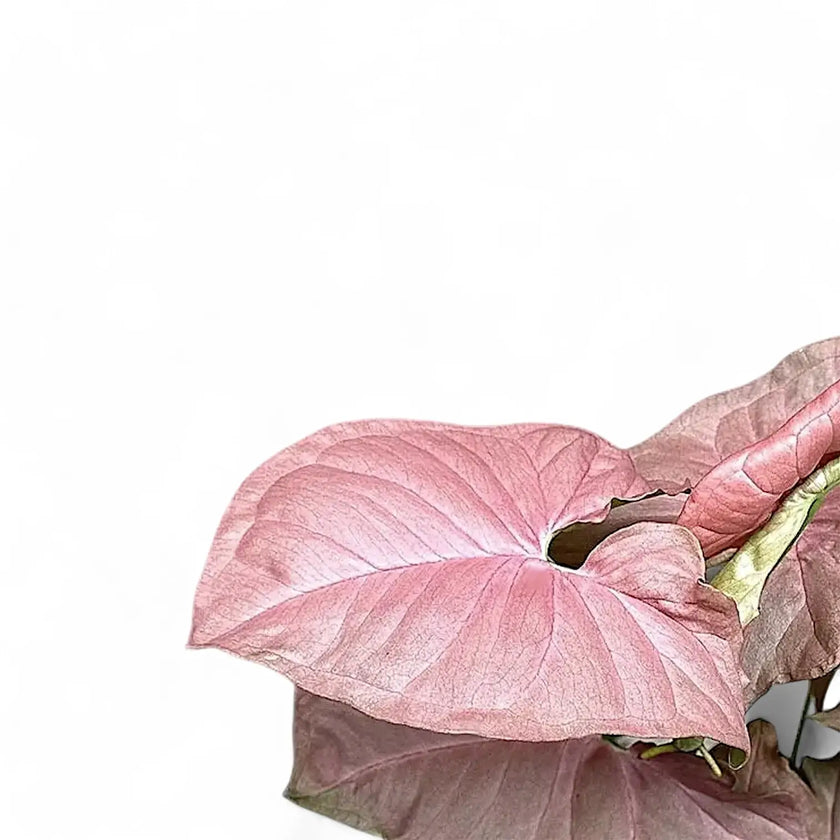
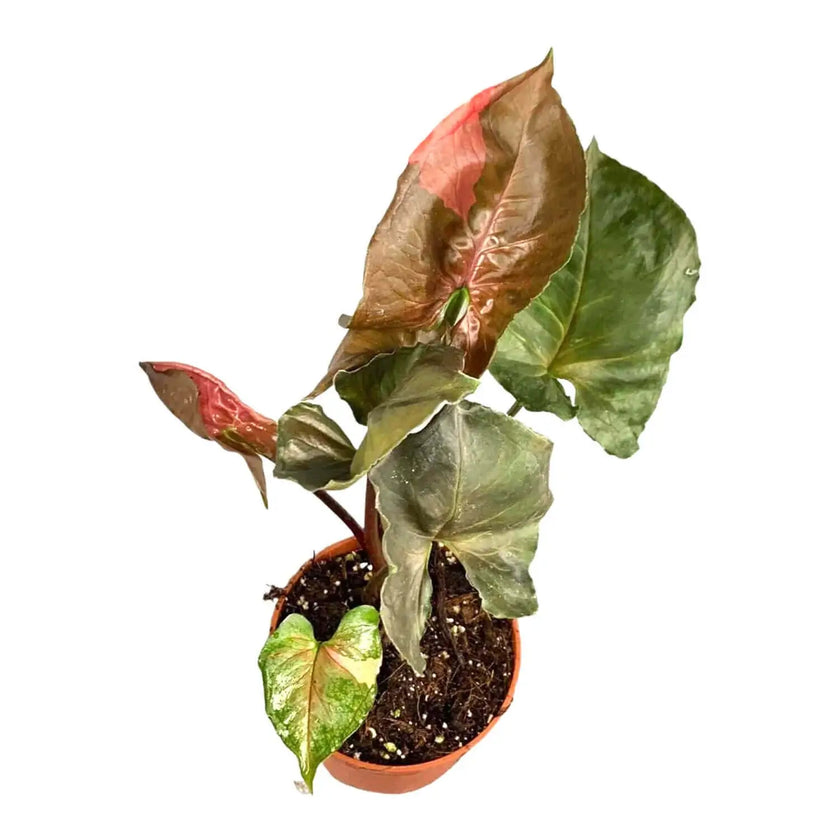
Syngonium podophyllum Neon with warm pink juvenile leaves

Syngonium podophyllum ‘Neon’

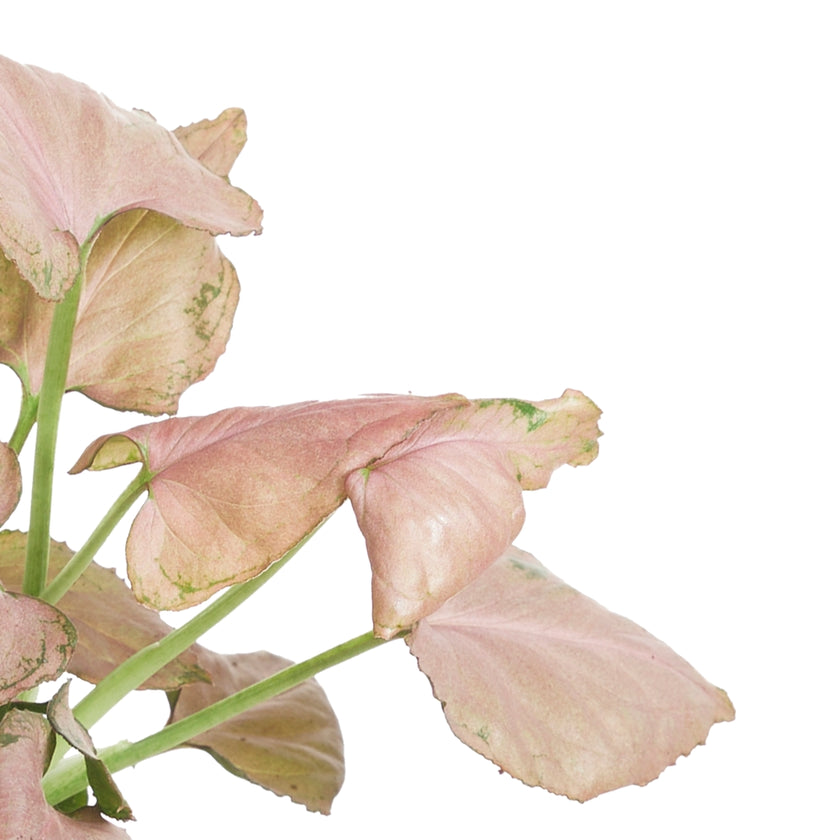
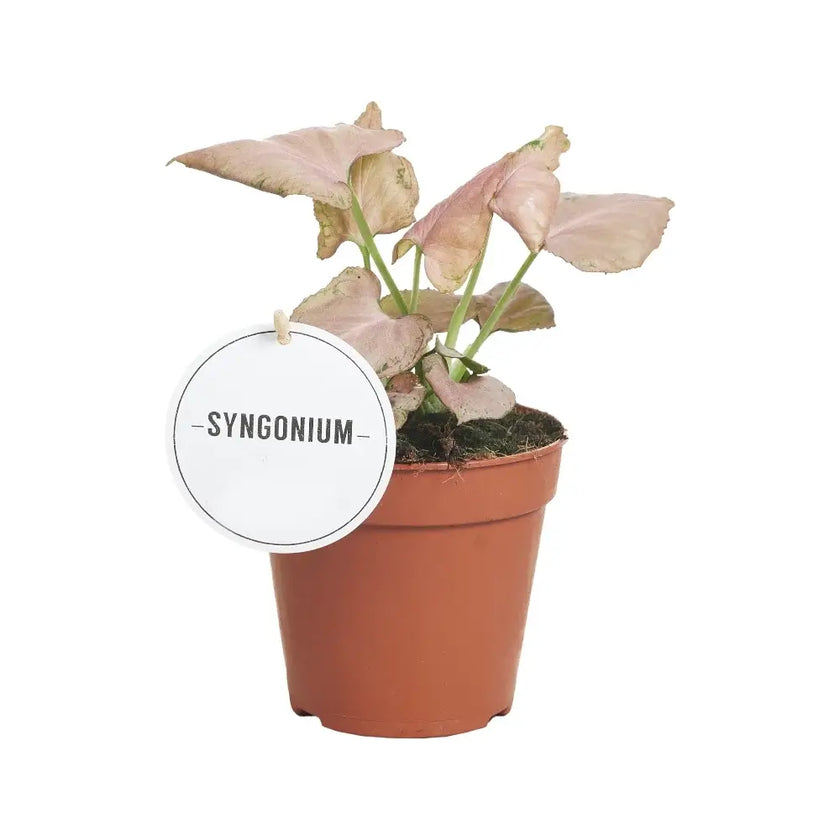
A pink-toned Syngonium podophyllum selection with warm juvenile leaves. It belongs with colour cultivars and can be shaped by pruning, hanging stems or support.

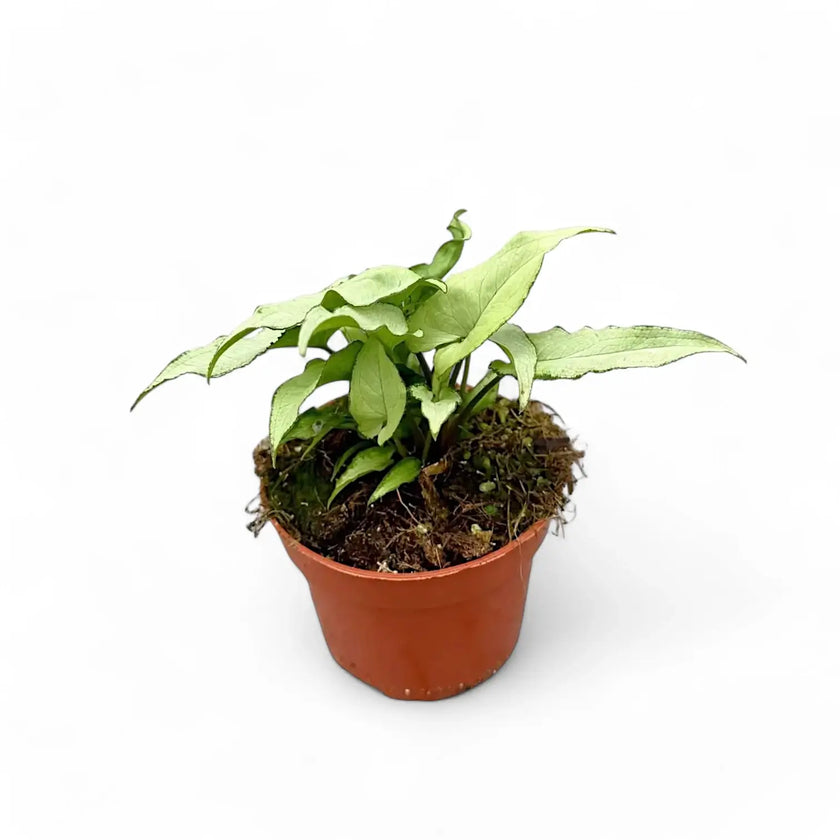
Syngonium podophyllum Pixie Nana with compact arrowhead leaves

Syngonium podophyllum ‘Pixie’

A smaller selection also sold as 'Nana', useful for tighter pots and scaled-down displays. Shorter internodes make it easier to keep dense with regular trimming.

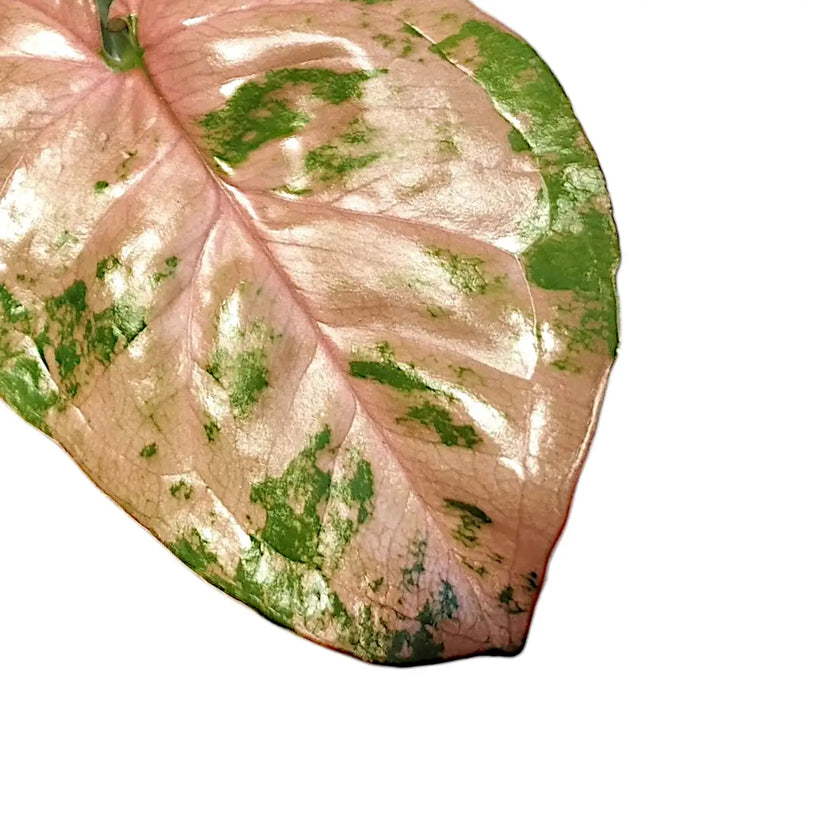
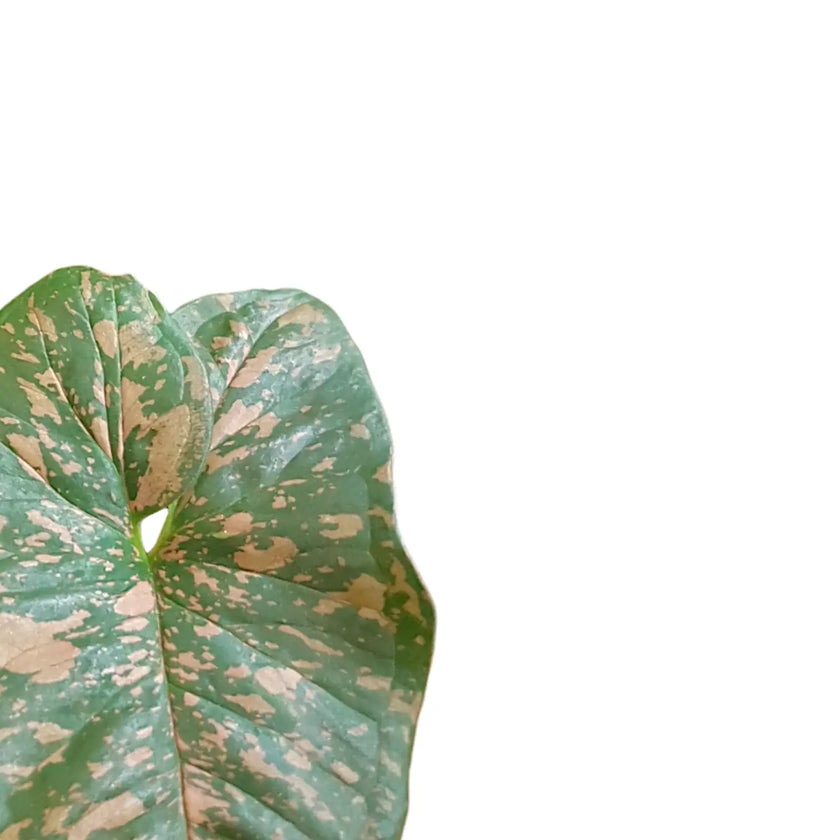
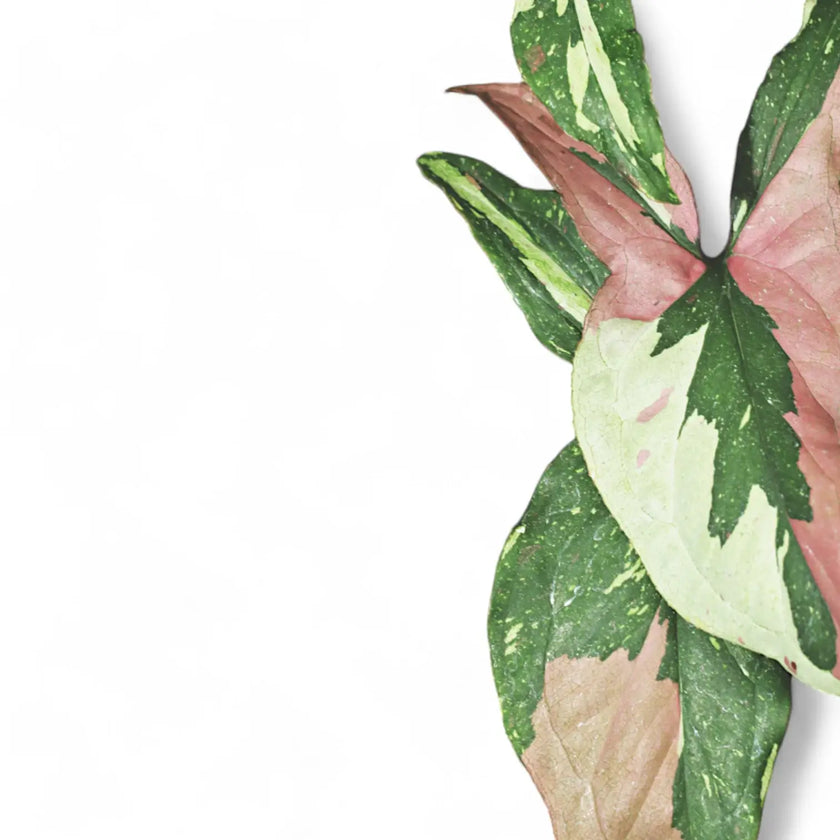
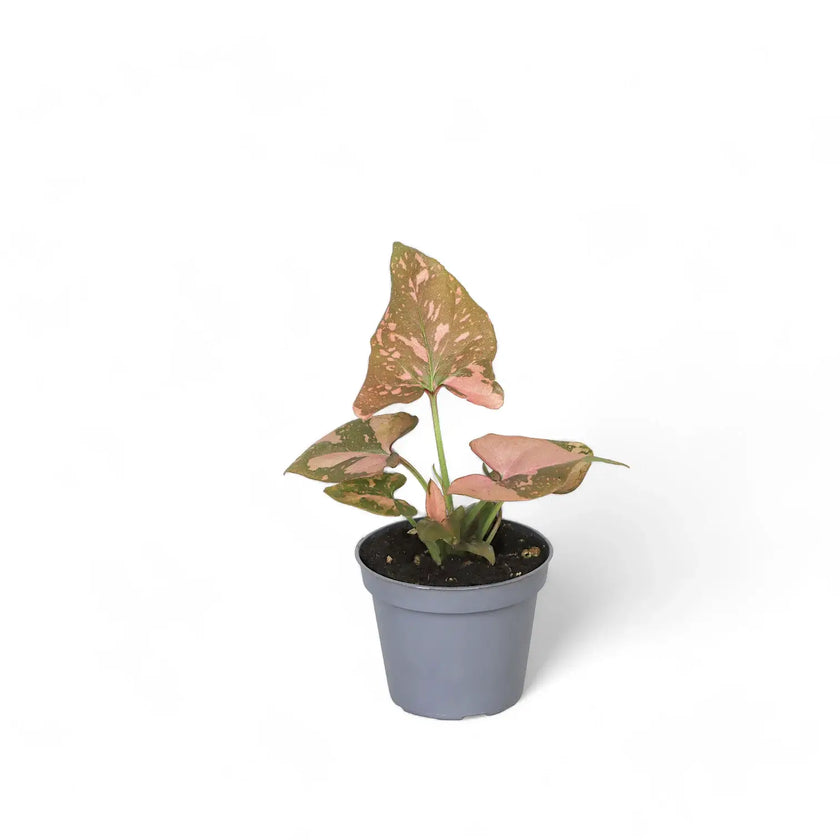
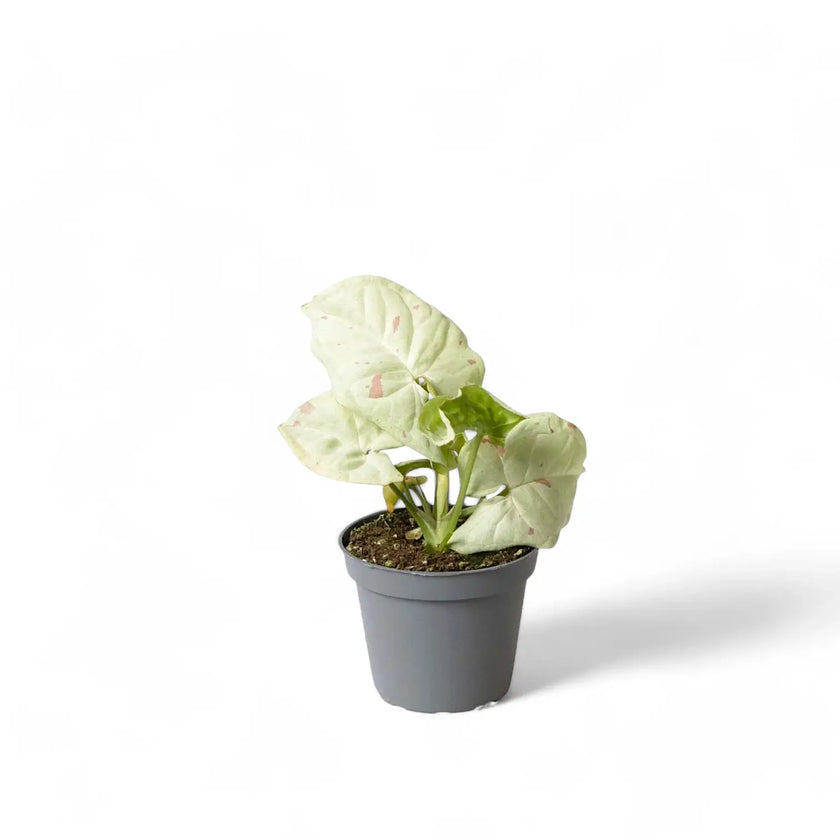
Syngonium Pink Spot with green leaves and pink speckled markings

Syngonium 'Pink Spot'

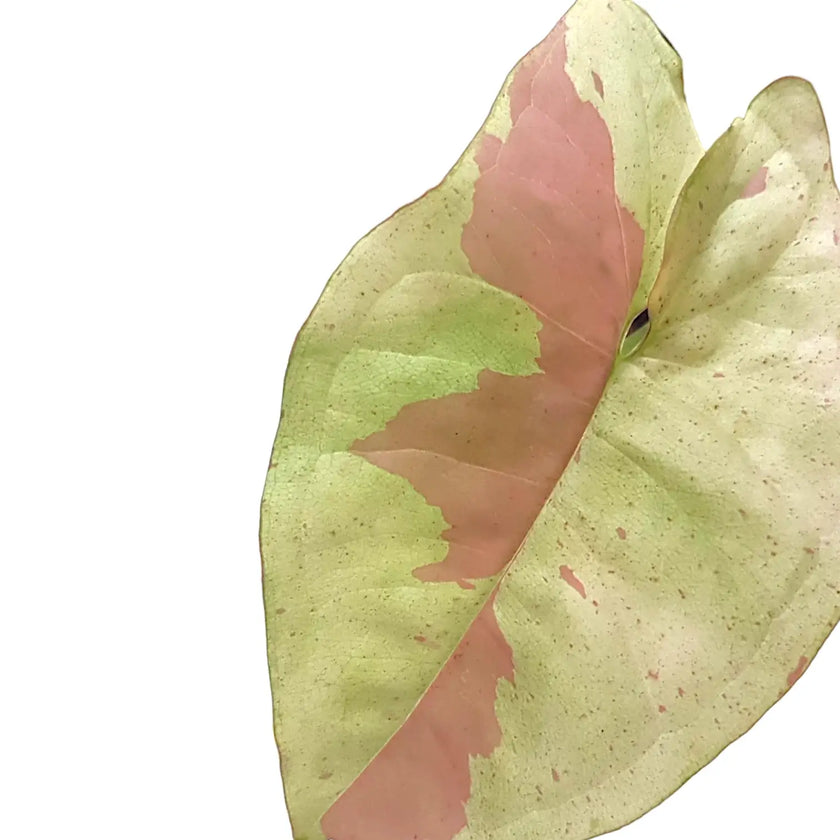
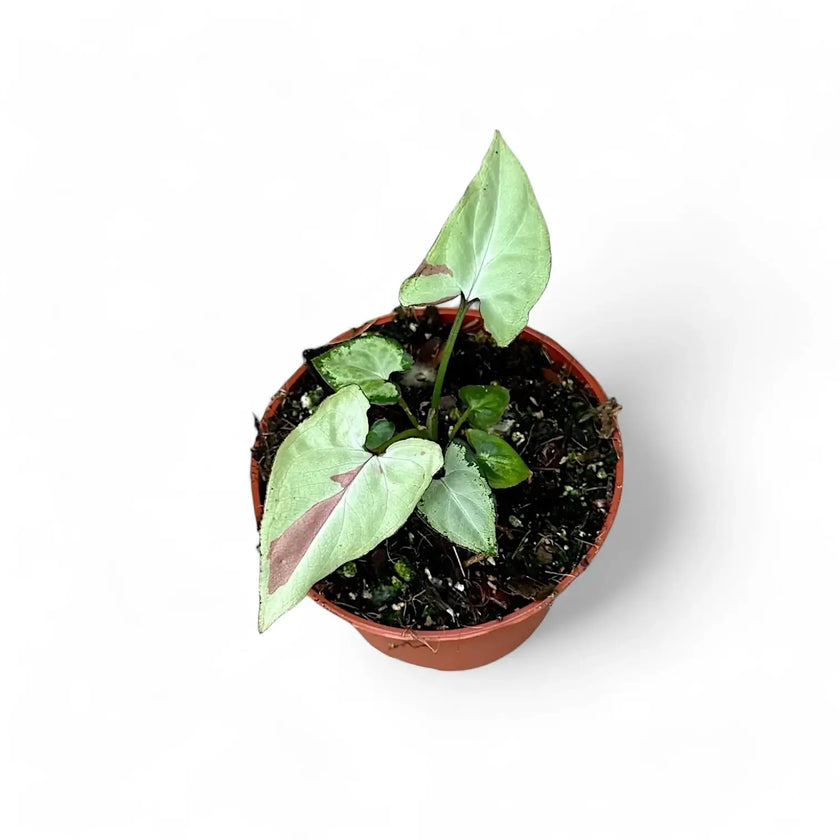
A soft green and pink selection with darker pink spots and patches across juvenile arrowhead leaves. It gives a speckled colour effect while keeping classic Syngonium podophyllum care needs.

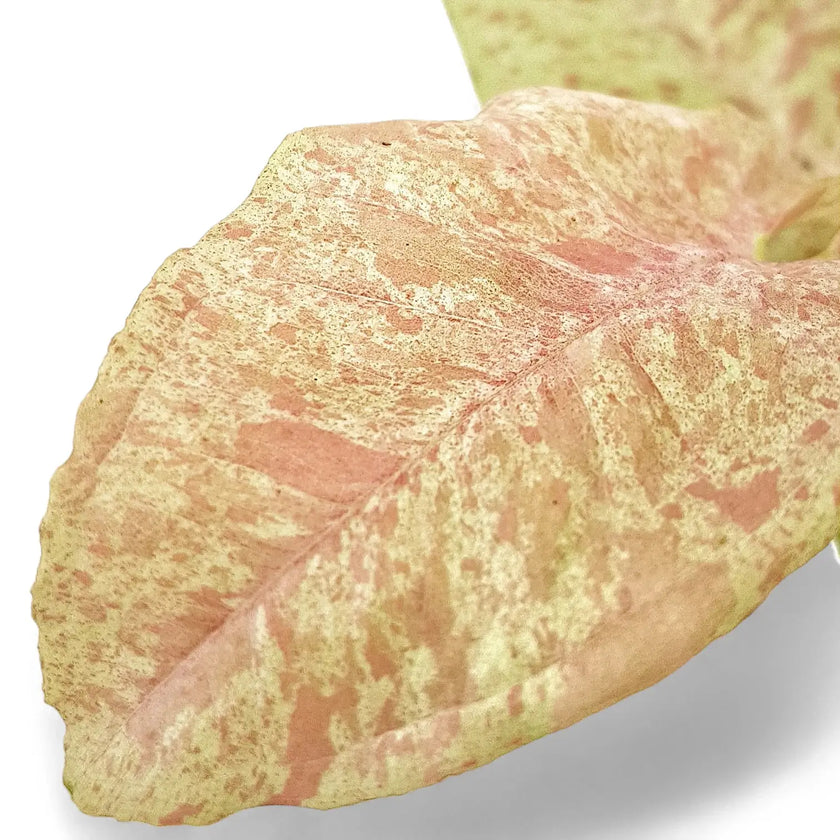
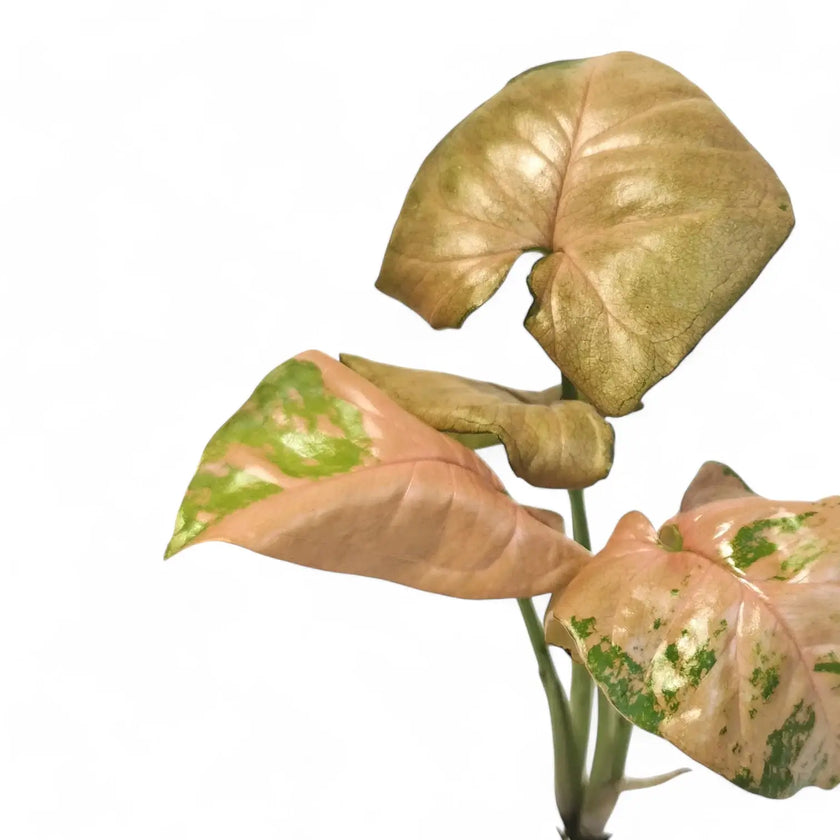
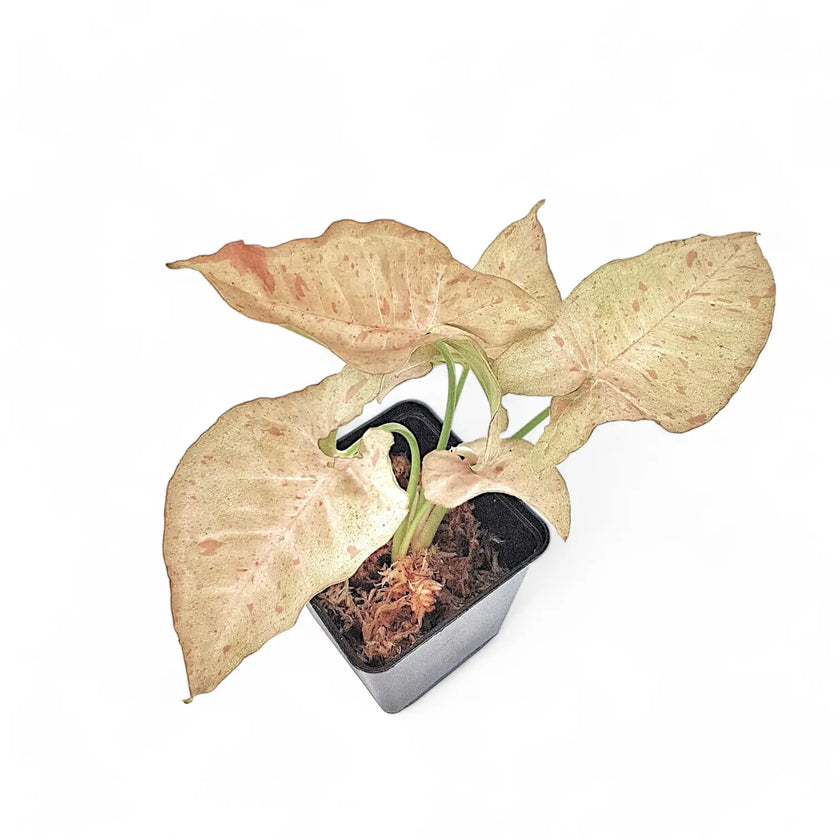
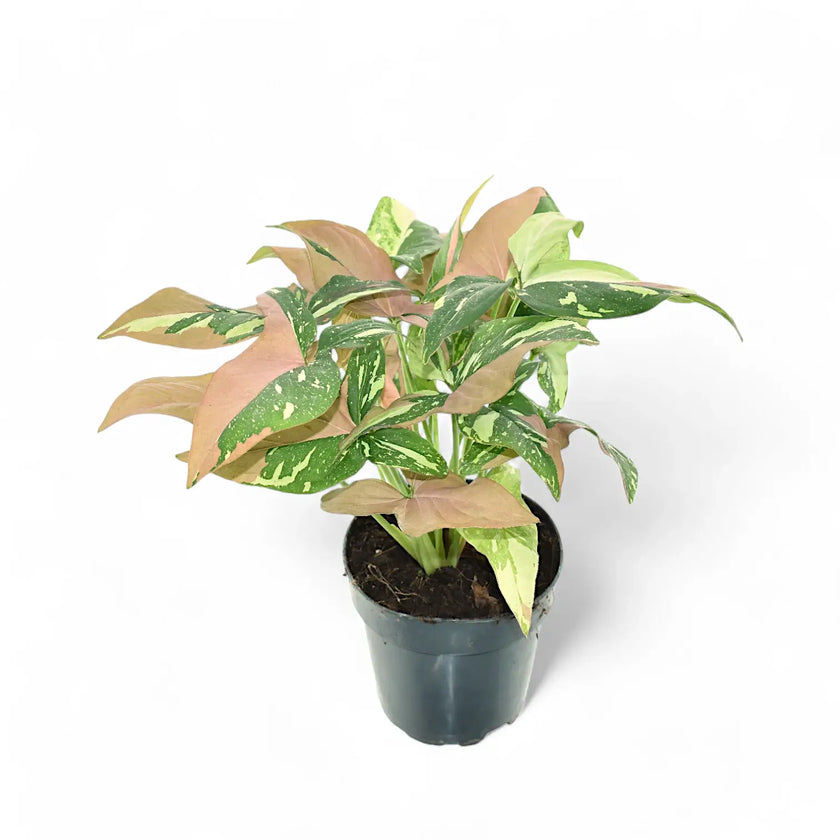
Syngonium Mango Allusion with peach and soft green foliage

Syngonium 'Mango Allusion'

A warm pastel selection with peach, mango and soft green tones. It suits colour-led displays and can be kept fuller by trimming stems above nodes as growth extends.

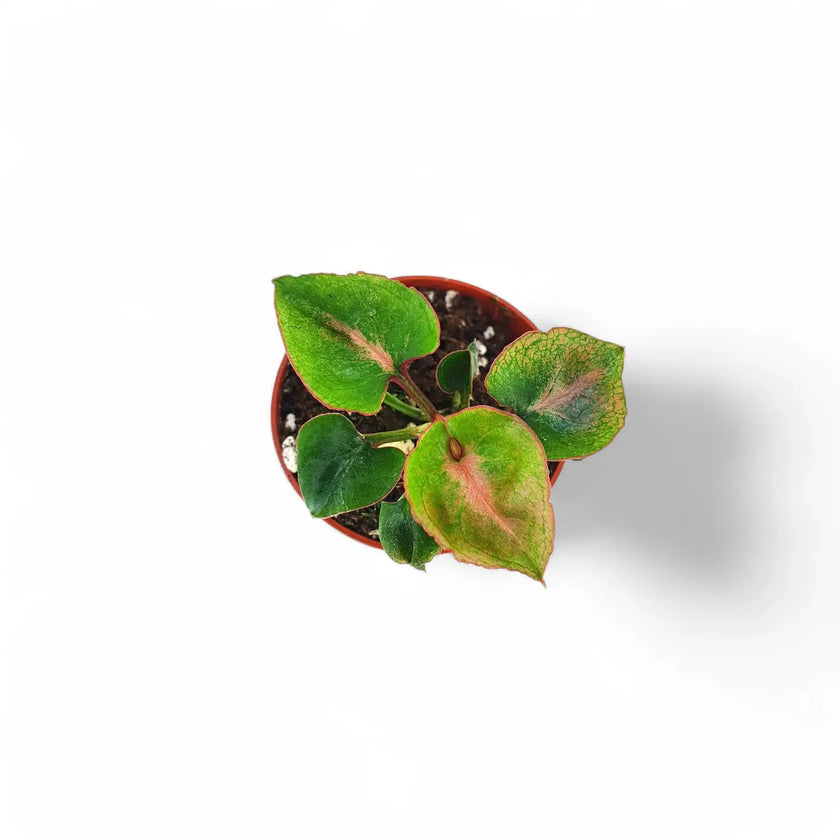
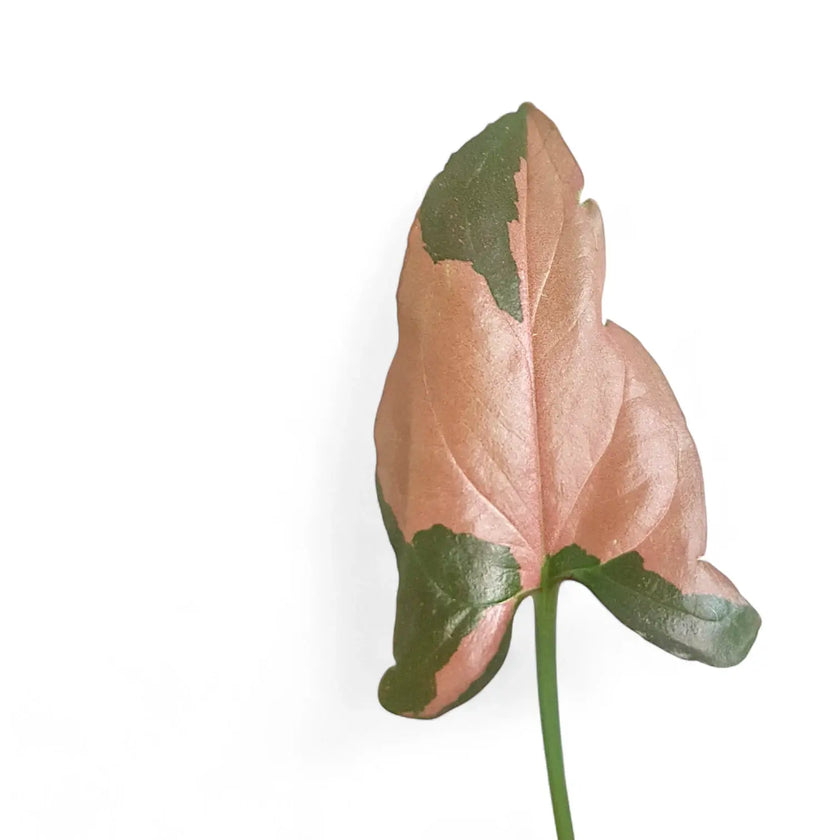
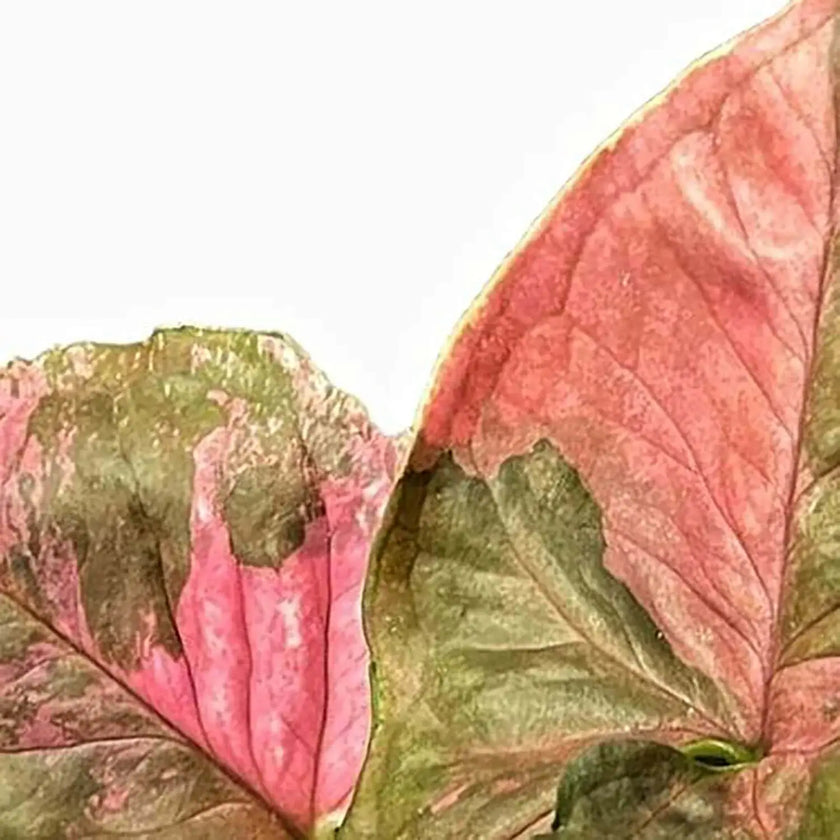
Syngonium Regina Red with reddish pink foliage and green edges

Syngonium 'Regina Red'

A reddish-pink cultivar with warm coral colour and fine green edging. It suits deeper pink foliage displays and can be pruned, hung or supported as stems extend.

Variegated and patterned Syngonium selections

White sectors, cream marbling, yellow-aurea tones, mint mottling and irregular pale markings shape the visual effect of Syngonium. The plant still grows as a climbing aroid, so the same selection can be pruned into a fuller pot, grown as a hanging plant or trained upward on support.

Syngonium podophyllum 'Albo Variegata' gives strong white-and-green contrast. 'Aureum' moves toward chartreuse and yellow-green. 'Mottled' brings mint, cream and green marbling, while 'Panda Galaxy', 'T25' and 'Eclipse' give further options for white, speckled or silver-green pattern.

Syngonium chiapense variegata is different in scale. It combines a larger species-led stem structure with white variegation, so it suits vertical support and room for broader foliage.

Syngonium podophyllum Albo Variegata with white and green variegated leaves

Syngonium podophyllum 'Albo Variegata'

The classic white-and-green collector form, with arrowhead leaves that can show marbling, sectors or strong white patches. Enough green tissue, bright indirect light and steady roots support active growth.

Syngonium podophyllum Aureum with yellow green variegated foliage

Syngonium podophyllum 'Aureum'

A chartreuse to yellow-green selection that gives warmth with softer contrast than white variegation. It works well as a colour accent and can be pruned, hung or trained like other Syngonium podophyllum vines.

Syngonium chiapense variegata with broad white variegated leaves

Syngonium chiapense variegata

A variegated form of larger Syngonium chiapense, with broader foliage and stronger vertical character than most podophyllum cultivars. It suits textured support and space for mature growth.

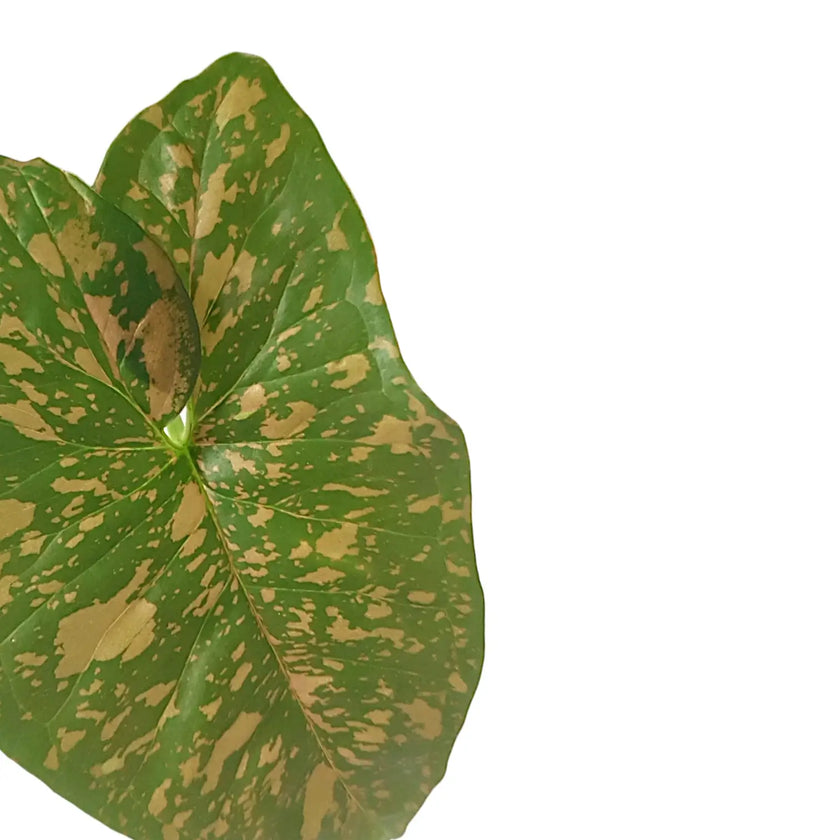
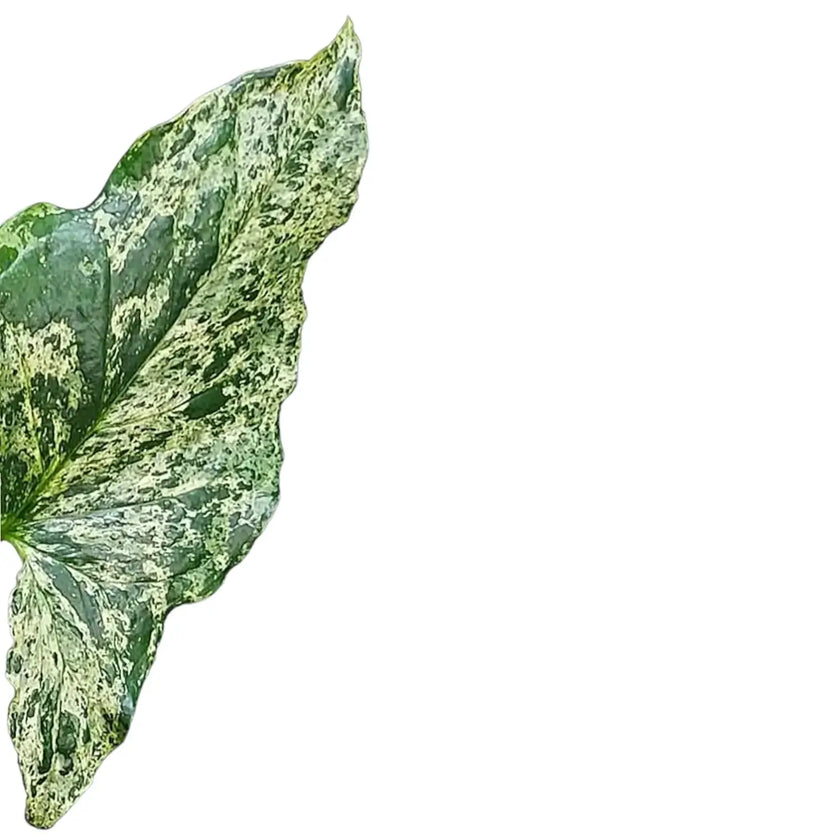
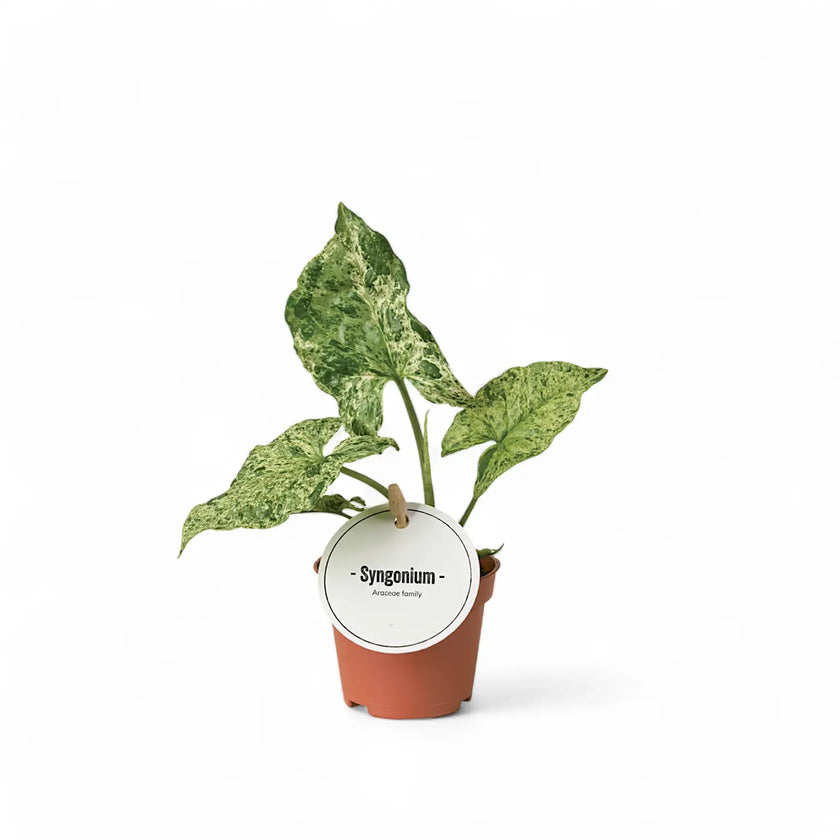
Syngonium podophyllum Mottled with mint cream and green markings

Syngonium podophyllum 'Mottled'

A mint, cream and green patterned selection with irregular chimeric markings that vary from leaf to leaf. It keeps the adaptable Syngonium podophyllum vine habit while adding a soft marbled look.

Syngonium species beyond podophyllum

Species-led Syngonium are chosen for leaf structure, texture, scale and mature climbing potential. Their appeal comes from how the plant builds size, attaches to support and changes leaf shape over time.

These plants come from warm wet-tropical habitats and grow as climbers. Indoors, stable warmth, even moisture, bright indirect light, healthy roots and textured support help them show larger mature growth.

Syngonium chiapense with broad green climbing foliage

Syngonium chiapense

A larger species for support-grown foliage, with broad green leaves and strong vertical presence. It suits a setup where the stem can climb and gradually size up.

Syngonium macrophyllum Ice Frost with broad frosted green leaves

Syngonium macrophyllum 'Ice Frost'

Chosen for broad, softly frosted green leaves and a heavier, calm look compared with many small cultivars. With support, warmth and steady roots, it can build substantial foliage indoors.

Syngonium steyermarkii with incised mature leaves and strong veins

Syngonium steyermarkii

A structural species with leaves that can become deeply incised and strongly veined as the plant matures. Its main appeal is mature leaf form, venation and shape rather than surface colour pattern.

Syngonium wendlandii with dark leaves and a pale central stripe

Syngonium wendlandii

Recognisable by darker, velvety leaves with a pale central stripe. It brings texture and contrast while keeping the same climbing stem habit as the rest of the genus.

Syngonium foliage in an indoor plant care setting

Indoor Syngonium Care

Syngonium care works best when roots receive both moisture and air. These climbing aroids grow well with a light moisture buffer, steady aeration and warm roots. A good setup keeps roots oxygenated and evenly moist while leaves receive enough indirect light for steady growth.

The plant’s display changes drying rhythm. A pruned pot, hanging stems and a support-grown vine may share the same natural habit, while pot size, root mass, foliage volume and support material all affect how quickly the substrate dries.

Light

Give Syngonium medium to bright indirect light. In weak light, growth often becomes slower, looser and less resilient. Long gaps between leaves, smaller new growth and strong leaning toward brighter areas can mean the plant needs a brighter position.

Harsh direct sun can damage soft leaves, especially pale, pink or variegated tissue. Good light supports healthy growth and helps existing colour or pattern show clearly. Variegation and colour come from the plant’s genetics and cultivar behaviour, not from forcing stronger sun.

Read the bright indirect light guide

Light

Light

Give Syngonium medium to bright indirect light. In weak light, growth often becomes slower, looser and less resilient. Long gaps between leaves, smaller new growth and strong leaning toward brighter areas can mean the plant needs a brighter position.

Harsh direct sun can damage soft leaves, especially pale, pink or variegated tissue. Good light supports healthy growth and helps existing colour or pattern show clearly. Variegation and colour come from the plant’s genetics and cultivar behaviour, not from forcing stronger sun.

Read the bright indirect light guide

Watering

Watering

Water Syngonium by pot depth and substrate condition. As a starting point, water when roughly the upper 25–40% of the pot depth has dried, then water thoroughly and let excess drain away. Smaller pots, warmer conditions, stronger light and fuller roots usually dry faster. Larger pots, dense substrate, weak light and cool conditions dry more slowly.

Aim for even moisture with good aeration. Limp leaves in dry substrate and limp leaves in wet substrate need opposite responses, so check the pot before watering again. If substrate is still wet and leaves are drooping, roots may be stressed rather than thirsty.

Read the houseplant watering guide

Substrate

Substrate

Use an airy, moisture-buffered substrate. Syngonium roots need moisture around them and oxygen between particles. A useful mix holds water evenly, drains freely and re-wets properly after partial drying.

A good Syngonium mix usually sits between heavy potting soil and very chunky aroid substrate. Bark, mineral components and fibrous ingredients can all help when balanced for pot size, root mass and indoor conditions.

Read the aroid substrate guide

Pot & Repotting

Pot size and repotting

Choose pot size by root mass, not by stem length. A hanging or support-grown Syngonium can have long stems and still have a modest root system. Gradual pot increases keep the moisture volume closer to what the roots can use.

Repot when roots have filled the current pot, substrate has broken down, drying has become difficult to manage, or the support setup needs rebuilding. Use an airy mix and give stable conditions after repotting.

Read the repotting guide

Temperature

Temperature

Keep Syngonium warm and stable indoors. Cold air, cold windowsills, cold floors and wet substrate increase root stress. Growth can slow sharply when roots are cool, and a pot that dries well in warmer conditions may stay wet for too long when temperatures drop.

After shipping, repotting or moving a plant, steady warmth helps roots resume growth while the pot settles. If growth has paused, check light, pot temperature, substrate moisture and root condition before adding fertiliser or watering again.

Humidity & Airflow

Humidity and airflow

Stable moderate humidity helps soft Syngonium leaves expand cleanly, especially on pale, pink or thin-textured foliage. Humidity works together with warmth, root health and steady watering.

Air movement keeps crowded stems and leaf surfaces fresher. A humidifier, grouped plants or a plant cabinet can work well when the air is not stagnant and the substrate is not kept constantly wet.

Feeding

Feeding

Feed Syngonium lightly while the plant is actively producing new growth and roots are healthy. Fertiliser works only after light, warmth, roots and substrate are already in balance. If growth has stalled, check the setup before increasing feed.

Use a balanced houseplant fertiliser at gentle strength and water evenly enough to limit salt buildup. Excess salts can contribute to brown tips and stressed edges, especially when substrate is not flushed properly.

Safety

Safety

Syngonium is not pet-safe if chewed. Plant tissue contains irritating calcium oxalate crystals and can cause mouth irritation, drooling, vomiting or difficulty swallowing. Keep Syngonium away from pets and children likely to chew leaves or stems.

Wear gloves if plant sap irritates your skin, especially during heavy pruning or propagation. Wash hands and tools after cutting stems.

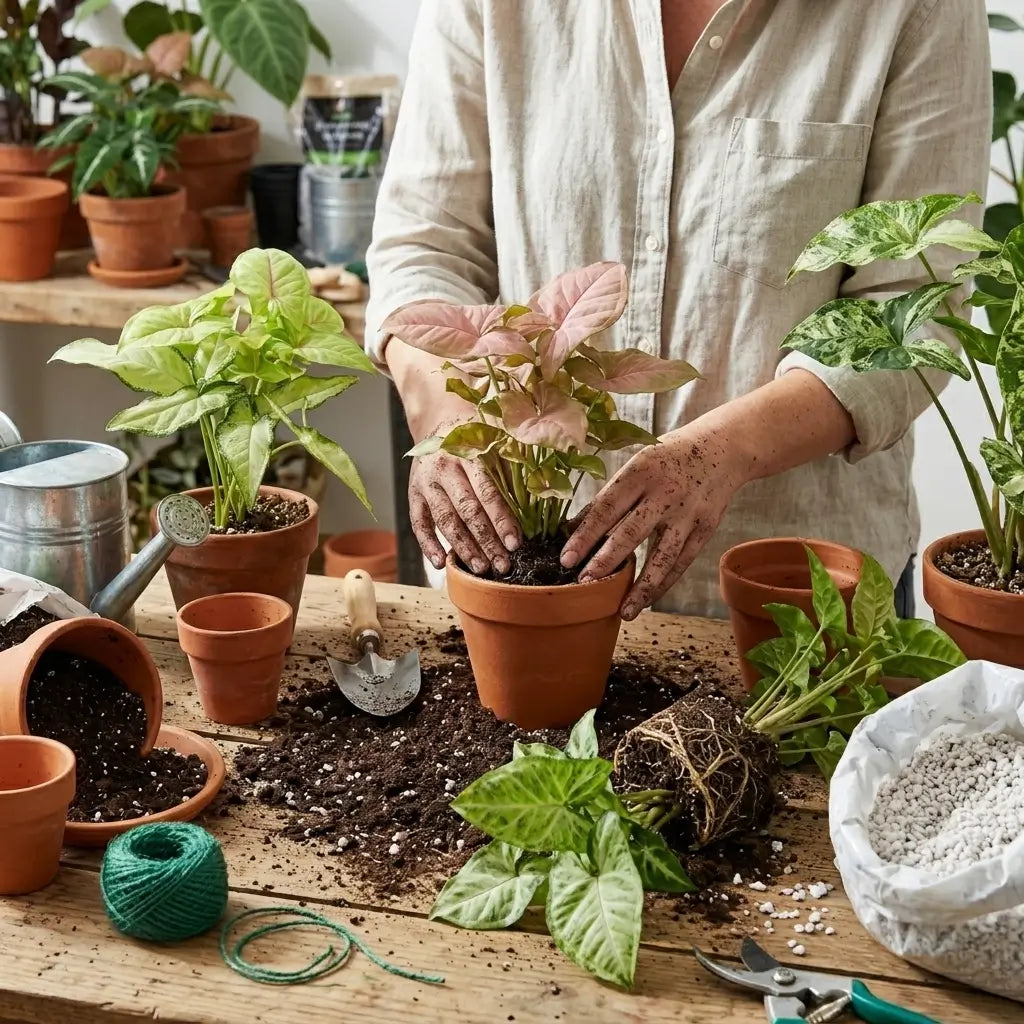
Person propagating Syngonium plants on a wooden table with gardening tools and supplies.

Syngonium Propagation

Syngonium propagation starts with healthy stem material. Each viable cutting needs at least one node, because nodes can produce roots and new shoots. A leaf blade without a node may stay fresh for a while; it has no growth point for a complete new plant.
Warmth, cleanliness and moisture-air balance matter more than the exact rooting medium. For a fuller pot, root several cuttings first, then plant them into a breathable mix once roots are established.

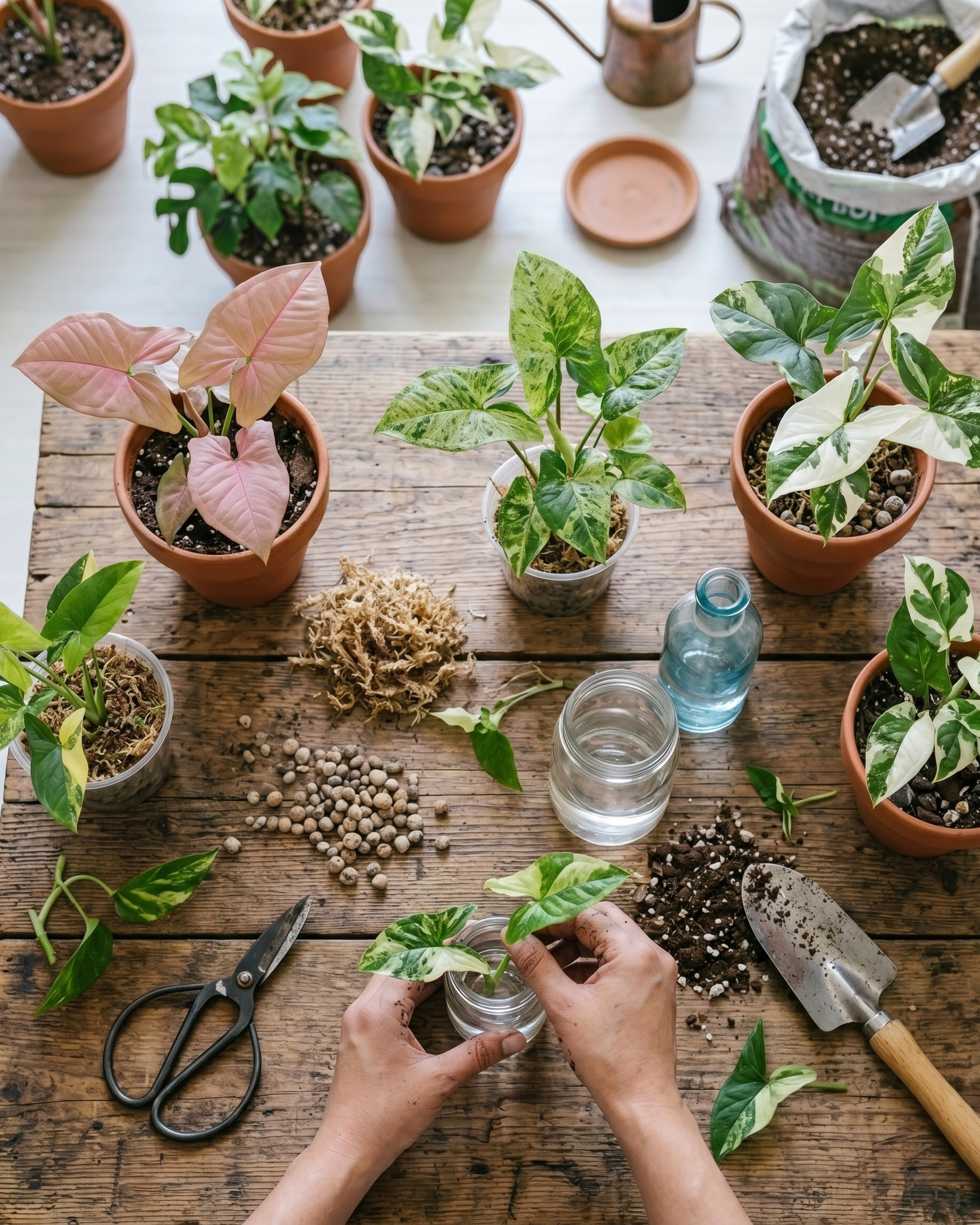
Syngonium propagation

Propagation checklist

✓ Each cutting has at least one node.

✓ Stem sections are firm and healthy.

✓ Rooting media stays lightly moist and airy.

✓ New roots move into modest pots.

✓ Very pale cuttings keep enough green tissue to support growth.

✓ Soft, rotting or hollow sections are removed before rooting.

💡 Fullness comes from rooted growth points, so several rooted cuttings create a denser pot.

Cuttings need nodes

A viable Syngonium cutting needs at least one node, because nodes are where roots and new shoots can develop. A leaf blade without a node may stay fresh for a while; it has no growth point for a complete new plant.
  • Use firm, healthy stem sections.
  • Top cuttings usually restart most neatly.
  • Mid-stem cuttings can work and often need more time to root and push new growth.

Read the houseplant propagation guide

Cuttings Need Nodes

Cuttings need nodes

A viable Syngonium cutting needs at least one node, because nodes are where roots and new shoots can develop. A leaf blade without a node may stay fresh for a while; it has no growth point for a complete new plant.

  • Use firm, healthy stem sections.
  • Top cuttings usually restart most neatly.
  • Mid-stem cuttings can work and often need more time to root and push new growth.

Read the houseplant propagation guide

Rooting Cuttings

Rooting Syngonium cuttings

Water, airy substrate, moss or mineral media can all work for Syngonium cuttings. The exact medium matters less than warmth, cleanliness and the balance between moisture and air. Rooting is steadier when cuttings stay warm, shallowly placed and surrounded by moist material that still holds oxygen.

  • Keep cuttings in bright indirect light and stable warmth.
  • Move rooted pieces into suitable substrate once roots are established.
  • Keep pot size modest; newly rooted cuttings need root contact before heavier feeding.
Refresh a Fuller Pot

Using propagation to refresh a plant

Propagation is also useful for rebuilding a fuller Syngonium. If older stems have become long and bare, cut healthy sections above nodes, root them, then plant several rooted cuttings back into the pot. Fullness comes from multiple rooted growing points.

  • Use only firm, healthy sections.
  • Keep very pale or heavily variegated cuttings in steady conditions.
  • Pieces with little green tissue can root more slowly.
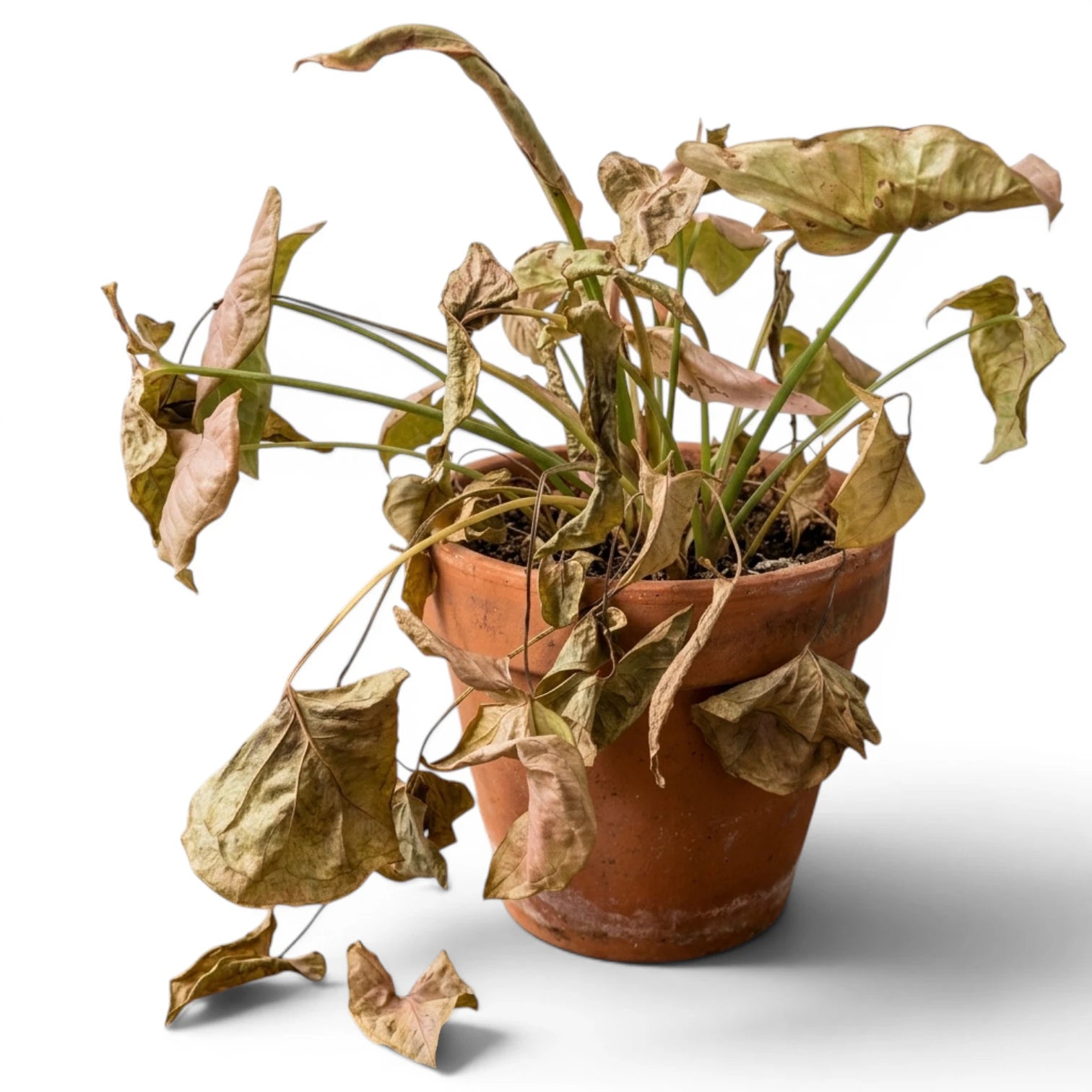
Browning Syngonium potted plant with wilted leaves on a white background

Syngonium Troubleshooting

Syngonium changes shape as it grows. Longer stems, wider spacing and different leaf outlines can be normal development in a climbing aroid. Sudden collapse, spreading yellowing, soft stems, wet-smelling substrate, spotting or distorted new growth call for a closer check.

Read the leggy growth guide · Read the watering guide

Syngonium troubleshooting

Check the whole plant first

Check light, pot moisture, root condition, stem firmness, recent changes and pests before changing several parts of care at once.

Dry stress and wet root stress can look similar from above, so the pot and roots matter as much as the leaves.

Syngonium Symptom Checks

Use the visible pattern to decide what to inspect first. Compare climbing structure, pot moisture, root condition, stem firmness, recent changes and pests before changing the whole setup.

Syngonium getting long or vine-like

This is normal development for a climbing aroid. If a fuller pot is wanted, prune above a node and root healthy cuttings for more growing points. If larger, more mature-looking growth is wanted, guide stems upward on a textured support.


Syngonium leaves changing shape

Changing leaf shape can be part of normal growth. Juvenile arrowhead leaves can shift as stems lengthen or climb, and some forms may develop larger, lobed or divided leaves over time. Distorted, scarred, sticky or pest-marked new growth needs closer inspection.


Long sparse stems

Long sparse stems can be linked to weak indirect light, old unpruned growth, unsupported extension or low starting density. Increase usable light when needed, cut healthy stems above nodes and use rooted cuttings to rebuild density. Rooted cuttings create better surface fullness than buried bare stems.


Pale variegated areas browning

Softer pale sections can mark more easily than green tissue. White, cream, mint and pale pink areas may show stress faster after handling, dehydration, heat, root issues or harsh light. Stronger sun usually adds stress; stable growth comes from bright indirect light, healthy roots, careful watering and steady warmth.

Read the variegated plant care guide

Soft stems or collapsing base

Soft stems, blackened sections or a collapsing base need prompt attention. Common triggers include cold wet substrate, dense stale mix, buried stems, damaged roots or propagation setups kept too wet or cold. Remove soft tissue, check the root zone and restart only from firm, healthy sections with nodes.

Yellow lower leaves

One older yellowing leaf can be normal turnover. Several yellow leaves at once need a closer check. Look at pot moisture, root health, temperature, recent repotting, shipping stress and pests. If substrate has stayed wet for too long, check roots before watering again.


Drooping or curling leaves

Drooping can come from opposite causes. A dry, light pot with curling leaves may need watering. A heavy, wet pot with limp leaves may point to stressed roots. Check substrate condition before reacting; extra water around stressed wet roots usually adds more stress.


Brown crispy edges

Brown edges can come from moisture swings, heat, dry air, salt buildup, root stress or damage to softer pale tissue. Treat brown tips as a pattern rather than a single-cause symptom. Check how evenly the pot dries, whether fertiliser has built up, whether roots are healthy and whether leaves are exposed to harsh sun or heat.


Leaf spots

A single mark is only a starting point. Leaf spots can come from handling, old damage, water sitting on leaves, pests, stress or disease. Watch whether spots spread, become water-soaked, develop yellow halos or appear on new leaves. Improve airflow, keep foliage from staying wet and remove badly affected leaves if the issue is spreading.

Pests and distorted new growth

Distorted new leaves, fine stippling, sticky residue, cottony clusters or tiny moving specks are reasons to inspect closely. Check leaf undersides, new growth, stem joints, nodes and pot edges for thrips, spider mites, mealybugs, aphids or scale. Pest treatment usually needs repeated checks across new growth cycles.

A stressed Syngonium can recover well when the actual cause is addressed. Keep care steady and let new growth show whether conditions are improving.

Indoor plant setup with a wooden shelf and varieties of Syngonium plants.

Choose a pruned compact pot for density

A pruned compact Syngonium suits shelves, plant tables and small supports when the goal is a dense pot. Look for short internodes, healthy juvenile growth and enough green tissue for steady photosynthesis. Keep the shape by pruning above nodes and replanting rooted cuttings when more density is wanted.
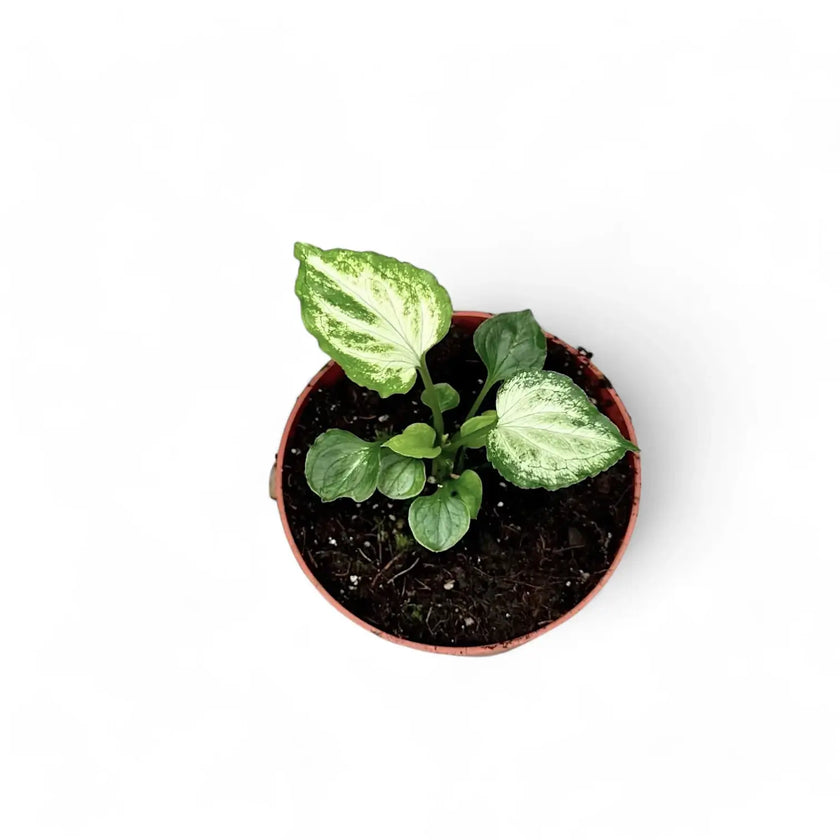
Choose warm-toned Syngonium for colour

Pink, red, peach, bronze and yellow-green selections bring colour while keeping the same climbing stem structure. New leaves can vary by cultivar, growth quality and leaf age, so compare the whole plant rather than one leaf.

Choose mottled, white or speckled Syngonium for pattern

Variegated, mottled and speckled selections suit a setup with steady light, warmth and watering. Pale tissue can show marks sooner than green tissue, so stable care and healthy roots matter more than stronger sun.

Choose species-led Syngonium for leaf structure

Species such as Syngonium chiapense, Syngonium macrophyllum, Syngonium wendlandii and Syngonium steyermarkii bring scale, texture, venation or stronger mature leaf changes. They suit support-grown culture when the plant has room to develop.

Choose support-grown Syngonium for larger mature growth

Support-grown culture suits plants where larger leaves, upright structure and mature-looking forms are the main aim. Use textured support, bright indirect light, stable warmth and time. Strong contact between stem nodes and support brings the indoor setup closer to the plant’s natural climbing habit.
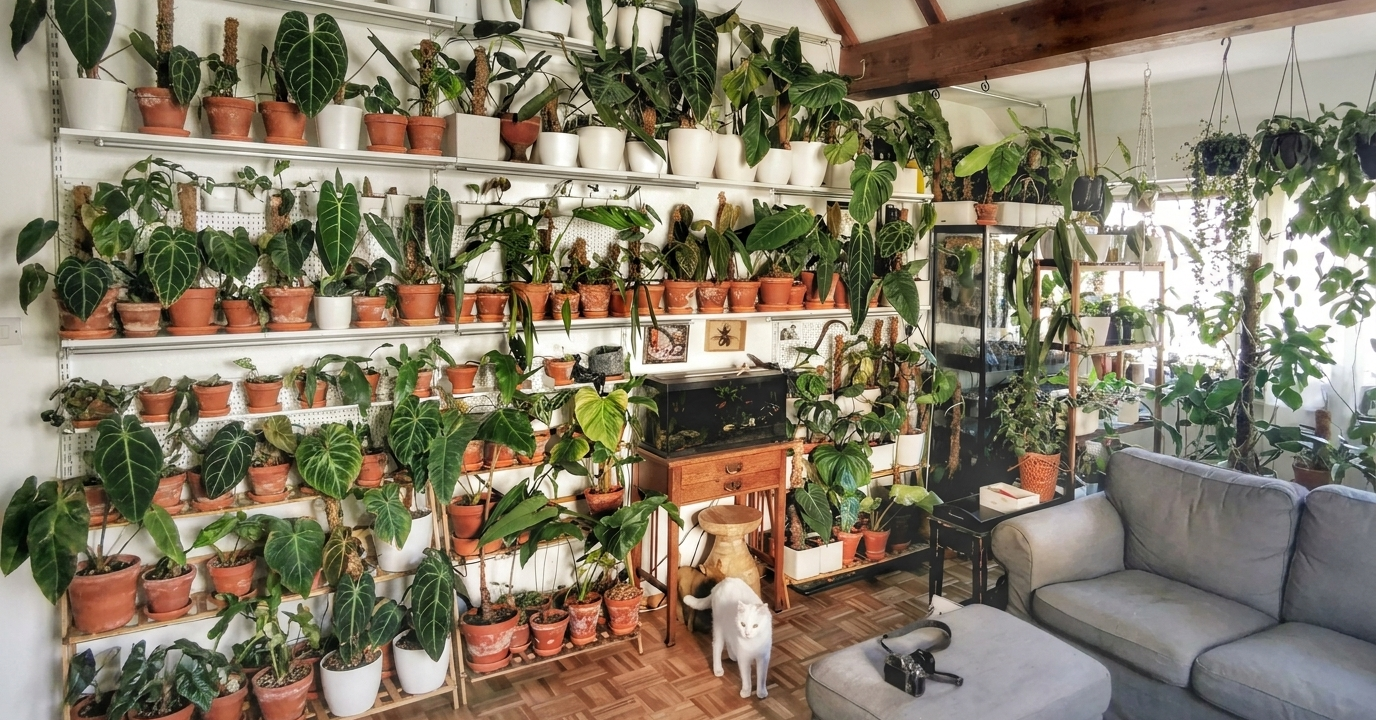
How to Choose the Right Syngonium

Choose Syngonium by stem habit, support plan and leaf character before colour. The genus is naturally climbing, and indoor presentation changes the result: a pruned pot stays fuller, hanging stems soften the outline, and a support-grown vine can build stronger vertical growth.

Syngonium FAQ

Browse Syngonium Varieties

Compare available Syngonium by species background, colour, pattern, leaf shape and training style.
Choose from compact young pots, hanging vines and support-grown plants for a warmer, leafier indoor setup.

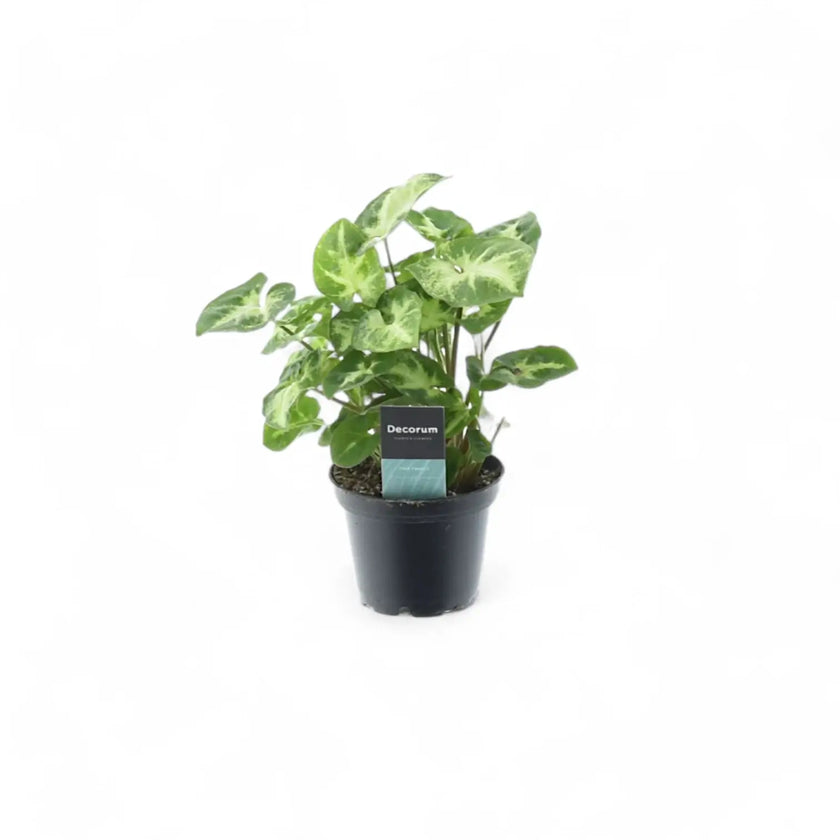
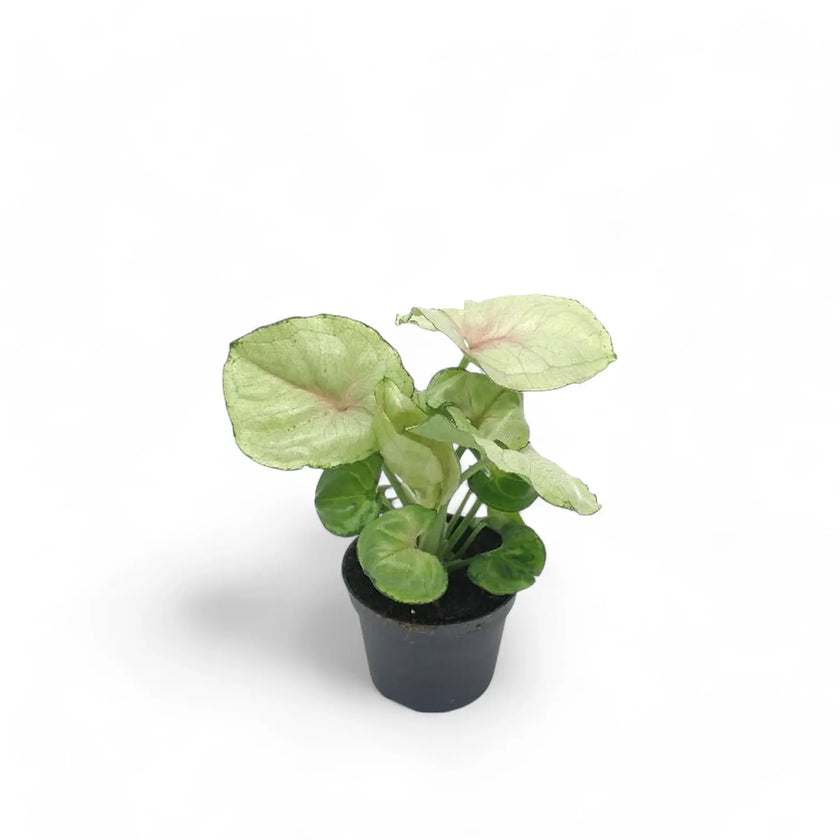
Syngonium podophyllum 'Mottled' Regular price From €9,25
Syngonium podophyllum 'Pixie' aka 'Nana' Regular price From €10,25