Skip to content

Cart

Your cart is empty.

Dieffenbachia (Dumb Canes)

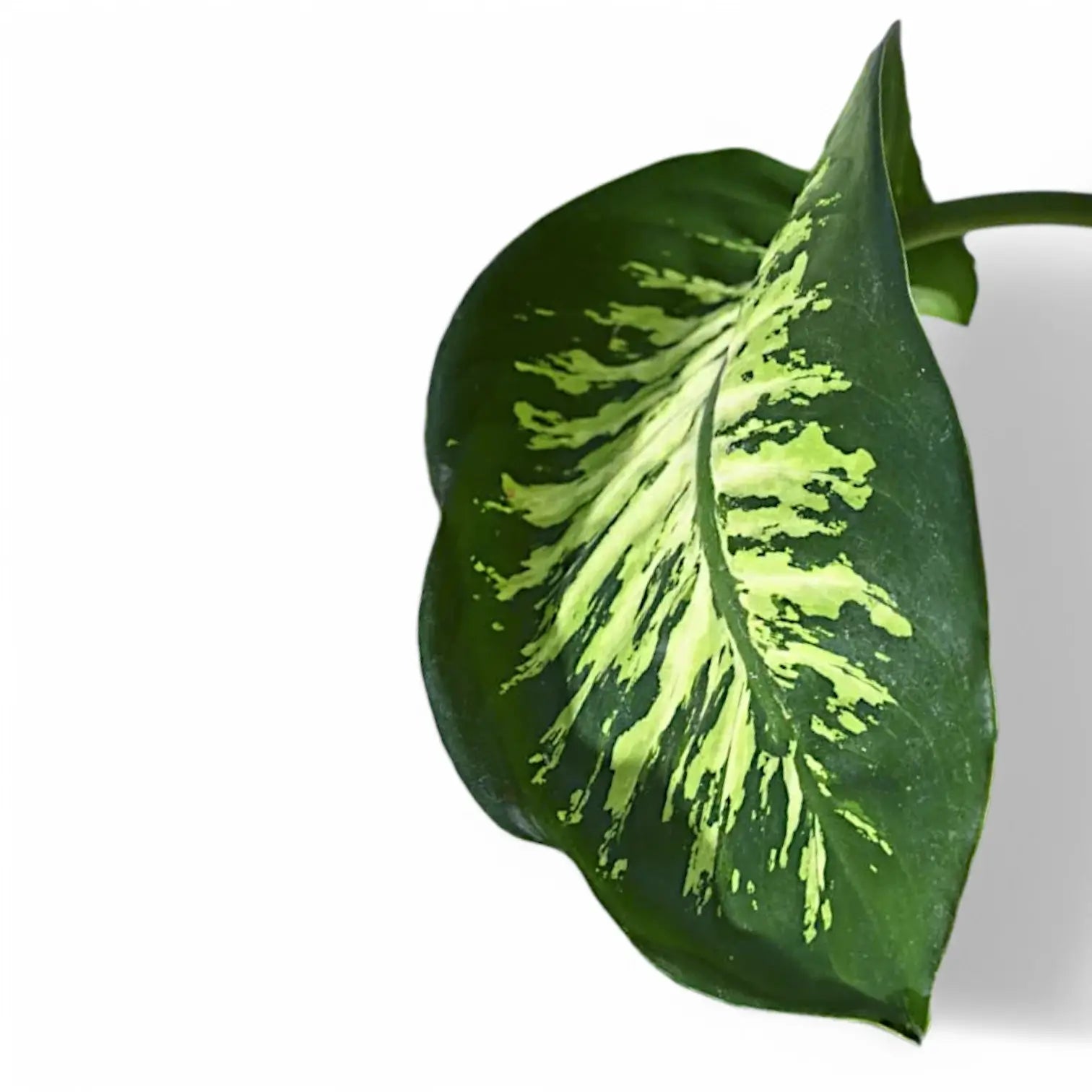
Close up of Dieffenbachia seguine Tropic Snow leaf on white background

Sort by:

Filters

Dieffenbachia seguine 'Amy' close-up of leaf on white background.
Dieffenbachia 'Amy' Regular price €9,50
Dieffenbachia seguine 'Big Ben' leaf detail on white background.
Dieffenbachia seguine 'Camilla' leaf detail on white background.
Dieffenbachia 'Camilla' Regular price From €9,50
Dieffenbachia seguine 'Compacta' close-up of leaf on white background.
Dieffenbachia 'Compacta' Regular price From €12,00
Dieffenbachia seguine 'Banana' close-up of leaf on white background.
Dieffenbachia seguine 'Cheetah' leaf detail on white background.
Dieffenbachia seguine 'Cool Beauty' leaf close-up on white background.
Dieffenbachia seguine 'Crocodile' leaf detail on white background.
Dieffenbachia seguine 'Green Magic' aka 'Sterling' leaf close-up on white background.
Dieffenbachia seguine 'Mars' close-up of leaf on white background.
Dieffenbachia seguine 'Reeva' leaf detail on white background.
Dieffenbachia seguine 'Reflector' leaf detail on white background.
Dieffenbachia seguine 'Reflector' Regular price €20,00
Dieffenbachia seguine 'Tiki' leaf close-up on white background.
Dieffenbachia seguine 'Tropic Marianne' leaf detail on white background.
Dieffenbachia seguine 'Tropic Snow' leaf close-up on white background.
Dieffenbachia seguine 'Vesuvius' close-up of leaf on white background.
Dieffenbachia seguine 'White Etna' close-up of leaf on white background.

Araceae

Dieffenbachia (Dumb Canes)

Quick Overview

Dieffenbachia: patterned cane aroid essentials

  • Habit: upright canes with broad, patterned leaves; works as a structural plant for bright interiors.
  • Light: medium to bright, indirect light; low light stretches canes, harsh glass sun scorches leaves.
  • Watering: maintain lightly moist mix with a short dry phase at the top; heavy, cold compost quickly triggers yellowing.
  • Substrate: needs a loose indoor mix with some bark and mineral structure so roots don’t sit in compact peat.
  • Climate: enjoys standard warm rooms; cold drafts near windows or doors often cause sudden leaf loss.
  • Toxicity: strongly irritating if chewed (hence “dumb cane” history); keep out of chewing range and handle sap with care.
Botanical Profile

Dieffenbachia: botanical profile for cane aroids

Dieffenbachia is a genus of upright, herbaceous aroids in Araceae, established by H. W. Schott in 1829 and named in honour of Viennese gardener Joseph Dieffenbach. Around 50-60 species are currently accepted, with centres of diversity in northern South America and Central America, and numerous cultivars selected for striking, speckled foliage.

  • Order: Alismatales
  • Family: Araceae
  • Tribe: Dieffenbachieae
  • Genus: Dieffenbachia Schott
  • Type species: Dieffenbachia seguine (Jacq.) Schott
  • Chromosomes: Most examined species show 2n = 34, with occasional polyploid counts around 2n = 68 reported.

Range & habitat: Native to the Neotropics from Mexico and the Caribbean south to northern Argentina. Dieffenbachia species inhabit lowland to premontane rainforests, river terraces and secondary forests, usually in shaded to dappled light on deep, moist but well-aerated soils rich in organic matter.

  • Life form: Evergreen, cane-forming perennials with thick, juicy stems that can branch or lean with age, often rooting where they contact the substrate.
  • Leaf attachment: Alternate leaves with sheathing petiole bases encircling the stem, forming distinct nodes along the cane.
  • Leaf size: Blades typically 15-50 cm long in wild-type species and cultivars, proportionally broad and carried in loose crowns along the stem.
  • Texture & colour: Firm, often glossy foliage with irregular patterns in cream, yellow, light green or grey set against darker backgrounds; midribs and primary veins usually pronounced.
  • Notable adaptation: Tolerance of low to moderate light and intermittent dry-downs, combined with calcium oxalate raphides that deter herbivory, supports survival as an understory shrub in disturbed tropical sites.

Inflorescence & fruit: Compact spadix-and-spathe inflorescences arise from the stem, with distinct female and male zones and pronounced dichogamy. Berries develop on the spadix and ripen to orange or red, enclosing one to several seeds; in ornamental culture, flowering and fruiting are secondary to vegetative propagation.

Details & Care

Dieffenbachia: bold patterned foliage on upright canes

Dieffenbachia is a classic indoor foliage plant with thick canes and large leaves marked in pale greens, creams, or speckles. It fills space fast once established, making it a strong choice for bright corners that need height and leaf mass.

Dieffenbachia likes bright, filtered light and a watering routine that keeps roots evenly supplied without leaving the pot wet. The plant responds well to stable placement, regular rotation, and a substrate that drains reliably.

Light: Bright indirect light keeps stems sturdier and patterns clearer. Very low light can cause stretched growth.

Watering: Water when the upper part of the pot dries, then drain well. Avoid constantly wet soil.

Substrate: Use an airy indoor mix with good drainage. Add structure if your home is cool or you water often.

Safety: Sap can irritate and the plant is not pet-safe. Place out of reach of pets and children.

Shaping: Older canes can be cut back to encourage new shoots, especially if the plant becomes tall and bare-stemmed.

Dieffenbachia can be maintained as a bushy plant or allowed to form taller canes, depending on the space. If the plant gets leggy, it responds well to controlled cut-backs that encourage new shoots. Stable light and a consistent watering rhythm are the easiest ways to keep leaves large and well-marked.

Humidity: Average indoor humidity is usually fine, but very dry air can lead to crisp edges. Grouping plants or moving away from heat sources often helps.

Rejuvenation: Cane cuttings can root, which makes reshaping a mature plant practical without losing it.

Frequently Asked Questions About Dieffenbachia