Dieffenbachia (Dumb Canes)
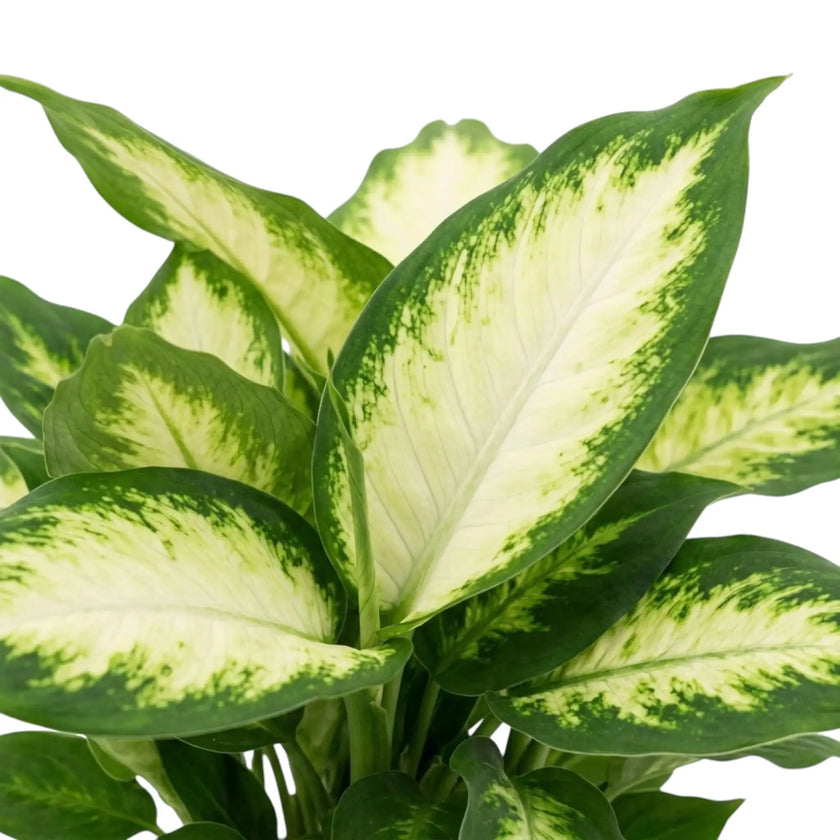
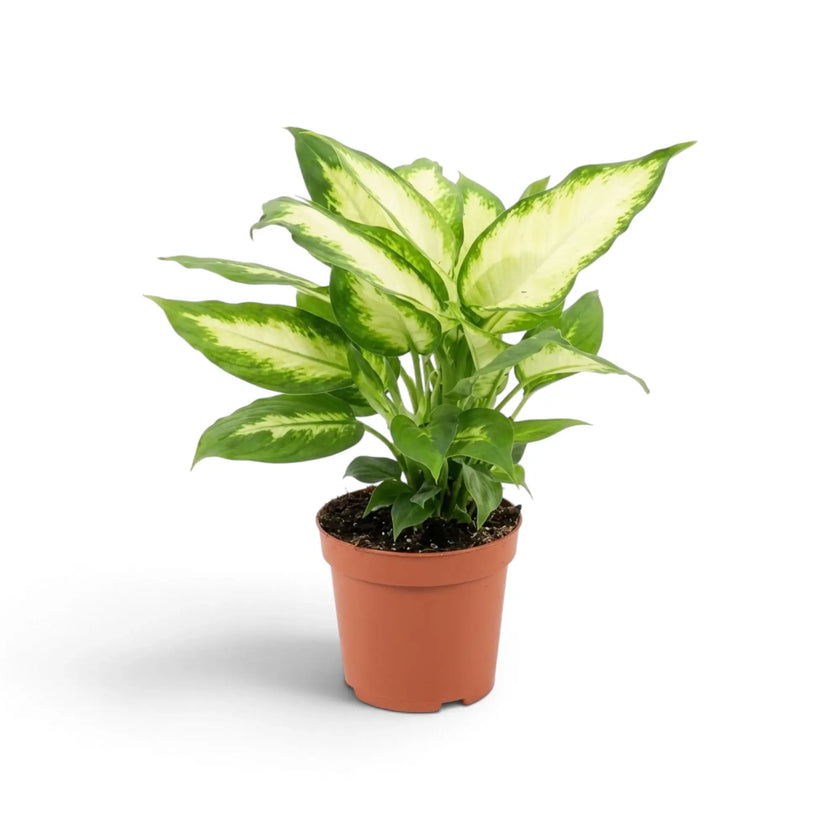
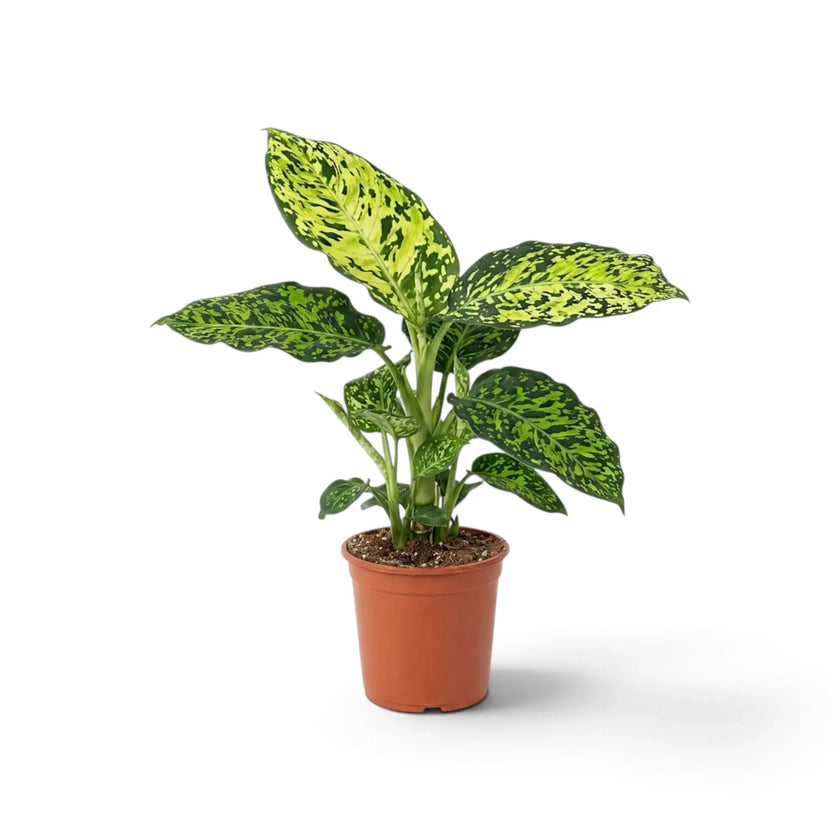
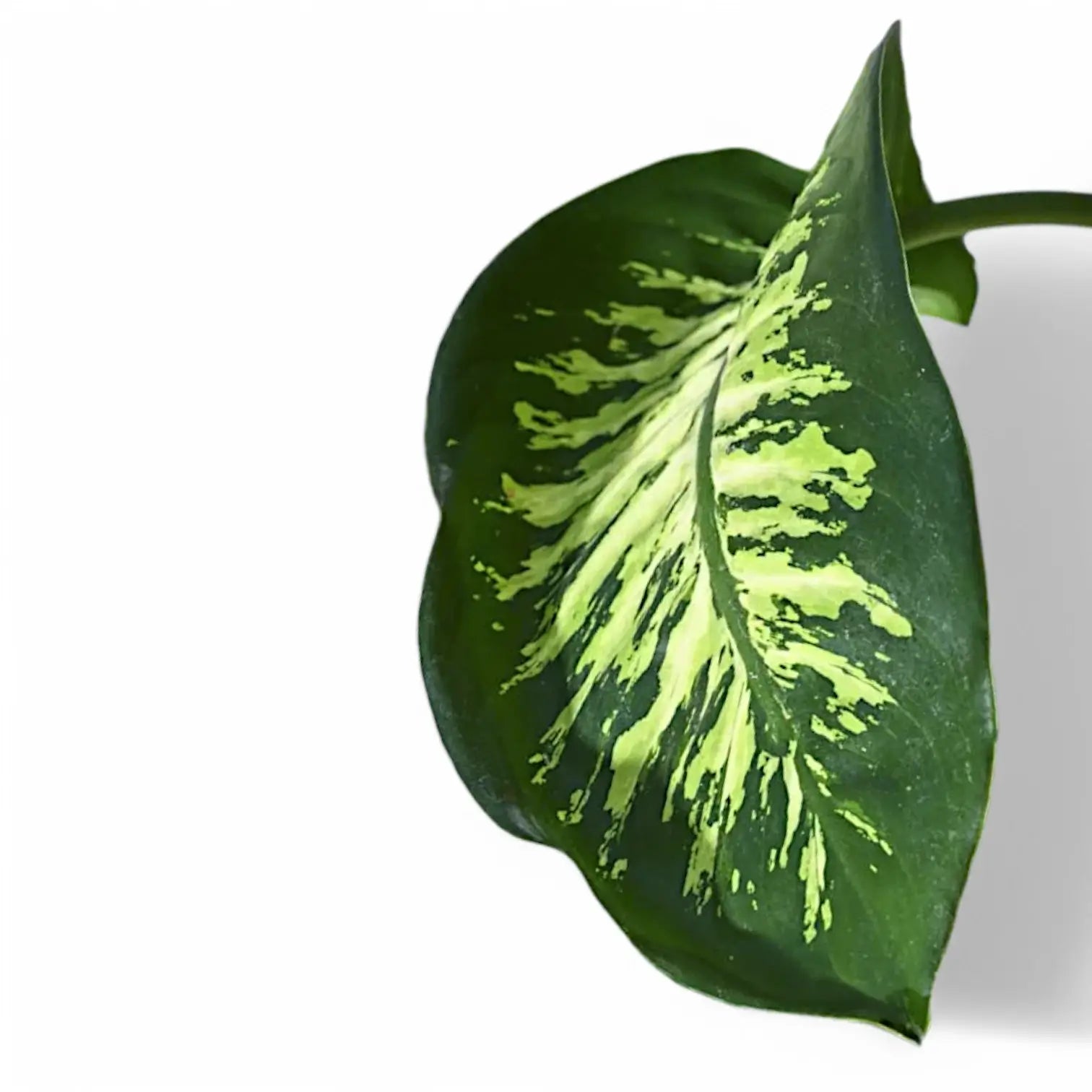
Dieffenbachia grows broad, cream- and green-patterned leaves on upright canes. The collection includes compact leafy plants and taller varieties whose stems become more visible with age.

About Our Filters
Start with the light and space you can offer, then narrow by the plant’s shape or appearance. Check the individual product page for care and size details.
No filter options are available for this collection right now. Open a product to check its details.
Sort by:
Filters
Araceae
Dieffenbachia (Dumb Canes)
Dieffenbachia grows in tropical American forests, where its broad leaves gather daylight beneath the canopy. The upright canes are fleshy stems, and the marks left by fallen leaves become visible as the plant ages.
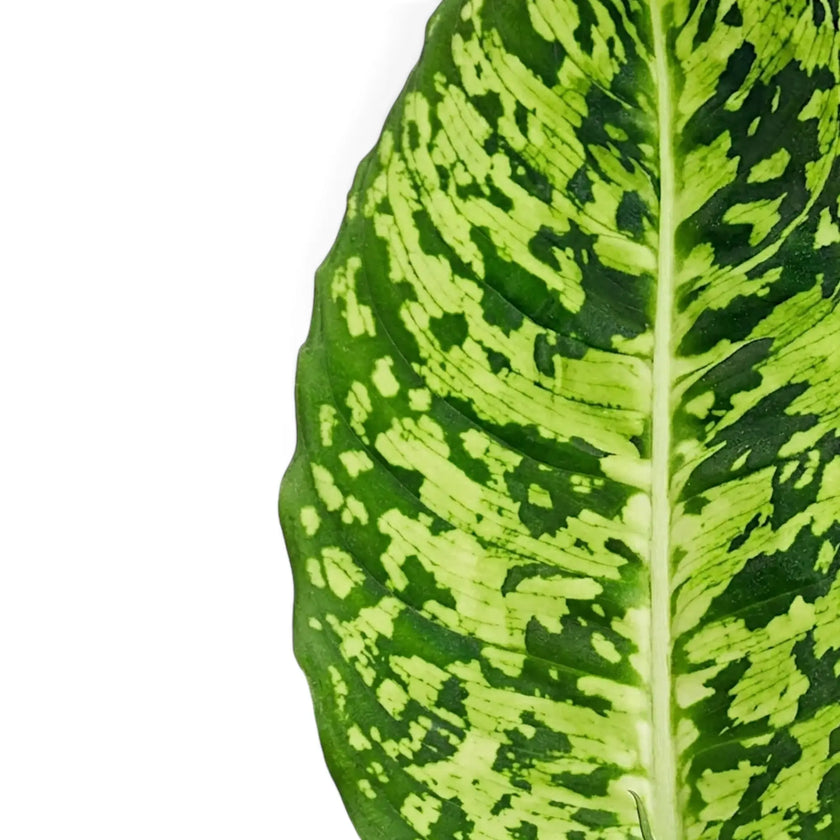
Many varieties develop new shoots near the base. The pale leaf patterns that make Dieffenbachia familiar indoors range from fine markings along the veins to large cream-coloured areas.
Dieffenbachia plants
‘Camilla’ carries broad leaves with pale centres and green margins, while ‘Reflector’ is recognised for its dark, patterned foliage. ‘Tiki’ has fine pale markings, and ‘Compacta’ grows into a dense, leafy plant. Several canes can make a broad crown; a single stem gradually gains height.
Fresh leaves emerge near the top of each cane, and older lower leaves may drop naturally. Established plants can produce new shoots near the base. Give the foliage indirect daylight and enough room for the crown to expand.
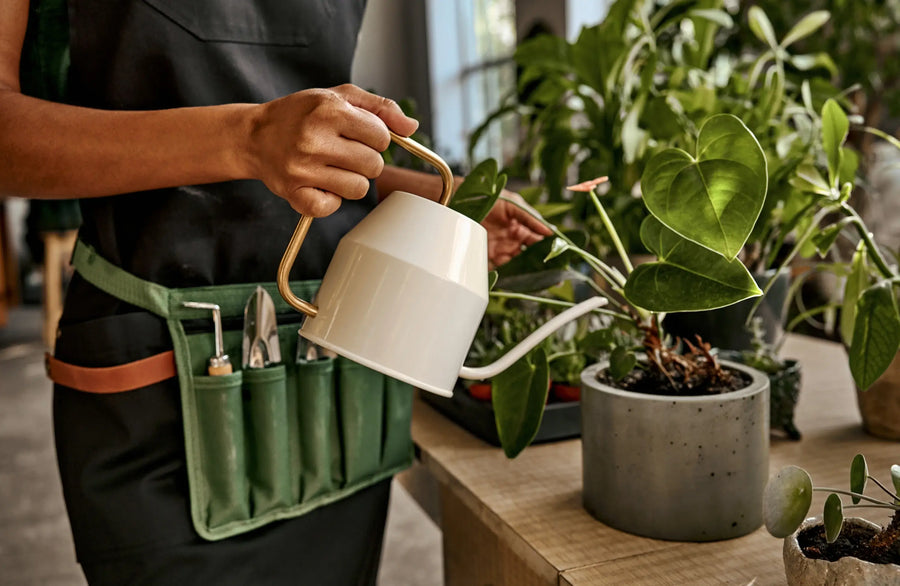
Keep an open potting mix lightly moist during active growth, allowing the surface to begin drying before watering again. Dieffenbachia contains calcium oxalate crystals, and its sap can irritate skin and eyes. Keep damaged stems and leaves away from children and pets.
Botanical Profile
Dieffenbachia grows in tropical American forests, where its broad leaves gather daylight beneath the canopy. The upright canes are fleshy stems, and the marks left by fallen leaves become visible as the plant ages.
Many varieties develop new shoots near the base. The pale leaf patterns that make Dieffenbachia familiar indoors range from fine markings along the veins to large cream-coloured areas.
Details & Care
Dieffenbachia plants
‘Camilla’ carries broad leaves with pale centres and green margins, while ‘Reflector’ is recognised for its dark, patterned foliage. ‘Tiki’ has fine pale markings, and ‘Compacta’ grows into a dense, leafy plant. Several canes can make a broad crown; a single stem gradually gains height.
Fresh leaves emerge near the top of each cane, and older lower leaves may drop naturally. Established plants can produce new shoots near the base. Give the foliage indirect daylight and enough room for the crown to expand.
Keep an open potting mix lightly moist during active growth, allowing the surface to begin drying before watering again. Dieffenbachia contains calcium oxalate crystals, and its sap can irritate skin and eyes. Keep damaged stems and leaves away from children and pets.
Frequently Asked Questions About Dieffenbachia
How much light does Dieffenbachia need indoors?
Bright indirect daylight is suitable for many Dieffenbachia cultivars. Pale-leaved varieties often need more light to maintain their markings, while strong midday sun can scorch the foliage.
When should I water a Dieffenbachia?
Water when the upper layer of the potting mix begins drying, with some moisture remaining deeper around the roots. Check farther down in large containers and allow excess water to drain.
Why is my Dieffenbachia losing lower leaves?
Older leaves naturally fall as a cane lengthens. Widespread yellowing, collapsing stems or rapid leaf loss can indicate a problem with the roots, watering or temperature.
Can I cut back a tall Dieffenbachia?
A healthy cane can be shortened, and many plants produce new shoots below the cut. Top sections or pieces of a cane can often be rooted for propagation. Protect skin and eyes from the irritating sap.
Is Dieffenbachia poisonous to pets?
Dieffenbachia contains calcium oxalate crystals that cause painful mouth irritation if chewed. Its sap can also irritate skin and eyes. Keep the plant away from cats, dogs and small children.