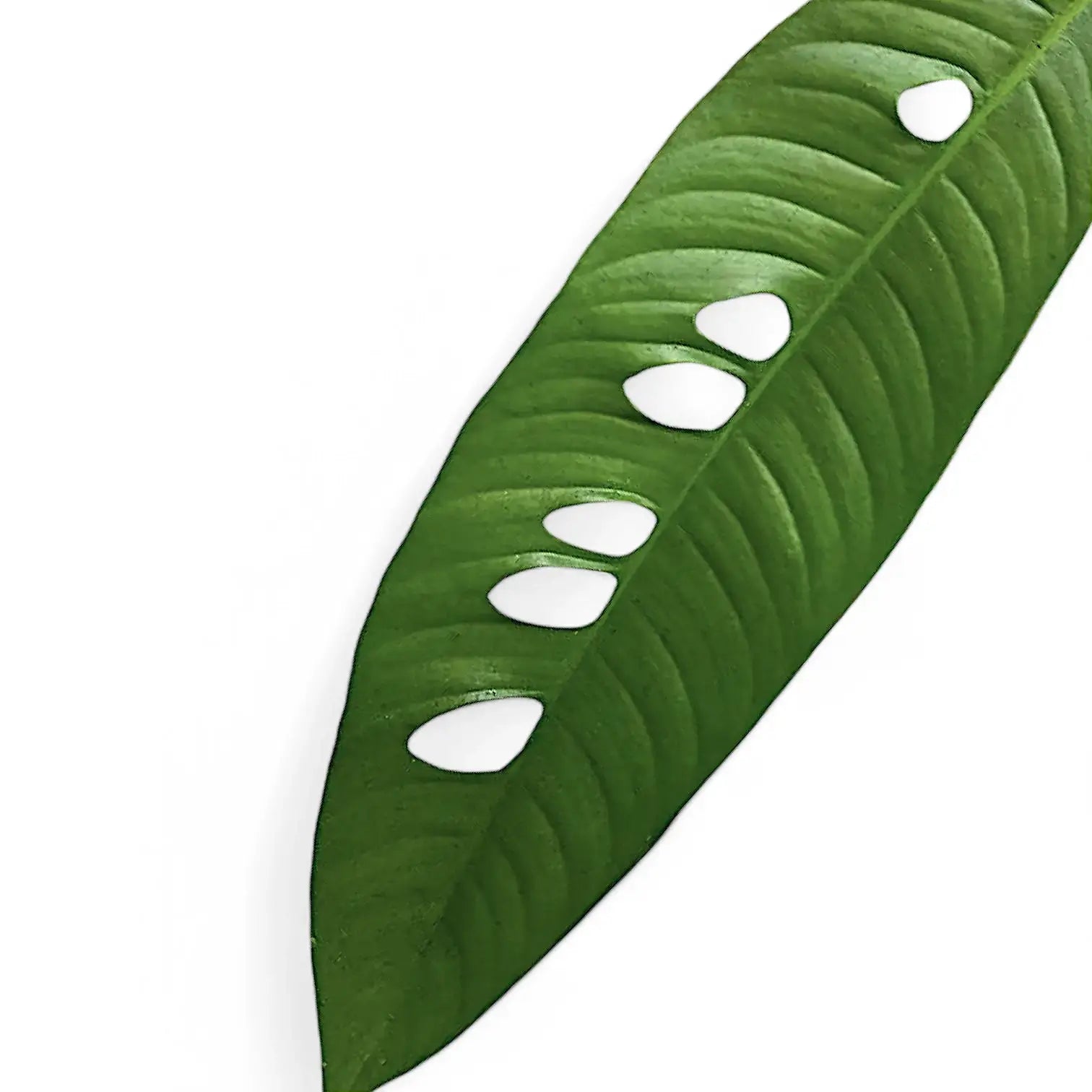
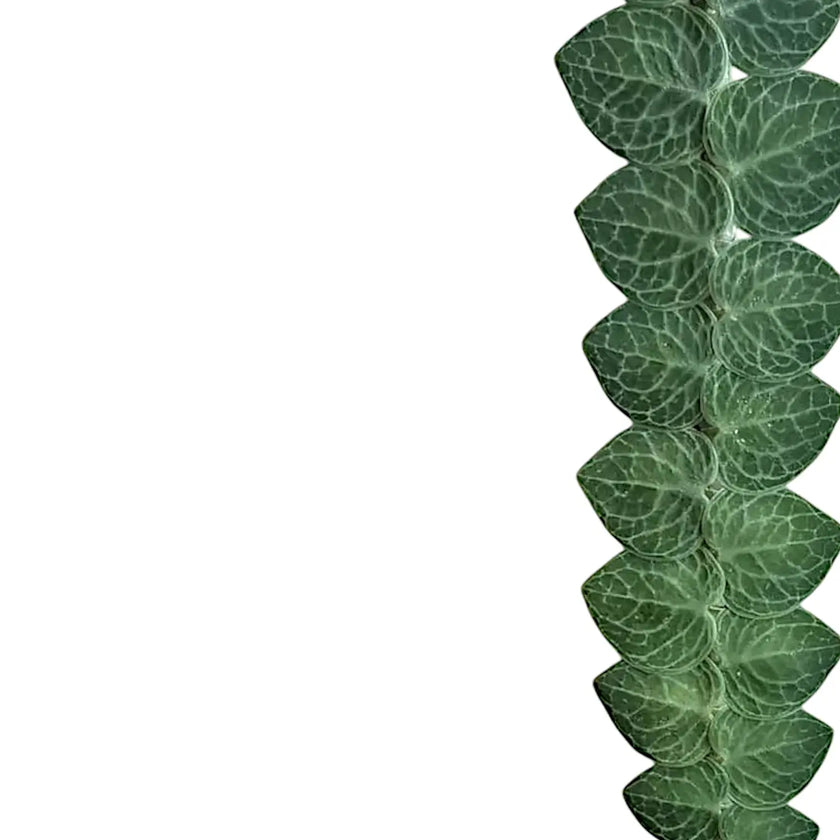
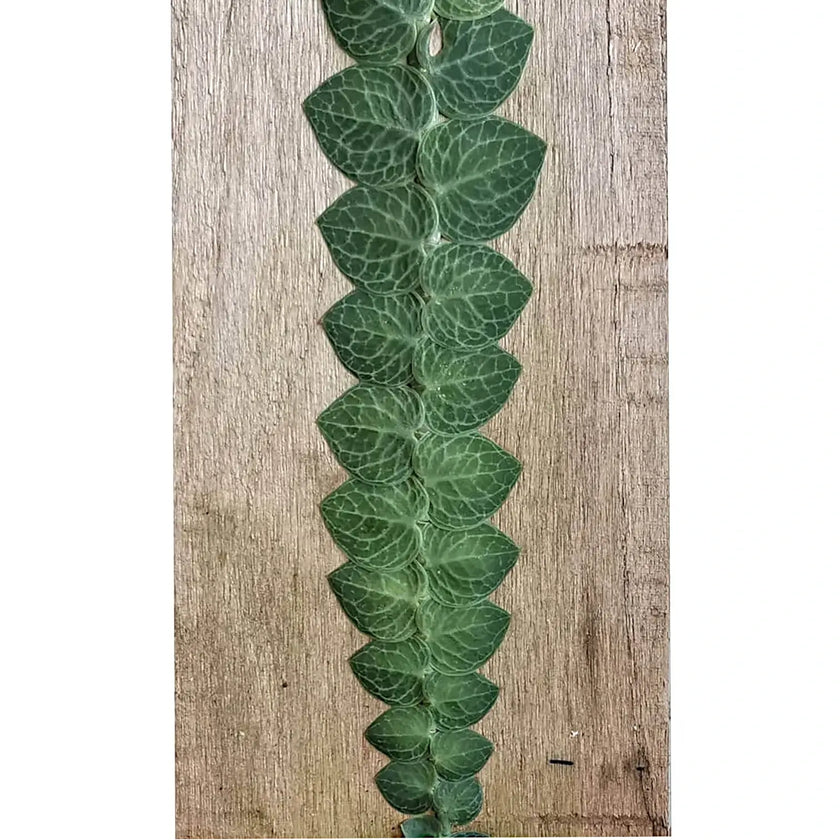
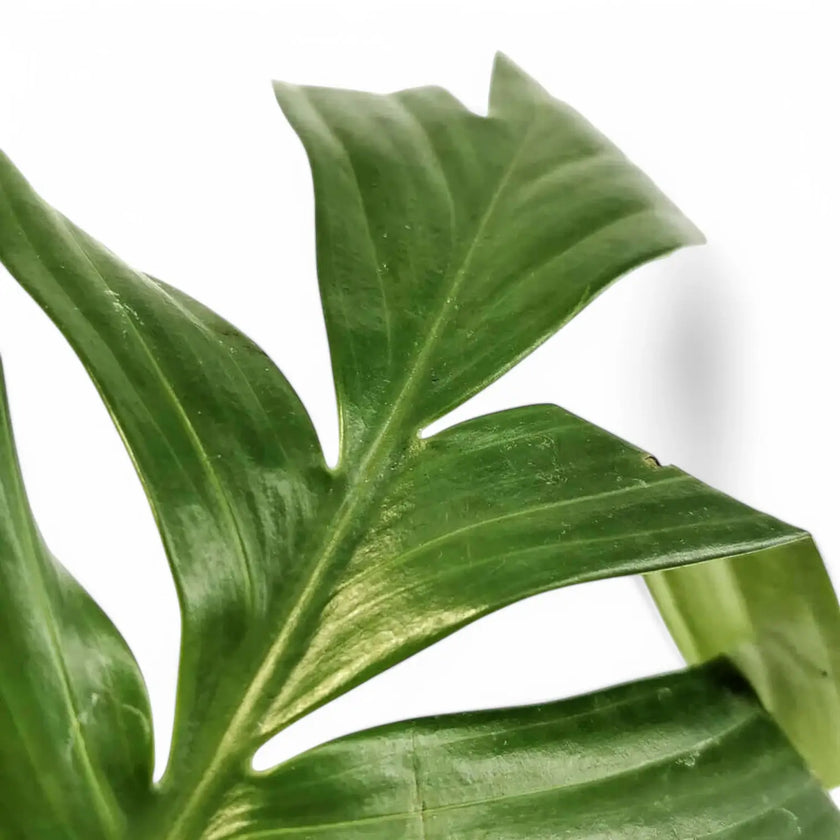
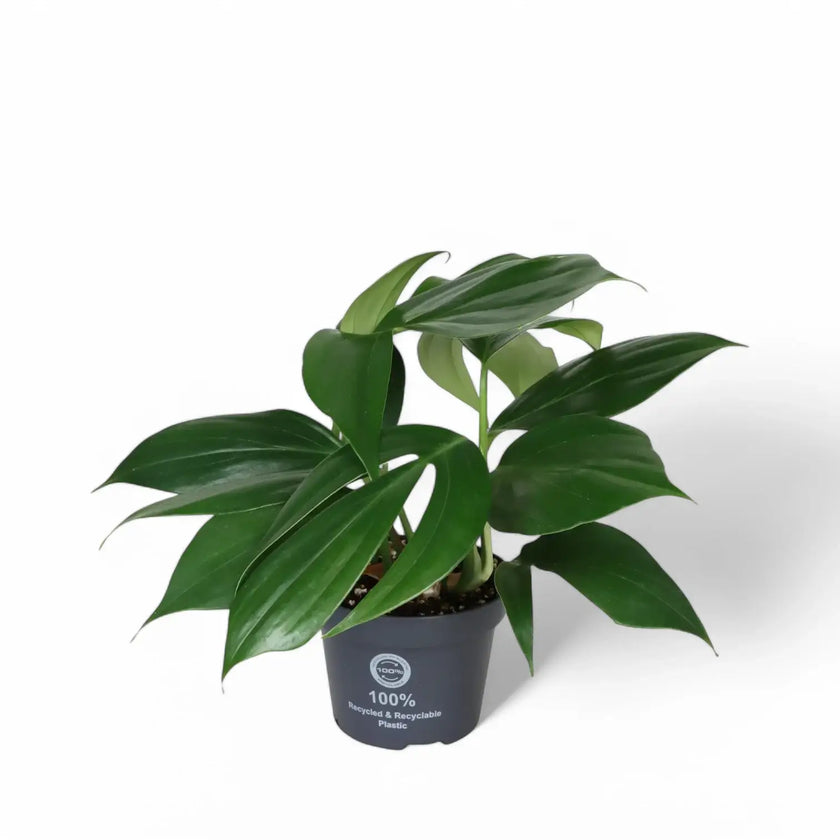
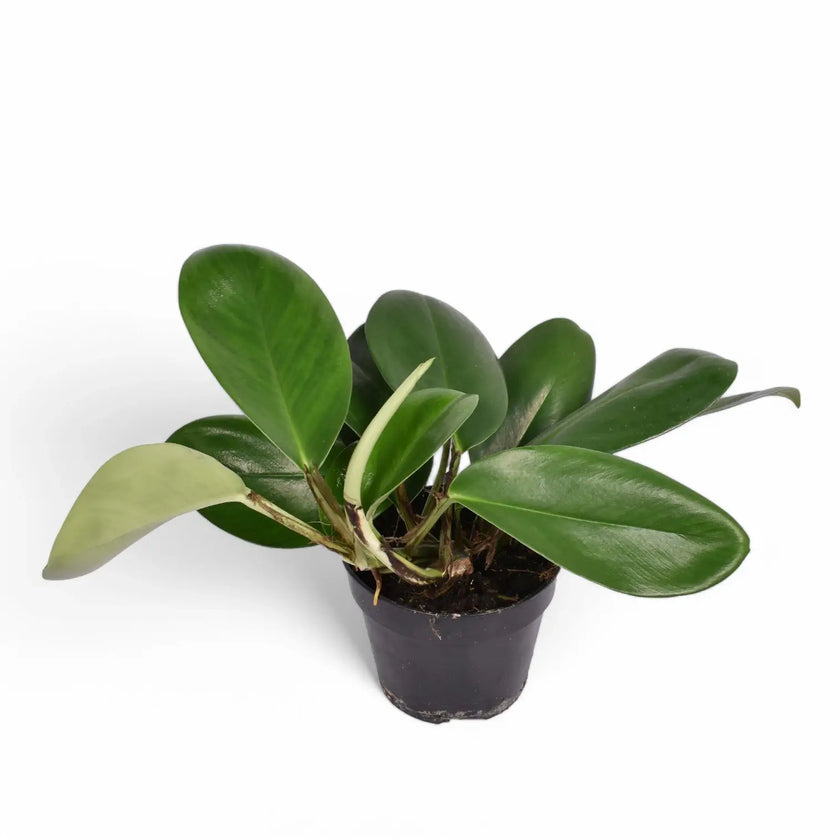
Rhaphidophora
Rhaphidophora covers climbing and shingling aroids related to MonsteraEpipremnum, but with their own leaf shapes and growth habits. Indoors, most Rhaphidophora show stronger leaf size and character once they have proper light and vertical support, especially as they begin to climb and attach themselves.
Rhaphidophora is rewarding when you enjoy training a plant and watching it change with structure. Mounting and staking usually give you tighter growth, stronger leaf character and a much clearer sense of what makes these plants different from an ordinary trailing vine.

Substrate help
Aroid roots need structure, not dense compost
About Our Filters
Filters help you narrow things down fast and without guessing. We put a lot of time and effort into keeping filter values consistent across the shop by cross-checking references and validating them against real-world indoor growing and handling.
Use them as guidance, not guarantees. Homes vary a lot, so for the full context (and any exceptions), open the product page and read the description.
How filtering works
- Filters stack: each selection narrows results.
- Multiple picks in one filter are usually either/or within that filter.
- Undo anytime: click a selected option again (or clear filters).
Safety
- Non-toxic: not known for relevant chemical toxicity for common pets (chewing can still cause irritation).
- Non-toxic & Pet Friendly: stricter shortlist that also avoids many physical hazards like spines, sharp tips, thorns, and bristles.
Common care filters
- Light level: Low indirect → Full sun/direct.
- Water Needs: Low / Medium / High.
- Humidity Level: Normal (40–50%) / Moist (50–60%) / Humid (60–80%+).
Growth & size
- Growth Habit: climbing, trailing, crawling, upright, self-heading, clumping, rosette.
- Needs support? none / optional / needed.
- Delivered size: pot size + plant height at shipping.
- Max size indoors: realistic long-term height + spread indoors.
Looks & botanical browsing
- Leaf Shape & Size + Foliage Colour: quick visual categories.
- Plant Type / Genus / Family: browse by broad group or taxonomy.
If you want to see the references we use, Plant Care Resources is simply a curated list of source links (POWO, Kew, and more).
Sort by
Filters
Araceae
Rhaphidophora
Quick Overview
Rhaphidophora-Monstera-adjacent climbers
- Form: natural climber that starts along the ground and then climbs trunks or boards; leaf shape changes as it matures.
- Light: medium to bright, indirect light; low light stretches nodes, strong glass sun burns thin blades.
- Support: perform best on moss poles, boards or textured stakes; unsupported vines look weaker and leaf size stalls.
- Substrate: enjoys airy aroid mix with bark and mineral components; heavy soil around roots and nodes is a poor match.
- Water: water when upper mix has dried a bit; aim for evenly moist, never prolonged drought or permanent wetness.
- Toxicity: treat as irritant if chewed; site out of reach of pets and kids.
Botanical Profile
Rhaphidophora: botanical profile for shingling and climbing aroids
Rhaphidophora is a genus of climbing aroids in Araceae (subfamily Monsteroideae, tribe Monstereae), described by Hasskarl in 1842. The name refers to needle-like sclereids (raphides) in the tissues. About 100 species are currently recognised, spanning shingling dwarfs, robust lianas and occasionally rheophytic plants adapted to fast-flowing water in tropical Asia and the western Pacific.
- Order: Alismatales
- Family: Araceae
- Tribe: Monstereae (subfamily Monsteroideae)
- Genus: Rhaphidophora Hassk.
- Type species: Rhaphidophora glauca (Wall. ex Hook.f.) Schott
- Chromosomes: Chromosome counts are incompletely known; available data place Rhaphidophora within the mid-range polyploid series typical of Monstereae.
Range & habitat: Rhaphidophora occurs from tropical Africa through the Indian subcontinent, Indochina and Malesia to New Guinea, northern Australia and the western Pacific islands. Species are mainly hemiepiphytes or epiphytes on tree trunks and rocks in humid lowland and lower montane forests, with some adapted to periodically flooded ravines or stream margins.
- Life form: Evergreen climbers and scramblers, many with a juvenile shingling phase that adheres closely to substrates, followed by a free-climbing adult phase with larger leaves and longer internodes.
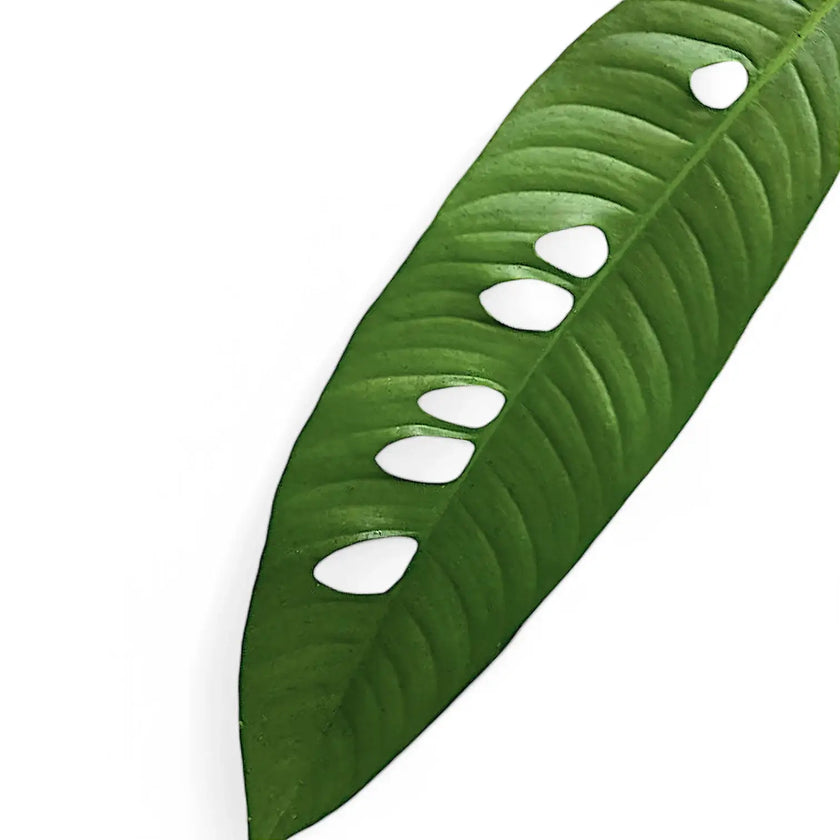
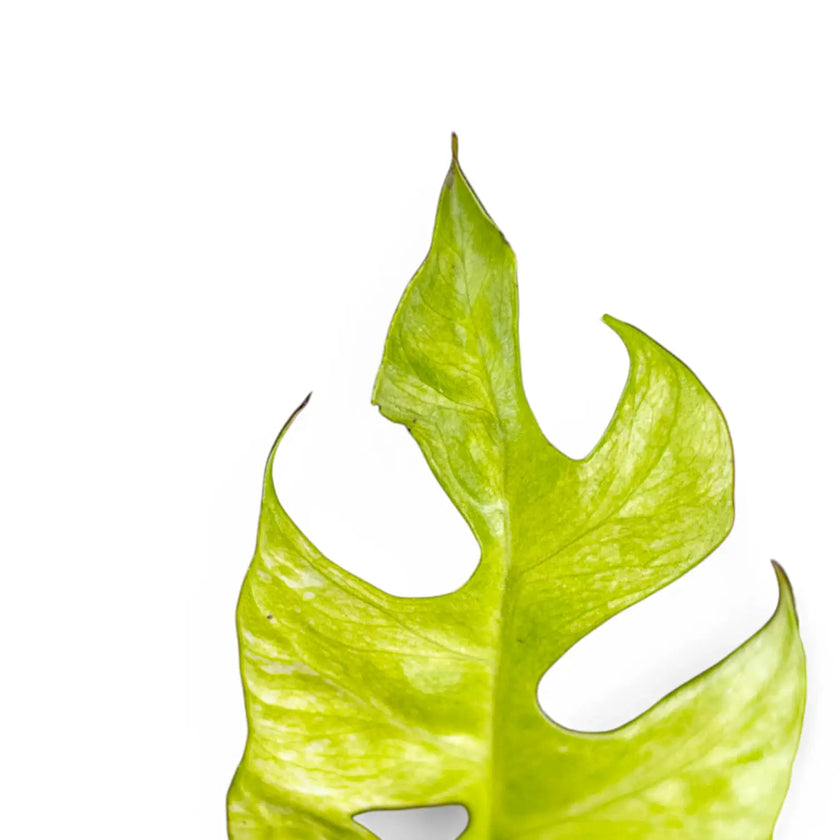
- Leaf attachment: Petiolate leaves with marked dimorphism between juvenile and adult stages; adult blades range from entire to deeply pinnatifid or perforated, often on elongated petioles.
- Leaf size: Juvenile shingling leaves can be only a few centimetres across; adult leaves in robust species may exceed 40-60 cm in length when well supported and adequately lit.
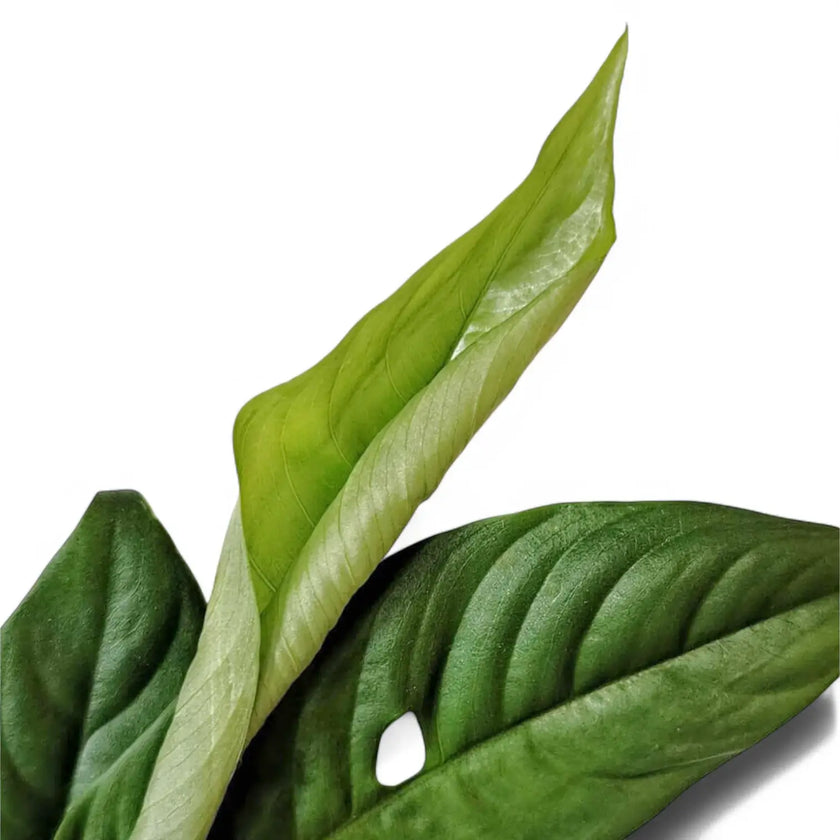
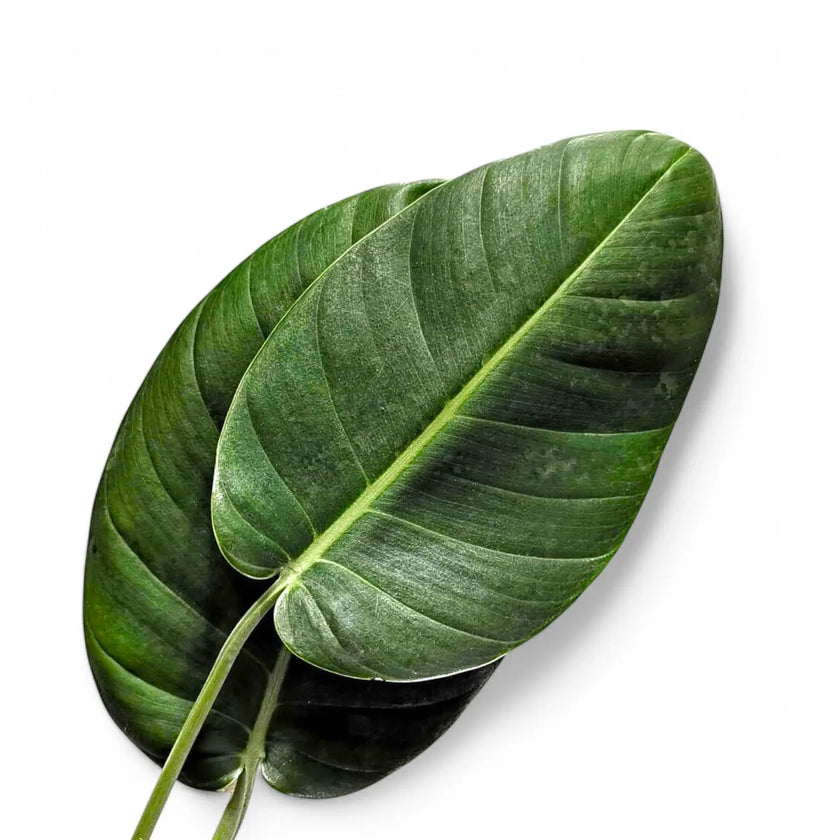
- Texture & colour: Generally firm to leathery, mid- to dark green foliage, sometimes with a slightly matte or glaucous bloom; venation is often prominent, contributing to a sculpted look.
- Notable adaptation: The combination of shingling juveniles, extensive aerial rooting and plastic leaf morphology allows plants to track shifting light regimes along trunks and rock faces while maintaining hydraulic connection to moist substrates below.
Inflorescence & fruit: Rhaphidophora produces spadix-and-spathe inflorescences typical of Monstereae; the spathe usually soon falls after flowering, exposing the maturing spadix. The fruits are many-seeded berries embedded in a fleshy infructescence, eaten by birds and mammals that disperse seeds across the forest.
Details & Care
Rhaphidophora: climbing aroids that look best once they grip
Why Rhaphidophora behaves better on a board than in mid-air
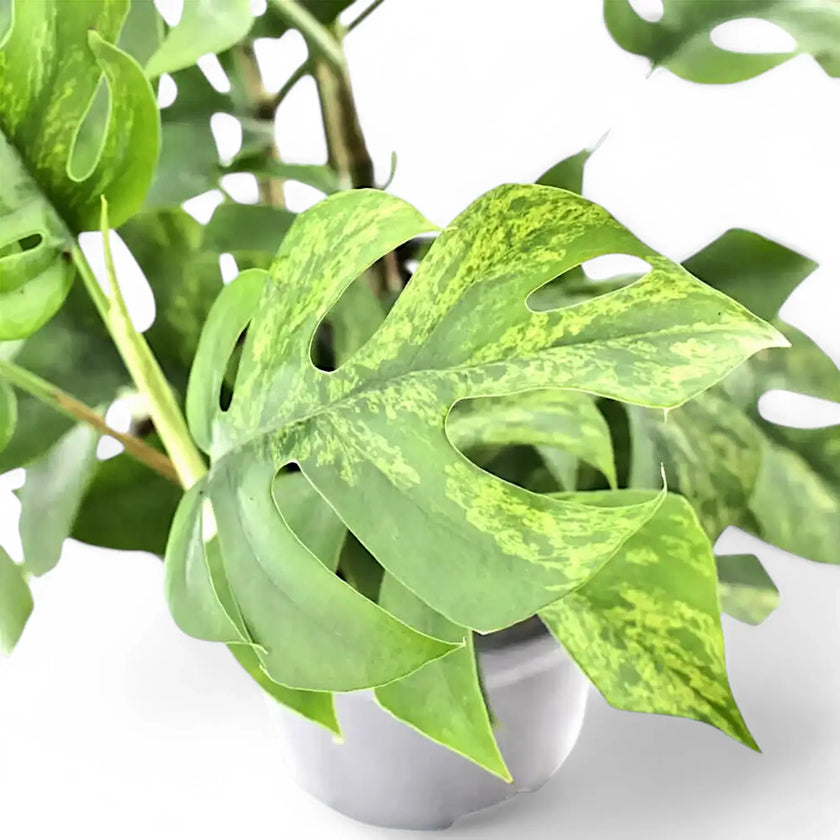
Rhaphidophora sits close to Monstera and Epipremnum in the collector world, but the look is different. Most forms are leaner, more directional climbers that hug supports, shingle across surfaces or stretch upward with clear intent. Juvenile leaves can seem simple at first; once stems root along a board or pole, foliage often gets larger, tighter-spaced and far more characteristic.
That is the real draw indoors. Rhaphidophora is for setups that suit guiding a plant, not just parking it in a pot. Given texture to grip, bright filtered light and room to climb, it turns into a structured vertical plant instead of a loose trailer with shrinking leaves.
What habitat tells you about Rhaphidophora care
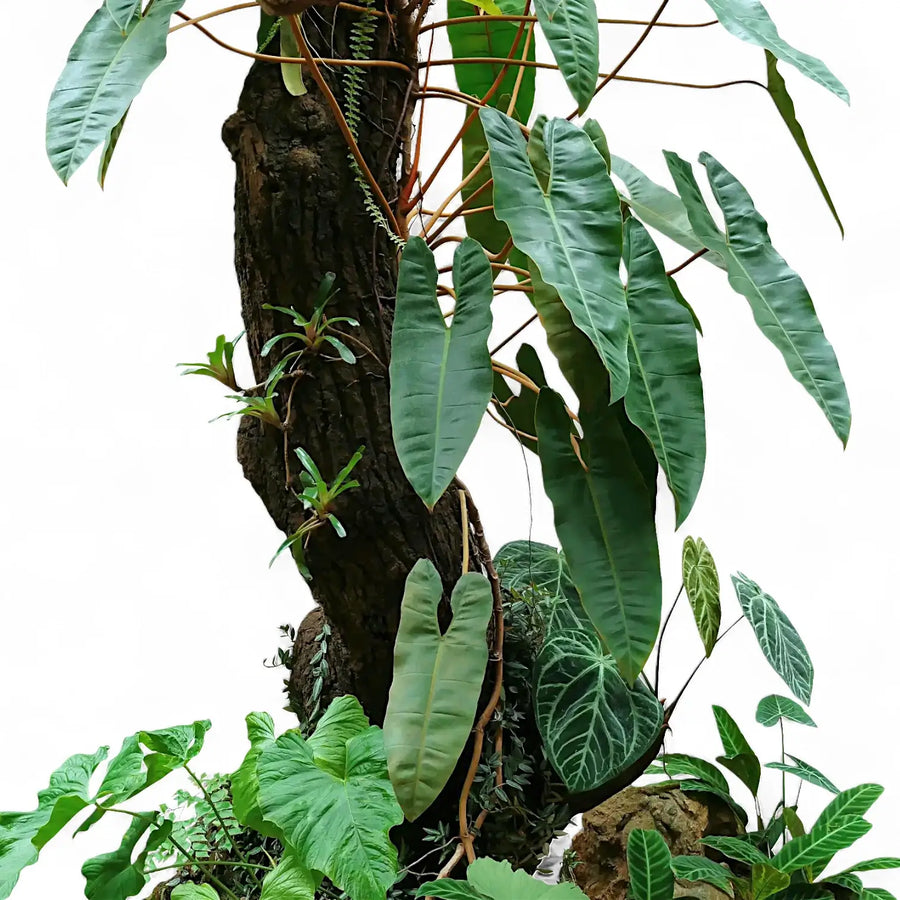
Species in this genus occur from tropical Africa across South and Southeast Asia to the western Pacific, usually as root-climbing aroids in warm, humid forests. Many start low, then run up trunks, rocks or other rough surfaces where roots can anchor into moss, litter and bark. Water moves through those materials fast; it does not sit around roots in heavy, airless soil.
That is why indoor culture is easiest when you think “climber in airy organic debris”, not “vine in dense compost”. The right setup is a breathable mix, thorough watering and a support that lets nodes attach and feed the next phase of growth.
Light, support and spacing that change the way Rhaphidophora looks
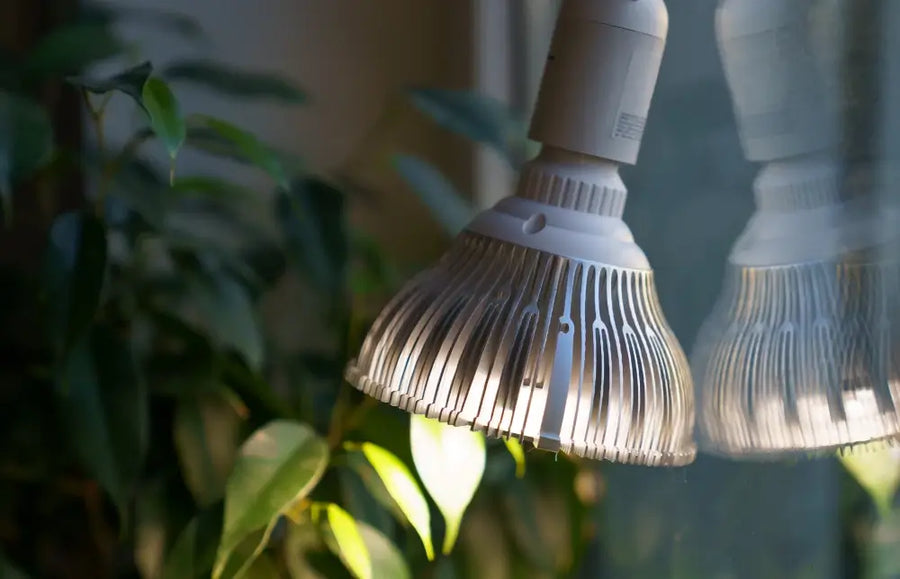
Rhaphidophora usually wants medium to bright, indirect light. Too dim, and internodes stretch, leaves stay small and shingling species peel away from their support. Too much concentrated sun through glass marks thinner blades and dries exposed roots. A bright position with softened light keeps growth tight and makes climbing worth the effort.
Support is not optional if you want the plant to show its real habit. Boards, planks, moss poles and rough bark-style surfaces all work better than smooth stakes or loose unsupported growth. Tie stems in early, keep nodes close to the support and let aerial roots make contact. Once the vine is hanging free for too long, it tends to stall into a less interesting, juvenile form.
Water, substrate and why heavy soil sets Rhaphidophora back
Use an airy aroid-style mix with bark, mineral fraction and enough fine material to hold some moisture between waterings. Water thoroughly, then let the upper portion dry a little before watering again. Roots like a clear wet-to-damp-to-slightly-drier rhythm, not repeated half-sips into a cold, compact pot.
When mix stays dense and slow for days, older leaves yellow, nodes soften and aerial roots stop exploring. When the pot swings bone-dry too often, new leaves stay smaller, edges crisp and growth becomes hesitant. The middle ground is simple: deep watering, good drainage and oxygen around the roots every day.
Common Rhaphidophora problems indoors
- Long bare internodes and small leaves: not enough usable light, or the stem has nothing worth climbing. Increase brightness and attach the vine to a proper support.
- Shingling stems lifting away from the board: air is too dry, the surface is too smooth or nodes were not secured early enough. Reattach while growth is still flexible.
- Yellow leaves in a pot that stays cold and wet: substrate is too dense or watering is too frequent. Check the roots and repot into a looser mix if needed.
- Brown, papery patches on exposed leaf areas: likely scorch from direct sun through glass. Move the plant slightly back or filter the light.
- New leaves staying tiny despite active roots: the plant is still behaving as an unsupported juvenile vine. More light and vertical contact usually matter more than extra fertiliser.
Compare the Rhaphidophora that suit your board, your pole and the space you can give a climber

Frequently Asked Questions About Rhaphidophora
Is Rhaphidophora the same as Monstera?
No. Rhaphidophora is a separate aroid genus, even though some species are sold under misleading names like mini Monstera.
Does Rhaphidophora need support indoors?
Usually yes. Most popular indoor Rhaphidophora types are climbers, and a pole, board, or trellis helps them stay tidier and mature better.
What light does Rhaphidophora need indoors?
Bright indirect light is the safest baseline. Some forms can handle a little gentle direct sun, but hard sun is more likely to scorch leaves than improve growth.
How often should I water Rhaphidophora?
Water when roughly the top 20–30% of the pot has dried. In cooler or dimmer conditions, let closer to the top 30–40% dry first, and keep the mix airy rather than dense.
Why are Rhaphidophora leaves staying small and juvenile indoors?
Usually because the plant lacks support, enough light, or enough time to mature. Unsupported growth often stays smaller and less dramatic.
Our Customers
★★★★★
Die Pflanzen waren prima verpackt und ein heatpack war im Paket enthalten. Die Lieferzeit hat 2 bis 3 Tagen gedauert, was aus meiner Sicht wirklich gut ist. Alle drei Pflanzen haben die Lieferung gut überstanden. Ich habe mich auf Hoyas spezialisiert und habe schon die nächsten Pflanzen meiner Wunschliste auf der Website gefunden. Daher wird die nächste Bestellung nicht lange auf sich warten lassen.
Marion
★★★★★
I received perfectly heathy and absolutely beautiful plants, even bigger than expected. The delivery within Europe was really fast. I think Foliage Factory has one of the best plant web shops in the internet. It‘s just great to get so much informations about the plants. I will definitely order again :)
Walkerova
★★★★★
Envoie très rapide (2 jours), plantes parfaitement emballées et super offres ! Je suis une habituelle j'ai passé 6 ou 7 commandes et je n'en peut être plus satisfaite du service client et de la qualité et variété des plantes offertes
Iris
★★★★☆
Die Sendung kam leider in keinem guten Zustand bei mir an, kann passieren. Habe mich darauf hin sofort an Foliage Factory gewandt und habe selten einen so guten, schnellen, freundlichen und kulanten Kundendienst erlebt.
Frauke
★★★★★
The plants have arrived in perfect condition, the roots and the foliage so so healthy! I had problem with 1 plant out of 16 and they have responded to my email almost instantly and the issue was resolved straight away. I'm really impressed and satisfied, definitely getting more plants from them again!
Patricija
★★★★☆
Very healthy and well packed plant. Unfortunately there was one plant that ordered couldn’t be delivered as it was out of stock hence 1 star less.
Sam
★★★★★
Everything arrived in good condition and very well packed - it wasn't easy with a fragile plant and a heavy bag of substrate. I recommend it!
Lia
★★★★★
Bester online-Pflanzenhandel den ich kenne (habe davor 4 andere ausprobiert). Eine teure Pflanze wurde beim Transport beschädigt und mir ersetzt. Der Kontakt dabei war auch sehr nett (danke Jan) und hat mir gut geholfen. Die anderen Pflanzen sind in einem sehr guten Zustand, keine Schädlinge, super Bewurzelung. Nur zu empfehlen! :)
C L
★★★★★
Super Service, Gute Auswahl, Preise sind fair. Eine Pflanze kam kaputt an, hab sofort Ersatz bekommen. Danke an den unkomplizierten (und blitzschnellen) Kundenservice!!
Sarah
★★★★★
The plants are carefully packaged and arrive in great conditions (I’m based in Spain) and they’re always there to help in any way they can with your purchase.I have and will always recommend Foliage Factory to every friend I can. I’m not only satisfied with their plants and prices, but their customer service is exceptional.
José
Get 10% off your next plant order
Sign up for Foliage Factory newsletter for early access to new arrivals and practical care tips that work in real homes.
Limited discounts, extras, and bundle deals for subscribers.
Get points with every order to redeem them for discounts.
Give your friends 10 € off and get 200 Foliage Points.
Use your 10% code on plants when you're ready to order.