Light
Medium indirect • approx. 5,000–10,000 lux

VAT included · plus
Your new plant has just travelled a long way and needs a calm start in its new home. For step-by-step unboxing and first-week care, check our after-delivery care guide. For deeper tips on how your plant settles in over the next weeks, read our houseplant acclimatization guide.
Secure shipping, carefully packed orders with safe delivery across the EU, UK and Switzerland.
28-day plant guarantee, if a plant arrives damaged or fails soon after delivery, we help you make it right.
Free returns, simple, cost-free returns according to our policy.
For full details, please see:
Please head to our FAQ Page or Contact us.
Quick Care Guide
Light
Medium indirect • approx. 5,000–10,000 lux
Watering
Water when ~25–40% dry
Substrate
Aerated • Moisture-buffered • Balanced organic + mineral • Medium
Temperature
Ideal: 18–24 °C • Avoid below: 15 °C
Humidity
Moist 50–60 %
Growth habit
Upright clumping herbaceous perennial.
Support
not needed
Growth speed
Average
Max size indoors
Max. height: 80 cm • Max. spread: 80 cm
Toxicity & safety
Toxic
Origin & habitat
Native to Central Malesia
Outdoor growing
Outside from 15 °C · sheltered spot
These care values are quick reference points for indoor growing. Use them as a guide, then adjust for pot size, substrate, temperature and how quickly the substrate dries.
For more detail, read the full product description or visit our Plant Care Guides.
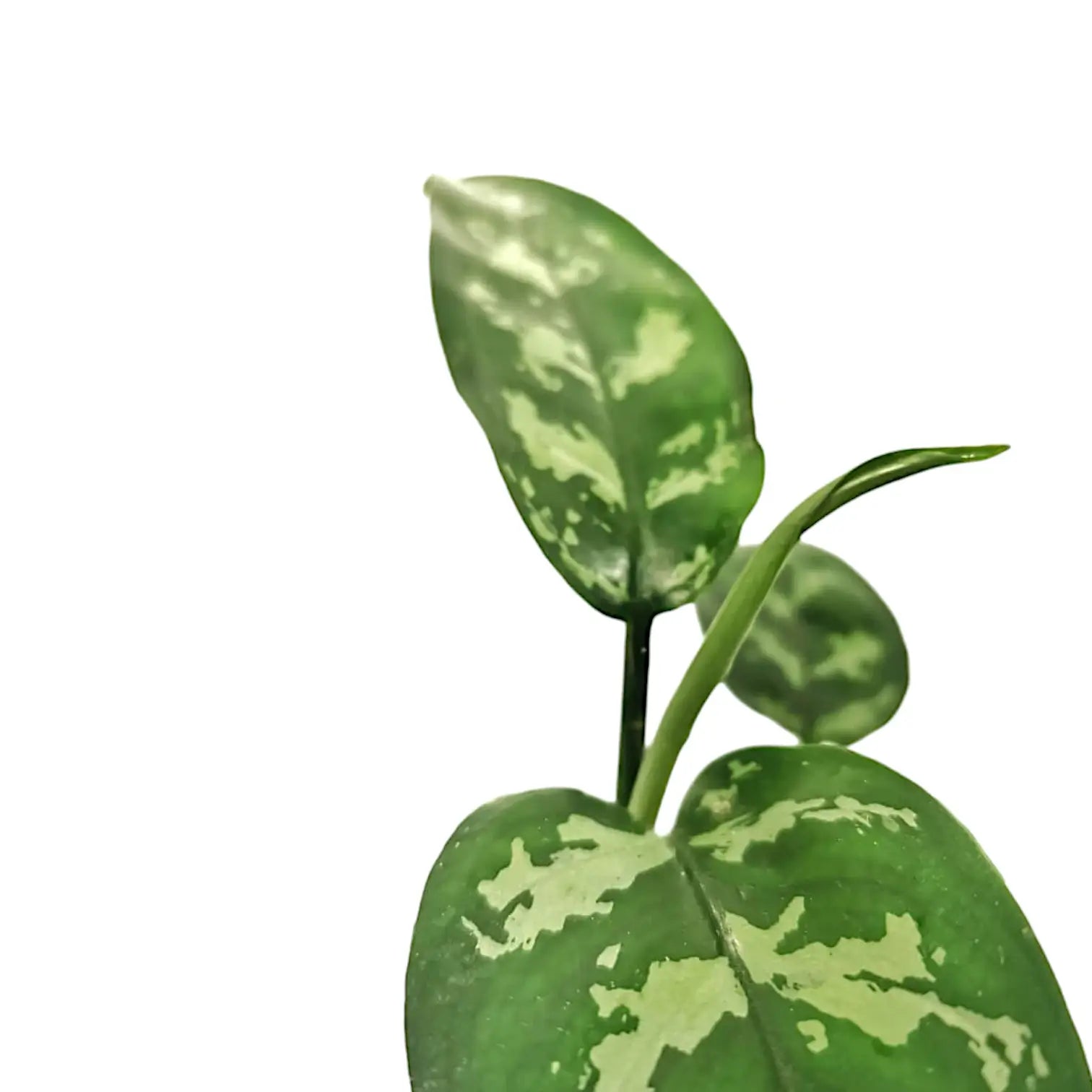
Aglaonema commutatum is an accepted Aglaonema species from Central Malesia, with narrow, firm leaves marked by pale bars along the side veins. The leaves are oblong to lance-shaped, and young plants hold them on upright stems.
Older stems can lengthen and lean over time, so mature plants may sit wider in the pot than young stock. The pale bars stay tied to the side-vein structure while the stem gradually extends as the plant develops.
Aglaonema commutatum forms elongated leaves with visible side-vein patterning. The pale markings sit within the natural vein structure and give individual leaves a broken striped pattern.
In a pot, the stem can gradually lengthen and lean as the plant ages. A stable planting depth and a substrate with enough air around the roots keep the lower stem area firmer, especially when the plant is grown warm and evenly moist.
Aglaonema commutatum contains calcium oxalate crystals that can irritate the mouth, throat and digestive tract if chewed. Keep it away from pets and children who may bite leaves or stems.
The genus name Aglaonema combines Greek roots linked to brightness and thread-like stamens. Aglaonema commutatum was published by Heinrich Wilhelm Schott in 1856, and the species epithet commutatum comes from Latin wording linked to change or alteration.
Aglaonema commutatum develops narrow barred leaves on stems that can lean as they lengthen.
Plant names, growth habits, natural habitats and indoor care guidance are checked against trusted botanical, habitat and horticultural references before publication.View our plant care resources and references.
Sign up for Foliage Factory newsletter for early access to new arrivals and practical care tips that work in real homes.