Light
Bright indirect • approx. 10,000–20,000 lux


VAT included · plus
Your new plant has just travelled a long way and needs a calm start in its new home. For step-by-step unboxing and first-week care, check our after-delivery care guide. For deeper tips on how your plant settles in over the next weeks, read our houseplant acclimatization guide.
Secure shipping, carefully packed orders with safe delivery across the EU, UK and Switzerland.
28-day plant guarantee, if a plant arrives damaged or fails soon after delivery, we help you make it right.
Free returns, simple, cost-free returns according to our policy.
For full details, please see:
Please head to our FAQ Page or Contact us.
Quick Care Guide
Light
Bright indirect • approx. 10,000–20,000 lux
Watering
Water when ~30–50% dry
Substrate
Airy + fast-draining • Light moisture buffer • Bark-based • Medium-chunky
Temperature
Ideal: 18–29 °C • Avoid below: 15 °C
Humidity
Moist 50–60 %
Growth habit
Climbing hemiepiphytic herbaceous perennial.
Support
recommended
Growth speed
High
Max size indoors
Max. height with support: 250 cm • Max. spread: 100 cm
Toxicity & safety
Toxic
Origin & habitat
Native to Colombia
Outdoor growing
Outside from 15 °C · sheltered spot
These care values are quick reference points for indoor growing. Use them as a guide, then adjust for pot size, substrate, temperature and how quickly the substrate dries.
For more detail, read the full product description or visit our Plant Care Guides.
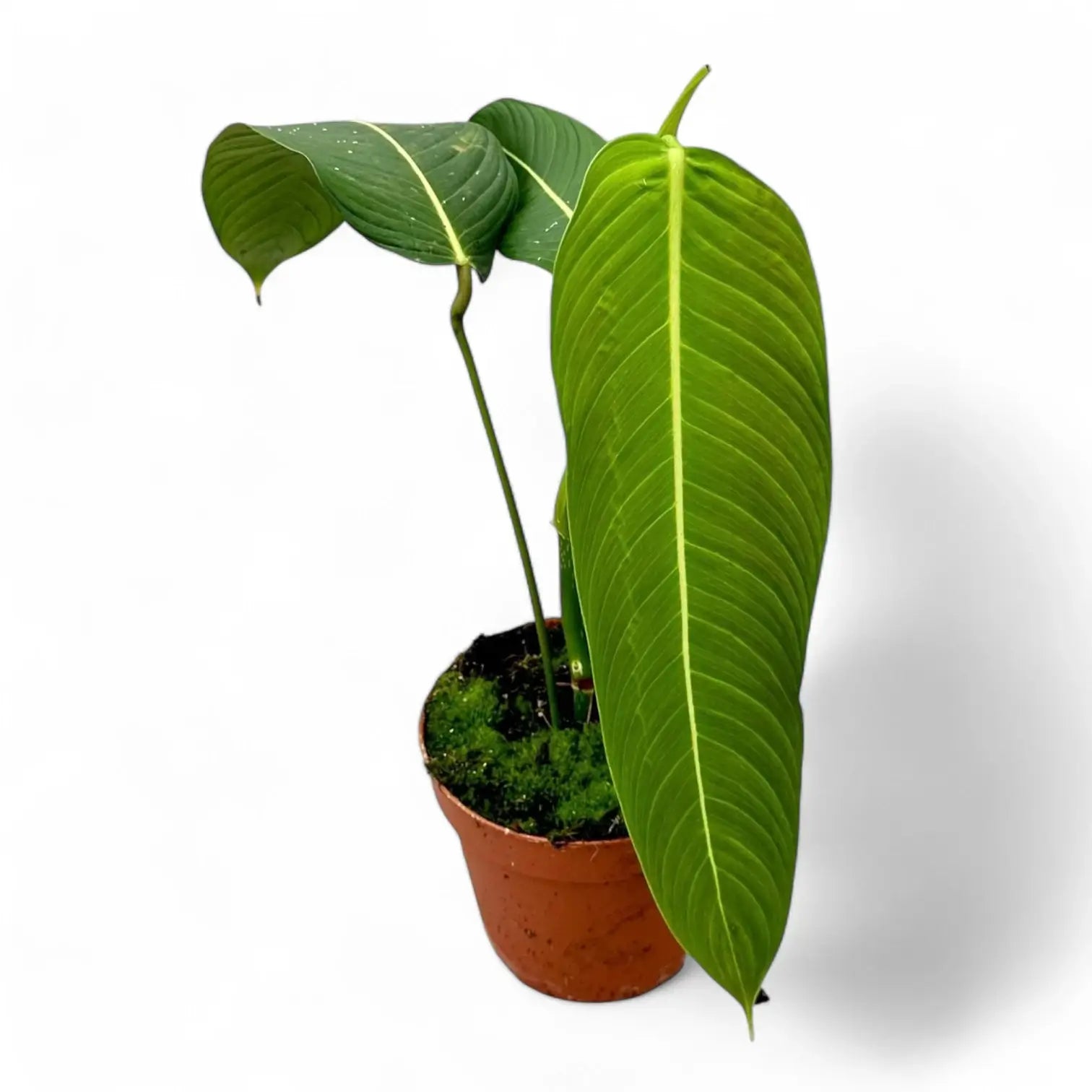
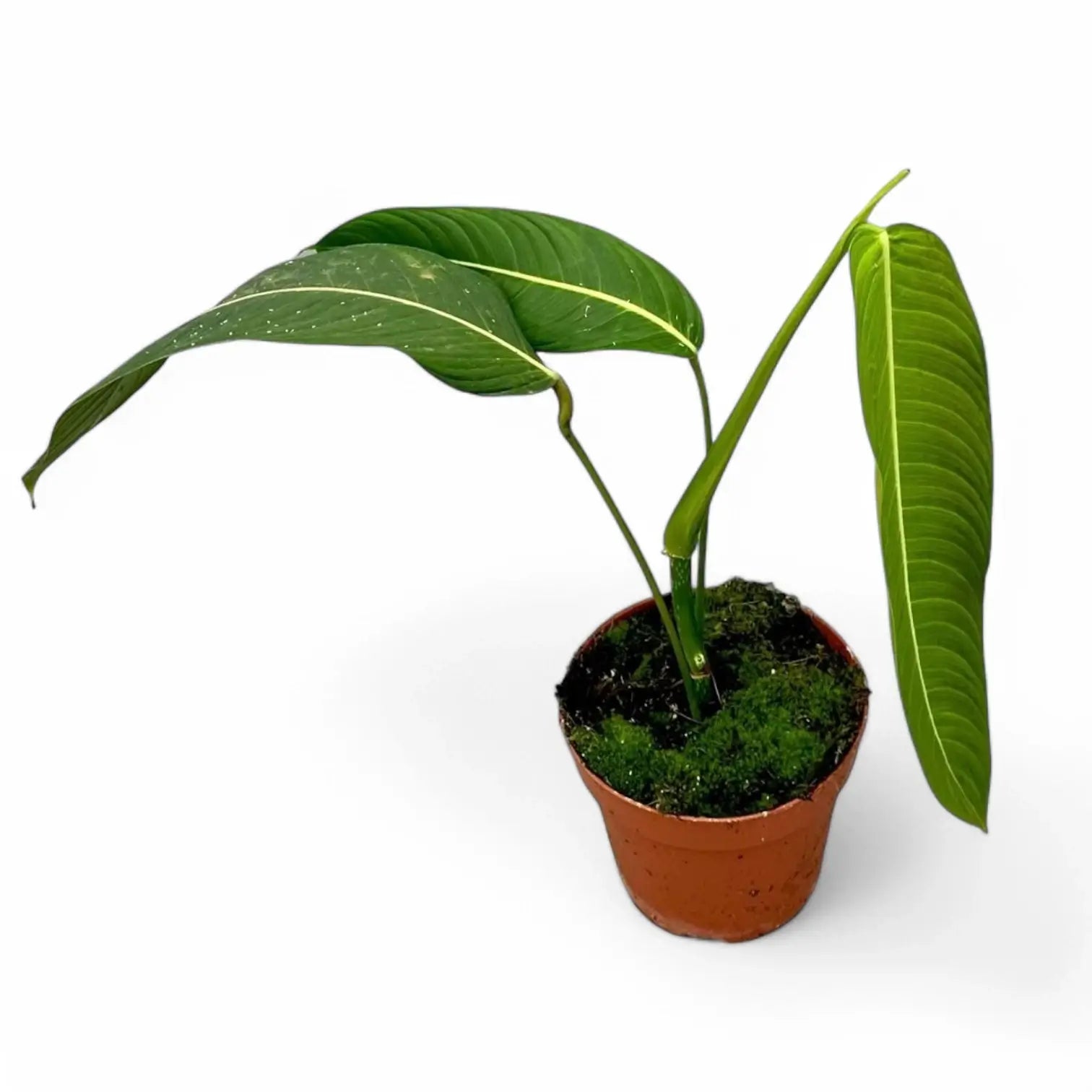
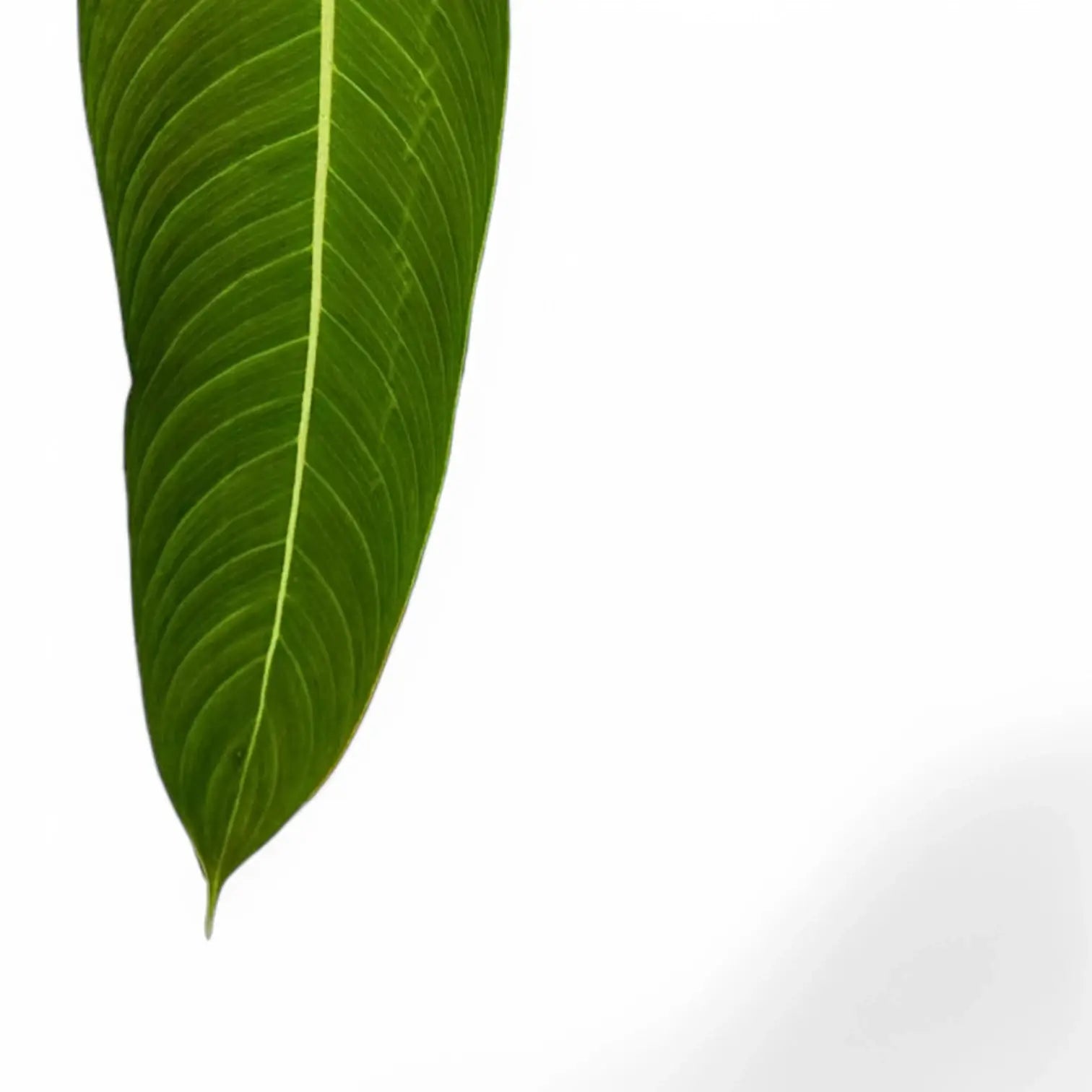
Philodendron heterocraspedon Croat and D.C.Bay is a scarce canopy-climbing aroid from the rainforests of Colombia and Ecuador. Described in Aroideana (2006), it is recognised for its long, slightly undulating leaves with deeply impressed primary veins. In cultivation, this species responds to firm vertical support, bright filtered light, and stable humidity with increasingly dramatic, well-textured foliage.
Native to wet lowland and lower montane forests in Colombia and Ecuador, typically between 100 – 800 m elevation. P. heterocraspedon climbs large tree trunks in filtered to low canopy light, benefiting from constant moisture, warm temperatures, and moving air. In situ, its leaves are adapted to intercept dappled sunlight while minimising water loss.
Compared to Philodendron elongatum, heterocraspedon shows more pronounced primary venation and slightly more undulate leaf margins. Unlike P. atabapoense, it lacks the pronounced bicolour contrast between the adaxial (upper) and abaxial (lower) leaf surfaces. It can resemble juvenile P. pedatum, but heterocraspedon maintains a narrower, more elongated blade shape into maturity.
Images may depict mature plants. Shipped specimens may have smaller juvenile leaves; with strong light, humidity, and a firm pole, foliage will gradually increase in size and complexity. Newly shipped plants may pause growth temporarily while acclimating.
Mature plants produce a greenish to pale spathe enclosing a spadix, typical of Philodendron. While ornamental value is minor compared to foliage, flowering indoors is possible in stable, long-term culture.
Philodendron derives from Greek phílos (“loving”) and déndron (“tree”), referring to its climbing nature. The species epithet heterocraspedon comes from Greek for “different edge,” referencing variation in the leaf margins.
Add Philodendron heterocraspedon to your collection for a rare canopy climber with elegant, elongated foliage. With stable humidity, bright filtered light, and firm support, this species will reward you with increasingly architectural leaves over time.
Plant names, growth habits, natural habitats and indoor care guidance are checked against trusted botanical, habitat and horticultural references before publication.View our plant care resources and references.
Sign up for Foliage Factory newsletter for early access to new arrivals and practical care tips that work in real homes.