10 Fast-Growing Houseplants – Indoor Plants That Grow Quickly and Look Stunning
Fast-growing houseplants are a good fit when you want visible progress from a plant, not a pot that looks the same for months. New leaves, longer vines, fuller clumps, easy cuttings and baby plants all make indoor growing feel more rewarding, especially when you are still learning how light, watering and root space affect growth.
Fast does not mean instant. Indoors, even vigorous plants usually grow in centimetres over weeks, not overnight. Their pace changes with light, temperature, watering, nutrition, humidity and available root room. A plant that grows quickly in bright indirect light may slow down sharply in a dim corner, even if it stays alive.
Root space matters, but it has to be handled sensibly. More room can support stronger growth once roots have filled the current pot, while an oversized container can stay wet for too long and make root problems more likely. For most fast growers, gradual pot upgrades, airy substrate and strong light give better results than jumping straight into a much larger pot.
The best choice depends on the kind of growth you want. Some plants trail. Some climb. Some thicken into fuller clumps. Others multiply through offsets or cuttings. Matching that growth habit to your space makes a fast-growing houseplant much easier to keep attractive long term.
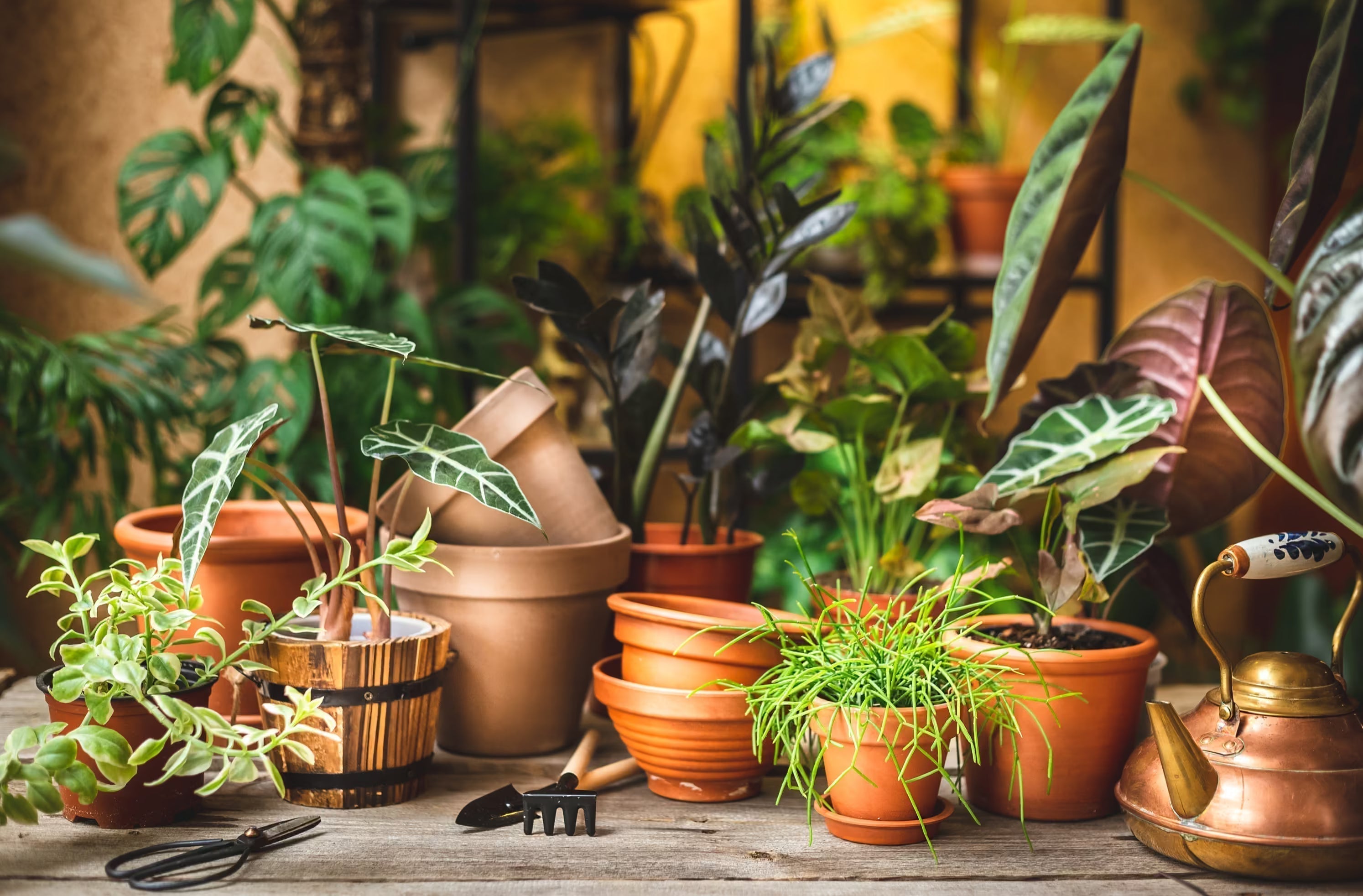
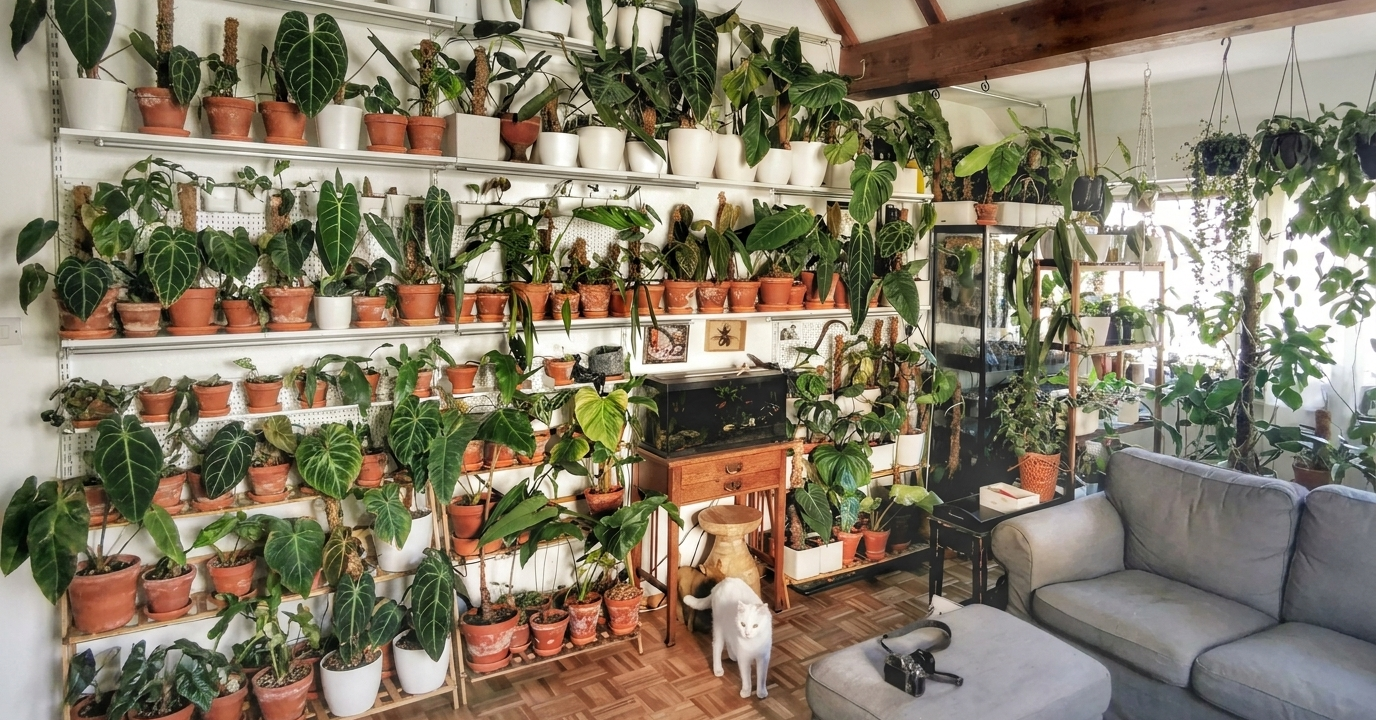
Fast-growing houseplants can fill shelves, hanging pots and plant supports quickly when light, watering and root space are balanced.
Contents
What fast growth really means indoors
When people search for fast-growing houseplants, they usually want plants that visibly change within a normal care routine. That could mean a vine adding new nodes, Spider Plant making baby plants, Tradescantia filling out after regular pruning, or Peace Lily forming a wider clump from the base.
Growth speed depends on more than plant choice. Genetics set the potential, but indoor conditions decide how much of that potential you actually see. Light drives energy. Roots need oxygen as well as moisture. Leaves need enough humidity to avoid constant stress. Nutrients support new tissue, but they cannot make up for poor light, cold conditions or soggy substrate.
A realistic indoor benchmark is monthly progress, not daily drama. A good fast grower should show regular new leaves, stem extension, offsets or usable cuttings during active growth. If a plant keeps stretching with long gaps between leaves, that is not strong growth; it is usually a light response. Use how much light houseplants really need to check whether your setup gives enough usable light before changing everything else.
Best fast-growing houseplants by use
If you already know the result you want, choosing becomes much easier. Use growth habit first, plant name second.
Fastest for cuttings: Pothos, Tradescantia and Heartleaf Philodendron root easily from stem cuttings.
Best for baby plants: Spider Plant produces offsets on long stolons once mature.
Best for vertical growth: Monstera deliciosa, Syngonium and Creeping Fig grow best when they have support.
Best for compact fullness: Peace Lily, Asparagus Fern and Homalomena rubescens build volume without long trailing stems.
Best for beginners: Spider Plant, Pothos and Heartleaf Philodendron are forgiving, easy to restart and quick to reward better care.
Best if you enjoy pruning: Tradescantia, Creeping Fig and Pothos respond well to regular trimming and shaping.
For pet households, Spider Plant is the safest choice in this list. Several other fast growers, especially aroids such as Pothos, Monstera deliciosa, Philodendron, Syngonium, Peace Lily and Homalomena, should be kept away from pets that chew plants.
How fast-growing houseplants build size
Fast-growing indoor plants do not all grow in the same direction. The right support, pot and pruning style depend on how each plant naturally builds size.
Trailing vines: Pothos, Heartleaf Philodendron and Tradescantia grow long stems that work well on shelves, wall planters and hanging pots.
Climbers: Monstera deliciosa, Syngonium and Creeping Fig use stems, nodes or aerial roots to move upward when they have a pole, trellis or frame.
Clumpers: Peace Lily, Homalomena rubescens and Asparagus Fern build volume from the base, gradually filling a pot with new leaves, stems or shoots.
Offset producers: Spider Plant sends out stolons with plantlets, making it one of the easiest houseplants to multiply.
This matters because fast growth can become messy if it has no direction. A trailing plant may need regular cutting back. A climber may need support before it shows its best form. A clumper may look calm above the substrate while its roots are filling the pot fast.
Many strong indoor climbers and trailers are aroids. For more context on their growth habits, aerial roots and support needs, read Aroids – the fabulous Arum family.
Conditions that help houseplants grow faster
Fast-growing houseplants only stay fast when the setup supports active growth. These factors make the biggest difference.
Bright indirect light: Most fast growers produce fuller, stronger growth with bright filtered light for several hours a day. Low light may keep tough plants alive, but it usually reduces speed, leaf size and density.
Gradual pot upgrades: Move up one pot size when roots have filled the current container. This gives roots more room without leaving too much wet substrate around them.
Airy substrate: Vigorous roots need oxygen. Dense, compact or constantly wet mixes slow growth and increase the risk of root damage. Use the principles in the houseplant substrate guide if growth stalls despite enough light.
Even moisture: Fast growers use more water while producing leaves and stems, but they still need drainage and a drying phase suited to the species.
Consistent feeding: Fertilizer supports active growth when light is sufficient. Feed lightly and regularly instead of using occasional heavy doses. Reduce frequency when growth slows in darker months.
Useful humidity: Many tropical climbers and clumpers keep new leaves cleaner and less stressed with moderate to higher humidity. Humidifiers, grouping plants or enclosed growing setups can help when indoor air is very dry.
Regular pruning: Cutting back trailers like Tradescantia, Pothos and Heartleaf Philodendron keeps growth dense and gives you propagation material.
If stems stretch with long gaps between leaves, improve light and pruning before adding more fertilizer. The fixes in leggy plant growth: causes, fixes and prevention are more useful than trying to force weak growth with extra nutrients.
10 fast-growing houseplants for visible indoor progress
These plants were chosen because they usually show clear movement indoors: new vines, fuller pots, fresh shoots, easy cuttings or regular offset production. Their speed still depends on care, but each one can feel rewarding without years of waiting.
Spider Plant shows its speed through offsets, arching growth and easy propagation from baby plants.
Spider Plant is one of the most satisfying fast-growing houseplants for beginners because progress is easy to see. A young plant forms a fuller rosette, then sends out long stolons carrying small plantlets. Those baby plants can stay attached for a cascading look or be rooted into separate pots.
Its speed comes from tough roots, forgiving care needs and reliable offset production. Bright indirect light gives denser growth and stronger plantlets, while lower light usually slows the plant and reduces offset production. Let the upper part of the substrate dry before watering again, and avoid leaving the pot sitting in water.
Best for: Beginners, hanging pots, easy propagation and pet households.
Propagation: Remove plantlets once they have small roots, then pot them into lightly moist substrate.
Watch out for: Brown tips from inconsistent watering, salt buildup or very dry air.
Pothos is a fast, forgiving vine that can trail from shelves or climb when given support.
Pothos is a classic choice for fast indoor growth because it keeps producing nodes, leaves and roots with very little fuss. It can trail from a shelf, soften the edge of a hanging pot or climb a moss pole, coir pole or trellis. With support and bright indirect light, leaves often become larger and the plant looks more mature.
For fuller growth, prune long bare stems and root healthy cuttings back into the same pot. Low light is tolerated, but it usually means slower growth and longer spaces between leaves. Water when the upper part of the substrate has dried, and keep the mix open enough that roots do not sit wet for days.
Best for: Shelves, poles, quick cuttings and low-maintenance vine growth.
Propagation: Take stem cuttings with at least one node and root them in water or airy substrate.
Watch out for: Long, sparse vines when light is too weak or pruning is skipped.
Monstera deliciosa gains size through climbing growth, larger leaves and stronger stems when support is provided early.
Swiss Cheese Plant is not the fastest plant on this list leaf for leaf, but it is one of the strongest choices for visible size indoors. It is a natural climber, and its growth improves when the stem has stable support instead of sprawling sideways.
Young plants usually produce smaller, simpler leaves first. As roots, light and support improve, new leaves can become larger and more divided. That is where Monstera deliciosa earns its place among fast-growing statement houseplants: not through constant small leaves, but through noticeable size jumps once conditions are right.
Give it bright indirect light, an airy aroid-style substrate and a sturdy pole before the stem becomes heavy. Rotate only when needed, because this plant tends to orient itself toward the strongest light source. For detailed support, pruning and aerial-root care, use Monstera deliciosa: complete care guide.
Best for: Larger spaces, vertical support and bold leaf development.
Propagation: Use stem cuttings with a node and, ideally, an aerial root starting point.
Watch out for: Heavy, leaning stems if support is added too late.
Heartleaf Philodendron stays manageable while still producing regular vines, nodes and easy cuttings.
Heartleaf Philodendron is one of the easiest fast-growing vines to live with indoors. It trails neatly from shelves, roots readily from cuttings and adapts well to normal household conditions. Bright indirect light gives the best leaf spacing, but it usually stays presentable in medium light too.
Its biggest strength is flexibility. Let stems trail if you want a soft cascading plant, or guide them up a pole for larger leaves and a tidier footprint. Regular pruning keeps the pot full and prevents long bare vines.
Best for: Beginners, smaller spaces, shelves and easy plant styling.
Propagation: Take stem cuttings with one or more nodes and root them in water or substrate.
Watch out for: Thin growth when stems are allowed to run too long without pruning.
Tradescantia grows quickly, colours up well in bright light and is easy to refresh from cuttings.
Tradescantia is one of the quickest houseplants for visible fullness. Stems extend fast, cuttings root easily, and a small pot can become dense in a short time if you pinch and replant regularly. It is especially useful when you want colour as well as speed.
The trade-off is long-term neatness. Tradescantia often becomes leggy, brittle or bare near the crown if left to grow without trimming. That does not mean the plant has failed; it simply stays best when renewed from cuttings.
Best for: Quick colour, hanging pots, cuttings and regular refresh pruning.
Propagation: Use stem-tip cuttings and plant several together for a full pot.
Watch out for: Bare crowns, brittle stems and dull colour when light is too weak.
Asparagus Fern looks soft, but its tuberous root system can fill a pot surprisingly quickly.
Asparagus Fern is not a true fern, and that matters for care. It grows from a strong root system with fleshy storage structures, which helps it recover from short dry spells better than many delicate-looking plants. When conditions are stable, it thickens into a fine, airy mass of green stems.
This plant suits growers who want texture rather than large leaves. It needs bright indirect light to stay dense, and it dislikes being kept bone dry for too long. At the same time, heavy wet substrate can stress the roots, so drainage still matters.
Best for: Fine texture, fuller pots and bright indoor positions.
Propagation: Divide established clumps carefully, keeping roots attached to each division.
Watch out for: Root pressure, fast drying and yellowing when watering becomes too uneven.
Arrowhead Vine starts compact, then becomes a faster climber or trailer as stems mature.
Arrowhead Vine is a good choice if you enjoy plants that change form as they mature. Young Syngonium often looks compact and bushy, with neat arrow-shaped leaves. Over time, stems lengthen and the plant becomes more obviously vining, especially with warmth, light and support.
For a fuller pot, pinch growing tips and replant cuttings. For larger leaves and a more vertical shape, guide stems up a pole or trellis. Most cultivars prefer bright indirect light, even moisture and an airy mix that does not stay saturated.
Best for: Flexible styling, compact young plants and supported climbing growth.
Propagation: Take node cuttings from healthy stems and root them in water or substrate.
Watch out for: Messy, wandering stems if the plant has no pruning plan or support.
Creeping Fig is a fast climber with small juvenile leaves and strong attachment growth.
Creeping Fig is one of the quickest plants for covering a support. Its small leaves and clinging stems create a dense green surface when it has something textured to grip. Indoors, it works best on a removable trellis, pole or frame rather than directly on painted walls.
This plant needs more attention than Pothos or Heartleaf Philodendron. It dislikes drying out completely, and fast growth can become too dense without pruning. If you allow it to attach to walls or furniture, it may leave marks when removed.
Best for: Trellises, frames and controlled vertical coverage.
Propagation: Root stem cuttings with several nodes in moist, airy substrate.
Watch out for: Surface damage, dense tangles and stress from repeated drying.
Peace Lily grows by building a fuller clump, with white spathes appearing in cycles when conditions are suitable.
Peace Lily is not a racing vine, but it can become full surprisingly quickly when warmth, moisture and root health are stable. Instead of long stems, it builds volume from the base, producing new leaves and gradually forming a wider clump.
White spathes are often described as flowers, but botanically they are bracts surrounding the spadix, where the tiny flowers sit. Good light supports stronger leaf growth and more reliable spathe production, while very dim conditions usually reduce flowering and slow the plant down.
Best for: Compact fullness, glossy leaves and white spathes in cycles.
Propagation: Divide mature clumps during repotting, keeping roots attached to each section.
Watch out for: Repeated drought collapse, heavy wet substrate and pet access.
Homalomena rubescens offers steady clumping growth, glossy leaves and red petioles for a bold indoor plant display.
Homalomena rubescens is a strong choice when you want a fuller, bolder aroid without long vines. It builds presence through glossy heart-shaped leaves, red petioles and steady clumping growth once roots are established.
It is better described as a reliable visible grower than an explosive one. In warm, bright indirect light with even moisture, it can push new leaves at a satisfying pace. In cold conditions, dry air or heavy substrate, growth can slow sharply.
Best for: Collectors, warm setups, bold leaves and steady clumping growth.
Propagation: Divide only well-established plants with enough roots on each section.
Watch out for: Cold draughts, soggy substrate and sudden care changes.
Quick comparison: which fast grower fits your space?
This simplified comparison is designed for quick decisions. Choose by the result you want, then check the care note before buying.
Plant
Best for
Watch out for
Spider Plant (Chlorophytum comosum)
Beginners, hanging pots, offsets, pet households
Brown tips from uneven watering, salt buildup or very dry air
Pothos (Epipremnum aureum)
Fast vines, shelves, poles, easy cuttings
Sparse stems in weak light; toxic if eaten by pets
Swiss Cheese Plant (Monstera deliciosa)
Large leaves, vertical growth, statement plants
Needs room, support and bright indirect light to size up well
Long bare stems when pruning and light are neglected
Inch Plant (Tradescantia zebrina and related Tradescantia)
Quick colour, hanging pots, frequent cuttings
Leggy growth and bare crowns without regular renewal
Asparagus Fern (Asparagus densiflorus)
Fine texture, dense clumps, bright positions
Fast root pressure, uneven drying and yellowing if stressed
Arrowhead Vine (Syngonium podophyllum and cultivars)
Flexible styling, compact young plants, climbing growth
Messy stems without pruning or support
Creeping Fig (Ficus pumila)
Trellises, frames, controlled vertical coverage
Surface damage, dense growth and stress from drying out
Peace Lily (Spathiphyllum cultivars)
Compact fullness, glossy leaves, white spathes
Drought collapse, heavy wet substrate and pet access
Homalomena rubescens
Bold clumping aroid growth, red petioles, warm stable setups
Cold draughts, soggy substrate and sudden care changes
How to choose the right fast-growing houseplant
The best fast-growing houseplant is the one that matches your light, space and maintenance style. Speed is only useful if the plant still looks good after several months.
Choose Spider Plant if you want baby plants, easy propagation and a forgiving first fast grower.
Choose Pothos if you want a tough vine that can trail, climb and recover well from pruning.
Choose Monstera deliciosa if you have space for a larger climbing plant and can give it support early.
Choose Heartleaf Philodendron if you want a softer vine that stays manageable in smaller spaces.
Choose Tradescantia if you like quick colour and do not mind refreshing the pot from cuttings.
Choose Asparagus Fern if you want fine texture and are ready to manage a strong root system.
Choose Syngonium if you want a plant that can start compact and later become a climber.
Choose Creeping Fig if you want controlled coverage on a frame or trellis, not a plant to ignore.
Choose Peace Lily if you prefer compact clump growth with glossy leaves and occasional white spathes.
Choose Homalomena rubescens if you want a steady, bold aroid for warm, stable indoor conditions.
Fast growth also means more upkeep. Expect more pruning, more cuttings, more frequent watering during active growth and occasional repotting once roots have filled the container. That is not a downside if you enjoy shaping plants, propagating extras or building a fuller display from a small starter plant.
Start with the growth habit you actually want: trailing, climbing, clumping or multiplying. Give the plant bright indirect light, suitable substrate, steady watering and enough root room, then adjust as growth speeds up. With the right match, a small houseplant can become one of the most rewarding parts of your collection in just a few months.
Sources and Further Reading
The sources below support the plant physiology, acclimation, light, humidity, root-zone, and habitat logic used in this guide.
Zotz, G. – Hemiepiphytes revisited Useful for understanding plants that begin or continue growth with aerial or climbing root strategies, relevant to many indoor aroids.
After winter, houseplants don’t need a blind repotting spree; they need a smart reset. Learn how spring light shifts indoors, when to prune or refresh substrate, how to catch pests early, and which...
Leggy, stretched stems are your plant’s early warning sign. This guide explains why it happens and how to fix it with better light, smarter feeding, targeted pruning, and propagation.
I received perfectly heathy and absolutely beautiful plants, even bigger than expected. The delivery within Europe was really fast. I think Foliage Factory has one of the best plant web shops in the internet. It‘s just great to get so much informations about the plants. I will definitely order again :)
Walkerova
★★★★★
Die Pflanzen waren prima verpackt und ein heatpack war im Paket enthalten. Die Lieferzeit hat 2 bis 3 Tagen gedauert, was aus meiner Sicht wirklich gut ist. Alle drei Pflanzen haben die Lieferung gut überstanden. Ich habe mich auf Hoyas spezialisiert und habe schon die nächsten Pflanzen meiner Wunschliste auf der Website gefunden. Daher wird die nächste Bestellung nicht lange auf sich warten lassen.
Marion
★★★★★
Envoie très rapide (2 jours), plantes parfaitement emballées et super offres ! Je suis une habituelle j'ai passé 6 ou 7 commandes et je n'en peut être plus satisfaite du service client et de la qualité et variété des plantes offertes
Iris
★★★★☆
Die Sendung kam leider in keinem guten Zustand bei mir an, kann passieren. Habe mich darauf hin sofort an Foliage Factory gewandt und habe selten einen so guten, schnellen, freundlichen und kulanten Kundendienst erlebt.
Frauke
★★★★★
The plants have arrived in perfect condition, the roots and the foliage so so healthy! I had problem with 1 plant out of 16 and they have responded to my email almost instantly and the issue was resolved straight away. I'm really impressed and satisfied, definitely getting more plants from them again!
Patricija
★★★★☆
Very healthy and well packed plant. Unfortunately there was one plant that ordered couldn’t be delivered as it was out of stock hence 1 star less.
Sam
★★★★★
Everything arrived in good condition and very well packed - it wasn't easy with a fragile plant and a heavy bag of substrate. I recommend it!
Lia
★★★★★
Bester online-Pflanzenhandel den ich kenne (habe davor 4 andere ausprobiert). Eine teure Pflanze wurde beim Transport beschädigt und mir ersetzt. Der Kontakt dabei war auch sehr nett (danke Jan) und hat mir gut geholfen. Die anderen Pflanzen sind in einem sehr guten Zustand, keine Schädlinge, super Bewurzelung. Nur zu empfehlen! :)
C L
★★★★★
Super Service, Gute Auswahl, Preise sind fair. Eine Pflanze kam kaputt an, hab sofort Ersatz bekommen. Danke an den unkomplizierten (und blitzschnellen) Kundenservice!!
Sarah
★★★★★
The plants are carefully packaged and arrive in great conditions (I’m based in Spain) and they’re always there to help in any way they can with your purchase.I have and will always recommend Foliage Factory to every friend I can. I’m not only satisfied with their plants and prices, but their customer service is exceptional.






Leave a comment
This site is protected by hCaptcha and the hCaptcha Privacy Policy and Terms of Service apply.