Light
Bright indirect • approx. 10,000–20,000 lux

VAT included · plus
Your new plant has just travelled a long way and needs a calm start in its new home. For step-by-step unboxing and first-week care, check our after-delivery care guide. For deeper tips on how your plant settles in over the next weeks, read our houseplant acclimatization guide.
Secure shipping, carefully packed orders with safe delivery across the EU, UK and Switzerland.
28-day plant guarantee, if a plant arrives damaged or fails soon after delivery, we help you make it right.
Free returns, simple, cost-free returns according to our policy.
For full details, please see:
Please head to our FAQ Page or Contact us.
Quick Care Guide
Light
Bright indirect • approx. 10,000–20,000 lux
Watering
Water when ~20–35% dry
Substrate
Airy + fast-draining • Light moisture buffer • Bark-based • Medium-chunky
Temperature
Ideal: 18–24 °C • Avoid below: 10 °C
Humidity
Normal 40–50 %
Growth habit
Trailing epiphytic cactus.
Support
optional
Growth speed
Average
Max size indoors
Max. trail length: 80 cm • Max. spread: 60 cm
Toxicity & safety
Non-toxic
Origin & habitat
Tropical America; wet tropical habitat
Outdoor growing
Outside from 15 °C · sheltered from wind and rain
These care values are quick reference points for indoor growing. Use them as a guide, then adjust for your space, pot size, substrate, temperature and how quickly the substrate dries.
For more detail, read the full product description or visit our Plant Care Guides.
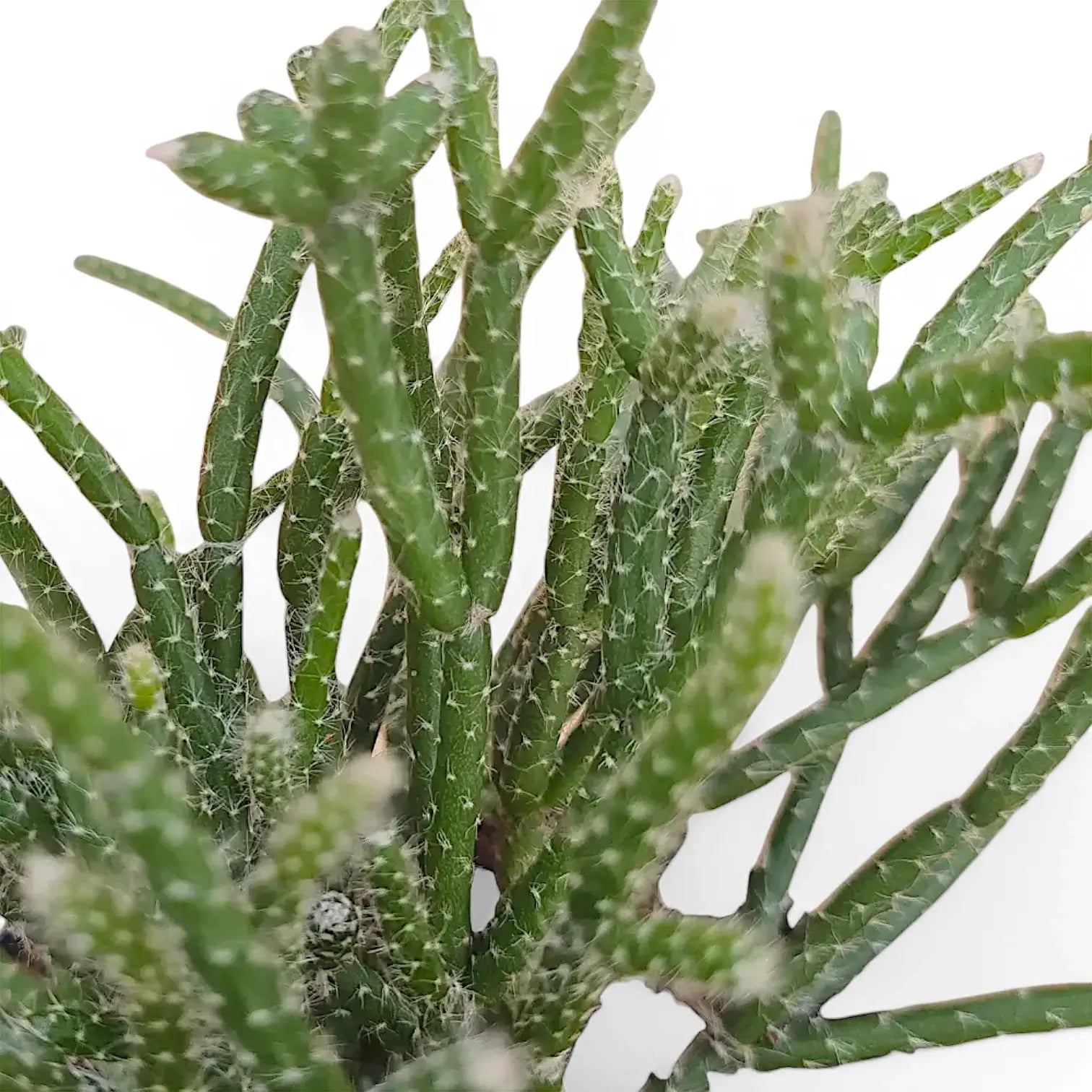
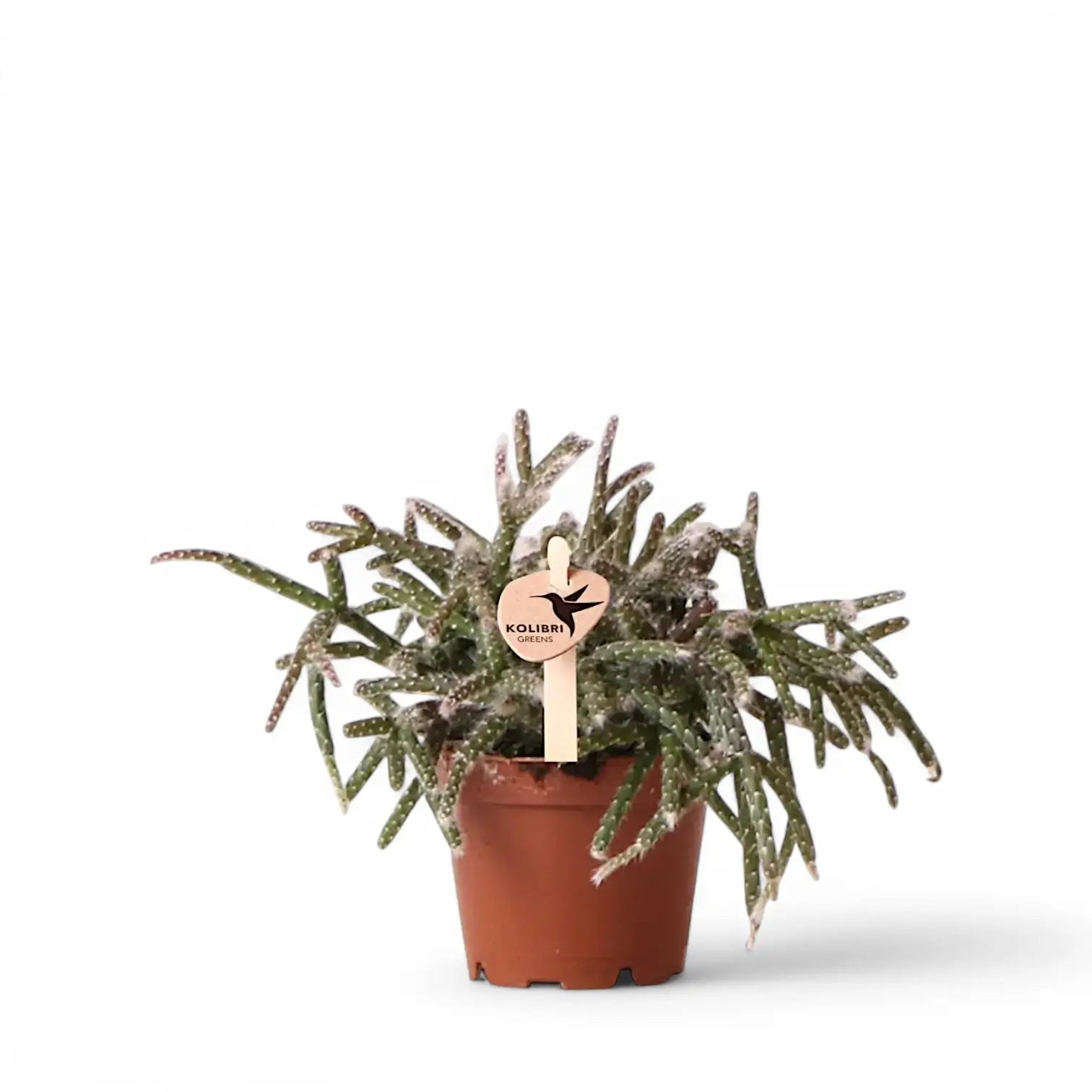
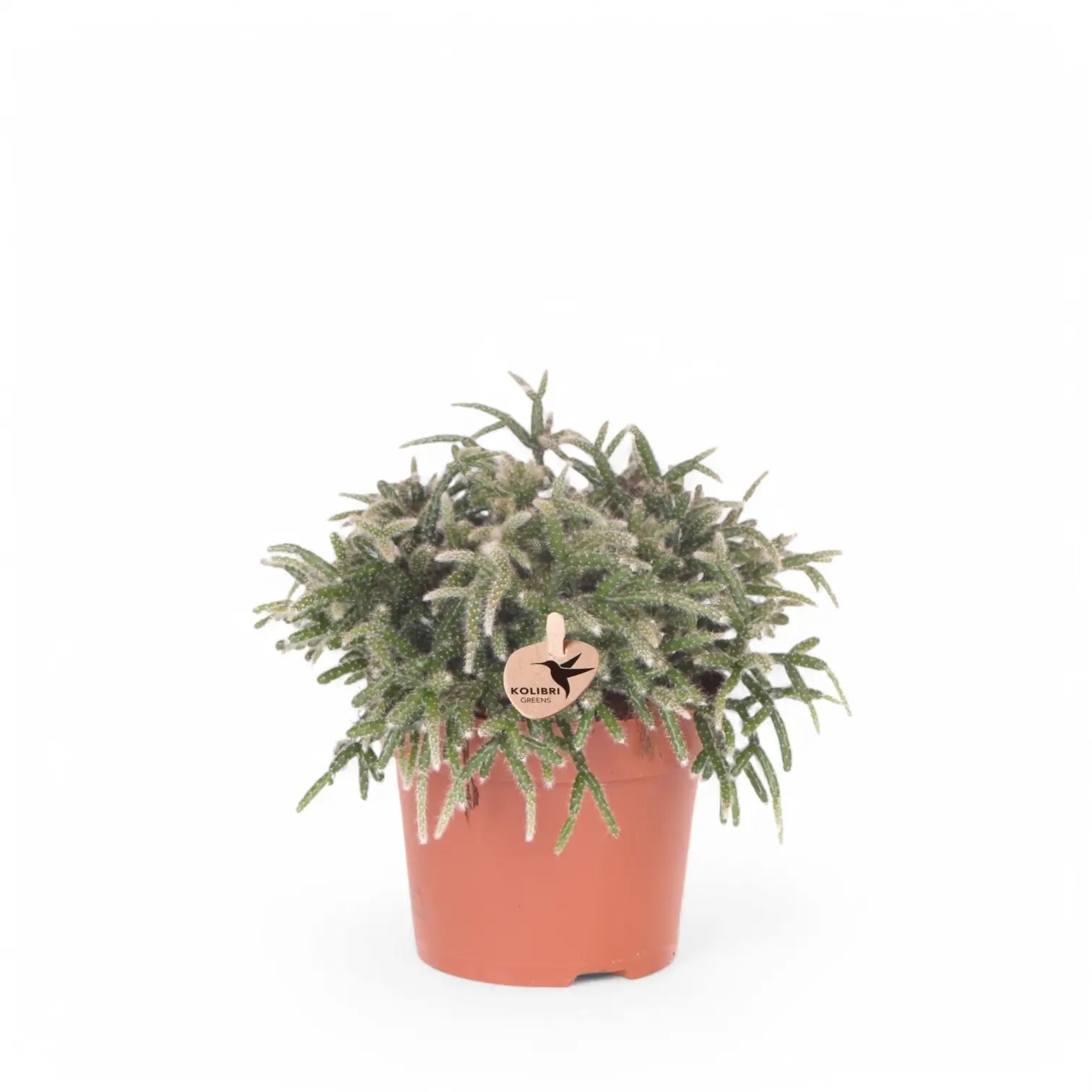
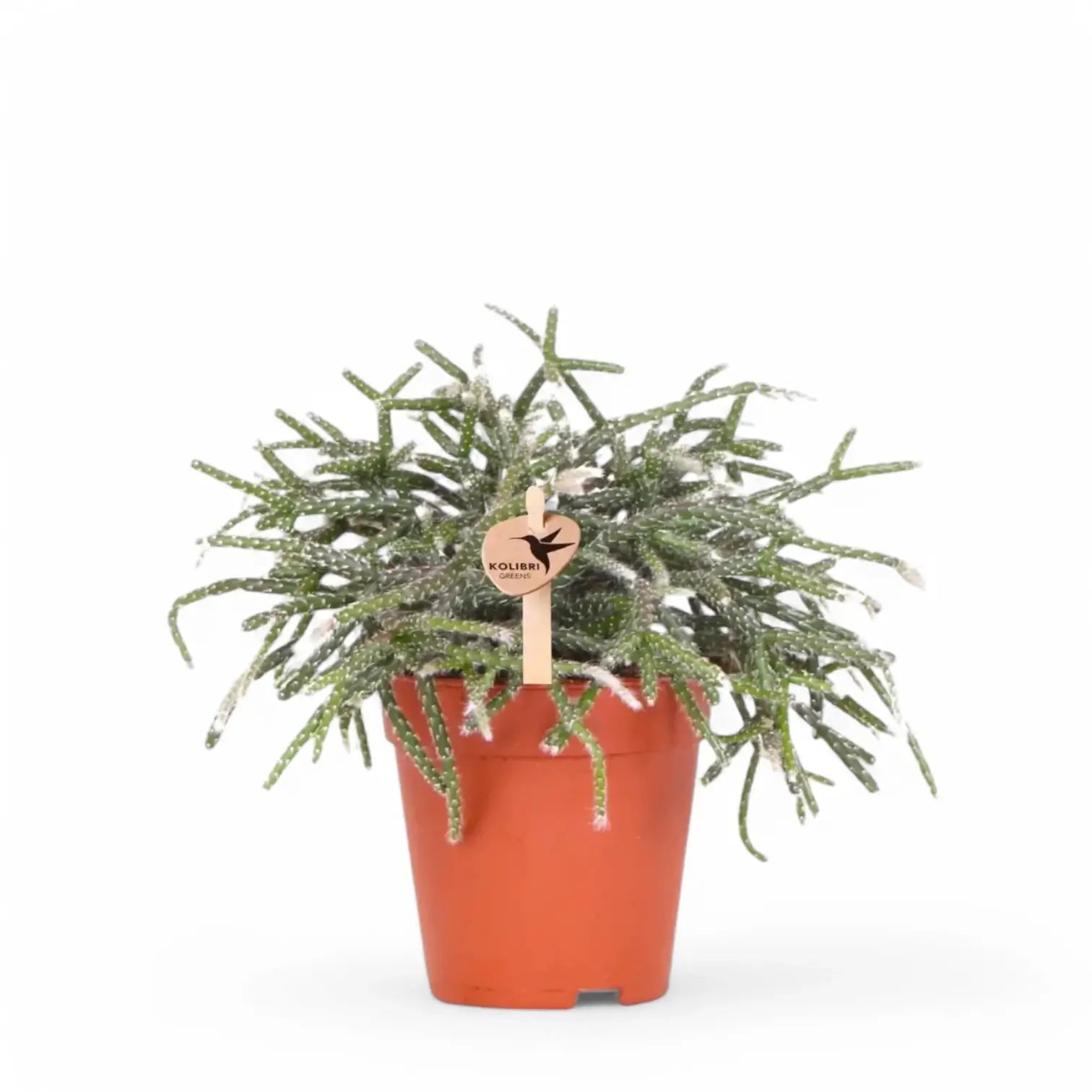
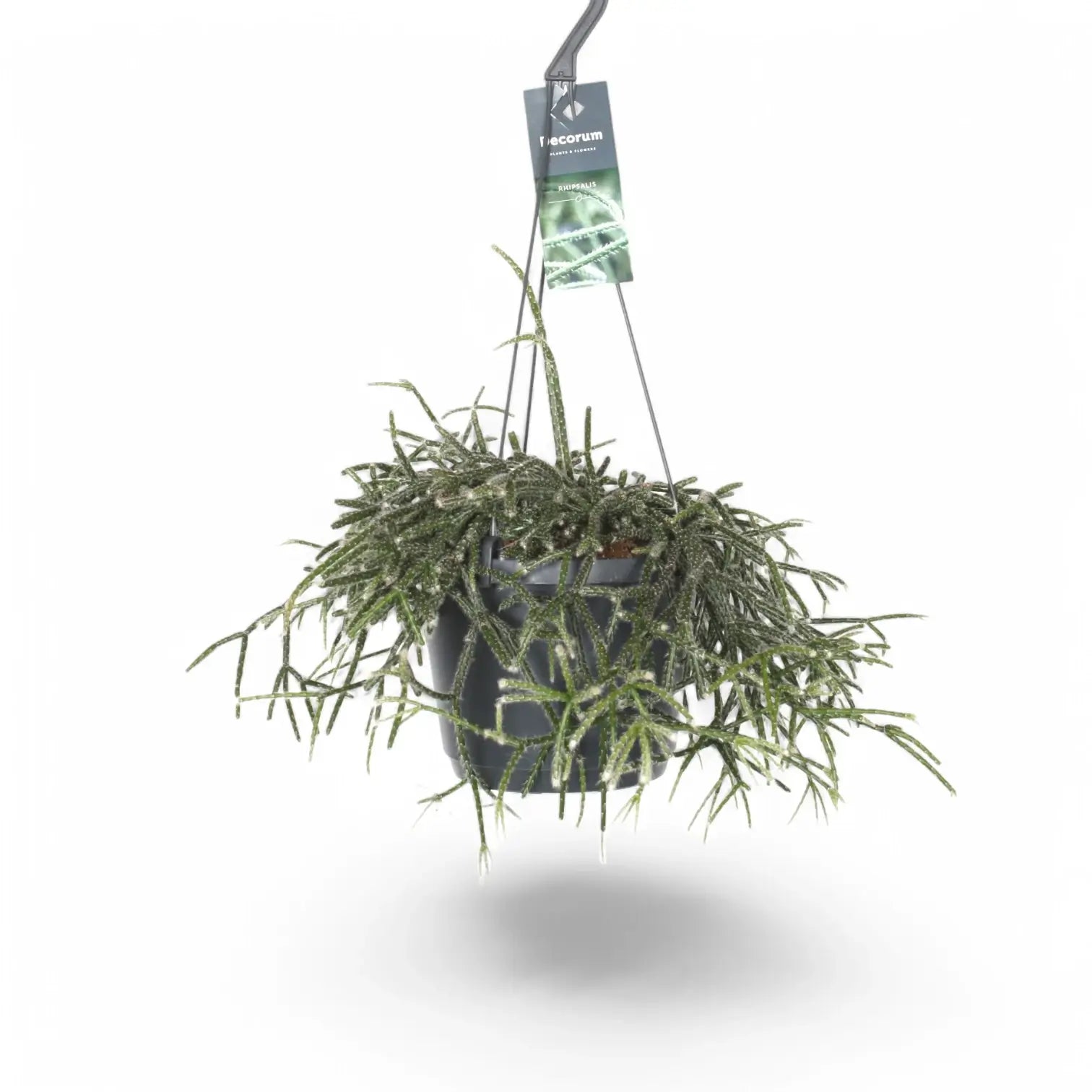
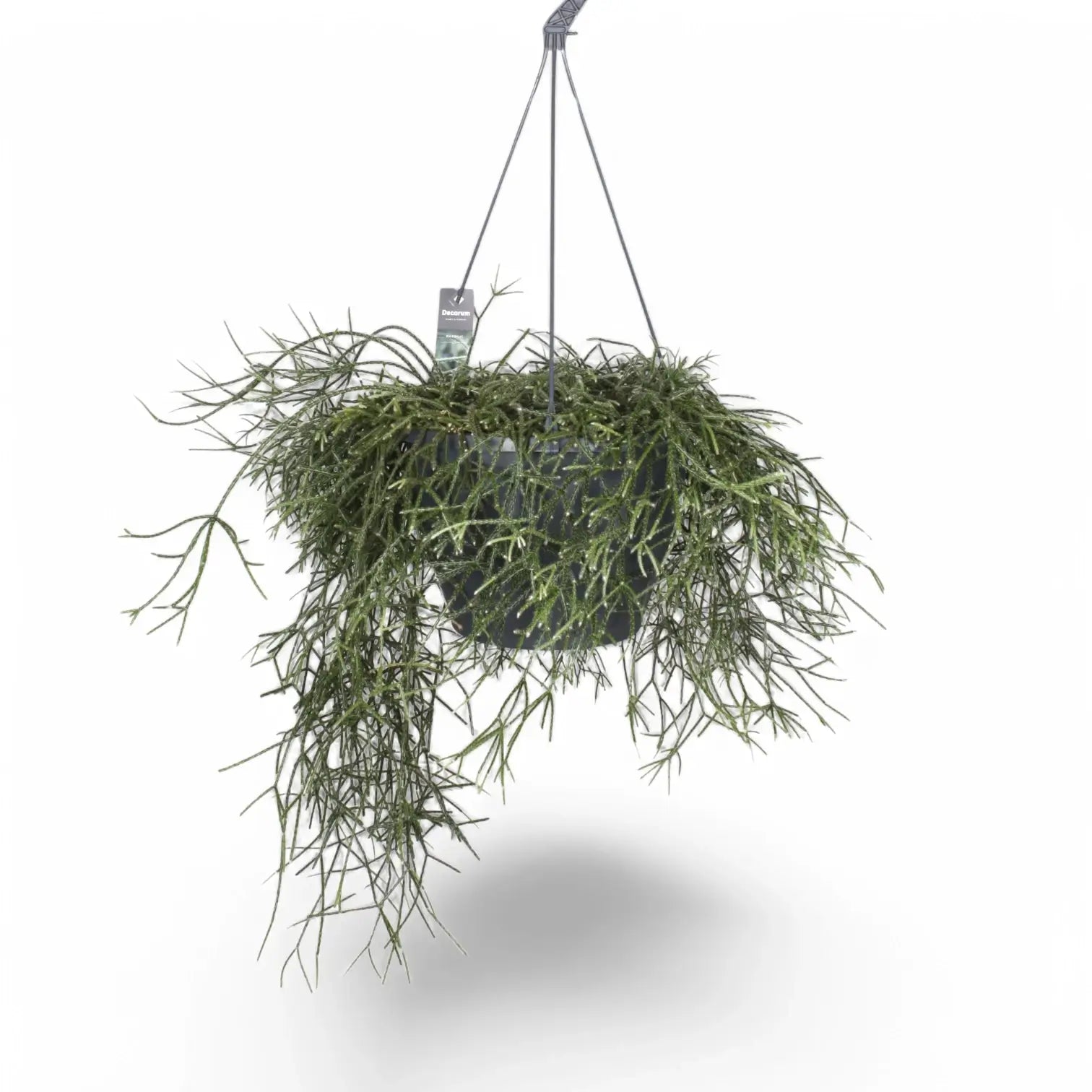
Rhipsalis pilocarpa, commonly known as the hairy-fruited wickerware cactus, is a distinctive epiphytic cactus native to the subtropical and tropical forests of Brazil. Recognized for its slender, cylindrical stems adorned with fine bristles, this species offers a unique aesthetic appeal. Its white, fragrant flowers and subsequent red, berry-like fruits add to its ornamental value, making it a favored choice among indoor plant enthusiasts.
Understanding the natural habitat of Rhipsalis pilocarpa is crucial for successful cultivation. In its native Brazilian forests, it grows epiphytically on trees, thriving in humid, shaded environments. Replicating these conditions indoors – providing indirect light, adequate humidity, and well-draining soil – will promote a healthy, flourishing plant.
The genus Rhipsalis derives from the Greek word for "wickerwork," referencing the plant's interwoven growth habit. The species name pilocarpa combines the Greek words "pilos" (hair) and "karpos" (fruit), highlighting the characteristic bristly fruits of this species.
Rhipsalis pilocarpa is listed as "Vulnerable" on the IUCN Red List, primarily due to habitat loss in its native range. While international trade is not heavily regulated, responsible cultivation and sourcing practices are encouraged to support conservation efforts.
Seeking a unique and low-maintenance addition to your indoor garden? Rhipsalis pilocarpa offers distinctive aesthetics and easy care. Order now to enjoy its cascading stems and charming blooms!
Plant names, growth habits, natural habitats and indoor care guidance are checked against trusted botanical, habitat and horticultural references before publication.View our plant care resources and references.
Sign up for Foliage Factory newsletter for early access to new arrivals and practical care tips that work in real homes.