Light
Bright indirect • approx. 10,000–20,000 lux

VAT included · plus
Your new plant has just travelled a long way and needs a calm start in its new home. For step-by-step unboxing and first-week care, check our after-delivery care guide. For deeper tips on how your plant settles in over the next weeks, read our houseplant acclimatization guide.
Secure shipping, carefully packed orders with safe delivery across the EU, UK and Switzerland.
28-day plant guarantee, if a plant arrives damaged or fails soon after delivery, we help you make it right.
Free returns, simple, cost-free returns according to our policy.
For full details, please see:
Please head to our FAQ Page or Contact us.
Quick Care Guide
Light
Bright indirect • approx. 10,000–20,000 lux
Watering
Water when ~50–70% dry
Substrate
Extra-airy • Fast-draining • Bark-heavy • Chunky
Temperature
Ideal: 16–30 °C • Avoid below: 10 °C
Humidity
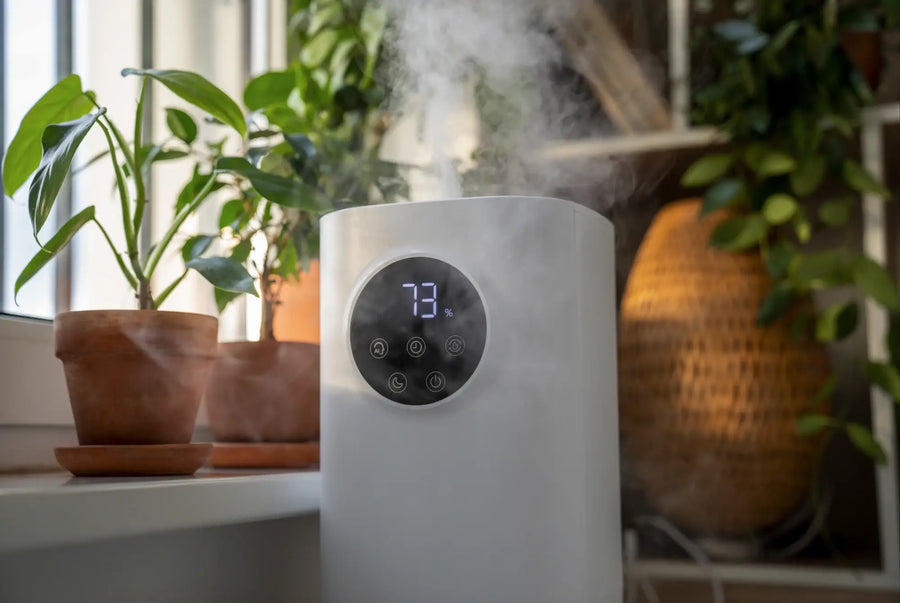
Moist 50–60 %
Growth habit
Epiphytic clumping fern.
Support
not needed
Growth speed
Slow
Max size indoors
Max. height: 90 cm • Max. spread: 80 cm
Toxicity & safety
Non-toxic
Origin & habitat
E. Australia to New Guinea; wet tropical habitat
These care values are practical reference points for indoor growing. Use them as a starting point, then adjust for your room, pot size, substrate, temperature and how quickly the plant dries.
For more context, read the full product description or visit our Plant Care Guides.
Move outside once nights stay above
12°C
Bring under cover below
10°C
Best outdoors in
Warm summer patio, Sheltered balcony
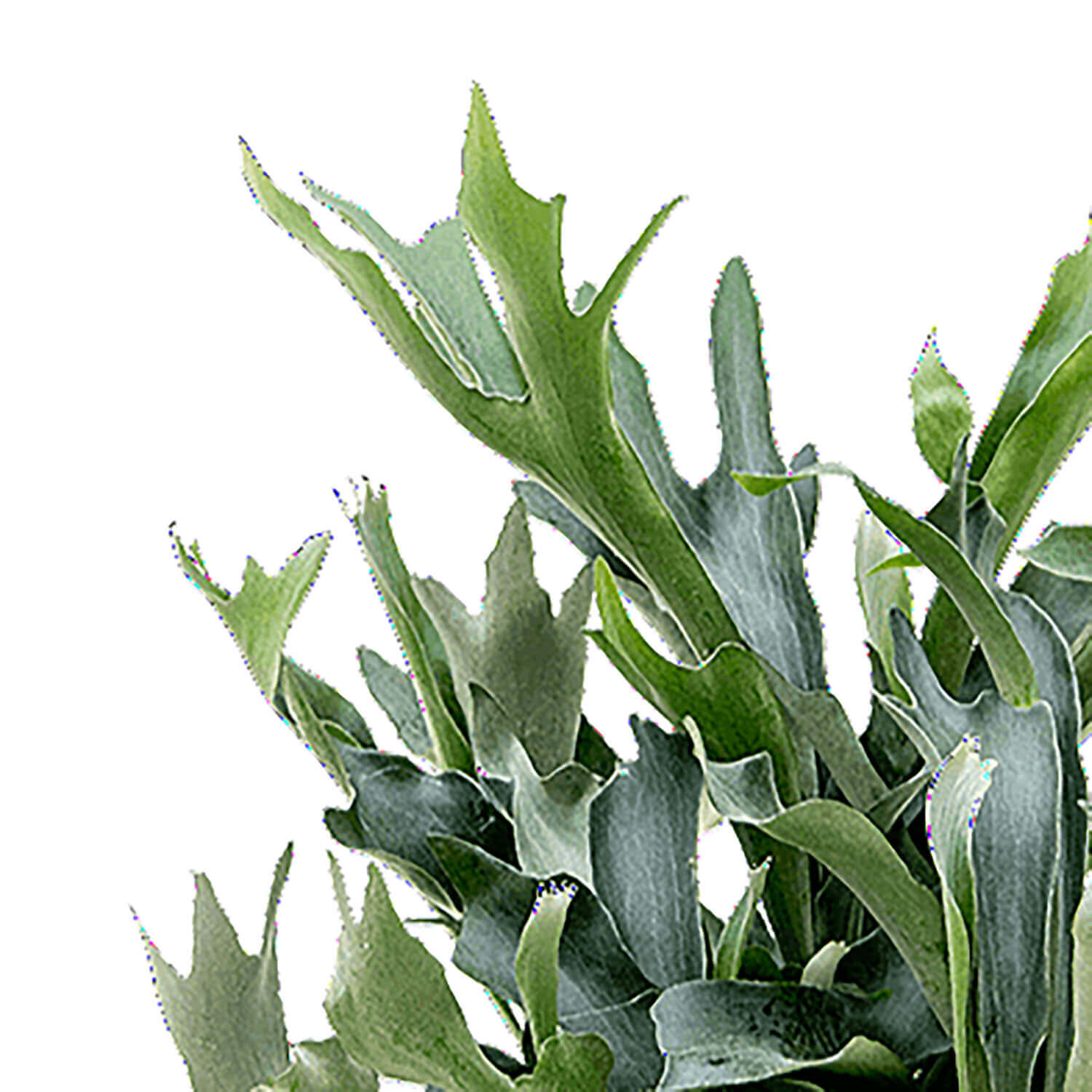
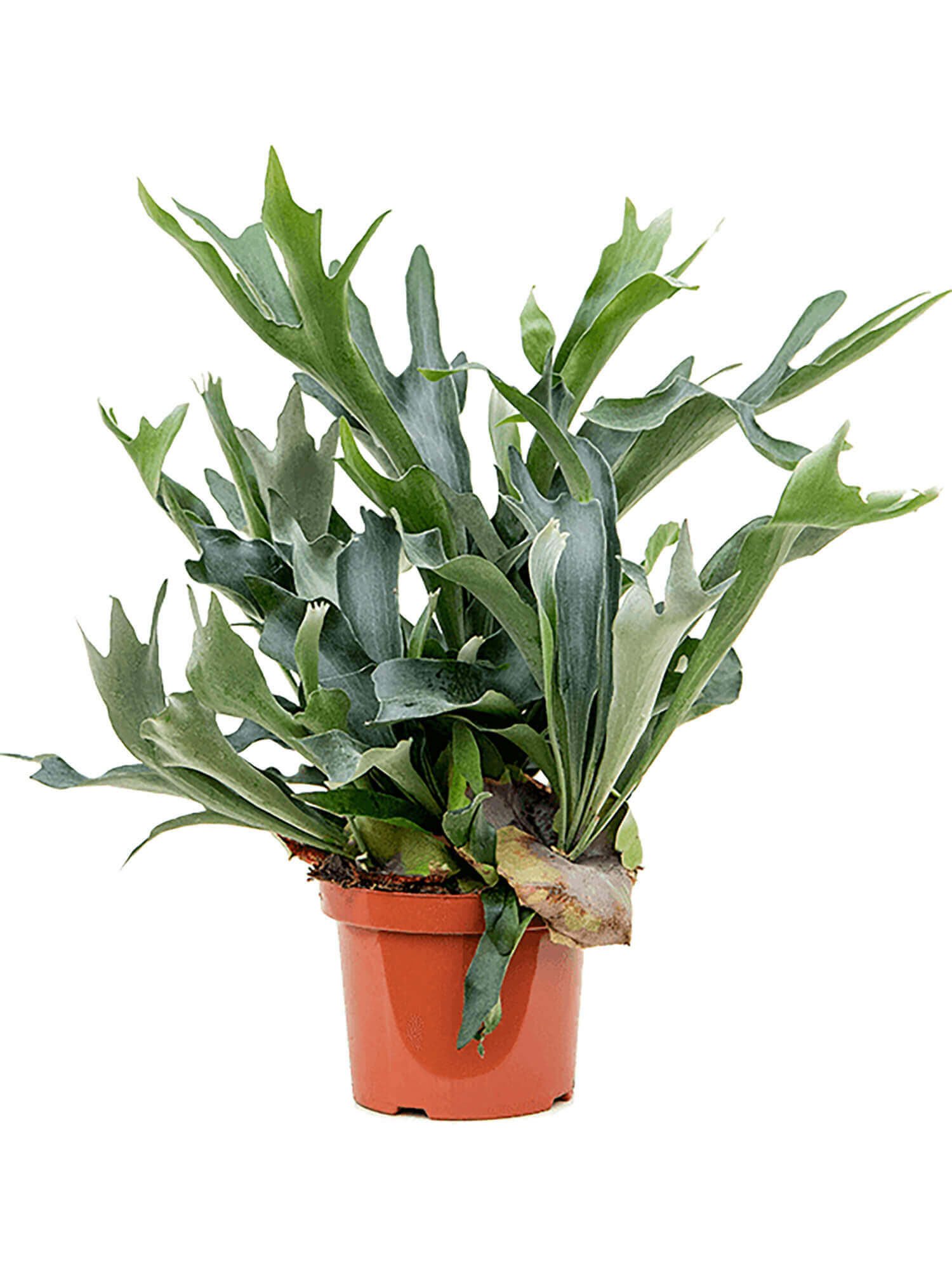
Platycerium bifurcatum, commonly known as the Staghorn Fern, is a uniquely structured epiphytic fern with broad, antler-like fronds and shield-shaped basal leaves. The grey-green, bifurcated foliage creates an organic, sculptural silhouette – ideal for mounting or hanging displays. Its growth form is unlike typical ferns: fronds fork outward like antlers, while basal leaves press against the mounting surface and help anchor the plant. A slow grower with a long lifespan, this species thrives in bright, indirect light and steady humidity, offering a bold botanical focal point for walls or airy corners.
Platycerium bifurcatum is native to rainforests in eastern Australia, New Guinea, and Java, where it grows on trees and rocks in bright, filtered light and high humidity. It thrives in warm, stable temperatures between 18 – 28 °C and depends on airflow and natural moisture to regulate hydration. As a true epiphyte, it absorbs nutrients and water through its fronds rather than from soil. Originally described by Cavanilles and later reclassified by Carl Frederik Albert Christensen, this species is the most commonly cultivated Platycerium due to its adaptability and resilience.
Platycerium bifurcatum is non-toxic and considered safe for pets and people.
This is a long-lived, architectural species that rewards consistent care. Unlike typical houseplants, Platycerium bifurcatum thrives when mounted and allowed to breathe. Shield fronds play a protective role – never remove them even when brown. Recreate its natural tree-dwelling environment by providing vertical space, bright but indirect light, and consistent moisture cycles. With time, it develops a sculptural presence ideal for minimal or jungle-style interiors alike.
The genus name Platycerium comes from Greek “platys” (broad) and “keras” (horn), referring to the wide, horn-like fertile fronds. The species epithet bifurcatum means “twice-forked,” describing the split in the frond lobes. It was first described by Antonio José Cavanilles and reclassified by Carl Christensen.
With its sculptural antler-like fronds and easy epiphytic care, Platycerium bifurcatum is a showpiece for any indoor plant setup. Order now and mount a living work of botanical art in your home.
Plant names, growth habits, natural habitats and indoor care guidance are checked against trusted botanical, habitat and horticultural references before publication.View our plant care resources and references.
Sign up for Foliage Factory newsletter for early access to new arrivals and practical care tips that work in real homes.