Light
Bright indirect • approx. 10,000–20,000 lux

VAT included · plus
Your new plant has just travelled a long way and needs a calm start in its new home. For step-by-step unboxing and first-week care, check our after-delivery care guide. For deeper tips on how your plant settles in over the next weeks, read our houseplant acclimatization guide.
Secure shipping, carefully packed orders with safe delivery across the EU, UK and Switzerland.
28-day plant guarantee, if a plant arrives damaged or fails soon after delivery, we help you make it right.
Free returns, simple, cost-free returns according to our policy.
For full details, please see:
Please head to our FAQ Page or Contact us.
Quick Care Guide
Light
Bright indirect • approx. 10,000–20,000 lux
Watering
Water when ~30–50% dry
Substrate
Airy + fast-draining • Light moisture buffer • Bark-based • Medium-chunky
Temperature
Ideal: 18–29 °C • Avoid below: 15 °C
Humidity
Moist 50–60 %
Growth habit
Climbing hemiepiphytic herbaceous perennial.
Support
recommended
Growth speed
Slow
Max size indoors
Max. height with support: 250 cm • Max. spread: 100 cm
Toxicity & safety
Toxic
Origin & habitat
Horticultural Philodendron cultivar
Outdoor growing
Outside from 15 °C · sheltered spot
These care values are quick reference points for indoor growing. Use them as a guide, then adjust for pot size, substrate, temperature and how quickly the substrate dries.
For more detail, read the full product description or visit our Plant Care Guides.
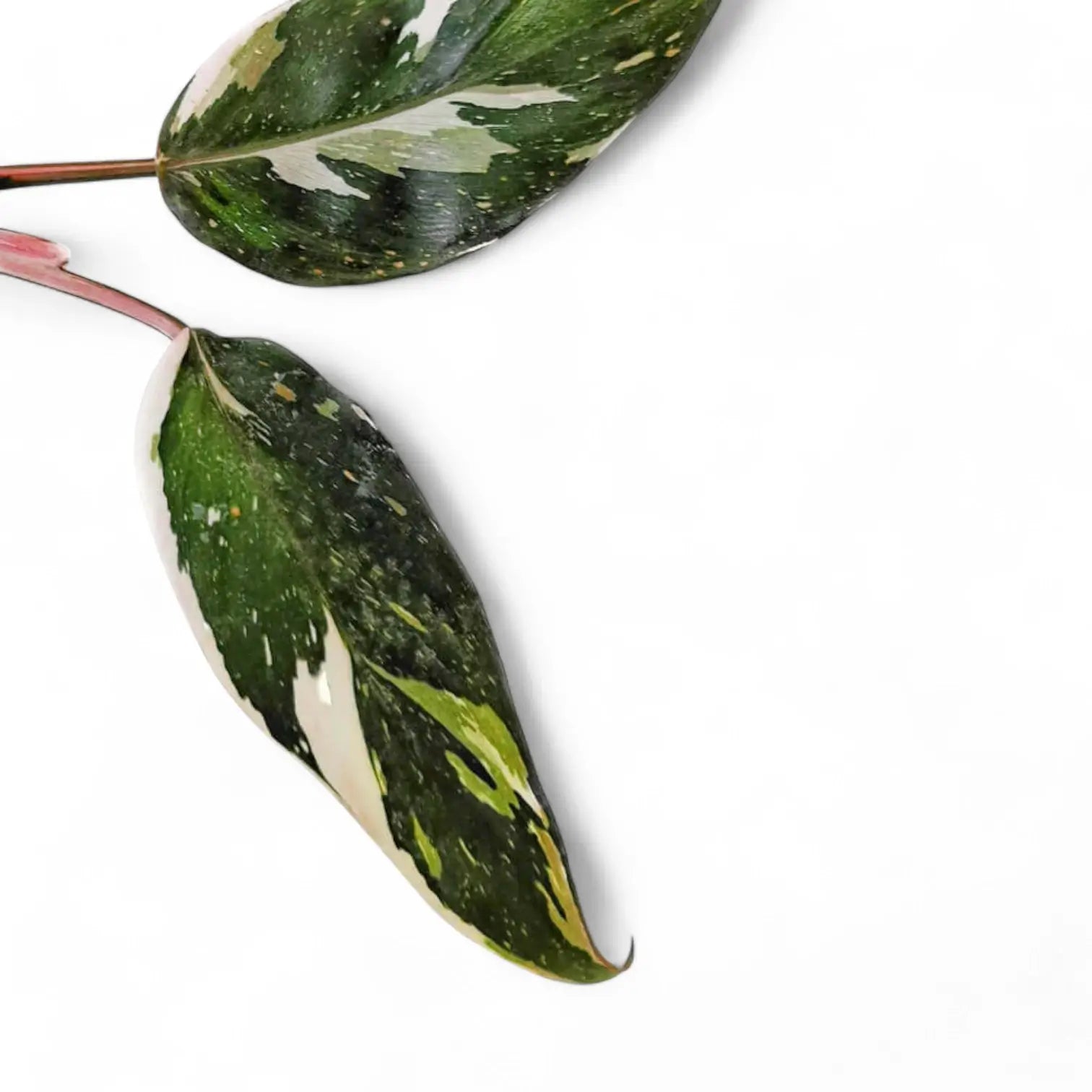
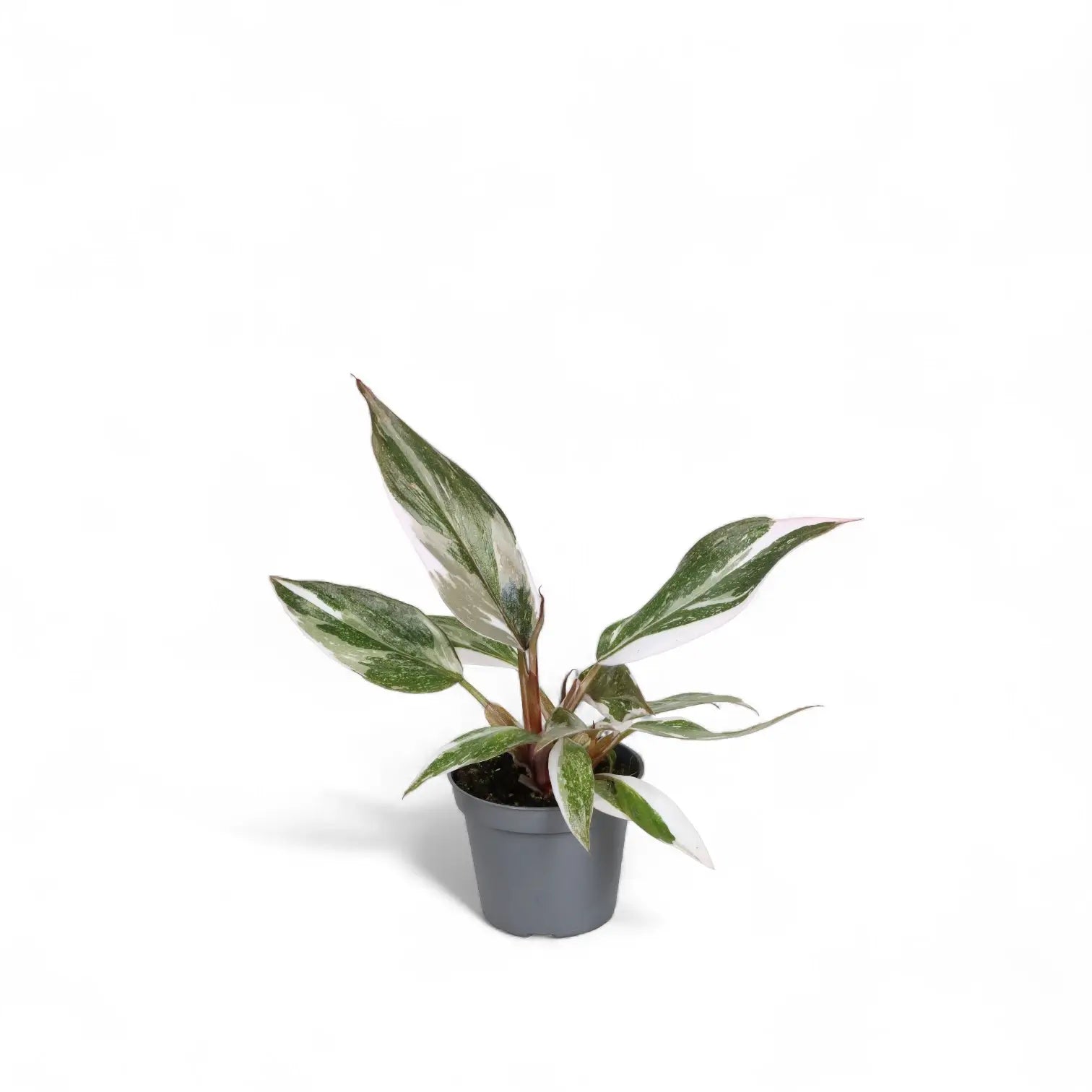
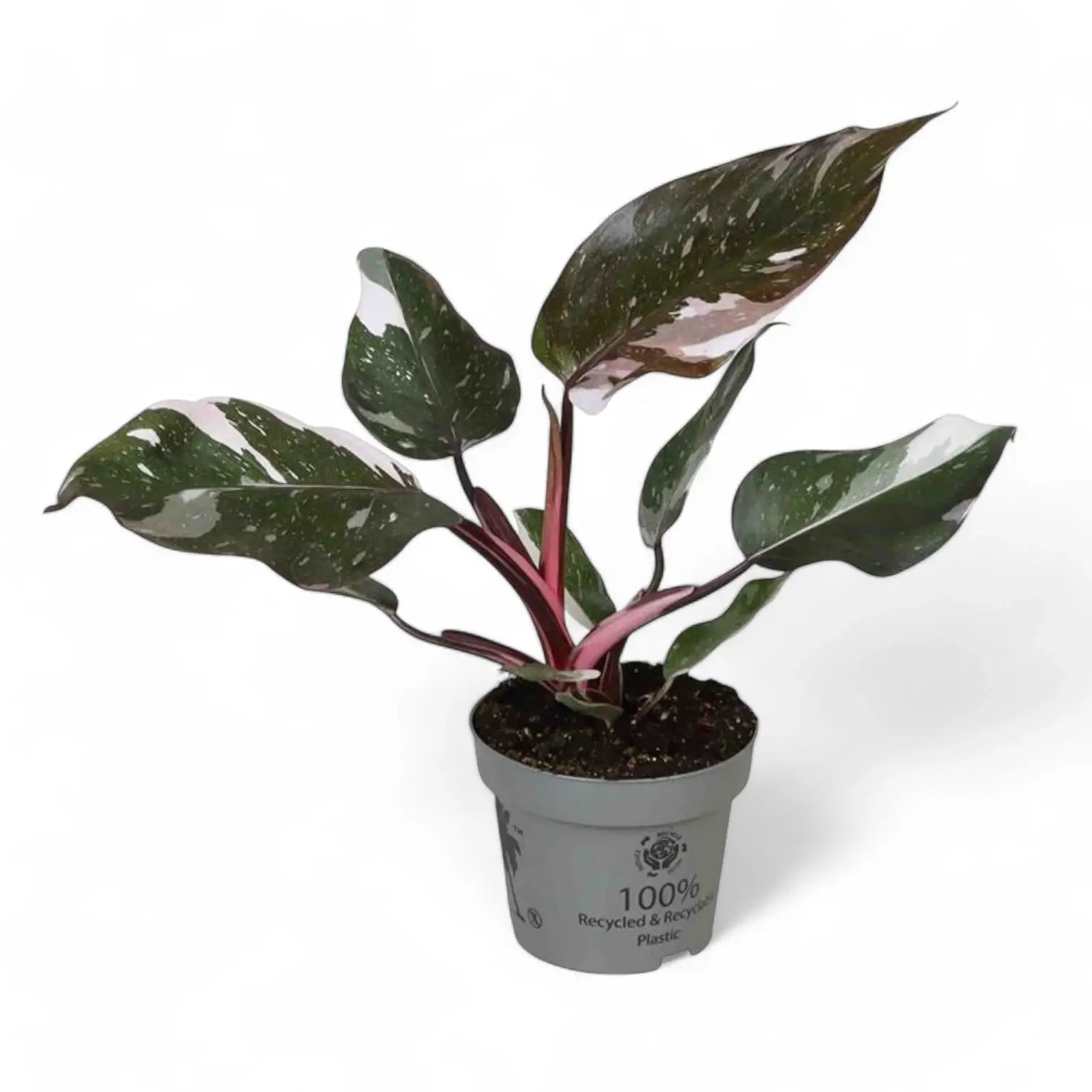
Philodendron 'Red Anderson' Variegata is a variegated climbing Philodendron with red-toned new growth, burgundy stems, and glossy leaves marked in green, cream, white, and red-pink. New leaves can show different mixes of marbling, streaks, pale sectors, and green tissue.
Young foliage often carries the warmest tones before hardening into deeper green with cream-white variegation. The stems and petioles keep a darker red tone between new leaves. As the stem lengthens, a pole, plank, hardwood stake, or coco support gives aerial roots a surface for attachment.
Each node can hold a leaf, an aerial root, and a future growth point. Keep nodes firm and exposed when tying the plant in place, and use stem sections with viable nodes for propagation.
Variegation can shift between leaves as the plant grows. Some leaves may show stronger pale areas, others may carry more green, and new growth can open with red-pink tones that soften as the blade matures. Fully green growth can be pruned back to a healthy variegated node if the plant starts losing its patterned character.
As the plant develops, wider leaf spacing or smaller new blades can point to low light, root stress, or irregular watering. Pale leaf sections are more sensitive to harsh sun, so bright indirect light is safer than direct midday exposure.
The strongest red and pink tones usually appear on new leaves. As each blade hardens, the warmer colour can soften while green, cream, and white variegation becomes clearer. Petioles and stems keep the redder tone for longer, so the red stem colour remains visible as older leaves mature.
Avoid bending mature stem sections sharply when tying them to support, and place ties around the stem while leaving individual petioles free. If the plant becomes top-heavy, adjust the support and pot stability before the stem twists or pulls against the root ball.
Keep Philodendron 'Red Anderson' Variegata away from pets and children. Its tissue contains insoluble calcium oxalate crystals, which can irritate the mouth, lips, tongue, throat, skin, and digestive tract if chewed, ingested, or handled by sensitive skin. Wear gloves when pruning if you react to aroid sap, and wash hands after taking cuttings.
Philodendron belongs to the Araceae family and includes evergreen aroids with climbing, creeping, rhizomatous, tree-like, or rosette-forming growth depending on the species. The genus name comes from Greek roots often translated as “tree-loving”, reflecting the way many Philodendron grow with or against trees in tropical habitats.
Philodendron 'Red Anderson' Variegata has burgundy stems, red-pink emerging leaves, and glossy variegated blades that mature with green, cream, and white patterning.
Its colour changes are most visible in active new growth, while the climbing stem gives the plant a clear upward structure as it matures.
Plant names, growth habits, natural habitats and indoor care guidance are checked against trusted botanical, habitat and horticultural references before publication.View our plant care resources and references.
Sign up for Foliage Factory newsletter for early access to new arrivals and practical care tips that work in real homes.