
Light
Full sun / direct • approx. 40,000–80,000 lux

Golden Ball Cactus
VAT included · plus
Your new plant has just travelled a long way and needs a calm start in its new home. For step-by-step unboxing and first-week care, check our after-delivery care guide. For deeper tips on how your plant settles in over the next weeks, read our houseplant acclimatization guide.
Secure shipping, carefully packed orders with safe delivery across the EU, UK and Switzerland.
28-day plant guarantee, if a plant arrives damaged or fails soon after delivery, we help you make it right.
Free returns, simple, cost-free returns according to our policy.
For full details, please see:
Please head to our FAQ Page or Contact us.
Parodia leninghausii
Light
Full sun / direct • approx. 40,000–80,000 lux
Watering
Water when ~90–100% dry
Substrate
Gritty • Ultra fast-draining • Mineral-heavy • Fine-medium
Temperature
Ideal: 18–30 °C • Avoid below: 8 °C
Humidity
Normal 40–50 %
Growth habit
Globular succulent cactus.
Support
not needed
Growth speed
Average
Max size indoors
Max. height: 60 cm • Max. spread: 40 cm
Toxicity & safety
Non-toxic; physical injury risk
Origin & habitat
Native to Brazil (Rio Grande do Sul)
Outdoor growing
Outside from 10 °C · sheltered spot
These care values are quick reference points for indoor growing. Use them as a guide, then adjust for pot size, substrate, temperature and how quickly the substrate dries.
For more detail, read the full product description or visit our Plant Care Guides.
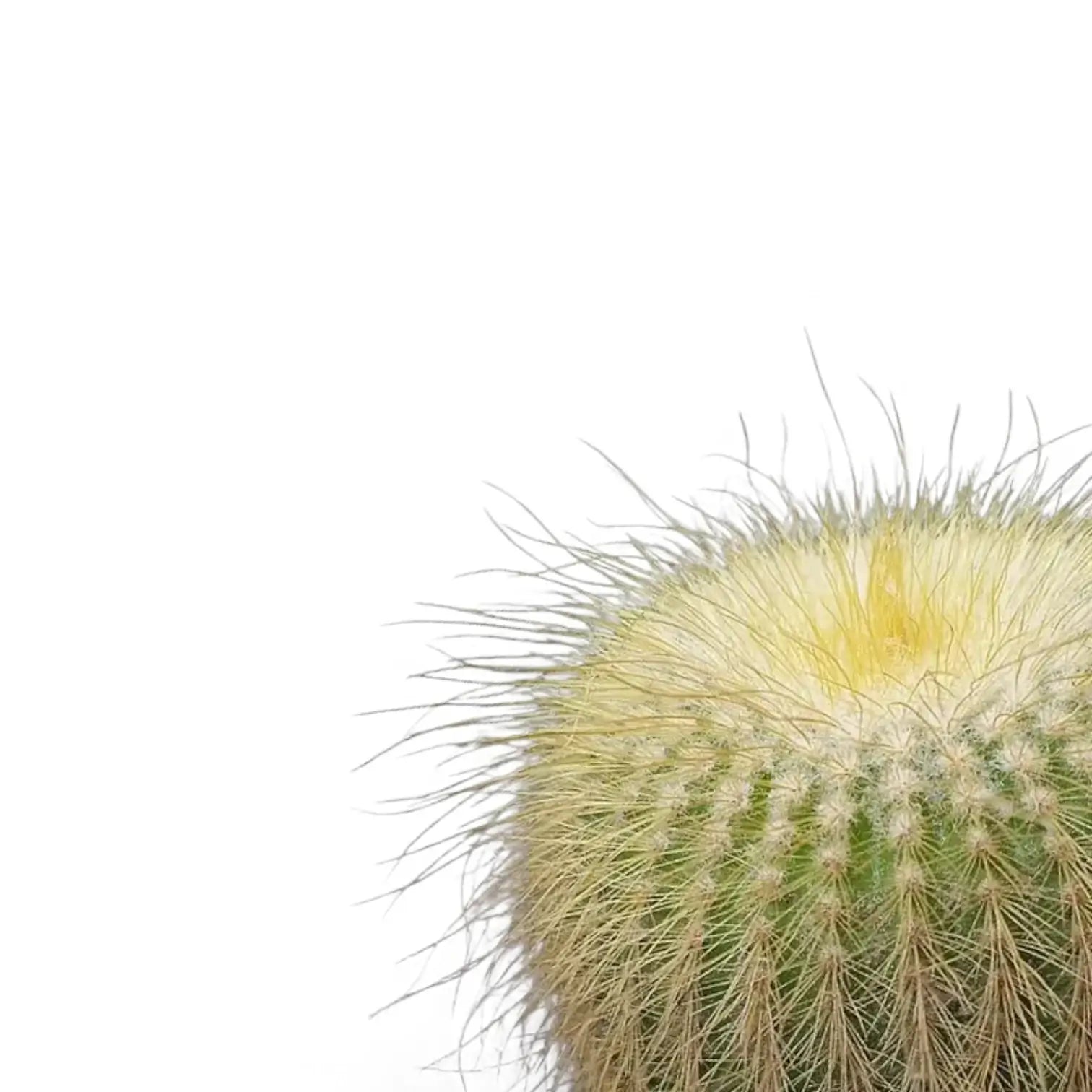
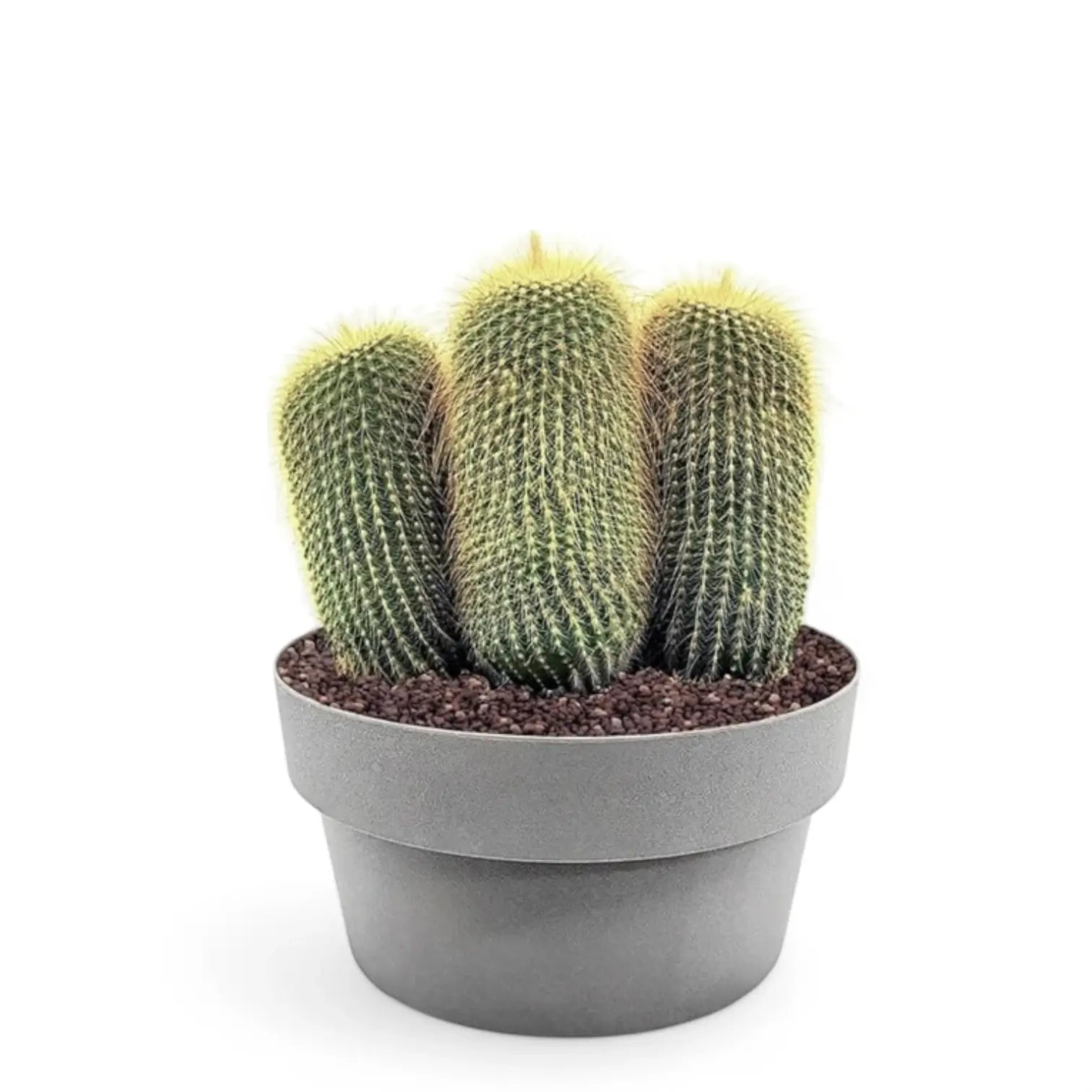
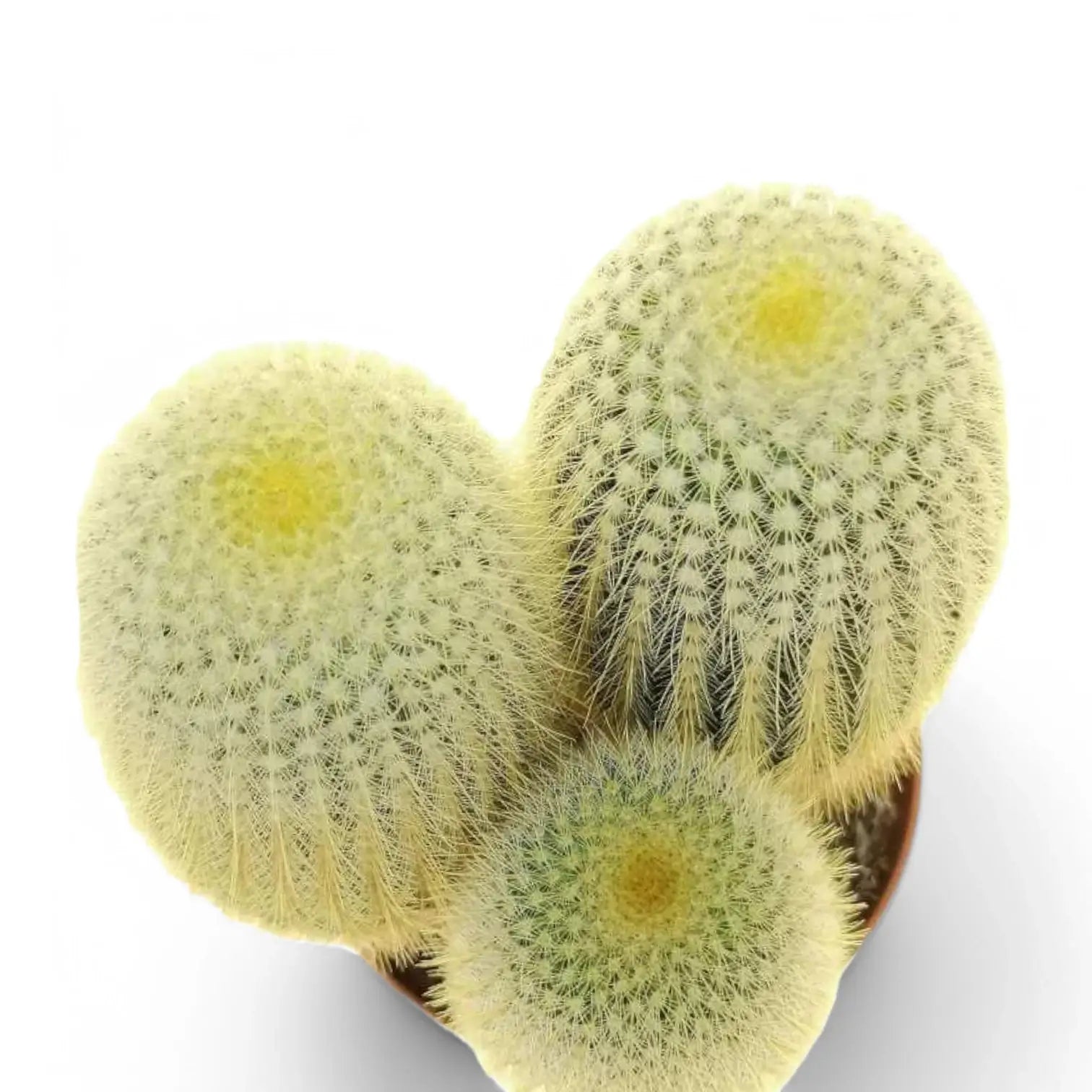
Parodia leninghausii (K.Schum.) F.H.Brandt, still often found under its older synonyms Notocactus leninghausii and Eriocactus leninghausii, is one of the most admired cacti for its elegant golden spines and reliable summer flowers. Its silky yellow blossoms appear only once plants are mature, usually after around five years of growth, but the display is worth the wait. In addition to its standard form, collectors sometimes encounter cristate or monstrous variations, which add even more curiosity value.
Parodia leninghausii is native to southern Brazil, particularly Rio Grande do Sul, where it grows on rocky slopes and grasslands at higher altitudes. In its natural setting, it experiences strong light, alternating wet and dry periods, and cooler nights–conditions that inform its cultivation in collections.
This species is sometimes called the “Golden Ball Cactus” for its glowing spines that catch the light. While initially solitary, older specimens branch and form impressive clusters that can fill wide pots over time. With patience, mature plants reward growers with a crown of yellow blooms each summer.
The genus name Parodia honors Lorenzo Raimundo Parodi, an Argentinian botanist. The species epithet leninghausii commemorates Wilhelm Leninghaus, a German plant collector active in Brazil, who first introduced this cactus to European horticulture.
With its golden spines, columnar form, and brilliant summer blooms, Parodia leninghausii is a showpiece cactus that only becomes more impressive with age. Whether grown in its classic form or as a cristate curiosity, it’s a rewarding species for both beginners and seasoned collectors.
Plant names, growth habits, natural habitats and indoor care guidance are checked against trusted botanical, habitat and horticultural references before publication.View our plant care resources and references.
Choose options


Sign up for Foliage Factory newsletter for early access to new arrivals and practical care tips that work in real homes.

%20F.H.Brandt,%20still%20often%20found%20under%20its%20older%20synonyms%20Notocactus%20leninghausii%20and%20Eriocactus%20leninghausii,%20is%20one%20of%20the%20mo...)