Light
Bright indirect • approx. 10,000–20,000 lux

VAT included · plus
Your new plant has just travelled a long way and needs a calm start in its new home. For step-by-step unboxing and first-week care, check our after-delivery care guide. For deeper tips on how your plant settles in over the next weeks, read our houseplant acclimatization guide.
Secure shipping, carefully packed orders with safe delivery across the EU, UK and Switzerland.
28-day plant guarantee, if a plant arrives damaged or fails soon after delivery, we help you make it right.
Free returns, simple, cost-free returns according to our policy.
For full details, please see:
Please head to our FAQ Page or Contact us.
Quick Care Guide
Light
Bright indirect • approx. 10,000–20,000 lux
Watering
Water when ~60–80% dry
Substrate
Airy + fast-draining • Light moisture buffer • Bark-based • Medium-chunky
Temperature
Ideal: 16–24 °C • Avoid below: 10 °C
Humidity
Moist 50–60 %
Growth habit
Upright succulent epiphytic subshrub.
Support
recommended
Growth speed
Average
Max size indoors
Max. trail length: 30 cm • Max. spread: 30 cm
Toxicity & safety
Non-toxic
Origin & habitat
Cultivar of Hoya pachyclada; species native to Indo-China
Outdoor growing
Outside from 15 °C · sheltered from wind and rain
These care values are quick reference points for indoor growing. Use them as a guide, then adjust for pot size, substrate, temperature and how quickly the substrate dries.
For more detail, read the full product description or visit our Plant Care Guides.
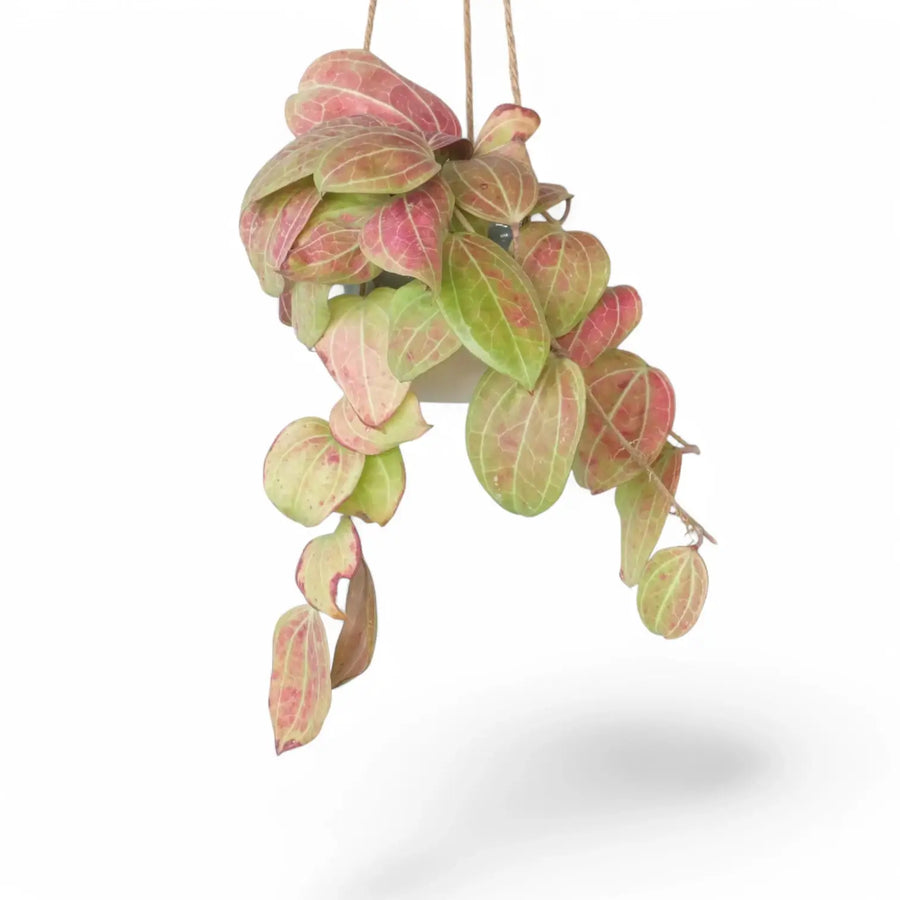
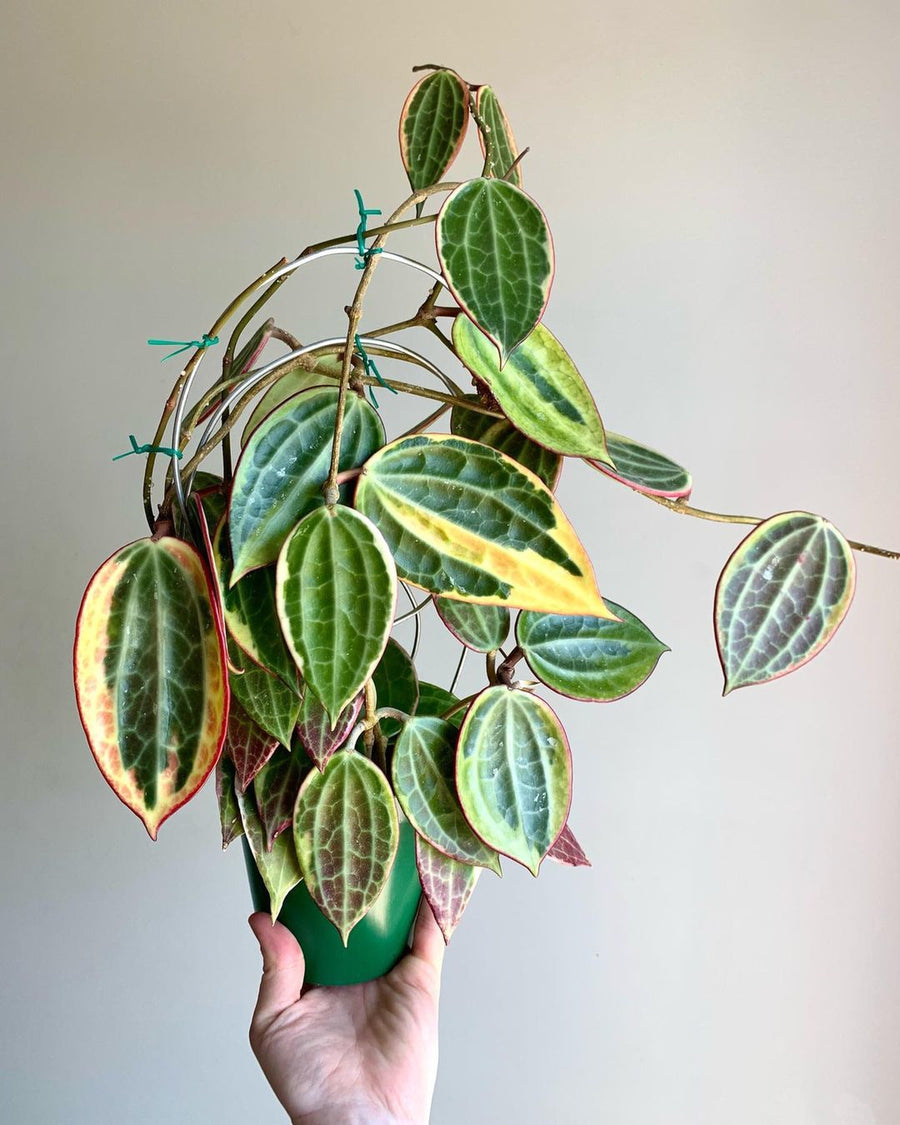
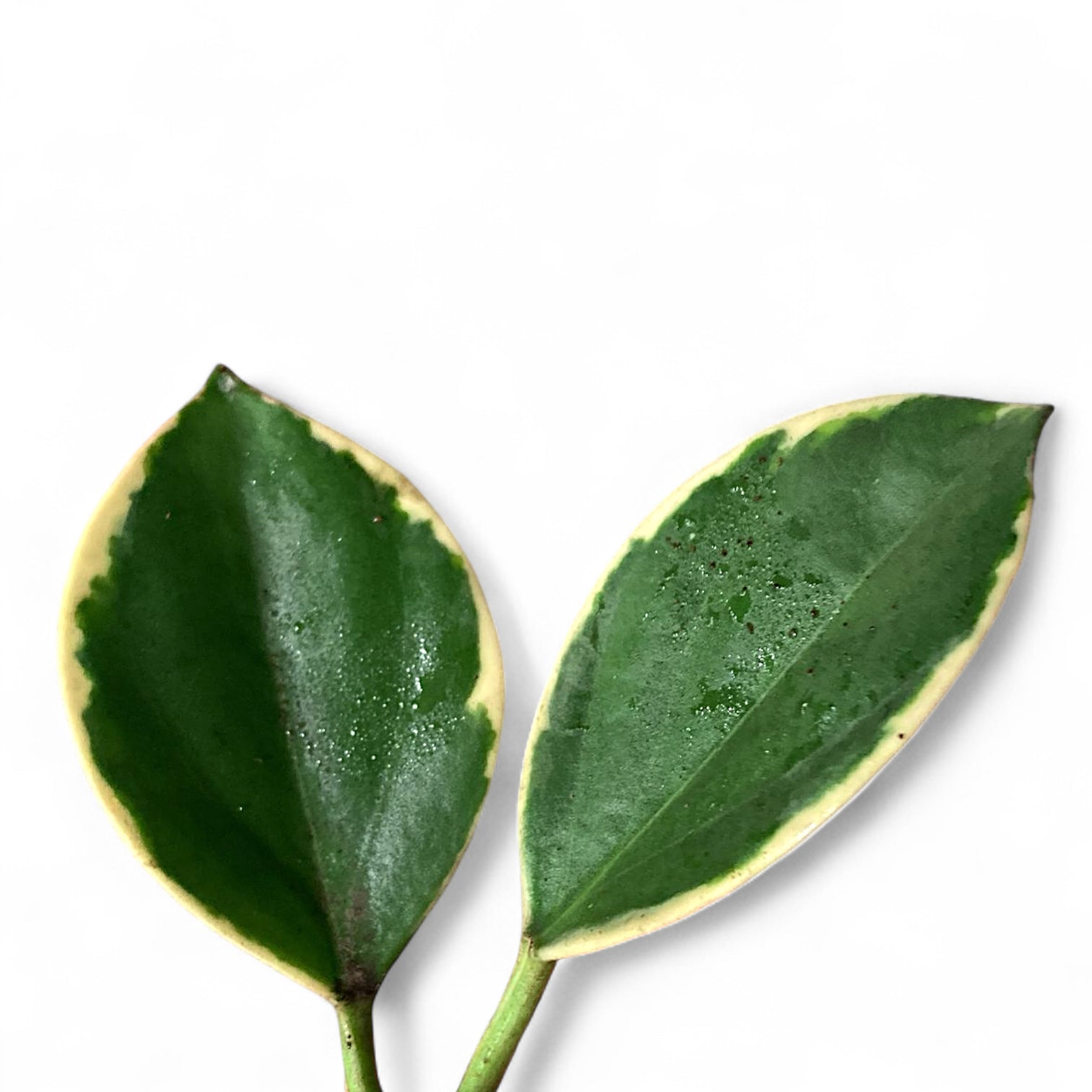
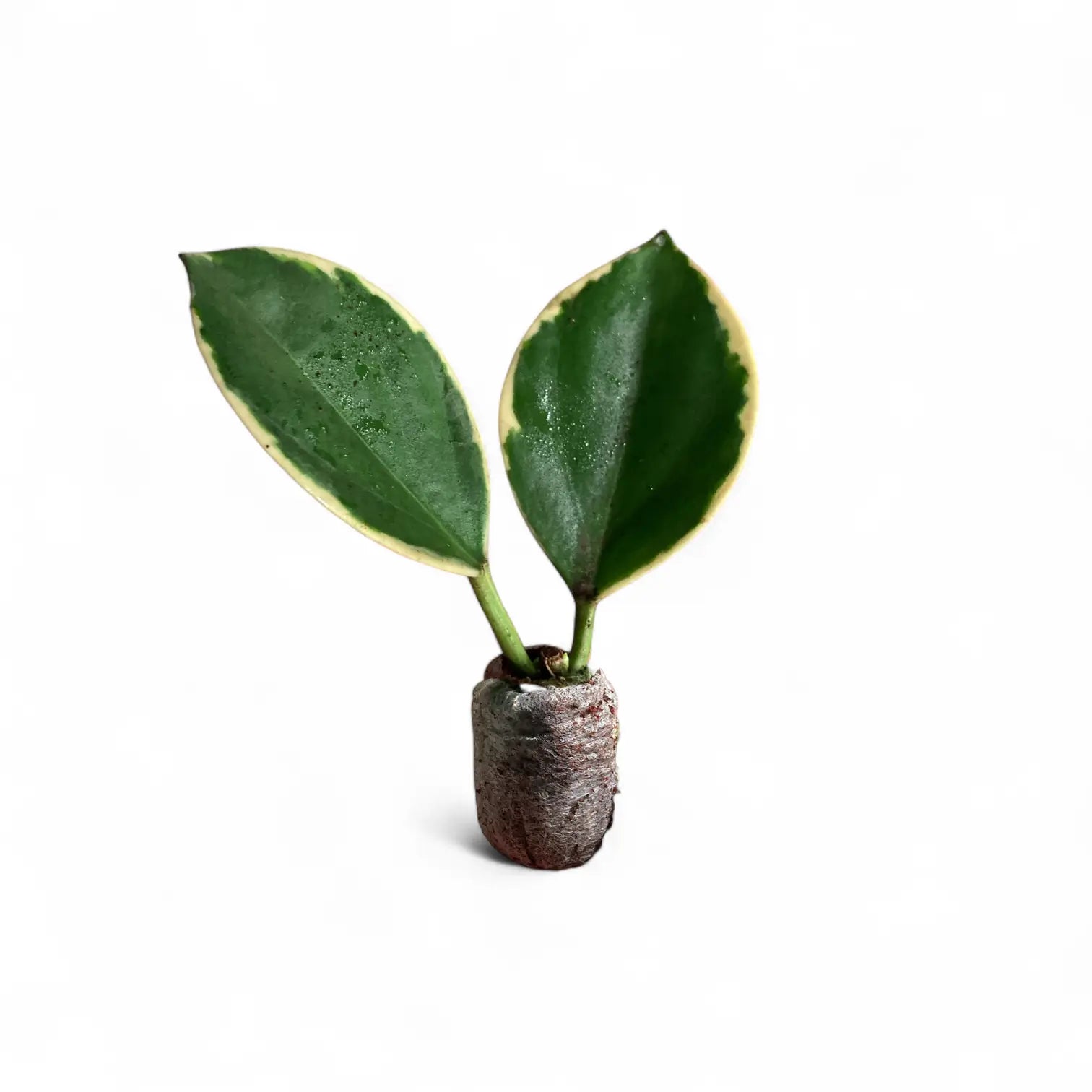
Hoya pachyclada ‘New Moon’ is a rare variegated cultivar admired for its thick, semi-succulent leaves edged in creamy white and sometimes kissed with a soft pink blush under strong light. Compact, slow-growing, and distinctly sculptural, it brings an elegant yet resilient presence to any Hoya collection. It is a plant that rewards patience with quiet, refined beauty rather than flashy speed.
This cultivar is easily recognised by its dense, round to oval leaves with a leathery texture and subtle sheen. The creamy margins appear like a pale halo around each leaf – a look that inspired the name ‘New Moon’. Under bright, indirect light the edges can turn blush-pink, creating a delicate gradient that collectors value highly.
The plant stays naturally compact, forming tidy rosettes or short, firm vines that rarely become unruly. Hoya pachyclada ‘New Moon’ is ideal for smaller spaces or growers who prefer well-behaved foliage displays.
The parent species Hoya pachyclada Kerr was first described in 1939 in Bull. Misc. Inform. Kew 1939: 462 from specimens native to Thailand and neighbouring regions. In nature it grows epiphytically on tree trunks and branches, storing moisture in thick leaves to handle short dry spells.
In recent years, the cultivar ‘New Moon’ has sometimes been listed as Hoya subquintuplinervis ‘New Moon’, as some taxonomists treat H. pachyclada as a synonym or variant. In trade, both names refer to the same variegated form – a semi-succulent Hoya with creamy margins and slow, compact growth. For shop accuracy, it is best to note the synonymy rather than presenting one name as definitively correct.
In its native habitat, Hoya pachyclada grows in bright, filtered light within warm, humid forests. Thick leaves and robust stems act as water reservoirs, allowing it to tolerate occasional dryness better than many thinner-leaf Hoyas.
Indoors, Hoya pachyclada ‘New Moon’ behaves similarly: adaptable in bright rooms, happy in airy mixes or semi-hydro systems, and generally unfussy as long as roots do not sit in stagnant moisture.
Bright, indirect light maintains healthy growth and clear variegation. A few hours of gentle morning sun are fine, but harsh midday rays can scorch the pale margins.
Let the upper layer of substrate dry out before watering again. Because foliage is semi-succulent, overwatering is a greater risk than mild underwatering.
Use a coarse, well-draining mix with bark, perlite, and mineral elements. Hoya pachyclada ‘New Moon’ also adapts well to semi-hydro or mineral substrates, provided moisture is consistent and oxygen around roots stays high.
Feed lightly but regularly with a balanced liquid fertiliser. Aim for steady nutrition throughout active growth instead of heavy, infrequent doses.
Prefers moderate to high humidity (around 50–70 %), though it tolerates average indoor air when airflow is good.
Ideal temperature range is 20–30 °C. Avoid prolonged exposure below 15 °C.
Repot only when roots have clearly filled the container. Hoyas generally thrive slightly root-bound, and Hoya pachyclada ‘New Moon’ is no exception.
Take stem cuttings with 2–3 nodes, allow the cut end to dry for a few hours, then root in a moist, airy substrate or semi-hydro setup.
Hoya pachyclada ‘New Moon’ sits firmly among the more sculptural Hoyas. Thick, polished foliage gives a modern, architectural look, while pale variegation keeps the plant visually light and elegant. Leaves can develop soft pink or peach tones under higher light stress, adding subtle seasonal shifts in colour.
This is a slow-growing but rewarding cultivar that works on display shelves, in hanging setups, or on bright desks. Over time it may also bloom – small clusters of white, fragrant flowers typical of H. pachyclada – but its main appeal lies in structured, variegated foliage.
The genus name Hoya honours English botanist Thomas Hoy (1750–1822), gardener to the Duke of Northumberland.
The species name pachyclada comes from Greek pachys (“thick”) and klados (“branch”), a reference to its sturdy, fleshy stems.
The cultivar name ‘New Moon’ refers to glowing white margins reminiscent of lunar light against the darker leaf centre.
Hoya pachyclada ‘New Moon’ combines compact growth, distinctive texture, and creamy variegation in a way few Hoyas do. It stands out quietly – elegant rather than showy, slow but reliable, and perfectly suited to anyone who values structure and subtle detail in a collection.
If you are building a curated Hoya selection or want a foliage plant that thrives on steady, thoughtful care, Hoya pachyclada ‘New Moon’ is an excellent choice.
Plant names, growth habits, natural habitats and indoor care guidance are checked against trusted botanical, habitat and horticultural references before publication.View our plant care resources and references.
Sign up for Foliage Factory newsletter for early access to new arrivals and practical care tips that work in real homes.