Light
Bright indirect • approx. 10,000–20,000 lux

VAT included · plus
Your new plant has just travelled a long way and needs a calm start in its new home. For step-by-step unboxing and first-week care, check our after-delivery care guide. For deeper tips on how your plant settles in over the next weeks, read our houseplant acclimatization guide.
Secure shipping, carefully packed orders with safe delivery across the EU, UK and Switzerland.
28-day plant guarantee, if a plant arrives damaged or fails soon after delivery, we help you make it right.
Free returns, simple, cost-free returns according to our policy.
For full details, please see:
Please head to our FAQ Page or Contact us.
Quick Care Guide
Light
Bright indirect • approx. 10,000–20,000 lux
Watering
Water when ~90–100% dry
Substrate
Airy + fast-draining • Light moisture buffer • Bark-based • Medium-chunky
Temperature
Ideal: 16–24 °C • Avoid below: 10 °C
Humidity
Moist 50–60 %
Growth habit
Climbing or trailing epiphytic perennial vine.
Support
recommended
Growth speed
Average
Max size indoors
Max. trail length: 400 cm • Max. spread: 60 cm
Toxicity & safety
Non-toxic
Origin & habitat
Native from Indochina to Malesia
Outdoor growing
Outside from 15 °C · sheltered from wind and rain
These care values are quick reference points for indoor growing. Use them as a guide, then adjust for pot size, substrate, temperature and how quickly the substrate dries.
For more detail, read the full product description or visit our Plant Care Guides.
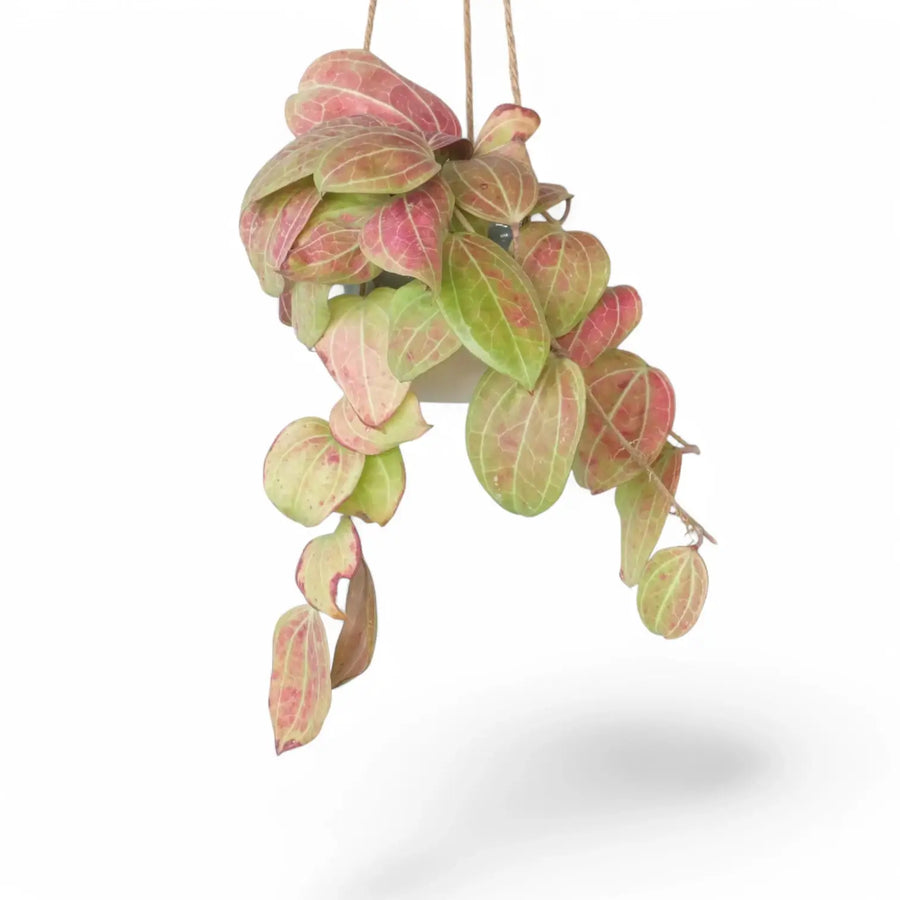
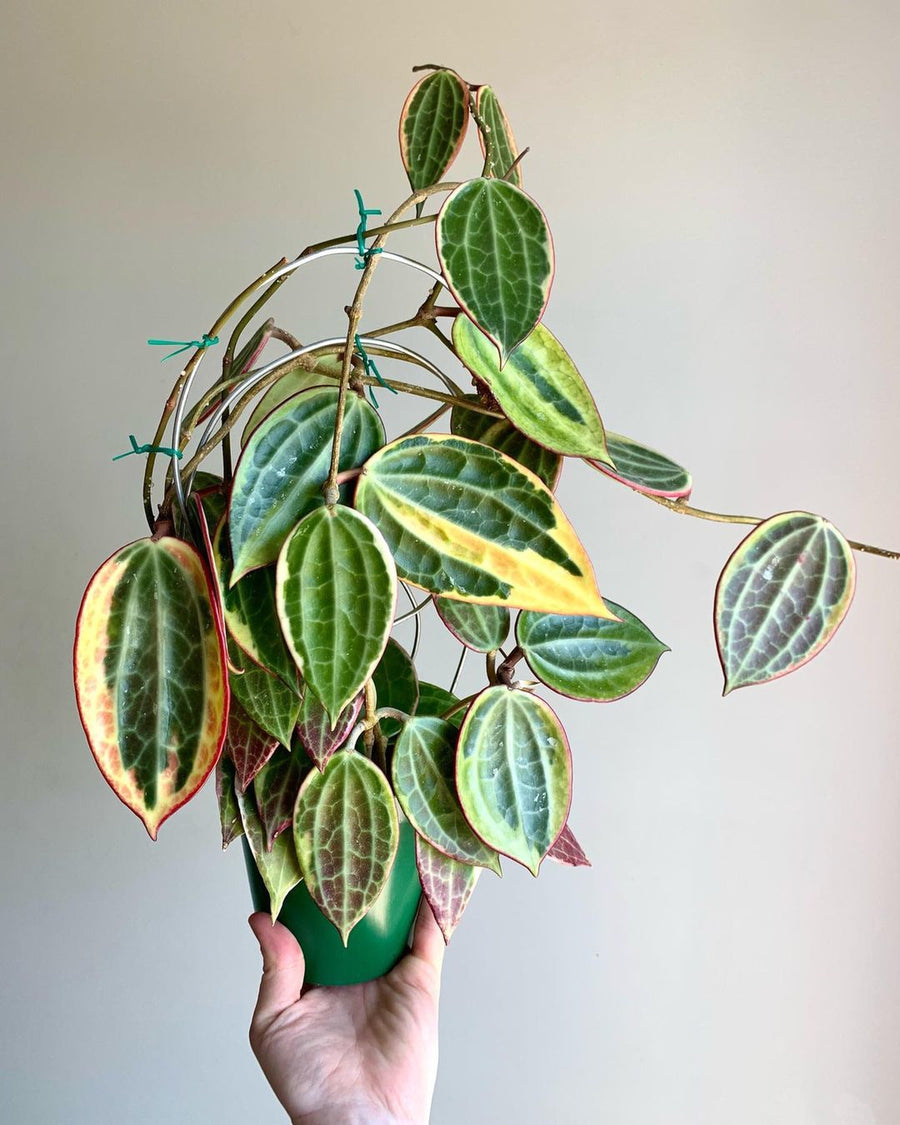
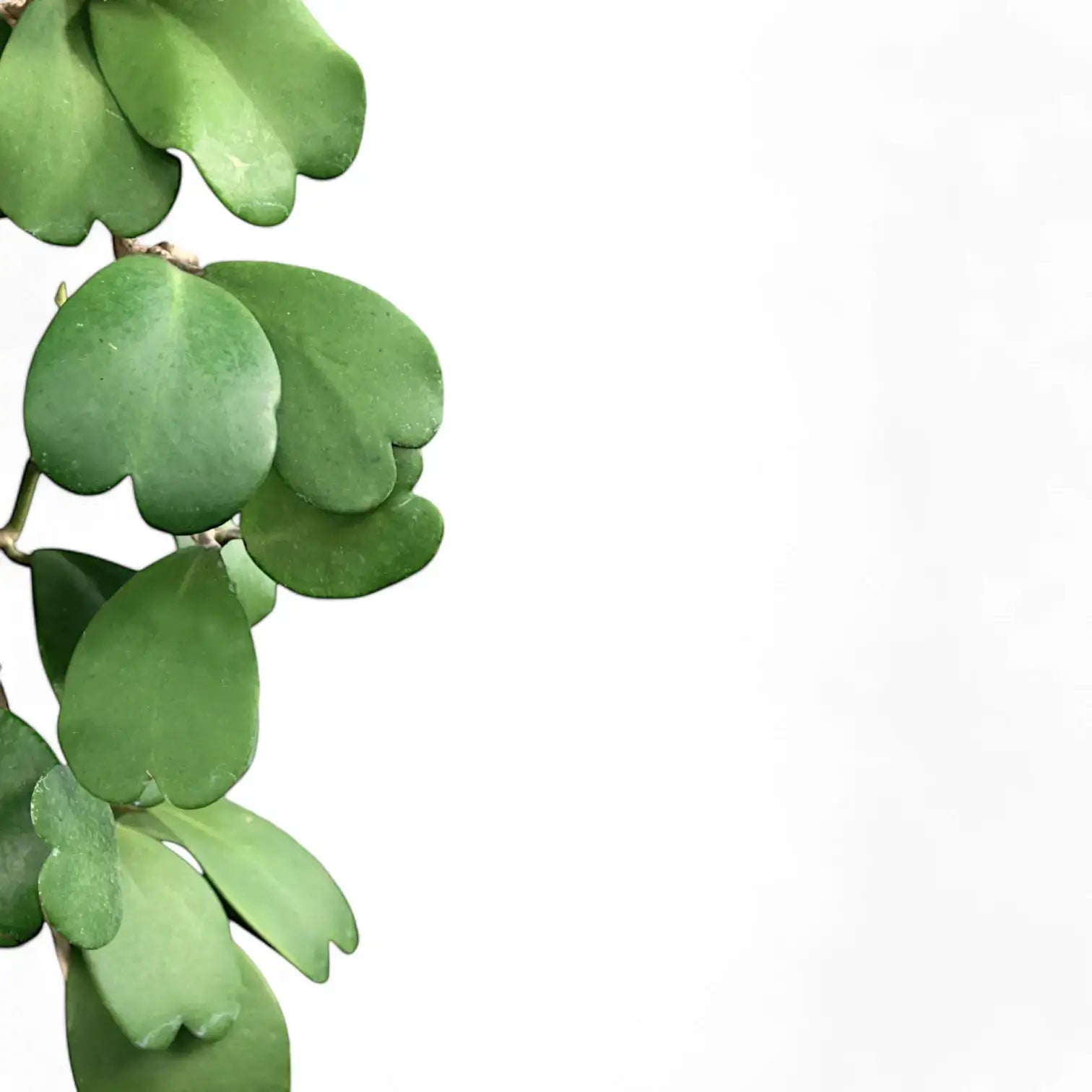
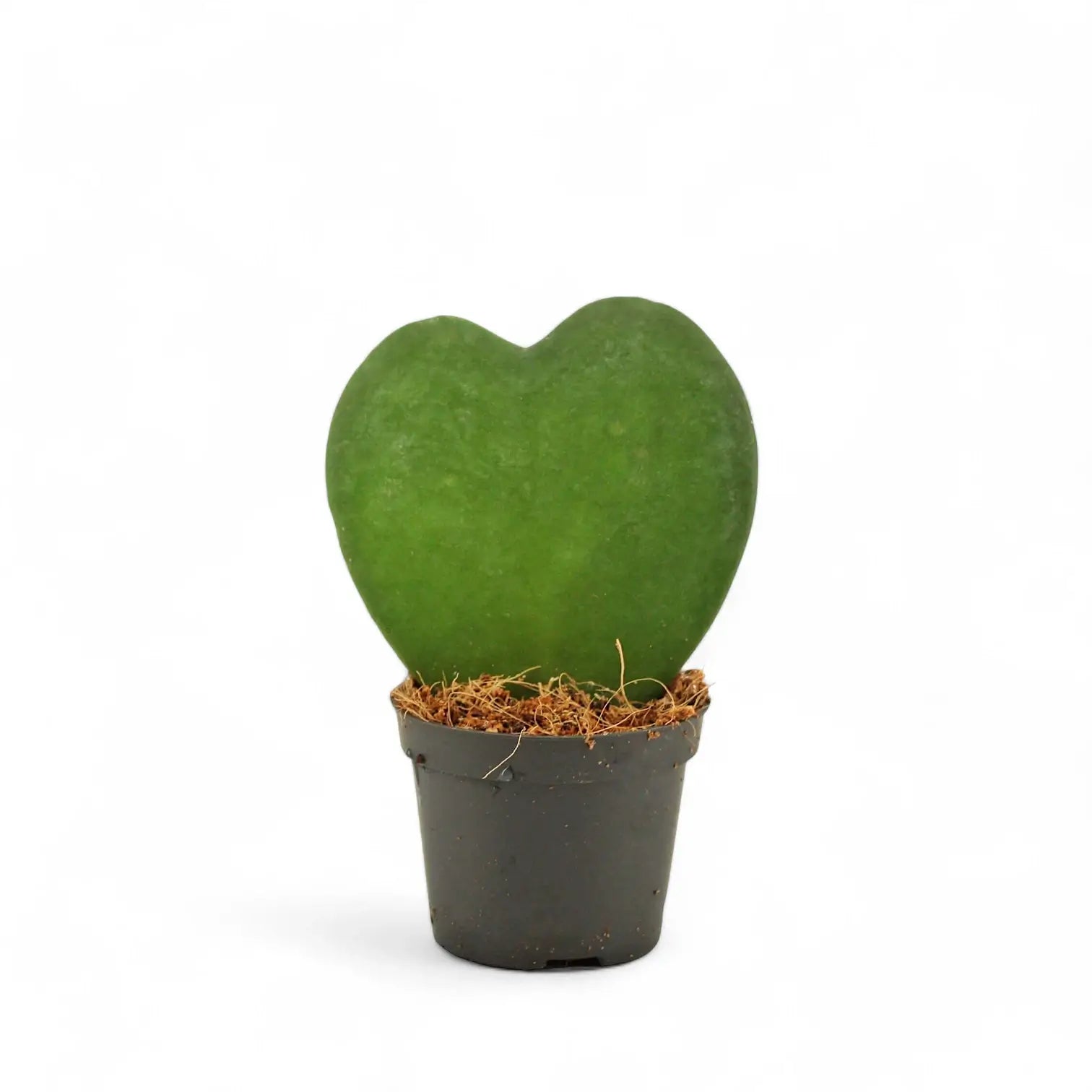
Hoya kerrii is the classic heart-leaf wax plant, grown for thick, fleshy leaves arranged in opposite pairs on slow, twining stems. A rooted stem plant can develop into a long-lived vine with aerial roots at the nodes, while a single rooted leaf often remains a living leaf for a very long time. Stem tissue is what allows the plant to build a true vine.
Established plants grow deliberately, sending out searching stems before new leaves appear. Mature vines can produce rounded umbels of waxy flowers with night fragrance and reddish-brown nectar, so flowering plants are best kept away from surfaces that could stain.
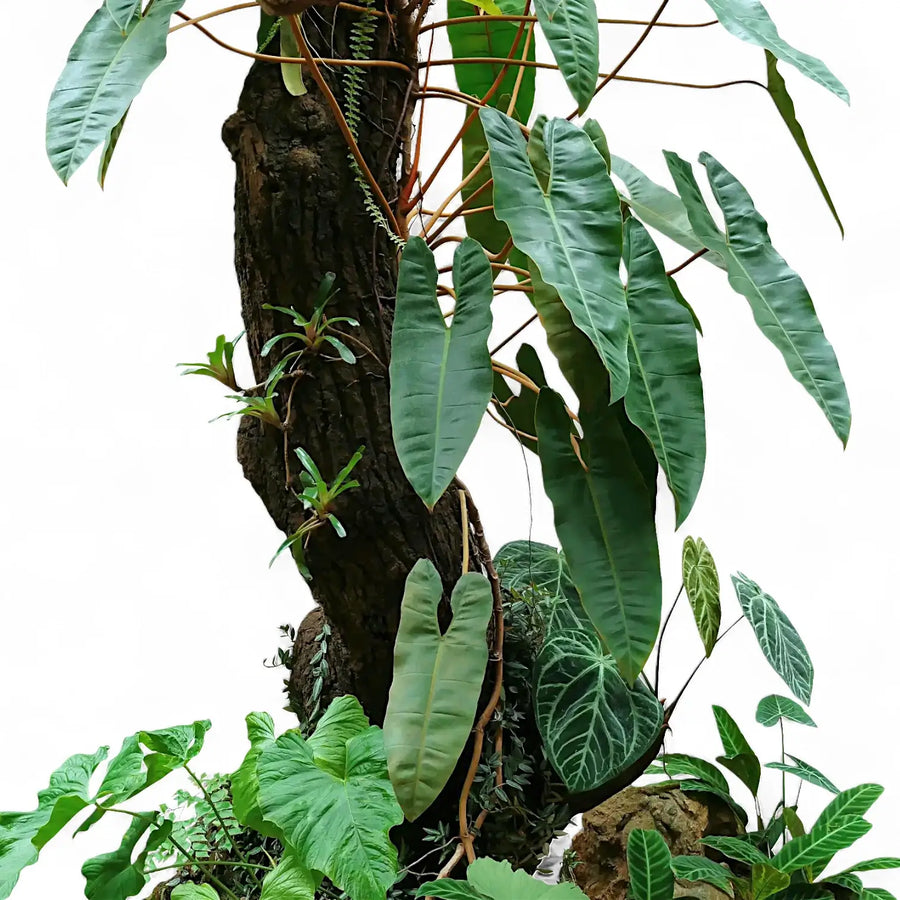
Hoya kerrii is native from Indochina to western Malesia, where it grows as a climbing epiphyte or lithophyte in wet tropical habitats. Its thick leaves hold moisture, while its roots are adapted to airy positions on bark or rock rather than dense, heavy soil.
In indoor cultivation, the slow pace is normal. A healthy rooted stem cutting may spend months building roots before extending new shoots. Bare vines should usually stay in place because they can later produce leaves or flowering spurs.
Hoya kerrii is listed as non-toxic to cats, dogs and horses by NC State Extension and ASPCA. The plant is still ornamental and can release milky sap when cut, so wash hands after pruning and keep trimmings away from pets that chew houseplants.
Hoya kerrii Craib belongs to Apocynaceae and was first published in 1911. The species epithet honours Arthur Francis George Kerr, the plant collector associated with early material from Southeast Asia, while Hoya honours Thomas Hoy.
Hoya kerrii grows slowly from stem cuttings into a sturdy sweetheart vine with thick paired leaves and long bare runners before new foliage forms.
Plant names, growth habits, natural habitats and indoor care guidance are checked against trusted botanical, habitat and horticultural references before publication.View our plant care resources and references.
Sign up for Foliage Factory newsletter for early access to new arrivals and practical care tips that work in real homes.