Light
Bright indirect • approx. 10,000–20,000 lux

Buy 4 plants, get 1 free
VAT included · plus
Your new plant has just travelled a long way and needs a calm start in its new home. For step-by-step unboxing and first-week care, check our after-delivery care guide. For deeper tips on how your plant settles in over the next weeks, read our houseplant acclimatization guide.
Secure shipping, carefully packed orders with safe delivery across the EU, UK and Switzerland.
28-day plant guarantee, if a plant arrives damaged or fails soon after delivery, we help you make it right.
Free returns, simple, cost-free returns according to our policy.
For full details, please see:
Please head to our FAQ Page or Contact us.
Quick Care Guide
Light
Bright indirect • approx. 10,000–20,000 lux
Watering
Water when ~60–80% dry
Substrate
Airy + fast-draining • Light moisture buffer • Bark-based • Medium-chunky
Temperature
Ideal: 16–24 °C • Avoid below: 10 °C
Humidity
Moist 50–60 %
Growth habit
Climbing or trailing epiphytic perennial vine.
Support
recommended
Growth speed
Slow
Max size indoors
Max. trail length: 30 cm • Max. spread: 30 cm
Toxicity & safety
Non-toxic
Origin & habitat
Native to Philippines
Outdoor growing
Outside from 15 °C · sheltered from wind and rain
These care values are quick reference points for indoor growing. Use them as a guide, then adjust for pot size, substrate, temperature and how quickly the substrate dries.
For more detail, read the full product description or visit our Plant Care Guides.
Hoya bilobata is a compact trailing species native to Mindanao, Philippines, prized for tiny pink star-shaped flowers and soft, rounded foliage. It is one of the smallest-flowering members of the genus – a low-maintenance, high-reward species that thrives in bright indoor conditions and flowers readily once mature.
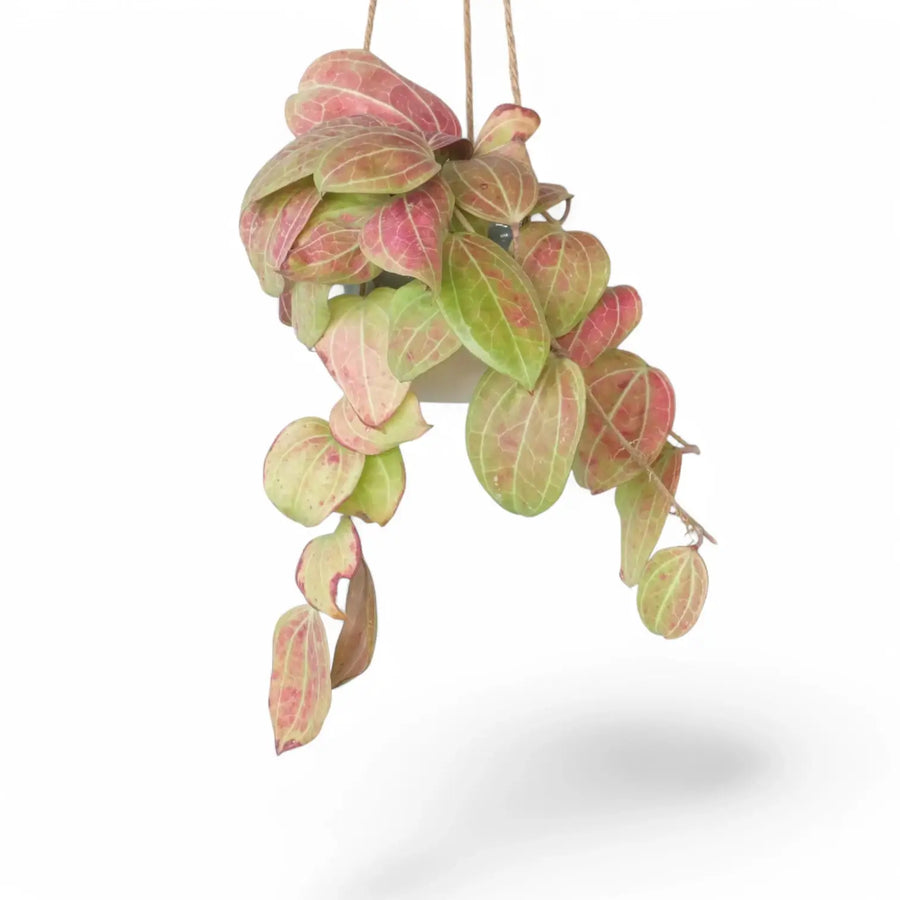
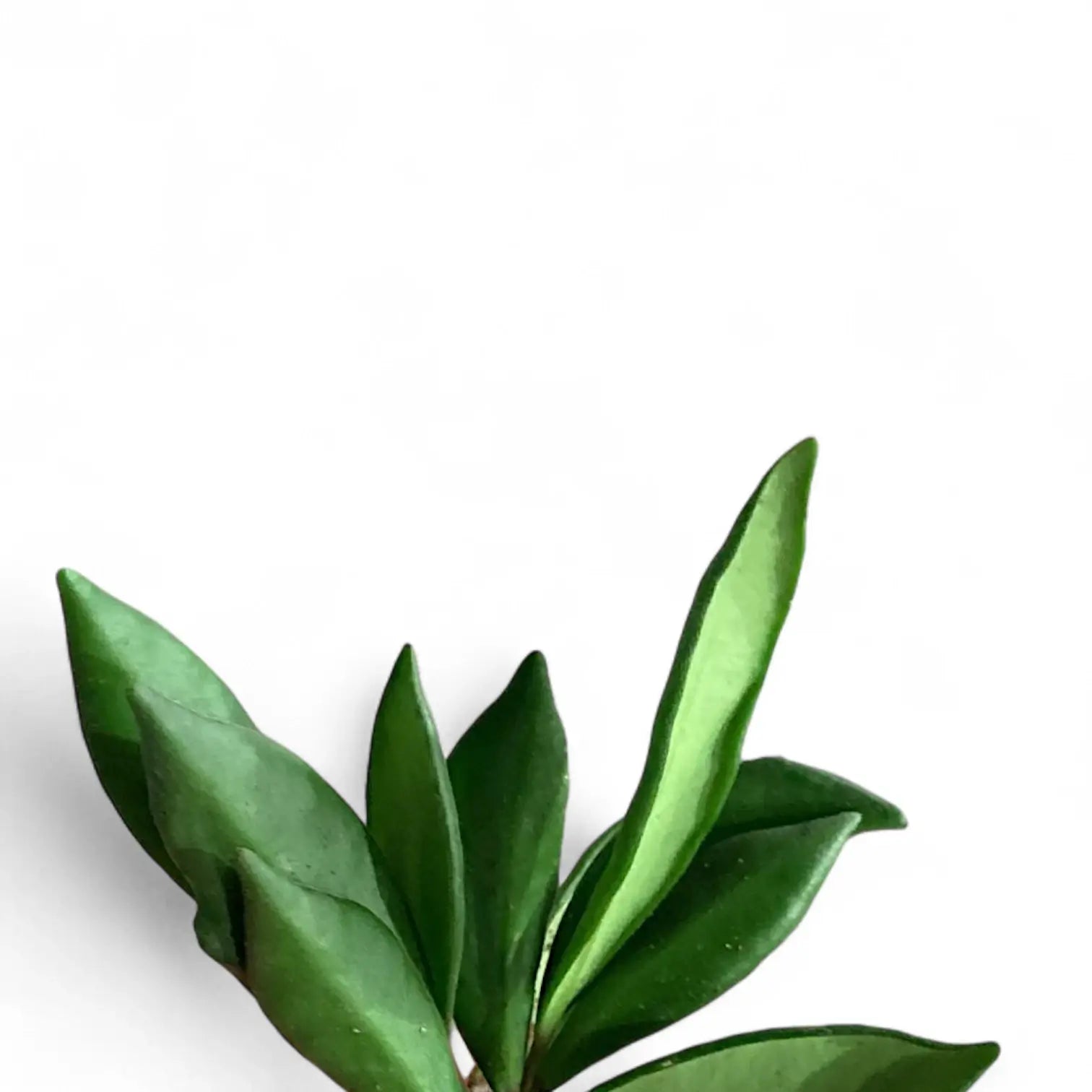
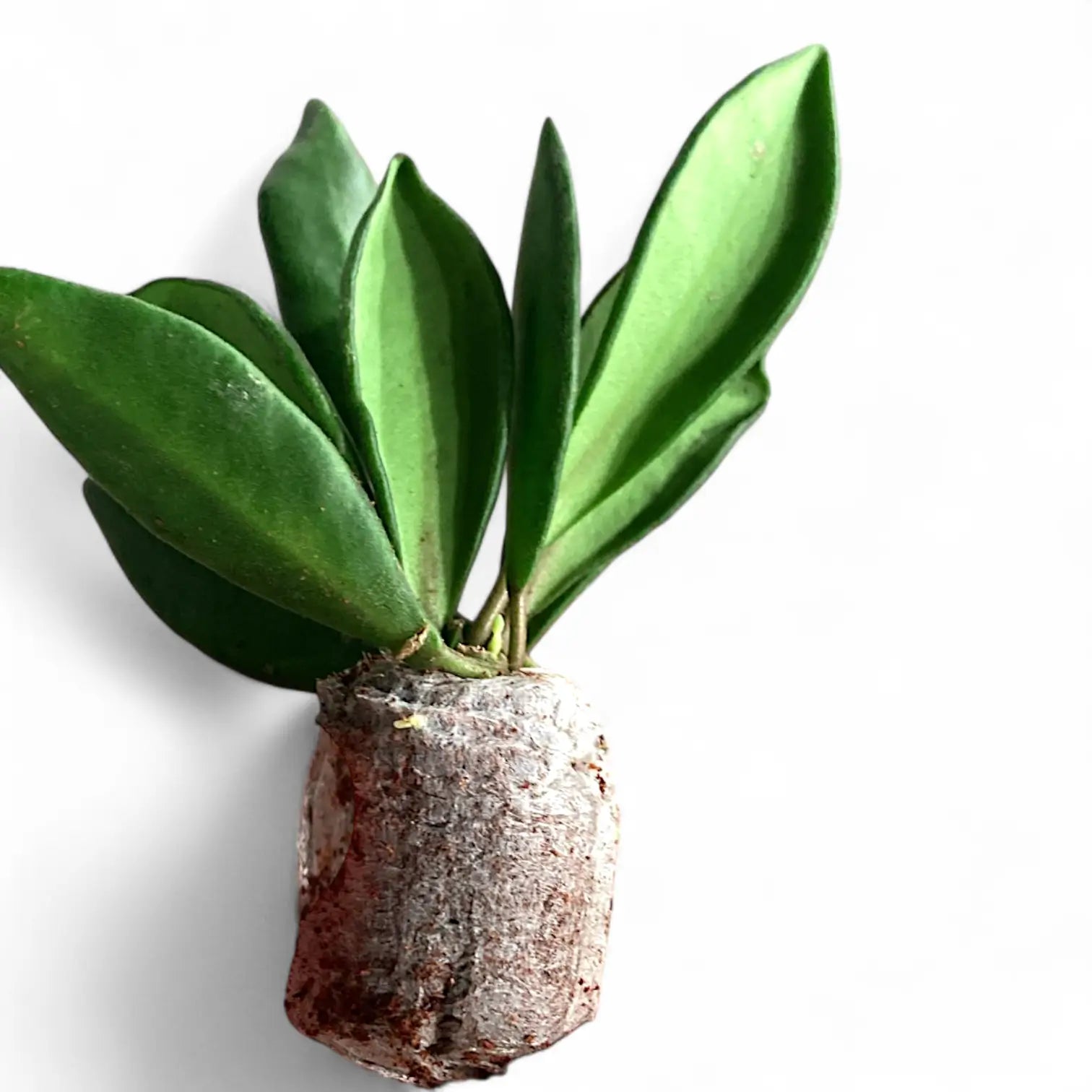
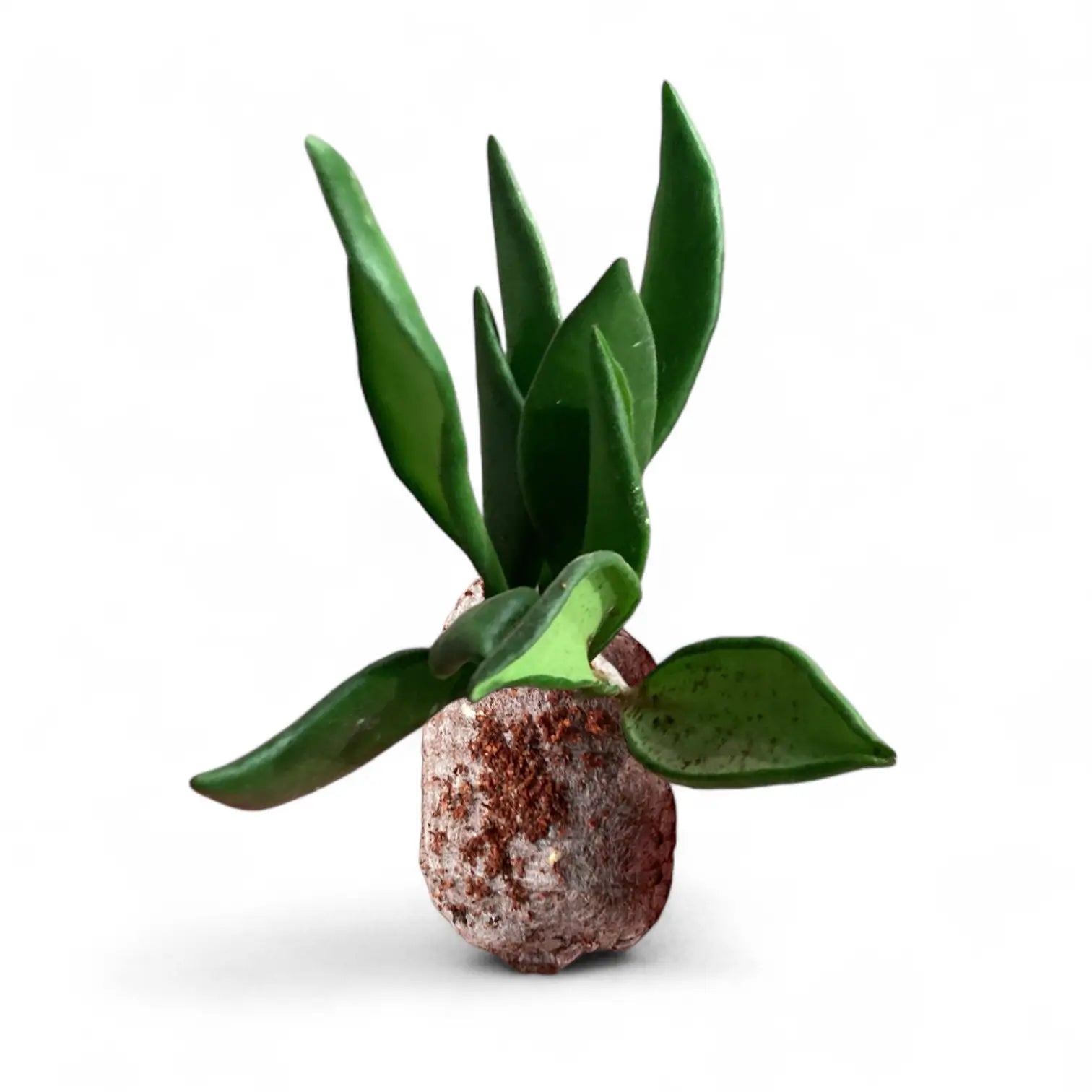
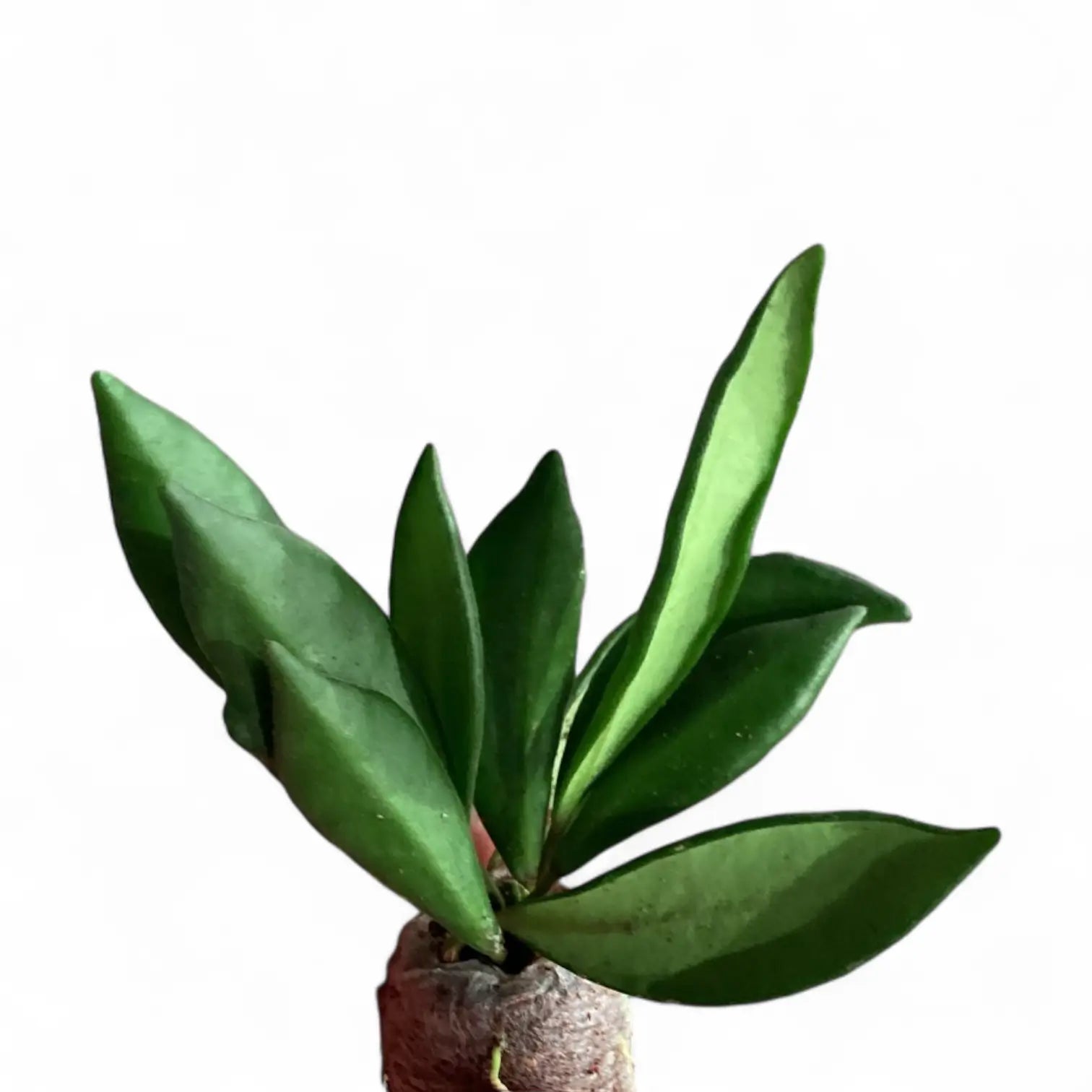
Hoya bilobata forms slender, branching vines with closely spaced, nearly round leaves measuring about 1–2 cm long. Leaves are covered in minute, velvet-like hairs that make them soft to the touch. The upper surface is a muted olive-green, the underside lighter, and both can flush bronze or copper in gentle sunlight.
Stems remain flexible yet sturdy, allowing the plant to trail gracefully or climb compact supports – ideal for hanging planters, bright shelves, and small trellises.
Each umbel carries up to 25 tiny, five-pointed blooms, only 4–5 mm across – among the smallest in any Philippine Hoya. The corolla is rosy pink with a yellow crown marked by deep red accents.
Fragrance is subtle and sweet, often compared to mild honey, and strongest in the evening. Under warm, stable light, Hoya bilobata blooms repeatedly throughout the warmer months and can rebloom from the same spurs indoors year-round.
In its native lowland forests of Mindanao, Hoya bilobata grows epiphytically on tree trunks and branches where light is filtered, air circulation constant, and moisture frequent but never stagnant.
Recreating these balanced conditions indoors – airy substrate, bright indirect light, and gentle airflow – supports steady growth and regular flowering.
Bright, indirect light suits it best. Short periods of morning or late-afternoon sun enhance foliage colour; avoid strong midday exposure.
Allow the upper layer of substrate to dry slightly before watering again. Plants cope well with brief dryness but dislike constantly wet soil.
Best between 50–70 %, but adapts well to normal indoor air if watering rhythm is stable.
Prefers 20–28 °C. Avoid prolonged chill below 15 °C to prevent stress and stalled growth.
Use a well-draining, airy mix with bark, perlite, or mineral media. Hoya bilobata is also suitable for semi-hydro setups with good aeration around the roots.
Stem cuttings root easily in water or inert substrates. Under warm, bright conditions, young plants often flower within their first year.
Perfect for hanging baskets, bright shelves, or open terrariums where trailing vines can be appreciated at eye level.
Hoya bilobata Schltr., published in Philipp. J. Sci. 1 (Suppl.): 301 (1906), was first described from a specimen collected by Copeland (No. 420) in Davao del Sur, Mindanao. It belongs to section Acanthostemma, a group known for compact vines and small, ornamented flowers.
The name bilobata derives from Latin bi- (“two”) and lobatus (“lobed”), referring to twin lobes projecting from each corolla segment. Schlechter’s original description highlighted this feature, which still helps distinguish Hoya bilobata from similar species such as Hoya DS-70 and Hoya burtoniae.
A truly miniature Hoya from Mindanao with plush round leaves, honey-scented pink blooms, and remarkable resilience. Compact, floriferous, and easy to manage, Hoya bilobata is an excellent choice for collectors seeking a low-maintenance trailing plant that does not compromise on charm.
Plant names, growth habits, natural habitats and indoor care guidance are checked against trusted botanical, habitat and horticultural references before publication.View our plant care resources and references.
Sign up for Foliage Factory newsletter for early access to new arrivals and practical care tips that work in real homes.