Light
Low indirect • approx. 1,000–5,000 lux

VAT included · plus
Your new plant has just travelled a long way and needs a calm start in its new home. For step-by-step unboxing and first-week care, check our after-delivery care guide. For deeper tips on how your plant settles in over the next weeks, read our houseplant acclimatization guide.
Secure shipping, carefully packed orders with safe delivery across the EU, UK and Switzerland.
28-day plant guarantee, if a plant arrives damaged or fails soon after delivery, we help you make it right.
Free returns, simple, cost-free returns according to our policy.
For full details, please see:
Please head to our FAQ Page or Contact us.
Quick Care Guide
Light
Low indirect • approx. 1,000–5,000 lux
Watering
Water when ~20–35% dry
Substrate
Moisture-retentive + airy • Steady-moist • Organic-forward • Fine
Temperature
Ideal: 16–25 °C • Avoid below: 16 °C
Humidity
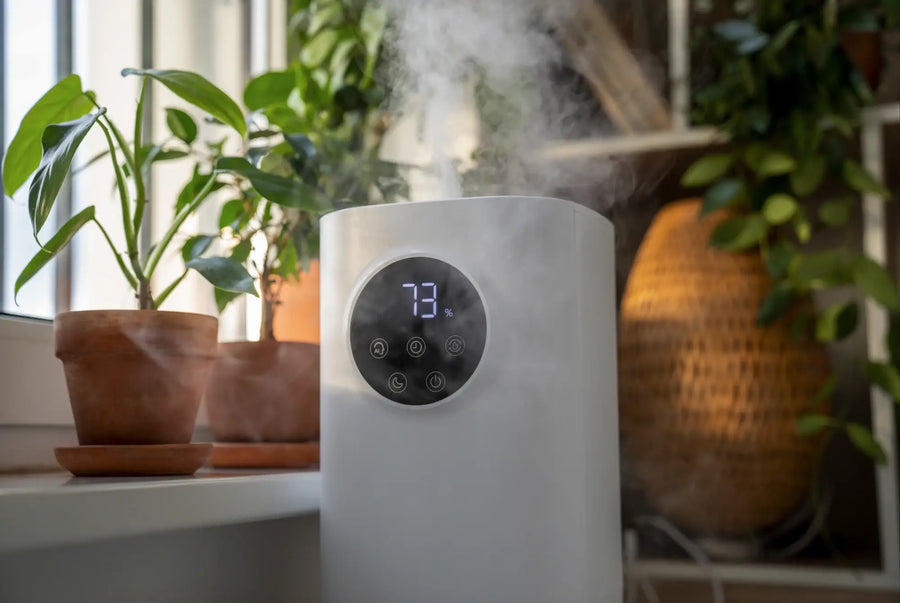
Humid 60–80 % +
Growth habit
Creeping terrestrial orchid.
Support
not needed
Growth speed
Slow
Max size indoors
Max. height: 10 cm • Max. spread: 10 cm
Toxicity & safety
Non-toxic
Origin & habitat
Native from Nepal to China (Yunnan)
Outdoor growing
Indoor only
These care values are quick reference points for indoor growing. Use them as a guide, then adjust for pot size, substrate, temperature and how quickly the substrate dries.
For more detail, read the full product description or visit our Plant Care Guides.
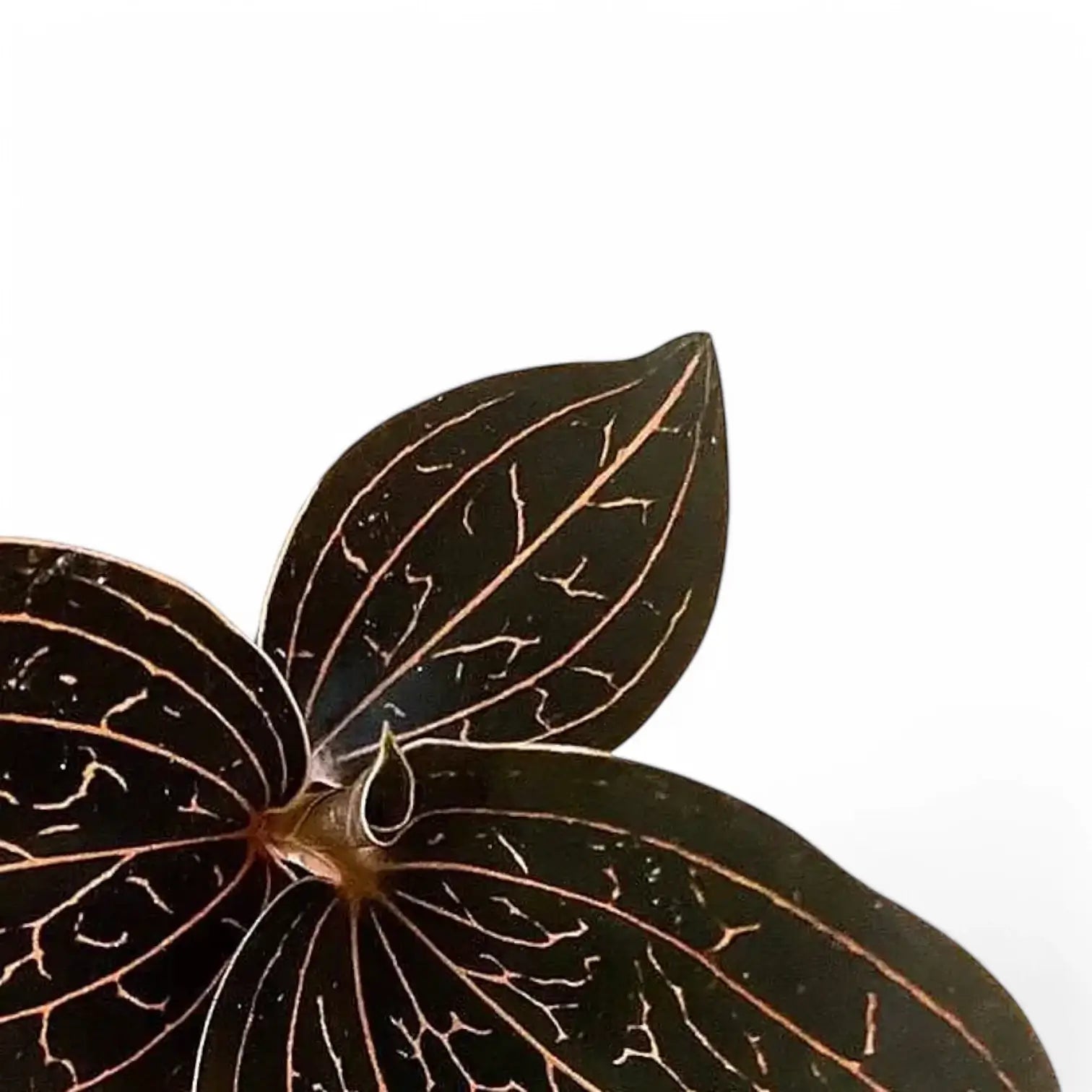
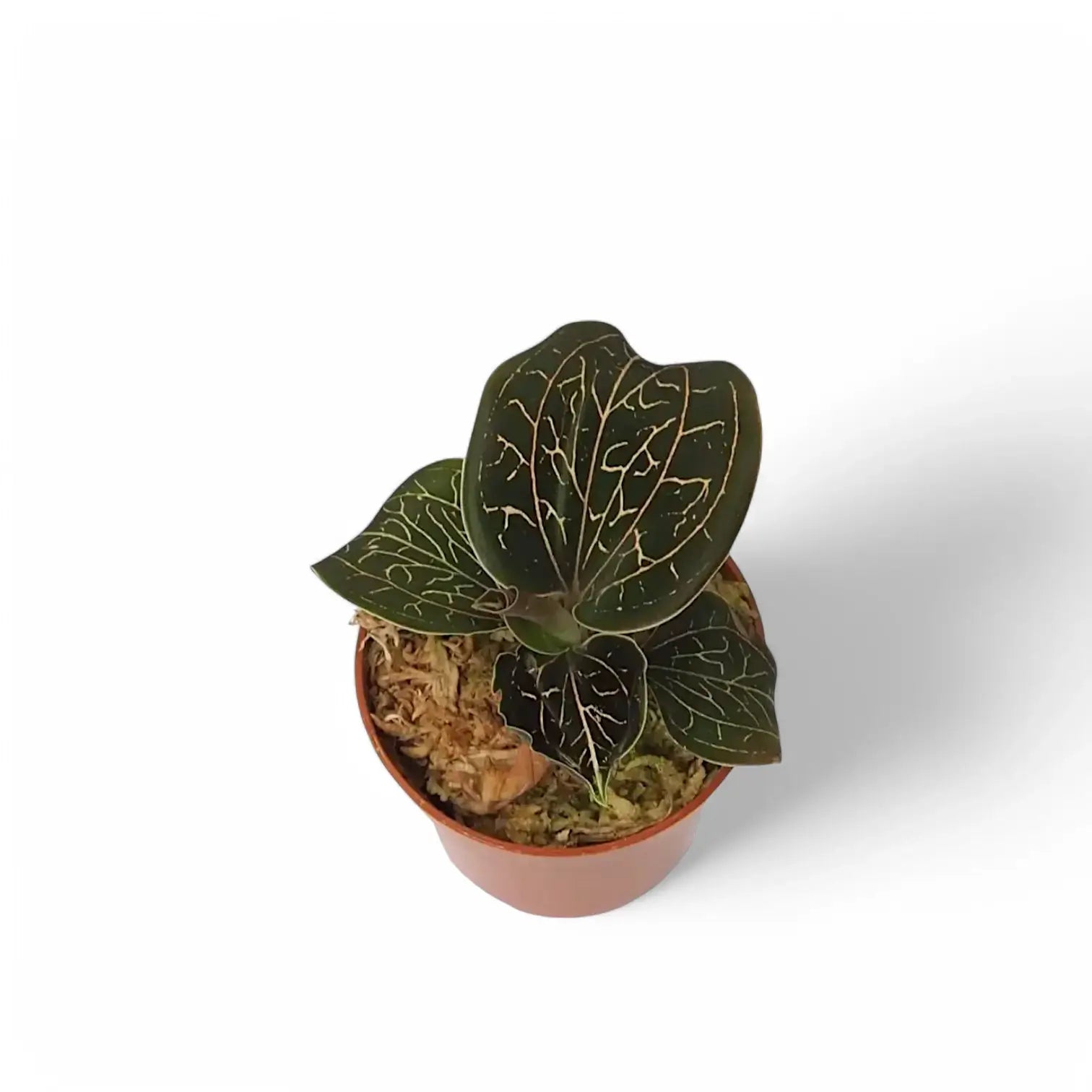
Copper-gold to red-gold veins give Anoectochilus brevilabris a warm, dark jewel-orchid look. The foliage can read as garnet, maroon or deep brown-green depending on the light, with the vein network sitting clearly over the soft velvet surface.
It grows as a low terrestrial orchid with creeping rhizomes and fine roots. The plant needs gentle light, warm humidity and a substrate that stays lightly moist while keeping air around the root zone.
Anoectochilus brevilabris is an accepted Orchidaceae species with a range currently placed from Nepal to Yunnan. It is a rhizomatous terrestrial orchid of humid forest conditions, with growth concentrated close to the substrate surface.
In a pot, the creeping stems need surface room and a fine, airy mix. The substrate should hold moisture around the roots without becoming compacted or cold at the base.
Anoectochilus brevilabris is considered non-toxic to cats and dogs. Keep it out of reach of regular leaf-chewers to protect the soft foliage and shallow root system.
Anoectochilus brevilabris Lindl. is an accepted Orchidaceae species first published in John Lindley’s Genera and Species of Orchidaceous Plants, page 499, in 1840. The genus name refers to the open lip of the flower. The epithet brevilabris combines Latin roots for “short” and “lip”, giving the name its short-lipped meaning.
Plant names, growth habits, natural habitats and indoor care guidance are checked against trusted botanical, habitat and horticultural references before publication.View our plant care resources and references.
Sign up for Foliage Factory newsletter for early access to new arrivals and practical care tips that work in real homes.