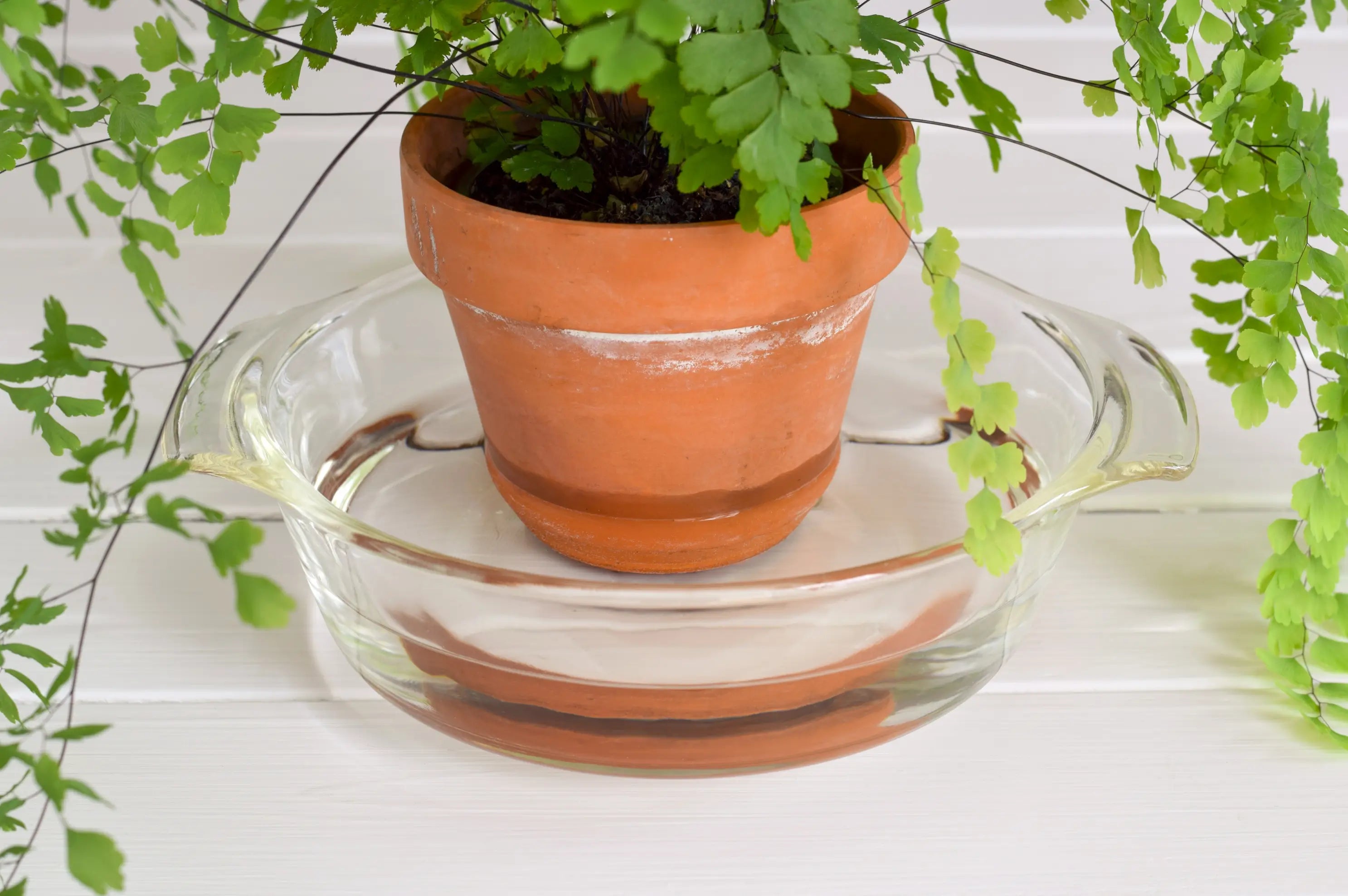
Bottom Watering Houseplants: Myths, Risks & Best Practice
Bottom watering can be useful, but it also comes with risks like salt buildup and root suffocation. Here’s when it helps, when it hurts, and how to use it safely.
Read more
Good houseplant care starts with one honest truth: indoor plants are still plants with outdoor biology. They may tolerate shelves, ceramic pots, dry air, and window light, but they did not evolve around radiator heat, dark corners, or fixed watering reminders.
Most houseplant problems are not random. A yellow leaf, stalled stem, pest outbreak, or stretched vine usually points to a mismatch between plant needs and room conditions. Better care comes from reading those signals and adjusting light, water, roots, nutrients, airflow, and placement around your real indoor space.
Quick answer: Houseplants thrive indoors when care follows actual conditions, not care labels. Bright rooms may still be dim for growth, potting mix changes over time, pests can arrive unnoticed, fertilizer only helps active growth, and new plants often need several weeks to settle before major changes.

A houseplant is not a separate kind of plant. It is a plant that can handle indoor conditions well enough to be grown inside. Many indoor plants have wild ancestry, cultivated traits, or hybrid backgrounds, but they still respond to light, water, oxygen, minerals, temperature, humidity, gravity, and stress.
That is why “easy houseplant” does not mean “plant that naturally belongs in a living room.” It usually means a plant can tolerate indoor conditions better than fussier species. Tolerance is useful, but it is not magic.
Care improves when the question changes from “What is wrong with my plant?” to “Which condition is the plant responding to?”
A new plant may look fresh when it arrives, but it has already gone through several changes before reaching your home. It may have moved from a nursery bench to a packing area, dark box, courier network, warehouse, shop shelf, or final windowsill. Each step changes light, air movement, temperature, moisture, and handling.
Acclimation is not a defect. It is the plant adjusting to a new environment.
Strong light, calm observation, and stable watering usually help more than repotting, pruning, or feeding too soon.
For new-plant settling, leaf drop, and slower drying after delivery, use Houseplant Acclimatization: What It Is, What to Expect, and How to Support It.

Plants often look best at point of sale because they have been grown for visual quality, transport strength, and short-term retail appeal. Commercial growing conditions vary by crop and producer, but they are usually more stable than home conditions: brighter light, controlled watering, regular nutrition, planned spacing, monitored pests, and better airflow.
Once a plant moves indoors, it starts producing growth shaped by your home instead of a production environment.
A plant that changes after purchase is not automatically declining. It is growing under different limits.
A dense, perfectly shaped plant may not keep that exact form at home. Compact growth can come from genetics, cultivar selection, strong production light, cool growing conditions, pruning, pinching, close spacing, or plant growth regulators used in commercial horticulture.
Plant growth regulators are professional tools used to manage height, branching, flowering, or transport-friendly shape. When used correctly, they help growers produce plants that ship and display well. They are one possible reason why new growth later becomes longer, larger, thinner, or less compact indoors, but they are not the default explanation for every plant that stretches.
Shop shape is a snapshot. Long-term form depends on genetics, light, support, and care consistency.
Pests are not proof that you failed. They are also not something to ignore. Spider mites, thrips, fungus gnats, mealybugs, and scale insects can arrive on new plants, hide in small crevices, move between plants, or build up slowly before damage becomes obvious.
No grower, shop, collector, or friend can promise with absolute certainty that a living plant carries no hidden pest stage. Early infestations can be hard to see, especially eggs, juveniles, root-zone pests, and insects tucked into leaf axils.
A pest outbreak does not automatically prove poor sourcing or poor care. It means the plant needs isolation, inspection, and a calm treatment plan.
For pest-specific identification and control, use our pest control guides.

Not every healthy plant grows constantly. Indoor growth often comes in waves because light, temperature, root activity, water use, and plant energy reserves shift over time. A pause is only concerning when it appears together with rot, pests, severe wilting, spreading yellowing, or collapsing roots.
A growth pause is a signal to observe. Check light, roots, pests, and drying speed before changing care.
Plants are not static. Many change leaf size, leaf shape, stem structure, and growth habit as they mature. This developmental change is part of morphogenesis: plant form developing in response to age, genetics, and environment.
If two plants of the same species look different in two homes, that is not surprising. Each plant is being shaped by its own microclimate.
For stretched stems and long internodes, read Etiolation: Why Is My Plant So Leggy?.
A bright room can still be dim for plant growth. Human eyes adjust quickly to low light, but leaves respond to actual usable light reaching their surface. Distance from the window, season, glass type, curtains, nearby buildings, and dirty leaves all change how much light the plant can use.
Light for plants is best understood through PPFD, measured in µmol/m²/s. Lux can be useful as a rough household reading, but it measures brightness for human eyes, not plant-usable light directly.
| Situation | Approximate PPFD | What it usually means indoors |
|---|---|---|
| Outdoor full sun | 1,500–2,000+ µmol/m²/s | Far stronger than most indoor plants need or tolerate for long periods. |
| Bright outdoor shade | 100–500 µmol/m²/s | Often brighter than many indoor positions that look “bright” to us. |
| Bright window with some direct sun | 100–400+ µmol/m²/s | Useful for many tropical foliage plants when heat and leaf scorch are managed. |
| Bright indirect window area | 50–200 µmol/m²/s | Good baseline for many common houseplants, depending on duration. |
| 1–2 m from window | 10–80 µmol/m²/s | Often enough for survival, but weak for strong growth in many species. |
| Interior room without grow light | Often below 10–30 µmol/m²/s | Usually too dim for reliable long-term growth. |
These numbers vary by window direction, season, cloud cover, wall colour, balcony shade, screens, and time of day. Measuring with a light meter or reliable app gives a better picture than guessing from room brightness.
For placement details, compare bright indirect light with real window orientation. Most indoor plant issues that get blamed on humidity, watering, or “mood” are partly light problems. Better light makes watering easier, growth stronger, and diagnosis clearer.
Low-light tolerant does not mean dark-room loving. It means the plant can endure lower light better than many others. Growth will still slow, soil will dry more slowly, and new leaves may become smaller or weaker if light stays too low.
These plants can cope with dimmer positions, but most still look and grow better in bright indirect light. Survival is not the same as active growth.
Move the plant closer to the window gradually or add a grow light before changing fertilizer, pot size, or watering frequency. For deeper light-level context, use Low-Light Houseplants Explained.

Fertilizer is not medicine for a stressed plant. It supports active growth by replacing minerals that potting mix cannot supply forever. When a plant is in poor light, recovering from transport, dealing with root damage, or not producing growth, extra fertilizer often adds stress instead of solving the problem.
Fertilizer works best when light, roots, and watering are already in balance.
Potting mix does not stay perfect forever. Bark breaks down, peat can become hydrophobic, fine particles settle, mineral salts accumulate, roots fill air spaces, and drainage may slow. Even if the top layer looks normal, the root zone can become too dense, too wet, or too depleted.
Root health depends on water and oxygen together. Dense wet mix is one of the most common reasons indoor plants decline slowly. For more detail, use our houseplant substrate guide, repotting guide, and drainage vs. aeration guide.
A weekly watering schedule feels tidy, but plants do not use water on a calendar. They use more water when light is stronger, roots are active, foliage is growing, and air is moving. They use less when light is weak, substrate is dense, the pot is oversized, or growth has paused.
This does not mean plants need constant fussing. They need regular attention and calm adjustments. Most care mistakes come from doing too much too quickly or ignoring slow signals for too long.
For watering decisions based on real drying speed, use Watering Houseplants: The Ultimate Guide.

Once basic care is stable, a few less obvious details can make plant growth easier to understand. These are not hacks. They are practical ways to think about light, roots, and propagation with more precision.
Plants respond to light spectrum, but everyday indoor growers usually get better results by focusing first on enough usable light at leaf level. A broad-spectrum white grow light with suitable distance and duration is usually more useful than chasing red-blue formulas without measuring intensity.
Many aroids, Hoyas, epiphytes, and climbing tropicals benefit from airy mixes with bark, perlite, pumice, coco chips, or other structure-building materials. These mixes improve oxygen around roots and reduce the risk of soggy conditions. They are not automatically better for every plant, and they require matching watering and feeding habits.
For non-organic and semi-hydro setups, use Semi-Hydro and Non-Organic Substrates for Houseplants.
Even easy-to-root plants can fail. Node health, cutting maturity, temperature, humidity, water quality, oxygen, disease pressure, and timing all affect results. Taking multiple cuttings, using clean tools, and keeping conditions stable gives better odds than relying on one perfect stem.
For practical propagation methods, use How to Propagate Houseplants.
The plant moved from one environment to another. Light, humidity, airflow, temperature, watering, and handling all changed. Slower growth, slight leaf loss, different new leaves, or a temporary pause can be normal while the plant acclimates.
Usually not. Low-light tolerant plants survive dimmer conditions better than many species, but they still grow best with enough bright indirect light. In very dark rooms, growth slows, soil dries slowly, and leaves often become weaker over time.
Not automatically. Fertilizer helps active growth, but it can stress a plant with poor light, damaged roots, pest pressure, or soggy substrate. Fix light, roots, and watering first, then feed gently once growth resumes.
Two to three weeks is a practical minimum when space allows. During that time, inspect leaf undersides, stems, the soil surface, and new growth several times. Some pests appear slowly, so one quick check is not enough.
Stretching usually means the plant is responding to lower light, lack of support, natural growth habit, or production conditions wearing off. Move the plant closer to suitable light, add support if needed, and avoid overwatering while growth adjusts.
Indoor collections are not sterile. Pests can arrive on new plants, hide in leaf joints, move through shared tools, or appear when conditions favour them. Good care lowers risk and helps the plant recover, but it cannot remove every possibility.
Care gets easier when advice matches real indoor conditions. These guides go deeper into common houseplant problems, myths, and care decisions.
➜ Why Plant Care Guides Fall Short, or The Intricacies of Houseplant Care
No care guide can account for your exact light, airflow, temperature shifts, substrate, pot size, or watering habits. Build care around your real space.
➜ Houseplant Care Myths and Misconceptions
From cinnamon treatments to ice cubes and painted succulents, common plant-care myths often sound helpful while creating new problems.
➜ There Are No Difficult Houseplants
Plants are not difficult for drama’s sake. Most problems start when indoor conditions fail to meet plant needs.
➜ The Case Against Categorizing Houseplants by Room
Room labels are less useful than light, airflow, humidity, and temperature. A bathroom plant still needs enough usable light.
Bottom Watering Houseplants: Myths, Risks & Best Practice
Bottom watering can be useful, but it also comes with risks like salt buildup and root suffocation. Here’s when it helps, when it hurts, and how to use it safely.
Read more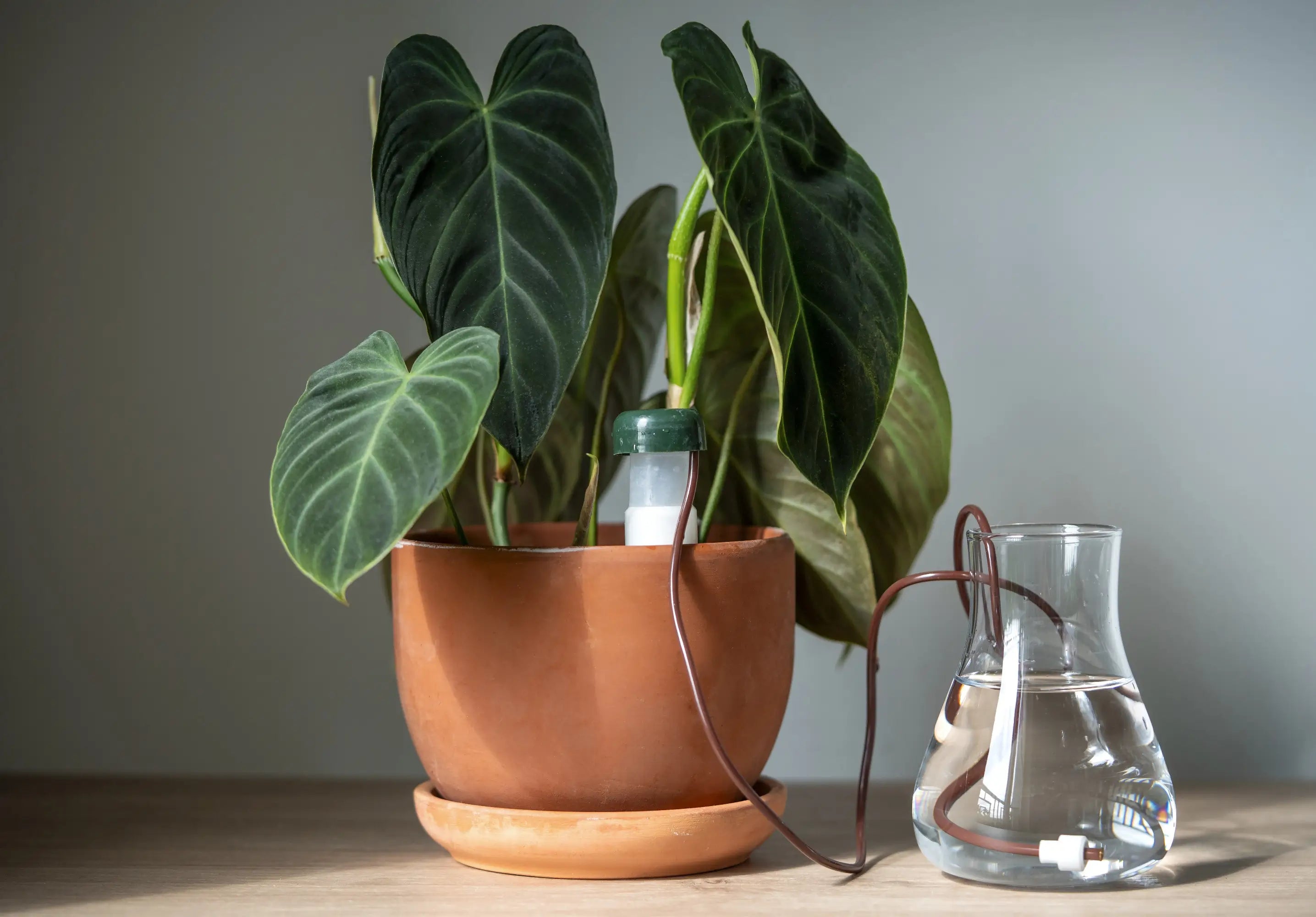
How to Keep Houseplants Alive (and Healthy) While You’re Away: Vacation Watering & Care Tips
A practical guide to keeping houseplants healthy while you’re away. Learn pre-trip prep, passive watering systems, plant-type and substrate tips, plus the common mistakes that lead to rot or crispy...
Read moreSign up for Foliage Factory newsletter for early access to new arrivals and practical care tips that work in real homes.


Leave a comment
This site is protected by hCaptcha and the hCaptcha Privacy Policy and Terms of Service apply.