

Why Your Houseplants Don’t Care What Room They’re In
A bathroom with a large, unobstructed window and a bathroom with no daylight at all can both be described as good places for a “bathroom plant”. The label sounds useful, yet the two spaces give a plant very different growing conditions.
The same problem appears everywhere in the home. A plant beside a bedroom window and another on a shelf deep in the same room are both “bedroom plants”, even though the light reaching their leaves may be completely different. Room names describe how we use a space. What matters to the plant is what it experiences in the spot where it sits.
A better question is simple: what does this exact spot provide, and which plants are suited to it? Once you start with the spot itself, choosing and moving plants becomes easier to understand and less dependent on vague labels such as “low light”, “bathroom plant” or “easy office plant”.
A room name is not a growing condition
A plant responds to the light, temperature, air and moisture around its leaves, pot and roots. These can change dramatically within a single room.
A windowsill may be bright and warm for part of the day while a bookcase on the opposite wall receives little daylight. A spot beside patio doors may have excellent light as well as regular cold exposure. A shelf above a radiator can be warmer and drier than another shelf only a short distance away.
This small-scale environment is often called a microclimate or microenvironment. In practical terms, it simply means the conditions where the plant sits.
Start with the spot you want to use. Look at the light first, then check the temperature and air around it before choosing a plant that suits the spot.

Read the exact spot, starting with light
Light is usually the best place to begin indoors. It supplies the energy for photosynthesis, and daylight can vary sharply across a single room. A corner that feels bright enough to us may receive far less daylight than the area beside the window.
What determines the daylight that reaches the plant
Window direction tells you when direct sun may reach the glass. The amount of light reaching the plant is also shaped by the window itself and everything around it.
Window size and the type of glass matter. A balcony above the window, a neighbouring building, exterior blinds or a tree outside can block part of the bright sky. Curtains and furniture can change the light further inside the room.
Distance changes the picture too. A plant close to a large window has access to much more of the bright sky outside than one placed deep inside the same room. Room depth, window dimensions and outside obstructions all affect how quickly daylight falls away.
Two south-facing rooms can therefore behave very differently, while a north-facing window can still receive diffuse daylight. What matters is the light that reaches the leaves at the spot you want to use.

Why the light changes over time
The same spot changes through the day and through the year.
The sun moves. Day length changes. Cloud cover changes. A deciduous tree may shade a window heavily while in leaf and expose much more sky after its leaves fall. Exterior blinds and curtains can alter the pattern again.
A light reading captures a moment. The plant experiences changing light over many hours, so both the strength of the light and how long it lasts shape what the plant receives over the day.
For home placement, the principle is simple: a bright hour and a bright day are different growing conditions.
When assessing a new spot, look at it more than once. Notice what happens in the morning, around the brightest part of the day and later in the afternoon. A spot that works well at one time of year may need another look when day length, sun angle or exterior shade changes.
How to assess light without false precision
A lux meter or phone light-meter app can help you compare one spot with another. Lux describes visible brightness as our eyes perceive it, which makes it useful for seeing how much brighter one part of a room is than another.
Phone apps are best treated as approximate. Readings vary with the device, app and calibration. Using the same phone in the same way can still reveal that one shelf receives far more light than another.
Treat the reading as one clue. How long the light lasts, the plant itself and the kind of growth you want all help determine whether the spot is suitable.
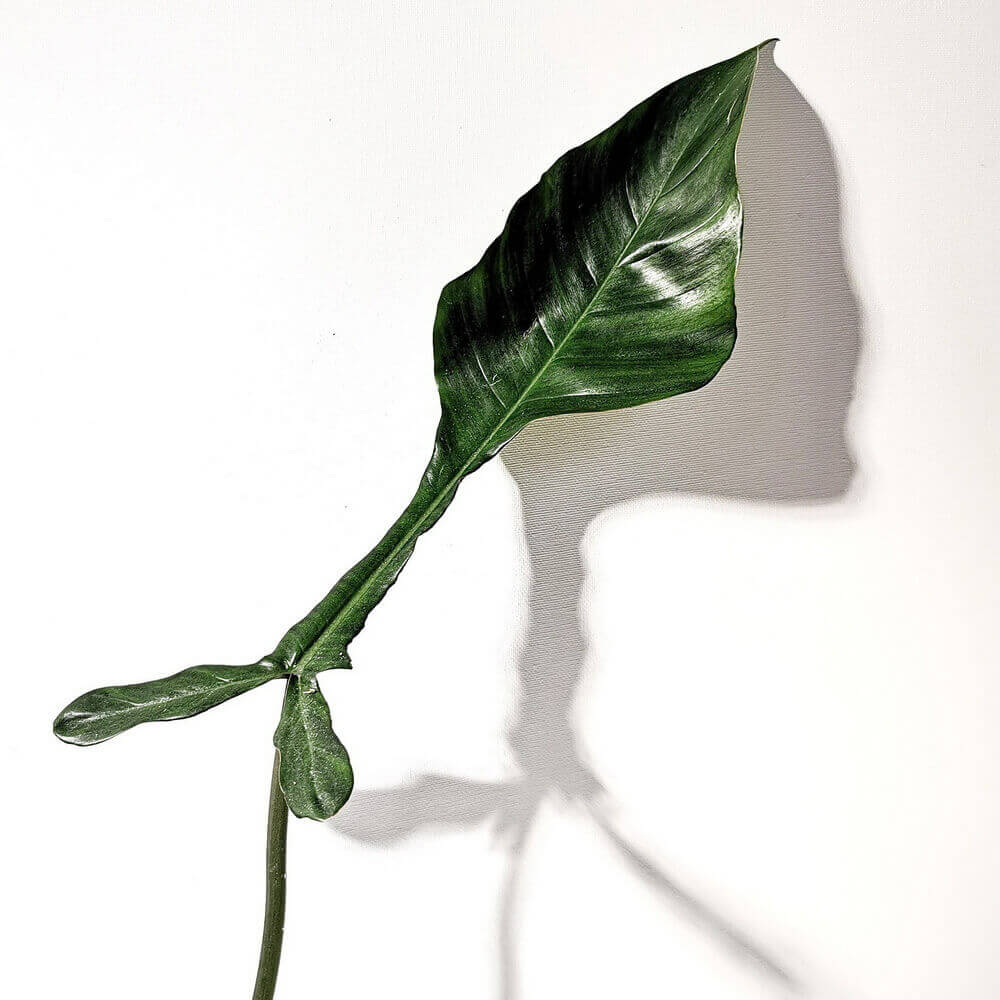
A shadow can give a quick impression of how directional the light is. Use it as an informal clue alongside the window, surrounding shade and any measurements you take.
For most homes, combine these observations. Look at the window and anything blocking it, consider how far the plant sits from the light source and check the spot at different times. Then watch how the plant grows there.
What if natural light is not enough?
Artificial lighting can make a spot usable when natural daylight is weak or absent. That can open up windowless bathrooms, interior shelves and displays far from a window.
Look at how much light reaches the foliage and how long it is available. Distance, coverage and spectrum also shape the result. Labels such as “grow light” and “full spectrum” describe the lamp; the setup determines what reaches the plant.
White LEDs can also provide light that plants can use. Properly positioned white lighting has supported the growth of shade-tolerant foliage plants under controlled indoor conditions.
Suitable operating time depends on the lamp, its distance from the plant, any natural light already available and the plant itself. For placement, artificial light can become the main light source when enough reaches the leaves for long enough.
Check the rest of the spot
Once the light looks suitable, look at the temperature and air around the plant.
Temperature at the exact spot
Indoor collections include plants from very different climates, so useful temperature guidance needs to be specific to the plant.
Focus on what happens where the pot actually sits. Cold window glass can make the area beside a window cooler than the centre of the room. An exterior door can bring repeated cold air. A radiator or heating vent can make one shelf much warmer. Air-conditioning can create another local temperature change.
Check whether those temperatures suit the plant you want to grow. Check the individual plant’s care guide for its temperature range.
Air movement around the leaves
A leaf is surrounded by a thin layer of air. Moving air changes that layer and affects how the leaf exchanges heat, water vapour and gases with its surroundings.
Gentle room air, a heating vent and an air-conditioning outlet can therefore affect the foliage in different ways. Frequently opened exterior doors can also expose a nearby plant to repeated temperature changes.
Pay attention to persistent streams of hot, cold or very dry air.
Humidity changes too
A shower can make bathroom air extremely humid for a short period. Once the shower stops, ventilation, an open door, heating and the size of the room all affect how quickly that moisture disappears. With effective ventilation, a steamy bathroom can return to ordinary household humidity quite quickly.

Temperature also changes how the air affects the leaves. Warmer or drier air can increase how quickly leaves lose water.
Some plants are much more sensitive to dry air than others. Humidity can therefore matter a great deal for particular species, alongside enough light to support growth. A dark bathroom may become very humid after a shower while still providing too little light for the plant.
Match the plant to the spot
Once you know what the spot is like, the next question is whether the plant suits it.
Houseplants come from very different environments
Houseplants come from many different habitats, and each species has its own range of suitable light, temperature and humidity. Check the care needs of the individual plant when choosing a spot.
Staying alive and growing well are different things
This distinction is especially useful with plants described as “low-light tolerant”.
Shade tolerance means a plant can handle relatively low light. Its growth and form can still change within those conditions.
Three outcomes are worth separating:
- the plant remains alive;
- the plant continues to produce new growth;
- the plant maintains the form, density, leaf size, colour or overall appearance you want.
A plant may stay alive while growth slows considerably or its shape changes. Treat “low-light tolerant” as a description of range, then look at the growth and appearance the plant maintains in the spot you have chosen.
Plants can acclimate after conditions change
A plant also carries some history with it. Leaves and shoots formed under its previous conditions. After a substantial move, new growth and water use can gradually adjust.
That process is acclimation. The first response after a move may be part of that adjustment, while later growth can give you a clearer picture of how well the plant is settling in.
Ongoing decline is still a reason to look again at the spot and the care the plant receives.
The plant experiences light, temperature, moving air and moisture at the same time. Light affects water use. Temperature can affect how quickly leaves lose water. Moisture in the pot affects how much air remains around the roots.
A new spot can change how the plant uses water
A plant’s water use changes with its surroundings. Light influences growth and water use, while temperature and dry air affect how quickly water is lost.
Plants often use water more slowly when they receive much less light over the day. The size of that change varies, so a move is a good reason to watch how the pot dries and adjust care from there.
Recheck the watering rhythm after a move
Imagine a pothos that has been drying predictably beside a bright window. You move it to a shelf deeper inside the room. If the new spot provides much less light over the day, the plant may use water more slowly.
The potting mix may then stay moist for longer even though the pot and the amount of water have stayed the same.
Use that new drying pattern as your guide. Check the pot in its new spot and adjust watering to what the plant and potting mix are doing there.
What slower drying can mean for the roots
Potting mixes contain networks of spaces that hold both water and air. Roots need access to both.
When many of those spaces stay filled with water for a long time, less air remains around the roots and oxygen moves through the potting mix more slowly. Poor aeration can make it harder for roots to grow and stay healthy.
The structure of the potting mix affects this balance. Particle size and the spaces between particles influence how much water it retains, how readily excess water drains and how much air remains after watering. Two pots can therefore dry and aerate very differently even when they were watered on the same day.
A move to a darker spot can slow water use. The pot may then stay wet for longer, which changes the balance of water and air around the roots.
Watch how the plant responds
Once a plant is in its new spot, its growth and appearance give you more information about how well it is doing there.
Slower growth, changed leaf size, wider or tighter spacing between leaves, yellowing, browning or leaf loss can all be useful observations. Each can have several causes, so look at the wider pattern.
A yellow leaf can follow several different problems. Brown edges also have several possible causes. Changes in spacing or form make more sense when you consider them alongside the plant’s light, water use and recent history.
Ask what changed.
Was the plant moved recently? Has the daylight changed with the season? Is the potting mix staying wet for much longer? Is healthy new growth still forming? Is the plant settling, or is it continuing to decline?
New growth can be especially useful when judging how the plant is responding to its spot.
Three common placement situations

A bright bathroom and a windowless bathroom — Nephrolepis exaltata
Boston fern is a useful bathroom example because its growth can respond strongly to humidity, while temperature and light also shape how well it grows.
A bright bathroom may combine daylight with periods of higher humidity. Suitable temperature, ventilation and a potting mix that does not stay saturated for too long can make that spot work well.
In a windowless bathroom, the fern needs artificial light. Shower humidity may rise sharply, while the lighting setup determines whether the plant receives enough light to maintain growth.
For a Boston fern, humidity matters, while light and temperature also need to suit the plant.
A low-light-tolerant plant moved deeper into the room — Epipremnum aureum
Research using indoor-style white LED lighting found that pothos could keep growing at the lowest light level tested, while its growth rate and form changed as the daily light changed.
Pothos can keep growing under low light, while the amount of light still shapes how it grows.
A pothos moved from close to a window to a shelf deeper in the room may continue producing leaves while its growth changes. With less light across the day, it may also use water more slowly and leave the potting mix moist for longer.
Look at the light reaching the shelf, watch the new growth and adjust watering to the way the pot now dries.
A plant moved into very different conditions — Ficus benjamina ‘Exotica’
Research following Ficus benjamina ‘Exotica’ after a sudden move into deep shade found a clear adjustment period. Growth initially slowed, the plants used stored energy and some developing leaves were shed. Growth then resumed as the plants acclimated to the new conditions.
The leaves and shoots already on the plant developed under its previous conditions. Its early response after a move can therefore reflect both those earlier conditions and the adjustment to the new spot.
Watch how new growth develops and whether the plant begins to settle after the move. Continuing decline is a reason to check the light, temperature, watering and other conditions again.
Before and after you place a houseplant
When you choose or change a plant spot, these questions can help.
Check the spot
- What daylight or artificial light reaches the plant?
- What blocks or filters that light?
- How does it change through the day and across the year?
- Does the spot receive unusual cold, heat or direct air movement?
- If humidity matters for this plant, does the room stay humid or only become humid for short periods?
Check what the plant needs
- What light and temperature suit this species?
- Will it keep growing well and maintain the appearance you want in this spot?
- Is it moving from very different previous conditions?
Check how care changes
- Is the plant using water faster or more slowly?
- Is the potting mix drying at a different rate?
- Is the potting mix staying wet much longer than before?
- Can you reach the plant easily enough to check it and water when needed?
Watch how the plant responds
- Is the plant producing healthy new growth?
- Has its form changed since the move?
- Is it settling as it acclimates, or continuing to decline?
- Are you seeing one older leaf change, or a pattern in new growth and overall appearance?
Reassess when something changes
A spot can change even when the pot stays in the same place. Check it again when seasonal daylight or sun angle changes, exterior shade increases, heating or cooling changes, a grow light moves, the plant becomes much larger or you move the pot.
Changing a plant’s spot as the home changes around it is ordinary care. A spot that works today may need adjusting later.
Match plants to the conditions they will live in
Once you know how much light a spot receives, how warm or cool it becomes and what the air is like around it, you can choose plants that suit it. Then check the individual plant’s care information before deciding.
Look at what reaches the leaves, how warm or cool the spot becomes, how quickly the pot dries and how the plant grows once it is there. These details tell you far more than the name of the room.
Once you start looking at plants this way, placement becomes much easier to understand. You can choose plants more confidently, see why the same species behaves differently around your home and move it when the surrounding conditions change.
Sources and further reading
- American Society of Agricultural and Biological Engineers. (2017; reaffirmed 2022). ANSI/ASABE S640 JUL2017 (R2022): Quantities and Units of Electromagnetic Radiation for Plants (Photosynthetic Organisms). ASABE standard.
- Chaudhary, A., & Poudyal, S. (2025). Influence of daily light integral on irrigation needs and flowering of greenhouse-grown geranium and petunia. Scientia Horticulturae, 347, 114188. https://doi.org/10.1016/j.scienta.2025.114188.
- Dawson, I. A., King, R. W., & van der Staay, R. (1991). Optimising conditions for growth of Nephrolepis ferns. Scientia Horticulturae, 45(3–4), 303–314. https://doi.org/10.1016/0304-4238(91)90076-B.
- Evans, R. Y., Hansen, J., & Dodge, L. L. (2009). Growth of rose roots and shoots is highly sensitive to anaerobic or hypoxic regions of container substrates. Scientia Horticulturae, 119(3), 286–291. https://doi.org/10.1016/j.scienta.2008.07.033.
- Li, D. H. W., Wong, S. L., Tsang, C. L., & Cheung, G. H. W. (2006). A study of the daylighting performance and energy use in heavily obstructed residential buildings via computer simulation techniques. Energy and Buildings, 38(11), 1343–1348. https://doi.org/10.1016/j.enbuild.2006.04.001.
- Liu, P., Alonso, M. J., Mathisen, H. M., Halfvardsson, A., & Simonson, C. J. (2023). Understanding the role of moisture recovery in indoor humidity: An analytical study for a Norwegian single-family house during heating season. Building and Environment, 229, 109940. https://doi.org/10.1016/j.buildenv.2022.109940.
- Mortensen, L. M. (1986). Effect of relative humidity on growth and flowering of some greenhouse plants. Scientia Horticulturae, 29(4), 301–307. https://doi.org/10.1016/0304-4238(86)90013-0.
- Mortensen, L. M., & Gislerød, H. R. (1990). Effects of air humidity and supplementary lighting on foliage plants. Scientia Horticulturae, 44(3–4), 301–308. https://doi.org/10.1016/0304-4238(90)90130-7.
- Mortensen, L. M., & Grimstad, S. O. (1990). The effect of lighting period and photon flux density on growth of six foliage plants. Scientia Horticulturae, 41(4), 337–342. https://doi.org/10.1016/0304-4238(90)90114-T.
- Mortensen, L. M., & Larsen, G. (1989). Effects of temperature on growth of six foliage plants. Scientia Horticulturae, 39(2), 149–159. https://doi.org/10.1016/0304-4238(89)90087-3.
- Rodriguez, R. G., Paviglianiti, V., Dumit, C., & Pattini, A. (2025). Dos & Don’ts in Measuring Illuminance With Smartphones. Ergonomics in Design, 33(3), 126–134. https://doi.org/10.1177/10648046241263631.
- Schuepp, P. H. (1993). Tansley Review No. 59: Leaf boundary layers. New Phytologist, 125(3), 477–507. https://doi.org/10.1111/j.1469-8137.1993.tb03898.x.
- Sugano, S., Ishii, M., & Tanabe, S.-I. (2024). Adaptation of indoor ornamental plants to various lighting levels in growth chambers simulating workplace environments. Scientific Reports, 14, 17424. https://doi.org/10.1038/s41598-024-67877-y.
- Veneklaas, E. J., & den Ouden, F. M. (2005). Dynamics of non-structural carbohydrates in two Ficus species after transfer to deep shade. Environmental and Experimental Botany, 54(2), 148–154. https://doi.org/10.1016/j.envexpbot.2004.06.010.


Leave a comment