

The Tale of Monstera 'Thai Constellation': A Botanical Marvel

Monstera deliciosa 'Thai Constellation' indoors: what matters most
Monstera deliciosa 'Thai Constellation' is a variegated cultivar grown for cream-marbled leaves, but care is less exotic than reputation suggests. It is still a climbing Monstera deliciosa that performs best with strong usable light, a root zone with plenty of oxygen, steady warmth, and something to climb as it matures. Variegation changes pace more than rules. Because pale tissue contributes less to photosynthesis, Monstera deliciosa 'Thai Constellation' often grows more slowly than green Monstera deliciosa and has less margin for dim, wet conditions.
Most setbacks follow the same chain: light is lower than Monstera deliciosa 'Thai Constellation' can use, drying slows, and watering stays frequent. Add a dense mix or an oversized pot and roots sit under-aerated for too long. The visible results are predictable: stalled growth, smaller leaves, browned cream sections, stretched internodes, and root trouble that looks mysterious until the pot is opened. When fundamentals are stable, Monstera deliciosa 'Thai Constellation' becomes far more consistent: brighter conditions than green Monstera deliciosa, an airy mix that breathes through the whole pot, watering based on dry-down, and support before stems start sprawling.

Plant snapshot: what to expect indoors
Monstera deliciosa 'Thai Constellation' is not naturally compact long-term. Indoors, it behaves like a climbing Monstera deliciosa with a slower, steadier pace and leaves that vary in marbling from one to the next.
- Growth form: A climbing vine with nodes, cataphylls, and aerial roots that anchor to support as it matures.
- Leaf development: Juvenile leaves start smaller and simpler, then become larger and more fenestrated with time, support, and strong light.
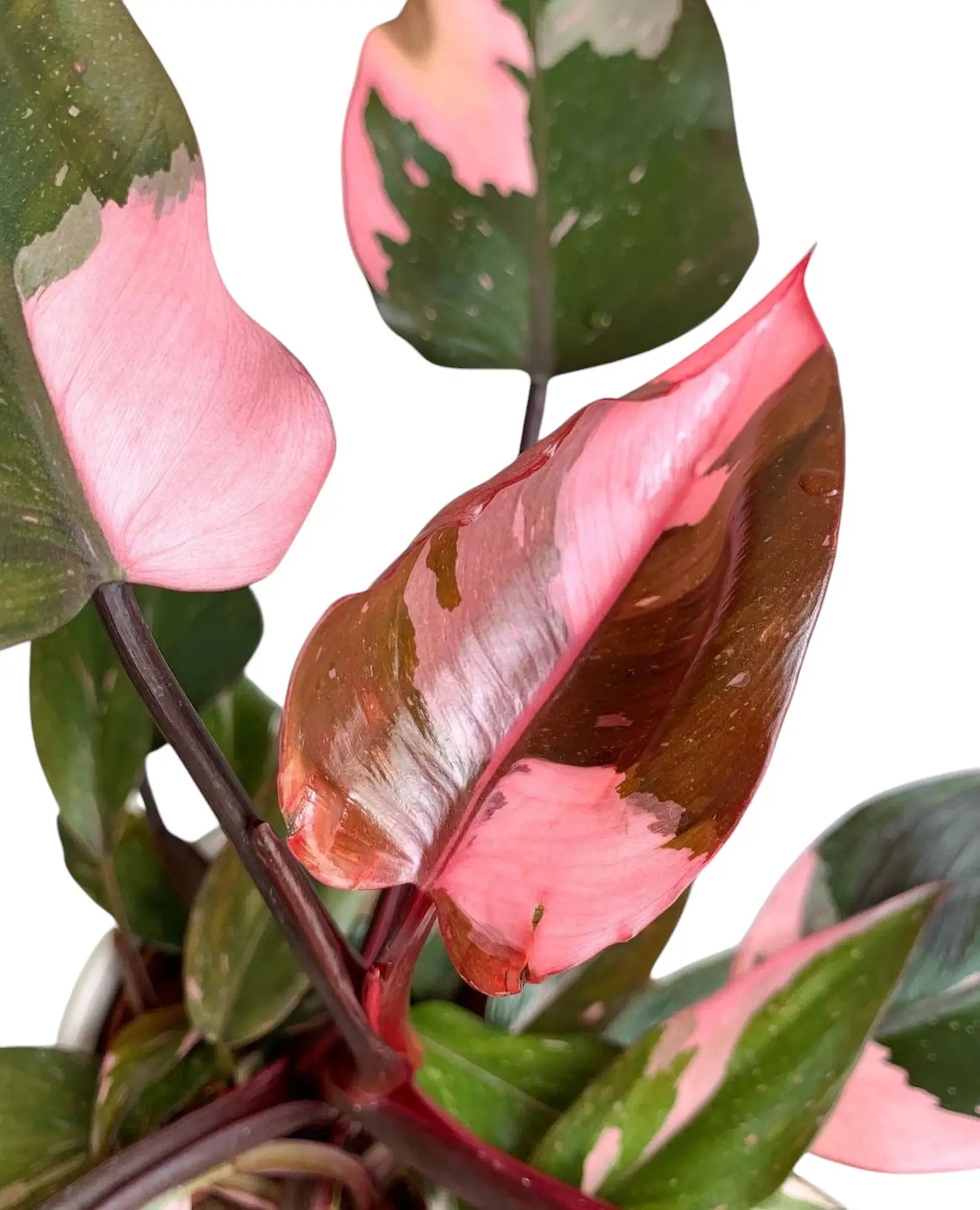
- Variegation pattern: Cream speckling and marbling are cultivar traits; density shifts leaf-to-leaf, so “perfect” pattern is not a reliable baseline.
- Pace: Expect longer gaps between leaves than green Monstera deliciosa, especially in lower light or cooler conditions.
- Space needs: A supported plant grows upward; an unsupported plant sprawls outward and stays juvenile longer.
Quick start: first two weeks after arrival
Plants settle fastest when temperature, light, and watering rhythm stay simple and consistent. Stacked changes slow adjustment and make symptoms harder to read.
- Light: Put it in very bright indirect light immediately (close to the brightest window available, or under a grow light that stays near the foliage). Avoid hard midday sun on day one.
- Warmth: Keep the root zone warm and steady; cool + wet is the most common slow decline pattern.
- Watering: Water thoroughly once it needs it, then let the mix dry back partly before watering again. Do not “top up” little and often.
- Pests: Check undersides, petioles, nodes, and unfurling growth. Treat early signs before they spread.
- Repotting: Delay repotting unless there is a clear problem (sour, waterlogged mix; rot smell; collapsed roots; pot with no drainage). A stable plant adapts faster than a disturbed plant.
- Support: If stems are already leaning or extending, add a small, rigid support now so growth trains upward instead of sprawling outward.
One useful rule: change one major variable at a time (light, pot/mix, watering pattern, or location), then judge results over the next leaf or two.
What this plant actually is
Monstera deliciosa is an accepted species native from southern Mexico to Guatemala. Monstera deliciosa 'Thai Constellation' is not a separate species and not a different wild Monstera. It is a cultivated variegated form of Monstera deliciosa selected and distributed in horticulture for a cream-speckled, marbled pattern. Care still follows Monstera deliciosa biology, even when Monstera deliciosa 'Thai Constellation' is sold as a premium collector plant.
Older range statements sometimes list Monstera deliciosa farther south. That confusion largely comes from historical misidentification within the group and overlap with closely related species. For indoor care, the practical takeaway stays the same: this is a warm-climate, climbing aroid adapted to bright forest light and an airy root environment.
Monstera deliciosa 'Thai Constellation' entered wider trade through tissue culture, which made this patterned form more reproducible and more available than many cut-propagated variegated Monsteras. Tissue culture improved access, but it did not turn Monstera deliciosa 'Thai Constellation' into a fast grower. It still tends to grow more slowly than green Monstera deliciosa, heavily variegated leaves still have less working green tissue, and small plants often need time to stabilise after shipping, transplanting, or a major shift in conditions.

Growth habit, variegation, and maturity
Variegation and leaf development
Cream sectors and speckling explain both appeal and behaviour. Pale areas contribute less to photosynthesis than dark green tissue, so a strongly variegated leaf is working with less chlorophyll overall. That is why Monstera deliciosa 'Thai Constellation' usually benefits from brighter indirect light than green Monstera deliciosa, and why growth often runs at a steadier, slower pace.
Variegation is generally more stable than the chimeric white-and-green pattern common in many cut-propagated “Monstera Albo” plants sold in trade. “Stable” still does not mean identical. Expect variation in splash, marbling, and sector size from leaf to leaf. A greener leaf does not automatically signal failure, and a heavily marbled leaf does not guarantee the next one will match.
Cosmetic reality: browned cream tissue does not turn green again. Trimming damaged edges is fine for appearance, but recovery is measured in new leaves and root health, not “healing” old cream sections.
Climbing habit, aerial roots, and fenestration
Like green Monstera deliciosa, this plant is a climbing aroid that produces aerial roots and develops larger, more cut and perforated leaves as it matures. It is not naturally compact long-term. Given time and support, Monstera deliciosa 'Thai Constellation' wants to climb, anchor, and increase leaf size.
Fenestrations are not triggered by one trick. They are a maturity response supported by conditions: enough light to fuel growth, a stem that can climb, roots that can breathe in the pot, and enough time for the plant to build strength across several leaves. A small unsupported starter plant can hold juvenile leaves for a while. A supported plant with strong light and a settled root system is far more likely to size up.


Monstera deliciosa 'Thai Constellation' care guide
For firm growth, reliable rooting, and eventual bigger leaves, focus on what changes outcomes indoors: usable light, dry-down rhythm, substrate structure, stable warmth, and support. Monstera deliciosa 'Thai Constellation' is slower than green Monstera deliciosa, but it is not fragile when conditions are steady.
Light that actually works
Think bright and close, not dim and decorative. A spot that feels bright to humans can function as low light to a variegated climber. Monstera deliciosa 'Thai Constellation' usually does best close to a bright window with protection from harsh midday sun, or under a grow light strong enough to replace daylight in a meaningful way.
- Best range: Bright indirect light for much of the day. Gentle early-morning or late-day sun can work once acclimated; hard midday sun can scorch pale tissue fast.
- Low-light reality: Survival is possible, but growth slows, internodes stretch, leaf size drops, and the mix stays wet longer.
- Grow light basics: Keep the fixture close enough to matter, and run it long enough to replace daylight (often 12–14 hours, depending on intensity and distance).
- Quick check: If a phone lux meter reads very low at leaf level for most of the day, treat that as low light, even if the room looks bright.
- Variegation and light: Better light supports stronger growth and sturdier leaves. It does not create new variegation genetics.
- Leaf clearance: Give expanding leaves space away from curtains, furniture, and foot traffic; pale tissue marks and tears easily.
Temperature and humidity
Warmth changes everything. A setup that looks fine on paper can still drift into slow decline if roots stay cool and wet for long stretches.
- Best range: Roughly 18–29°C with minimal abrupt swings.
- Cold risk: Prolonged chill slows uptake and increases stress, especially when the mix is wet. Keep Monstera deliciosa 'Thai Constellation' away from repeated cold drafts and very cold glass in winter.
- Humidity: Moderate to high humidity can help leaves unfurl more cleanly and reduce crisping on pale tissue, but it does not compensate for weak light or a suffocating mix.
- What helps: A humidifier, grouping plants, and steady airflow. Brief misting does not meaningfully raise ambient humidity.
Substrate and repotting
Roots need both moisture and oxygen. Slower growth means Monstera deliciosa 'Thai Constellation' often uses water more slowly than green Monstera deliciosa, so a dense mix can stay wet long enough to create chronic root stress.

- Use a chunky, airy mix: A moisture-holding base plus bark and mineral aggregate performs better than dense potting soil alone.
- Drainage is a system: Pot with real drainage holes + mix that stays airy through the full pot depth.
- Skip gravel layers: Stones at the bottom do not fix a wet, dense root zone.
- Repot for root health: Move up when roots have clearly filled the pot, or when the mix has broken down and stopped drying well.
- Avoid overpotting: A much larger pot increases the time roots sit in low-oxygen moisture.
- Healthy roots stay: Remove only dead, hollow, mushy, or foul-smelling roots.
Repot decision cues:
- Repot when: dry-down has slowed because the mix is compacted or breaking down, roots have fully occupied the pot, or the root zone smells sour even with sensible watering.
- Hold off when: Monstera deliciosa 'Thai Constellation' is pushing new growth, the pot dries at a reasonable pace, and roots look firm and light-coloured.
Pot choice: size, material, and drainage
Pot choice controls dry-down as much as substrate does. A perfect mix can still stay too wet in an oversized or poorly drained setup.
- Size: Step up gradually. A small root system in a large pot is a common route to slow rot.
- Material: Plastic holds moisture longer; terracotta increases evaporation and speeds drying. Match pot material to light level and watering rhythm.
- Cachepots: Keep the inner pot on a riser and empty collected water after watering.
- Stability: Taller plants on supports often need a heavier pot or a stable outer container, but drainage must still stay clear.
Watering logic
Water thoroughly, then let the mix partly dry before watering again. Aim for a usable wet-dry rhythm, not constant dampness and not bone-dry neglect. If roots never get oxygen back, Monstera deliciosa 'Thai Constellation' eventually stalls no matter how careful watering feels.
- Skip calendars: Water when the top 30–50% of pot depth is dry and the pot feels lighter.
- Simple check method: A wooden skewer pushed into the mix shows moisture deeper down; if it comes out cool and damp, wait.
- Expect the interval to change: Lower light, cooler temperatures, a larger pot, or a denser mix all mean slower drying and longer gaps between waterings.
- Why this matters more here: Slower growth means wet mix lingers longer, so root stress builds sooner than in a fast-growing green Monstera deliciosa.
- No standing water: Empty saucers and cachepots after watering.
- Water quality: Tap water is often fine. Very hard or softened water can leave residue and contribute to tip burn over time. If salts build up, flush the mix and review both water and fertiliser load.
Feeding
Monstera deliciosa 'Thai Constellation' does not need aggressive feeding. It needs enough nutrition for steady growth without leaving a heavy salt load in a slow-drying pot.
- Use a complete fertiliser: Apply at a modest dose when growth is active and conditions are bright and warm.
- Reduce when conditions limit growth: If light or temperature drops and growth slows, fertiliser should drop too.
- No foliar-fix thinking: Foliar feeding does not solve root-zone problems, weak light, or poor substrate structure.
- Flush occasionally: If fertilising regularly and runoff is minimal, flushing helps reduce salt buildup.
Propagation
Propagation is possible, but it is not always fast or forgiving. Sections with active momentum restart more reliably than tiny one-node pieces.

- You need a node: A leaf without a node will not grow into a new plant.
- Best material: A section with a node, an active growth point, and ideally an aerial root.
- Rooting media: Water, damp sphagnum, or a loose propagation mix can work if kept warm and aerated.
- Patience pays: Rooting and restart growth can take time, especially on small or very pale cuttings.
- Timing: A newly purchased starter often performs better when established first instead of being cut immediately.
Common problems and fixes
Quick troubleshooting map
Fast triage: match the symptom, then make one high-impact change first.
| What you see | Most likely cause | First move |
|---|---|---|
| Mix stays wet for ages, yellowing spreads, stem feels soft | Root oxygen collapse (dense mix, oversized pot, low light, cool conditions) | Increase light + warmth; inspect roots; repot into an airy mix if roots smell sour or feel mushy |
| Cream edges brown first | Sun scorch, salt buildup, uneven dry-down swings, or root stress | Remove harsh sun, stabilise watering rhythm, flush salts, confirm roots are firm and light-coloured |
| New leaves small, no splits, long internodes | Low usable light and/or no support; juvenile stage extended by setbacks | Move brighter, add support, reduce disturbance; judge over the next 2–4 leaves |
| Leaf tears or sticks while unfurling | Low humidity, friction, or inconsistent moisture while leaf expands | Increase humidity modestly, keep leaf clearance high, keep moisture rhythm steady |
| Deformed new growth, silvery scarring, tiny black specks | Thrips pressure (often hides in unfurling growth) | Isolate, treat in repeated cycles, focus on new growth and leaf undersides |
Browning on cream sections
Brown areas on pale parts are common because those tissues are less buffered than dark green tissue. Humidity can play a role, but it is rarely the only factor. Sun scorch, salt buildup, root stress, inconsistent watering, and physical damage while a leaf is expanding can all mark cream sections first.

- Most likely triggers: Hard direct sun, roots staying too wet, salt buildup, repeated dry-down swings, or leaves sticking while unfurling.
- What helps: Steadier moisture rhythm, better root aeration, moderate humidity, and keeping intense sun off the palest tissue.
Yellow leaves and stalled growth
A single older lower leaf yellowing can be normal turnover. Multiple yellow leaves, a sour mix smell, and stalled growth points more strongly to root stress.
- If the mix stays wet too long: Check roots and rethink pot size, substrate structure, and light level.
- If Monstera deliciosa 'Thai Constellation' dries too fast: Increase watering volume and adjust the moisture-holding part of the mix instead of compensating with tiny frequent waterings.
- If growth pauses after shipping or repotting: Hold conditions steady: warmth, bright light, and a sensible dry-down rhythm.
Small leaves, no splits, leaning growth
This is usually maturity plus conditions, not missing supplements.
- Common causes: Too little usable light, no support, root restriction, or repeated setbacks from wet roots and frequent disturbance.
- Fix: Brighter conditions, a climbable support, roots that breathe, and time across several leaves.
Pests
Spider mites, thrips, mealybugs, and scale are common indoor pests for Monstera deliciosa 'Thai Constellation'. Prevention is inspection and response time.
- Where to look: Leaf undersides, petioles, nodes, aerial roots, and unfurling growth.
- Symptom cues: Fine stippling and webbing (mites), silvery scarring and deformed new growth (thrips), cottony clusters (mealybugs), fixed bumps along stems (scale).
- Quarantine: Keep new arrivals separated before placing near the rest of a collection.
- Treat in cycles: Repeat treatments to match the pest life cycle and target the right surfaces, especially new growth and leaf undersides.
- Thrips reality: One treatment rarely ends an outbreak; consistent follow-through matters more than changing products.
Root rot
Root rot is usually the end result of a predictable combination: low light, oversized pot, compact mix, cool conditions, and frequent watering. The fix is rebuilding a root zone that can breathe.
- Signs: Yellowing and limp growth in wet mix, foul smell, black or mushy roots, or a collapsing stem base.
- Response: Unpot, remove dead roots, discard sour mix, repot into a fresh airy mix, and restart watering conservatively until new growth resumes.
How to help it size up
If larger, more fenestrated leaves are the goal, prioritise structure and consistency. Monstera deliciosa 'Thai Constellation' sizes up when it builds uninterrupted strength over time.
- Give real support: A rigid plank, stake, or sturdy pole keeps growth vertical and reduces sprawling juvenile form.
- Tie the stem, not petioles: Secure near nodes so petioles can pivot and leaves can orient naturally.
- Guide aerial roots: Tuck them into the pot or into the support; cutting them by default removes useful anchoring.
- Keep light consistent: Enough to fuel thicker stems and shorter internodes, not just enough to keep leaves alive.
- Limit disturbance: Frequent repotting, repeated moves, and constant “fixing” slows progress.
- Expect slower timelines: Heavily variegated plants often take longer between leaves, and mature fenestration builds over months and years.
Choosing a support: low-maintenance vs high-management
- Plank or coir pole: Good choice for stability and low maintenance. Attachment happens, and watering the support is optional.
- Moss pole or moisture-retentive support: Works when managed well, but it must stay airy and oxygenated. Damp is fine; cold, saturated, and stagnant around the stem is not.
- Upgrade timing: Start small, then upgrade as stems thicken. Early training is easier than trying to “correct” a sprawled plant later.
A pause after a move, repot, or shipping is common. Progress is best judged by leaf quality, stem firmness, and root health rather than daily change.

Toxicity considerations
Like other Monsteras, Monstera deliciosa 'Thai Constellation' contains insoluble calcium oxalates. Chewing can irritate the mouth and throat of pets or people.
- Pets: Keep out of reach of cats and dogs that chew foliage.
- Children: Treat as a plant that should not be mouthed or handled roughly.
- Pruning: Gloves help if sap or aroid juices trigger skin irritation.
- If eaten: Mouth irritation, drooling, and discomfort are more typical than severe poisoning, but a vet or medical professional is the right contact if symptoms are significant.
Why people still treat it as a collectible
Monstera deliciosa 'Thai Constellation' stays desirable because it combines the scale and leaf form of Monstera deliciosa with a marbled pattern that is generally more stable than many cut-propagated variegated forms. Tissue culture also turned a once far less accessible plant into something more available without making it common, fast, or interchangeable with green Monstera deliciosa.
- Stable marbling: The cultivar pattern is usually reliable overall, even though each leaf still varies.
- Slower build-up to maturity: Even well-grown plants take time to produce large, heavily fenestrated leaves.
- Starter plants need steady conditions: Small plants arrive juvenile and often restart best once temperature, light, and watering rhythm stabilise.
- Cream tissue is less forgiving: Cosmetic browning can happen even when Monstera deliciosa 'Thai Constellation' is otherwise healthy, especially after stress.
Monstera deliciosa 'Thai Constellation' is most satisfying when treated as a long-term grow: steady light, clean root conditions, and patience for a slow climb toward maturity.

Frequently asked questions
Q1: Is Monstera deliciosa 'Thai Constellation' the same as “Monstera Albo”?
No. Monstera deliciosa 'Thai Constellation' is a named cultivated variegated form of Monstera deliciosa that usually shows cream marbling and tends to be more stable in pattern than many cut-propagated albo forms. “Monstera Albo” in trade usually refers to chimeric variegated Monsteras with more sectoral white and more pruning-based management of green reversion.
Q2: Will brighter light make it more variegated?
No. Light supports stronger growth, sturdier leaves, and better spacing between nodes, but it does not create new variegation genetics. Better light helps Monstera deliciosa 'Thai Constellation' perform; it does not manufacture cream pattern.
Q3: Why are the cream parts browning first?
Cream tissue is the most delicate area on the leaf. Check for harsh direct sun, root stress, salt buildup, uneven dry-down swings, or leaves tearing while they unfurl before blaming humidity alone.
Q4: How often should I water Monstera deliciosa 'Thai Constellation'?
Water when the top 30–50% of pot depth is dry and the pot feels lighter. The interval changes with pot size, light, temperature, airflow, and substrate. “Weekly” can be right in one setup and completely wrong in another.
Q5: Why are new leaves small or still solid?
Juvenile plants often do that. Smaller or less fenestrated leaves also come from low usable light, lack of support, or repeated root stress. Monstera deliciosa 'Thai Constellation' usually sizes up over several leaves, not all at once.
Q6: Can I propagate from one leaf?
Not without a node. A rooted leaf without a node can survive for a while, but it will not produce a new vine.
Q7: What should I do with aerial roots?
Leave them, guide them into the pot or into a support, or trim only if they are genuinely in the way. Aerial roots help with anchoring and can improve how Monstera deliciosa 'Thai Constellation' interacts with support and root zone.
Q8: Do baby plants need different care?
Yes, mainly because they dry differently and have fewer reserves. Keep Monstera deliciosa 'Thai Constellation' warm, in strong indirect light, in a pot that can dry at a reasonable pace, and avoid overpotting or frequent repotting.
Q9: Can Monstera deliciosa 'Thai Constellation' flower indoors?
It can, but indoor flowering is not something to expect routinely. Monstera deliciosa 'Thai Constellation' is usually grown for foliage.
Q10: Is Monstera deliciosa 'Thai Constellation' beginner-friendly?
It can be manageable with bright usable light and a root zone that dries back partly between waterings. Most issues come from wet roots in low light rather than from the plant being inherently impossible.
Q11: Do I need a pole straight away?
A huge support is not necessary on day one, but once stems start extending, support makes a real difference. Without it, Monstera deliciosa 'Thai Constellation' can stay smaller, lean hard toward light, and sprawl instead of maturing upward.
Q12: Should I cut off browned cream sections?
Trimming for appearance is fine. Browned cream tissue will not turn green again, so prevention matters: stable moisture rhythm, good root oxygen, and no harsh sun on pale areas.
Q13: Is greener growth a “reversion”?
Leaf-to-leaf variation is normal. Monstera deliciosa 'Thai Constellation' can produce leaves with more green or more cream depending on natural variation and growth conditions, but it is generally more stable than many chimeric albo plants.


Leave a comment