

Banana Peels and Ice Cubes: Houseplant Care Myths and Misconceptions
Houseplant advice spreads easily because simple rules are easy to remember. Water every Sunday. Never wet the leaves. Add banana peel for potassium. Repot in spring. Put an ice cube on an orchid. Some of these ideas contain a useful piece of truth. Others only work in particular situations, and some become misleading once they are applied to every plant.
A better question is what the advice is meant to do, which plant it applies to, the conditions the plant is growing in, and what was actually tested.
This guide looks at 27 familiar houseplant claims through that lens. Some have straightforward answers. Others turn out to be more complicated than either the original claim or the usual debunking suggests. The aim is to give you enough context to decide what makes sense for the plant in front of you.
Myth 1: Brown leaf tips always mean underwatering
Brown tips show that leaf tissue has been damaged. The cause still needs to be identified. A plant that has dried too far can certainly develop crisp margins, and similar damage can appear when the roots have stayed wet for too long and can no longer supply water normally. Fertilizer salts, water chemistry, drying air and other stresses can contribute as well.
Start with the root zone. Feel or inspect the mix below the surface and think about the recent watering pattern. Has the root ball repeatedly dried hard? Has it stayed wet for unusually long periods? Has fertilizer been applied more heavily or more often than usual? If the plant is sensitive to particular dissolved salts, the water itself may also deserve attention.

“Hard water” and water with a high salt level are not the same thing. Hard water mainly contains more dissolved calcium and magnesium. Other salts can build up as well, and a sensitive plant may react to a particular mineral or salt even when the water is not especially salty overall. You usually do not need to test the water unless the plant is known to be sensitive or the watering history points in that direction.
Dry air can matter for some plants, especially where leaves are exposed to a drying draught, but humidity is not a universal explanation either. Compare the damage with the plant’s known requirements and the conditions around it.
Once leaf tissue has died and turned brown, it will not become green again. The aim is to work out what is affecting current growth and prevent the damage from continuing.
Myth 2: Yellow leaves always mean overwatering
Yellowing is a clue. Its pattern and growing conditions determine what to investigate. Too much water is one possible cause, and yellow leaves can also appear after severe drying, low light, cold exposure, poor root function, nutrient problems, pests or normal ageing.
The pattern matters. One old lower leaf fading while the rest of the plant grows normally tells a different story from several young leaves becoming pale at once. Yellow tissue with greener veins can point toward a problem with nutrient availability. Use that pattern as a clue and check the wider conditions before adding a particular nutrient. Nutrients may already be present while damaged or poorly functioning roots struggle to take them up.
Start by asking which leaves changed and when. Then check the root-zone moisture, recent light and temperature, root condition and signs of pests. A wet pot and a yellow leaf do not by themselves prove that overwatering caused the problem, just as a dry-looking leaf does not prove that the plant needs an immediate drink.
If the plant is otherwise growing well and only an old leaf is ageing, no rescue treatment may be needed at all. If the yellowing is spreading, appearing in new growth or arriving with other symptoms, the wider pattern gives you the better starting point. For a fuller symptom check, see our guide to yellow leaves.
Myth 3: Neglected plants bounce back instantly
A wilted plant can look dramatically better after watering. That quick change is real: the cells regain water and the leaves become firm enough to hold themselves up again. But a quick return of firmness does not prove that the whole plant has recovered.
Severe drought can damage fine roots and growing tissues. It can also leave some potting media, especially dried peat-rich mixes, difficult to wet evenly. Water may run down gaps around the root ball and out of the drainage holes while the centre remains dry. When that happens, “water came out of the bottom” is not enough information. Apply water slowly and check whether it actually reached the root zone.
The opposite problem can also produce wilting. Roots can struggle to function when the potting mix stays constantly wet and contains too little air, even though plenty of water is present. If a plant is wilted in wet mix, adding more water before checking the roots and drainage can make the situation worse.
Recovery is therefore something to watch over time. Renewed firmness is encouraging. Stable leaves, normal water use and healthy new growth tell you more about whether the plant is functioning again. Dead brown tissue stays dead, and a badly stressed plant may need time before active growth resumes.
There is no universal number of hours or days that proves recovery, and there is no fixed moment when every recovering plant should be fertilized again. Let the plant’s condition, roots and renewed growth guide the next step.
Myth 4: All indoor plants tolerate low light
“Indoor plant” describes where people grow a plant. It is not a light requirement.
Some houseplants genuinely adapt to relatively low light. The idea that low-light-tolerant plants merely survive is also too simple. In a 2024 study that recreated workplace conditions, the surviving plants from all three species tested continued to grow under low light. One Pachira in the low-light group died from reported root rot and was excluded. The study was small, so it cannot tell us the minimum light level that works for houseplants in general.
The important point is variation. A plant can be healthy at a light level that would leave another plant slowly declining. Growth rate, leaf form and water use can also change with light, so a plant that remains healthy in a dimmer position may grow differently from the same species in brighter conditions.

Judge the light where the leaves actually are. Window direction, glazing, nearby buildings, curtains, shelves and neighbouring plants all change what reaches them. A 2025 study of daylight for indoor plants reached the same practical conclusion: there is no single indoor light level that suits every houseplant.
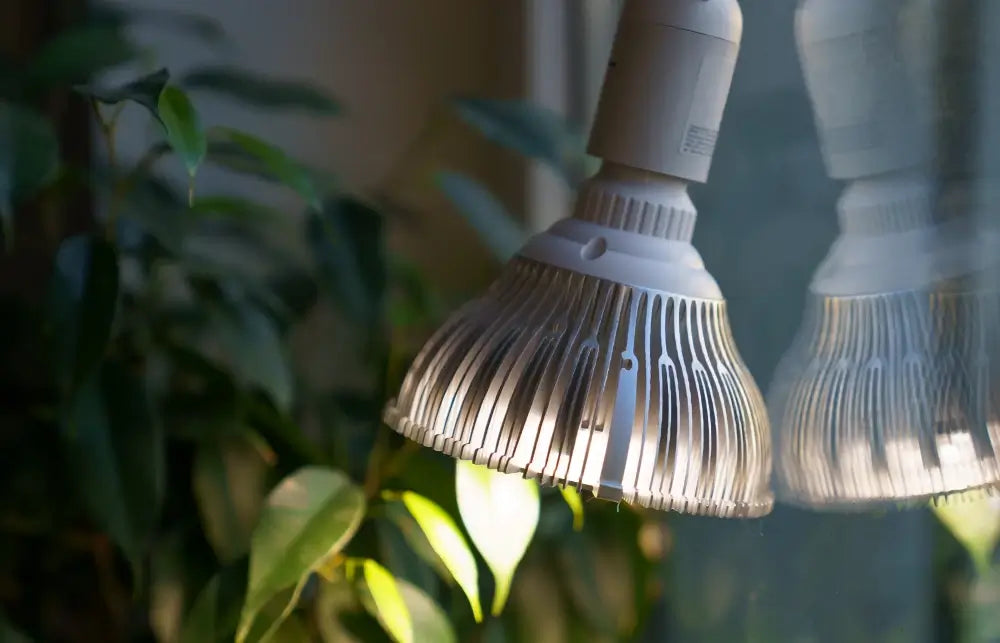
If the available daylight is too low for the plant you want to grow, choose a plant better matched to that position or add suitable artificial light. Our seasonal light and grow-light guide explains how changing daylength and indoor light affect plant care. Aim for enough usable light for healthy growth, using the plant’s actual needs to judge the position.

Myth 5: All houseplants thrive outdoors in summer
A summer outdoors can be excellent for some houseplants, but “outside” is not simply “inside with better light.”
Even outdoor shade can be much brighter than an indoor windowsill. Wind can dry a pot faster. Rain changes the watering balance. Night temperatures can fall sharply. A pot placed on a surface that blocks its drainage hole may stay far wetter after a storm than it ever did indoors. Outdoor plants can also acquire pests before they come back into the house.
Summering outdoors changes the plant’s whole growing environment. Start suitable plants in a sheltered position and increase exposure gradually. Check the expected night temperatures against the plant’s tolerance. Reassess watering because both rain and faster drying may alter the routine. Make sure excess water can leave the pot.
Before bringing the plant back indoors, inspect the foliage, stems and potting material. Outdoor plants can pick up pests, so a careful inspection gives you a chance to catch a problem before it spreads indoors.
Some plants can grow strongly outdoors for part of the year. Others are better left where their indoor conditions already suit them. The right choice depends on the plant and the environment you can actually provide. Our summer outdoor guide covers the move in more detail.
Myth 6: More light creates more variegation
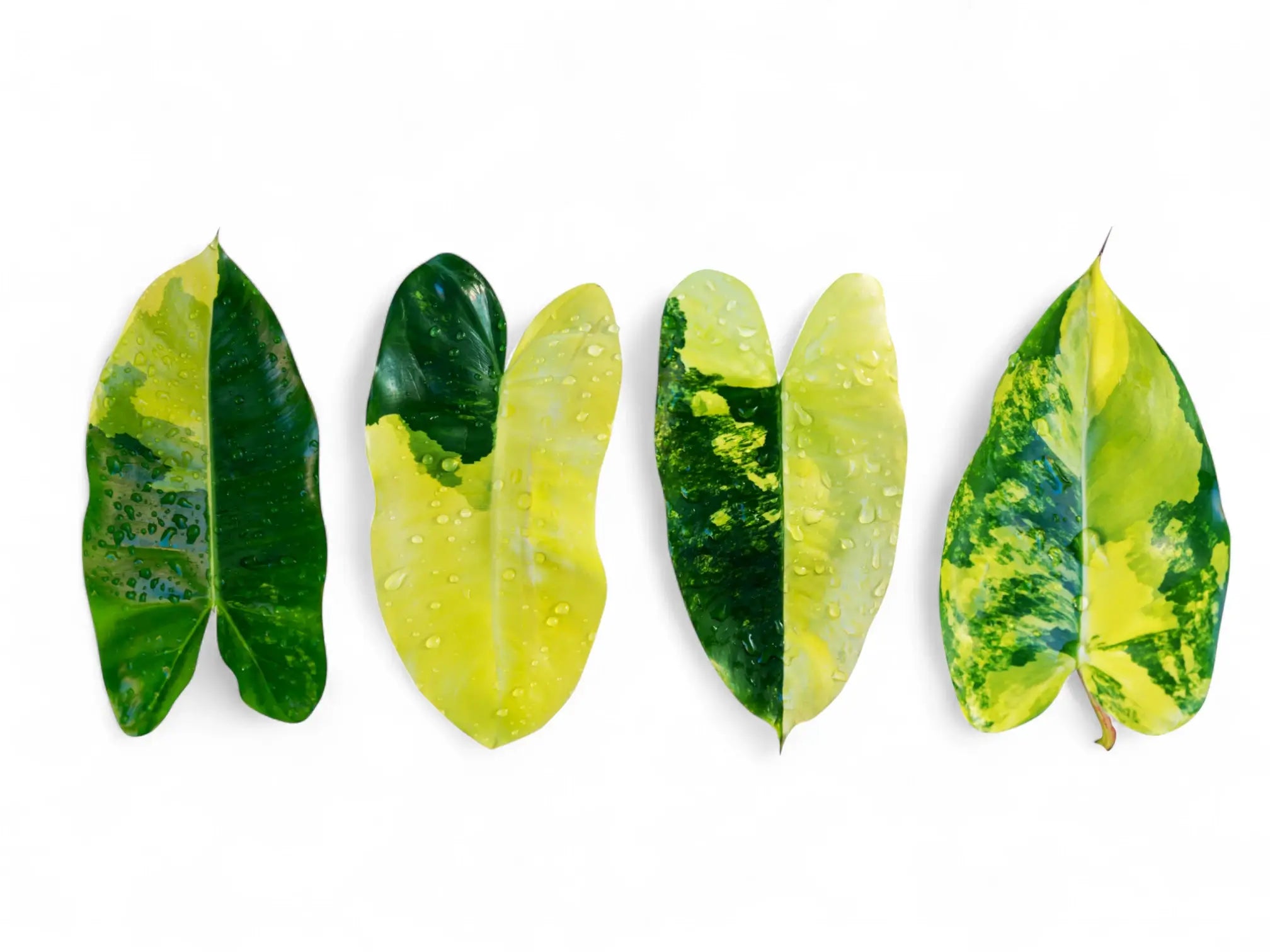
Light can change how an existing colour pattern appears, but it does not simply create a new stable inherited variegated pattern.
Variegation can come from several different mechanisms. In a chimera, different groups of cells in the same shoot have different genetic make-ups, and their arrangement creates the visible pattern. Some silver markings come from the way leaf tissues reflect light even though chlorophyll is still present. Red and purple areas may come from anthocyanins, the pigments that produce those colours. Because the causes differ, the patterns can respond to light in different ways.
That makes “more light = more variegation” too simple. In an indoor-light experiment with polka dot plant, new leaves had less non-green area under lower light. Their shape changed too: the leaves became narrower as light increased. At the two brighter settings they were also smaller on average than at the middle setting, although the study could not show that this size difference was reliable. Researchers rated the broader leaves as more attractive, which was a matter of appearance, not plant health. An ivy cultivar in the same experiment showed no clear change in its non-green area across the light levels, and leaf age also affected the pattern.
Light can therefore change how an existing pattern shows on the leaf, and different plants can respond in different ways. It cannot simply create a new inherited variegated pattern.
A shoot that begins producing fully green leaves raises a separate question: reversion. In a chimera, the mix of cells in a particular growing point matters. Selective pruning can sometimes favour patterned growth that remains elsewhere on the plant. A striped stem still cannot tell you exactly what a hidden bud will produce, so even a carefully placed cut cannot guarantee the next pattern.
Choose light first for healthy growth. Then observe how new leaves express the plant’s existing pattern. For more on the mechanisms behind patterned foliage, see our variegated plants guide.
Myth 7: Strict watering schedules work for every plant
Light, temperature and growth all change how quickly a pot uses water. That is why a watering schedule works best as a reminder to look at the plant, not as the thing that decides whether water is due.
How quickly a pot dries changes with light, temperature, airflow, the size of the plant and its roots, the pot itself, and the potting mix. The plant’s own tolerance matters too. A mix that is suitably dry for one species may already be too dry for another.
Check below the surface, where the roots are actually growing. The top of the pot can dry while the centre remains moist, or the surface can look dark while the root ball beneath has become unevenly dry. How far the mix should dry depends on the plant, pot and potting mix.
This is also why broad rules for “succulents” can fail. A Christmas cactus is a forest cactus, not a desert cactus, and its guidance does not call for repeatedly drying the potting mix to the same degree as a drought-adapted desert species.
A calendar can still be useful. “Check these plants every Sunday” is sensible. “Water every plant every Sunday” is a different claim. Our watering guide explains how to check moisture and judge how far the potting mix should dry before watering.
Myth 8: Watering houseplants with ice cubes is best
A direct experiment with Phalaenopsis orchids gives a more nuanced answer.
Researchers gave flowering Phalaenopsis a measured amount of ice or the same amount of liquid water while the plants grew in bark-based potting media at two sites. They found no clear difference in how long individual flowers or the overall flower display lasted. The tested ice treatment therefore did not cause the inevitable flower damage that is often claimed for this method.

That answers one useful question—how long the flowers lasted under the tested conditions—but it does not show that ice is the best way to water orchids. At one site, some cultivars differed in the dry weight of leaf or living-root tissue measured at the end of the trial. The study did not settle questions about long-term survival, repeat flowering, every aspect of root health or orchids grown in other systems.
Research on cold injury in Phalaenopsis does not answer the same question. Chilling the whole plant for a sustained period is different from placing a measured amount of ice on the pot and letting it melt.
For ordinary home care, liquid water is the simplest option. When the potting medium is ready for water, wet it evenly so the roots receive enough, let excess drain and avoid leaving water trapped where the plant is sensitive to it. If someone uses a measured amount of ice on a bark-grown Phalaenopsis, this study does not support calling the method universally harmful or universally better.
Myth 9: Daily misting reliably fixes low humidity
Misting puts liquid water on leaves. Relative humidity describes water vapour in the air. Those are related parts of the water cycle, but they are not the same treatment.
A hand spray can briefly change the air right around the leaves as droplets evaporate, but it will not reliably hold a whole room at a chosen humidity. If humidity matters for a particular plant, measure it near the plant and compare the reading with guidance for that species and growing setup. Then choose something that can actually raise the humidity, such as a suitable humidifier or an enclosure where that is appropriate.

Plants themselves can raise room humidity under some conditions. In a Boston-fern office experiment, adding more fern pots raised the measured relative humidity while the rooms were empty, the doors were closed and air conditioning was off. A 2025 study in a naturally ventilated office also found higher humidity after eight Epipremnum aureum plants were added and linked the change with how airborne particles behaved. Neither experiment tells you that clustering a few plants will humidify a home or how many plants would be needed to maintain a particular humidity in an occupied room.
Pebble trays have the same basic limitation. Water evaporating from a tray may affect the immediate surroundings, but a tray is not a dependable room-humidity control system. Keep the pot itself above standing water if you use one.
There is also a reason not to dismiss water on leaves completely: many studied plants can absorb water through their foliage. Some Tillandsia, for example, have specialized leaf structures that collect and absorb water. In propagation, controlled mist can help unrooted cuttings lose less water while roots form. This shows that water on leaves can have a real biological role, but it does not make daily hand-misting a reliable humidity treatment for established houseplants.
If you deliberately raise room humidity, check the result and watch the room as well as the plant. Persistent condensation and damp surfaces are signs that the indoor environment needs attention too.
Myth 10: Water on leaves causes damage
Water on foliage is not inherently damaging. What happens depends on the plant, the temperature, how long the surface stays wet, whether water becomes trapped, and whether a suitable pathogen is present.
African-violet research provides one useful example. Rapid cooling of the leaf can injure its cells, so washing temperature-sensitive foliage with very cold water can create damage through temperature change. That is different from saying a hairy leaf automatically rots when it gets wet.
Disease is conditional too. A susceptible plant, a pathogen and suitable environmental conditions must come together. The relationship is not even the same for every disease: liquid water can inhibit powdery mildew even though humid air can favour it. “Wet leaf equals fungus” is therefore too broad to be useful.
The familiar idea that every sunlit droplet acts like a magnifying glass is also too simple. In experiments with smooth Acer and Ginkgo leaves, droplets did not produce the expected scorching. On Salvinia, hairs held droplets above the surface in a position that could focus light and cause injury. The arrangement mattered.
Plant structure creates genuine exceptions. Tank-forming bromeliads are adapted to hold water in a central reservoir, and that water needs to be refreshed. Not every bromeliad forms a tank, and not every crown should be treated like one.
For ordinary cleaning or rinsing, use a method the leaf surface tolerates and do it when the leaves will be able to dry reasonably well afterwards. If spots appear, look at temperature, where water collected, how long the leaves stayed wet and whether the damage is spreading before deciding on the cause.
Myth 11: Houseplants only need fertilizer in warm months
Fertilizer timing should follow what the plant is doing, not the calendar alone.
Nutrient demand depends on growth, usable light, temperature, root health and what fertilizer is already available in the medium. Many indoor plants slow down during darker periods, so reducing feeding can make sense. Others continue growing under strong indoor light. Cyclamen is a familiar example of a plant that can be active during cooler parts of the year.
How much fertilizer a plant receives over time matters more than any single feeding. If the concentration and volume stay the same, feeding more often supplies more nutrients overall. A plant using more water because a room is hot or dry does not automatically need fertilizer every time it is watered.
Too much soluble fertilizer can build up around the roots. If the plant has genuinely received too much fertilizer and the mix drains freely, plain water can carry some of those salts out through the drainage holes. A pot that stays waterlogged or has failing roots needs a different response first.
Water quality can complicate the picture as well. Hard water mainly contains more calcium and magnesium, while salinity refers to the overall amount of dissolved salts. A sensitive plant can still be damaged by one particular mineral or salt even when the total salt level is not especially high. These differences matter when the watering history or the plant’s known sensitivity points to a water-quality problem. Extra fertilizer only helps when the plant actually needs more nutrients.
Feed according to actual growth and the product directions. For product choice and timing, see our houseplant fertilizer guide.
Myth 12: Coffee grounds, eggshells and banana peels make ideal fertilizer
A material can contain nutrients without being a predictable houseplant fertilizer.
Used coffee grounds are a good example. Their effect changes with how they are prepared, how old they are, how much is used and where they are placed. In experiments with radish and tomato, grounds aged for seven months or less reduced growth when mixed into the soil. Grounds aged for 14 months improved growth when mixed in, yet placing the same aged grounds on the surface reduced radish seedling survival. “Coffee grounds help plants” and “coffee grounds hurt plants” are both too broad.
Eggshells are mostly calcium carbonate, so their clearest direct effect is changing soil acidity. In a 2024 experiment using finely prepared eggshell in acidic soils, soil pH changed within seven days. Swiss chard produced more growth in one sandy clay loam treatment at one tested dose, while the other comparisons were unclear. This does not show that coarse kitchen eggshell will correct a suspected calcium deficiency in a houseplant pot.
Banana peels tell the same story from another angle. They contain plant nutrients, especially potassium, and composted or otherwise processed peel can supply useful nutrients. Composting studies have produced nutrient-rich banana-peel compost; greenhouse work with banana-peel compost has improved some crop growth measures; charred banana-peel material has also been investigated as a potassium source. Those results concern processed materials. They do not show that burying fresh peel in a houseplant pot or soaking peel in water creates a balanced, measurable fertilizer.
The phrase “banana-peel tea” can sound precise even though the amount of nutrient that ends up in the liquid depends on the peel, preparation, water, time and method. More importantly, a plant does not need extra potassium simply because banana peel contains potassium.
Kitchen scraps can become useful after proper composting or processing. For routine feeding in a container, a labelled fertilizer has one major advantage: you know what it contains and how much you are applying.
Myth 13: Bigger pots always make plants grow faster
More root space really can help a plant grow. That is exactly why the simple warning that “large pots always slow growth” is unsatisfactory.
A review that combined many studies of root space found that plants grew substantially more, on average, when their roots had more room. Roots need usable space, and restricting them can limit growth.
The catch is that a larger pot also changes how much water the potting mix can hold. Whether that causes a problem depends on how airy the mix is, the size and shape of the pot, how you water, and how quickly the plant uses that water. A large pot can still work well when those conditions suit the roots.
There is no universal rule that every houseplant should move up by exactly one pot size. A modest increase is often convenient because it is easy to manage, but the right choice depends on the root ball, the potting mix and the plant’s growth.
Choose a larger pot when the plant genuinely needs more root room and when you can keep the new mix moist enough without leaving the roots short of air.
Myth 14: Houseplants need frequent repotting
Repotting is useful when it solves a problem. Time alone is a weak reason to disturb a plant that is growing well in a potting mix that still works well and a pot that still fits.
A plant may need repotting because the roots have filled most of the pot, because the potting mix has collapsed or broken down, because watering has become difficult to manage, or because damaged roots need attention. Sometimes fresh potting mix is all that is needed, and the same pot can still be appropriate.

One root visible through a drainage hole does not tell you everything about how restricted the plant is. Neither does a root circling the edge of the pot. Look at the whole plant, how the medium behaves, how quickly it dries and how much usable root space remains.
Repotting can also disturb roots, especially if old medium is removed or roots are cut. That does not make repotting harmful; it means the amount of disturbance should match the job. If an intact root ball can be moved with little disruption, there is no benefit in dismantling it simply because you are repotting.
Some houseplants remain comfortable in the same container longer than people expect. Others fill a pot quickly. Repot because the plant or medium gives you a reason. Our repotting guide covers the full process.
Myth 15: Tropical houseplants should only be repotted in spring
Spring is often convenient for routine repotting because increasing light and active growth can help a plant recover. The condition of the plant still matters more than the calendar.
If a plant has a confirmed root problem, badly degraded potting mix or another issue that genuinely needs fixing, waiting months for a calendar date may not help. A freshly shipped, severely dehydrated or otherwise stressed plant still benefits from being left alone when repotting is not necessary.
Ask two questions. Does this work need doing now? And can the plant recover well under the light, warmth and care available afterwards?
For a healthy plant that simply needs more space, a period of active, steady growth is convenient. For a necessary correction, the plant’s actual condition matters more than the season name.
Myth 16: Cutting roots makes plants stronger
Root pruning has real uses in horticulture. It is not a universal way to make an ordinary houseplant more vigorous.
Healthy roots are working tissue. They absorb water and nutrients and store or transport resources. Removing them creates wounds and reduces root surface, at least initially. That is why routine cutting without a purpose is difficult to justify.
Roots can compensate for some pruning in the short term. In a maize pot experiment, the remaining roots moved water more efficiently for their size soon after some roots were cut. The response depended on how much root was removed and how much water the plants received, and the difference was no longer clear later. This shows a short-term response in maize under those conditions; it does not show that cutting healthy roots generally makes houseplants grow better.
Bonsai growers use root pruning deliberately to manage size and maintain plants in restricted containers. Removing clearly dead or decayed roots can also be necessary. In both cases, the cutting has a clear purpose.
If you are considering removing healthy roots, know what you want the pruning to achieve and whether the plant tolerates it. There is no single safe percentage of healthy roots that can be removed from every houseplant.
Myth 17: Dust on leaves does not matter
A light coating of dust may look cosmetic, but enough dust can reduce the light reaching the leaf. Cleaning also makes it easier to inspect foliage for pests, residue and developing damage.

The method should suit the leaf. Smooth, sturdy leaves can often be wiped gently with a soft damp cloth. Some spiky plants are easier to clean with a soft brush. Leaves with a natural waxy bloom or delicate surface can be permanently marked by rubbing, so “make every leaf glossy” is not a good cleaning goal.
There is no useful universal timetable for cleaning. If dust is visibly accumulating, the leaf surface gives you the cue.
Myth 18: Leaf-shine products are necessary for healthy leaves
Leaf shine is cosmetic. Healthy foliage does not need to look polished.
The product itself still matters. In experiments with Ficus benjamina, several leaf-shine products were applied before the plants spent five days in darkness to mimic shipping. Most treatments later changed the amount of light the leaves needed before photosynthesis balanced the carbon the plant lost through respiration. One product showed no clear change from untreated plants.
Under a microscope, the leaf pores were still open after the tested products were applied. An earlier part of the experiment also found no obvious change in how much water vapour left the leaves, although that result was reported with less statistical detail.
These findings apply only to the older products that were tested, so modern formulations may behave differently.
If the goal is simply to remove dust, use a cleaning method appropriate to the leaf surface. If you use a cosmetic product, check that it is suitable for that plant and treat the shine as an appearance effect.
Myth 19: Touching plants makes them grow better
Plants really do respond when they are repeatedly touched or moved. That is the interesting truth behind this myth.
Touch, brushing, wind and repeated movement can change how a plant grows and responds to stress. That still does not make repeated touching a useful household care treatment.
In a direct African-violet experiment, researchers repeatedly brushed two cultivars using either a latex-gloved hand or a bare hand coated with body lotion. Across the cultivars, brushed plants showed more visible damage and had less total leaf area than plants left unbrushed. A clean bare-hand treatment was not included, so ordinary gentle touching remains outside what this experiment tested.
Other experiments show that touch can trigger defence and growth responses in plants. They confirm that plants notice repeated physical contact, but they do not show that habitual stroking makes a houseplant stronger.
Handle plants when you need to inspect, clean, prune, move or repot them. There is no need to be afraid of normal contact, and no evidence-based reason to turn touching into a care routine.
Myth 20: Every houseplant needs regular pruning
Pruning is useful when the plant’s growth habit and your purpose make it useful.
A climbing Epipremnum can often produce new shoots from leaf joints after a stem is shortened. Woody Dracaena can produce shoots below a stem cut. A snake plant usually needs little routine pruning; damaged leaves can be removed at the base when necessary. Many bromeliads also do not need routine shape pruning.

Palms show why it matters to know where a plant can grow again after a cut. A typical palm stem has a single growing point at its top. Removing that point can kill the stem, and a single-stemmed palm may be lost. “Cut it back to make it bushier” does not work as general houseplant advice.
Before cutting healthy growth, ask what you want the cut to do and where the plant can grow from afterwards. Keep enough healthy leaf area to support photosynthesis. Use clean tools, especially when moving between plants.
Reverted growth needs a more careful decision. If a variegated shoot has genuinely become fully green, selective pruning can favour patterned growth that remains. The growing point left behind must still be capable of producing the pattern, and enough healthy green tissue must remain to support the plant. A striped stem does not reveal exactly what every hidden bud will produce, so even a carefully placed cut cannot guarantee the next leaf’s pattern.
Prune for a defined reason and with the plant’s growth habit in mind.
Myth 21: Home remedies eradicate pests overnight
When a pest is causing the damage, the useful question becomes “What am I actually treating?” A one-off household treatment may kill exposed pests while leaving hidden stages or eggs behind.
First, identify the pest. Two-spotted spider mites, for example, can cause fine pale speckling on the upper surface of leaves. Check the undersides for the mites themselves; fine webbing can appear in heavier infestations but may be absent early. Speckling alone does not prove that mites are the cause. Mealybugs often hide around new growth and where leaves meet stems, root mealybugs can live around the roots, and a scale cover may remain attached even after the insect beneath it has died.
Different pest life stages can also be easier or harder to reach. Eggs, hidden insects or pests beneath covers can survive a treatment that kills exposed individuals. A contact spray only works where it reaches a pest that is vulnerable to it.
“Soap” is a good example of why formulation matters. Formulated insecticidal soaps are designed for pest control, while household detergents contain different ingredients and can damage foliage, especially at unsuitable concentrations or on sensitive plants. Neem products vary too. Some contain azadirachtin, which can interfere with feeding or development and may act differently from a simple contact spray.
Once you know the pest, choose a method or product permitted for that use where you live, follow the label and inspect the plant afterwards. Repeat treatment only as the method and instructions call for it. Keep an infested plant away from the rest of the collection when that will help limit spread, and physically remove reachable pests where that can be done without damaging the plant.
Effective pest control depends on the pest, the formulation and the life stages that remain after treatment. For pest-specific identification and treatment, browse our pest-control guides.
Myth 22: Cinnamon is a magic rooting hormone and fungicide
Studies have found real effects from some cinnamon preparations, so the answer is more complicated than either “it works” or “it is useless.”
First decide what result you mean. A treatment might help more cuttings form roots without producing longer or better roots. Another might increase the number of roots. Reducing a fungal infection is a separate question.

In one study, researchers made a filtered water extract from cinnamon powder. It slowed Botrytis cinerea in laboratory tests and was followed by a modest drop in infection when sprayed on tomato plants. The laboratory result was much clearer than the result on living plants.
In a 2024 Prometheum leaf-cutting experiment, a higher percentage of cuttings rooted after treatment with cinnamon powder, but some other treatments produced longer, better-quality roots. The cinnamon was not fully identified, and some numbers in the paper conflict with one another, which makes the result harder to interpret or repeat.
Another 2024 cutting study used cinnamon together with IBA, a rooting compound used to encourage root formation. That combination produced more roots than some other treatments, but it did not increase the percentage of cuttings that rooted. Because both were used together, the study cannot show how much of the effect came from cinnamon.
Cinnamon can have real effects, but the result depends on how it is prepared, which plant or fungus is involved and what you are trying to achieve. The useful conclusion is narrower: particular cinnamon preparations can affect particular plants or fungi under particular conditions.
For propagation, healthy starting material, clean tools, suitable light, suitable moisture and an appropriate rooting method remain the foundation. If you want a rooting product, choose one with clearly stated ingredients and directions.
Myth 23: Tissue-cultured plants are inferior to cuttings
Tissue culture is a way to propagate plants. The quality of a plant for sale depends on how it was grown in culture, how well it adjusted after leaving the culture vessel and how it was grown afterwards.
Young plants inside culture vessels develop in protected, humid conditions. Leaving that environment is a major change. Their leaves and roots must adjust to lower humidity, different light and a different balance between taking up and losing water. This adjustment period is called acclimatization or hardening, and it can be delicate even when the plant later establishes well.

Tissue-cultured plants can establish successfully. When buying one, ask what stage you are actually getting. Is it still growing in its culture container, or in vitro? Has it only recently been removed and started hardening? Or is it already established in ordinary growing conditions? Roots, continuing new growth and the plant’s recent handling tell you more than the words “tissue cultured.”
Plants in tissue culture are grown under very clean laboratory conditions, but that alone does not prove they are free from every disease-causing organism. Specialized methods using tiny growing tips called meristems can remove particular viruses in particular crop systems, followed by testing.
How closely a tissue-cultured plant stays true to type can depend on the plant itself, the tissue used to start the culture and how the new plants are produced. Some methods can produce plants that differ from the intended form. In research on variegated snake plant, plants grown from some rhizome material kept the familiar patterned edges, while plants started from other tissues developed different appearances. The propagation method can therefore affect the result, but loss of variegation is not inevitable.
When buying, look at the plant’s stage, health, roots and new growth. Those details tell you more about quality than the propagation method alone.
Myth 24: Painted or dyed succulents are harmless
Artificial colouring can mean several different treatments, and they do not all affect a plant in the same way.
A directly relevant 90-day study followed commercially colour-treated Echeveria agavoides and Echeveria elegans. Treated plants continued to produce new leaves, and their measured height, width and new-leaf production showed no clear difference from untreated plants.

Some colouring treatments were followed by changes in leaf shape or colour. All groups still received the study’s highest appearance grade, “excellent,” because that score only judged whether a plant still looked saleable. It did not measure tissue healing, how the leaves exchanged gases, root health or long-term survival.
The study also gives limited detail about the exact products used, how thickly they were applied and how much of each leaf they covered. Surface paint, absorbed dye and glued decorations are different treatments, so findings from one should not automatically be applied to the others.
In this short trial, the treated Echeveria kept growing and some leaves changed in appearance. The experiment does not tell us whether every colouring method is harmless over the longer term. If a colouring treatment, or an attempt to remove it, damages the leaf tissue, that injury can leave lasting scars.
If you prefer to avoid the uncertainty, choose an untreated plant. If you already own a treated one, do not assume that scrubbing, solvents or peeling are safe removal methods; the study did not show that these methods were safe.
Myth 25: “Non-toxic” means completely pet-safe
Buying and growing decisions extend beyond the plant itself when animals share the home. A “non-toxic” listing only addresses poisoning risk for the animal species it covers. Eating the plant, physical injury and animal species the source has not assessed are separate questions.
Start by separating three situations: the plant is known to be toxic to that pet, it is specifically listed as non-toxic, or its status is unknown or missing from the source you are checking. “Not listed” is not the same as “proven safe.”
Even a plant classified as non-toxic can cause stomach or intestinal upset if enough material is eaten. Fibrous leaves, spines, sharp edges or irritating sap can cause physical injury. Potting media, fertilizers and other products in the pot can create their own risks if a pet chews or swallows them.
If poisoning is suspected, contact a veterinarian or animal-poison service promptly. Do not wait for symptoms or finish a plant-identification search before seeking professional advice when the exposure may be toxic. Severe signs such as breathing difficulty or seizures need urgent veterinary care.
For prevention, identify the plant and use a toxicity source for that animal species where one exists. Keep potentially harmful plants and pot products out of reach, remembering that a determined cat may reach places that look inaccessible from the floor.
Myth 26: Plants become inactive at night
Darkness stops the light-driven reactions of photosynthesis, but the plant keeps working. It continues to respire, using stored sugars for energy, and maintains its tissues through the night.
Some plants use CAM photosynthesis, which adds another layer to the story. Many succulents and some orchids take in carbon dioxide mainly at night and store it until daylight, when it can be used in photosynthesis.
Taking in carbon dioxide at night does not mean a plant releases oxygen in complete darkness. The part of photosynthesis that releases oxygen requires light. CAM also does not automatically mean that a plant makes a meaningful difference to bedroom air; room air quality depends on much more than when one plant takes in and releases gases.
Plants can also be affected by excessively long light periods. Experiments with foliage plants have found damage or poorer growth and appearance under continuous light in some plants. The appropriate day length depends on the plant and the lighting system.
So darkness changes what the plant is doing; it does not make the plant inactive.
Myth 27: Houseplants significantly purify indoor air
Plants can affect some pollutants under certain test and room conditions. A few ordinary potted plants, however, cannot replace removing pollution at its source, ventilation or suitable air filtration in a home.
The modern claim grew partly from experiments in sealed or partly enclosed chambers, including the well-known NASA work. Those studies showed that plants and their pots could remove some volatile organic compounds, or VOCs, from a fixed amount of air. The scale matters. A plant removing some pollution from a small chamber over a set period does not tell you how a few pots will perform in a much larger room where fresh air is constantly entering and leaving.
Airflow matters too. Some purpose-built planted systems use fans to pull air through roots, potting material or planted walls. Ordinary houseplants rely on room air drifting past them. These setups work very differently.

Studies in real rooms have produced mixed results. Some office and school and office studies reported lower VOC levels after plants were added. Results like these are harder to interpret when researchers compare the same room before and after adding plants without also following a similar room left unchanged. A 2026 randomized office study found no clear overall change in airborne particles, VOCs or carbon dioxide during the period with plants.
Plants can also affect indoor air indirectly. In a 2025 naturally ventilated office study, adding eight Epipremnum aureum plants increased relative humidity. The researchers linked the higher humidity with more airborne particles settling and fewer outdoor particles entering the room. Those findings apply to that office setup. They do not tell us how many plants would remove particles in a typical home, and they are not a reason to raise home humidity above 60%.
A separate 2025 office study found that ordinary numbers of potted plants made little difference to the amount of fungi or bacteria in settled dust or to the overall mix of fungi present. Some fungi moved between the potting soil and room dust, but the study did not show that a few houseplants meaningfully change the mix of microbes in the room.
CAM plants may take in carbon dioxide at night, but that does not mean they release oxygen in complete darkness or clean enough air to make a meaningful difference across a room.
If indoor air quality is the goal, start with the pollutant. Remove or control the source where possible. Use effective exhaust ventilation for indoor sources and bring in clean outdoor air when appropriate. Airborne particles need filters designed to catch particles, while gases and VOCs need materials designed to capture those compounds and enough capacity for the room and pollution source.
Keep plants because they are worth growing, and appreciate the real ways they interact with their surroundings. For deliberate pollution control, use measures designed and sized for that job. For a deeper look at how the air-cleaning claim developed and what the evidence means in ordinary homes, read our air-purifying houseplants guide.
Conclusion: Better plants, fewer myths
Plant myths last because simple rules are easier to remember than all the conditions that make them true. A useful tip still has to fit the plant, the growing conditions and the job you want it to do.
When new advice sounds convincing, ask what plant it was tested on, how the treatment was actually used, whether the conditions were similar to yours, and what changed in the plant. Then look at the plant in front of you.
Good plant care starts with the plant in front of you: how it is growing, what its roots and leaves are showing, and the conditions around it.
Find plants for your conditions
Use our Plant Finder to compare houseplants by the conditions you can provide and choose a better match for your space.
Sources and further reading
-
Royal Horticultural Society Advice Team (n.d.). Chlorosis. Accessed 18 September 2026.
-
University of California Statewide Integrated Pest Management Program (2020). Houseplant Problems. Accessed 18 September 2026.
-
Sugano, S.; Ishii, M.; Tanabe, S.-I. (2024). Adaptation of indoor ornamental plants to various lighting levels in growth chambers simulating workplace environments. Scientific Reports, 14, 17424.
-
Kim, J.; Kang, S. W.; Pak, C. H.; Kim, M. S. (2012). Changes in Leaf Variegation and Coloration of English Ivy and Polka Dot Plant under Various Indoor Light Intensities. HortTechnology, 22(1), 49–55.
-
Conover, C. A.; Poole, R. T.; Nell, T. A. (1982). Influence of Intensity and Duration of Cool White Fluorescent Lighting and Fertilizer on Growth and Quality of Foliage Plants. Journal of the American Society for Horticultural Science, 107(5), 817–822.
-
Marcotrigiano, M. (1997). Chimeras and Variegation: Patterns of Deceit. HortScience, 32(5), 773–784.
-
Royal Horticultural Society Advice Team (n.d.). How to water containers. Accessed 18 September 2026.
-
Daniel, K.; Hartman, S. (2024). How plant roots respond to waterlogging. Journal of Experimental Botany, 75(2), 511–525.
-
Durand, S.; Jackson, B. E.; Fonteno, W. C.; Michel, J.-C. (2021). The Use of Wood Fiber for Reducing Risks of Hydrophobicity in Peat-Based Substrates. Agronomy, 11(5), 907.
-
Royal Horticultural Society (n.d.). How to grow Christmas cactus. Accessed 18 September 2026.
-
South, K. A.; Thomas, P. A.; van Iersel, M. W.; Young, C.; Jones, M. L. (2017). Ice Cube Irrigation of Potted Phalaenopsis Orchids in Bark Media Does Not Decrease Display Life. HortScience, 52(9), 1271–1277.
-
United States Botanic Garden (n.d.). Orchid Care Tips. Accessed 18 September 2026.
-
American Orchid Society (n.d.). Phalaenopsis Culture Sheet. Accessed 18 September 2026.
-
Berry, Z. C.; Emery, N. C.; Gotsch, S. G.; Goldsmith, G. R. (2019). Foliar water uptake: Processes, pathways, and integration into plant water budgets. Plant, Cell & Environment, 42(2), 410–423.
-
Ohrui, T.; Nobira, H.; Sakata, Y.; Taji, T.; Yamamoto, C.; Nishida, K.; Yamakawa, T.; Sasuga, Y.; Yaguchi, Y.; Takenaga, H.; Tanaka, S. (2007). Foliar trichome- and aquaporin-aided water uptake in a drought-resistant epiphyte Tillandsia ionantha Planchon. Planta, 227(1), 47–56.
-
Dawson, T. E.; Goldsmith, G. R. (2018). The value of wet leaves. New Phytologist, 219(4), 1156–1169.
-
Royal Horticultural Society (n.d.). Powdery mildews. Accessed 18 September 2026.
-
Sanchez, O.; Burnett, S. E.; Peterson, B. J. (2020). Environment, Photosynthesis, and Adventitious Rooting of Manchurian Lilac Cuttings Propagated in Overhead Mist, Submist, and Combination Systems. HortScience, 55(1), 78–82.
-
Chicago Botanic Garden, Plant Information Service (n.d.). Orchids as Houseplants. Plant Information Service handout, pp. 1–5. Accessed 18 September 2026.
-
American Orchid Society (n.d.). Humidity for Plants. Accessed 18 September 2026.
-
Egri, Á.; Horváth, Á.; Kriska, G.; Horváth, G. (2010). Optics of sunlit water drops on leaves: conditions under which sunburn is possible. New Phytologist, 185(4), 979–987.
-
Royal Horticultural Society (n.d.). How to grow bromeliads. Accessed 18 September 2026.
-
Kadohama, N.; Goh, T.; Ohnishi, M.; Fukaki, H.; Mimura, T.; Suzuki, Y. (2013). Sudden Collapse of Vacuoles in Saintpaulia sp. Palisade Cells Induced by a Rapid Temperature Decrease. PLOS ONE, 8(2), e57259.
-
Conover, C. A.; Poole, R. T. (1981). Influence of Light and Fertilizer Levels and Fertilizer Sources on Foliage Plants Maintained under Interior Environments for One Year. Journal of the American Society for Horticultural Science, 106(5), 571–574.
-
University of Connecticut Home and Garden Education Center (2016). Houseplant Fertilization. Revised 2016. Accessed 18 September 2026.
-
Royal Horticultural Society Advice Team (n.d.). How to Feed Plants. Accessed 18 September 2026.
-
Chicago Botanic Garden (n.d.). Cyclamen. Accessed 18 September 2026.
-
Horgan, F. G.; Floyd, D.; Mundaca, E. A.; Crisol-Martínez, E. (2023). Spent Coffee Grounds Applied as a Top-Dressing or Incorporated into the Soil Can Improve Plant Growth While Reducing Slug Herbivory. Agriculture, 13(2), 257.
-
Sebonela, L. K.; Elephant, D. E.; Sithole, N. J. (2024). Eggshells Improve Soil pH and P Availability in Sandy Loam and Sandy Clay Loamy Soil. Agronomy, 14(11), 2539.
-
Poorter, H.; Bühler, J.; van Dusschoten, D.; Climent, J.; Postma, J. A. (2012). Pot size matters: a meta-analysis of the effects of rooting volume on plant growth. Functional Plant Biology, 39(11), 839–850.
-
Royal Horticultural Society Advice Team (n.d.). Overpotting. Accessed 18 September 2026.
-
Royal Horticultural Society Advice Team (n.d.). How to repot a plant. Accessed 18 September 2026.
-
Royal Horticultural Society (n.d.). How to grow hoya. Accessed 18 September 2026.
-
Yan, M.; Zhang, C.; Li, H.; Zhang, L.; Ren, Y.; Chen, Y.; Cai, H.; Zhang, S. (2023). Root pruning improves maize water-use efficiency by root water absorption. Frontiers in Plant Science, 13, 1023088.
-
Finkle, A. (2018). I have noticed a lot of dust on my houseplants. What is the best way to clean them?. New York Botanical Garden, Plant Information Service. Accessed 18 September 2026.
-
Barthlott, W.; Mail, M.; Bhushan, B.; Koch, K. (2017). Plant Surfaces: Structures and Functions for Biomimetic Innovations. Nano-Micro Letters, 9(2), 23.
-
Royal Horticultural Society (n.d.). How to grow epipremnum. Accessed 18 September 2026.
-
Royal Horticultural Society (n.d.). How to grow dracaena. Accessed 18 September 2026.
-
Royal Horticultural Society Advice Team (n.d.). Reversion. Accessed 18 September 2026.
-
Broschat, T. K. (2013). Palm Morphology and Anatomy. UF/IFAS Extension, ENH1212/EP473. Original publication May 2013; reviewed February 2019. Accessed 18 September 2026.
-
Joiner, J. N.; Conover, C. A.; Poole, R. T. (1983). Influence of Leaf Shine Compounds on Light Compensation Point of Ficus benjamina. HortScience, 18(3), 373–374.
-
Brotton, J. C.; Cole, J. C. (2009). Brushing Using a Hand Coated with Body Lotion or in a Latex Glove Decreases African Violet Plant Quality and Size. HortTechnology, 19(3), 613–616.
-
Chehab, E. W.; Yao, C.; Henderson, Z.; Kim, S.; Braam, J. (2012). Arabidopsis touch-induced morphogenesis is jasmonate mediated and protects against pests. Current Biology, 22(8), 701–706.
-
American Orchid Society; Freitas-Astúa, J. (2003). Viruses. Includes material from Orchids, September 2003. Accessed 18 September 2026.
-
Royal Horticultural Society Advice Team (n.d.). Indoor plants: sap-feeding insects and mites. Accessed 18 September 2026.
-
Royal Horticultural Society Advice Team (n.d.). Glasshouse red spider mite. Accessed 18 September 2026.
-
Cloyd, R. A. (2024). “Soaps” and Detergents: Should They Be Used on Roses?. American Rose Society. Accessed 18 September 2026.
-
Bond, C.; Buhl, K.; Stone, D. (2012). Neem Oil General Fact Sheet. National Pesticide Information Center. Accessed 18 September 2026.
-
Kowalska, J.; Tyburski, J.; Krzymińska, J.; Jakubowska, M. (2020). Cinnamon powder: an in vitro and in vivo evaluation of antifungal and plant growth promoting activity. European Journal of Plant Pathology, 156(1), 237–243.
-
Parlakova Karagöz, F.; Dursun, A.; Yıldırım, K. (2024). Vegetative Propagation of Wild Prometheum sempervivoides (Fischer Ex M. Bieb.) H. Ohba by Leaf Cutting: Effects of Auxin and Some Substances. Research in Agricultural Sciences, 55(3), 132–141.
-
Oliveira, F. C. de; Oliveira, I. V. de; Pereira Junior, E. J.; Vendruscolo, E. P.; Seleguini, A. (2024). Estaquia de rosa do deserto em função do tratamentos e do tempo de cura da estaca. Revista AgroTecnologia, 15(1), 34–42.
-
Druege, U.; Hilo, A.; Pérez-Pérez, J. M.; Klopotek, Y.; Acosta, M.; Shahinnia, F.; Zerche, S.; Franken, P.; Hajirezaei, M. R. (2019). Molecular and physiological control of adventitious rooting in cuttings: phytohormone action meets resource allocation. Annals of Botany, 123(6), 929–949.
-
Royal Horticultural Society Advice Team (n.d.). Leaf cuttings. Accessed 18 September 2026.
-
Hazarika, B. N. (2003). Acclimatization of tissue-cultured plants. Current Science, 85(12), 1704–1712.
-
Bahnamirei, M. K.; Sarmast, M. K.; Alizadeh, M.; Dahkaei, M. N. P. (2025). Innovative in vitro shoot regeneration in variegated snake plant (Sansevieria trifasciata cv. Laurentii) through utilization of light exposed single-node rhizome tissue. Scientific Reports, 15, 39505.
-
Kang, C.-M.; Kim, M.-J.; Hong, J.-S.; Jeong, R.-D. (2025). Managing Plant Viruses in Tissue-Cultured Apple and Grapevine: Strategies for Detection and Eradication. The Plant Pathology Journal, 41(5), 545–565.
-
ASPCA Animal Poison Control (n.d.). Toxic and Non-Toxic Plants. Accessed 18 September 2026.
-
ASPCA Animal Poison Control (2019). What to Do if Your Pet Is Poisoned. Accessed 18 September 2026.
-
Wolverton, B. C.; Johnson, A.; Bounds, K. (1989). Interior Landscape Plants for Indoor Air Pollution Abatement. NASA Technical Memorandum 101766.
-
Cummings, B. E.; Waring, M. S. (2020). Potted plants do not improve indoor air quality: a review and analysis of reported VOC removal efficiencies. Journal of Exposure Science & Environmental Epidemiology, 30(2), 253–261.
-
Wood, R. A.; Burchett, M. D.; Alquezar, R.; Orwell, R. L.; Tarran, J.; Torpy, F. (2006). The Potted-Plant Microcosm Substantially Reduces Indoor Air VOC Pollution: I. Office Field-Study. Water, Air, and Soil Pollution, 175(1-4), 163–180.
-
Felgueiras, F.; Mourão, Z.; Moreira, A.; Gabriel, M. F. (2026). Nature-Based Solutions for Office Workers: A Randomized Controlled Trial on Indoor Plants to Enhance Well-Being and Productivity. Environments, 13(8), 457.
-
Putzolu, S.; Baraldi, R.; Neri, L.; Zaldei, A.; Vagnoli, C.; Gioli, B.; Nawrocki, A.; De Benedictis, C. (2026). Effects of Green Plants on the Indoor Environment: Real-Life Case Studies in Italian Schools and Office Spaces. Atmosphere, 17(6), 596.
-
United States Environmental Protection Agency (2026). Improving Indoor Air Quality. Updated 3 August 2026. Accessed 18 September 2026.
-
United States Environmental Protection Agency (2018). Guide to Air Cleaners in the Home. Second edition, July 2018. Accessed 18 September 2026.
-
Winter, K. (2019). Ecophysiology of constitutive and facultative CAM photosynthesis. Journal of Experimental Botany, 70(22), 6495–6508.
-
Junqueira, A. H.; Chimin, B. R.; Pierre, E. V.; Peetz, M. da S. (2022). Post-production Growth and Quality of Echeveria agavoides and Echeveria elegans Treated with Artificial Coloring. International Journal of Advanced Engineering Research and Science, 9(10), 86–93.
-
Jiang, J.; Irga, P.; Coe, R.; Gibbons, P. (2024). Effects of indoor plants on CO₂ concentration, indoor air temperature and relative humidity in office buildings. PLOS ONE, 19(7), e0305956.
-
United States Environmental Protection Agency (2026). A Brief Guide to Mold, Moisture and Your Home. Updated 18 February 2026. Accessed 18 September 2026.
-
American Phytopathological Society (n.d.). Nutrient Disorders. Accessed 18 September 2026.
-
Drake, O. (2023). Moving houseplants outdoors for summer. Royal Horticultural Society, 22 June 2023. Accessed 18 September 2026.
-
Johnson, M. P. (2016). Photosynthesis. Essays in Biochemistry, 60(3), 255–273.
-
United States Geological Survey (2018). Hardness of Water. Water Science School, 11 June 2018. Accessed 21 September 2026.
-
United States Environmental Protection Agency (2026). Ionic Strength. CADDIS. Updated 3 March 2026. Accessed 19 September 2026.
-
Ayers, R. S.; Westcot, D. W. (1985). Water quality for agriculture. FAO Irrigation and Drainage Paper 29, Revision 1. Food and Agriculture Organization of the United Nations.
-
Scialdone, A.; Mugford, S. T.; Feike, D.; Skeffington, A.; Borrill, P.; Graf, A.; Smith, A. M.; Howard, M. (2013). Arabidopsis plants perform arithmetic division to prevent starvation at night. eLife, 2, e00669.
-
Gould, K. S. (2004). Nature’s Swiss Army Knife: The Diverse Protective Roles of Anthocyanins in Leaves. Journal of Biomedicine and Biotechnology, 2004(5), 314–320.
-
Royal Horticultural Society Advice Team (n.d.). Grey mould. Accessed 22 September 2026.
-
Royal Horticultural Society (n.d.). How to grow sansevierias. Accessed 23 September 2026.
-
Kaur et al. (2025). Impact of indoor plant-induced relative humidity on PM concentration in indoor urban environment. Atmospheric Pollution Research, 16(6), 102468.
-
Leslie et al. (2025). Indoor potted plants have little effect on office dust fungal communities. Indoor Environments, 2(2), 100092.
-
Szczepańska-Rosiak, E.; Sowa, J.; Mastalerz, K.; Heim, D. (2025). Useful daylight illuminance for ornamental plants in buildings – The method to design the green interior. Energy and Buildings, 330, 115315.
-
Kalemelawa, F.; Nishihara, E.; Endo, T.; Ahmad, Z.; Yeasmin, R.; Tenywa, M. M.; Yamamoto, S. (2012). An evaluation of aerobic and anaerobic composting of banana peels treated with different inoculums for soil nutrient replenishment. Bioresource Technology, 126, 375–382.
-
Islam, M.; Halder, M.; Siddique, M. A. B.; Razir, S. A. A.; Sikder, S.; Joardar, J. C. (2019). Banana peel biochar as alternative source of potassium for plant productivity and sustainable agriculture. International Journal of Recycling of Organic Waste in Agriculture, 8, 407–413.
-
Kitundu, M. P.; Msuya, N.; Katima, Z. (2024). Production of Potassium-Rich Biofertilizer from Composted Banana Peels and Watermelon Rinds. Tanzania Journal of Engineering and Technology, 44(1), 118–136.
-
Teshome, Z. T. (2022). Effects of banana peel compost rates on Swiss chard growth performance and yield in Shirka district, Oromia, Ethiopia. Heliyon, 8(8), e10097.


Leave a comment