Light
Full sun / direct • approx. 40,000–80,000 lux

VAT included · plus
Your new plant has just travelled a long way and needs a calm start in its new home. For step-by-step unboxing and first-week care, check our after-delivery care guide. For deeper tips on how your plant settles in over the next weeks, read our houseplant acclimatization guide.
Secure shipping, carefully packed orders with safe delivery across the EU, UK and Switzerland.
28-day plant guarantee, if a plant arrives damaged or fails soon after delivery, we help you make it right.
Free returns, simple, cost-free returns according to our policy.
For full details, please see:
Please head to our FAQ Page or Contact us.
Quick Care Guide
Light
Full sun / direct • approx. 40,000–80,000 lux
Watering
Water when ~90–100% dry
Substrate
Gritty • Ultra fast-draining • Mineral-heavy • Fine-medium
Temperature
Ideal: 10–30 °C • Avoid below: 1 °C
Humidity
Normal 40–50 %
Growth habit
Upright succulent cactus.
Support
not needed
Growth speed
Average
Max size indoors
Max. height: 600 cm • Max. spread: 100 cm
Toxicity & safety
Non-toxic; physical injury risk
Origin & habitat
Native to Mexico (Oaxaca)
Outdoor growing
Outside from 10 °C · rain-sheltered spot
These care values are quick reference points for indoor growing. Use them as a guide, then adjust for pot size, substrate, temperature and how quickly the substrate dries.
For more detail, read the full product description or visit our Plant Care Guides.
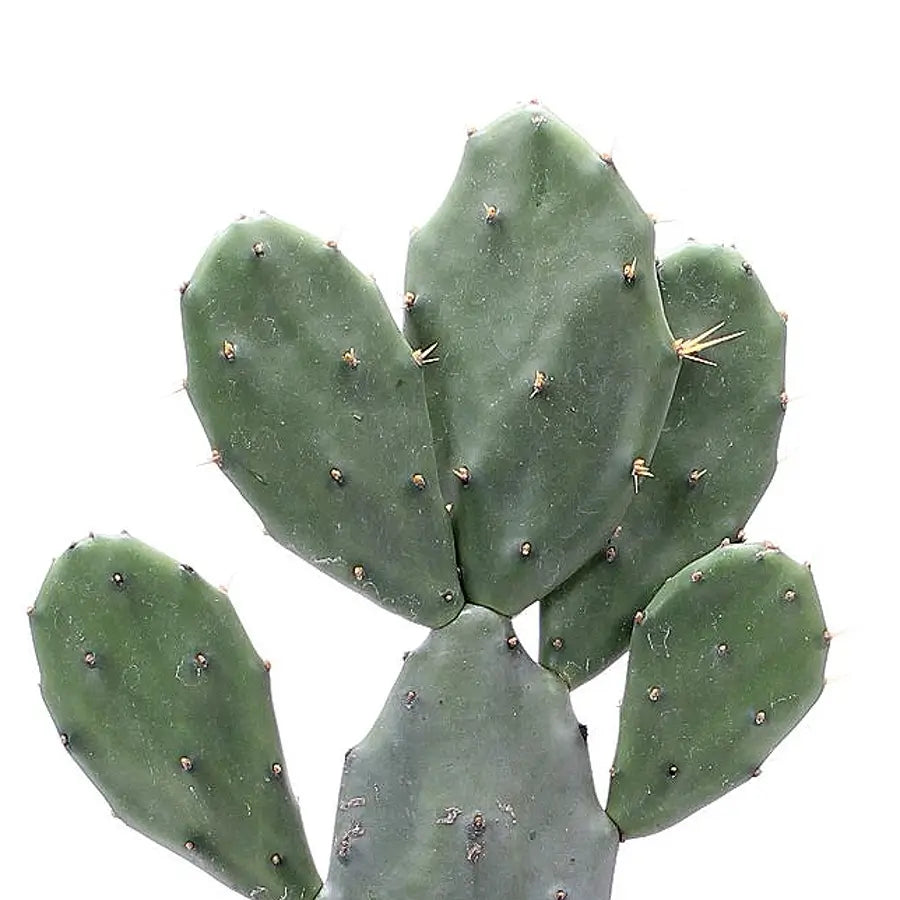
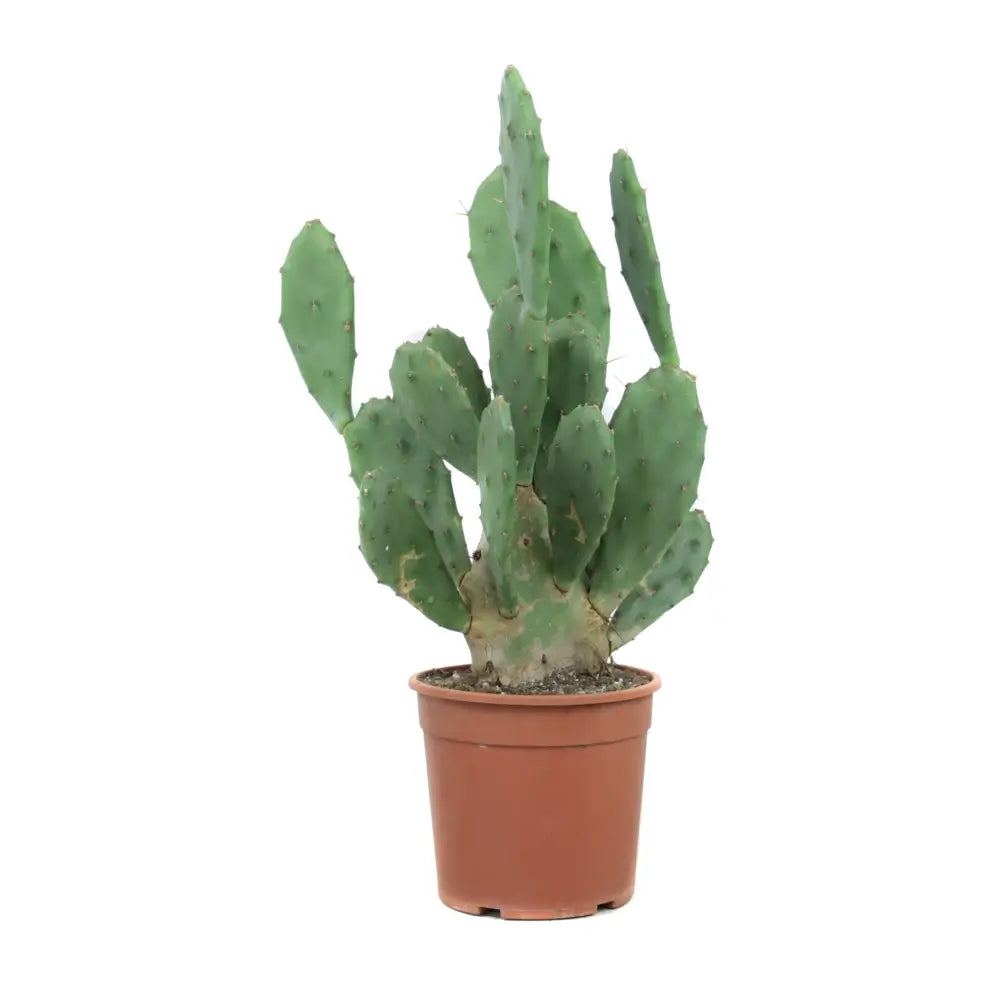
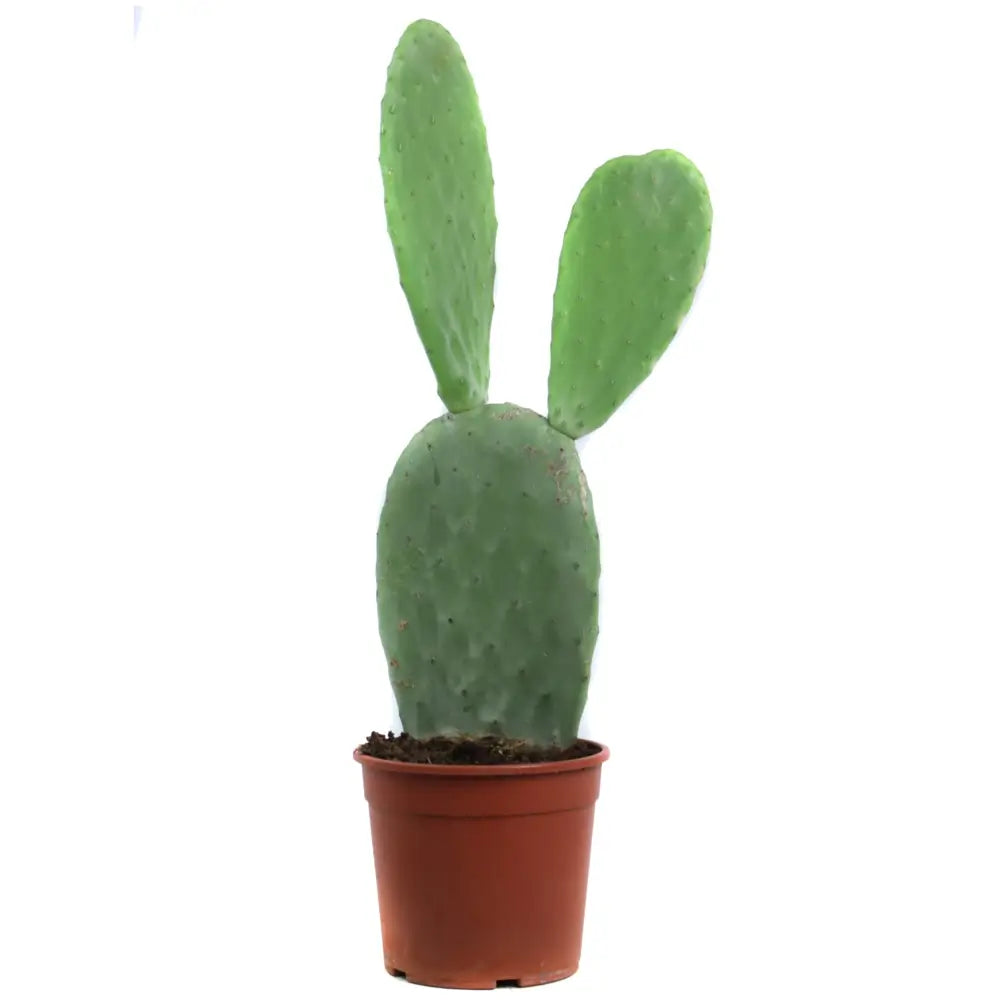
Opuntia ficus-indica, commonly known as the prickly pear, is one of the most important domesticated cacti in human history. Cultivated for thousands of years, it is valued both for its fleshy fruits and as a forage plant in arid landscapes. In cultivation it forms a large, shrubby to tree-like succulent with a woody trunk and broad, flattened pads, reaching 1 – 6 meters in height. With its iconic silhouette and long agricultural history, this species is as practical as it is ornamental.
The exact origin of Opuntia ficus-indica is unknown, though most evidence points to central Mexico, where it has been cultivated for at least 8,000 years. From there it spread across the Americas before the arrival of Europeans. After Columbus, it was introduced to Europe and beyond, becoming established in the Mediterranean, around the Red Sea, in southern Africa, and in Australia. Today it is naturalized in many dry regions worldwide.
This species is a cornerstone of arid agriculture. Its pads (nopales) are used as a vegetable, while its fruits (tunas) are widely eaten fresh or processed into jams, juices, and sweets. In many regions, it has also served as drought fodder for livestock. Beyond agriculture, it is grown ornamentally for its striking form and vibrant flowers.
The genus name Opuntia refers to the ancient Greek city of Opus in the region of Locris, where Theophrastus described a plant with rooting leaves, though its true identity remains debated. The species epithet ficus-indica combines a resemblance to the fig (Ficus carica) with the mistaken belief that the Americas were the Indies–an error dating back to Columbus. The fruits were introduced to Europe by the Spanish in the mid-1500s following the conquest of the New World.
Few plants combine history, beauty, and utility as well as Opuntia ficus-indica. Whether valued for its fruits, striking flowers, or bold desert form, it remains a living link between ancient cultivation and modern horticulture.
Plant names, growth habits, natural habitats and indoor care guidance are checked against trusted botanical, habitat and horticultural references before publication.View our plant care resources and references.
Sign up for Foliage Factory newsletter for early access to new arrivals and practical care tips that work in real homes.