Light
Bright indirect • approx. 10,000–20,000 lux

VAT included · plus
Your new plant has just travelled a long way and needs a calm start in its new home. For step-by-step unboxing and first-week care, check our after-delivery care guide. For deeper tips on how your plant settles in over the next weeks, read our houseplant acclimatization guide.
Secure shipping, carefully packed orders with safe delivery across the EU, UK and Switzerland.
28-day plant guarantee, if a plant arrives damaged or fails soon after delivery, we help you make it right.
Free returns, simple, cost-free returns according to our policy.
For full details, please see:
Please head to our FAQ Page or Contact us.
Quick Care Guide
Light
Bright indirect • approx. 10,000–20,000 lux
Watering
Water when ~30–50% dry
Substrate
Aerated • Moisture-buffered • Balanced organic + mineral • Medium
Temperature
Ideal: 19–25 °C • Avoid below: 15 °C
Humidity
Humid 60–80 % +
Growth habit
Upright epiphytic shrub.
Support
not needed
Growth speed
Average
Max size indoors
Max. height: 200 cm • Max. spread: 150 cm
Toxicity & safety
Pet safety unconfirmed
Origin & habitat
Native to Philippines (Luzon)
Outdoor growing
Outside from 15 °C · sheltered spot
These care values are quick reference points for indoor growing. Use them as a guide, then adjust for pot size, substrate, temperature and how quickly the substrate dries.
For more detail, read the full product description or visit our Plant Care Guides.
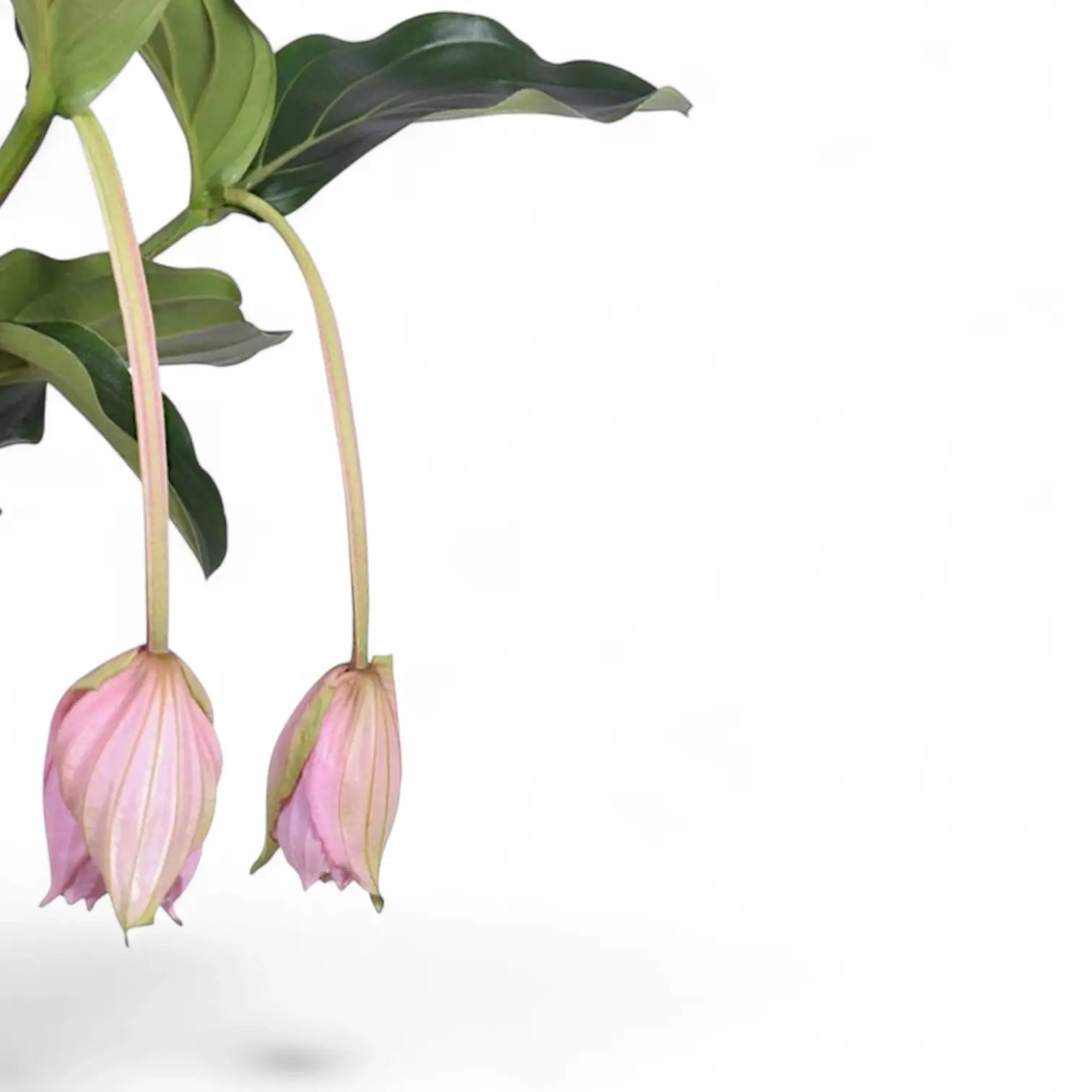
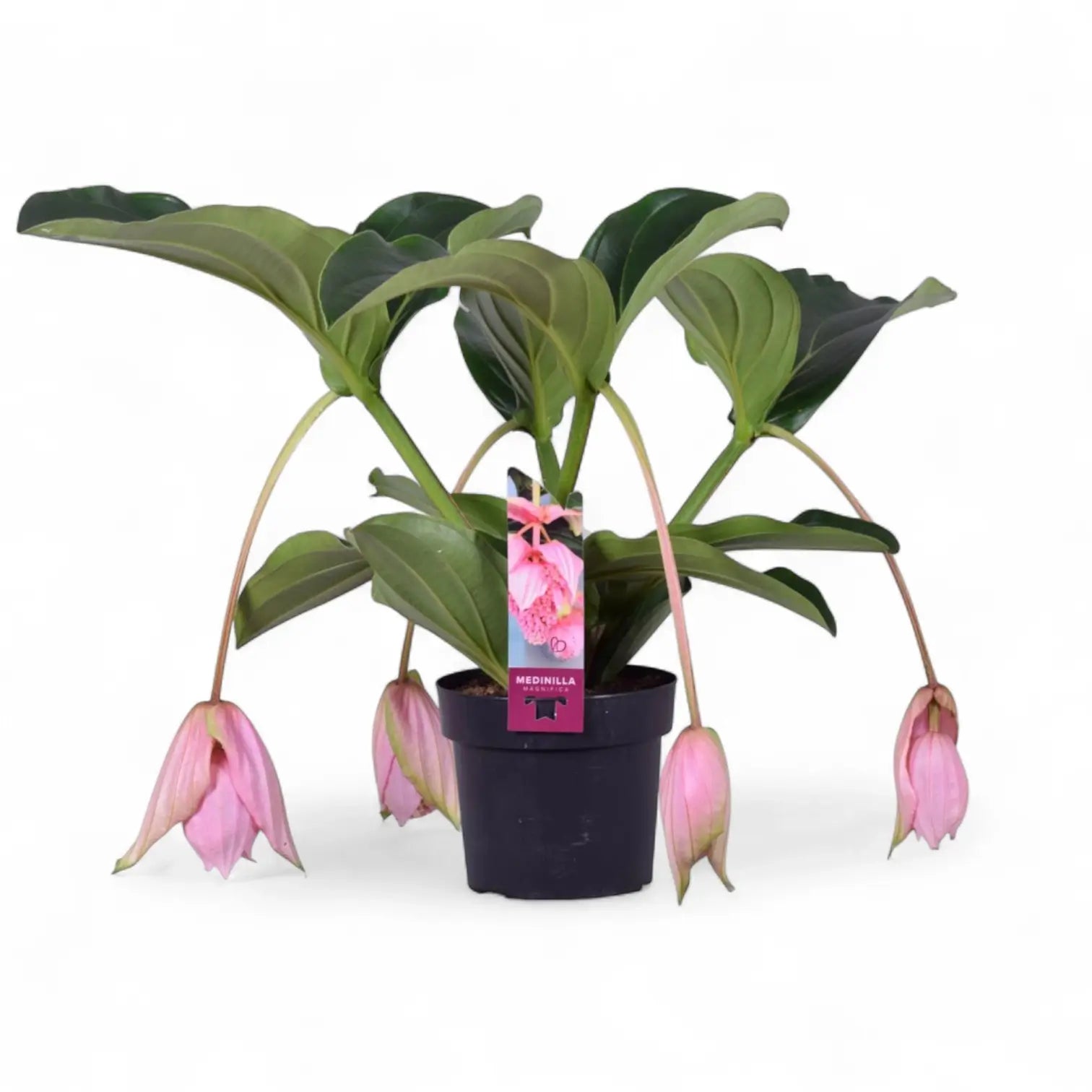
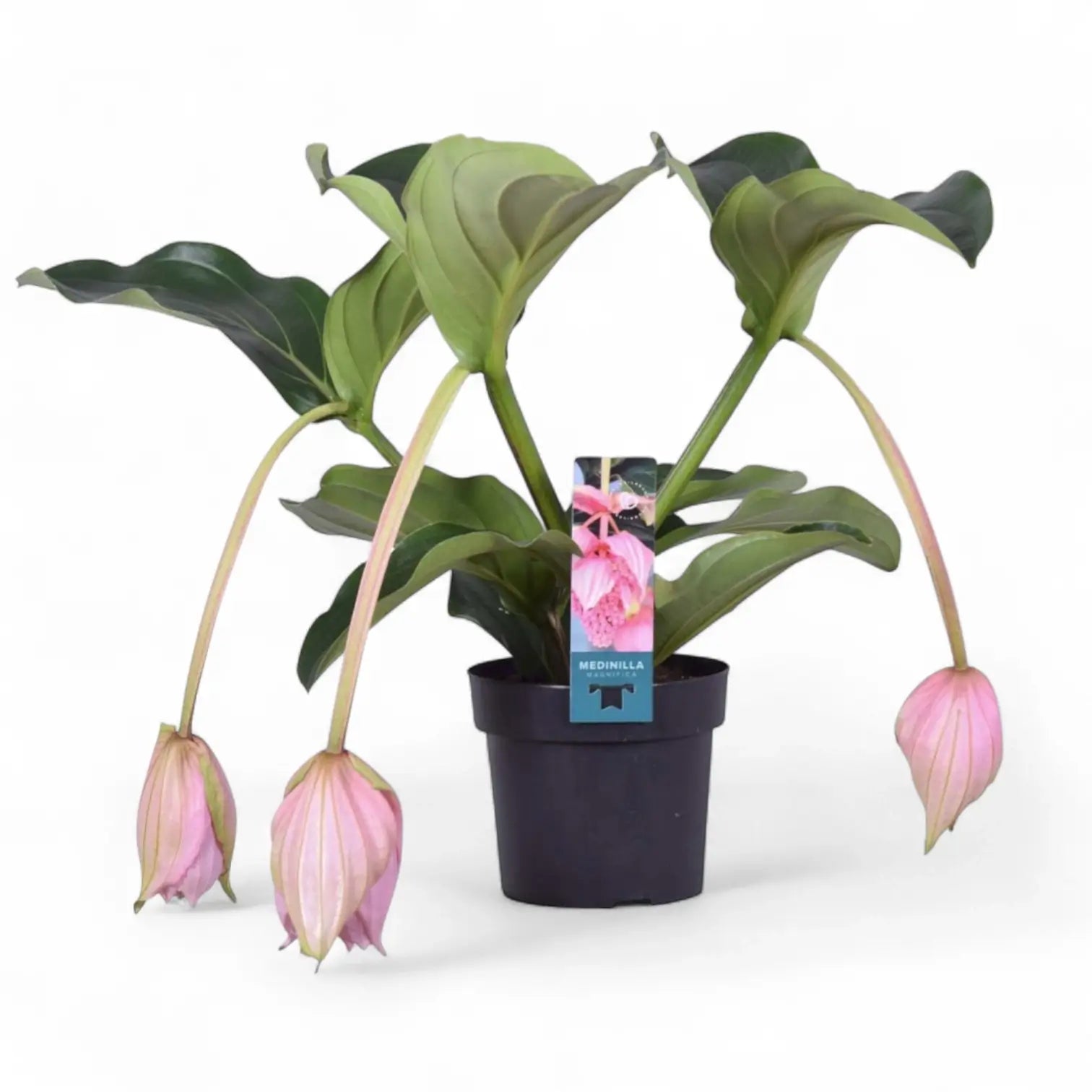
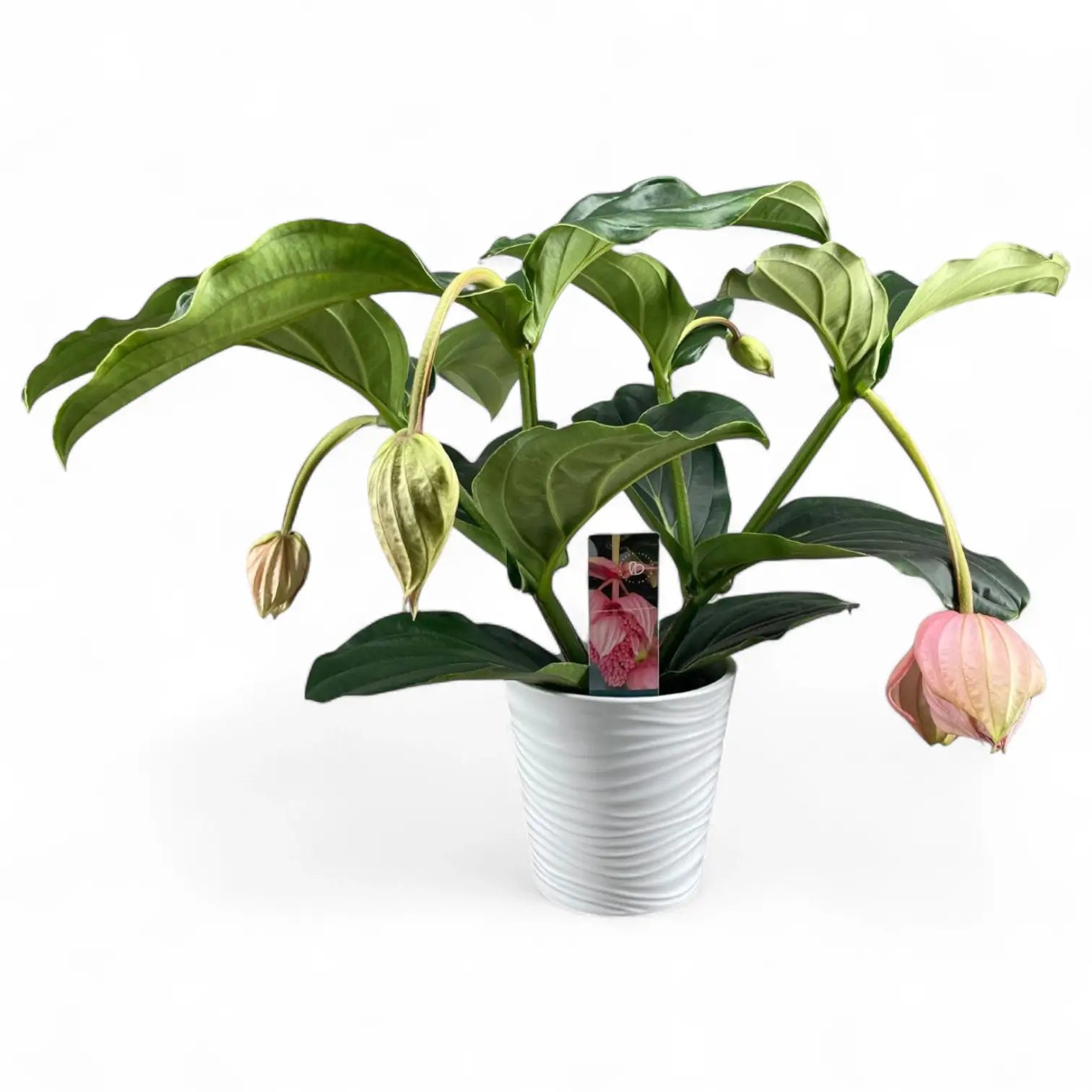
Medinilla magnifica is a tropical flowering shrub with large leathery leaves, angular stems and pendant clusters of pink flowers held beneath oversized pink bracts. Mature growth builds woody, slightly succulent stems, then produces hanging flower panicles after a stable growth phase and a brief post-flowering rest.
This species is native to Luzon in the Philippines, where it grows in wet tropical conditions as a hemiepiphytic shrub or small tree. It can root into organic pockets on trees as well as grow in open ground. Indoors, Medinilla magnifica needs bright filtered light, warmth, high humidity and a potting mix that stays lightly moist while draining freely around the roots.
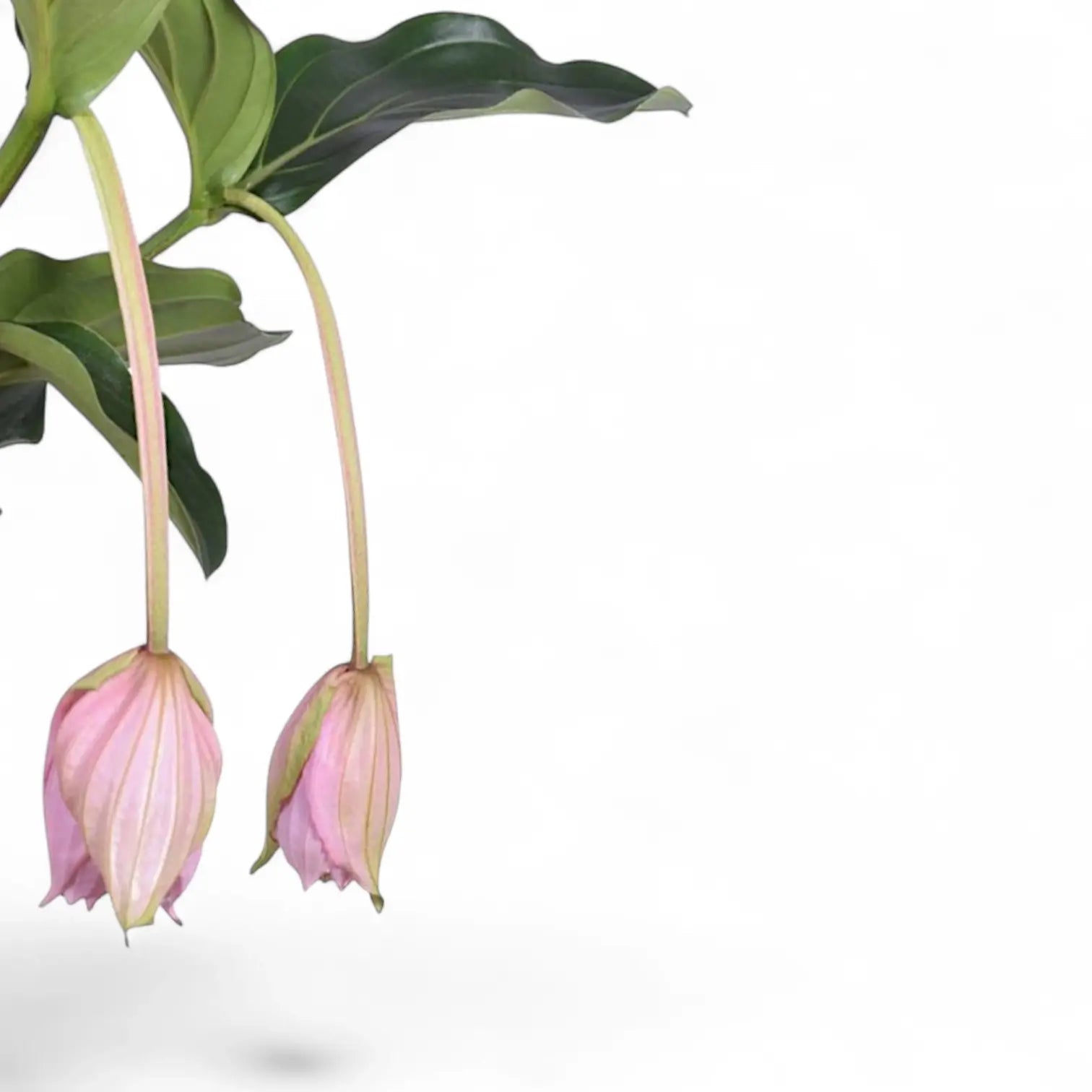
Medinilla magnifica develops a woody framework over time, with leaves arranged along sturdy stems. The flower clusters hang below the foliage, so the plant needs enough space around the pot for the pendant panicles to develop freely.
The large pink structures are bracts, while the smaller true flowers sit within the hanging cluster. After flowering, spent panicles can be removed cleanly so the plant can direct energy into new shoots. Future flowering develops from healthy mature stems after the plant has resumed steady growth.
Medinilla magnifica has hemiepiphytic roots that need moisture, oxygen and an open potting structure. Roots that naturally exploit loose organic pockets grow best in an open mix that stays lightly moist without compacting around the roots. Indoors, a chunky mix lets water move through the pot while still holding enough moisture for the large leaves and developing flower panicles.
Medinilla magnifica is often bought in bud or flower, and that stage is sensitive to shipping, turning, cold and dry air. Place it in bright filtered light, keep the root zone evenly moist, and avoid repeatedly moving the pot while the panicles are expanding. Once flowering finishes, the plant can be pruned lightly and grown on for the next cycle.
Medinilla magnifica is an ornamental plant. Keep leaves, flowers and berries away from pets and children that chew plants, and wash hands after pruning or removing old plant material.
Medinilla magnifica belongs to Melastomataceae. The accepted name Medinilla magnifica Lindl. was published by John Lindley in Paxton’s Flower Garden 1: 55 in 1850. The genus name Medinilla honours José de Medinilla y Pineda, governor of the Mariana Islands in the early nineteenth century. The species epithet magnifica means magnificent or splendid, matching the large pink bracts and hanging flower clusters.
Plant names, growth habits, natural habitats and indoor care guidance are checked against trusted botanical, habitat and horticultural references before publication.View our plant care resources and references.
Sign up for Foliage Factory newsletter for early access to new arrivals and practical care tips that work in real homes.