Light
Full sun / direct • approx. 40,000–80,000 lux

Buy 4 plants, get 1 free
VAT included · plus
Your new plant has just travelled a long way and needs a calm start in its new home. For step-by-step unboxing and first-week care, check our after-delivery care guide. For deeper tips on how your plant settles in over the next weeks, read our houseplant acclimatization guide.
Secure shipping, carefully packed orders with safe delivery across the EU, UK and Switzerland.
28-day plant guarantee, if a plant arrives damaged or fails soon after delivery, we help you make it right.
Free returns, simple, cost-free returns according to our policy.
For full details, please see:
Please head to our FAQ Page or Contact us.
Quick Care Guide
Light
Full sun / direct • approx. 40,000–80,000 lux
Watering
Water when ~25–40% dry
Substrate
Airy • Fast-draining • Mineral-leaning • Fine-medium
Temperature
Ideal: 10–30 °C • Avoid below: -8 °C
Humidity
Moist 50–60 %
Growth habit
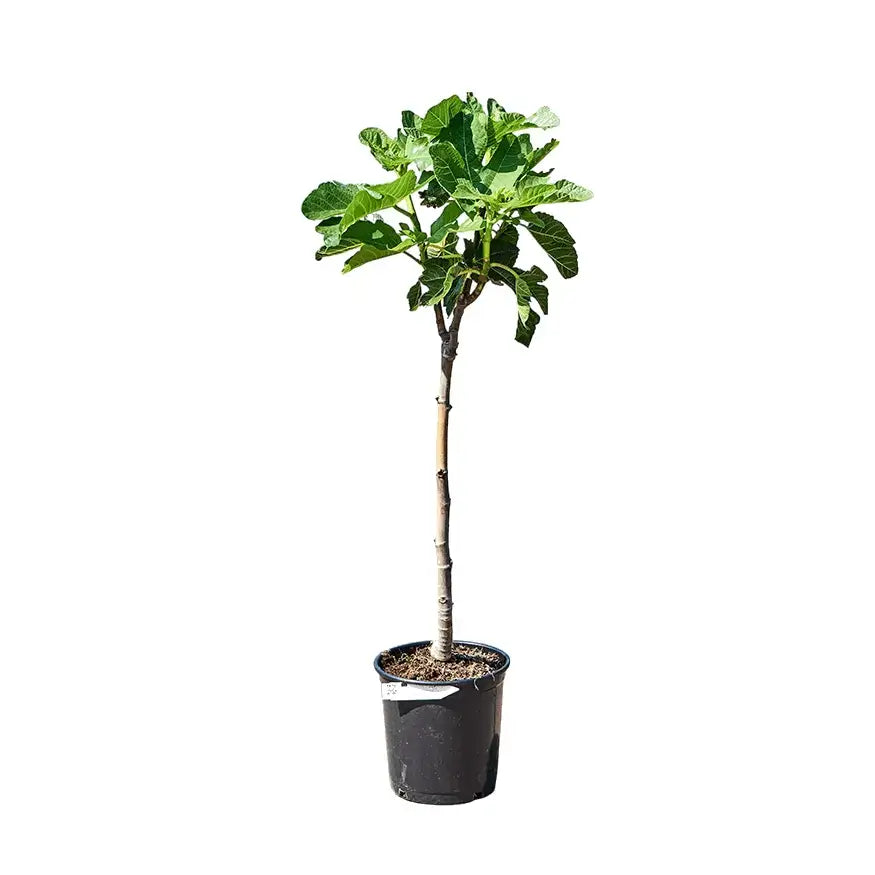
Upright woody shrub or tree.
Support
not needed
Growth speed
Average
Max size indoors
Max. height: 300 cm • Max. spread: 400 cm
Toxicity & safety
Mildly toxic
Origin & habitat
Variegated form of Ficus carica; species native from eastern Mediterranean to Central Asia and western Himalaya
Outdoor growing
Outside from 5 °C · winter-protected spot
These care values are quick reference points for indoor growing. Use them as a guide, then adjust for pot size, substrate, temperature and how quickly the substrate dries.
For more detail, read the full product description or visit our Plant Care Guides.
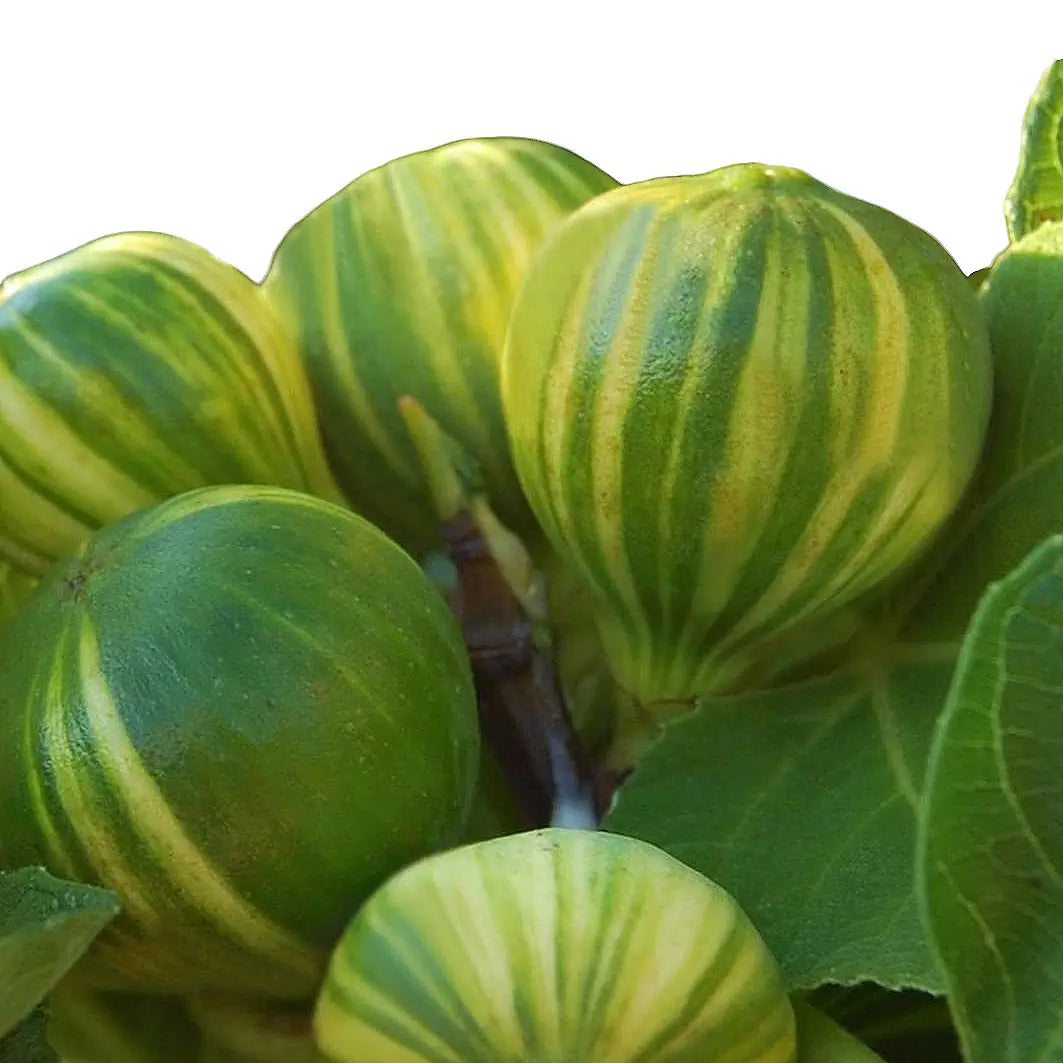
Ficus carica 'Variegata' is a rare, ornamental variety of the edible fig tree, instantly recognizable by its large, lobed leaves marked with irregular cream and green variegation. The foliage is bold and graphic – pale yellow margins blend into bright green centers, giving each leaf a painterly, unpredictable look.
This small tree or large shrub can be grown indoors in containers, especially in bright spaces, and may even produce edible figs when given enough light. Even without fruit, its architectural form and marbled foliage make it a showpiece. Outdoors, it thrives in warm, sunny spots; indoors, it becomes a botanical statement with real texture and structure.
Ficus carica originates from the Mediterranean region, where it grows in dry, rocky soils with intense sunlight and minimal rainfall. 'Variegata' is a cultivar selected for its striking foliage and potential fruiting ability, though indoors it’s usually grown for ornamental purposes. In its natural habitat, it tolerates high heat, poor soil, and periods of drought. Indoors, it prefers bright, sunlit spots with good airflow and fast-draining substrate.
The sap of this plant can be irritating to skin, and ingestion of large amounts (especially of immature fruit or sap) may be mildly toxic to pets or humans. Keep out of reach where needed.
‘Variegata’ responds well to pruning and shaping – regular cuts help maintain a compact form and improve branching. For best color, place it in the sunniest location you have. Avoid soggy soil and sudden changes in light or watering, as it may drop leaves in response. Though figs are possible indoors, this cultivar is mostly grown for its foliage – a bold, highly variegated presence in any bright room or greenhouse.
Ficus comes from Latin, referring to the fig tree, and carica refers to the ancient region of Caria in Asia Minor, where figs were historically cultivated. 'Variegata' is a descriptive cultivar name highlighting the cream-variegated foliage. Though sometimes confused with other fig species, this is a true fruiting fig – with ornamental appeal front and center.
Plant names, growth habits, natural habitats and indoor care guidance are checked against trusted botanical, habitat and horticultural references before publication.View our plant care resources and references.
Sign up for Foliage Factory newsletter for early access to new arrivals and practical care tips that work in real homes.