Light
Full sun / direct • approx. 40,000–80,000 lux

VAT included · plus
Your new plant has just travelled a long way and needs a calm start in its new home. For step-by-step unboxing and first-week care, check our after-delivery care guide. For deeper tips on how your plant settles in over the next weeks, read our houseplant acclimatization guide.
Secure shipping, carefully packed orders with safe delivery across the EU, UK and Switzerland.
28-day plant guarantee, if a plant arrives damaged or fails soon after delivery, we help you make it right.
Free returns, simple, cost-free returns according to our policy.
For full details, please see:
Please head to our FAQ Page or Contact us.
Quick Care Guide
Light
Full sun / direct • approx. 40,000–80,000 lux
Watering
Water when ~90–100% dry
Substrate
Gritty • Ultra fast-draining • Mineral-heavy • Fine-medium
Temperature
Ideal: 18–30 °C • Avoid below: 10 °C
Humidity
Normal 40–50 %
Growth habit
Upright succulent shrub or tree.
Support
not needed
Growth speed
Average
Max size indoors
Max. height: 300 cm • Max. spread: 150 cm
Toxicity & safety
Toxic
Origin & habitat
Native from northeastern Sudan to Somalia
Outdoor growing
Outside from 12 °C · sheltered spot
These care values are quick reference points for indoor growing. Use them as a guide, then adjust for pot size, substrate, temperature and how quickly the substrate dries.
For more detail, read the full product description or visit our Plant Care Guides.
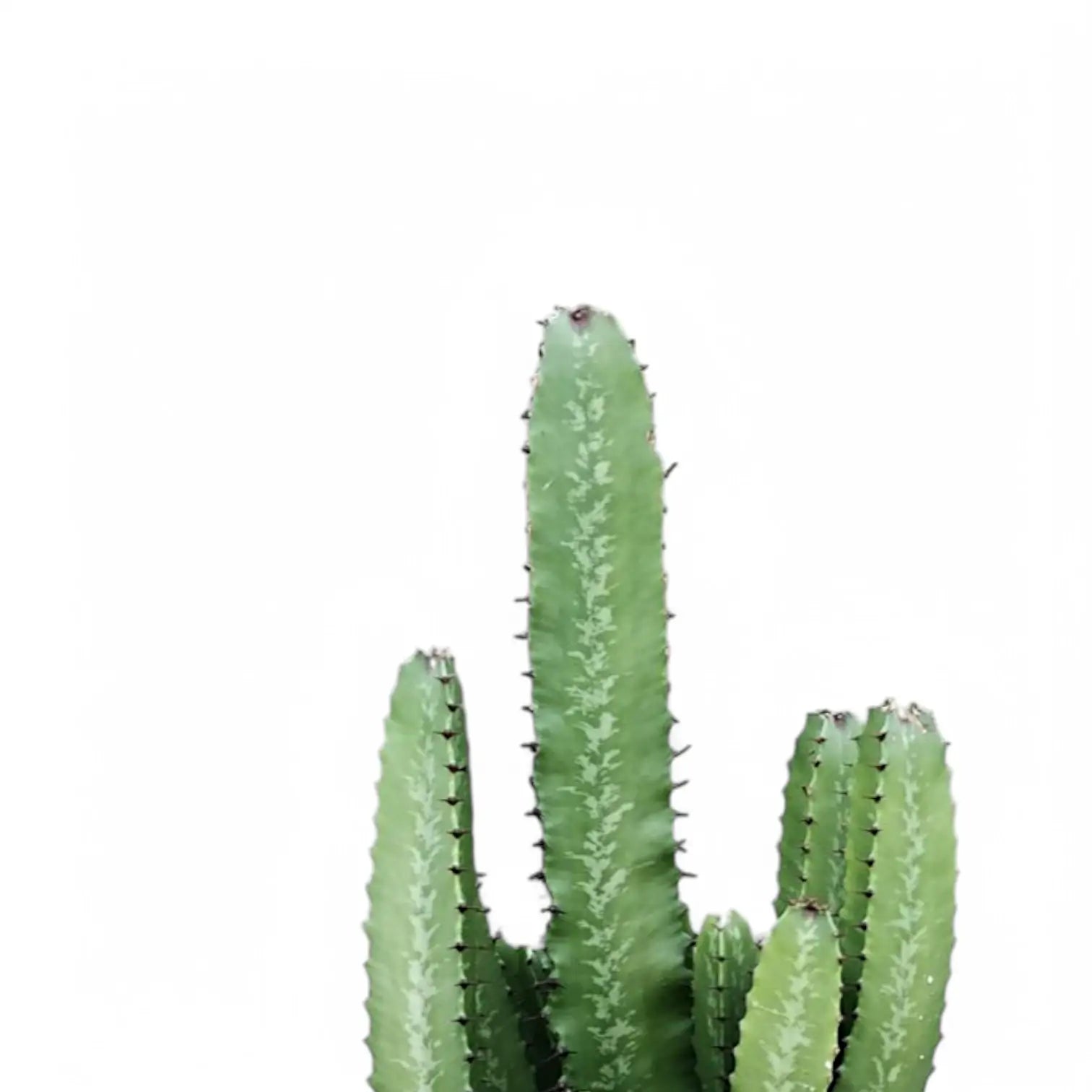
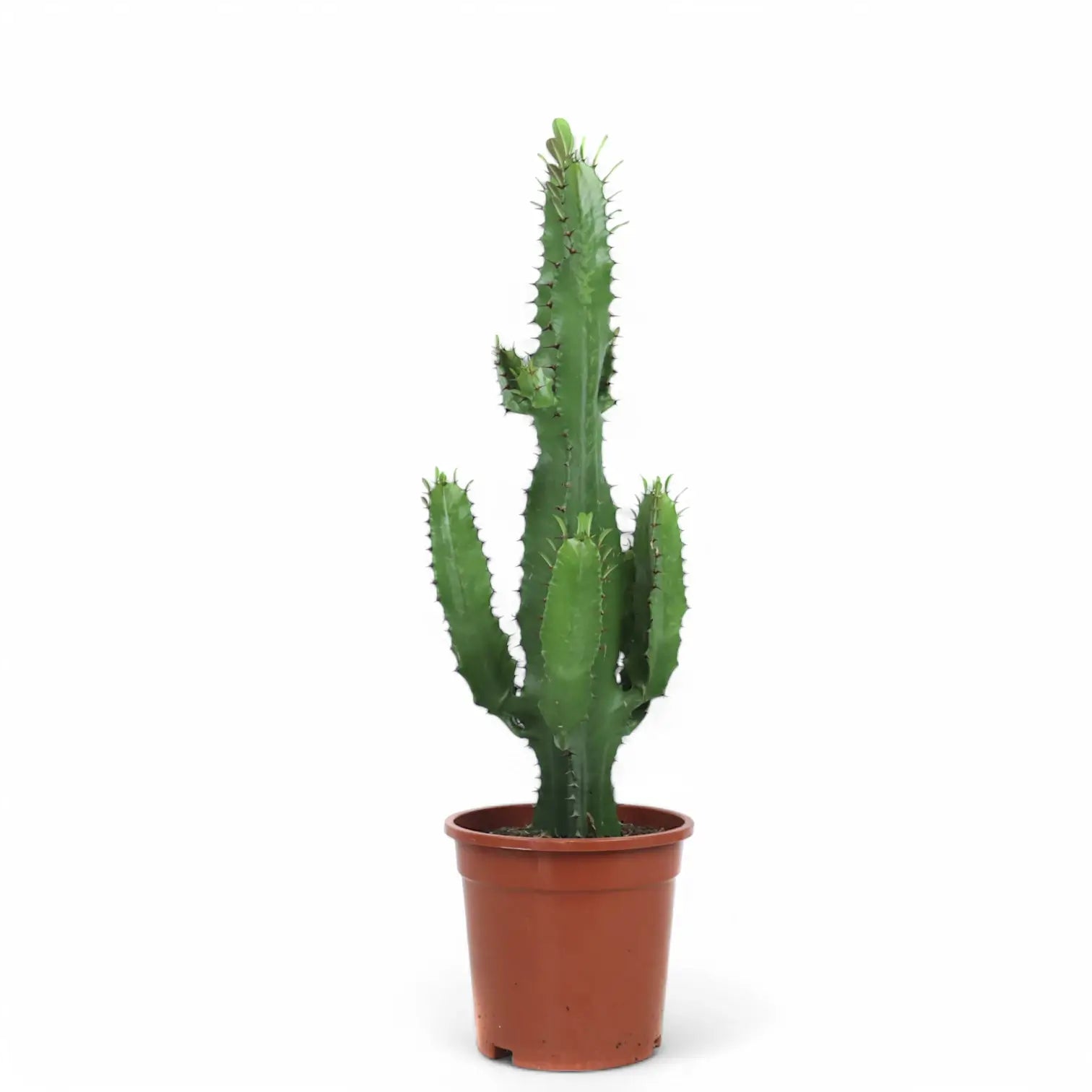
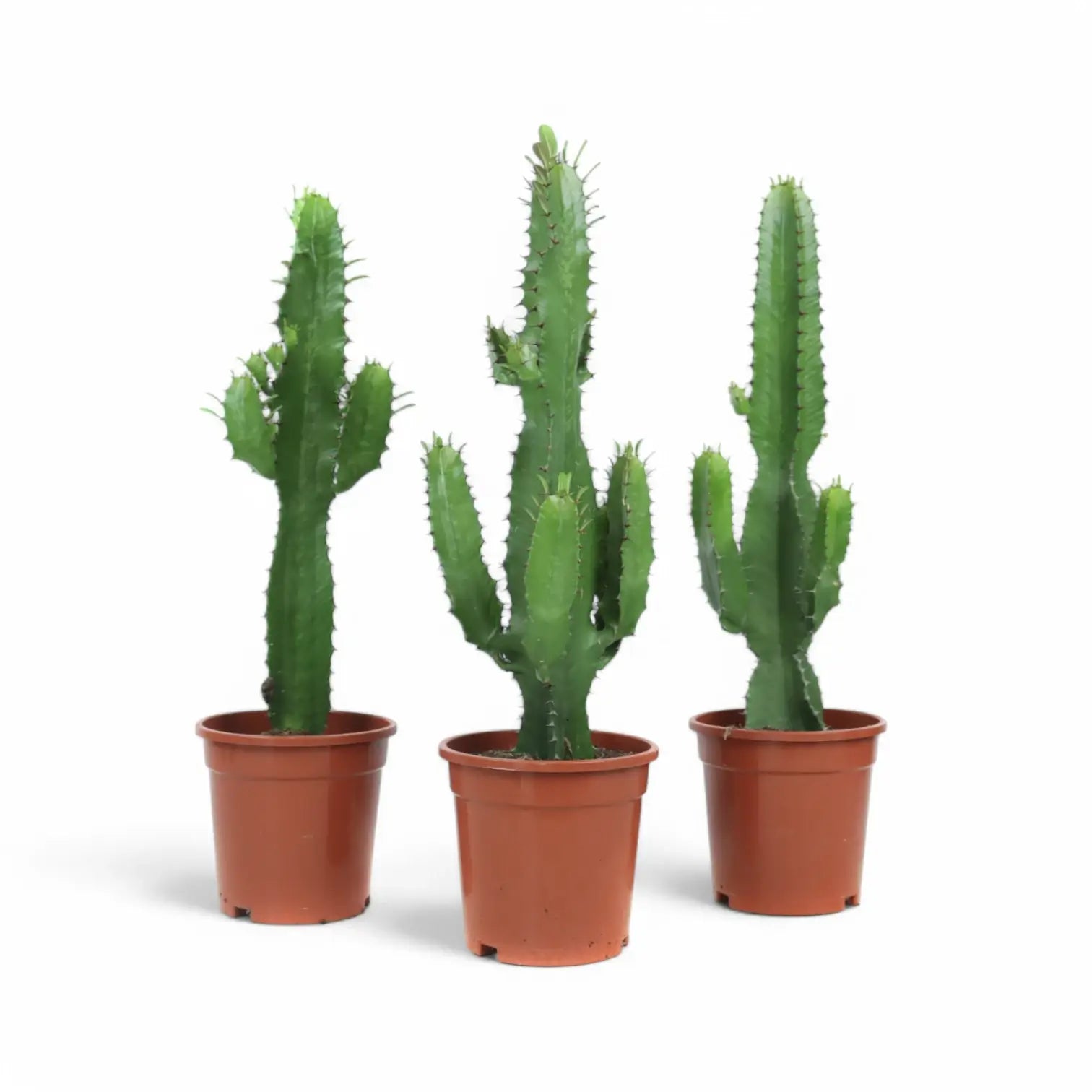
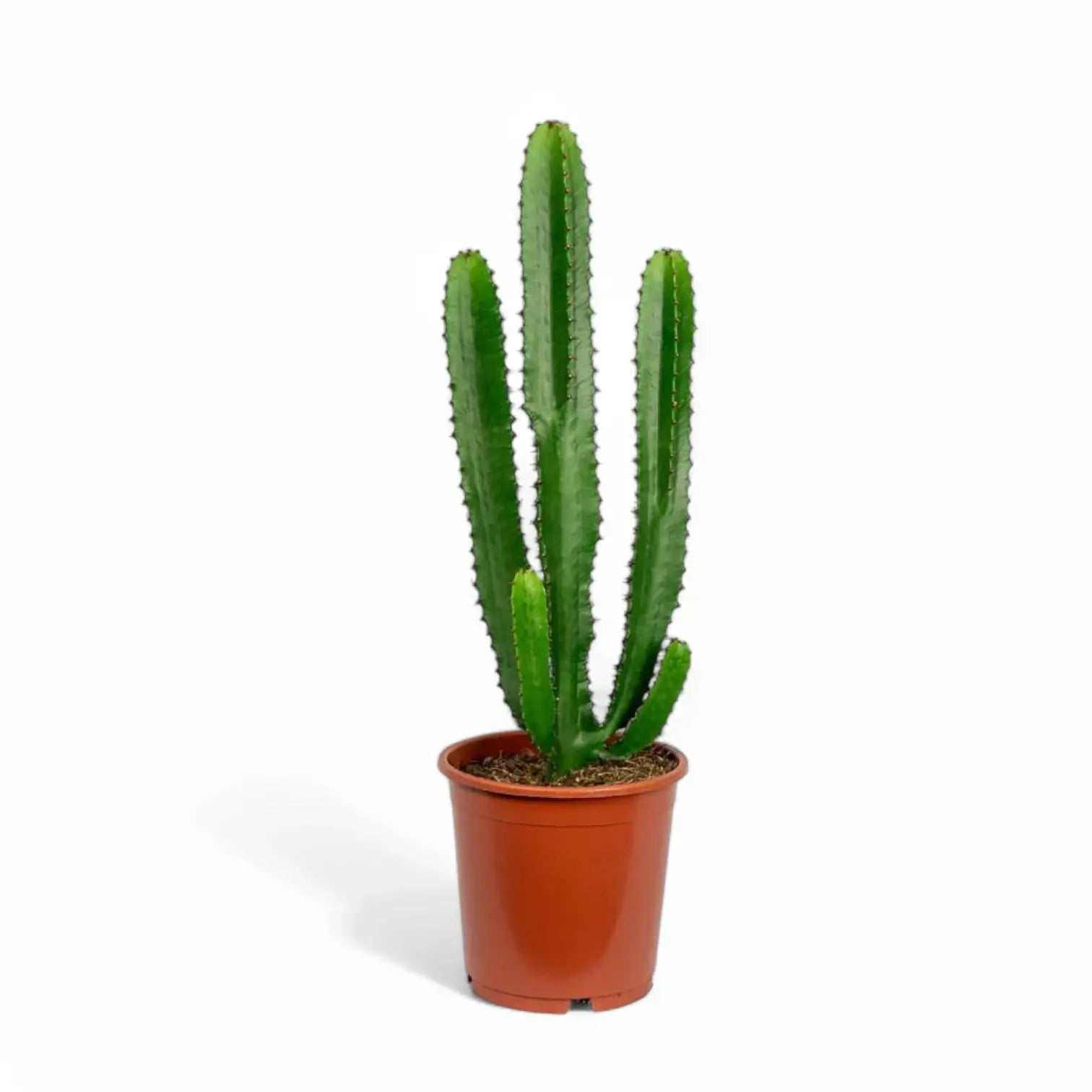
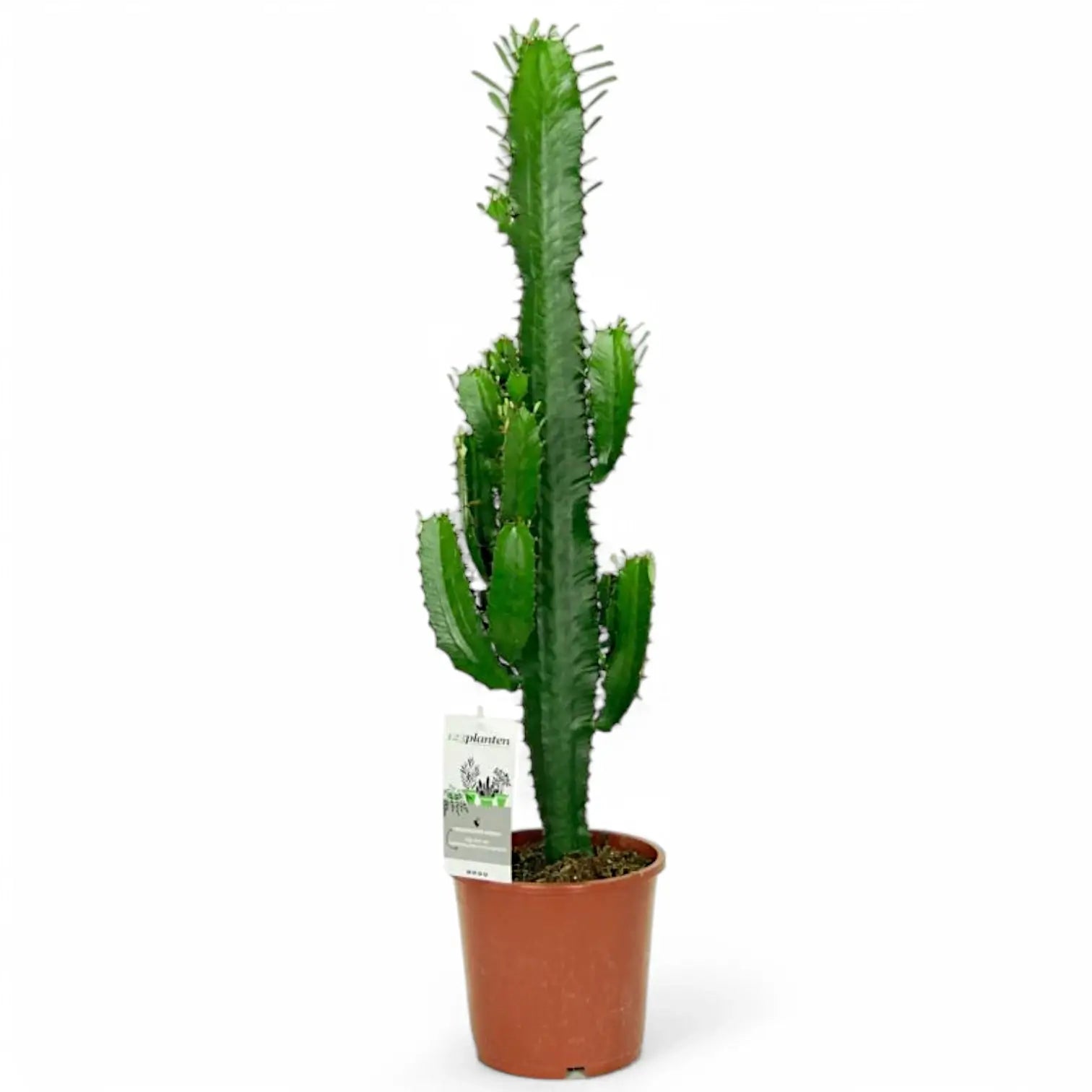
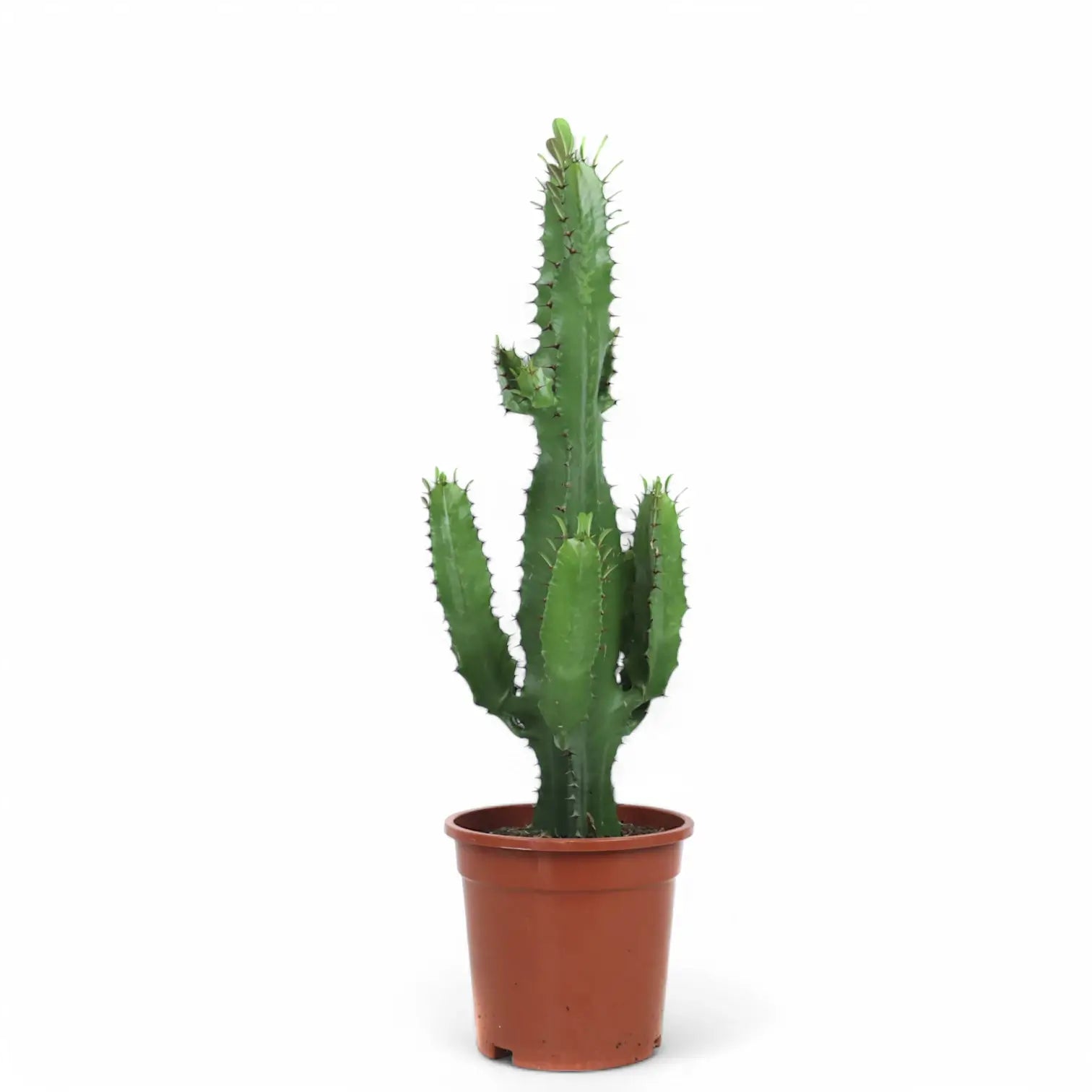
Euphorbia abyssinica is a large, tree-forming succulent euphorbia with thick green stems, paired spines and a candelabra-like branching habit. In habitat it can become a substantial succulent tree, while in a pot it develops slowly into an upright, ribbed plant with water-storing stems.
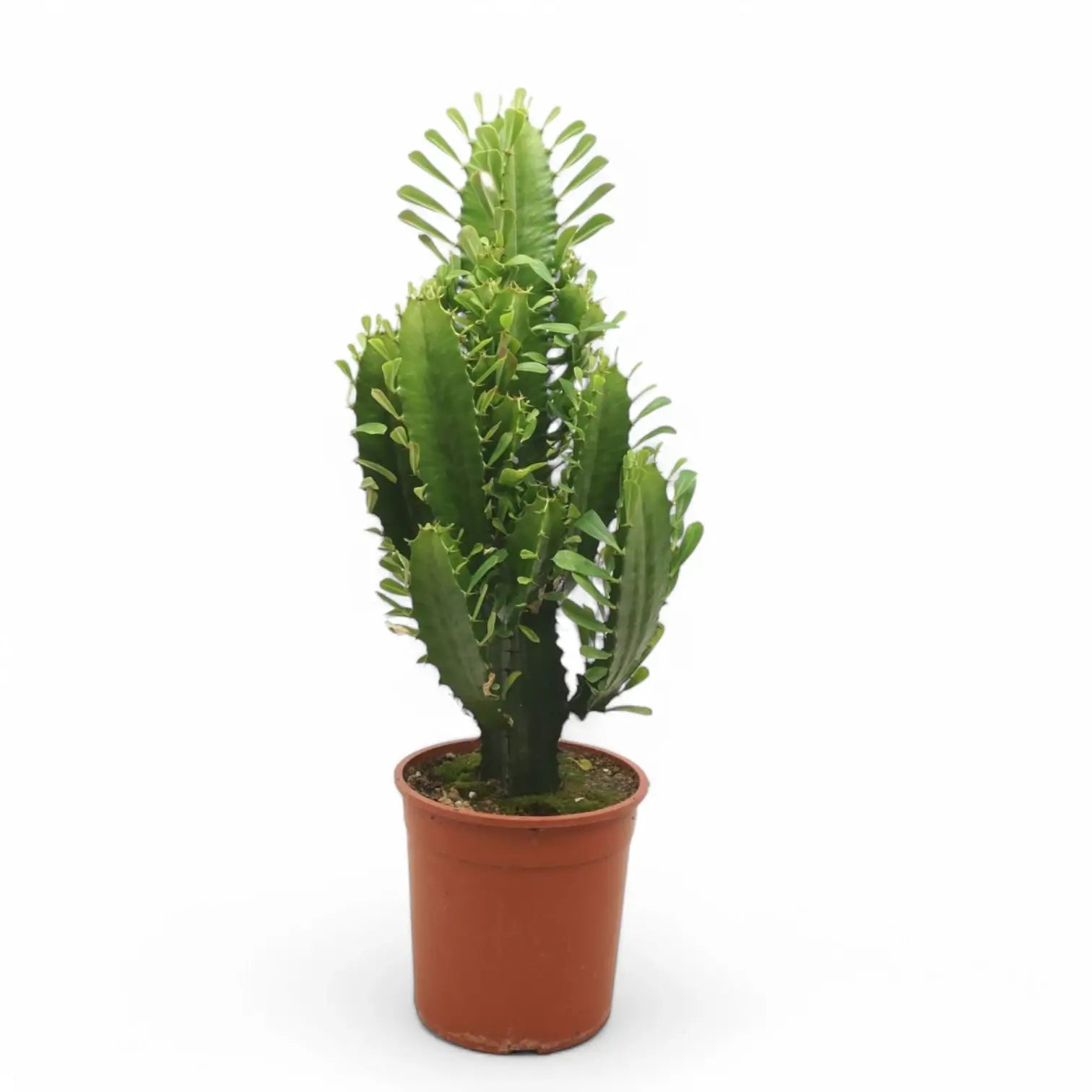
The plant’s outline comes from succulent stem tissue that stores water and carries out photosynthesis through the green surface. Its visible shape is built by upright, angular, often dark green branches, with shallow teeth along the ribs and paired spines emerging from the spine shields. Short-lived leaves can appear near new growth during warm active periods, then drop as the plant continues through its leafless stem growth.
Euphorbia abyssinica is native from northeastern Sudan to Somalia, where it grows primarily in desert or dry shrubland. Its thick stems act as water-storage organs, and the green surface tissue can photosynthesise even when leaves are absent. These traits align with strong light, mineral drainage and dry intervals between thorough waterings.
Older plants develop a woody trunk-like base, while the green branches remain the active succulent parts of the plant. The ribs are more than a visual trait: they allow the stem to expand and contract slightly as stored water changes through wet and dry periods. In containers, this makes a stable pot, gritty substrate and careful handling more important than frequent repotting or heavy feeding.
Euphorbia abyssinica contains white latex sap that can irritate skin, eyes and mucous membranes. Wear gloves when pruning, repotting or cleaning damaged tissue, and keep the plant away from children and pets that may touch or chew the stems. If sap touches skin, wash it off promptly; if it reaches the eyes, rinse with clean water and seek medical advice.
Euphorbia abyssinica belongs to the family Euphorbiaceae and was first published by Johann Friedrich Gmelin in 1791. The genus name Euphorbia is traditionally connected with Euphorbus, physician to King Juba II of Mauretania. The epithet abyssinica refers to Abyssinia, a historical name associated with Ethiopia and the wider region where this species occurs.
Over time, Euphorbia abyssinica builds a tall ribbed structure with paired spines and a clearly upright succulent-tree outline.
Plant names, growth habits, natural habitats and indoor care guidance are checked against trusted botanical, habitat and horticultural references before publication.View our plant care resources and references.
Sign up for Foliage Factory newsletter for early access to new arrivals and practical care tips that work in real homes.