Light
Bright indirect • approx. 10,000–20,000 lux

Bear's Foot Fern
VAT included · plus
Your new plant has just travelled a long way and needs a calm start in its new home. For step-by-step unboxing and first-week care, check our after-delivery care guide. For deeper tips on how your plant settles in over the next weeks, read our houseplant acclimatization guide.
Secure shipping, carefully packed orders with safe delivery across the EU, UK and Switzerland.
28-day plant guarantee, if a plant arrives damaged or fails soon after delivery, we help you make it right.
Free returns, simple, cost-free returns according to our policy.
For full details, please see:
Please head to our FAQ Page or Contact us.
Davallia tyermanii
Light
Bright indirect • approx. 10,000–20,000 lux
Watering
Water when ~10–20% dry
Substrate
Moisture-retentive + airy • Steady-moist • Organic-forward • Fine
Temperature
Ideal: 18–25 °C • Avoid below: 10 °C
Humidity
Moist 50–60 %
Growth habit
Creeping epiphytic fern.
Support
not needed
Growth speed
Average
Max size indoors
Max. height: 90 cm • Max. spread: 100 cm
Toxicity & safety
Non-toxic
Origin & habitat
Native from southern China to northern Myanmar, Taiwan
Outdoor growing
Outside from 12 °C · sheltered from wind
These care values are quick reference points for indoor growing. Use them as a guide, then adjust for pot size, substrate, temperature and how quickly the substrate dries.
For more detail, read the full product description or visit our Plant Care Guides.
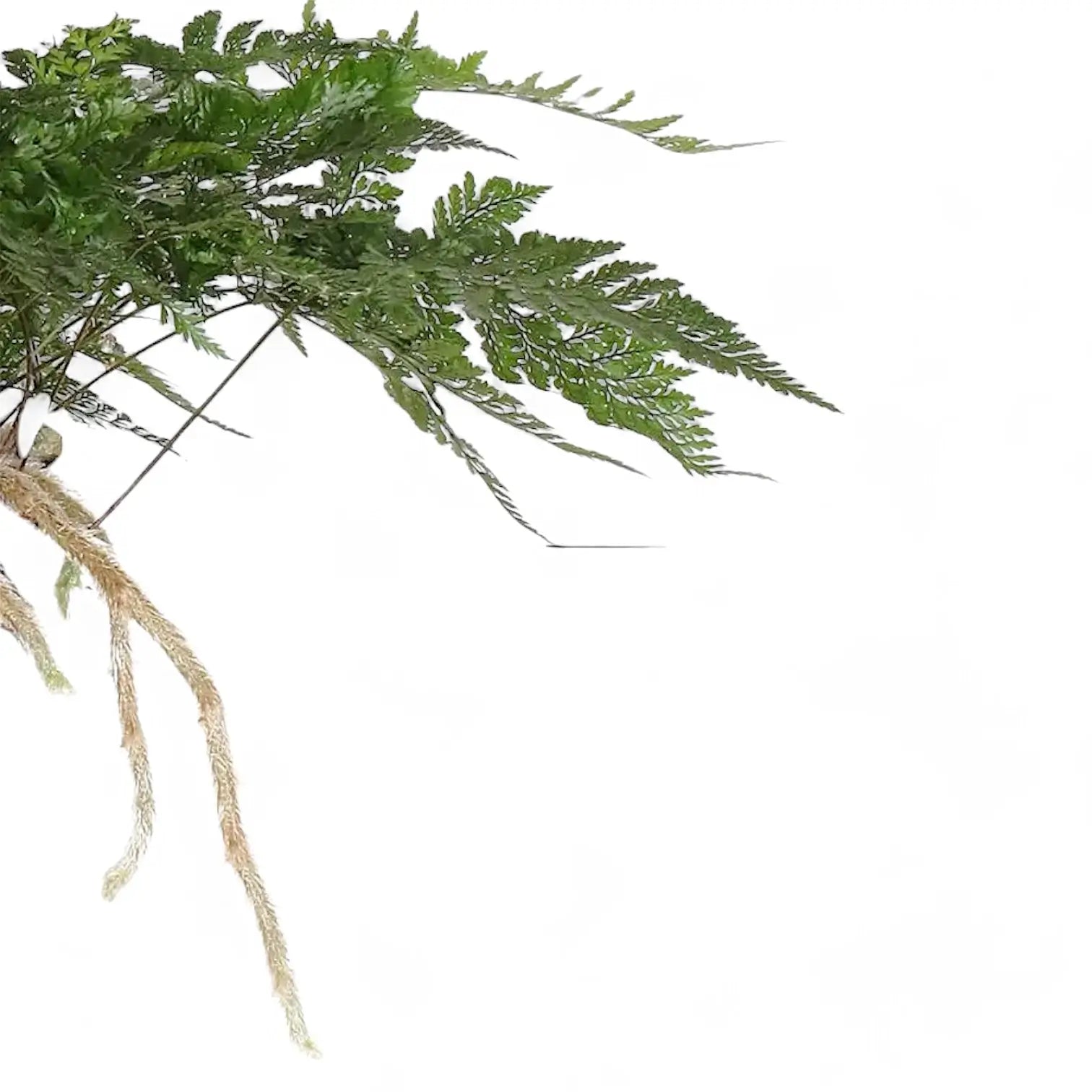
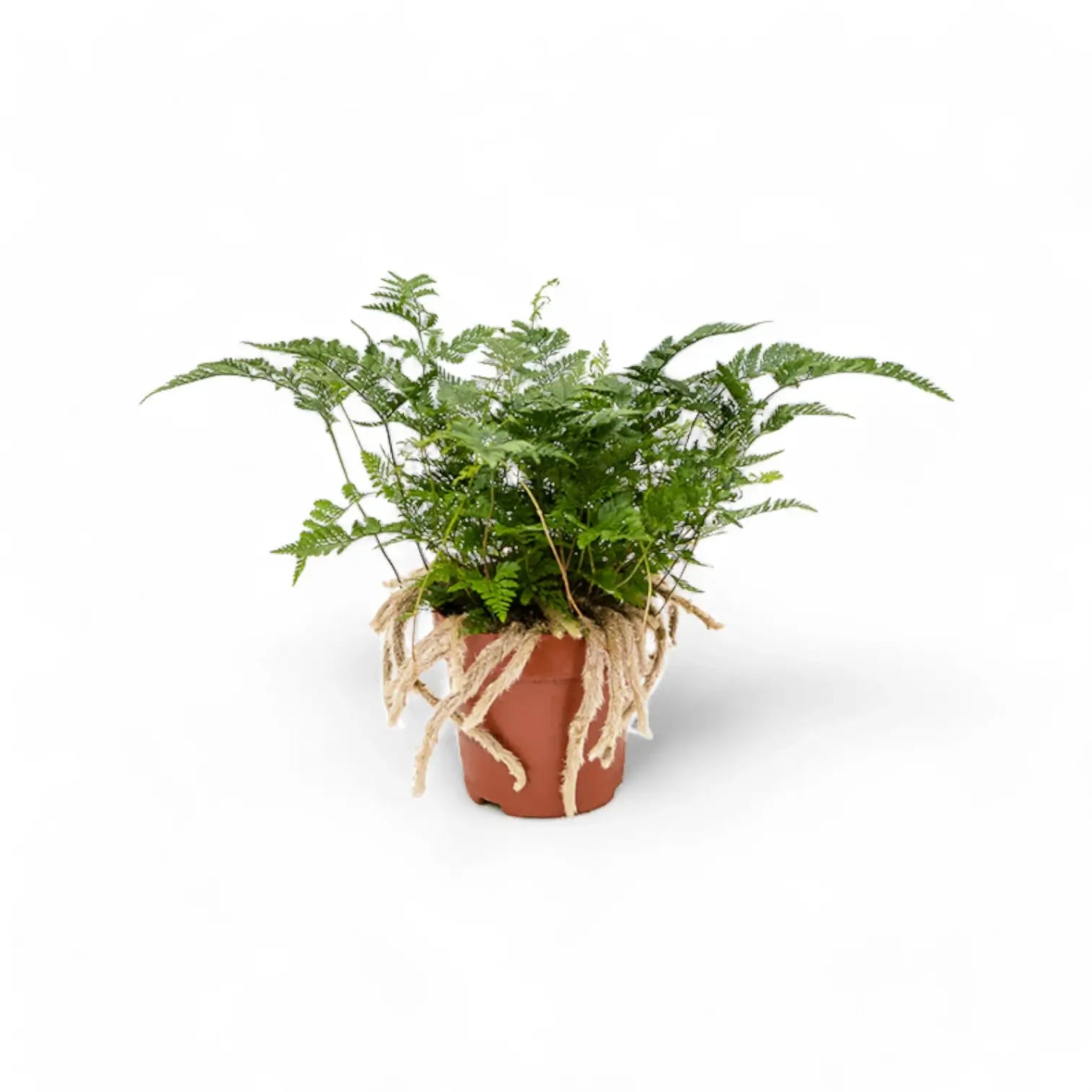
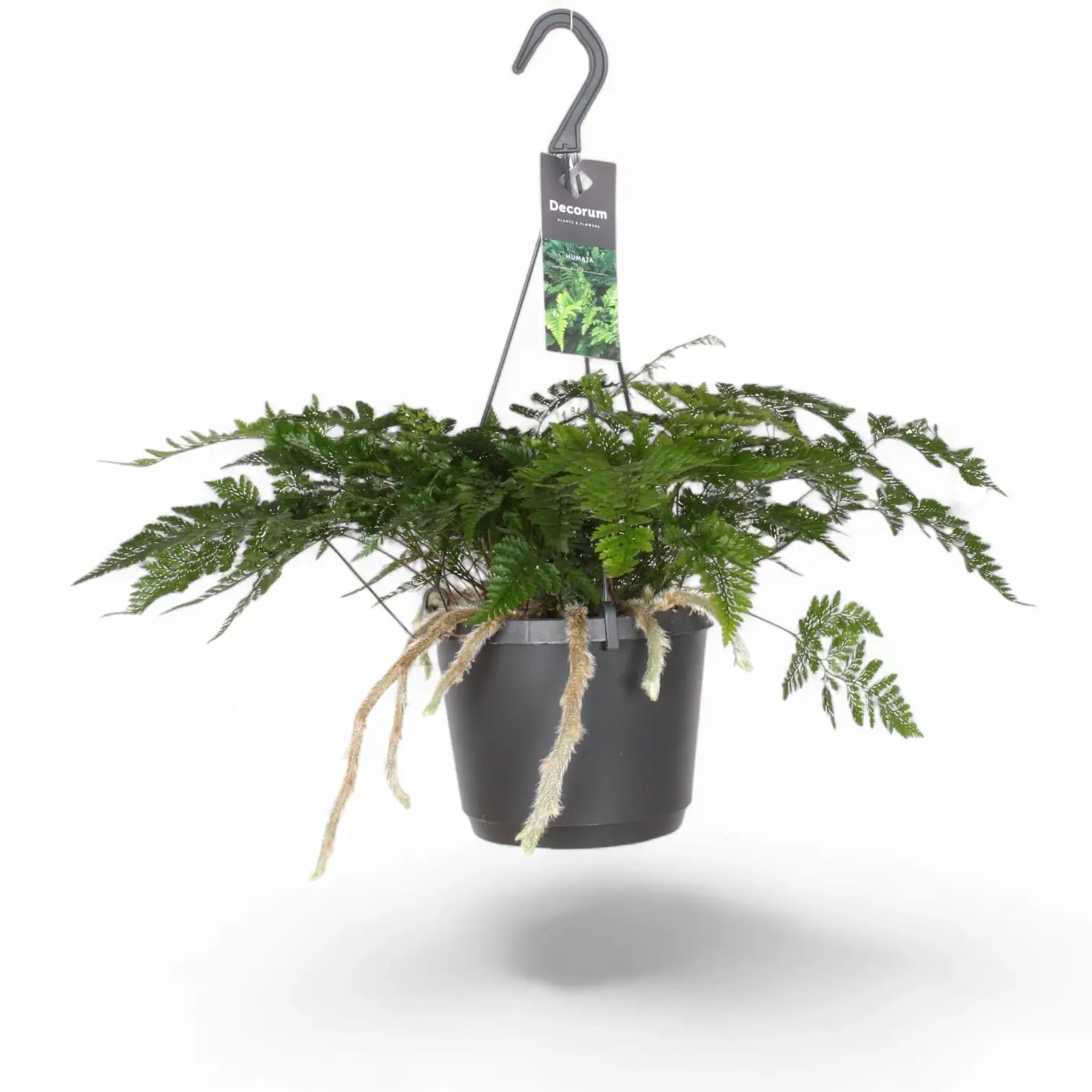
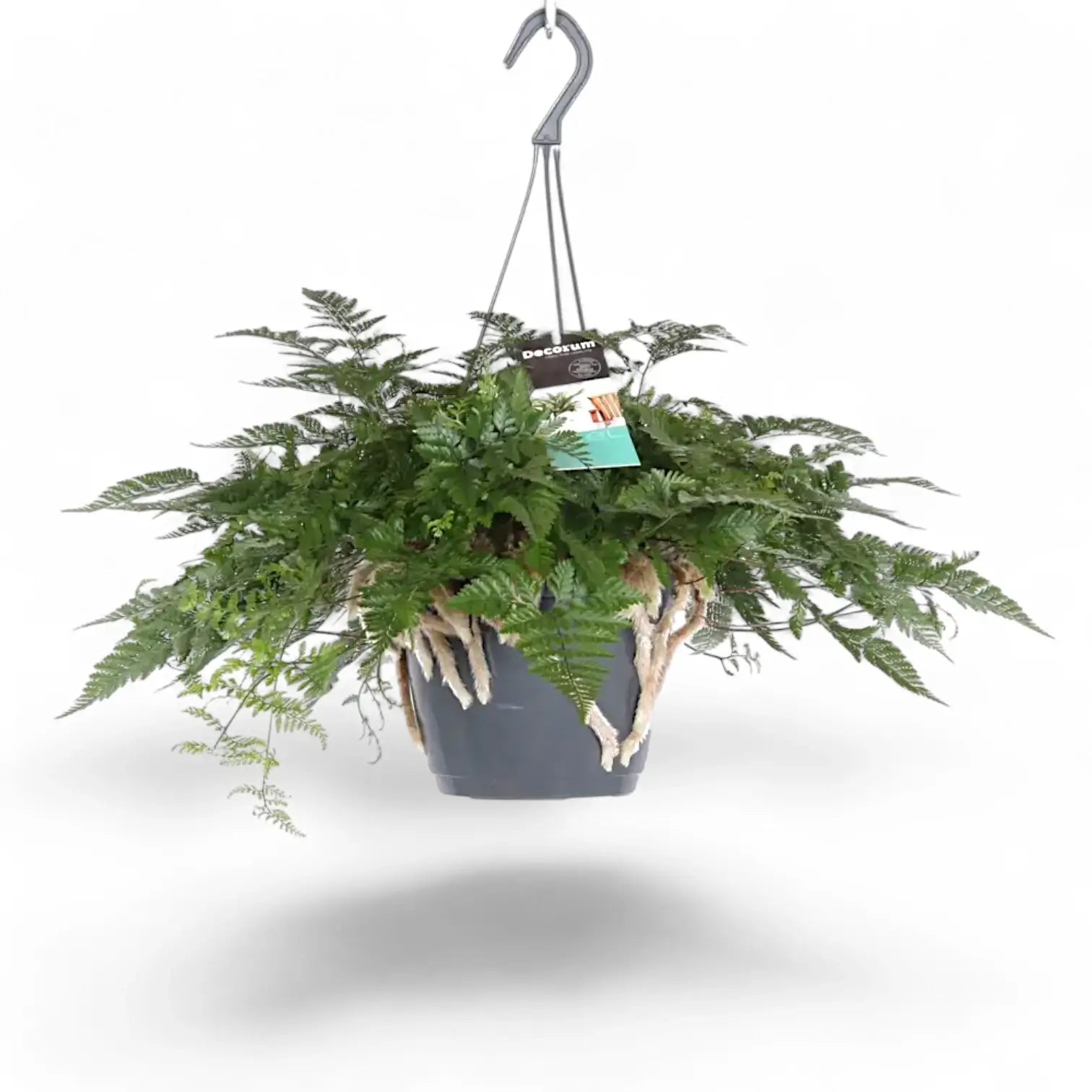
Davallia tyermanii, Rabbit’s Foot Fern, pairs finely divided green fronds with pale furry rhizomes. These creeping stems remain on the substrate surface and eventually travel over the container edge, where their dense silver-white hairs are fully visible.
Above them, repeated small leaflets create a soft airy fern texture. Fresh light-green fronds uncurl from active points along the rhizomes. The fronds darken, firm and arch as they finish expanding, while the furry growth below continues to lengthen and branch around the pot.
Over time, the plant develops two distinct layers: a visible network of pale creeping rhizomes and a broad mass of delicate green foliage. Their contrast becomes stronger as more silver-white sections escape the container and the fronds fill the space above them.
Plant names, growth habits, natural habitats and indoor care guidance are checked against trusted botanical, habitat and horticultural references before publication.View our plant care resources and references.

Choose options


Sign up for Foliage Factory newsletter for early access to new arrivals and practical care tips that work in real homes.