Light
Very bright / some direct • approx. 20,000–40,000 lux


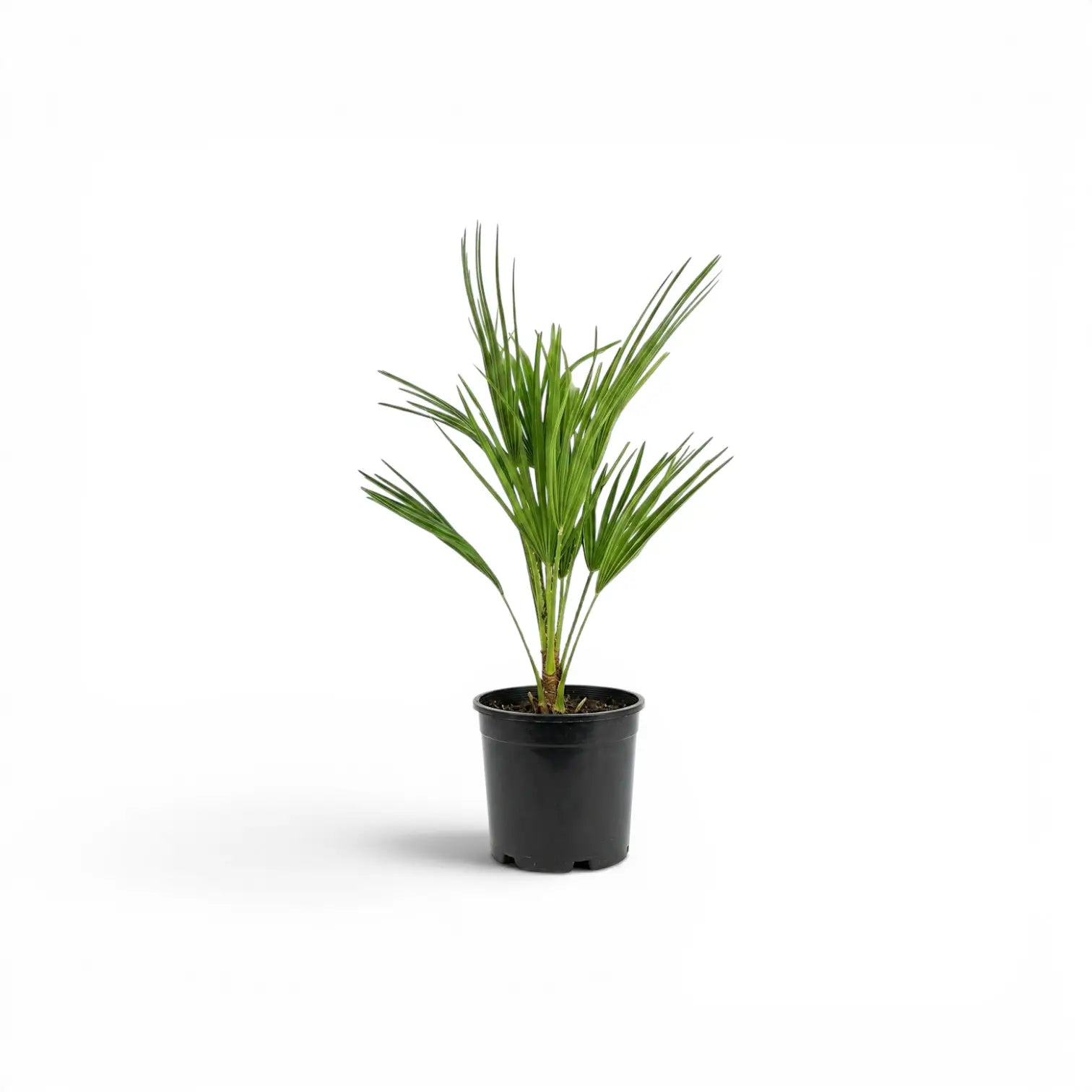
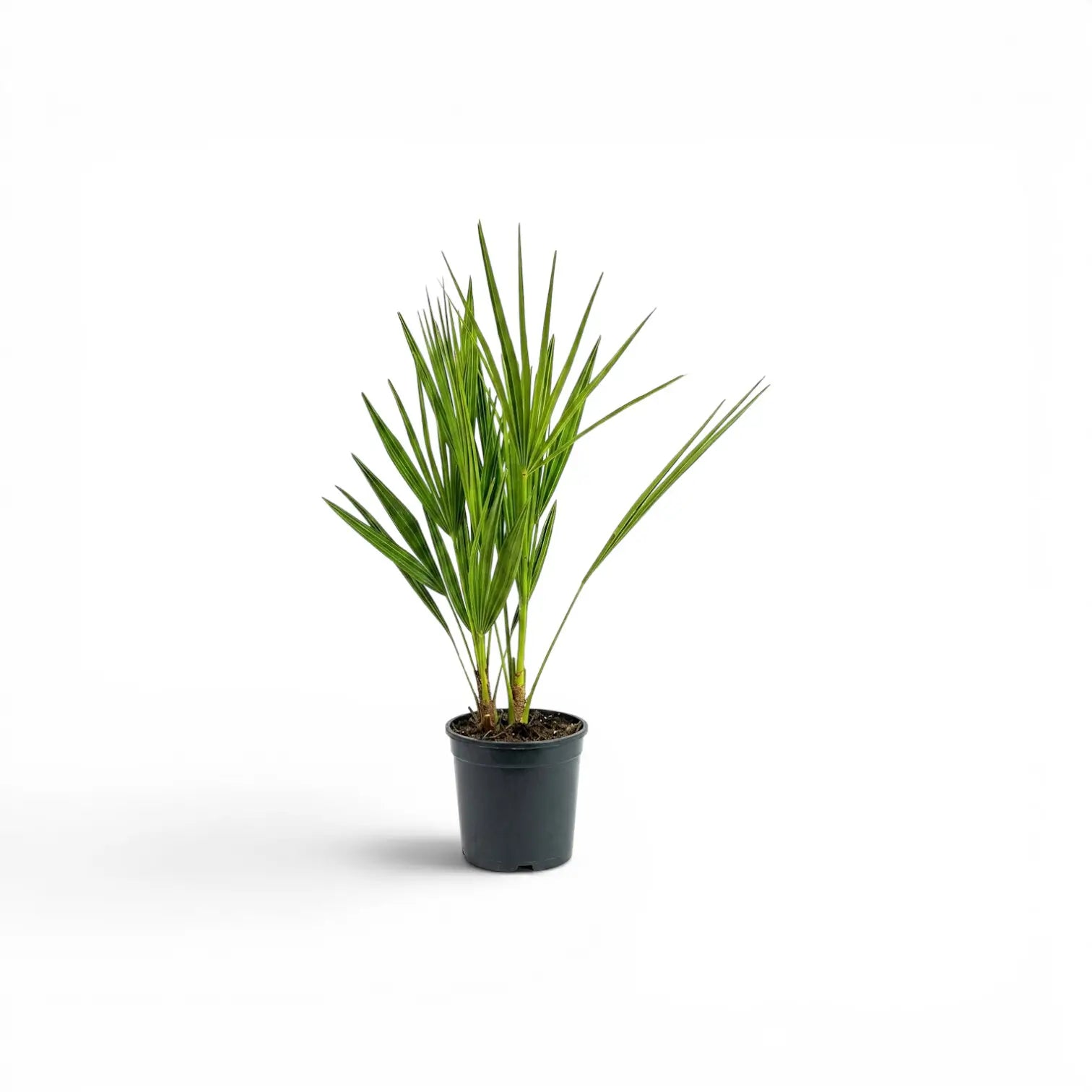
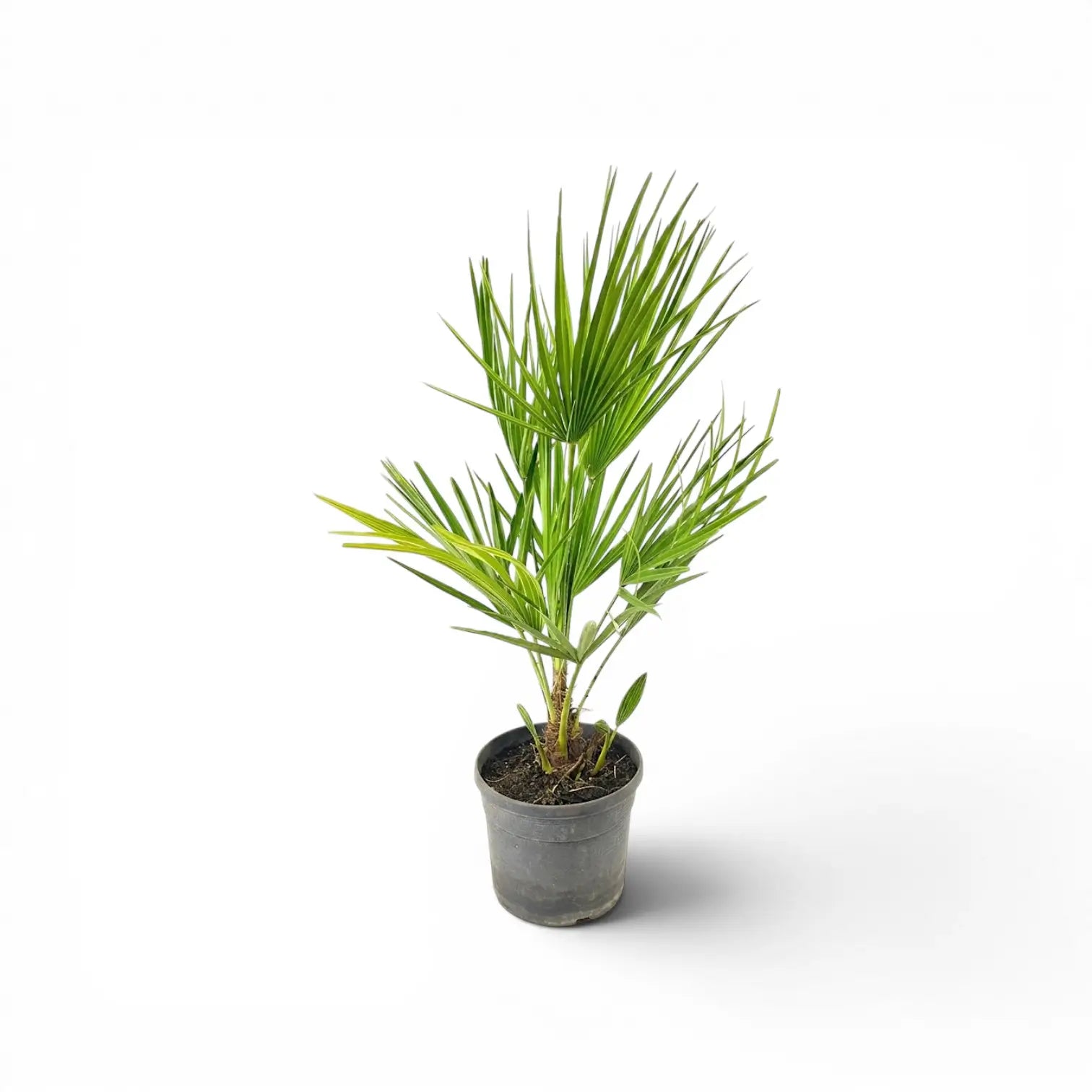


VAT included · plus
Your new plant has just travelled a long way and needs a calm start in its new home. For step-by-step unboxing and first-week care, check our after-delivery care guide. For deeper tips on how your plant settles in over the next weeks, read our houseplant acclimatization guide.
Secure shipping, carefully packed orders with safe delivery across the EU, UK and Switzerland.
28-day plant guarantee, if a plant arrives damaged or fails soon after delivery, we help you make it right.
Free returns, simple, cost-free returns according to our policy.
For full details, please see:
Please head to our FAQ Page or Contact us.
Quick Care Guide
Light
Very bright / some direct • approx. 20,000–40,000 lux
Watering
Water when ~30–50% dry
Substrate
Airy • Fast-draining • Mineral-leaning • Fine-medium
Temperature
Ideal: 5–28 °C • Avoid below: -5 °C
Humidity
Normal 40–50 %
Growth habit
Upright clumping palm.
Support
not needed
Growth speed
Slow
Max size indoors
Max. height: 200 cm • Max. spread: 200 cm
Toxicity & safety
Non-toxic; physical injury risk
Origin & habitat
Native to western and central Medit
Outdoor growing
Outside from 5 °C · winter-protected spot
These care values are quick reference points for indoor growing. Use them as a guide, then adjust for pot size, substrate, temperature and how quickly the substrate dries.
For more detail, read the full product description or visit our Plant Care Guides.
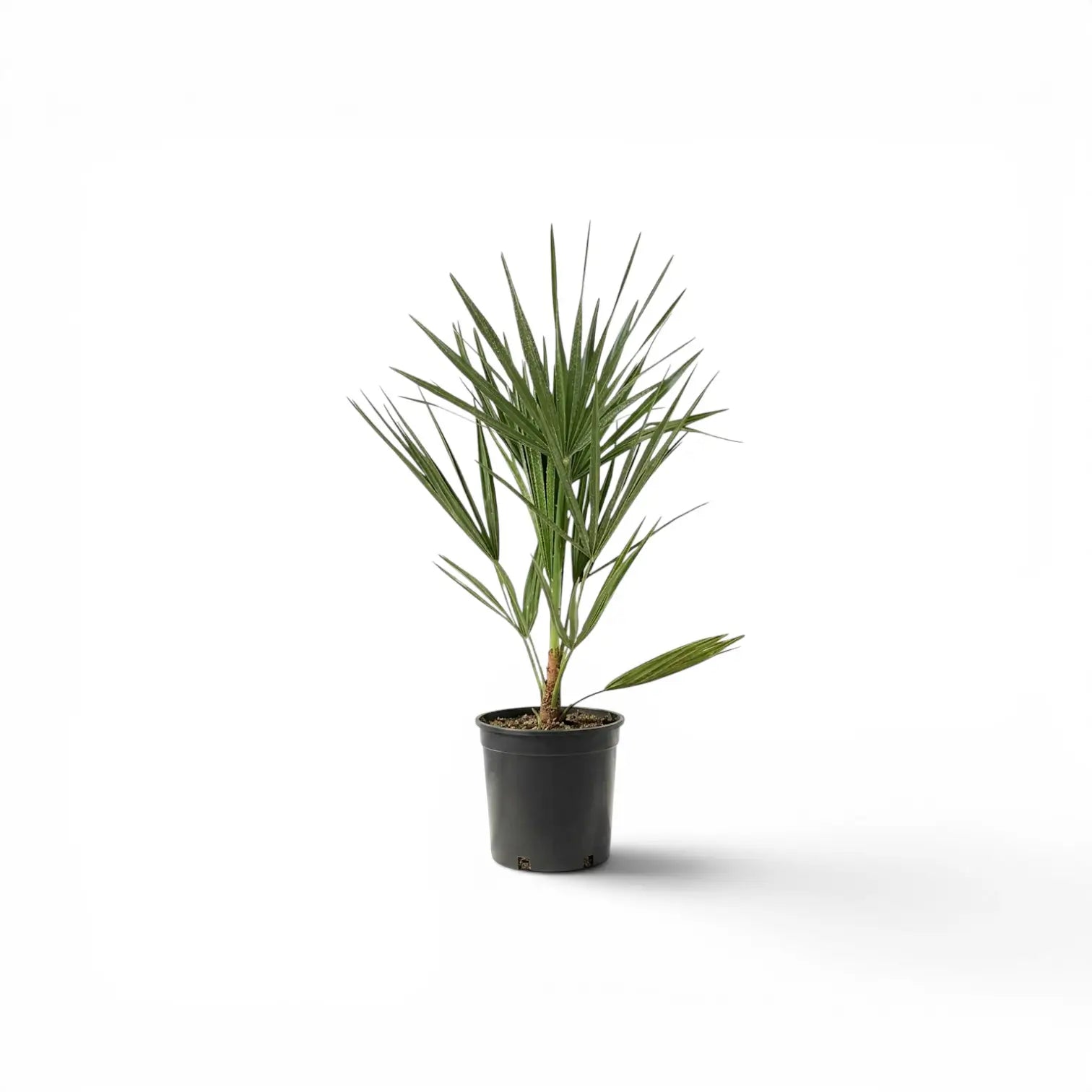
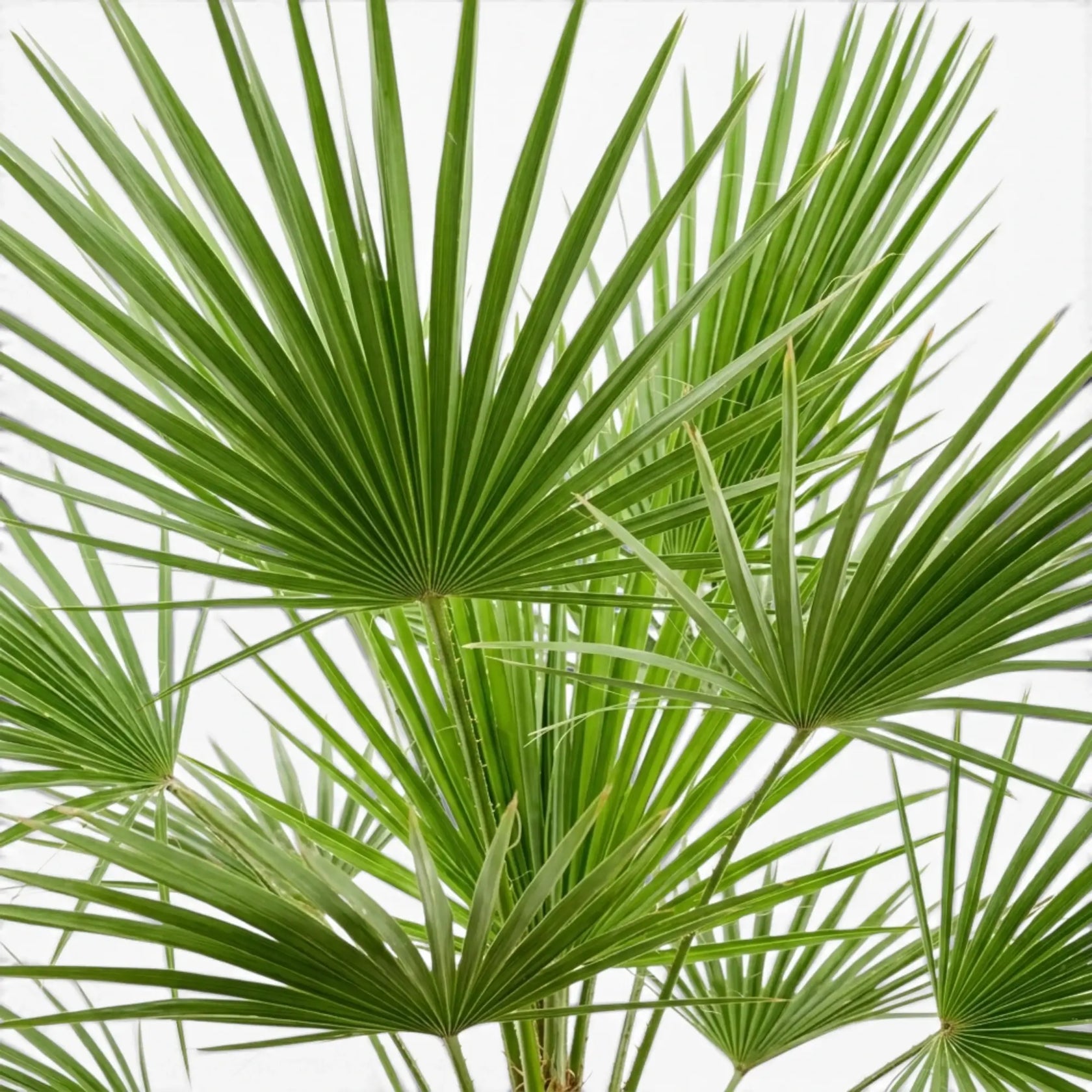
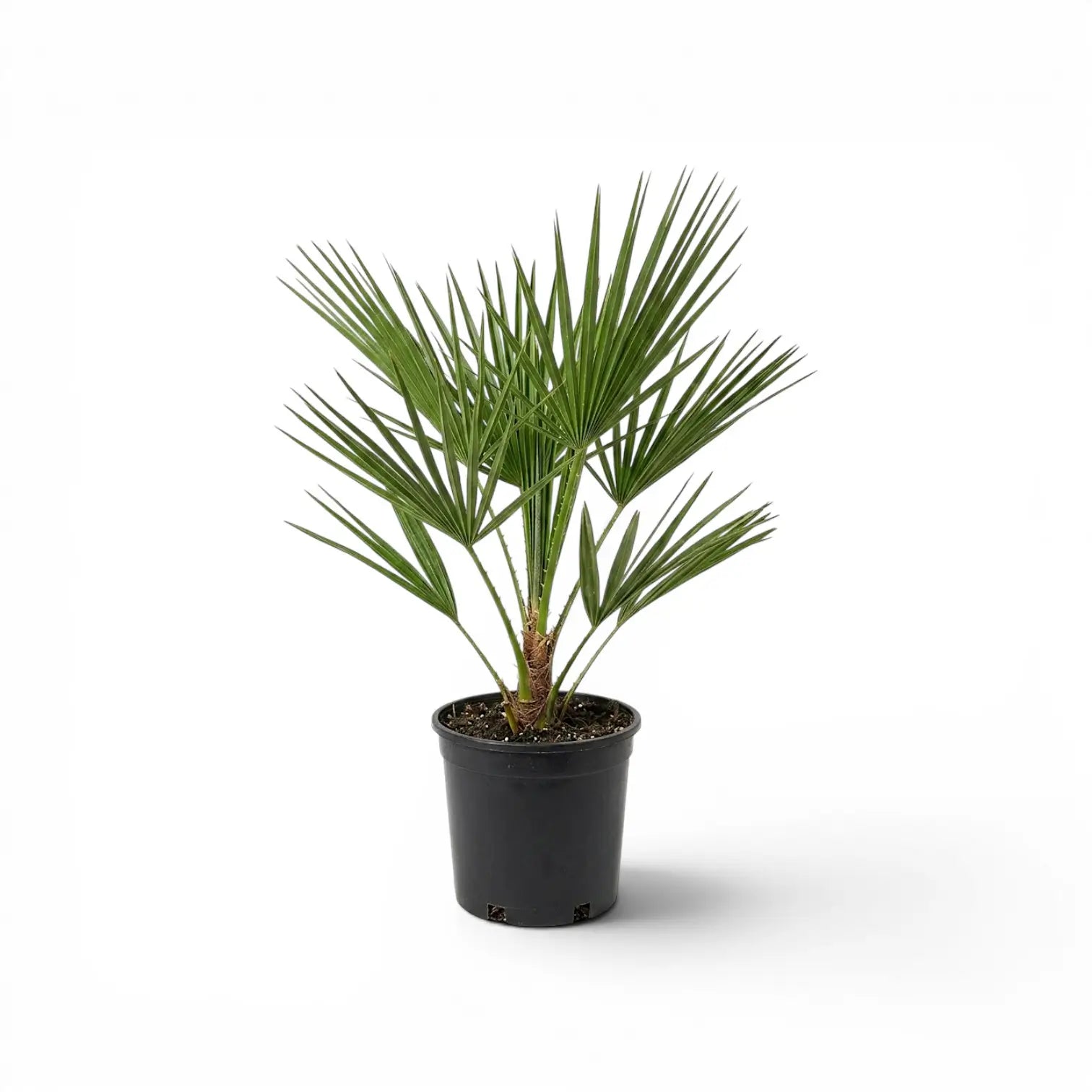
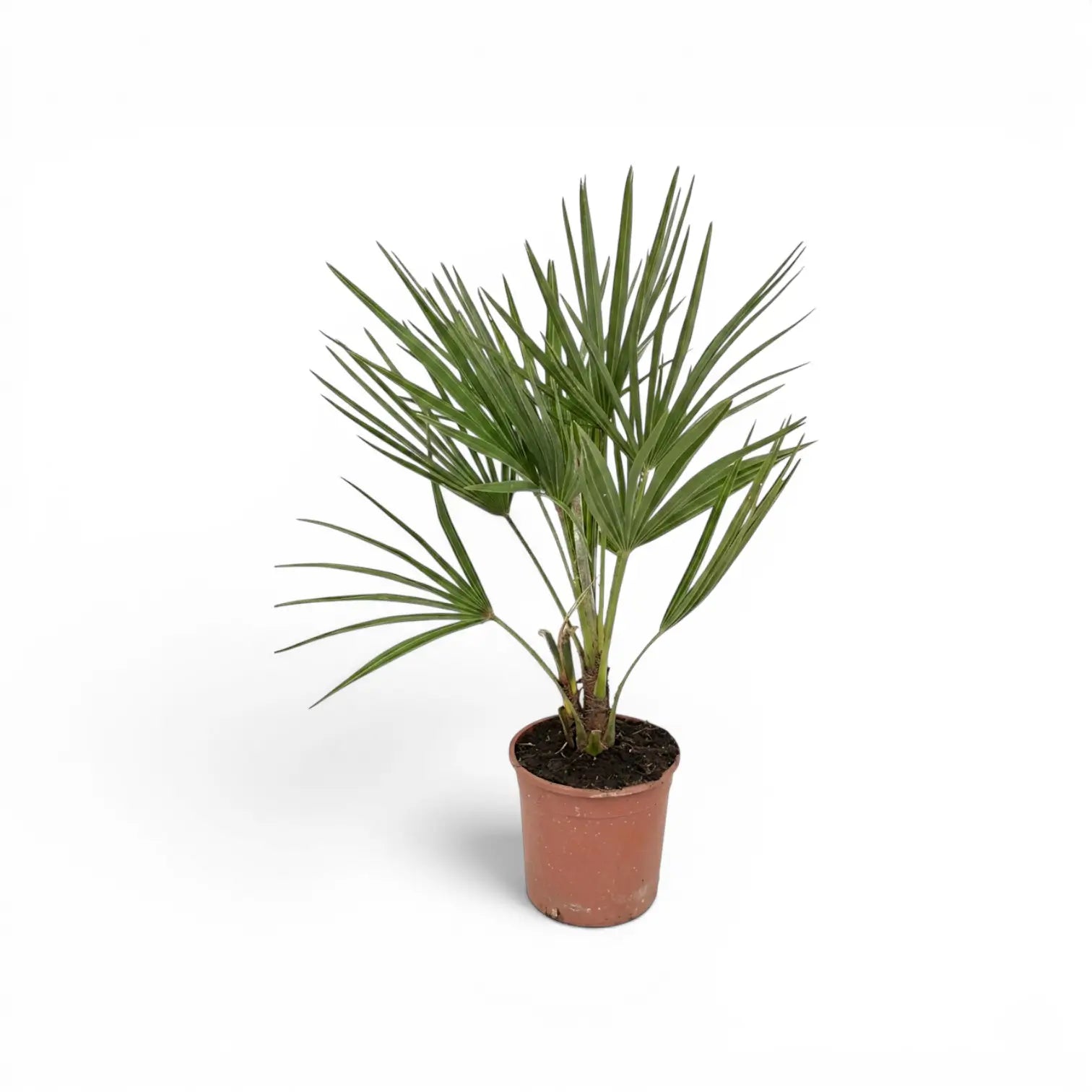
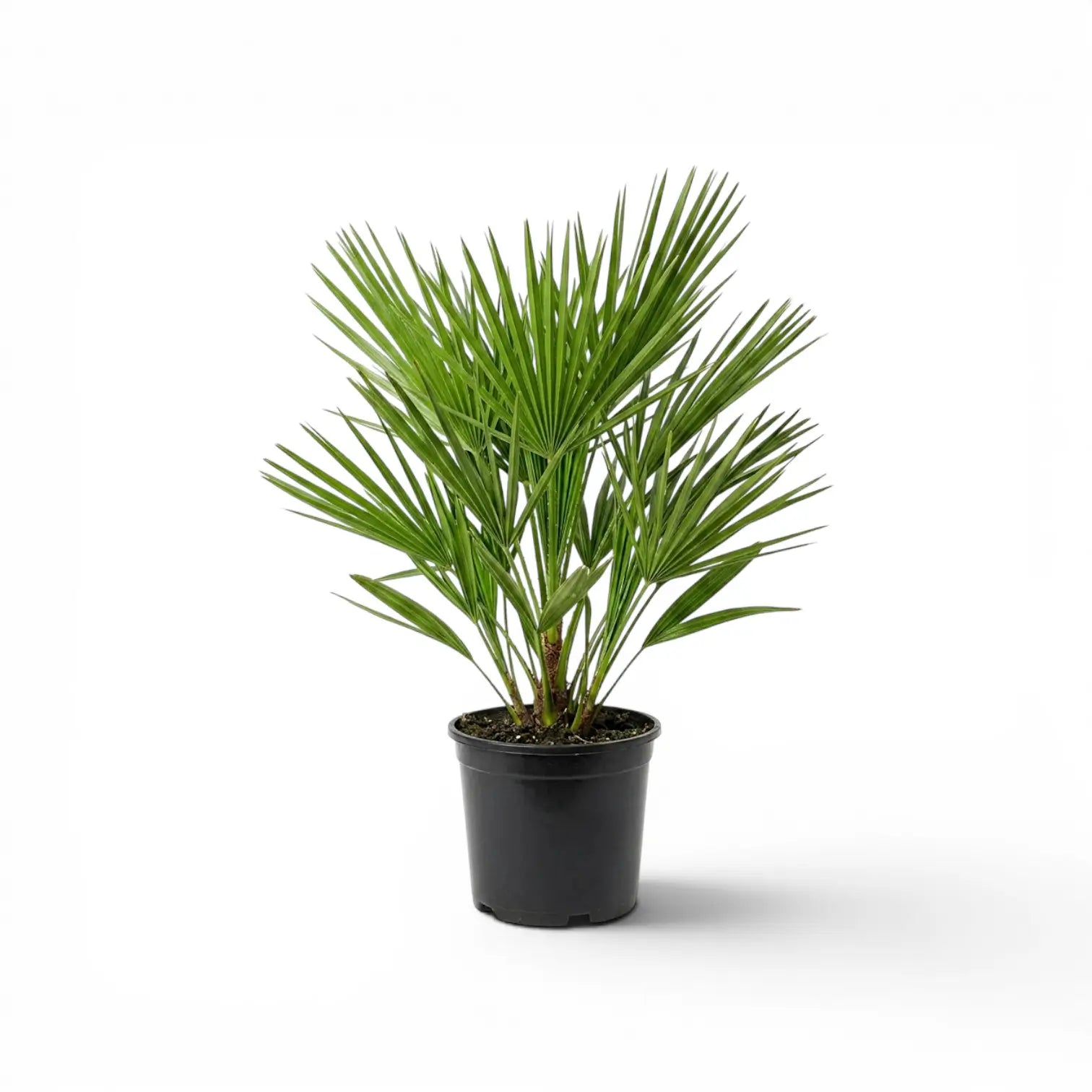
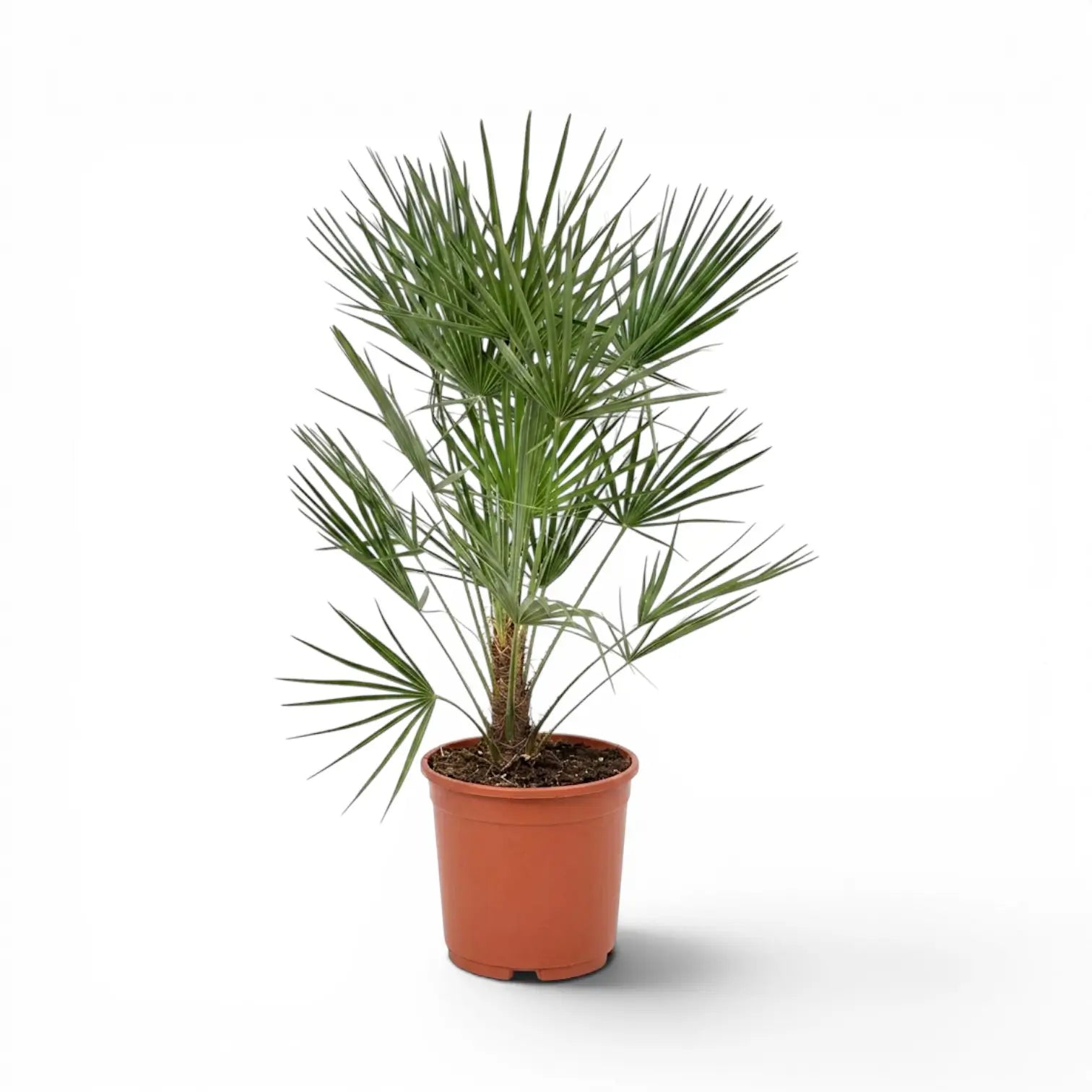
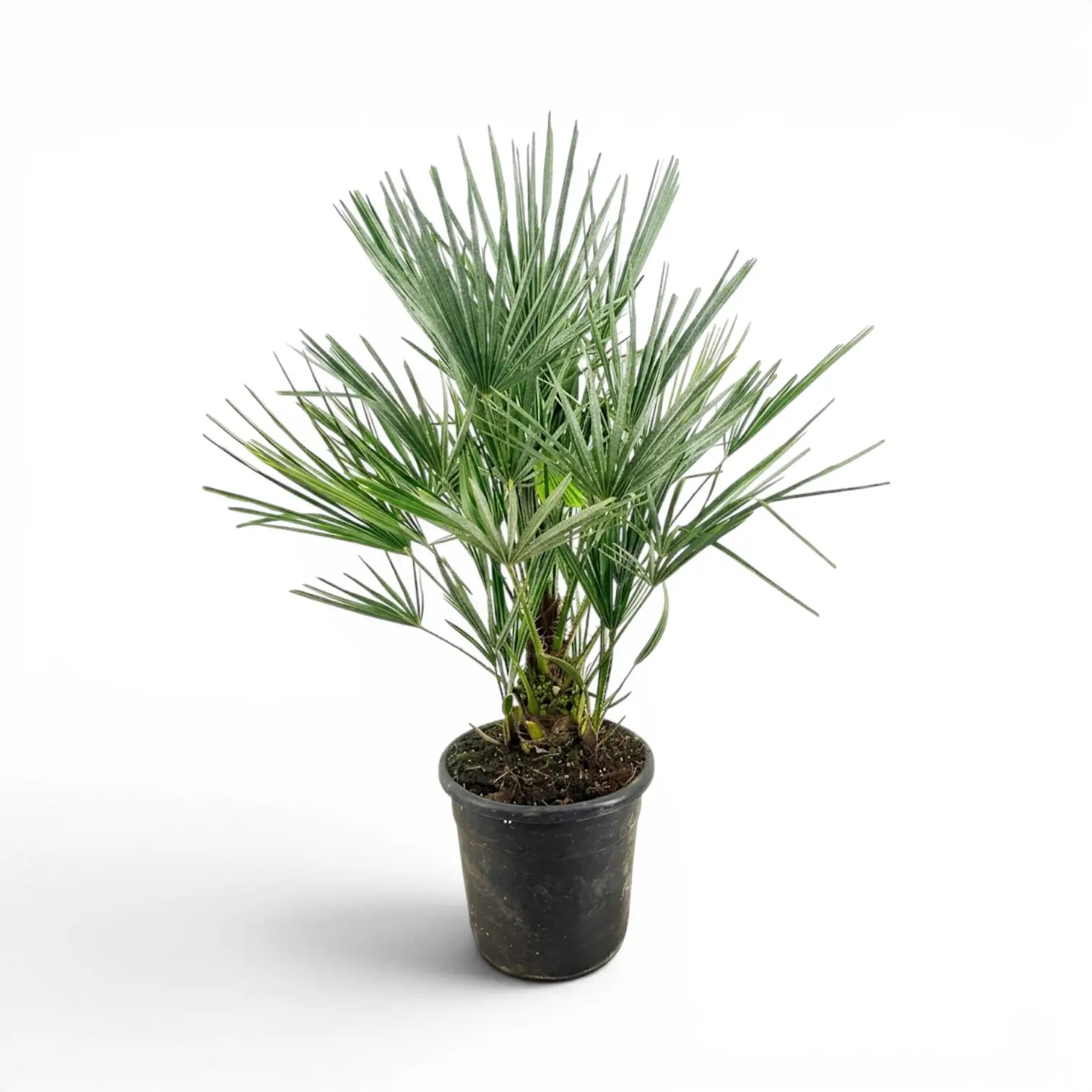
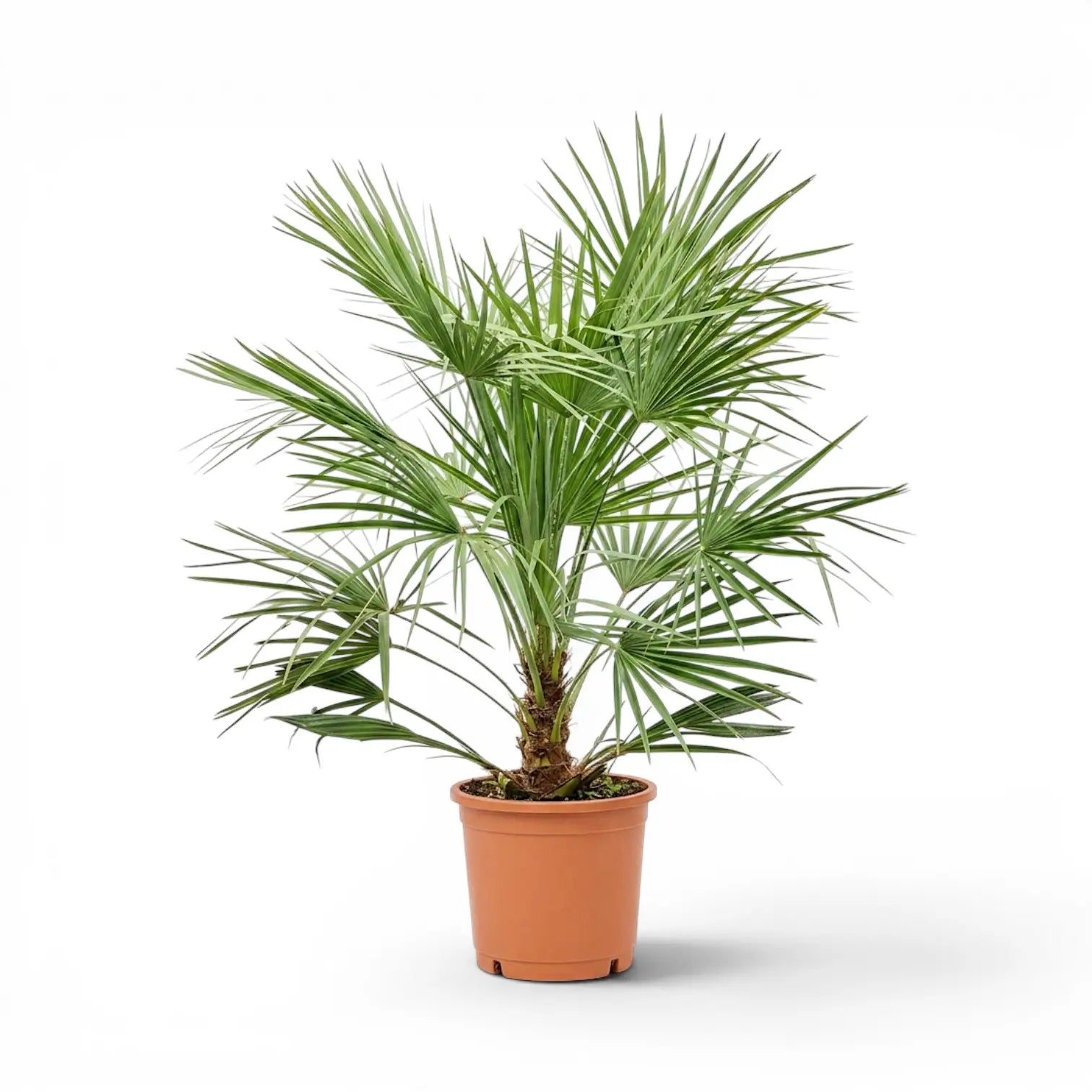
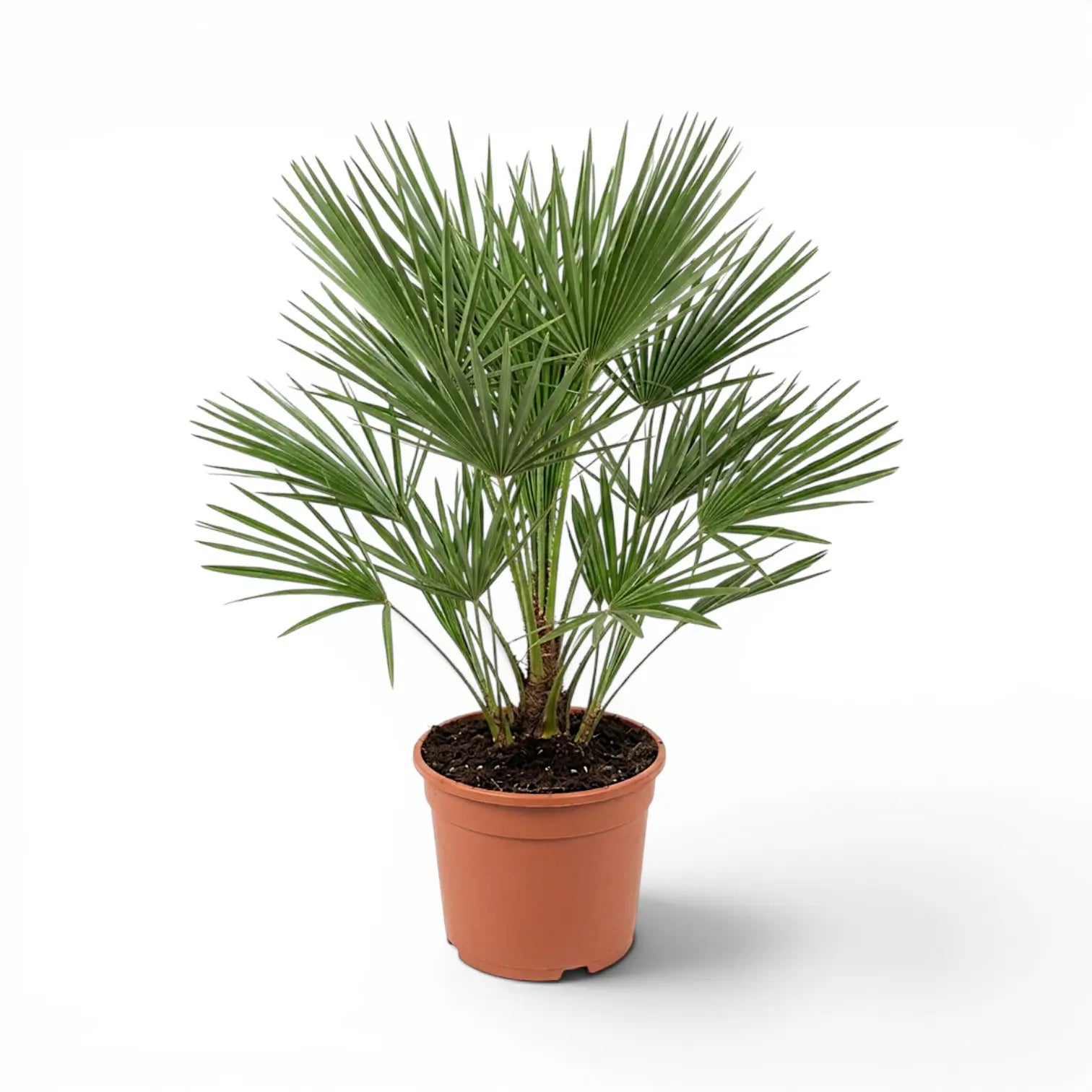
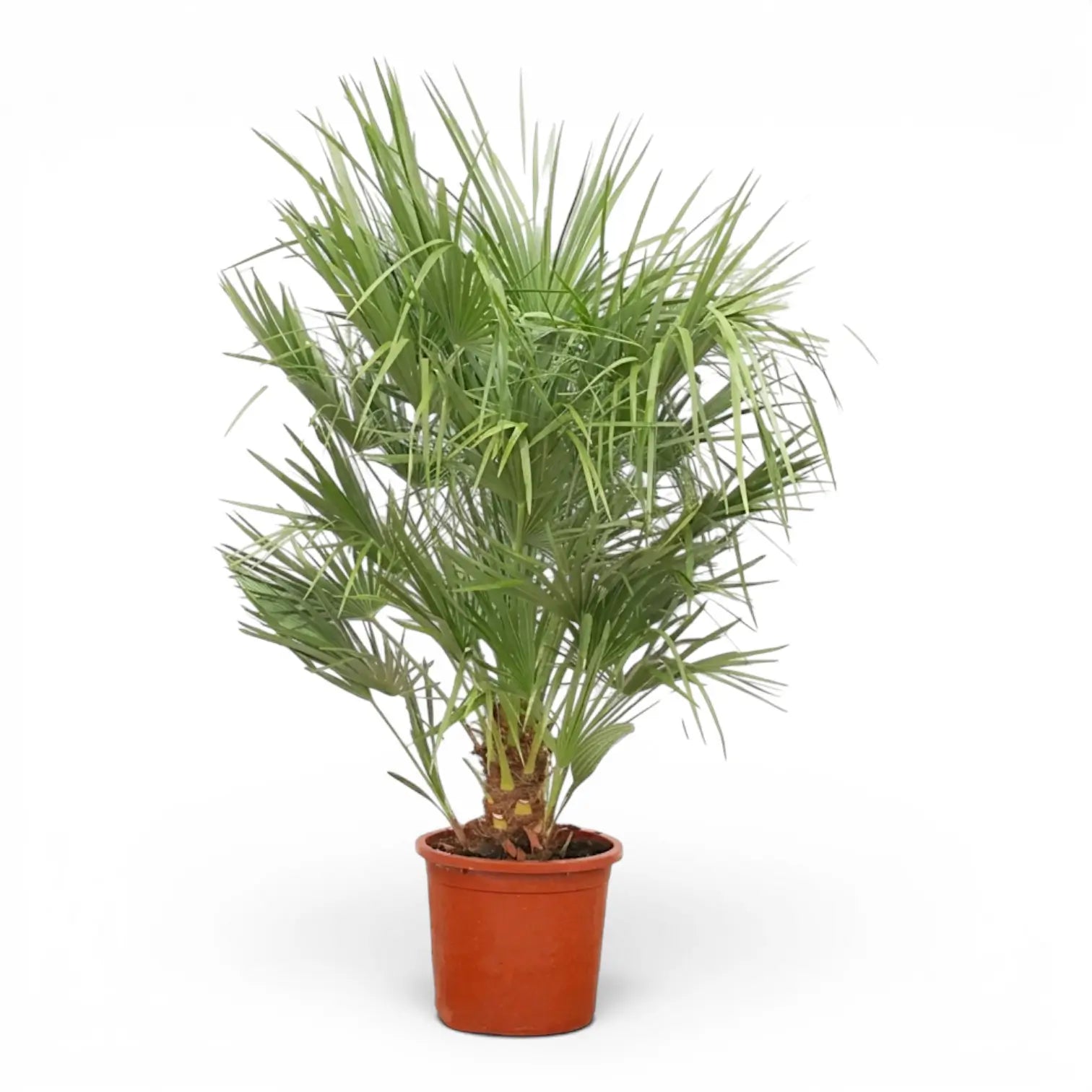
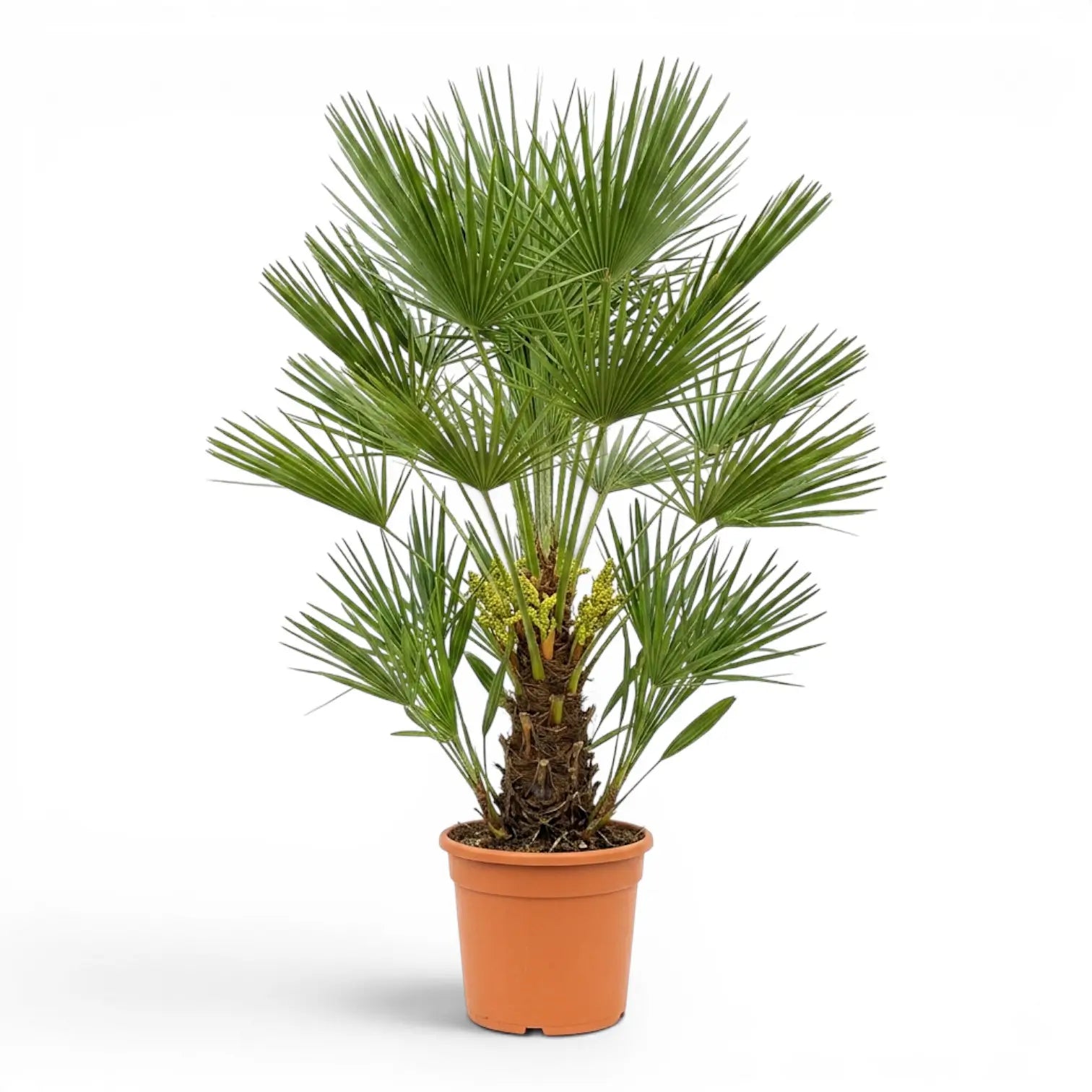
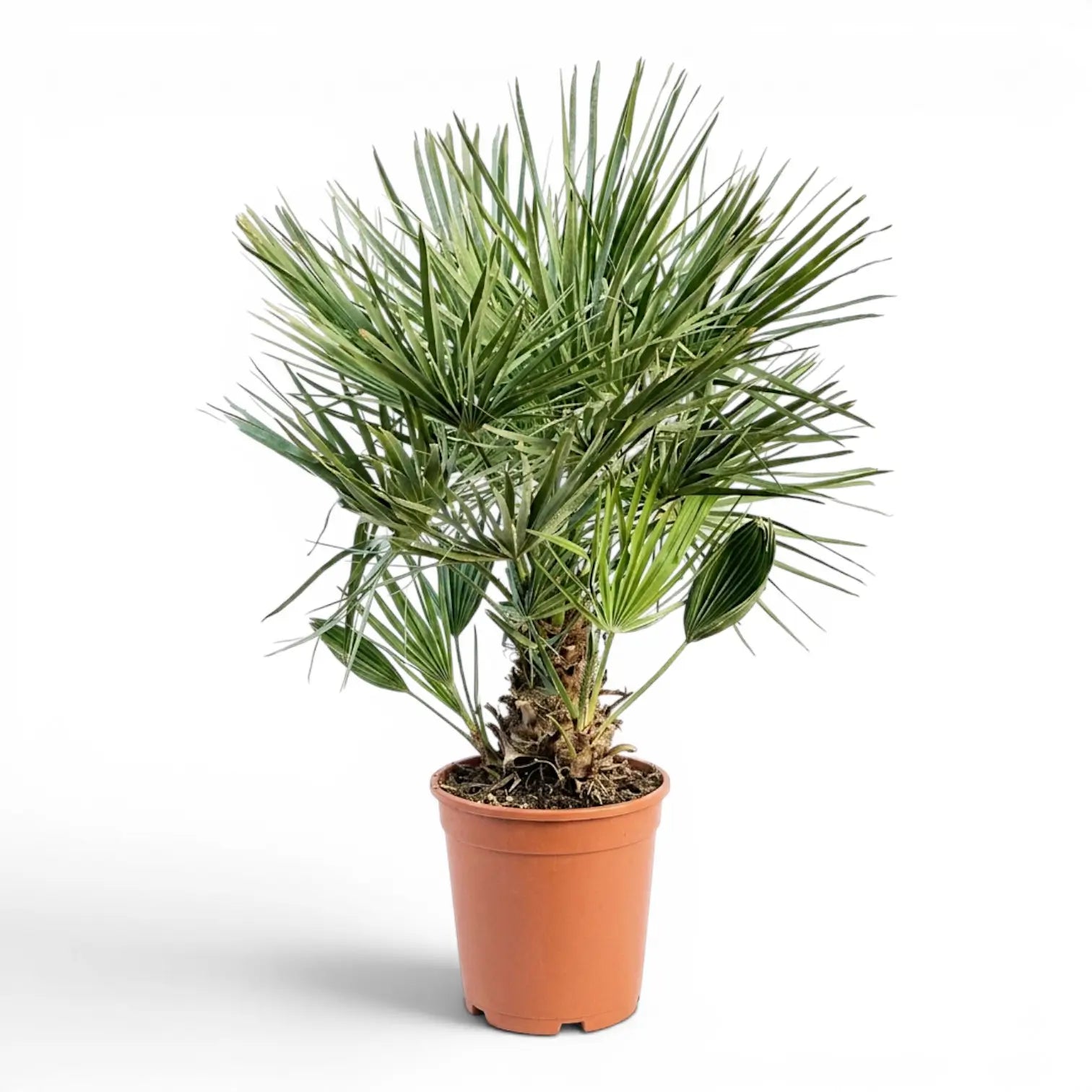
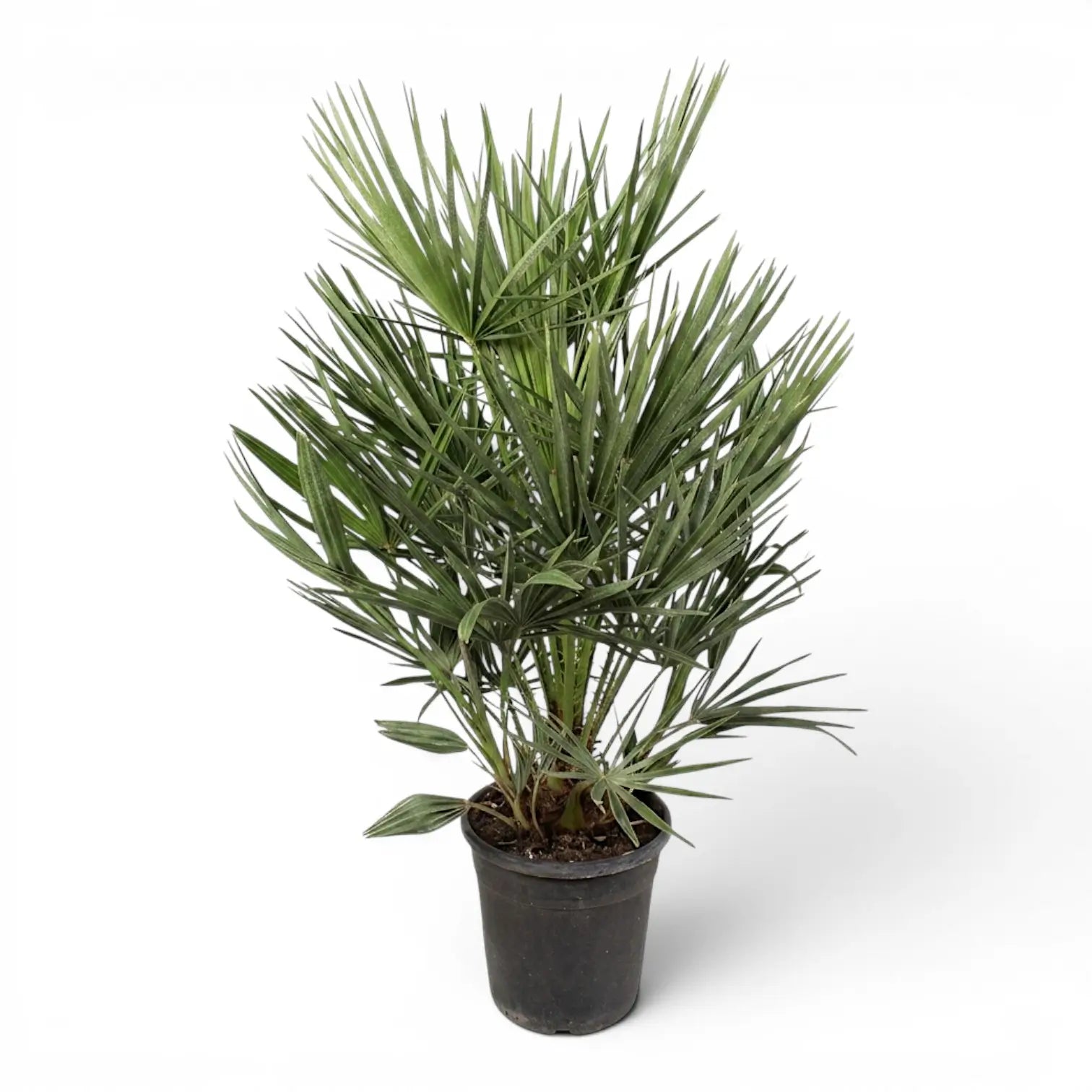
Chamaerops humilis, known as the European Fan Palm or Mediterranean Dwarf Palm, grows slowly and forms stiff, fan-shaped leaves. Several thick stems rise from the base, creating a dense clump over time.
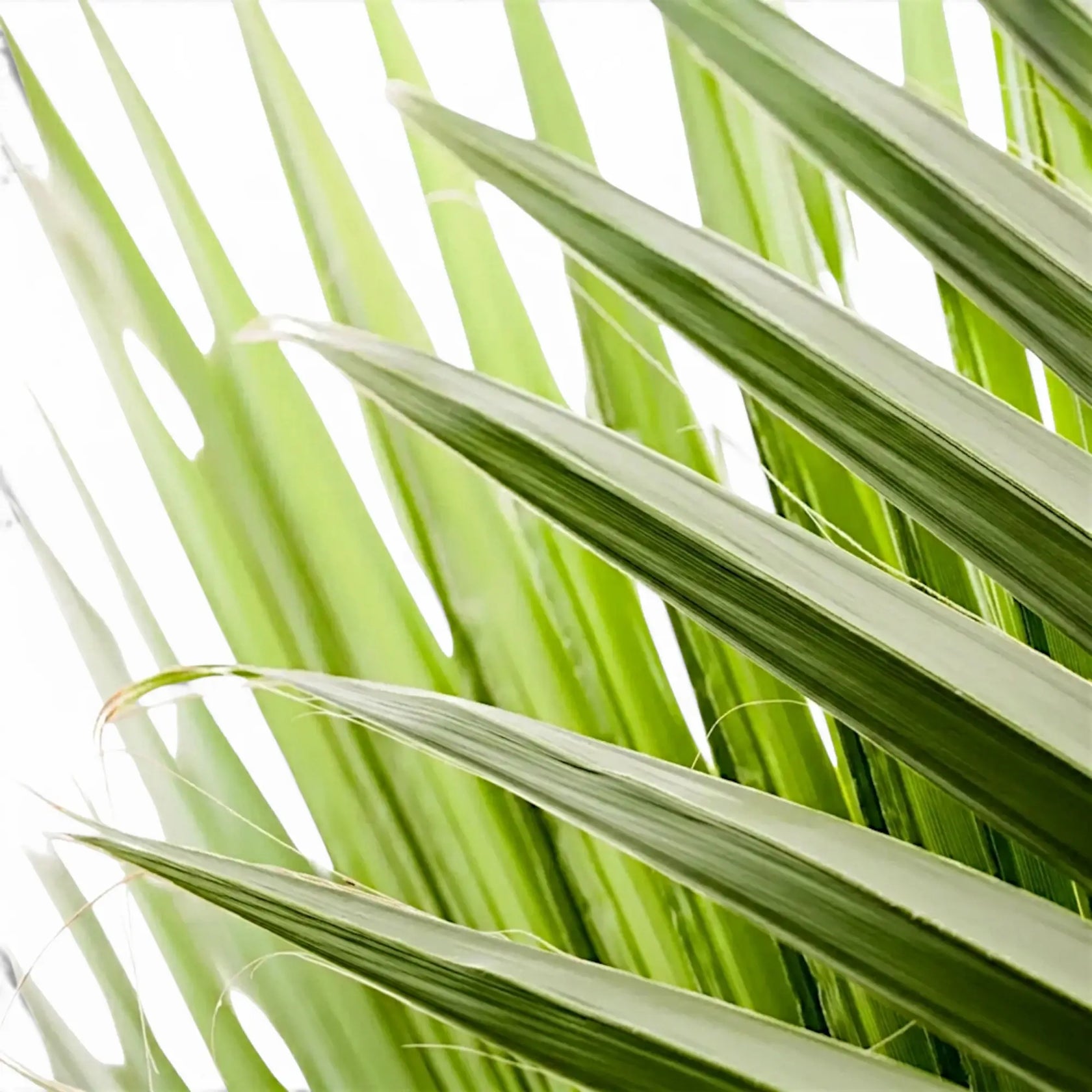
Each leaf is divided into firm segments that spread out like a fan from the end of the leaf stalk. The petioles carry sharp spines, so the plant needs careful placement and handling. The stiff leaves and spiny stalks make it harder to handle than softer indoor palms.
Chamaerops humilis comes from the western and central Mediterranean, where it grows in open, sunny areas with mineral soils and periods of dryness. In a pot, strong light, gritty substrate and careful watering are more important than watering often.
Give Chamaerops humilis the brightest position available. It can take direct sun once acclimated, but greenhouse-grown plants should be introduced to stronger light gradually. Water thoroughly, then let the upper part of the substrate dry before watering again. In cooler conditions, allow the mix to dry a bit further between waterings.
Use a gritty, well-draining substrate with mineral components such as pumice, lava rock or coarse sand. Good drainage is critical, especially in cooler weather, because wet roots combined with low temperatures can lead to rot. Always use a pot with a drainage hole.
Established plants in the ground can handle brief cold better than container plants. In a pot, the roots are more exposed, so protect them from frost and cold, wet substrate. Normal indoor humidity is usually fine when light and airflow are good.
Feed modestly during active growth, then ease off as temperatures drop. Use a heavy, stable pot to support the stiff crown. Repot when roots fill the pot or the mix starts drying unevenly. Remove only fully brown fronds, and wear gloves to avoid the spines.
A soft stem base or sour smell from the substrate usually points to poor drainage or prolonged wetness. Long, loose growth indicates too little light. Brown leaf tips after winter can result from cold roots, wind exposure or salt build-up. Check for scale, mealybugs or spider mites, especially around leaf bases and folded segments.
The sharp spines are the main handling issue. They can scratch or puncture skin. Wear gloves when handling and keep the plant where children and pets cannot brush against it.
Chamaerops humilis L. belongs to Arecaceae, the palm family. The genus name Chamaerops is commonly explained from Greek elements referring to a low-growing shrub, and humilis means low-growing.
In a pot, Chamaerops humilis is mainly about strong light, sharp drainage and careful winter handling.
Plant names, growth habits, natural habitats and indoor care guidance are checked against trusted botanical, habitat and horticultural references before publication.View our plant care resources and references.

Sign up for Foliage Factory newsletter for early access to new arrivals and practical care tips that work in real homes.