Light
Bright indirect • approx. 10,000–20,000 lux

VAT included · plus
Your new plant has just travelled a long way and needs a calm start in its new home. For step-by-step unboxing and first-week care, check our after-delivery care guide. For deeper tips on how your plant settles in over the next weeks, read our houseplant acclimatization guide.
Secure shipping, carefully packed orders with safe delivery across the EU, UK and Switzerland.
28-day plant guarantee, if a plant arrives damaged or fails soon after delivery, we help you make it right.
Free returns, simple, cost-free returns according to our policy.
For full details, please see:
Please head to our FAQ Page or Contact us.
Quick Care Guide
Light
Bright indirect • approx. 10,000–20,000 lux
Watering
Water when ~25–40% dry
Substrate
Aerated • Moisture-buffered • Balanced organic + mineral • Medium
Temperature
Ideal: 20–27 °C • Avoid below: 15 °C
Humidity
Moist 50–60 %
Growth habit
Upright palm.
Support
not needed
Growth speed
Slow
Max size indoors
Max. height: 180 cm • Max. spread: 90 cm
Toxicity & safety
Non-toxic
Origin & habitat
Native from Mexico to Honduras
Outdoor growing
Outside from 14 °C · rain-sheltered spot
These care values are quick reference points for indoor growing. Use them as a guide, then adjust for pot size, substrate, temperature and how quickly the substrate dries.
For more detail, read the full product description or visit our Plant Care Guides.
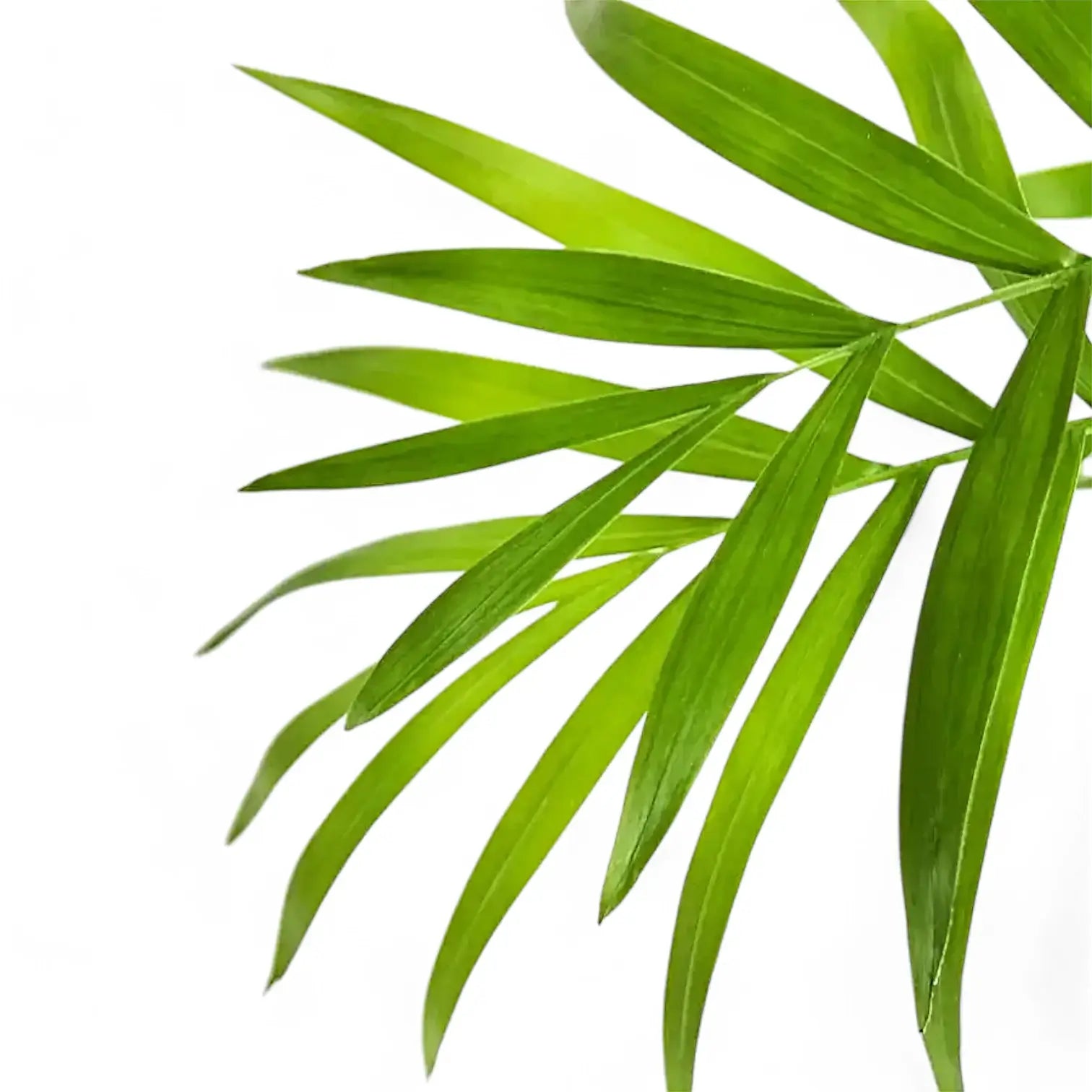
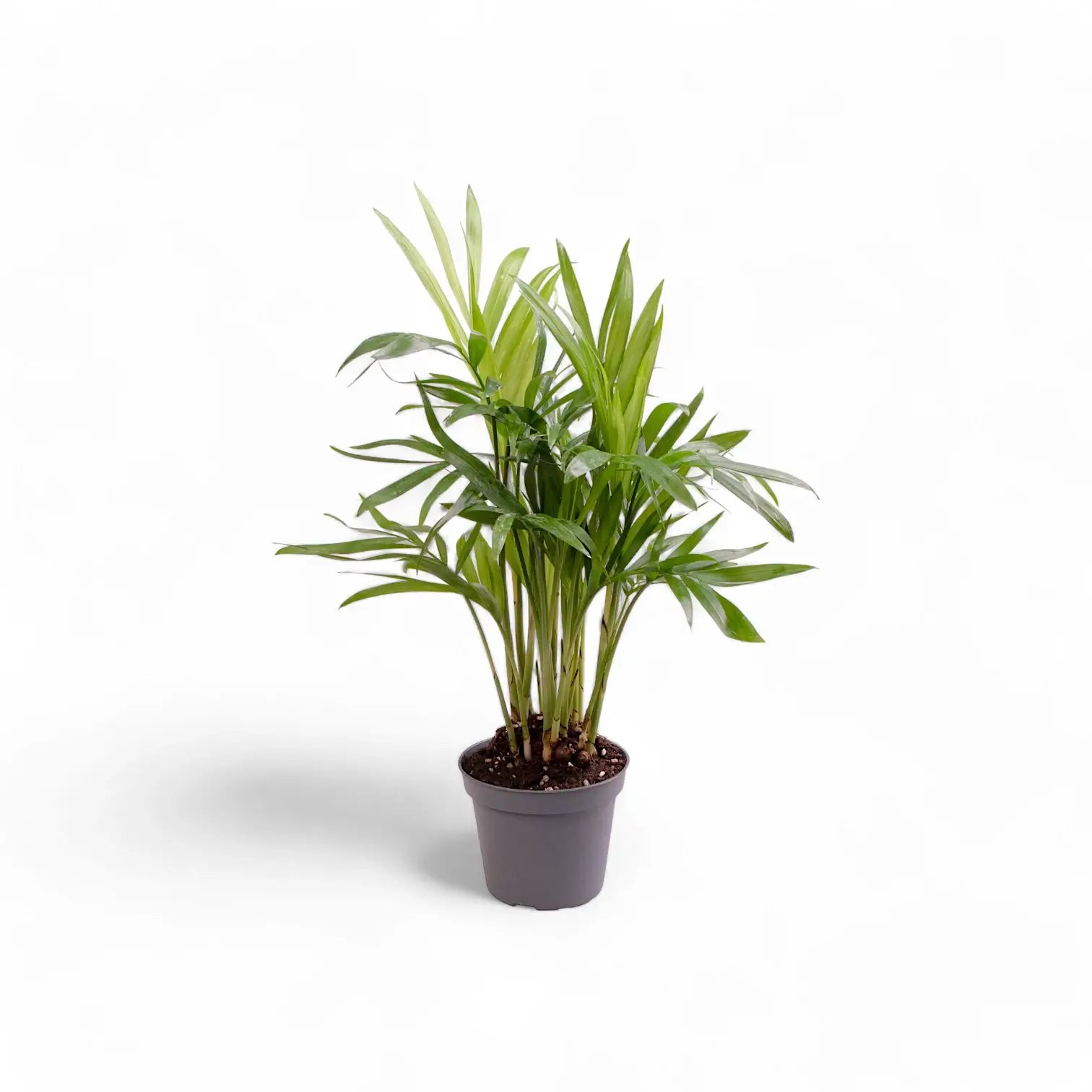
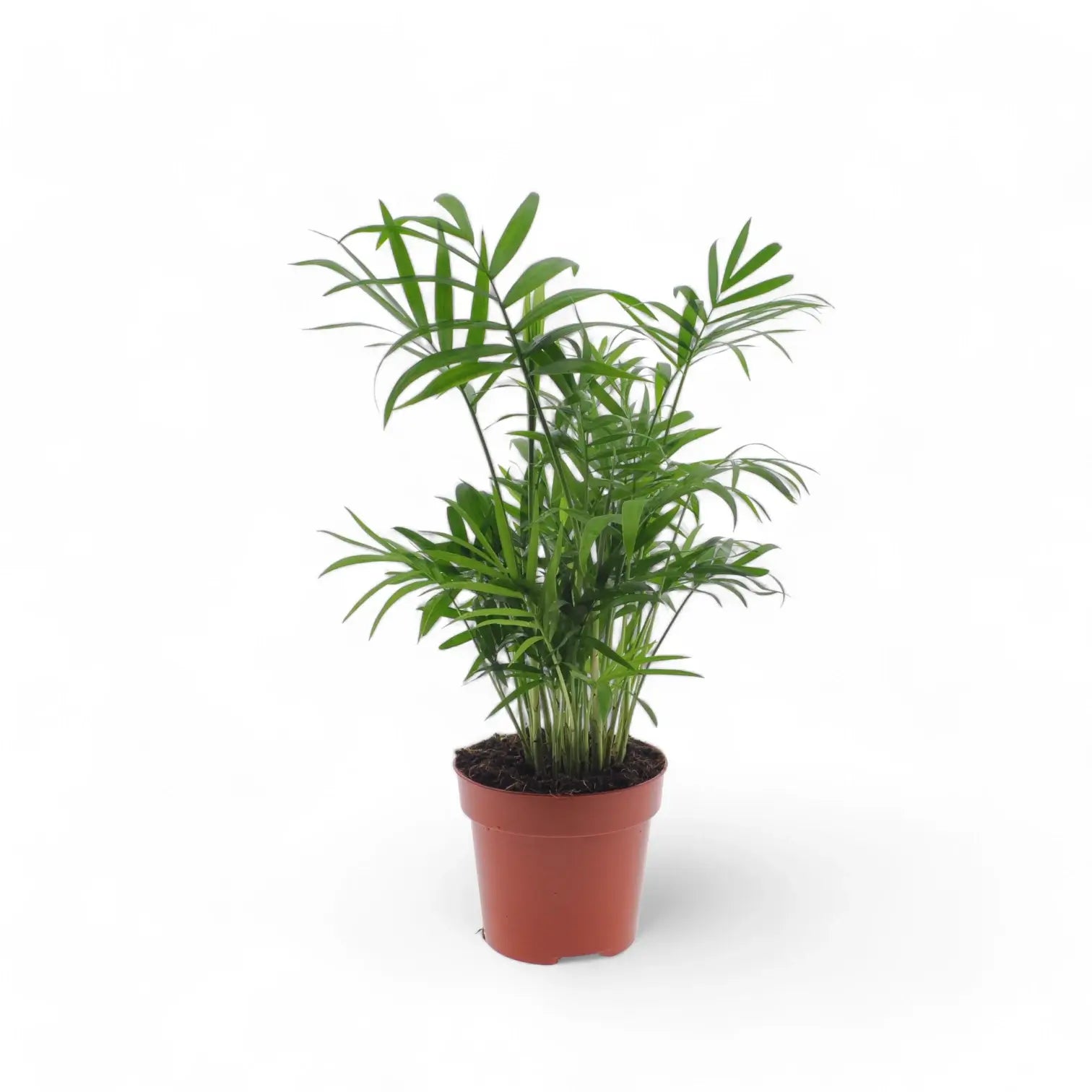
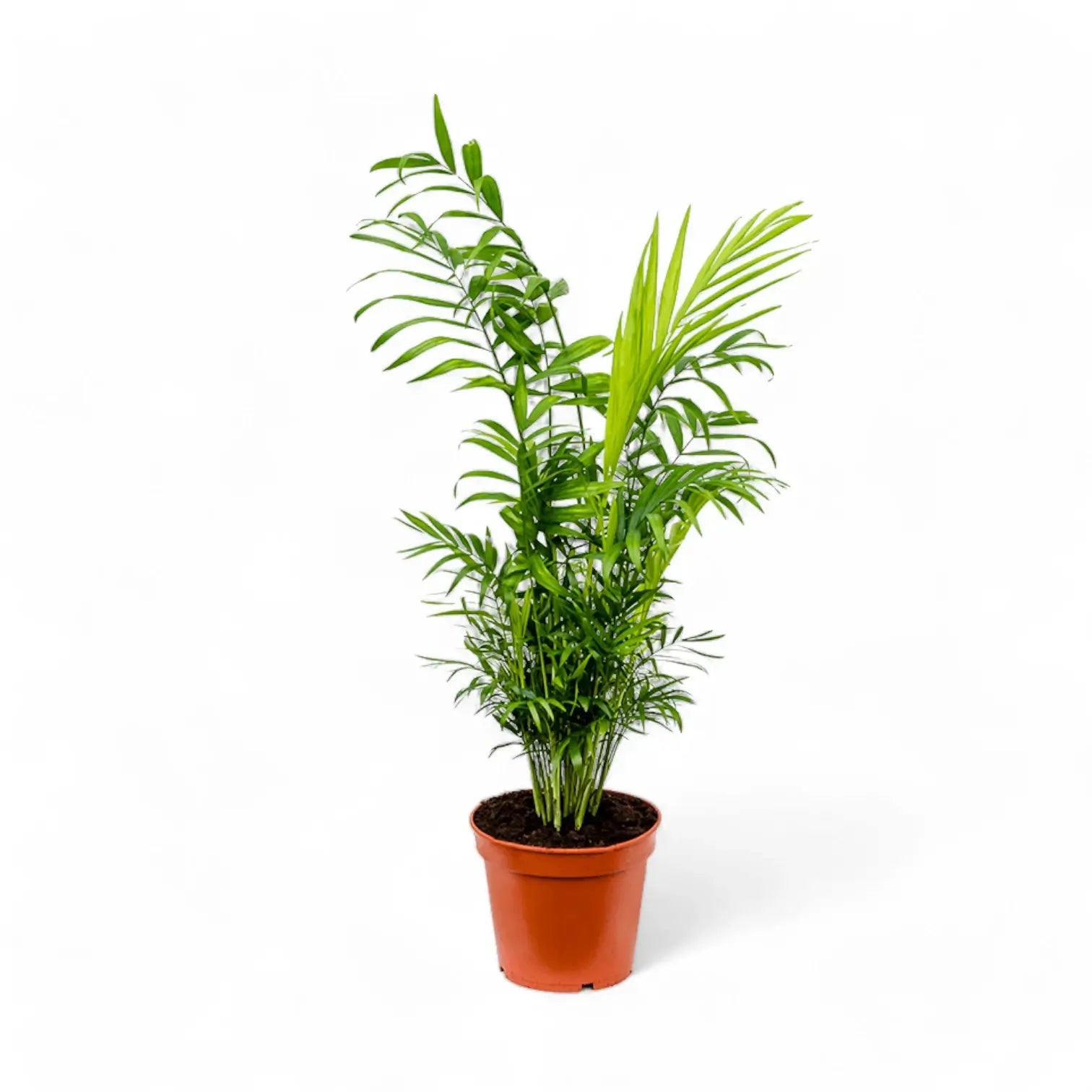
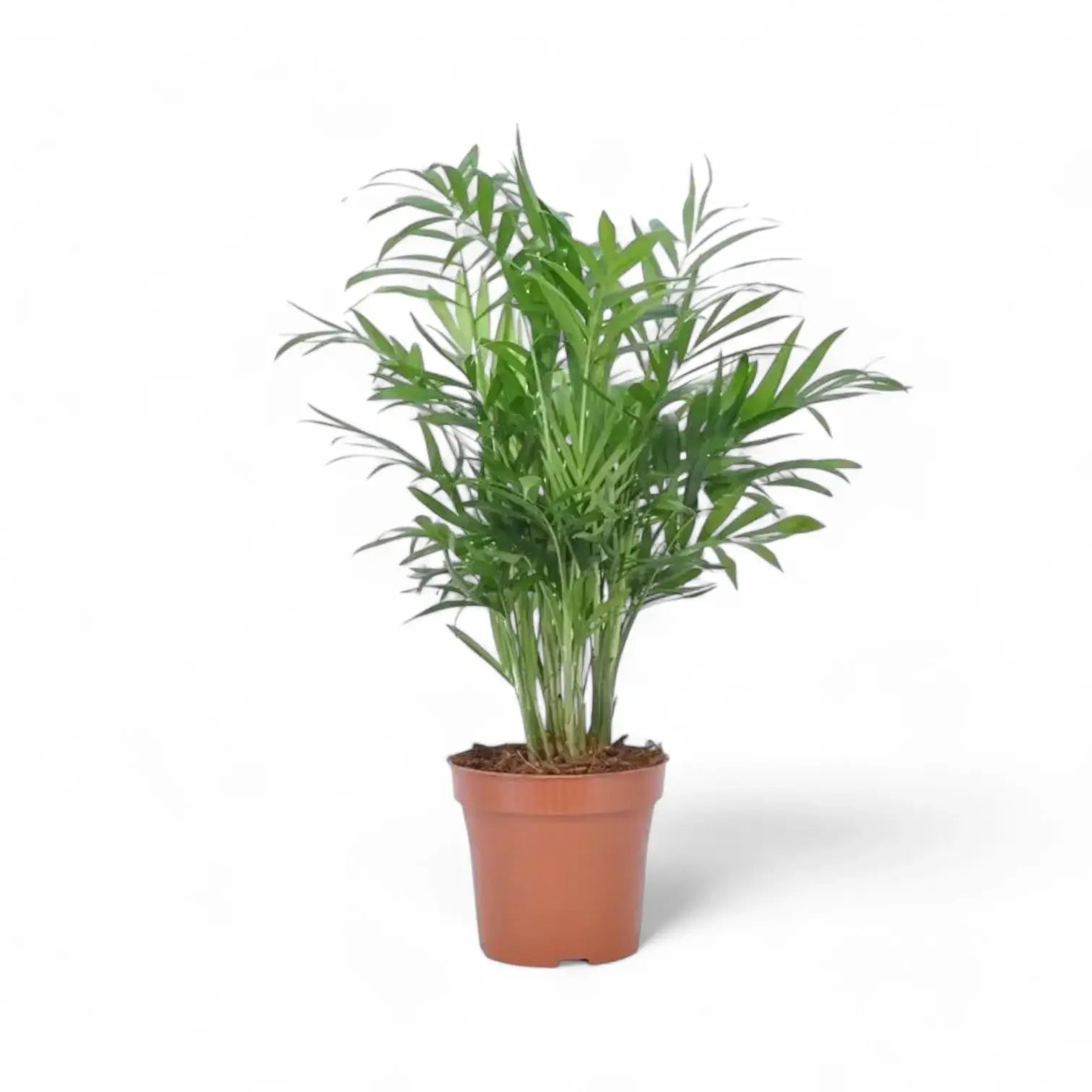
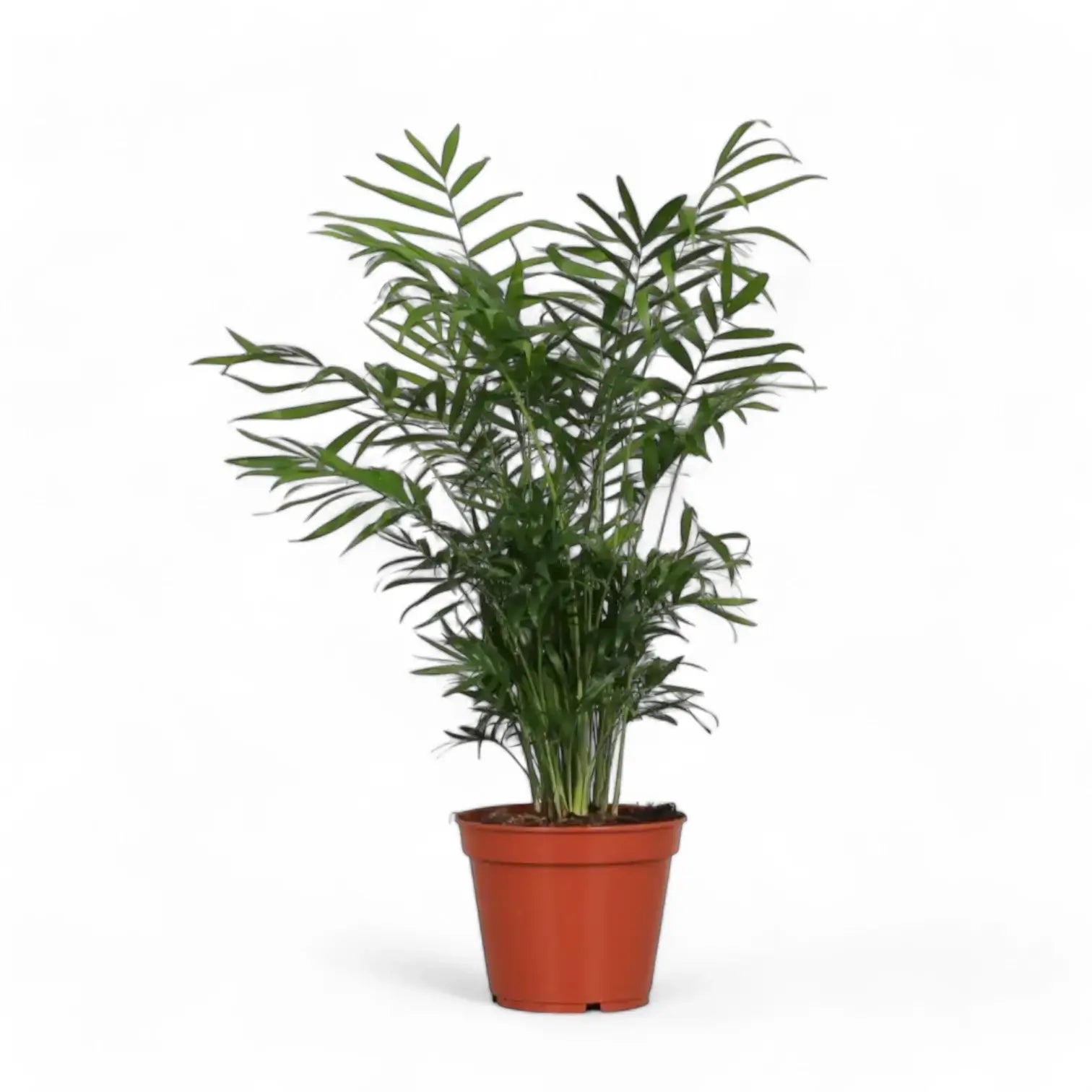
Chamaedorea elegans, widely known as the Parlour Palm, is a small understory palm with fine, feathered fronds and a naturally compact habit. Slender green stems carry narrow leaflets along arching fronds, giving the plant a soft layered outline as it matures.
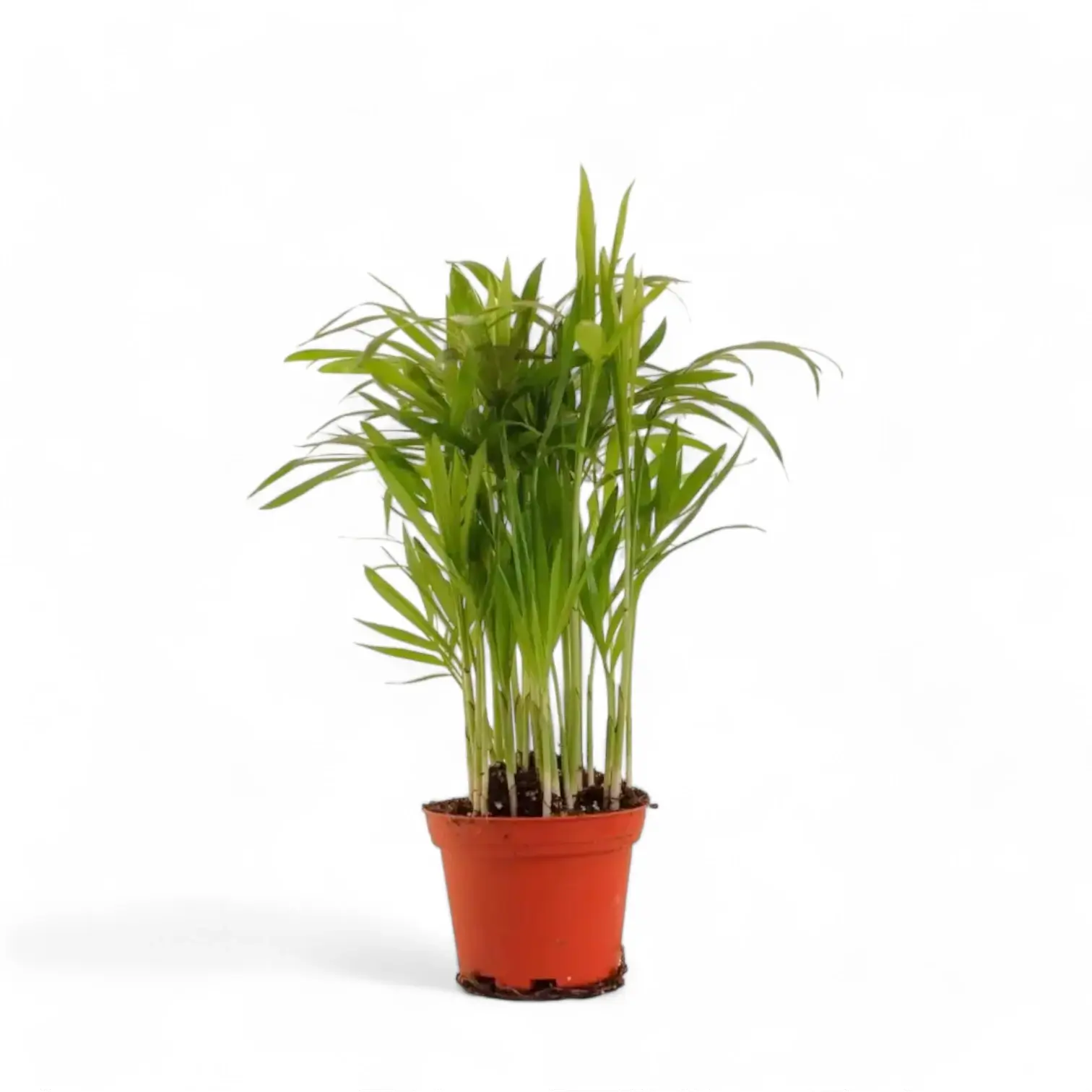
Several young plants are often grown together in one pot to create a fuller crown from an early stage. Growth is slow and steady: older stems gain height gradually while fresh fronds rise from the crown. Indoors, Chamaedorea elegans stays manageable for many years when the root zone remains lightly moist, airy, and protected from cold stress.
Chamaedorea elegans belongs to the palm family, Arecaceae. Its native range extends from Mexico into Central America, where it grows below taller vegetation. Its slim stems, shade-tolerant fronds and steady response to filtered indoor light match that understory habitat.
The fronds are pinnate, with narrow leaflets arranged along a central axis. Each new frond adds height and width gradually, so the plant develops by layering fresh leaves above older ones. Mature plants may flower under good conditions, producing small yellowish inflorescences, although indoor flowering depends on plant age, light and overall growth.
Young Chamaedorea elegans plants are often planted in groups for a fuller pot. In a shared container, stronger stems may gain more light and space while smaller stems slow down. This is a normal part of how grouped palms develop over time.
ASPCA lists Chamaedorea elegans as non-toxic to cats and dogs. Chewed fronds can still upset sensitive stomachs, so trim damaged growth and discourage pets from grazing.
The accepted botanical name is Chamaedorea elegans Mart., in the family Arecaceae. The genus name Chamaedorea is derived from Greek elements commonly interpreted as “ground” and “gift”, referring to the low stature of many species in the genus. The species epithet elegans means elegant, matching the plant’s fine fronds and restrained growth habit.
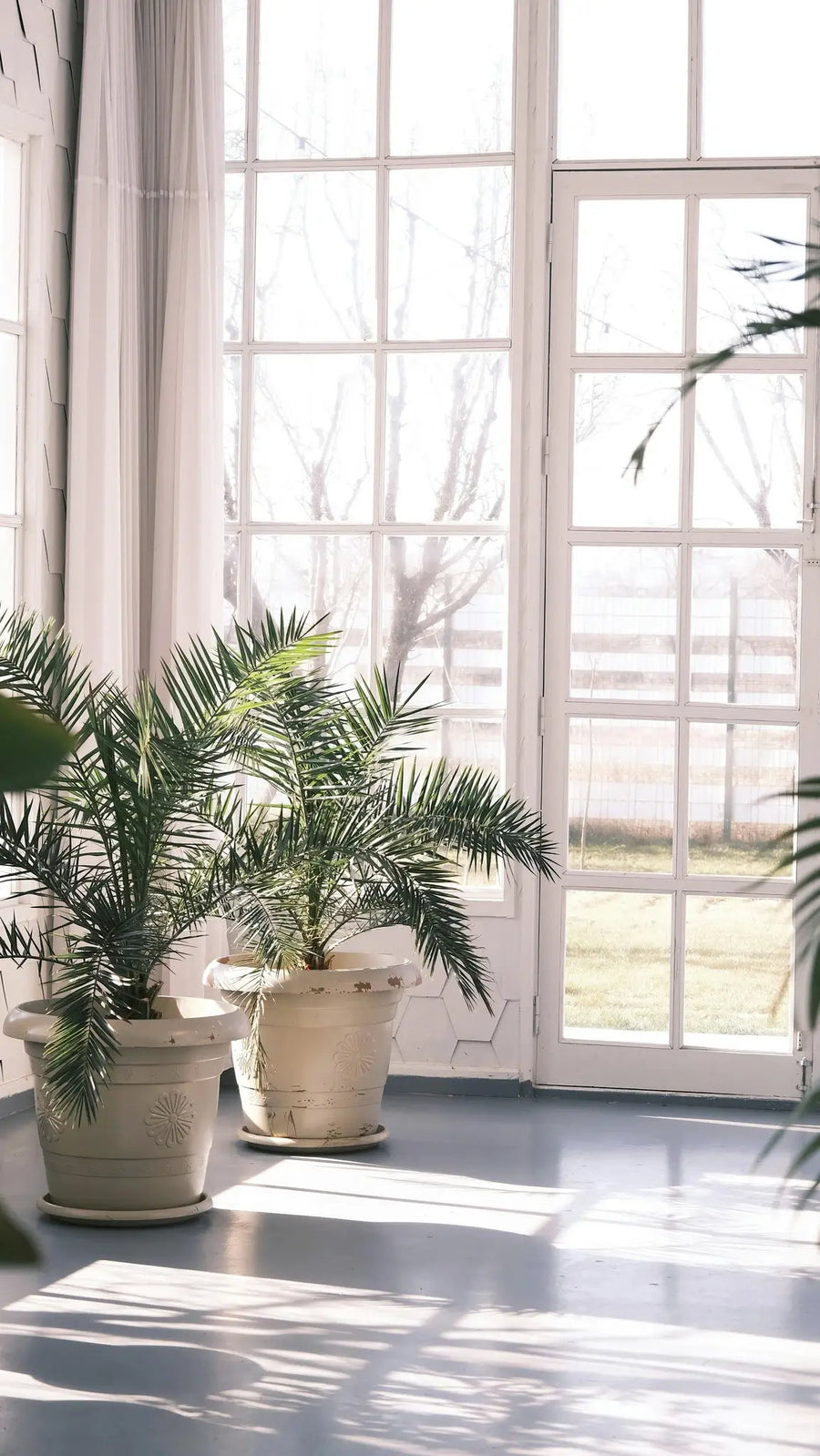
Chamaedorea elegans shows soft feathered fronds, slender green stems and a compact palm profile.
Plant names, growth habits, natural habitats and indoor care guidance are checked against trusted botanical, habitat and horticultural references before publication.View our plant care resources and references.
Sign up for Foliage Factory newsletter for early access to new arrivals and practical care tips that work in real homes.