Light
Very bright / some direct • approx. 20,000–40,000 lux

Buy 4 plants, get 1 free
VAT included · plus
Your new plant has just travelled a long way and needs a calm start in its new home. For step-by-step unboxing and first-week care, check our after-delivery care guide. For deeper tips on how your plant settles in over the next weeks, read our houseplant acclimatization guide.
Secure shipping, carefully packed orders with safe delivery across the EU, UK and Switzerland.
28-day plant guarantee, if a plant arrives damaged or fails soon after delivery, we help you make it right.
Free returns, simple, cost-free returns according to our policy.
For full details, please see:
Please head to our FAQ Page or Contact us.
Quick Care Guide
Light
Very bright / some direct • approx. 20,000–40,000 lux
Watering
Water when ~90–100% dry
Substrate
Airy + gritty • Fast-draining • Mineral-leaning • Medium
Temperature
Ideal: 18–27 °C • Avoid below: 10 °C
Humidity
Normal 40–50 %
Growth habit
Upright caudiciform succulent tree.
Support
not needed
Growth speed
Slow
Max size indoors
Max. height: 240 cm • Max. spread: 150 cm
Toxicity & safety
Non-toxic
Origin & habitat
Native to Mexico (Oaxaca, Puebla, San Luis Potosí, Tamaulipas, Veracruz)
Outdoor growing
Outside from 10 °C · rain-sheltered spot
These care values are quick reference points for indoor growing. Use them as a guide, then adjust for pot size, substrate, temperature and how quickly the substrate dries.
For more detail, read the full product description or visit our Plant Care Guides.
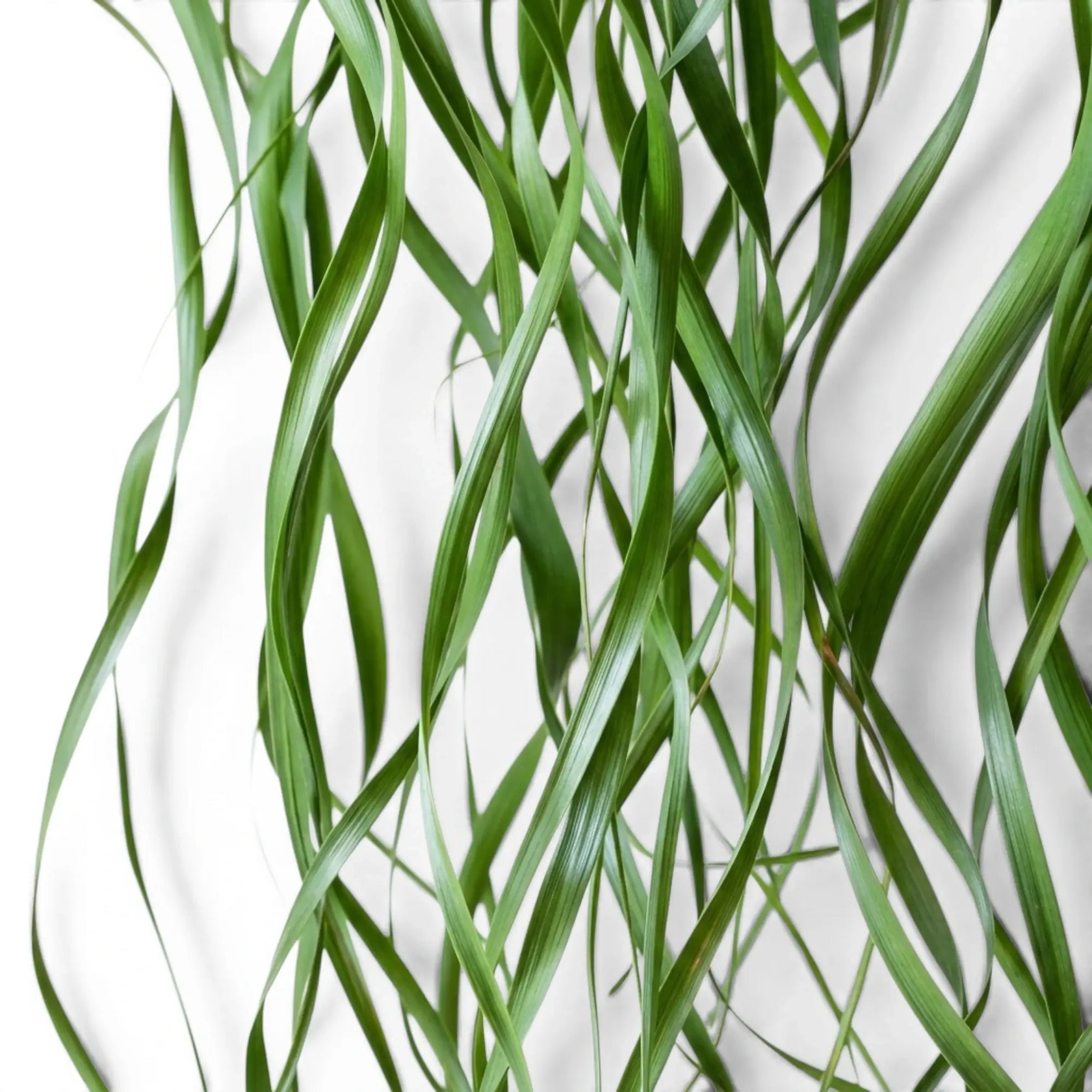
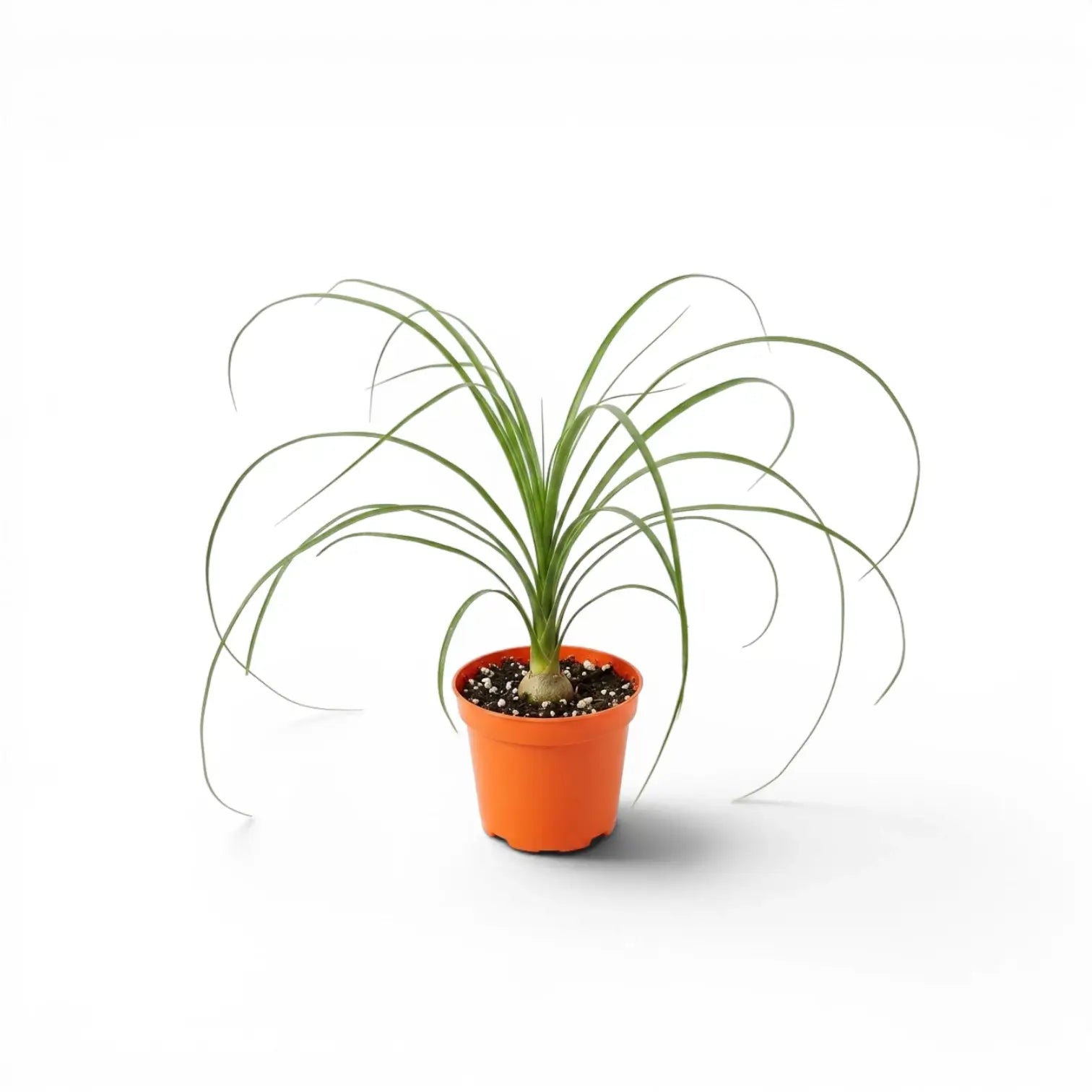
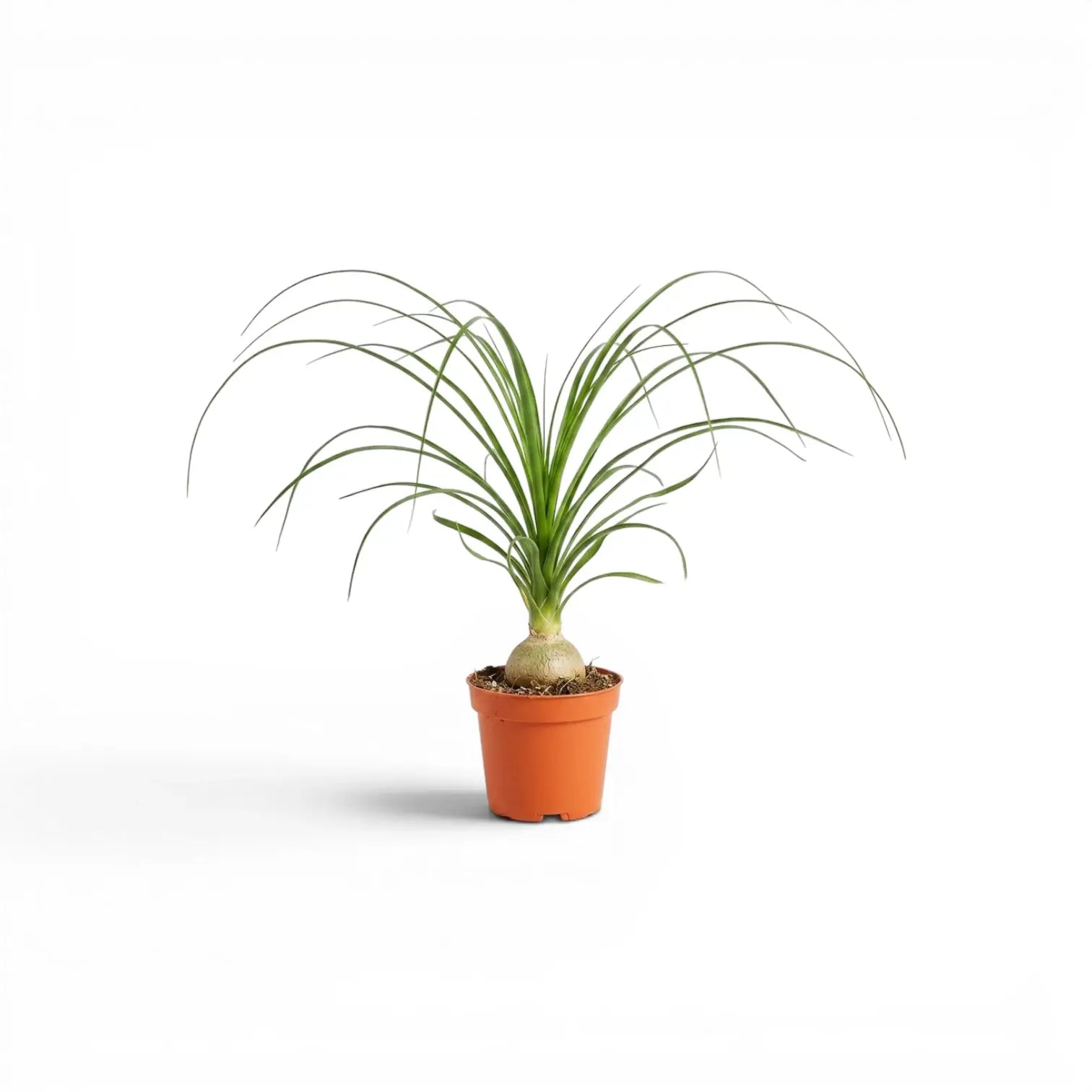
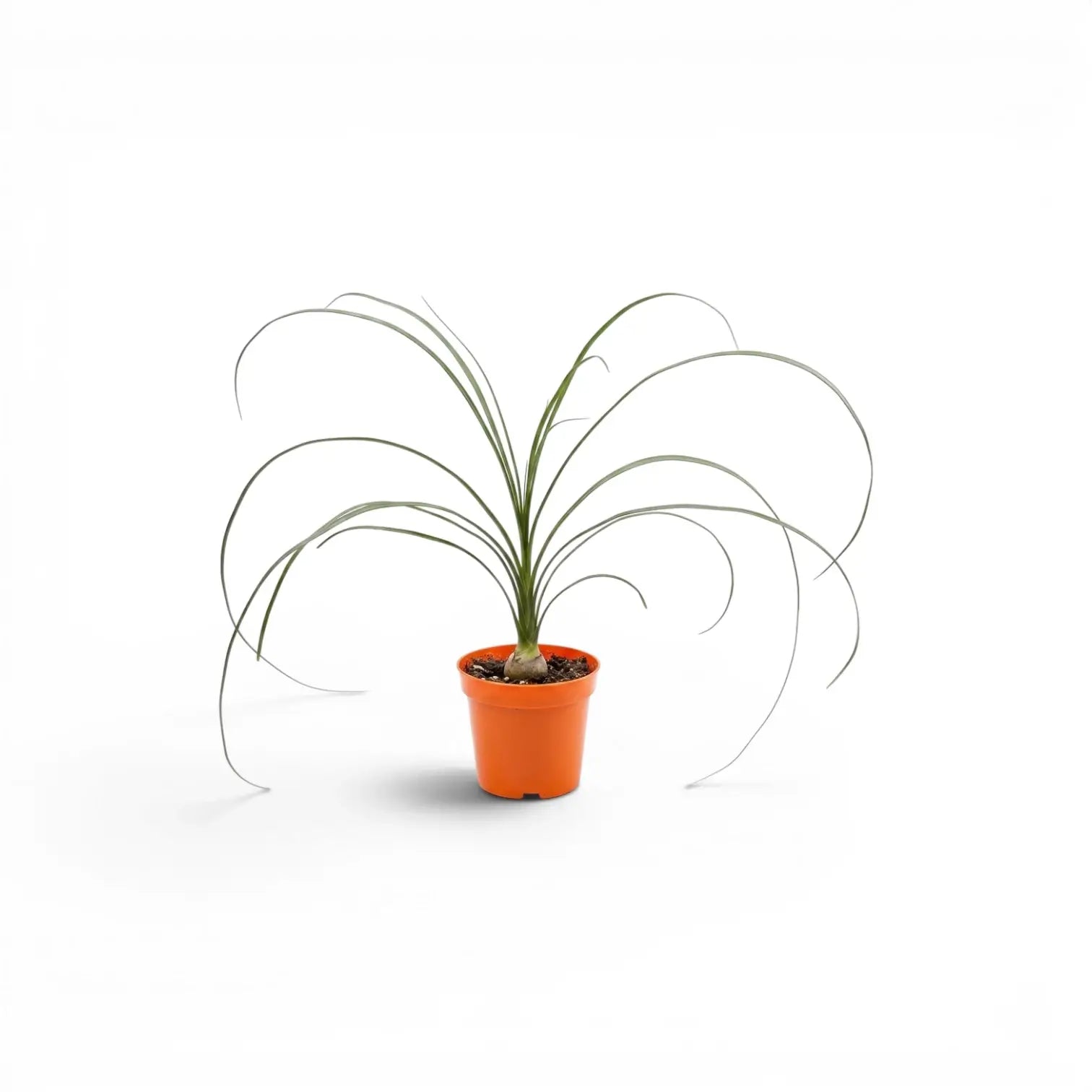
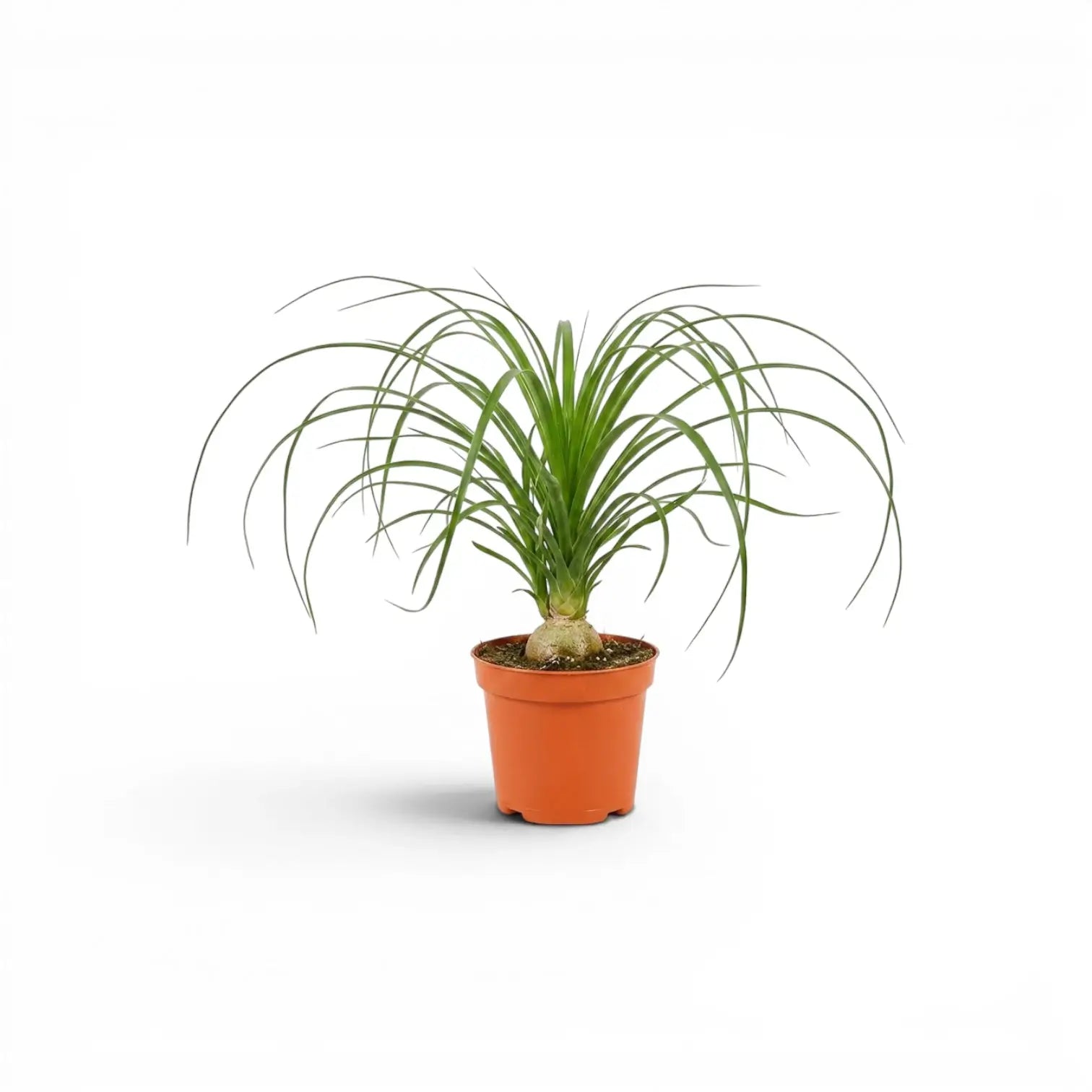
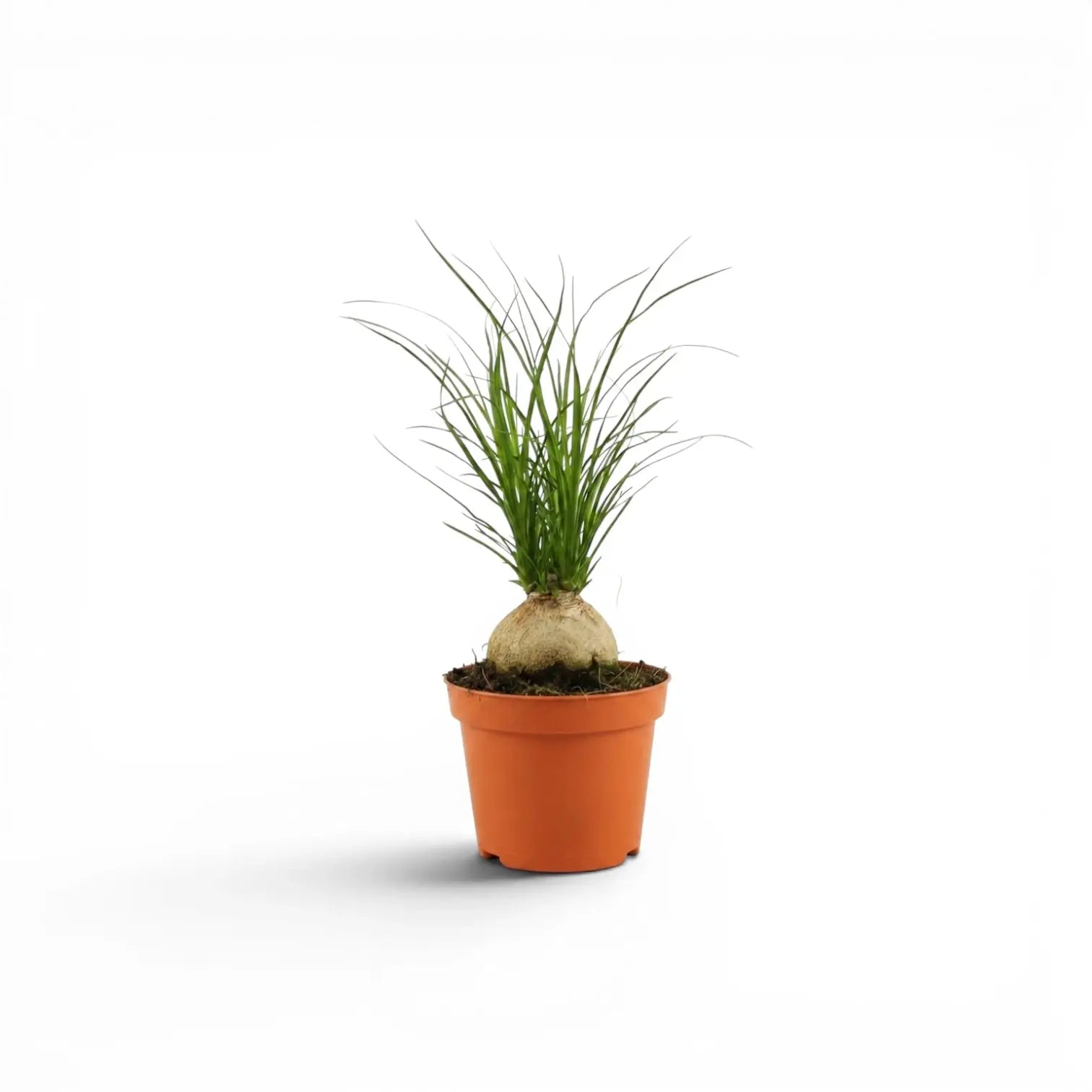
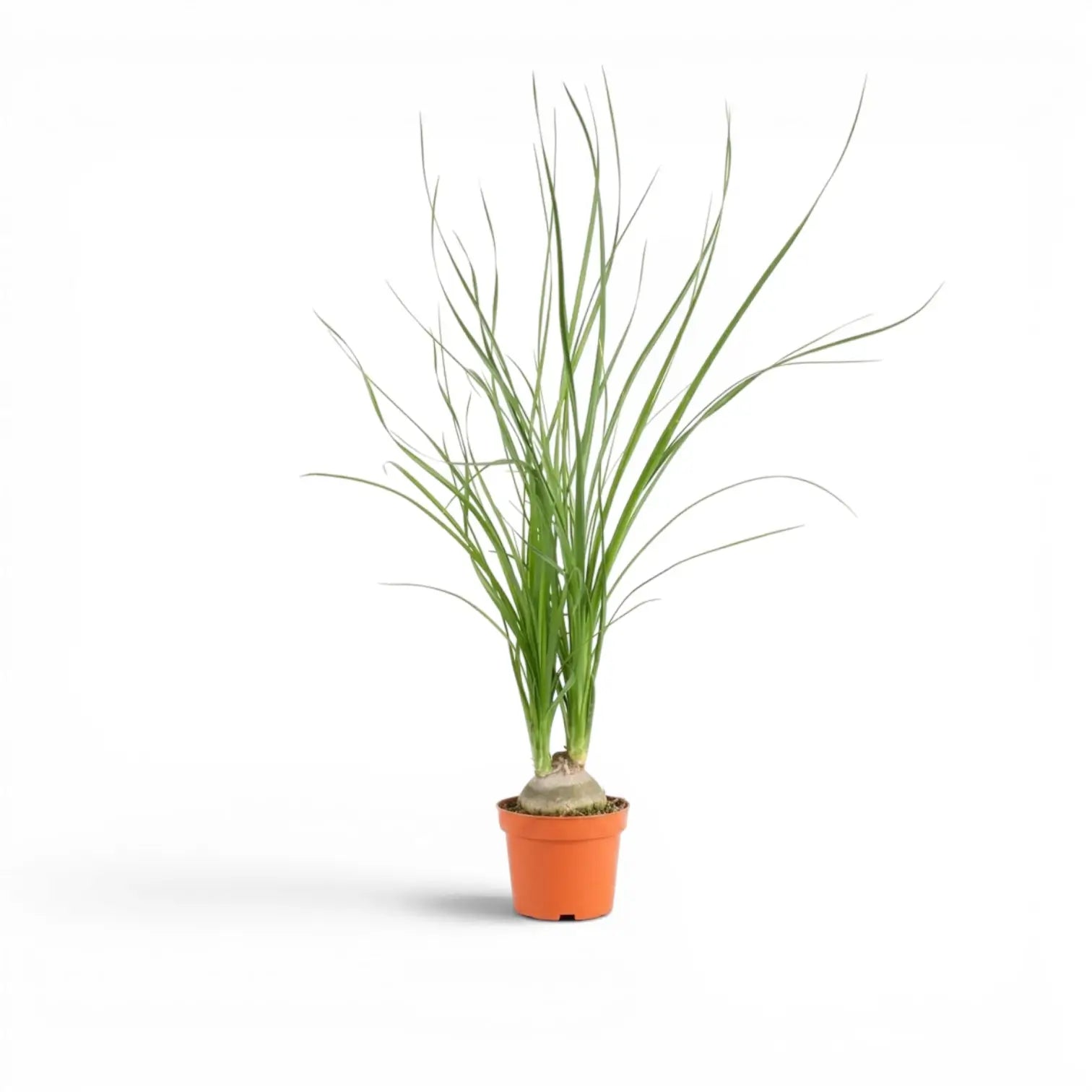
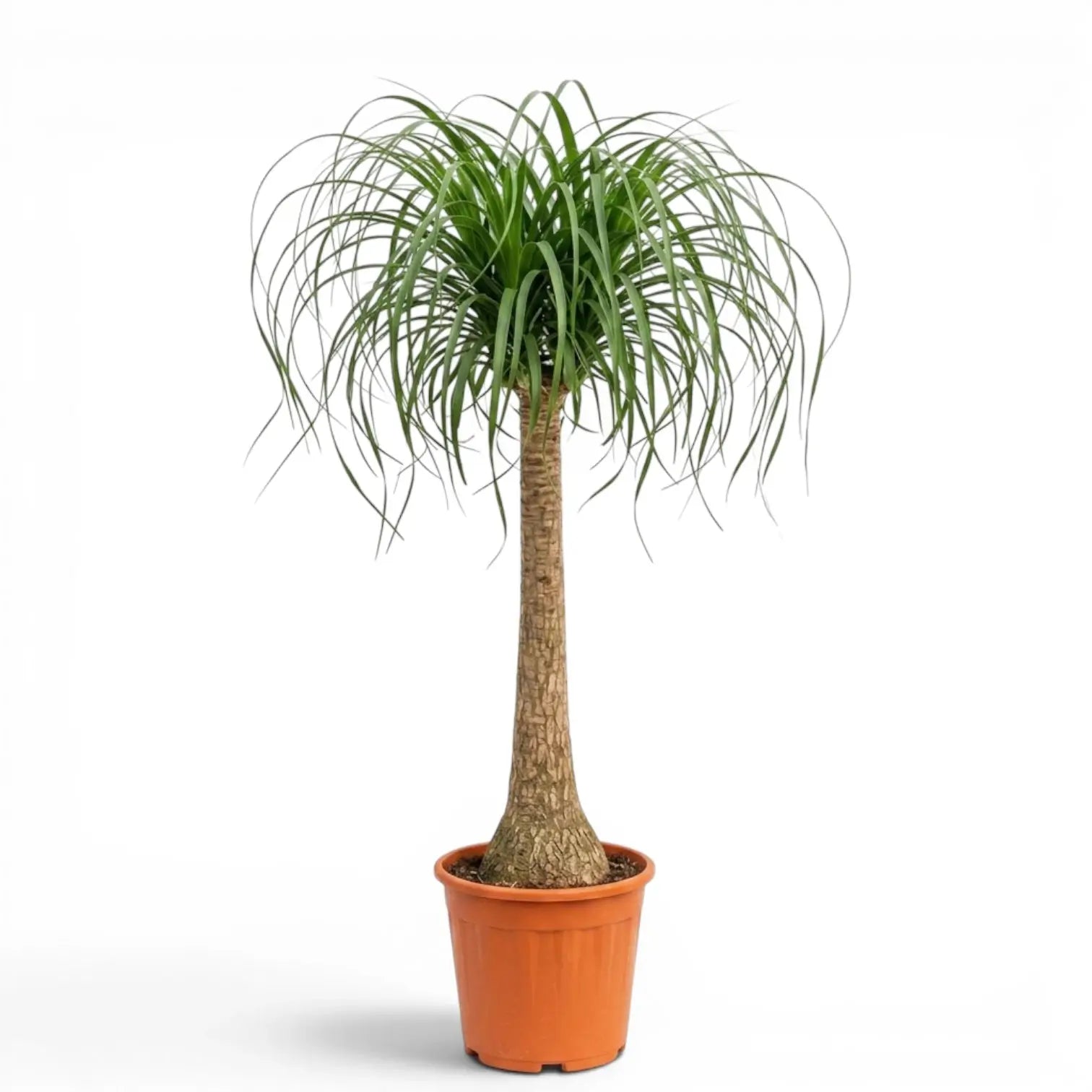
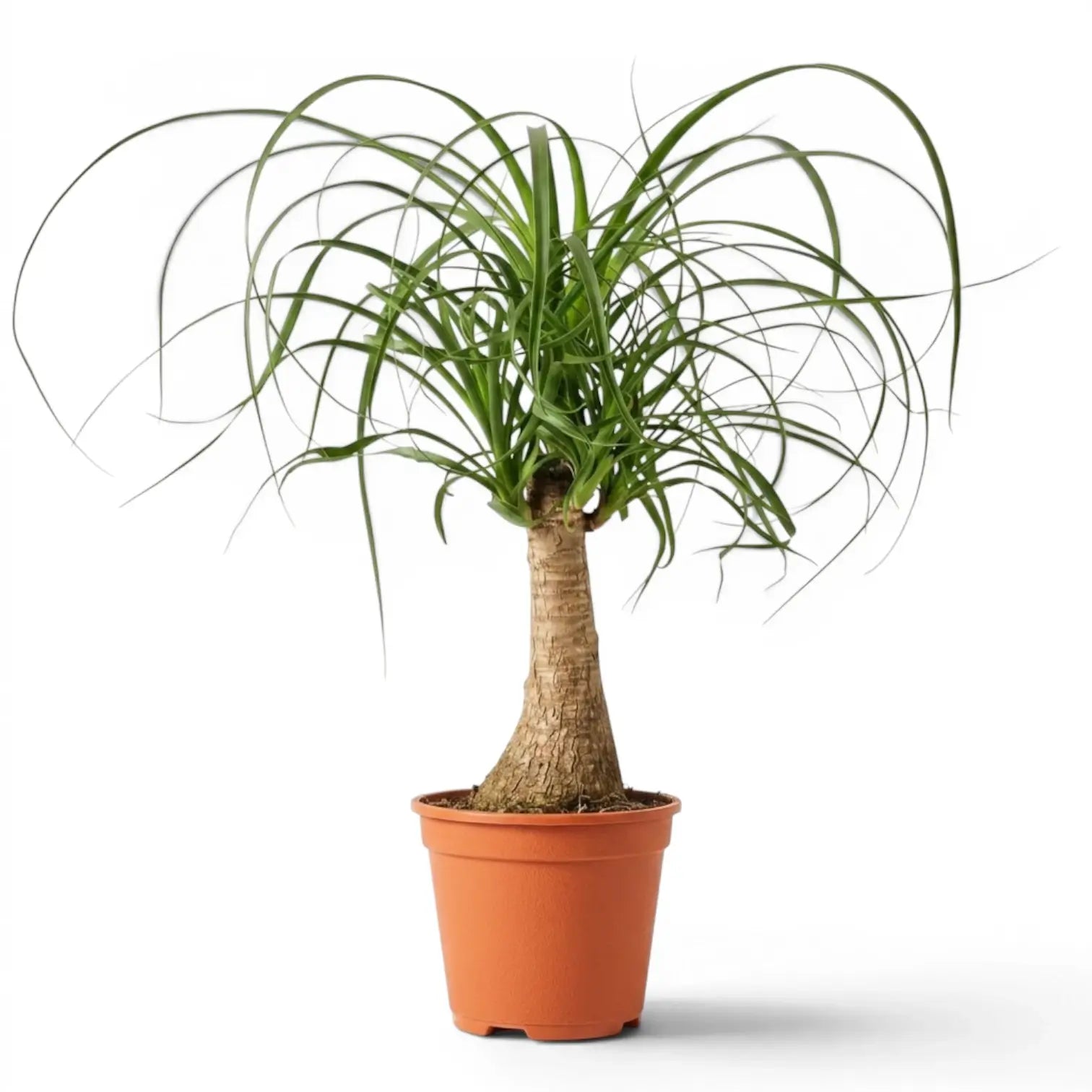
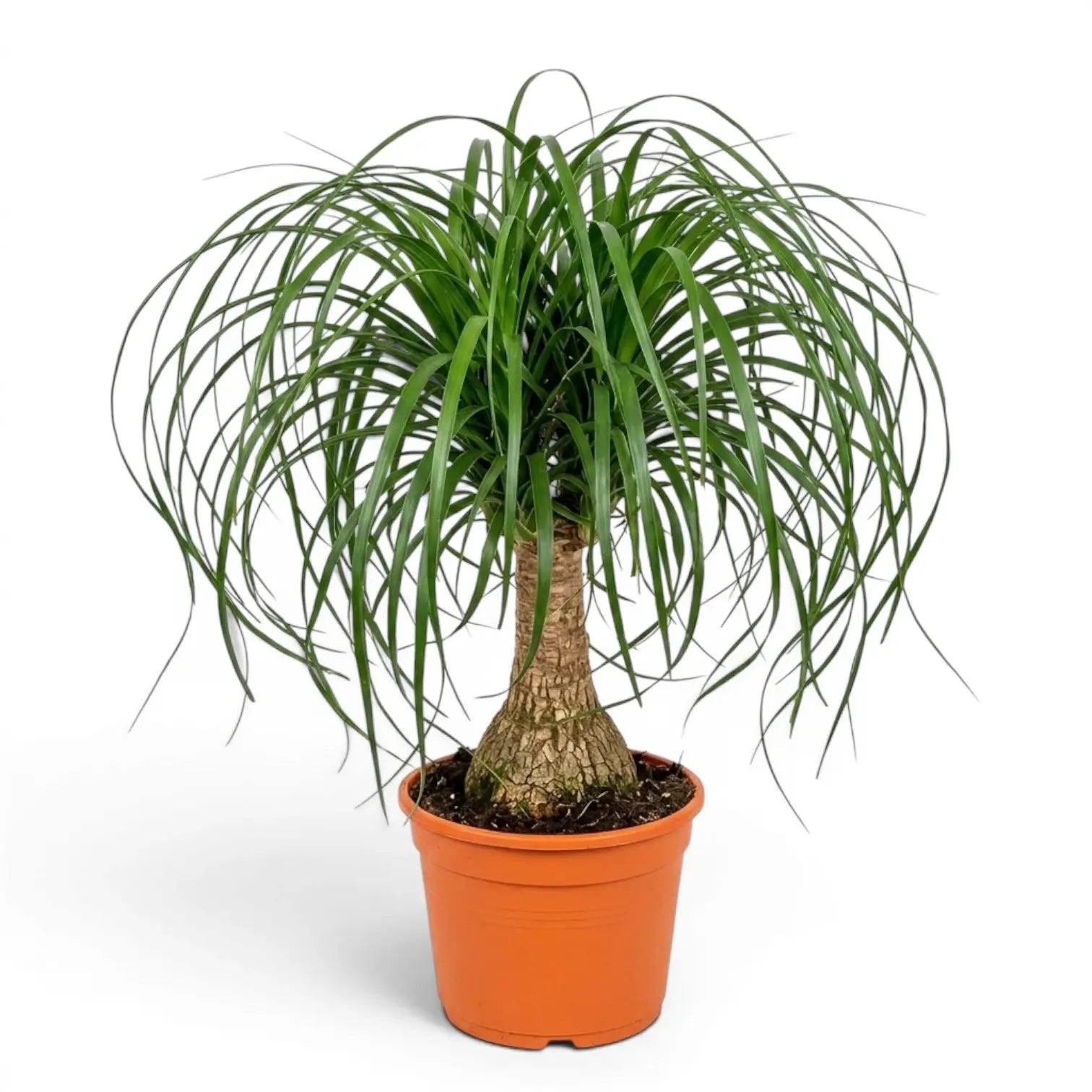
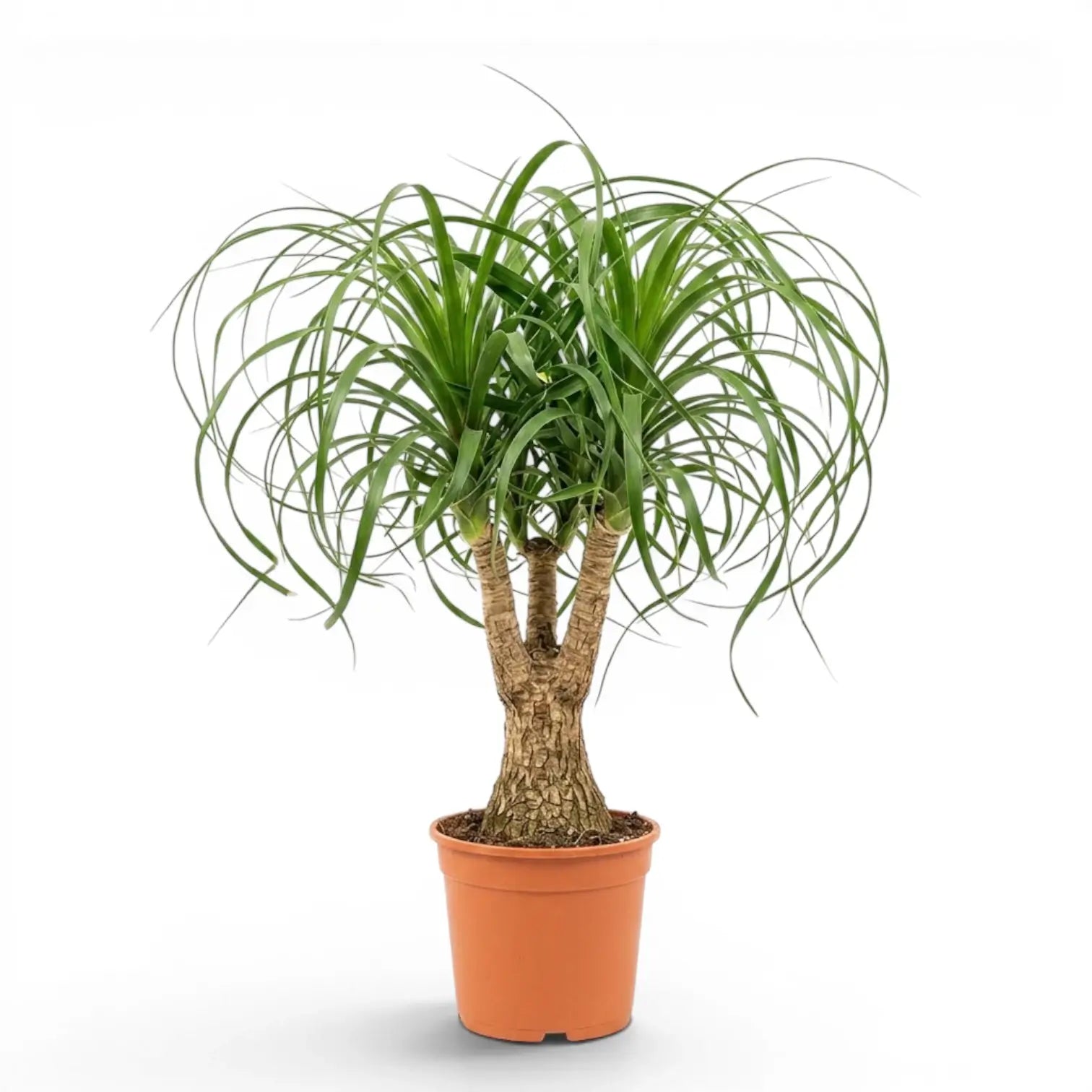
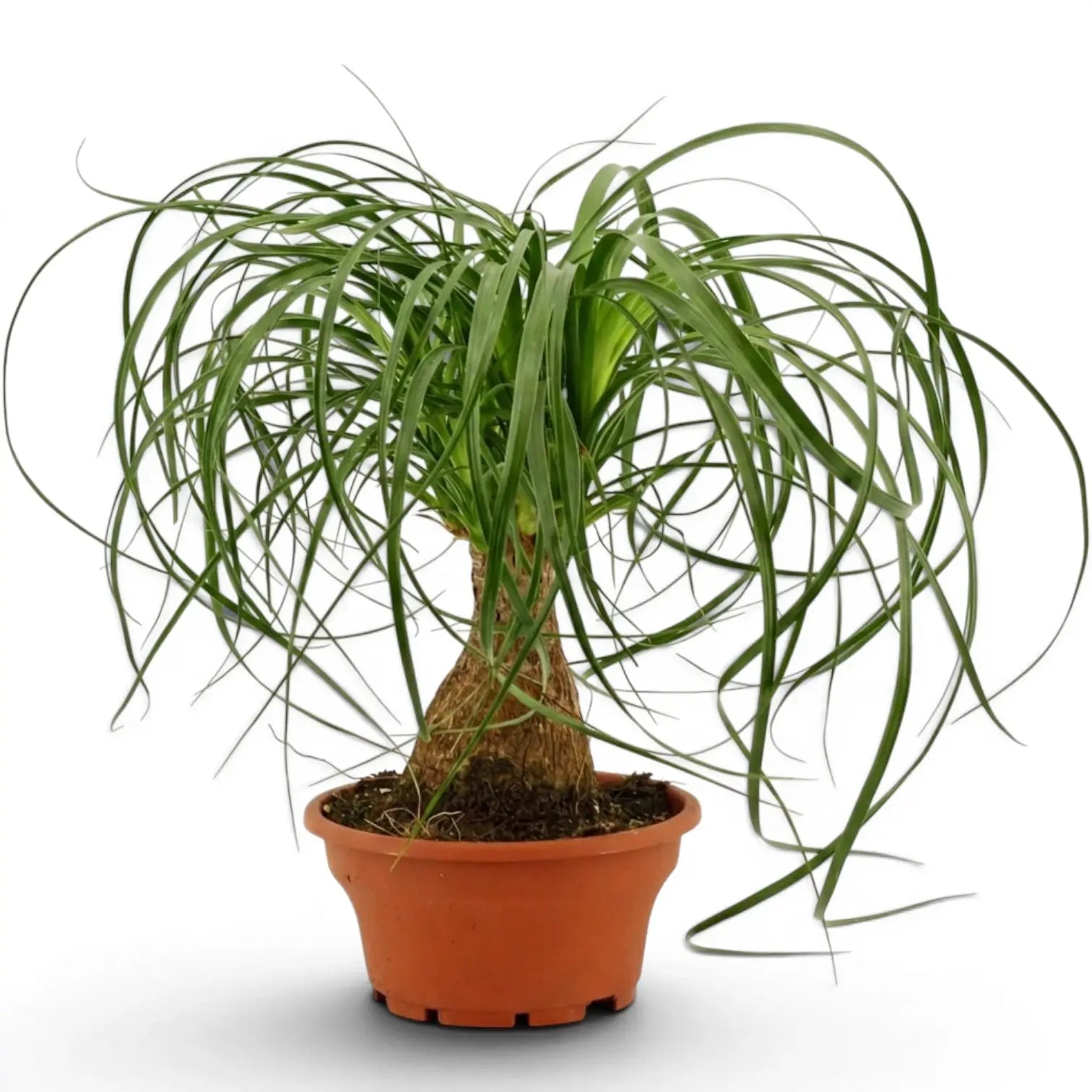
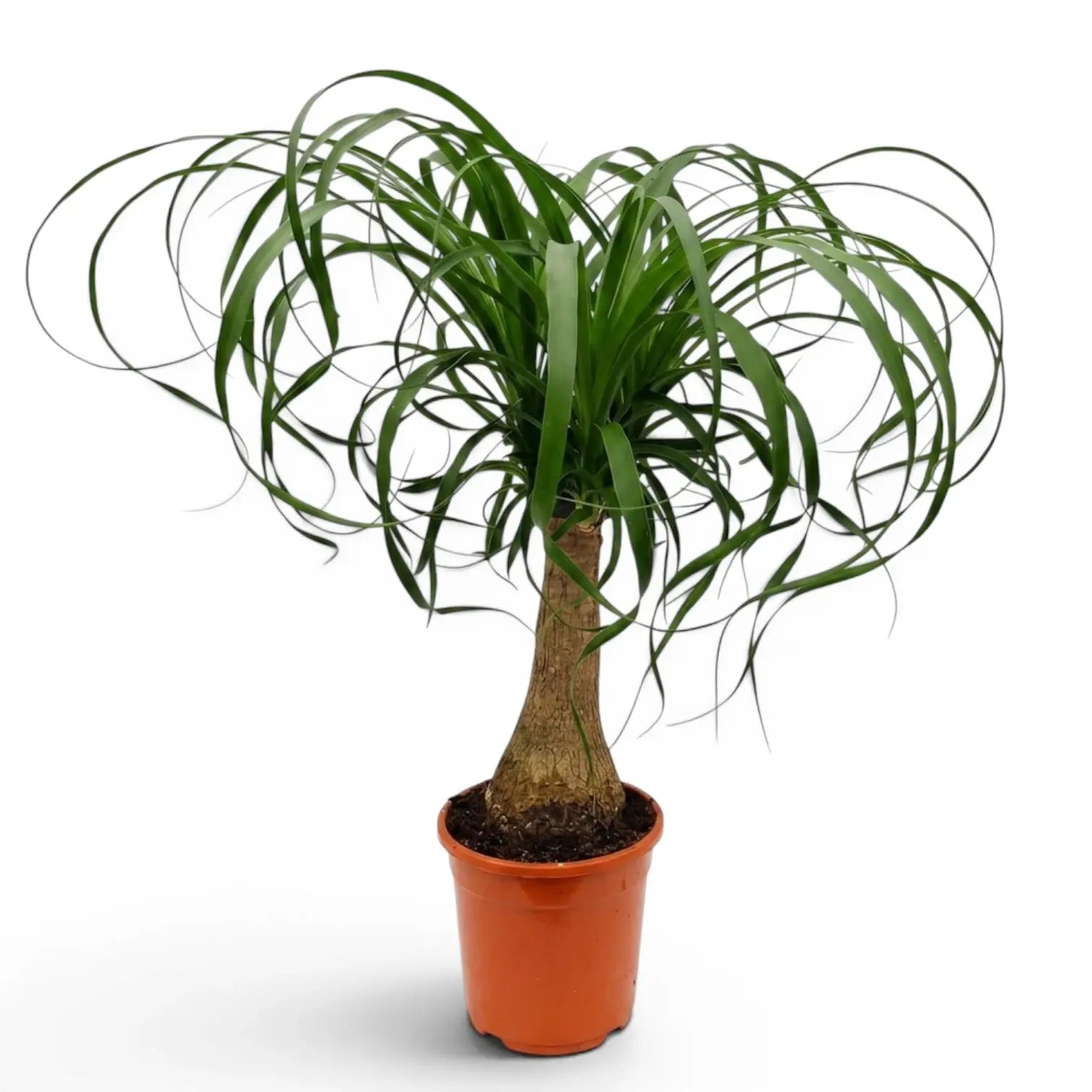
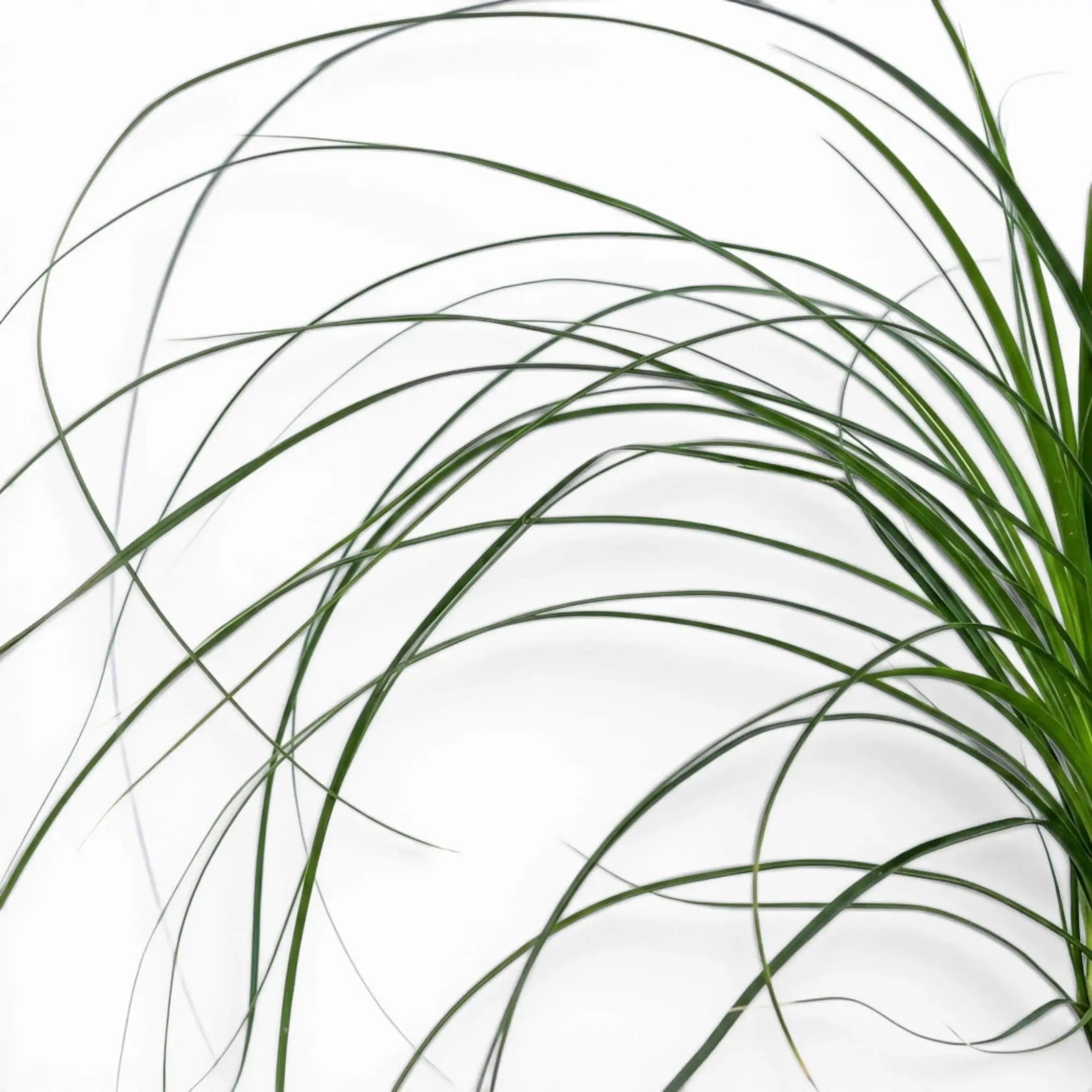
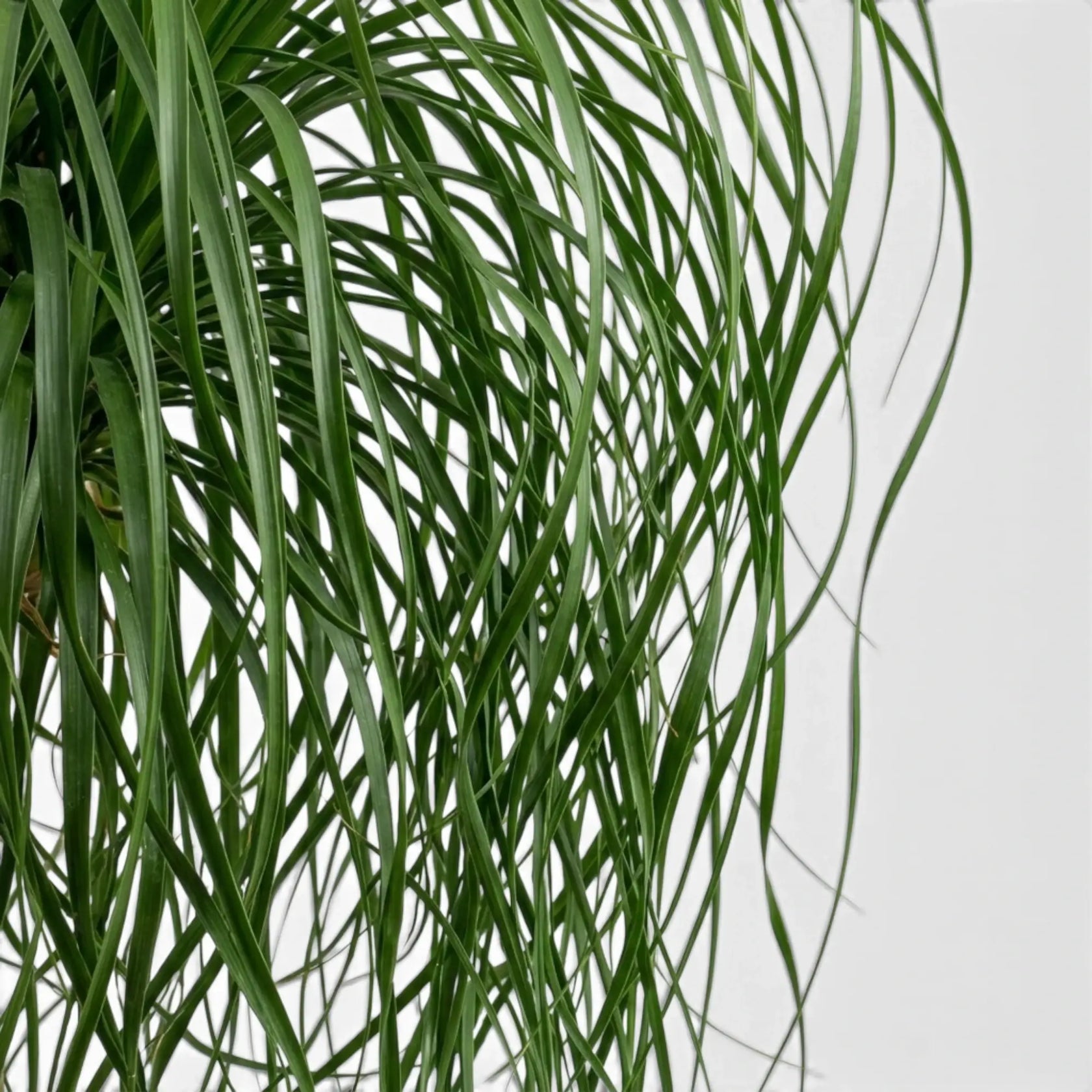
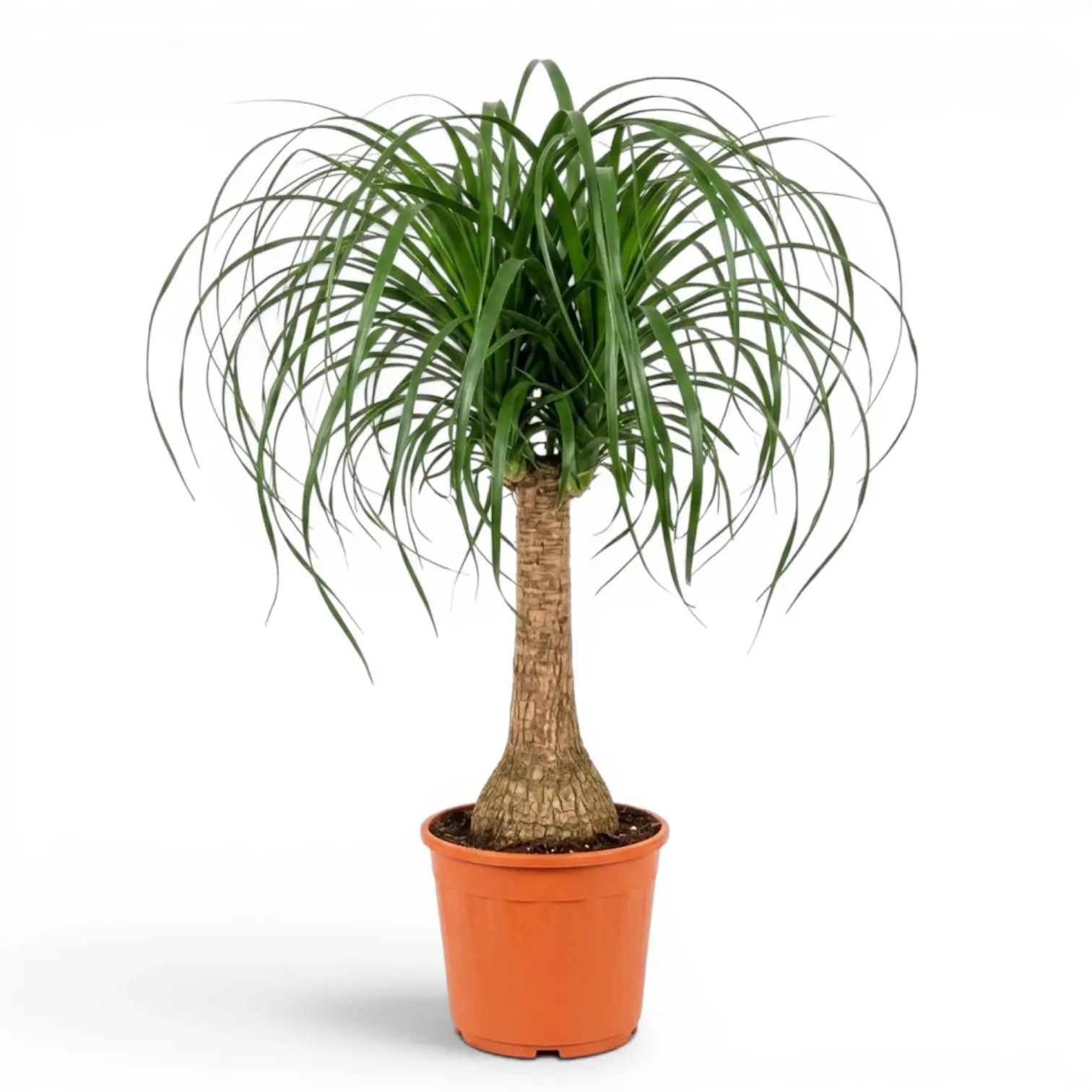
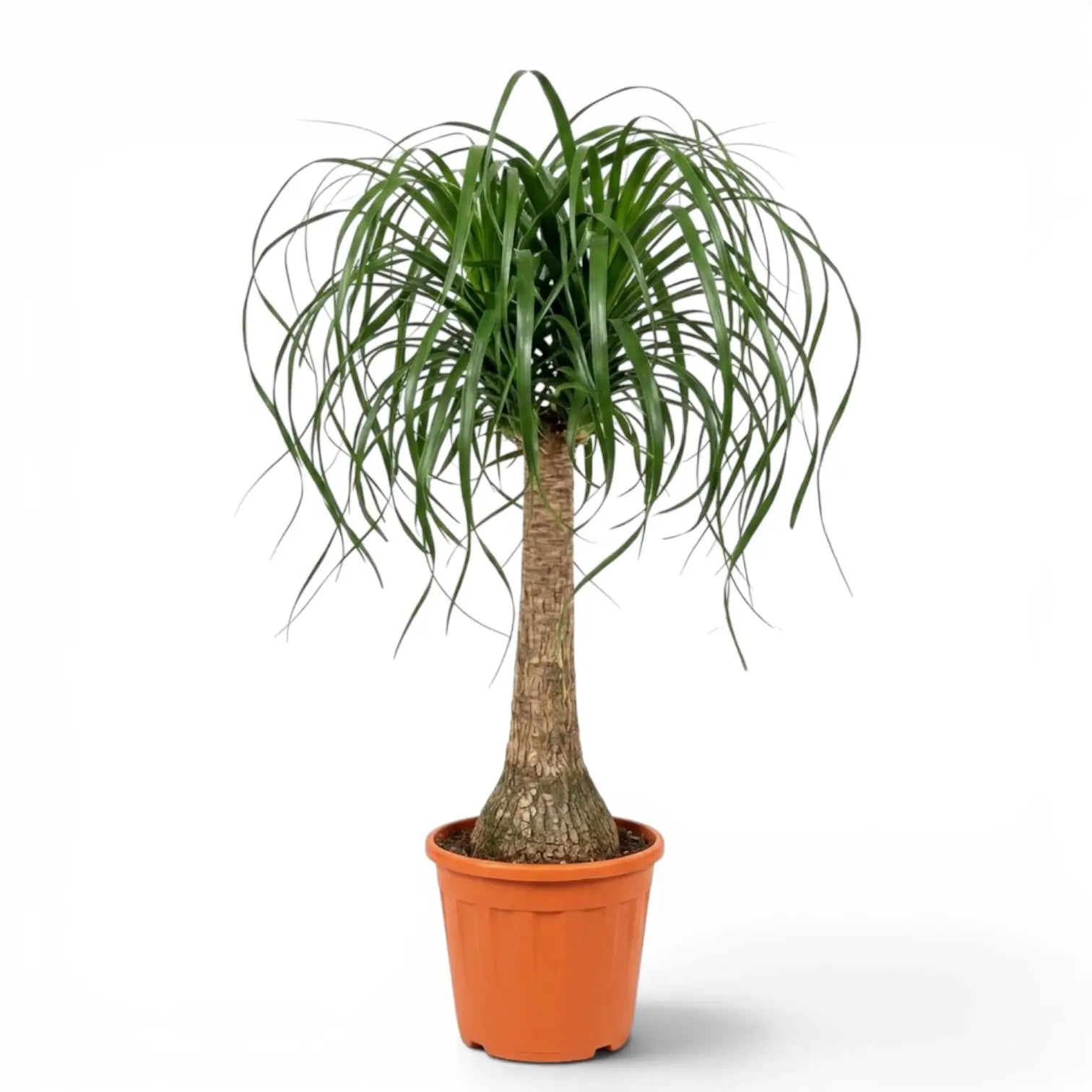
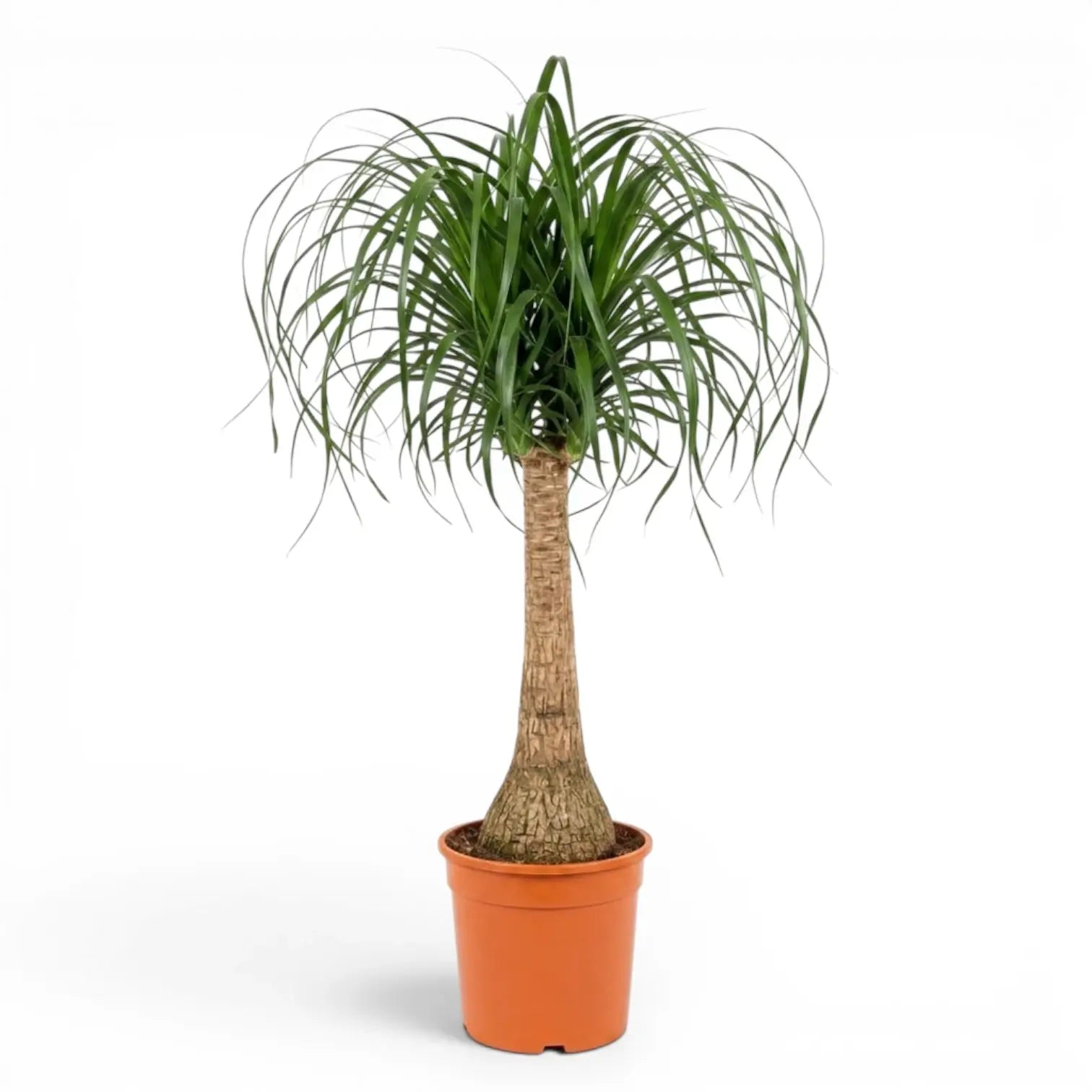
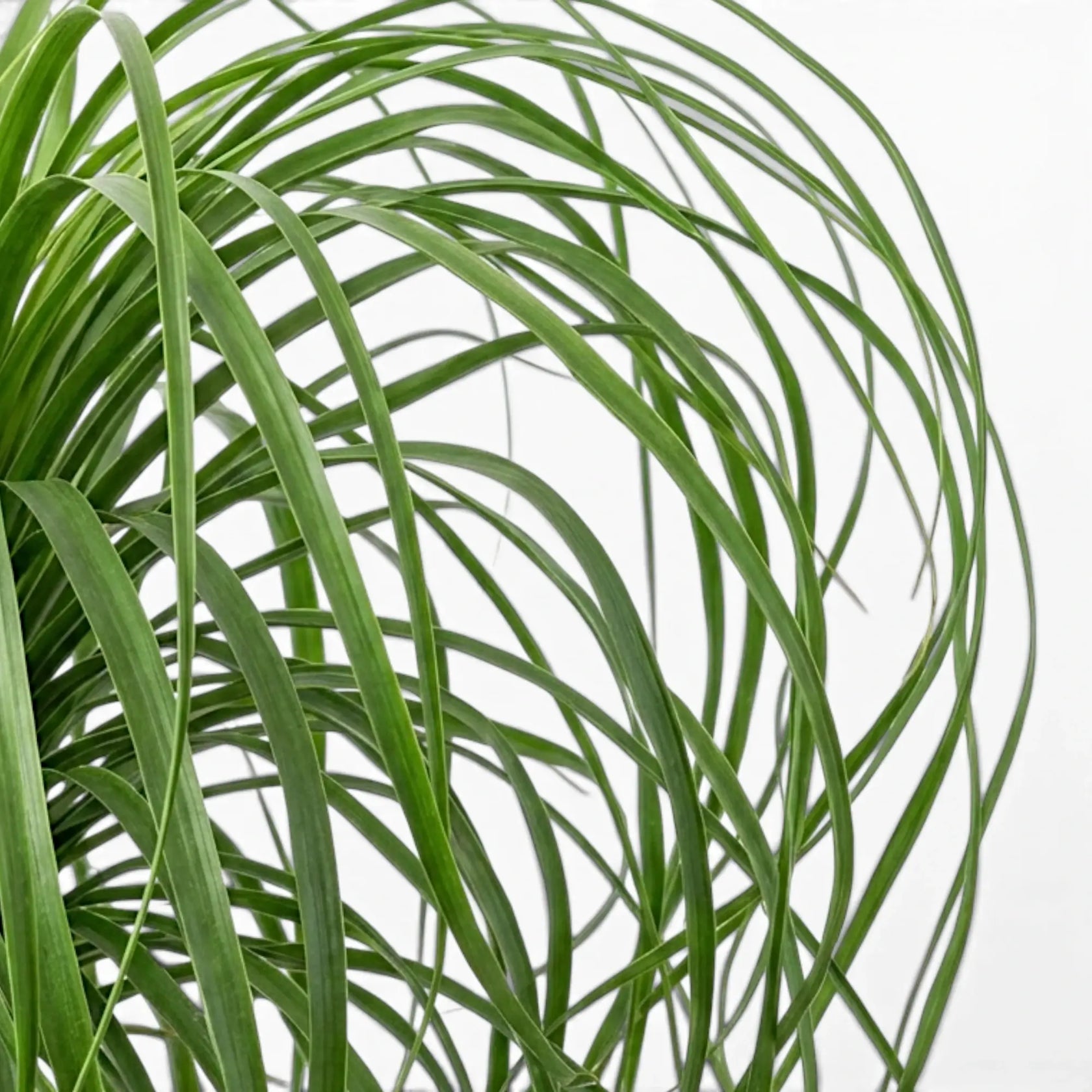
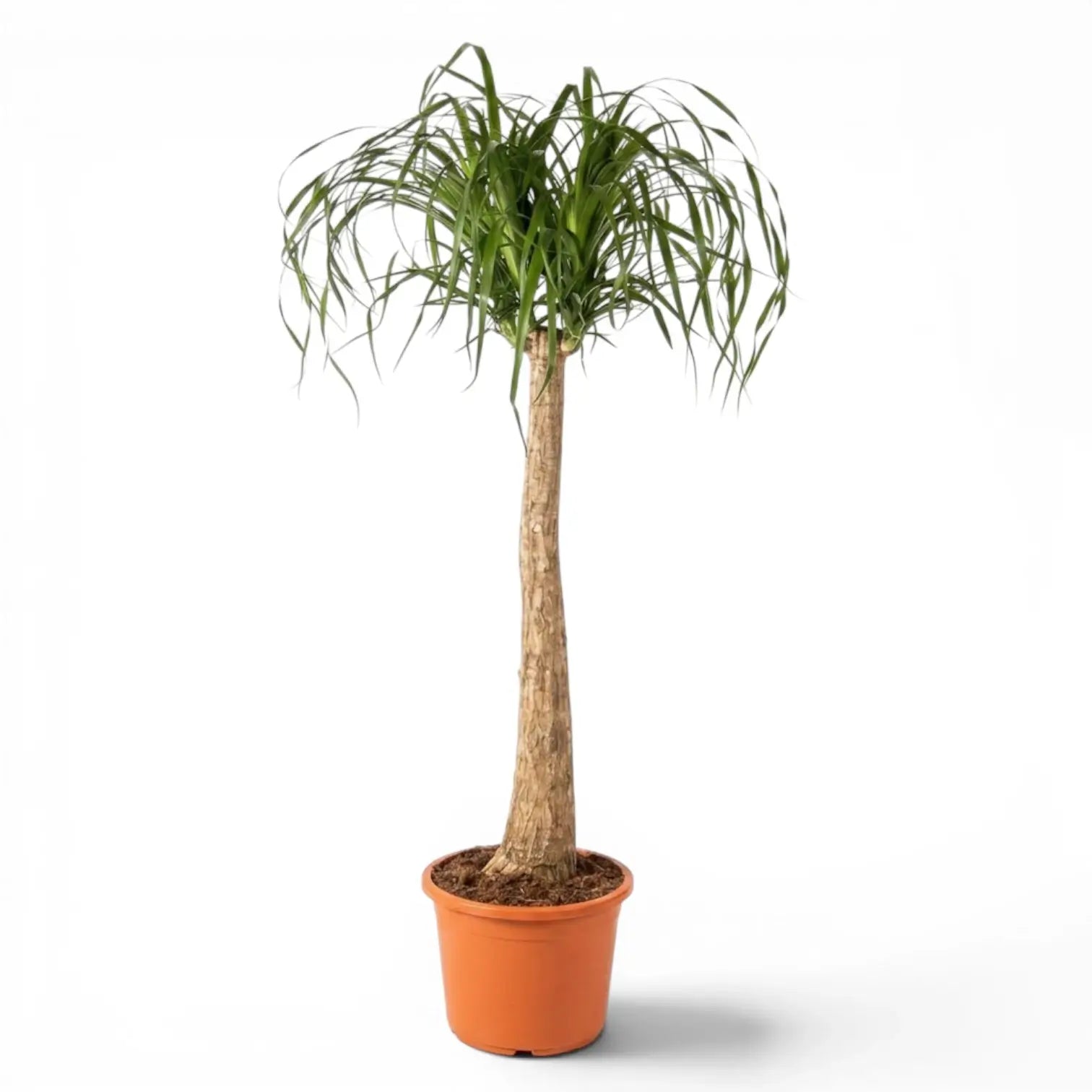
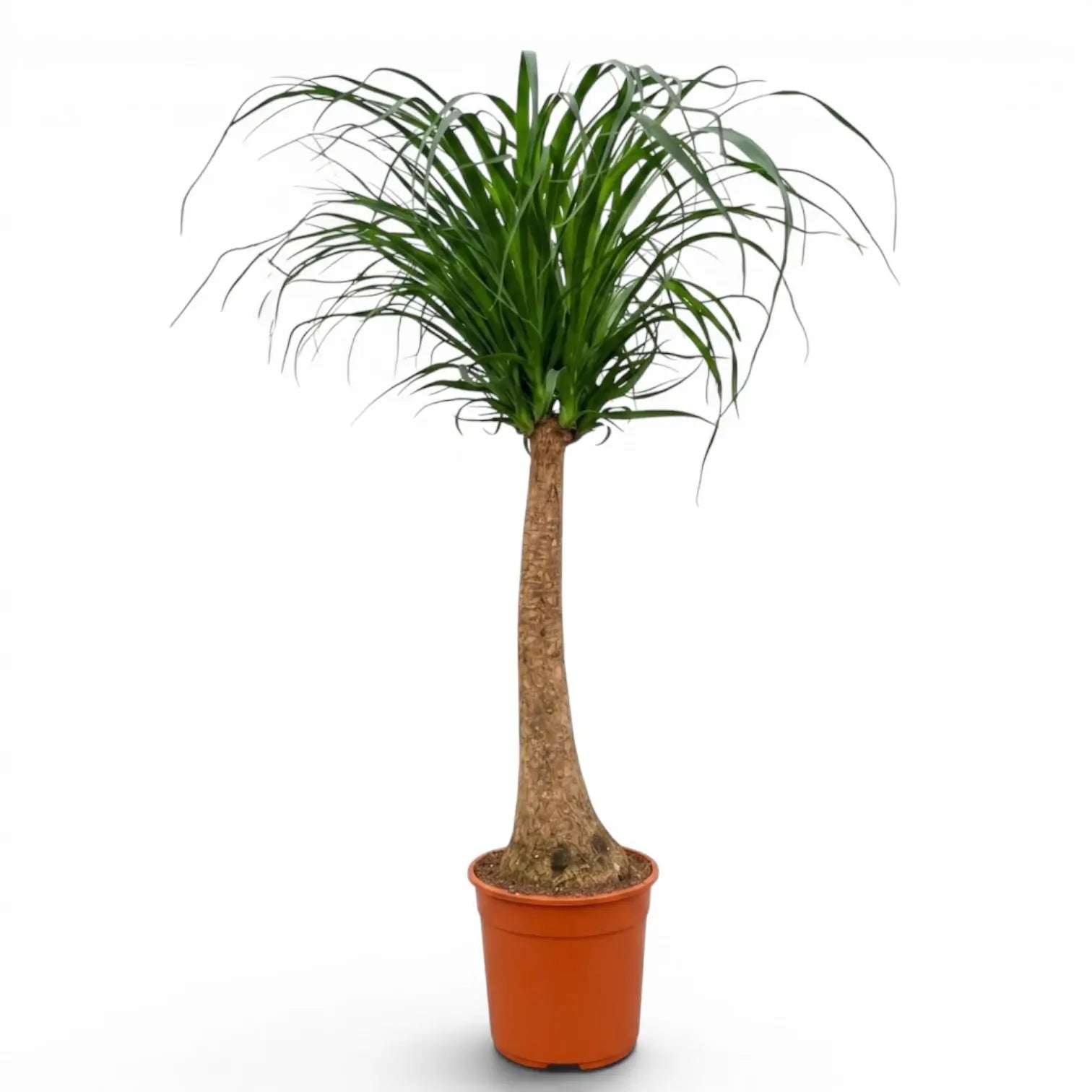
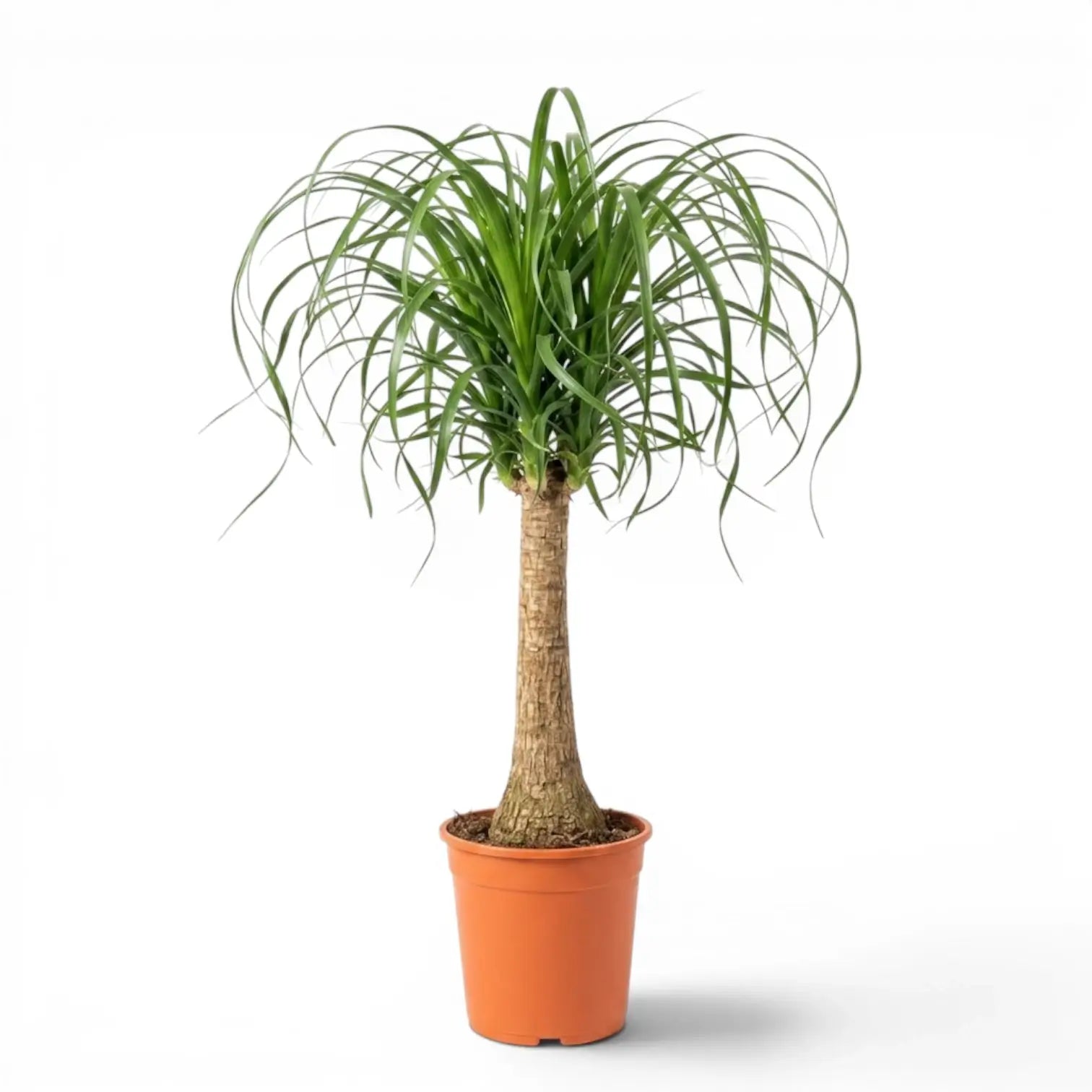
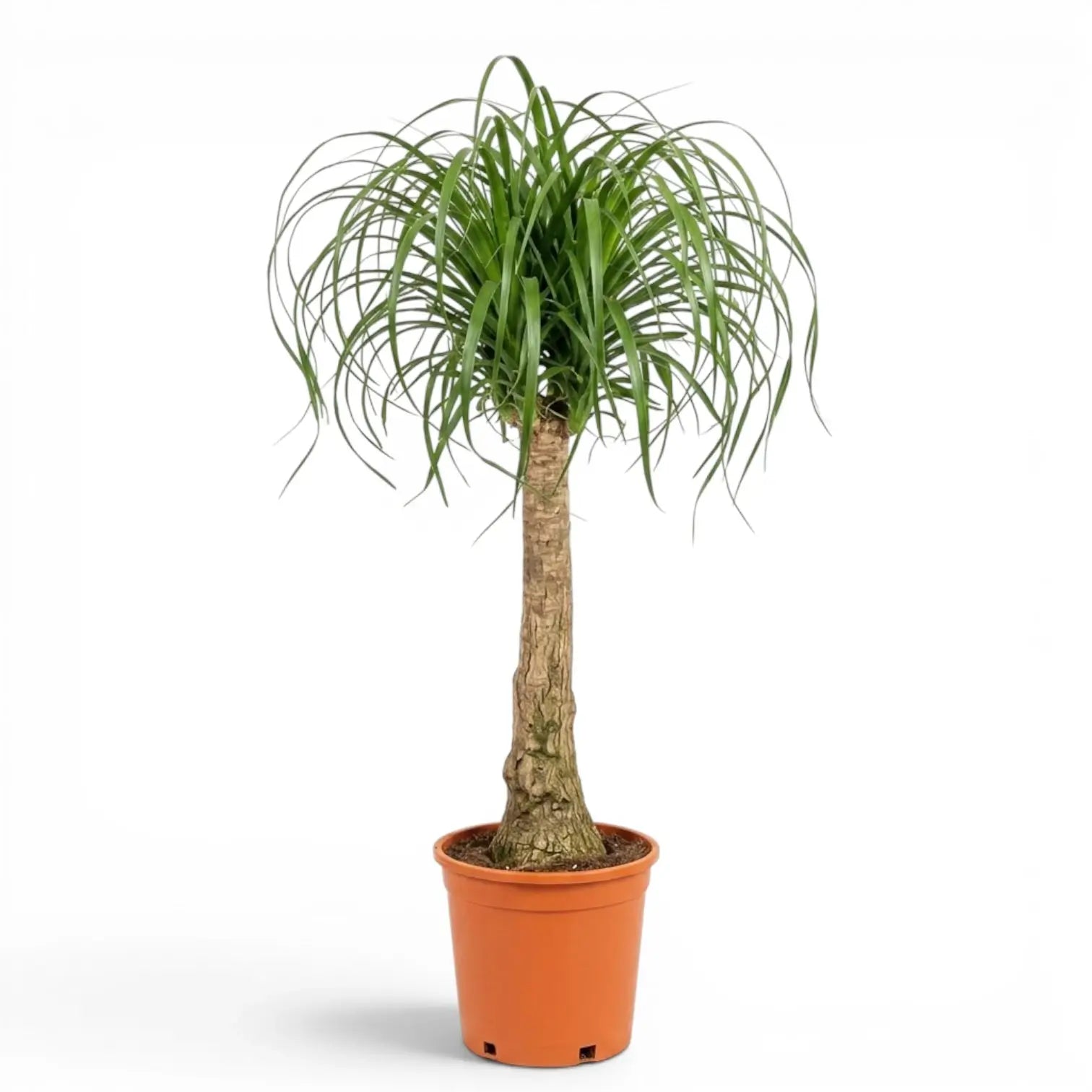
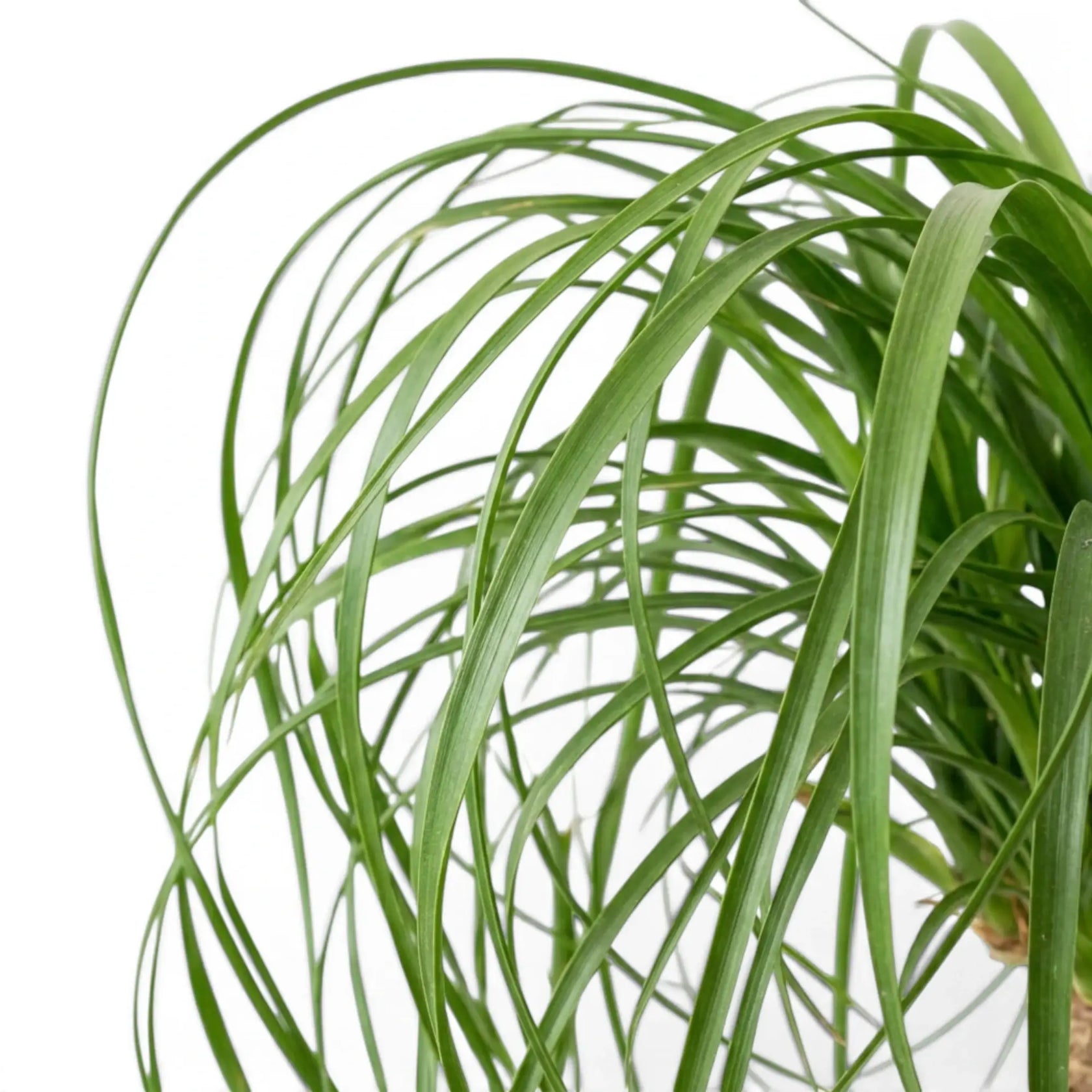
Beaucarnea recurvata, known as Ponytail Palm or Elephant’s Foot, is a slow-growing plant with a swollen water-storing base and a crown of long, narrow green leaves. The leaves curve back from the top of the trunk, which is where the common name Ponytail Palm comes from. It belongs to Asparagaceae.
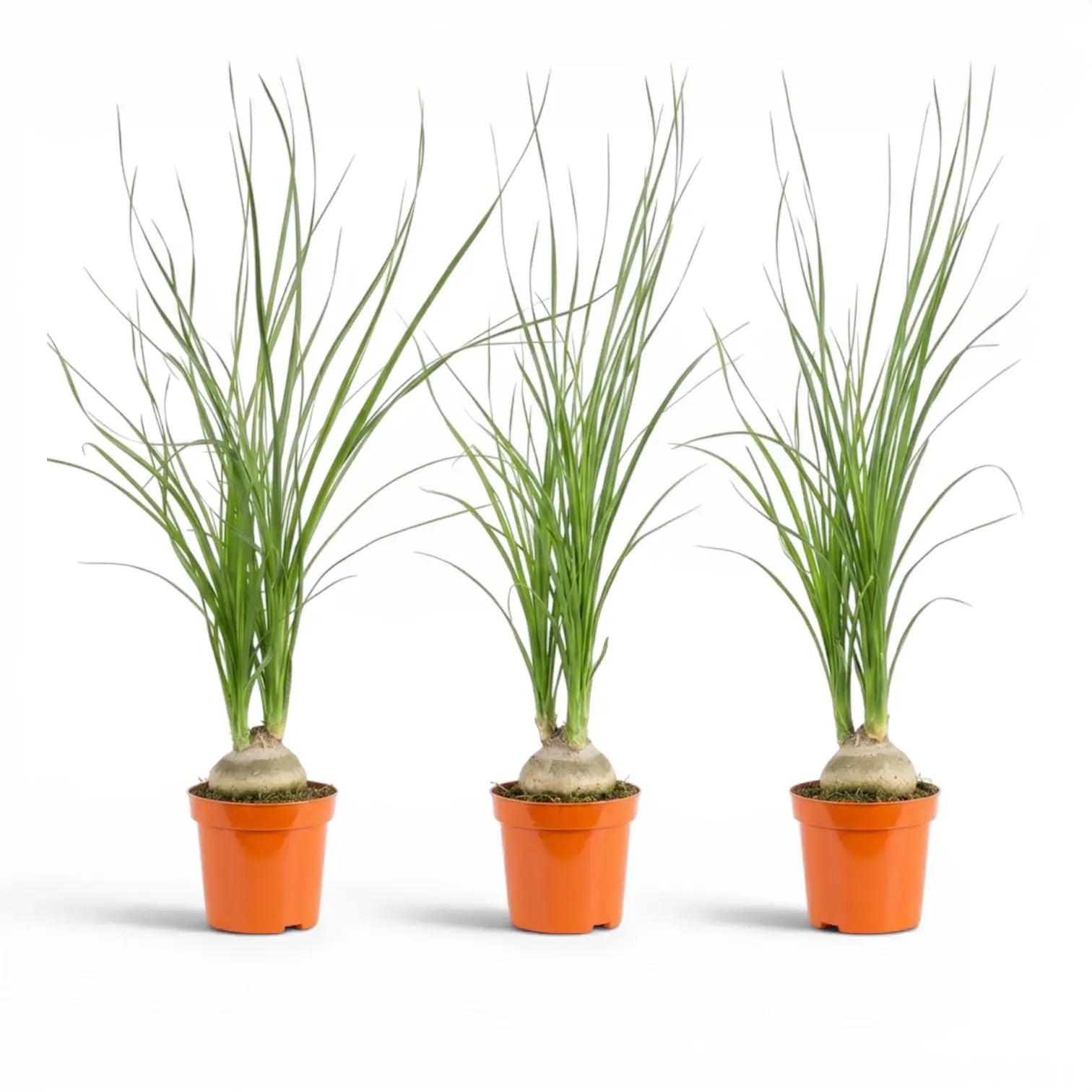
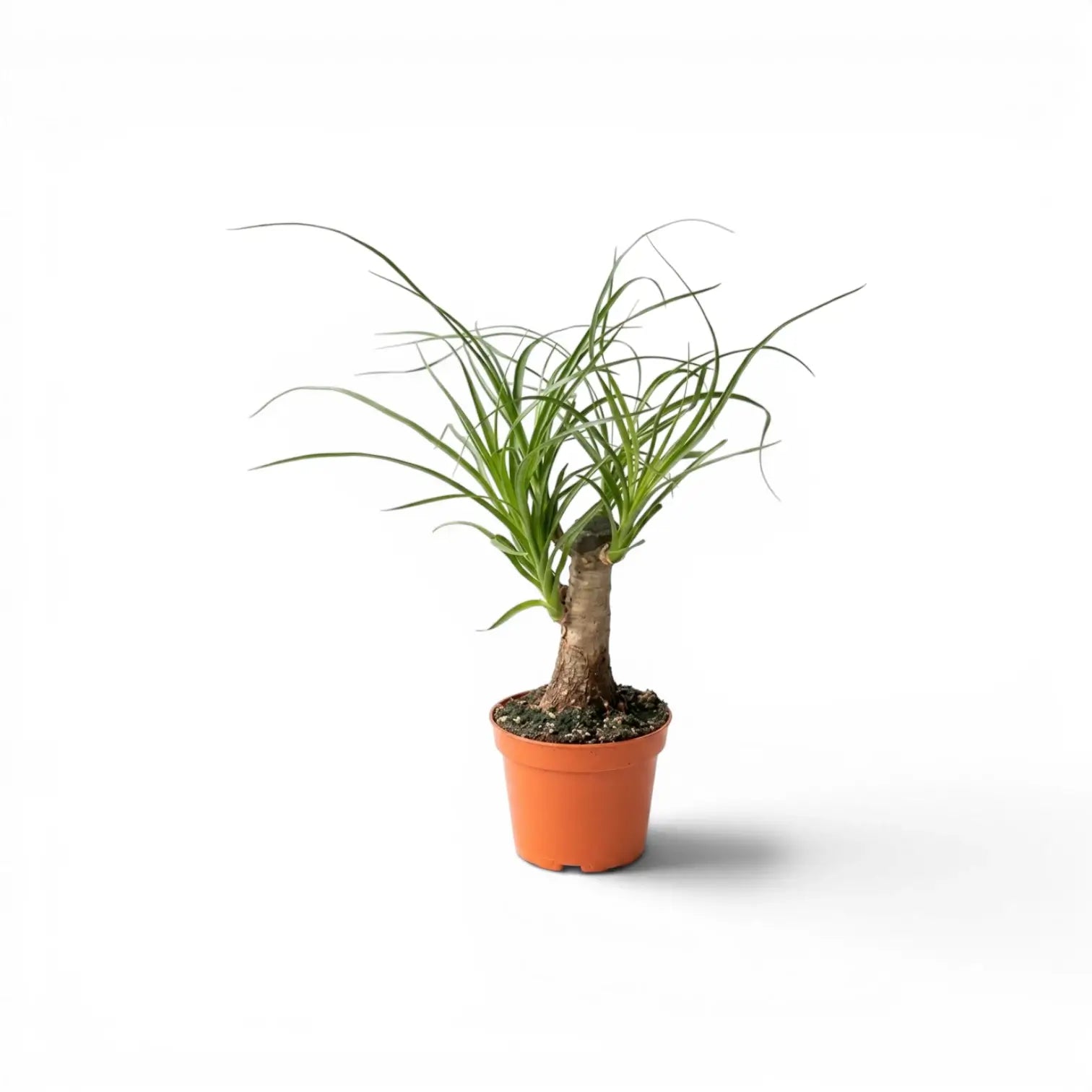
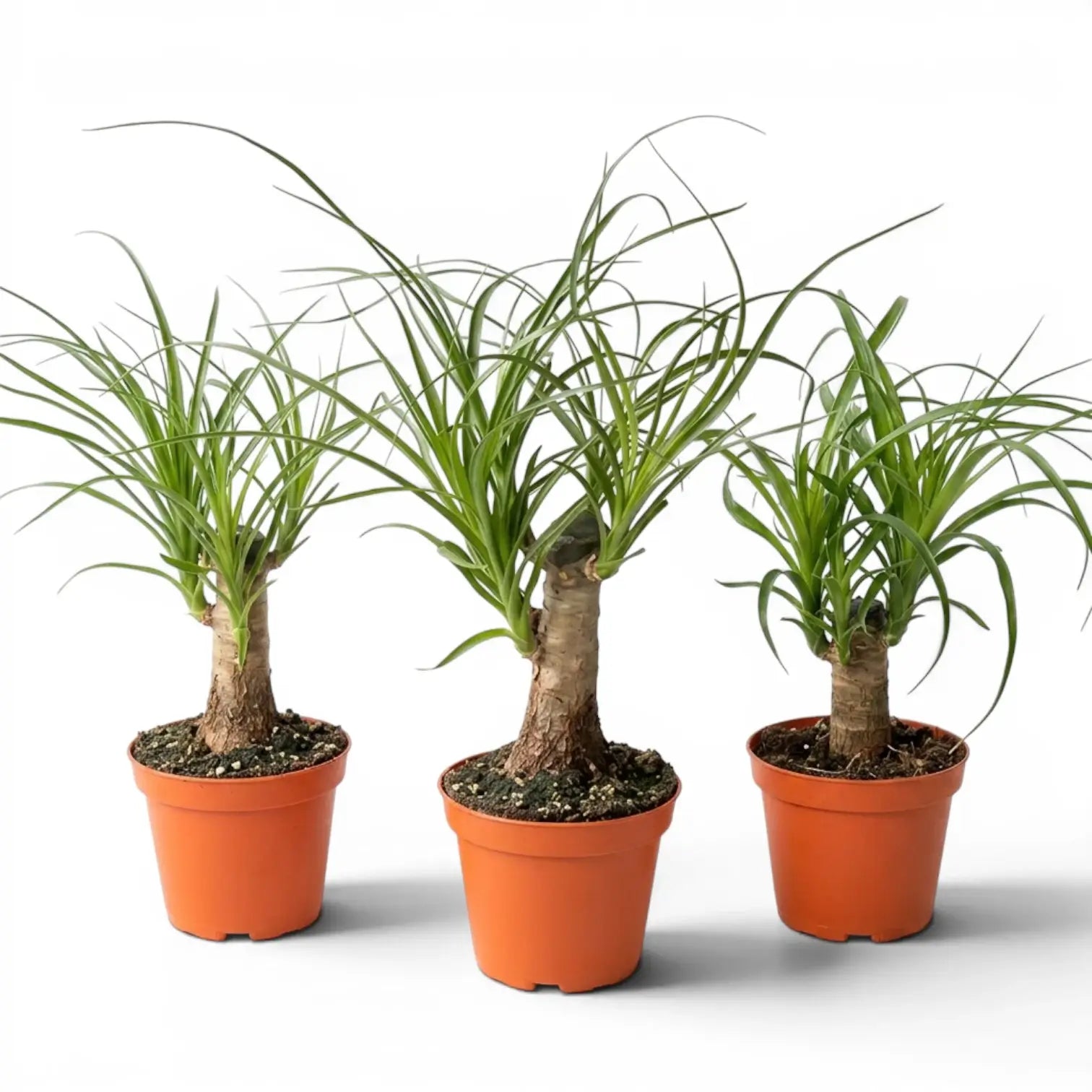
The thick base, or caudex, stores water and shapes the way this plant should be watered. It prefers a thorough soak followed by a clear drying period. Young plants usually have one rounded base and one crown, while older plants can branch and develop a more tree-like outline over time.
Beaucarnea recurvata belongs to Asparagaceae and is native to Mexico, including dry shrubland and semi-desert regions. In the wild, plants can grow into large caudex trees over long periods. In containers, they stay much smaller and grow slowly.
Mature plants may produce creamy white flowers, but this is mainly seen on older outdoor or greenhouse-grown specimens. Indoors, the swollen base, trunk and leaf crown are the parts you will notice most. Wild populations are critically endangered; nursery-propagated plants avoid pressure on wild plants.
Beaucarnea recurvata thickens its caudex slowly over many years. The crown renews from the centre, while older lower leaves dry naturally. Bright light, warmth and fast drainage help the base stay firm and the crown grow more compactly.
Large cuts to the trunk or crown change the plant’s future shape. Routine care is usually limited to removing dry leaves, cleaning dust from the leaves and adjusting watering to light and season.
Beaucarnea recurvata is considered non-toxic to dogs, cats and horses. The long leaves can still be damaged if pets play with or nibble them. Mature plants can become heavy, so place larger pots securely.
The genus name Beaucarnea is linked to Jean-Baptiste Beaucarne. The species name recurvata means curved backwards, referring to the leaves. Older names seen in literature include Nolina recurvata and Dasylirion recurvatum.
Plant names, growth habits, natural habitats and indoor care guidance are checked against trusted botanical, habitat and horticultural references before publication.View our plant care resources and references.

Sign up for Foliage Factory newsletter for early access to new arrivals and practical care tips that work in real homes.