Light
Bright indirect • approx. 10,000–20,000 lux

VAT included · plus
Your new plant has just travelled a long way and needs a calm start in its new home. For step-by-step unboxing and first-week care, check our after-delivery care guide. For deeper tips on how your plant settles in over the next weeks, read our houseplant acclimatization guide.
Secure shipping, carefully packed orders with safe delivery across the EU, UK and Switzerland.
28-day plant guarantee, if a plant arrives damaged or fails soon after delivery, we help you make it right.
Free returns, simple, cost-free returns according to our policy.
For full details, please see:
Please head to our FAQ Page or Contact us.
Quick Care Guide
Light
Bright indirect • approx. 10,000–20,000 lux
Watering
Water when ~30–50% dry
Substrate
Airy + fast-draining • Light moisture buffer • Bark-based • Medium-chunky
Temperature
Ideal: 18–29 °C • Avoid below: 15 °C
Humidity
Humid 60–80 % +
Growth habit
Pendent epiphytic herbaceous perennial.
Support
not needed
Growth speed
Slow
Max size indoors
Max. height: 240 cm • Max. spread: 60 cm
Toxicity & safety
Toxic
Origin & habitat
Variegated form of Anthurium vittariifolium; species native from southeastern Colombia to Peru, Brazil (Amazonas)
Outdoor growing
Outside from 15 °C · sheltered spot
These care values are quick reference points for indoor growing. Use them as a guide, then adjust for pot size, substrate, temperature and how quickly the substrate dries.
For more detail, read the full product description or visit our Plant Care Guides.
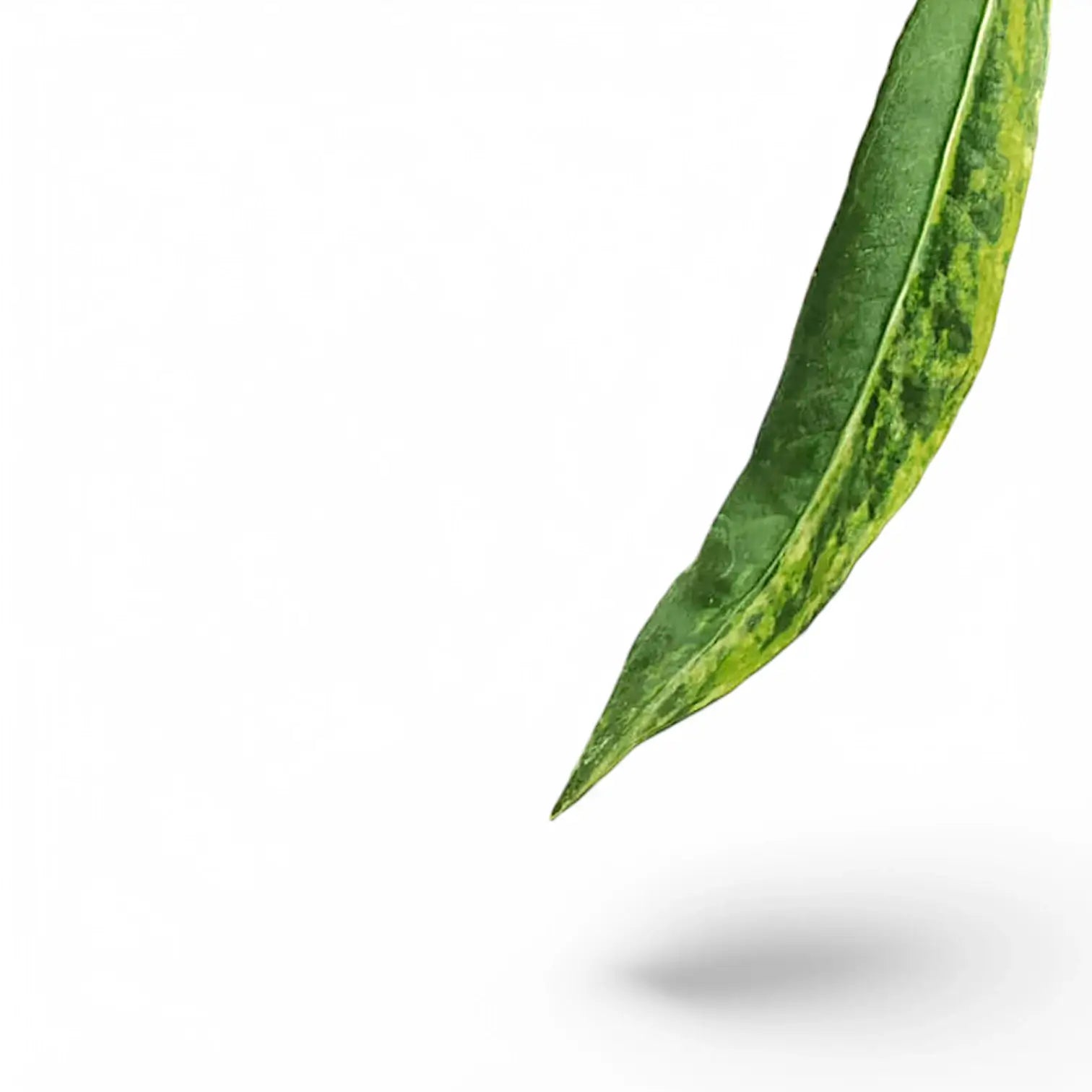
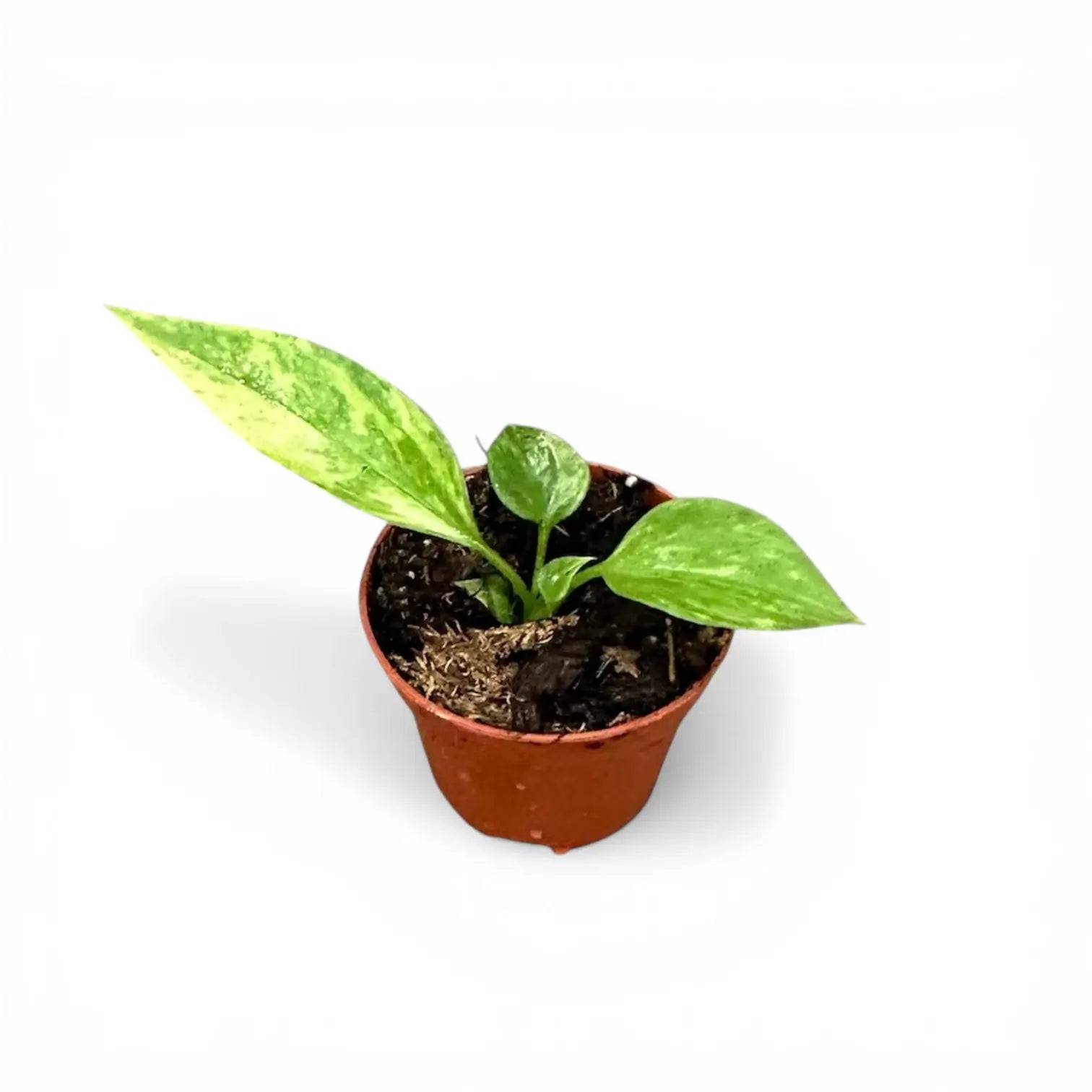
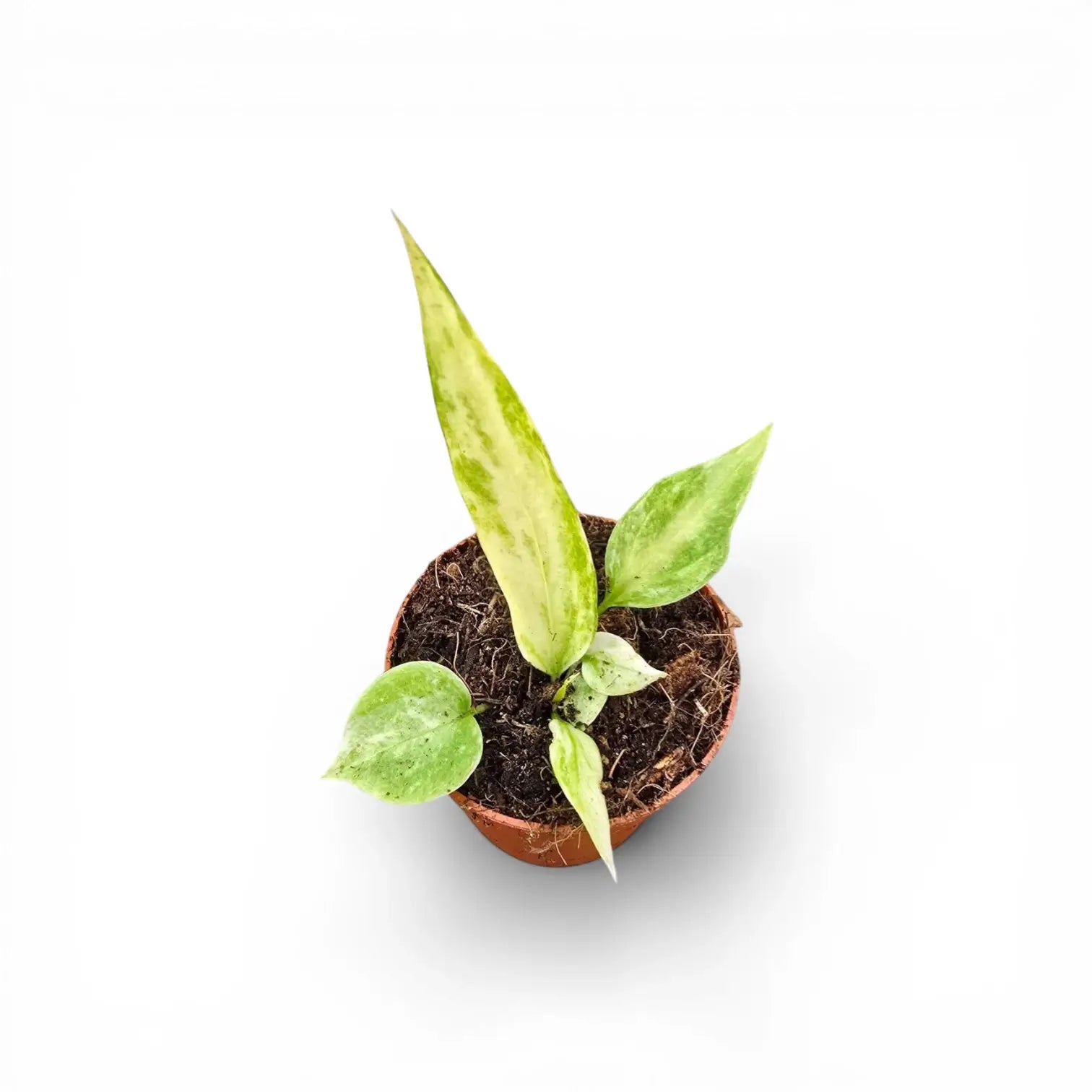
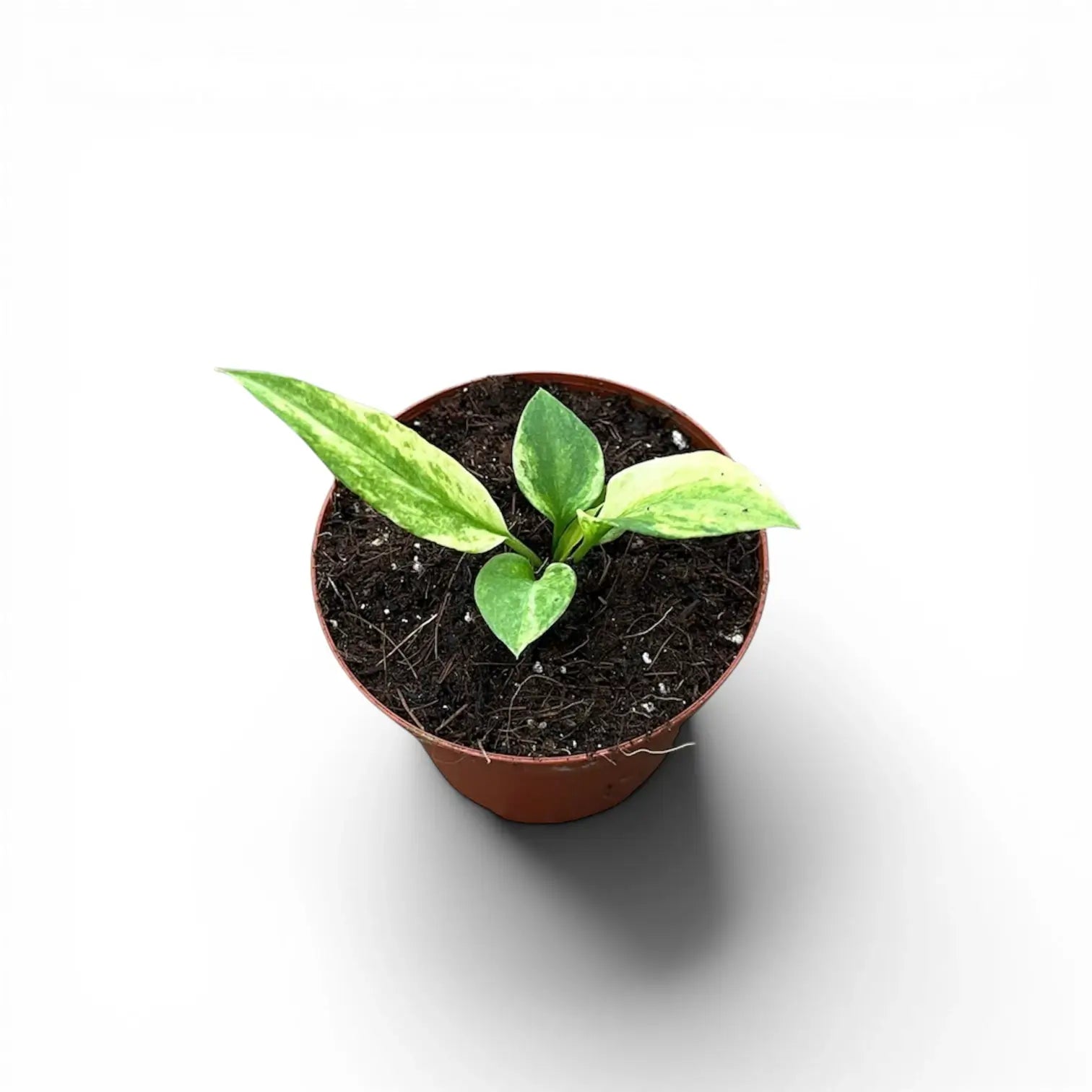
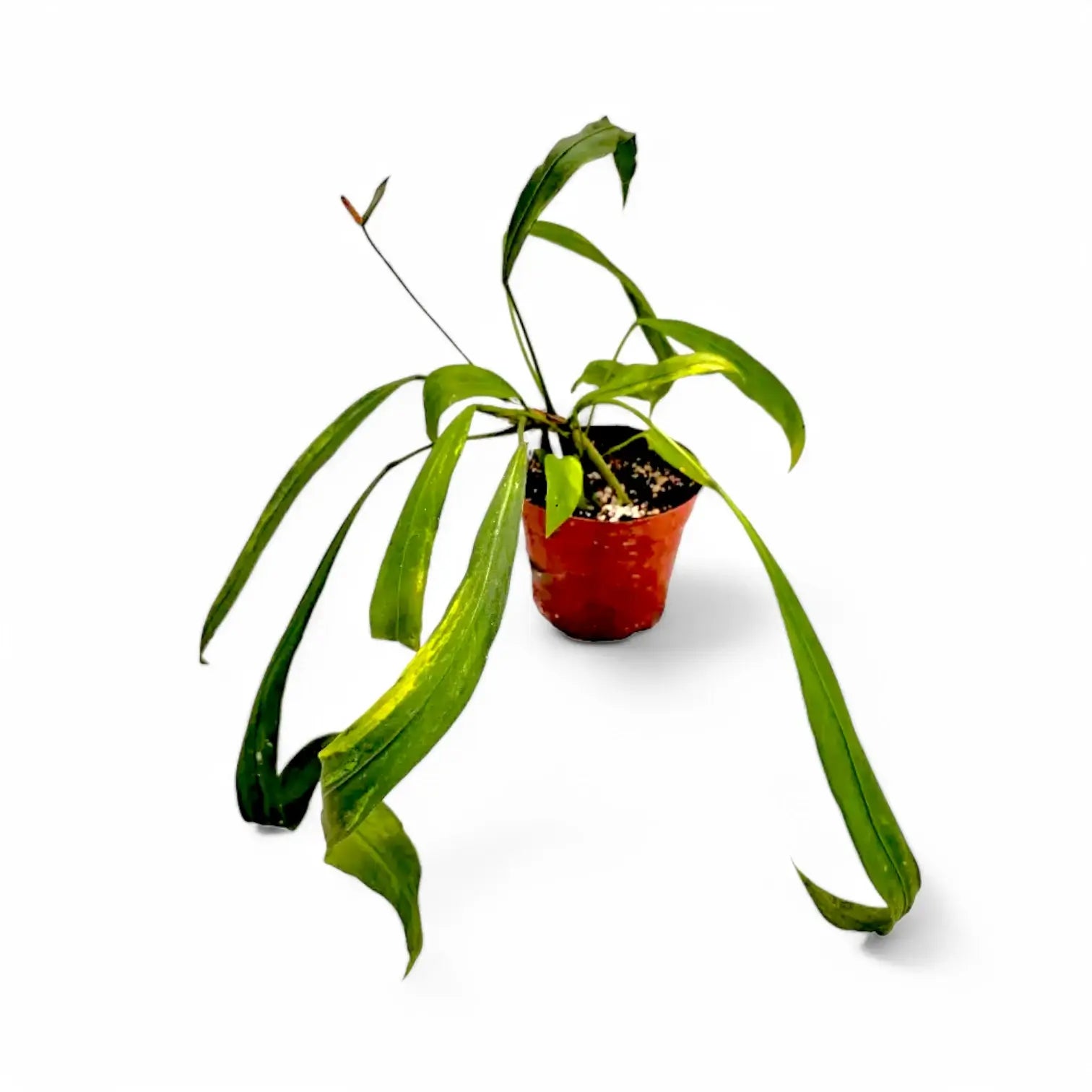
Anthurium vittariifolium variegata is a variegated form of Anthurium vittariifolium, a strap-leaved Anthurium with long, pendant foliage. Its narrow leaves hang downward from the crown, making the plant a natural fit for an elevated pot, shelf edge or hanging position.
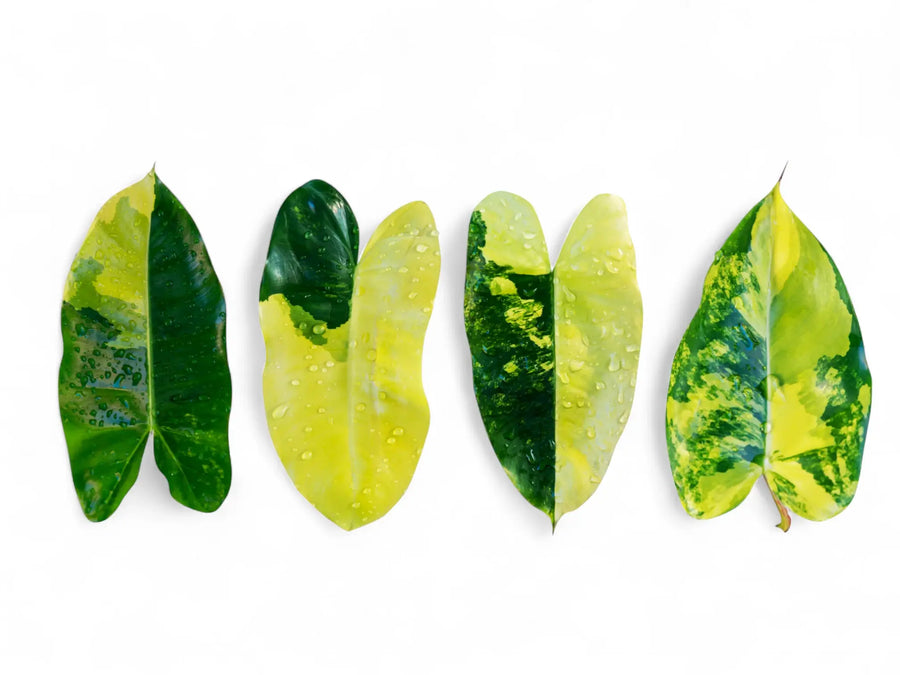
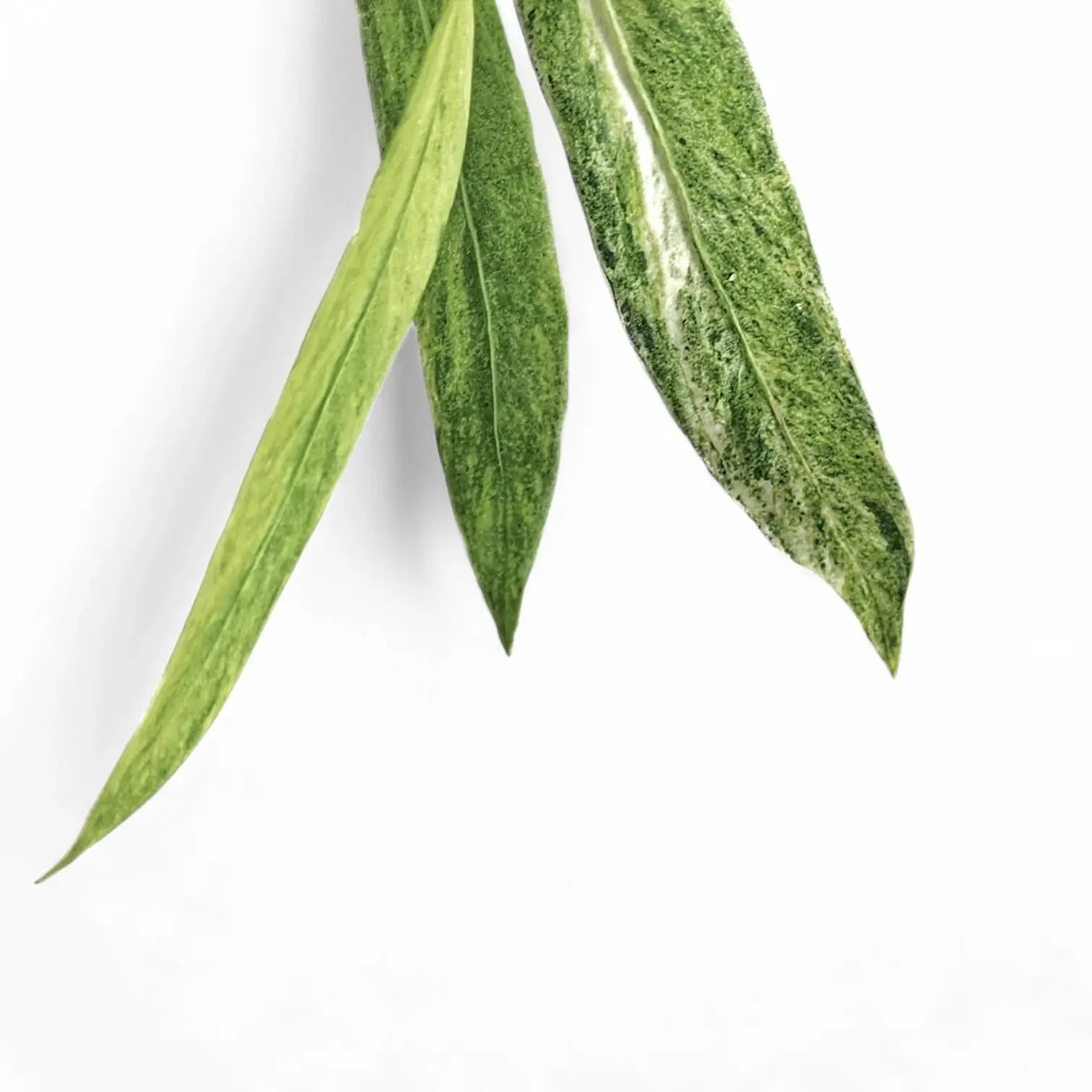
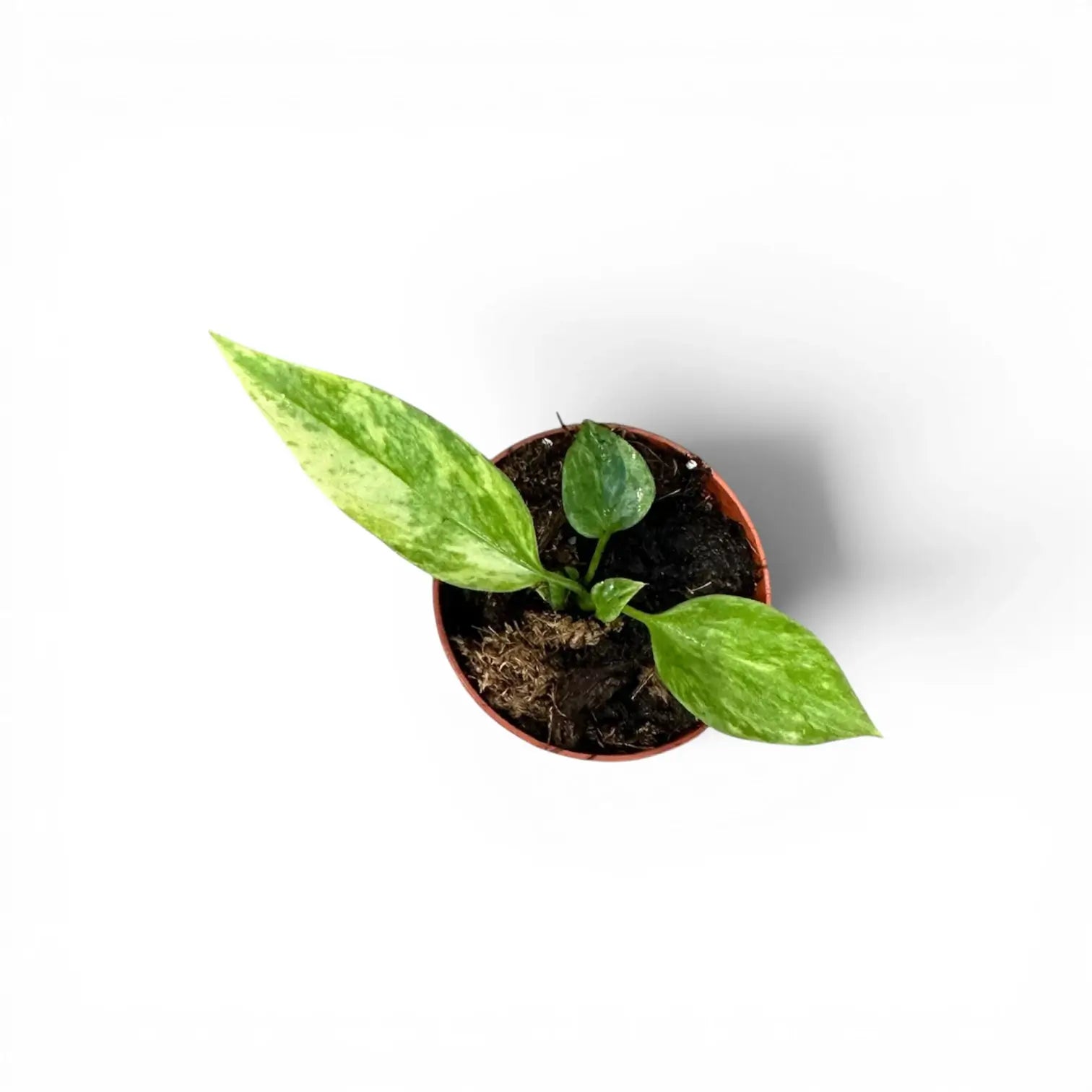
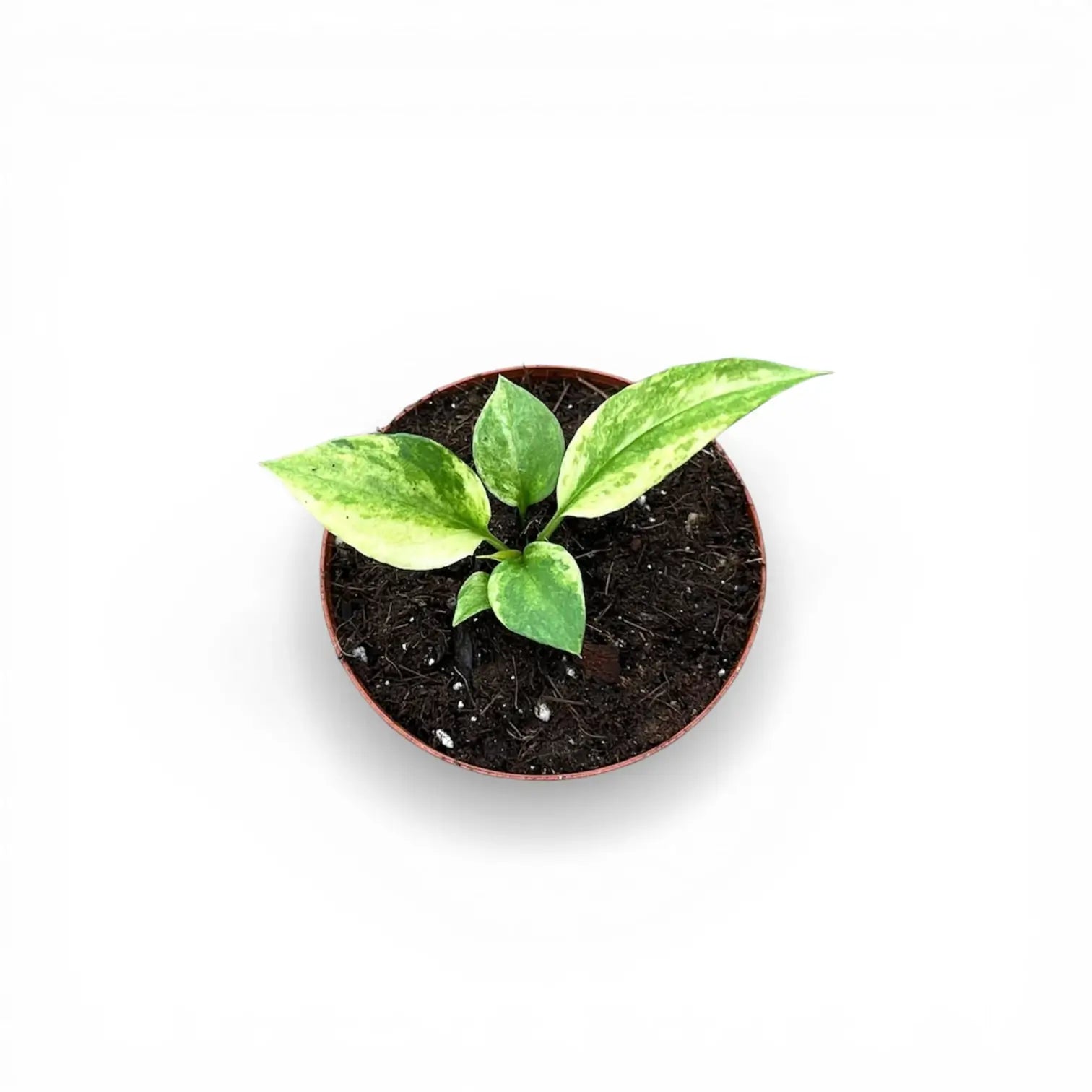
The leaves are glossy and ribbon-like, with a defined midrib running along the blade. In the variegated form, pale streaks, marbling or sectoring can appear along the length of the leaf, so the pattern follows the plant’s vertical movement. Mature specimens need clear space below the pot because the leaves can become long as the plant develops.
Anthurium vittariifolium is native to wet tropical forests of the Amazon basin, from south-eastern Colombia through Ecuador and Peru to northern Brazil. It grows as an epiphyte, using fleshy roots to attach to trees and branches where moisture, filtered light and airflow are available around the root system.
Mature plants can produce very long, narrow leaves, with documented mature blades reaching up to around 2 m long and 5–7 cm wide under strong conditions. Indoor plants often remain smaller, but the leaves still need vertical space and a potting setup that keeps the crown stable while the foliage hangs.
Anthurium vittariifolium variegata contains calcium oxalate crystals. Keep it away from pets and children, and handle cut or damaged tissue with care because sap may irritate skin or eyes.
Anthurium belongs to the Araceae family, and the genus name comes from Greek words meaning “flower” and “tail”, referring to the spadix. The accepted species name is Anthurium vittariifolium Engl.; the epithet vittariifolium refers to leaves resembling those of Vittaria, a group of narrow strap-like ferns. Variegata identifies the variegated foliage form in horticultural use.
Anthurium vittariifolium variegata develops long glossy strap leaves with pale streaking or sectoring that follows the natural downward line of the foliage.
Plant names, growth habits, natural habitats and indoor care guidance are checked against trusted botanical, habitat and horticultural references before publication.View our plant care resources and references.
Sign up for Foliage Factory newsletter for early access to new arrivals and practical care tips that work in real homes.