Light
Bright indirect • approx. 10,000–20,000 lux

VAT included · plus
Your new plant has just travelled a long way and needs a calm start in its new home. For step-by-step unboxing and first-week care, check our after-delivery care guide. For deeper tips on how your plant settles in over the next weeks, read our houseplant acclimatization guide.
Secure shipping, carefully packed orders with safe delivery across the EU, UK and Switzerland.
28-day plant guarantee, if a plant arrives damaged or fails soon after delivery, we help you make it right.
Free returns, simple, cost-free returns according to our policy.
For full details, please see:
Please head to our FAQ Page or Contact us.
Quick Care Guide
Light
Bright indirect • approx. 10,000–20,000 lux
Watering
Water when ~20–30% dry
Substrate
Open warm aroid mix with bark, coir and pumice or perlite
Temperature
Ideal: 20–28 °C • Avoid below: 15 °C
Humidity
Humid 60–80 % +
Growth habit
Upright clumping herbaceous perennial.
Support
not needed
Growth speed
Average
Max size indoors
Max. height: 200 cm • Max. spread: 150 cm
Toxicity & safety
Toxic
Origin & habitat
Golden-variegated cultivated/trade form of Alocasia macrorrhizos; species native from Central Malesia to Queensland (Murray Group)
Outdoor growing
Outside from 15 °C · sheltered spot
These care values are quick reference points for indoor growing. Use them as a guide, then adjust for your space, pot size, substrate, temperature and how quickly the substrate dries.
For more detail, read the full product description or visit our Plant Care Guides.
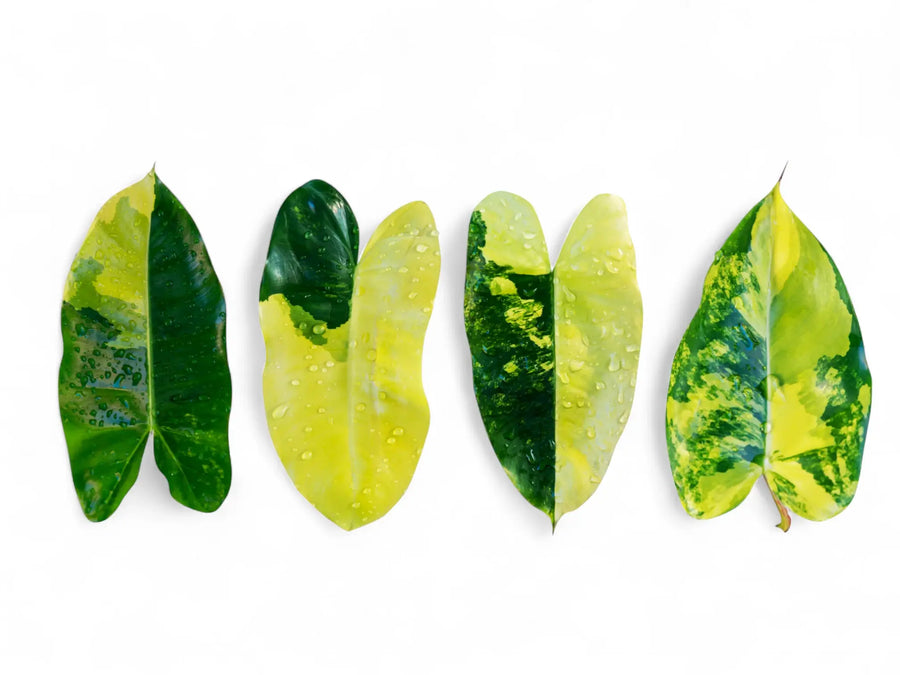
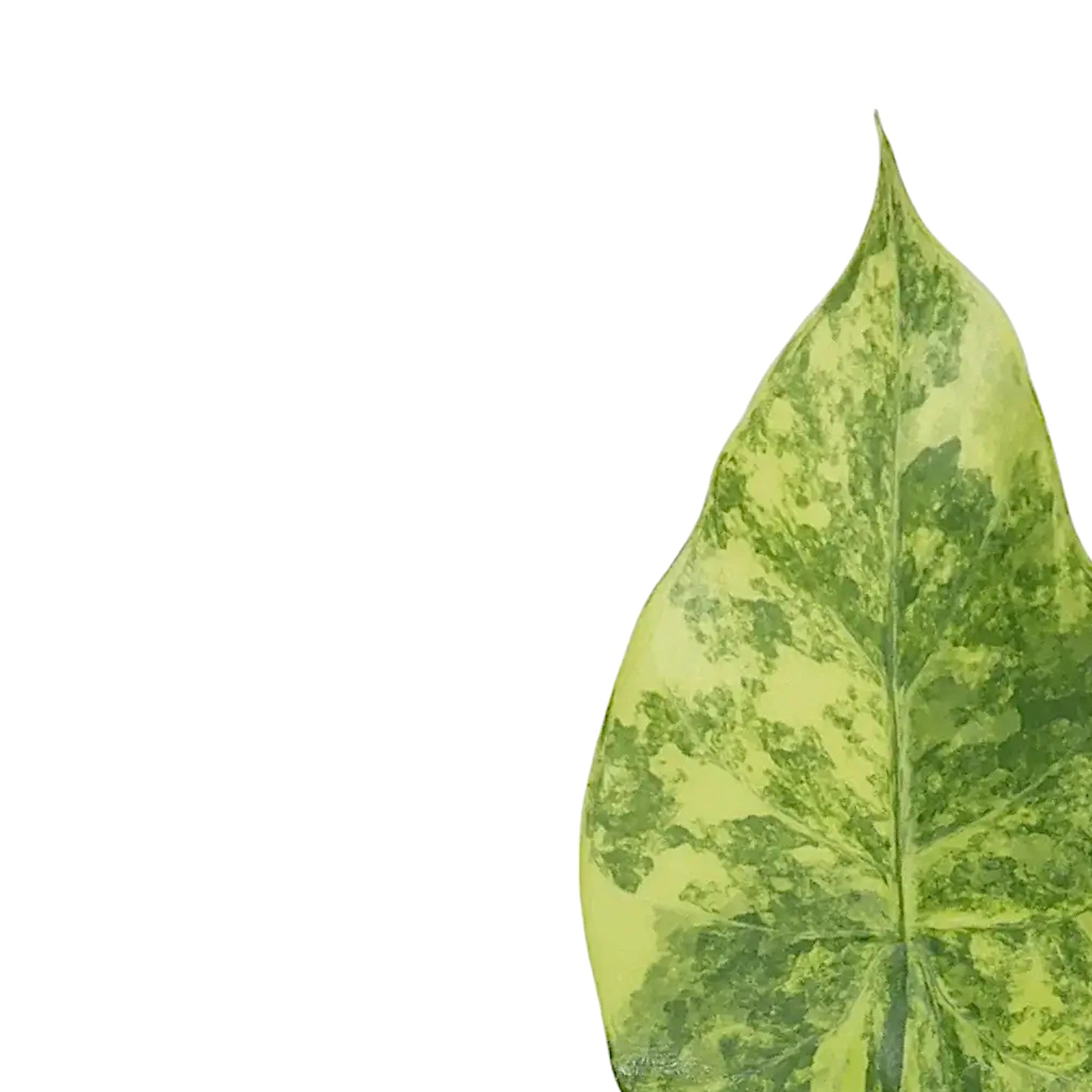
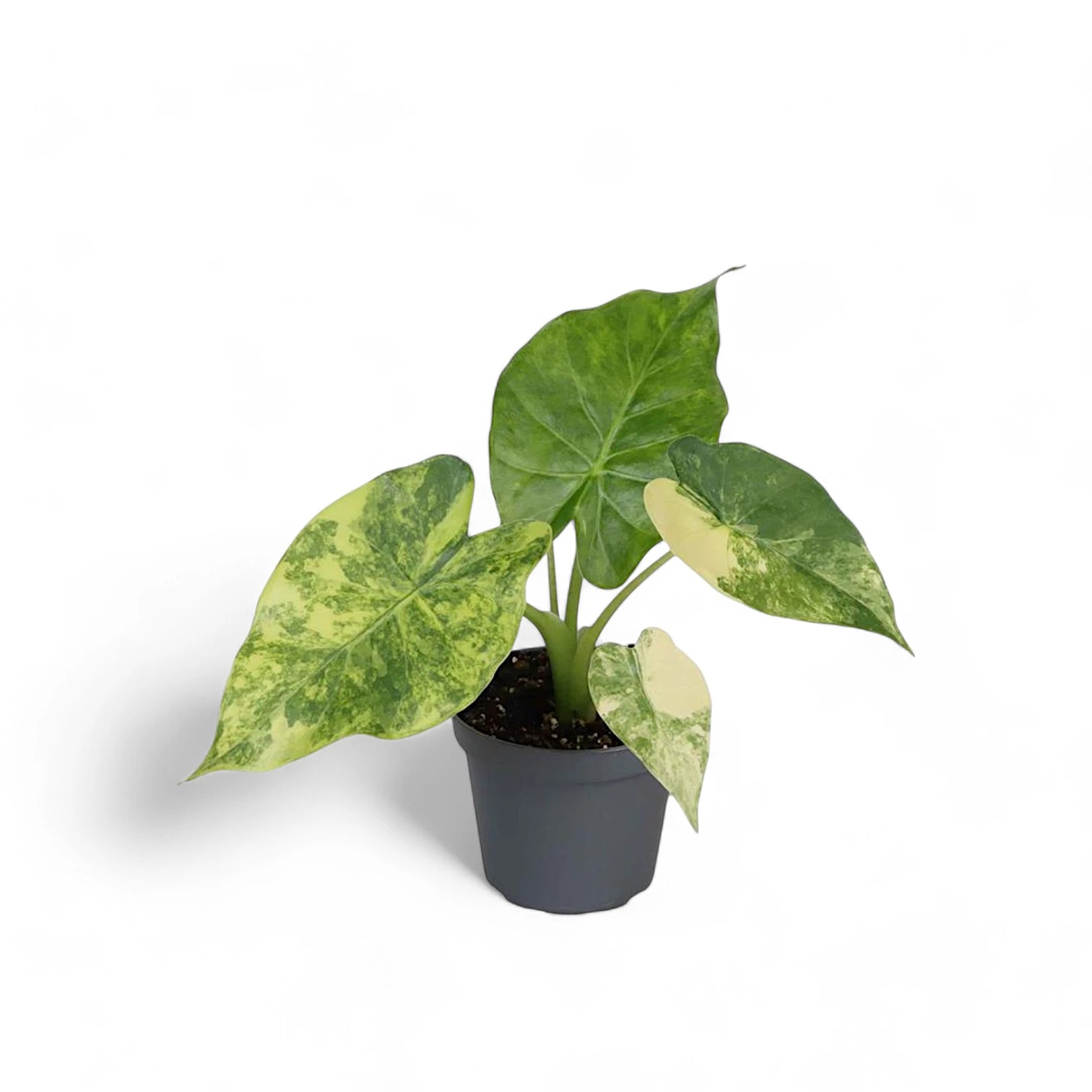
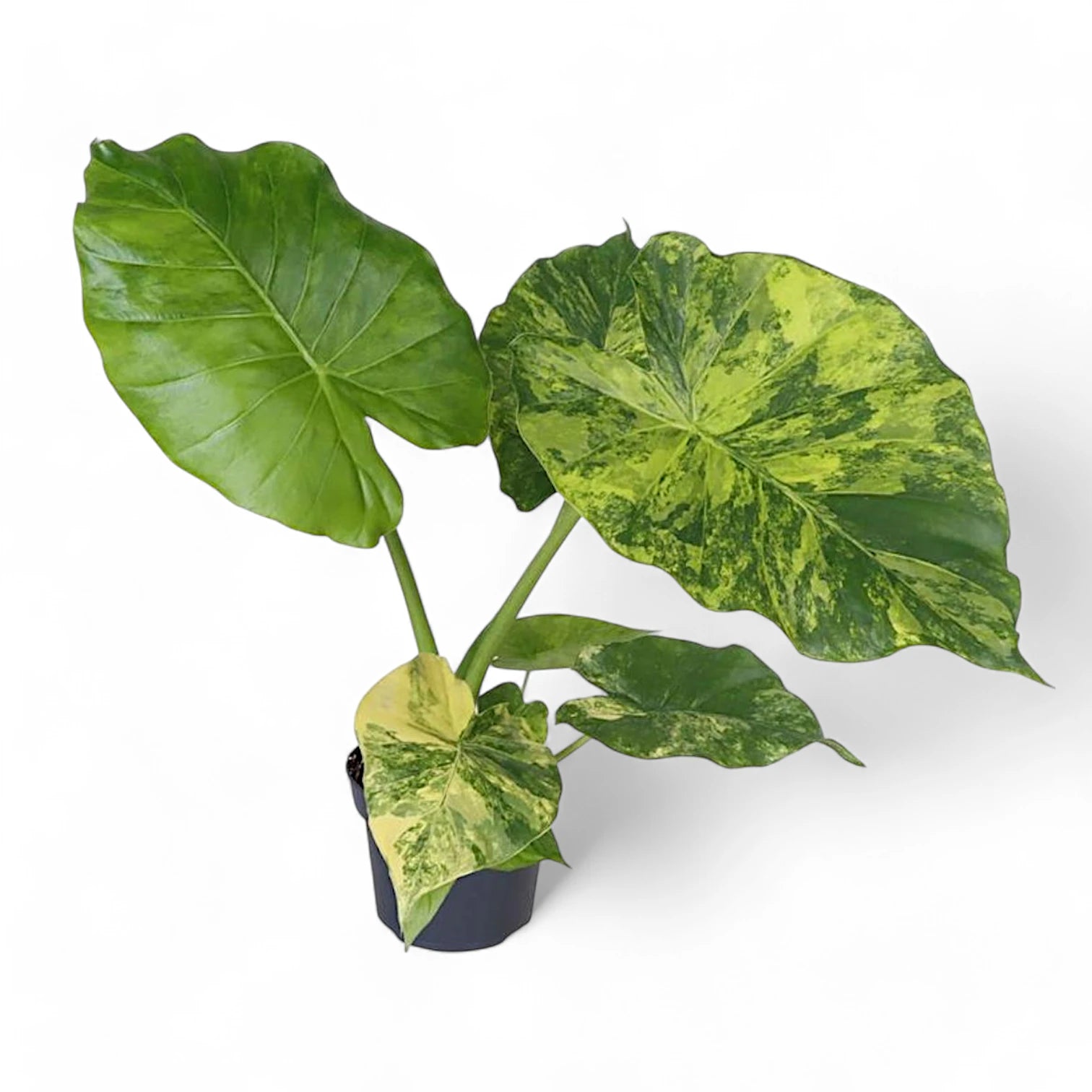
Alocasia macrorrhizos 'Aurea Variegata' carries yellow, lime and green variegation across the broad leaves and upright structure of giant taro. The plant has the same large-leaf framework as Alocasia macrorrhizos: strong petioles, a thickened base and a base that can gain real height with warmth and root space. The golden pattern can appear as marbling, speckling, streaking, sectors or soft washes, with each new leaf showing its own balance of green and pale tissue.
Alocasia macrorrhizos is native from Central Malesia to Queensland’s Murray Group and grows in wet tropical conditions. Alocasia macrorrhizos can form an erect stem to around 1.5 m, with petioles to around 1.3 m and large ovate-sagittate blades recorded up to around 120 × 50 cm in suitable tropical growth. In this golden-variegated plant, the large leaves carry visible pattern variation between leaves and individual plants.
The variegation is warm-toned, often mixing green, yellow, lime and cream-yellow areas on the same blade. Some leaves may show fine mottling, while others carry broader yellow sections or irregular marbling. As a new leaf hardens, the colour can shift from soft pale green to clearer yellow or lime. Mature leaves usually show clearer contrast once the blade has firmed and the glossy surface has hardened.
On a large macrorrhizos base, green areas give the plant more active green surface alongside the yellow pattern. Pale yellow tissue adds the colour, but it can mark sooner from heat, dry air, rough contact or mineral residue. A plant with both green and aurea pattern usually carries larger leaves more reliably than a base made mostly of pale tissue.
Alocasia macrorrhizos is a wet-tropical giant taro with a strong root system, large leaves and an upright growth. Indoors, Alocasia macrorrhizos 'Aurea Variegata' needs bright, indirect light, warmth, humidity and a substrate that holds moisture while letting air return after watering. The variegated form adds one extra care layer: pale tissue needs gentler handling and protection from heat stress.
Golden variegation can change from leaf to leaf. A greener leaf gives the plant more active leaf surface after transport, repotting or a low-light period, while a more yellow leaf adds brighter colour. In filtered daylight, petioles stay firmer and broad leaves open more cleanly; the yellow pattern itself comes from the plant’s variegated tissue. Firm roots, strong green areas and clean leaf expansion indicate an established plant.
As it matures, the plant can become broad and heavy. Give broad new leaves room to open clear of glass, walls and nearby pots. Mature leaves can be wiped gently with a damp cloth, especially where dust dulls the yellow pattern. Fresh pale sections should be handled carefully until the blade has fully hardened.
When winter light slows growth, Alocasia macrorrhizos 'Aurea Variegata' may slow leaf production. Watering intervals usually stretch because large pots dry more slowly in cooler conditions. Maintain warmth around the root zone, reduce fertilising during quiet periods and wait for active growth before major repotting or division. A greener winter leaf gives the plant more active green surface during slower growth.
Leave functional green-and-yellow leaves in place until they yellow or collapse. Remove fully yellowed or collapsed leaves near the base after they have faded. Wipe mature leaves gently and hold large blades from below while cleaning.
Propagation is by division, offsets, basal shoots or firm stem/rhizome sections as the plant produces new leaves. Variegation can vary between divisions, so young plants should be assessed over several leaves. Mature Alocasia macrorrhizos can flower with a green spathe and pale spadix. Indoors, the golden-variegated giant leaves remain more visible than the inflorescences.
Alocasia macrorrhizos 'Aurea Variegata' contains irritating crystals. Place the plant away from pets and young children, especially around broad leaves and cut stems. Gloves are sensible when trimming large leaves, repotting or handling cut stems.
Alocasia macrorrhizos (L.) G.Don was published under Alocasia in 1839, with Arum macrorrhizon L. as the basionym. The epithet macrorrhizos is built from Greek roots referring to a large or long root. “Aurea Variegata” refers to the golden-yellow variegated pattern used for this cultivated form.
Give Alocasia macrorrhizos 'Aurea Variegata' warmth, filtered light and enough room for its broad yellow-marked leaves to expand.
Plant names, growth habits, natural habitats and indoor care guidance are checked against trusted botanical, habitat and horticultural references before publication.View our plant care resources and references.
Sign up for Foliage Factory newsletter for early access to new arrivals and practical care tips that work in real homes.