Light
Full sun / direct • approx. 40,000–80,000 lux

VAT included · plus
Your new plant has just travelled a long way and needs a calm start in its new home. For step-by-step unboxing and first-week care, check our after-delivery care guide. For deeper tips on how your plant settles in over the next weeks, read our houseplant acclimatization guide.
Secure shipping, carefully packed orders with safe delivery across the EU, UK and Switzerland.
28-day plant guarantee, if a plant arrives damaged or fails soon after delivery, we help you make it right.
Free returns, simple, cost-free returns according to our policy.
For full details, please see:
Please head to our FAQ Page or Contact us.
Quick Care Guide
Light
Full sun / direct • approx. 40,000–80,000 lux
Watering
Water when ~70–90% dry
Substrate
Gritty • Ultra fast-draining • Mineral-heavy • Fine-medium
Temperature
Ideal: 20–30 °C • Avoid below: 15 °C
Humidity
Normal 40–50 %
Growth habit
Upright caudiciform succulent shrub.
Support
not needed
Growth speed
Slow
Max size indoors
Max. height: 150 cm • Max. spread: 60 cm
Toxicity & safety
Toxic
Origin & habitat
Native from western tropical Africa to Arabian Peninsula and Tanzania
Outdoor growing
Outside from 18 °C · dry, rain-sheltered setup
These care values are quick reference points for indoor growing. Use them as a guide, then adjust for pot size, substrate, temperature and how quickly the substrate dries.
For more detail, read the full product description or visit our Plant Care Guides.
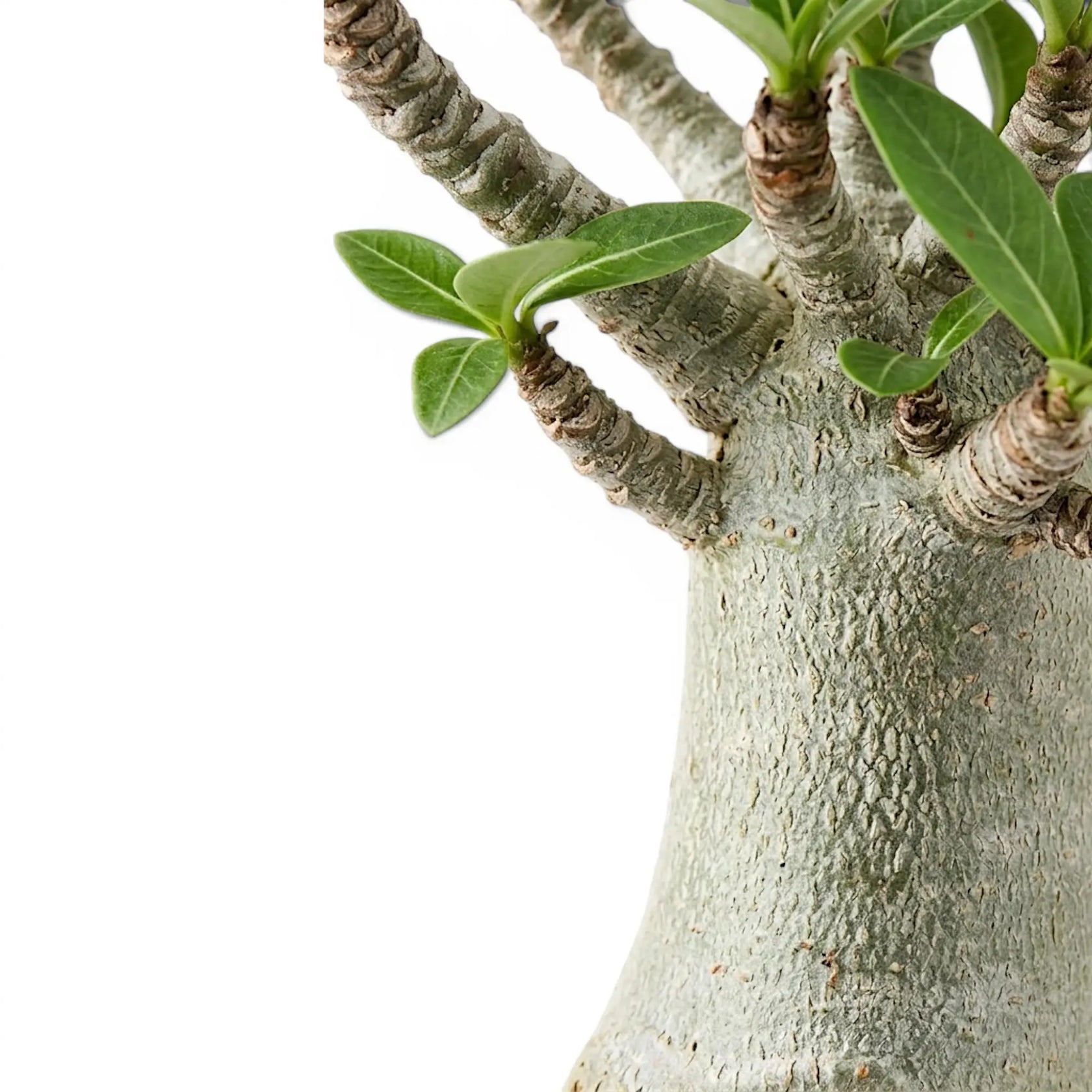
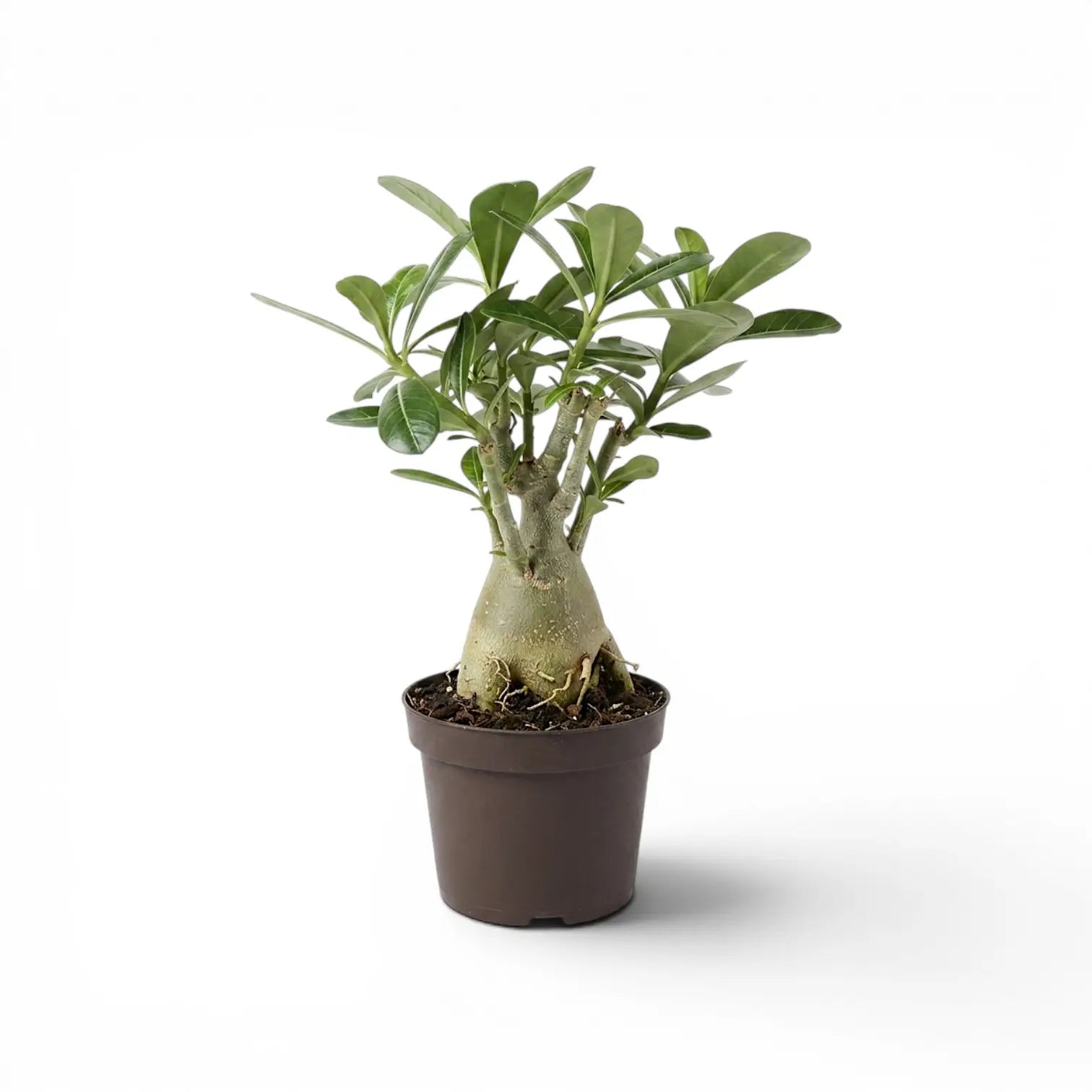
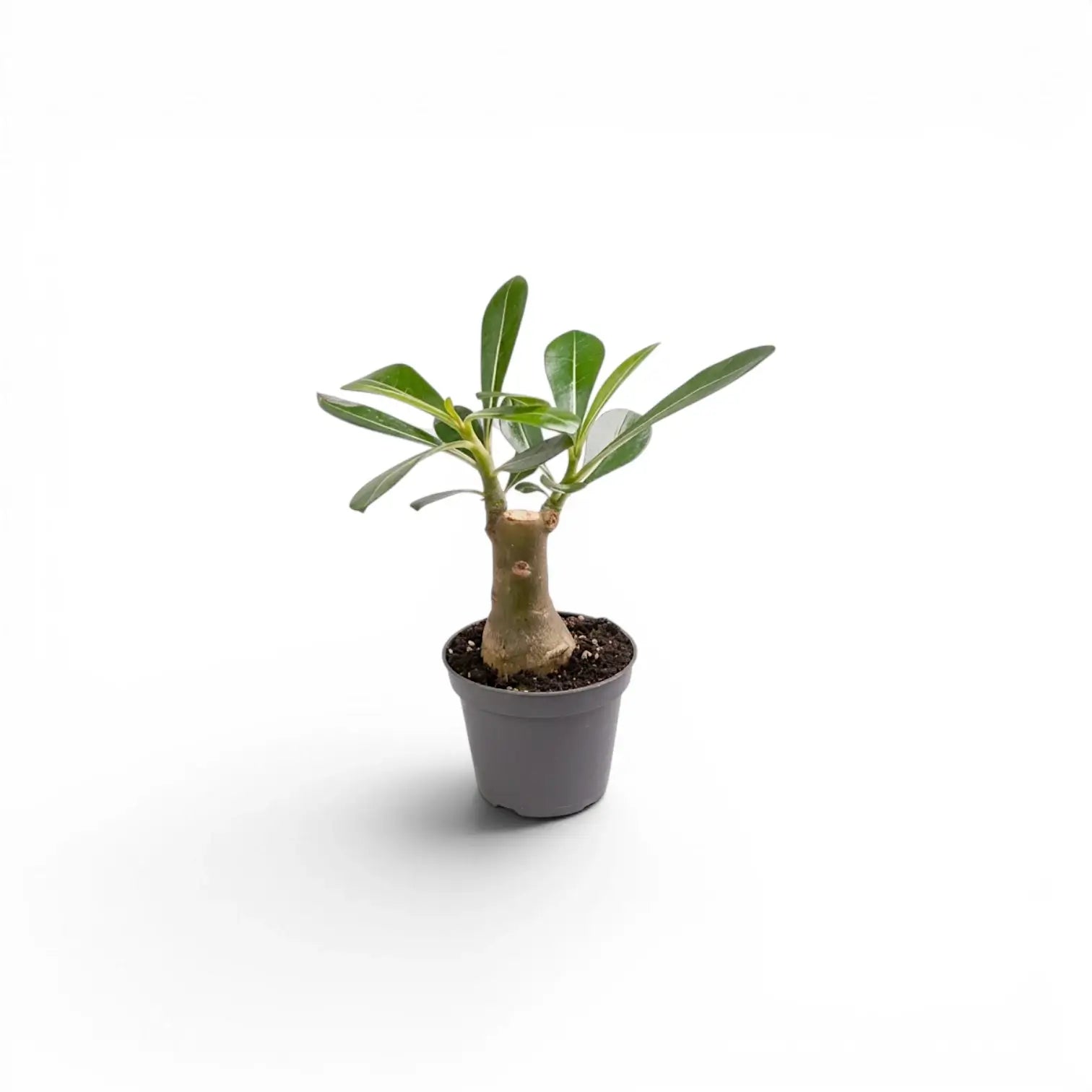
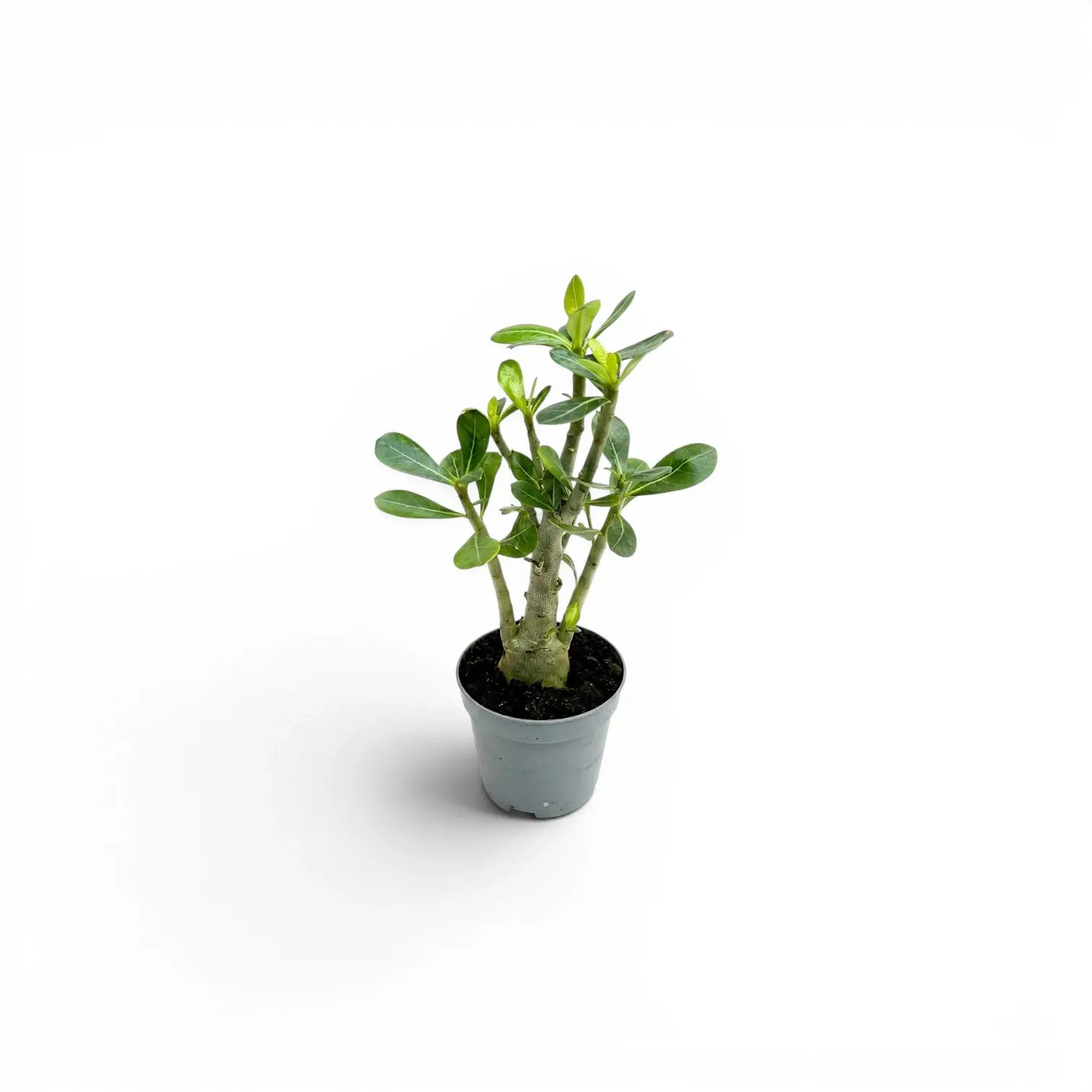
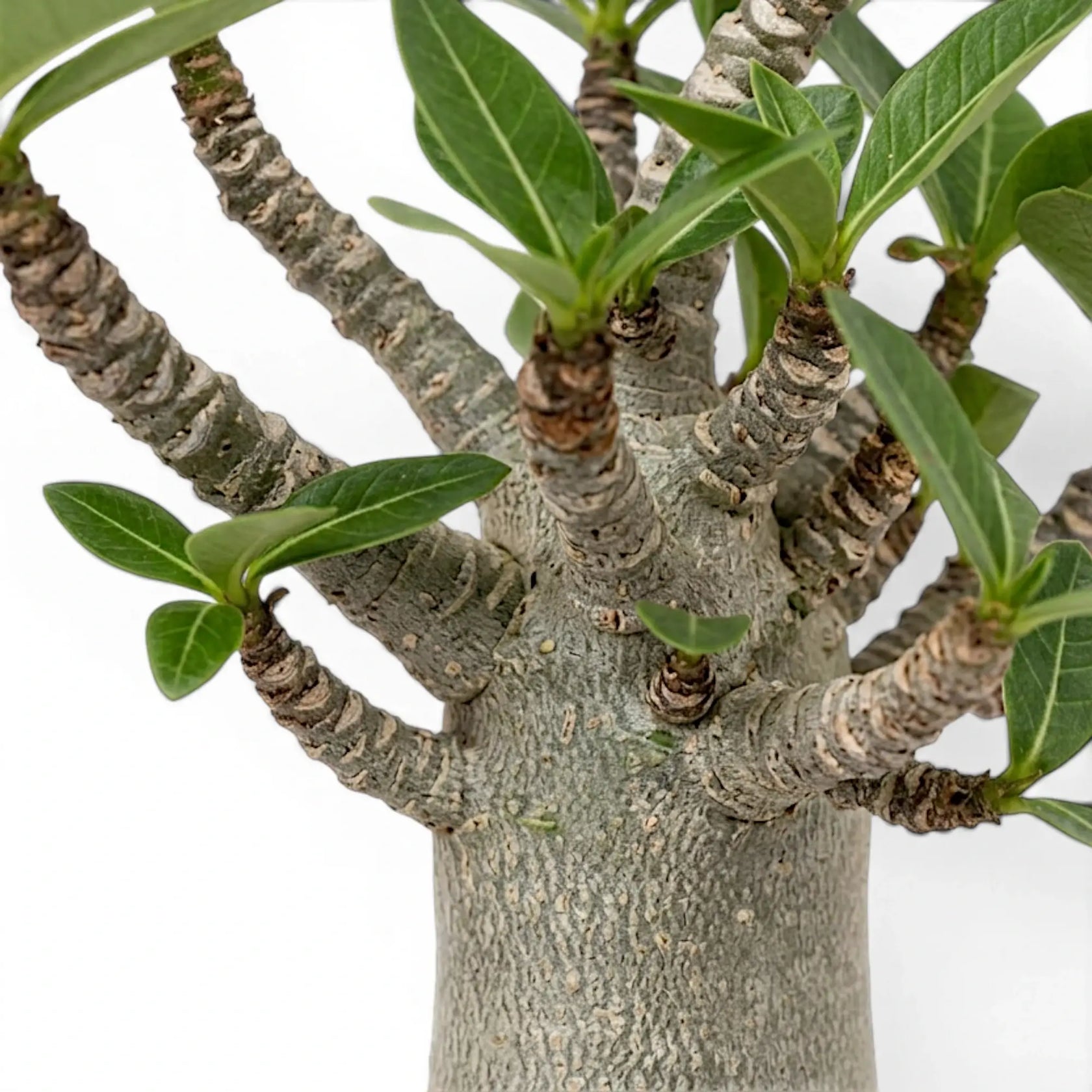
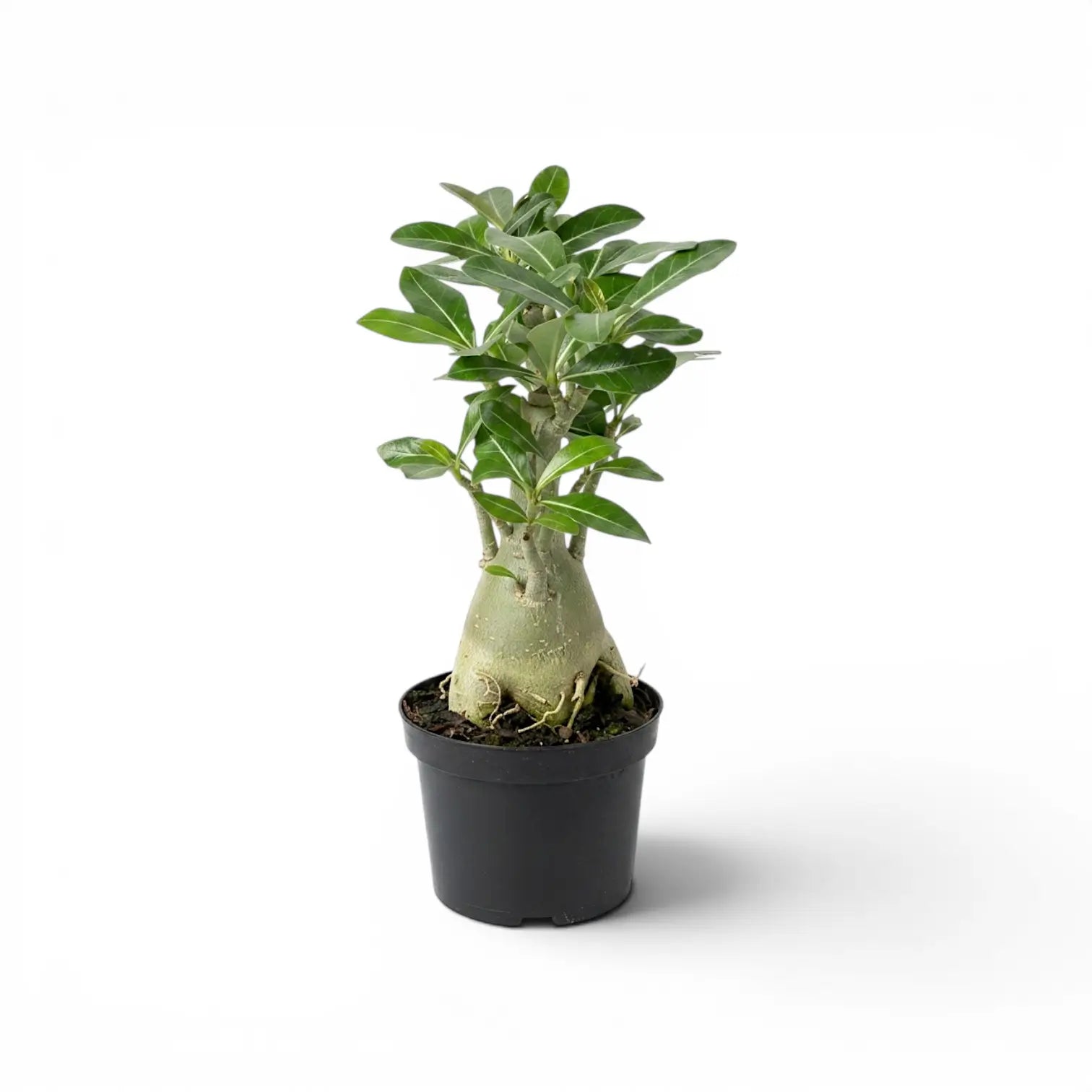
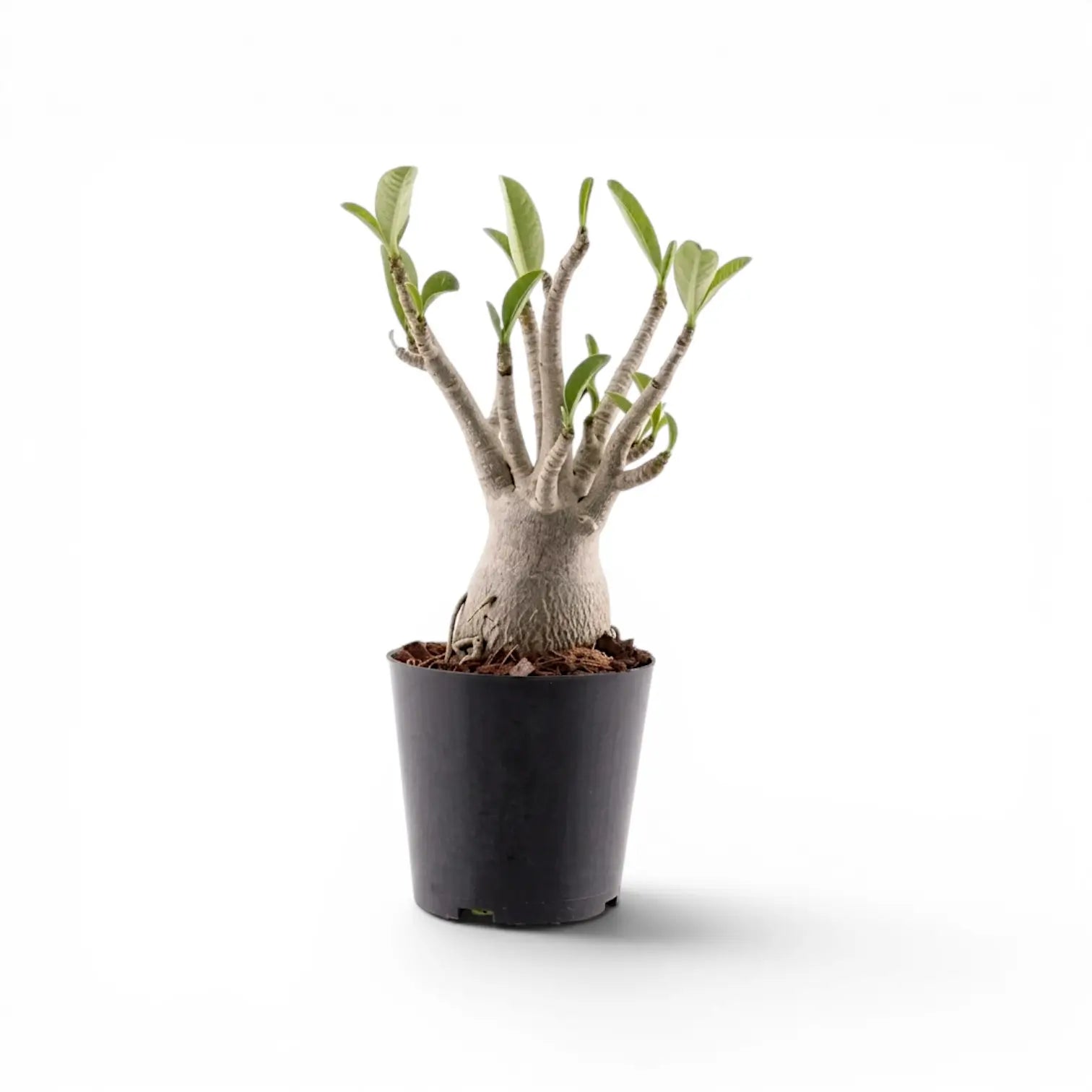
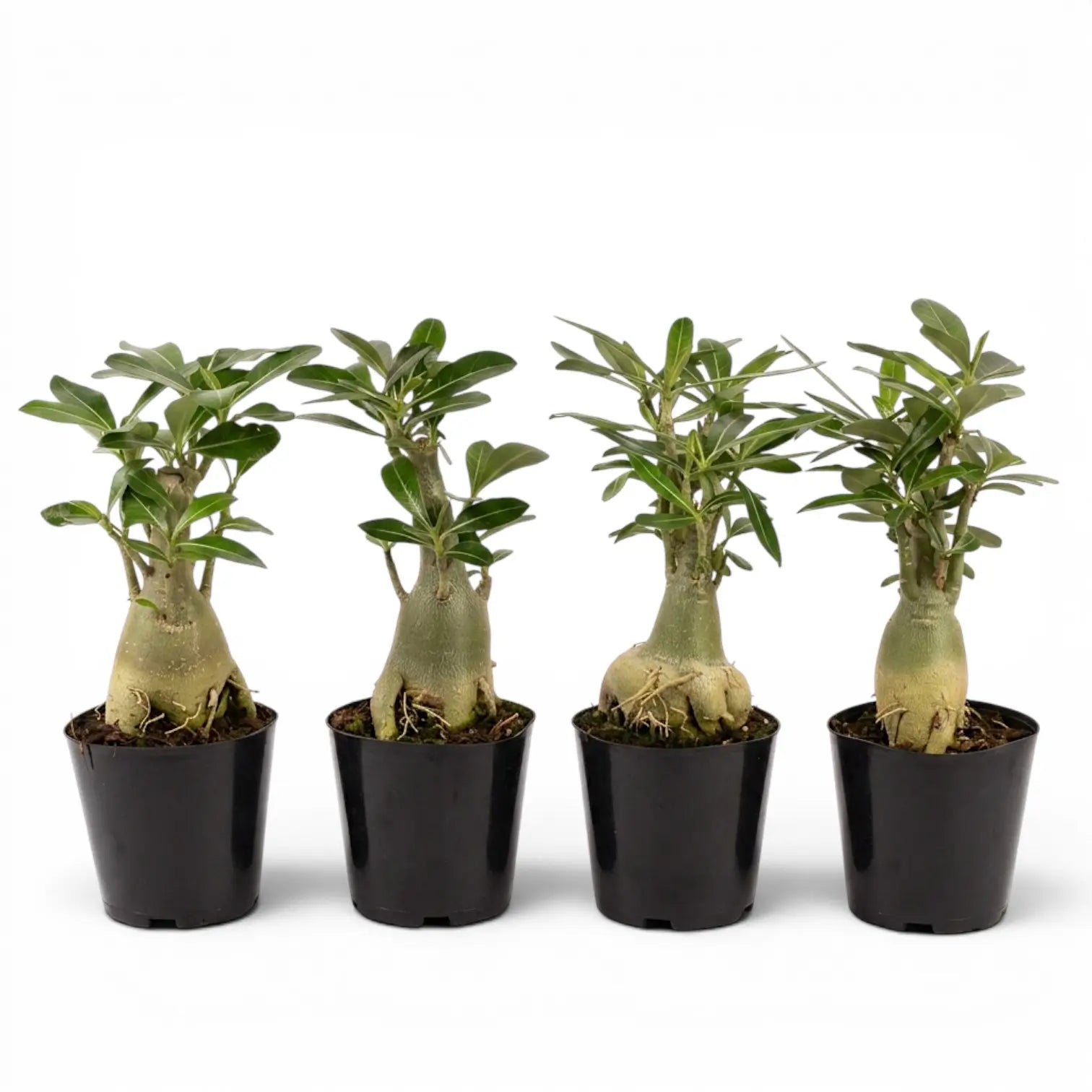
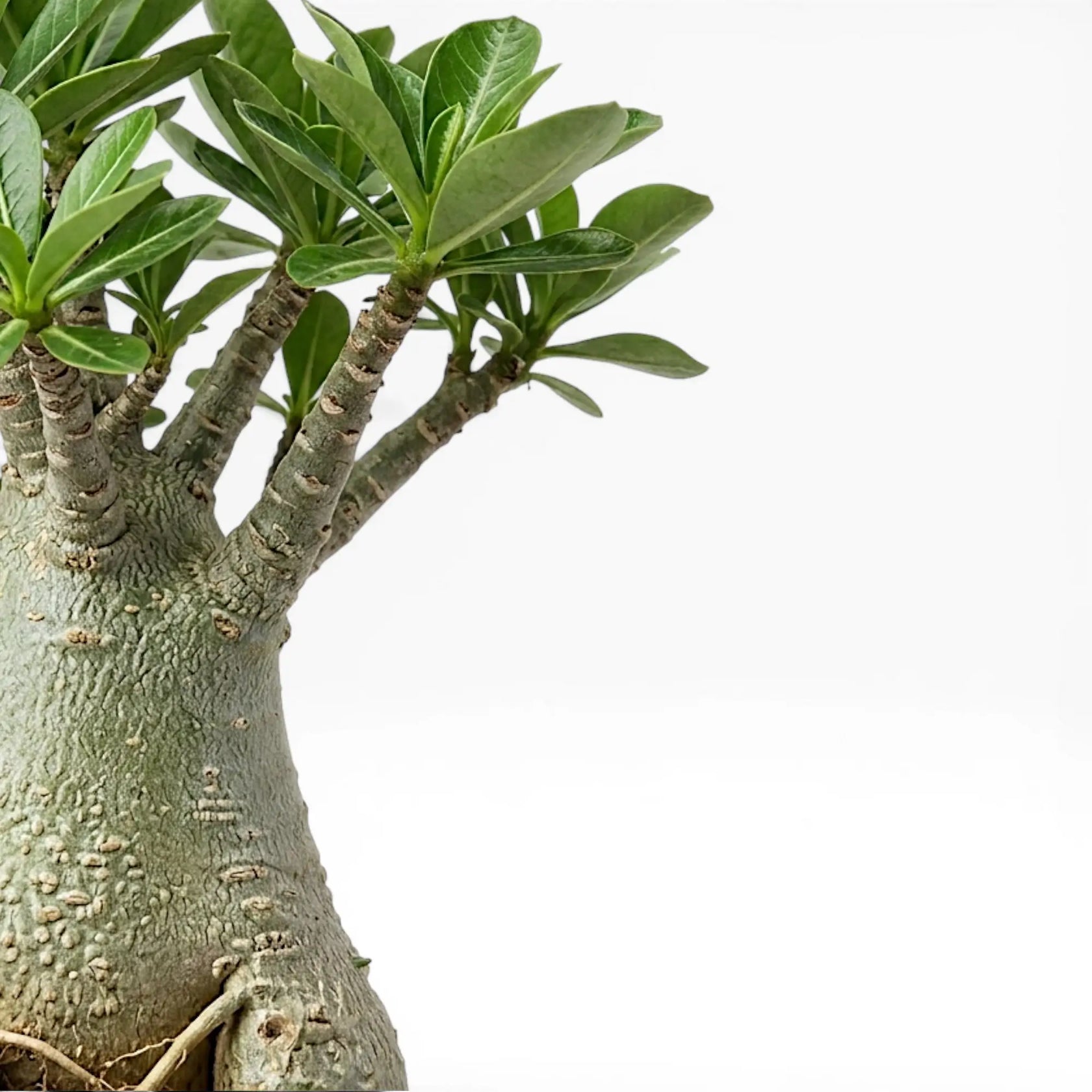
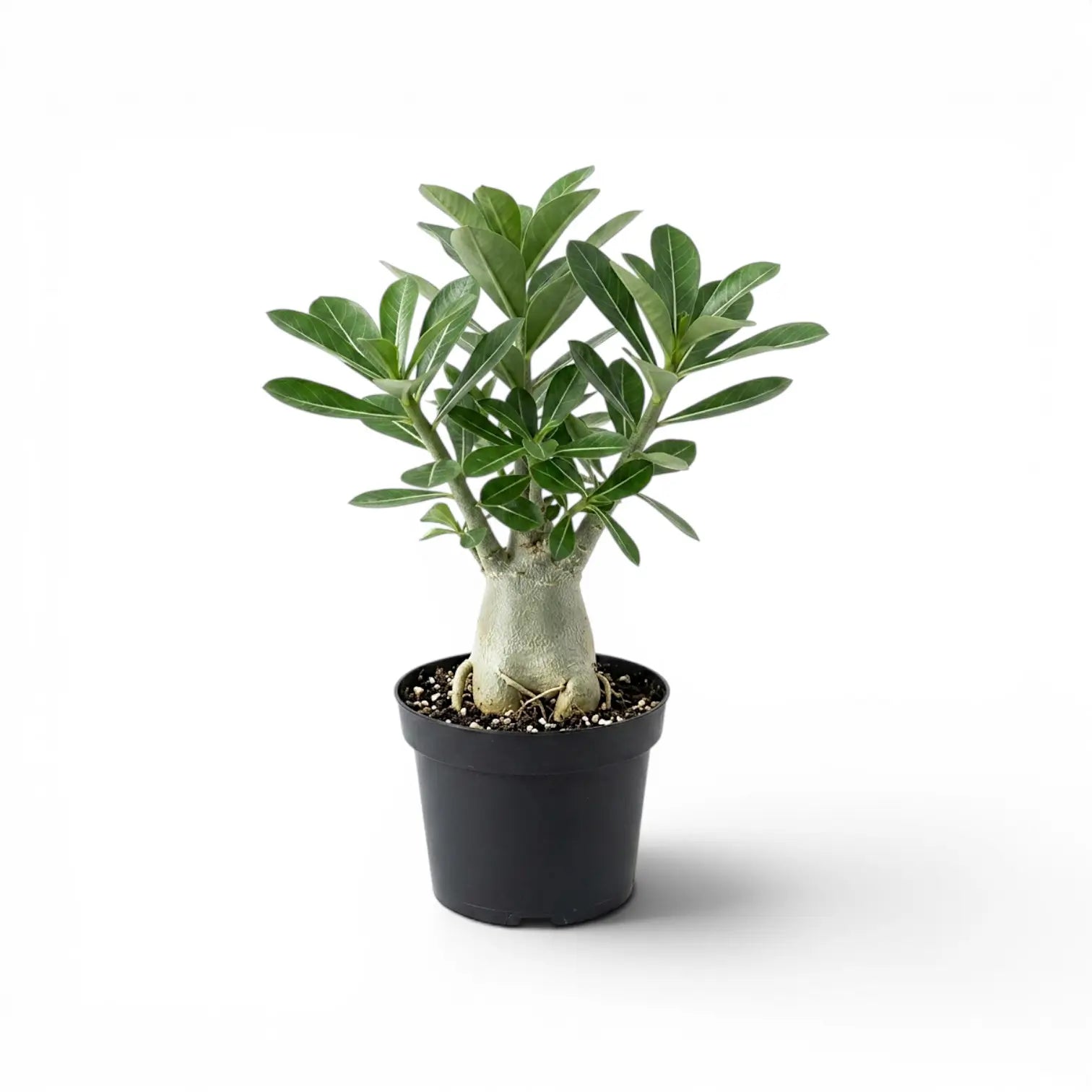
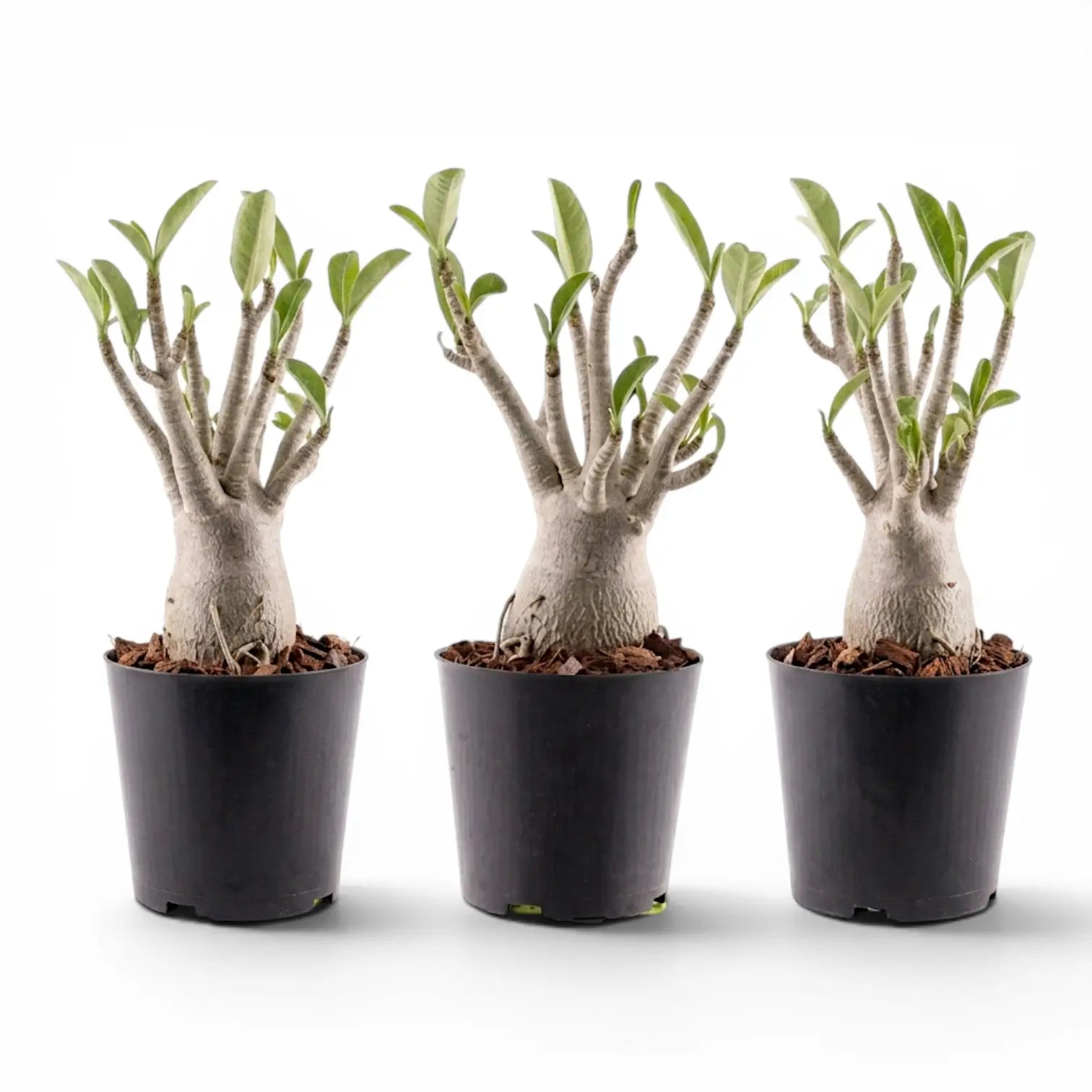
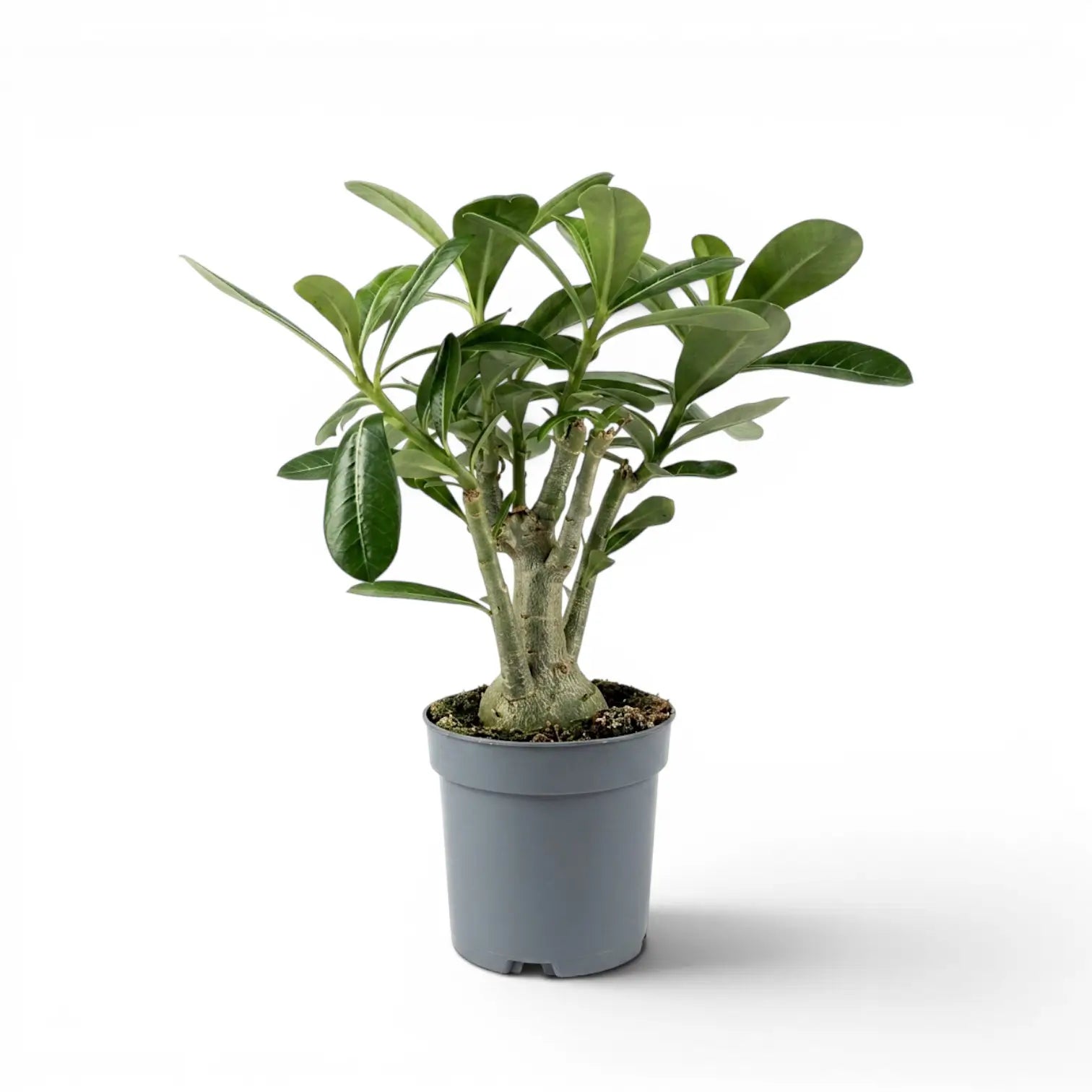
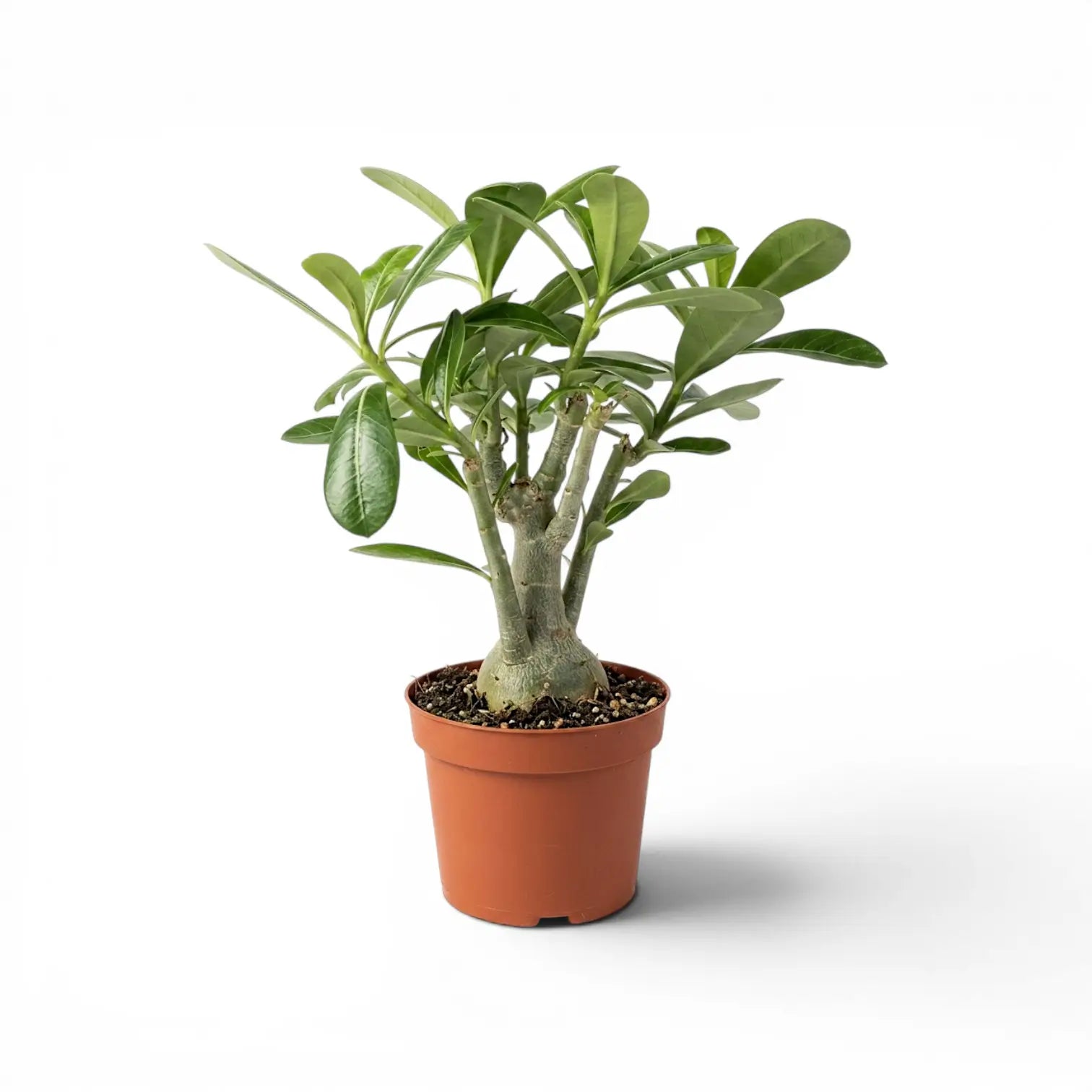
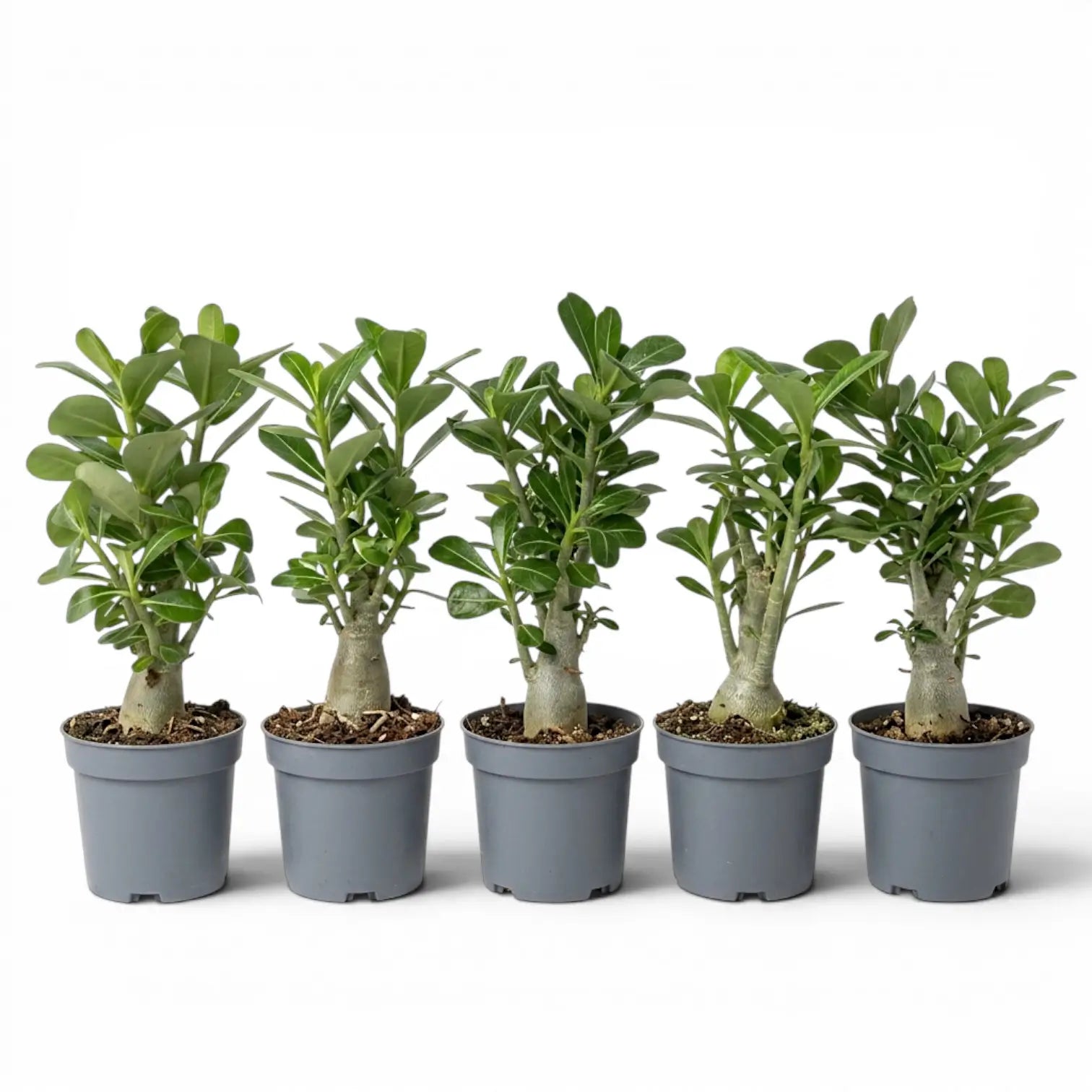
Adenium obesum, often called Desert Rose, is a semisucculent shrub with a thickened lower stem, fleshy branches, glossy leaves, and bright funnel-shaped flowers. Mature plants build a swollen base that stores water, while the upper branches carry seasonal foliage and flower clusters.
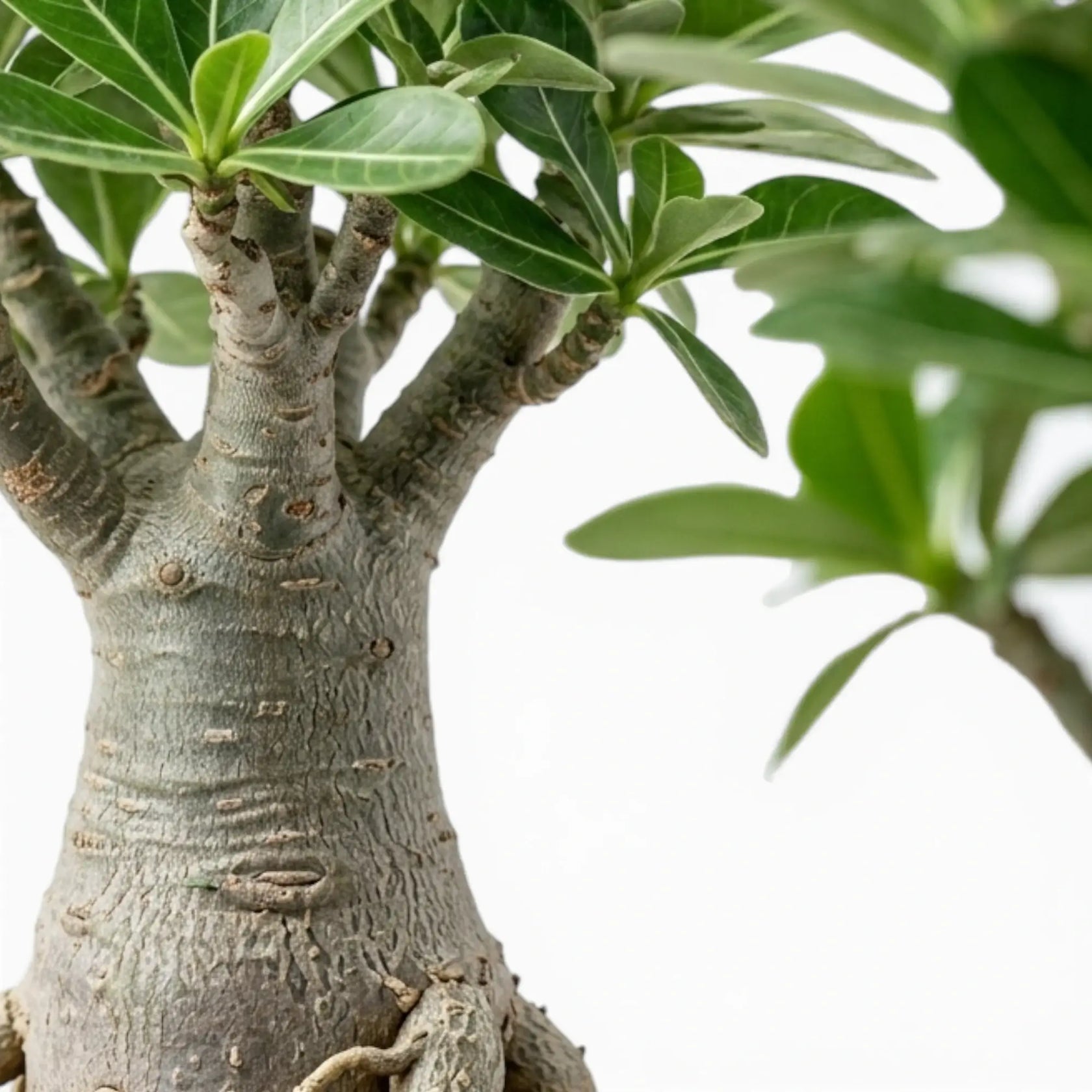
The thick base and branching framework remain clearly visible as the plant matures. Leaves usually sit near the shoot tips, with seasonal foliage and flower clusters carried above the swollen base. During active growth, established plants can produce pink, red, or pale flowers, especially when grown warm and bright.
Adenium obesum belongs to the Apocynaceae, the dogbane family. Its native range extends from West Tropical Africa to the Arabian Peninsula and Tanzania. In nature, it grows mainly in desert and dry shrubland habitats, and it also occurs in savanna, dry bushland, woodland, wooded grassland, rocky ground, and sandy soils.
The swollen base is central to the plant’s cultivation. It stores water during active growth and carries the plant through seasonal dry phases. The branches hold leaves and flowers near the outer growth points, so the plant develops a clear framework as it matures.
In containers, Adenium obesum needs a warm root zone, strong light, and a fast-draining mineral substrate. A compact pot that matches the root system helps the thickened stem base stay stable, while the substrate dries at a suitable pace between watering cycles.
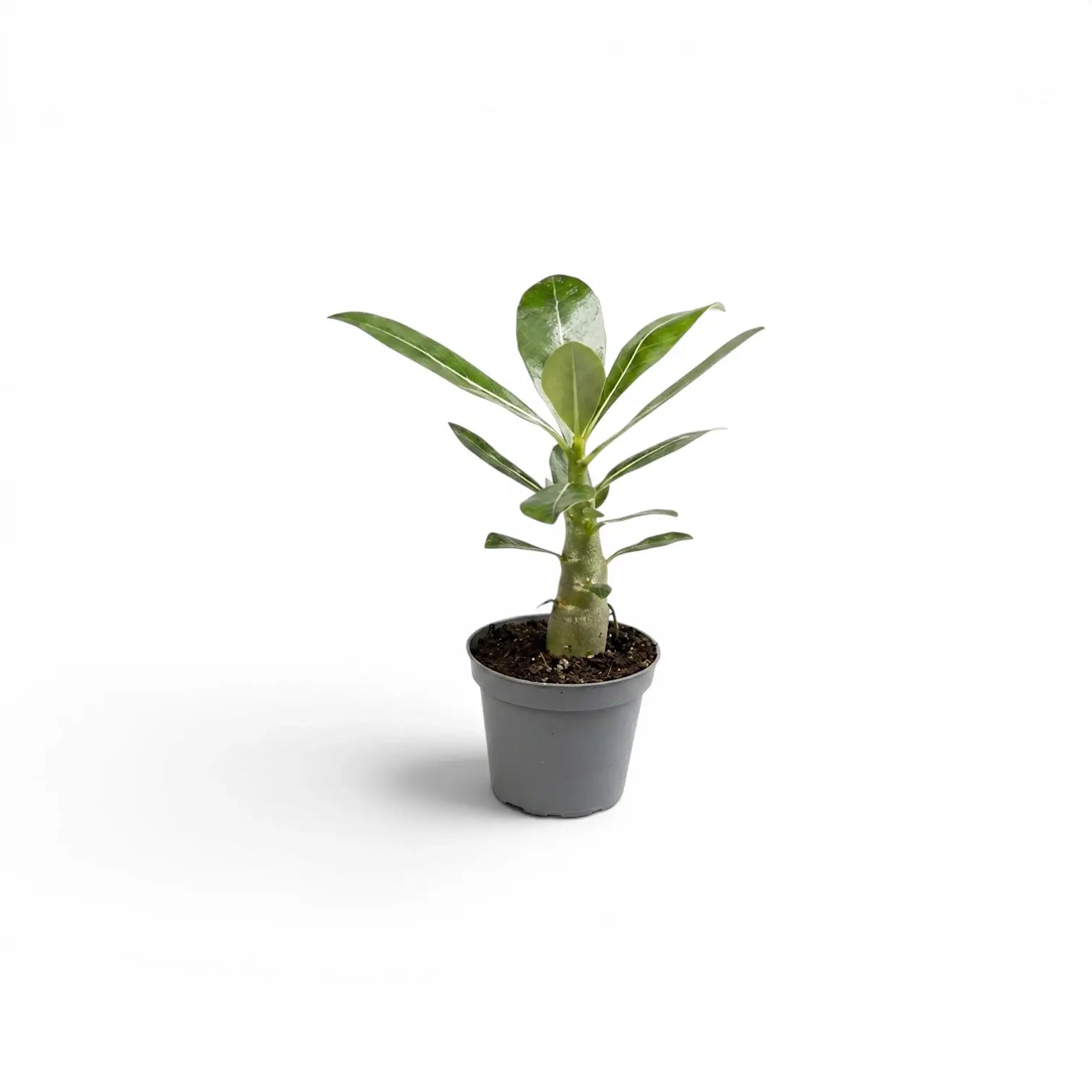
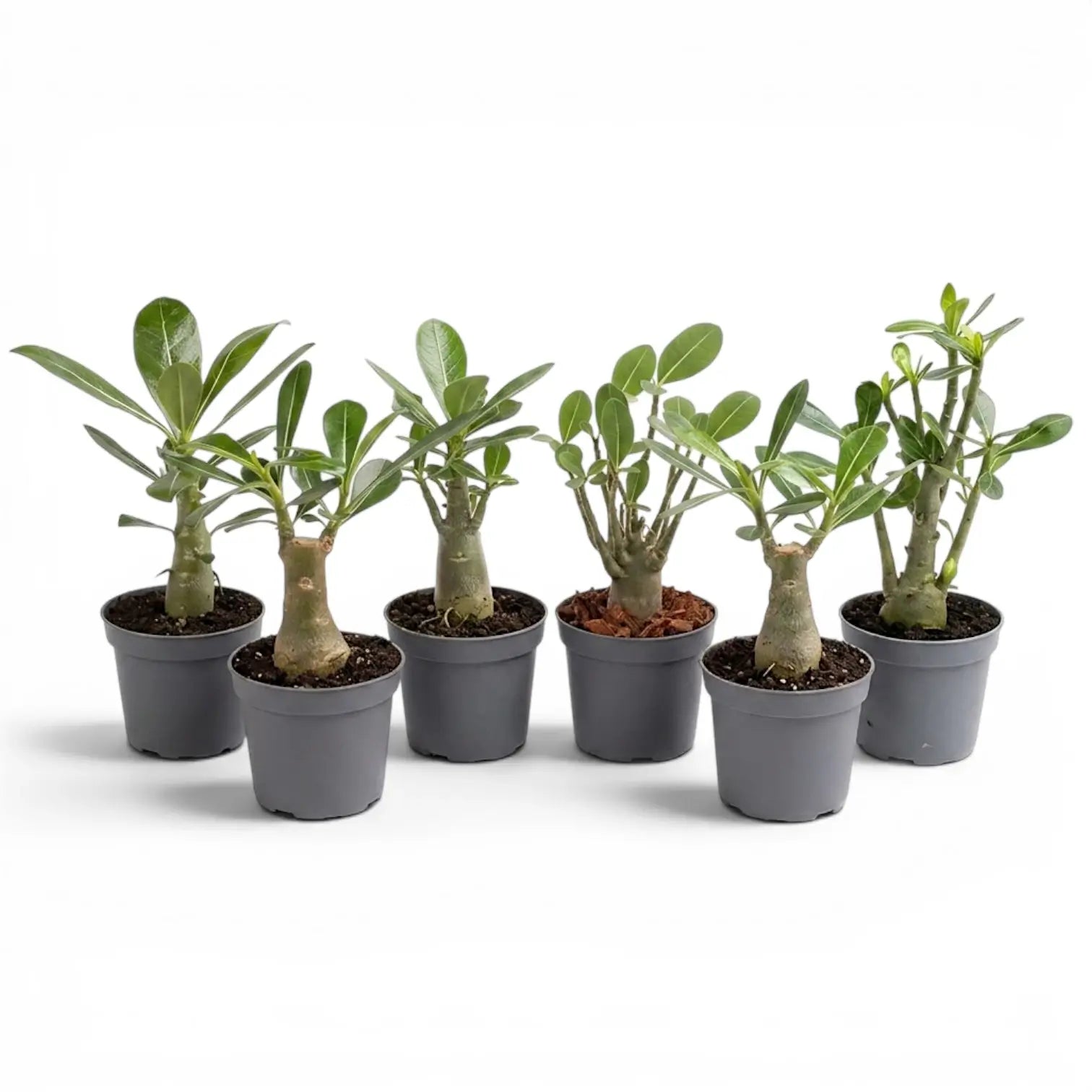
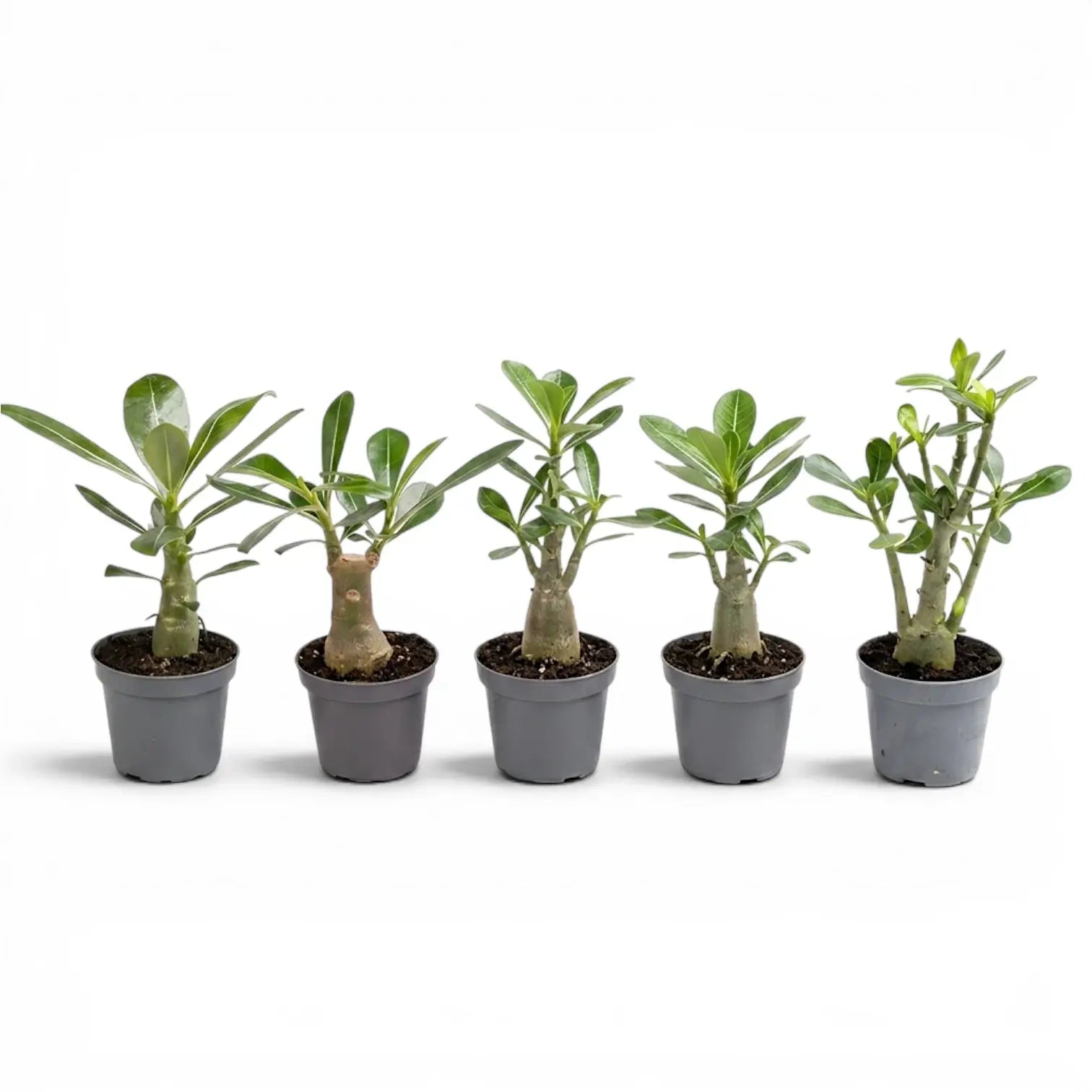
Adenium obesum thickens at the base and shows a clearer branch structure with age. Seed-grown plants usually develop a pronounced swollen base. Cutting-grown plants often mature with a slimmer lower structure and a stronger emphasis on branching and flowering.
Warmth, strong light and fresh leaves mark the active phase for deeper watering and light feeding. Cooler temperatures, leaf drop and slower growth call for a much drier approach.
Adenium obesum contains toxic cardiac glycosides, especially in the milky sap, and all parts should be treated as poisonous if ingested. Keep it away from pets and children, wear gloves when pruning or repotting, and avoid contact with eyes, mouth, and broken skin. Clean tools after cutting, as the latex can irritate skin and mucous membranes.
The botanical name is Adenium obesum (Forssk.) Roem. & Schult. The genus name Adenium is linked to Aden, a historical geographic reference associated with early botanical material from the Arabian Peninsula. The species epithet obesum means “stout” or “plump”, referring to the thickened water-storing trunk base.
A bright, warm position and a fast-drying mix keep the swollen base firm and the branches compact.
Plant names, growth habits, natural habitats and indoor care guidance are checked against trusted botanical, habitat and horticultural references before publication.View our plant care resources and references.

Sign up for Foliage Factory newsletter for early access to new arrivals and practical care tips that work in real homes.