Position
Full sun to part shade



Origanum
VAT included · plus
Your outdoor plant has just been packed, transported and unpacked, so give it a calm start before planting or placing it permanently. Remove all packaging carefully, check the pot, stems, visible roots and substrate moisture, and settle any loose growing medium back around the root ball. Water if the root ball feels dry, but do not leave the pot standing in water. For the first few days, keep the plant in a sheltered spot suited to its light needs, away from strong midday sun, heavy wind, frost and heat stress.
Do not move the plant straight into full exposure, especially if it is young, newly flushed, evergreen, recently pruned or greenhouse-grown. Gradually introduce more sun, wind and temperature variation over several days. If cold nights, storms, intense sun or hot dry weather are expected, keep the plant protected until conditions are more stable. Do not fertilize immediately after delivery; let the plant settle first and resume feeding only when it is actively growing and conditions are suitable.
Outdoor plants may arrive in different seasonal stages. Depending on the time of year, your plant may be leafy, flowering, newly sprouting, recently pruned, dormant, partly bare or leafless. Adjust care to what the plant is doing: actively growing plants need closer moisture checks, while dormant plants usually need protection from extremes and only light moisture management until growth resumes.
Plant outdoors when the soil is workable and weather conditions suit the plant type. Avoid planting during frost, heatwaves, waterlogged soil or very dry windy periods. It is better to keep the plant protected in its pot for a short time than to plant into stressful conditions. After planting, water thoroughly so the root ball and surrounding soil connect properly, then monitor moisture while the plant establishes.
Secure shipping, carefully packed orders with safe delivery across the EU, UK and Switzerland.
28-day plant guarantee, if a plant arrives damaged or fails soon after delivery, we help you make it right.
Free returns, simple, cost-free returns according to our policy.
For full details, please see:
Please head to our FAQ Page or Contact us.
Herbaceous perennial herb
Position
Full sun to part shade
Moisture
Dry to average
Drainage
Well-drained
Hardiness
Fully hardy · -20°C
Mature size
10–30 × 30–50 cm
Winter habit
Semi-evergreen
Bloom time
Summer, Autumn
Containers
Good in pots
Pruning
Late spring, After flowering
Dry grassland, rocky ground and open scrub across Europe, western Asia and the Mediterranean.
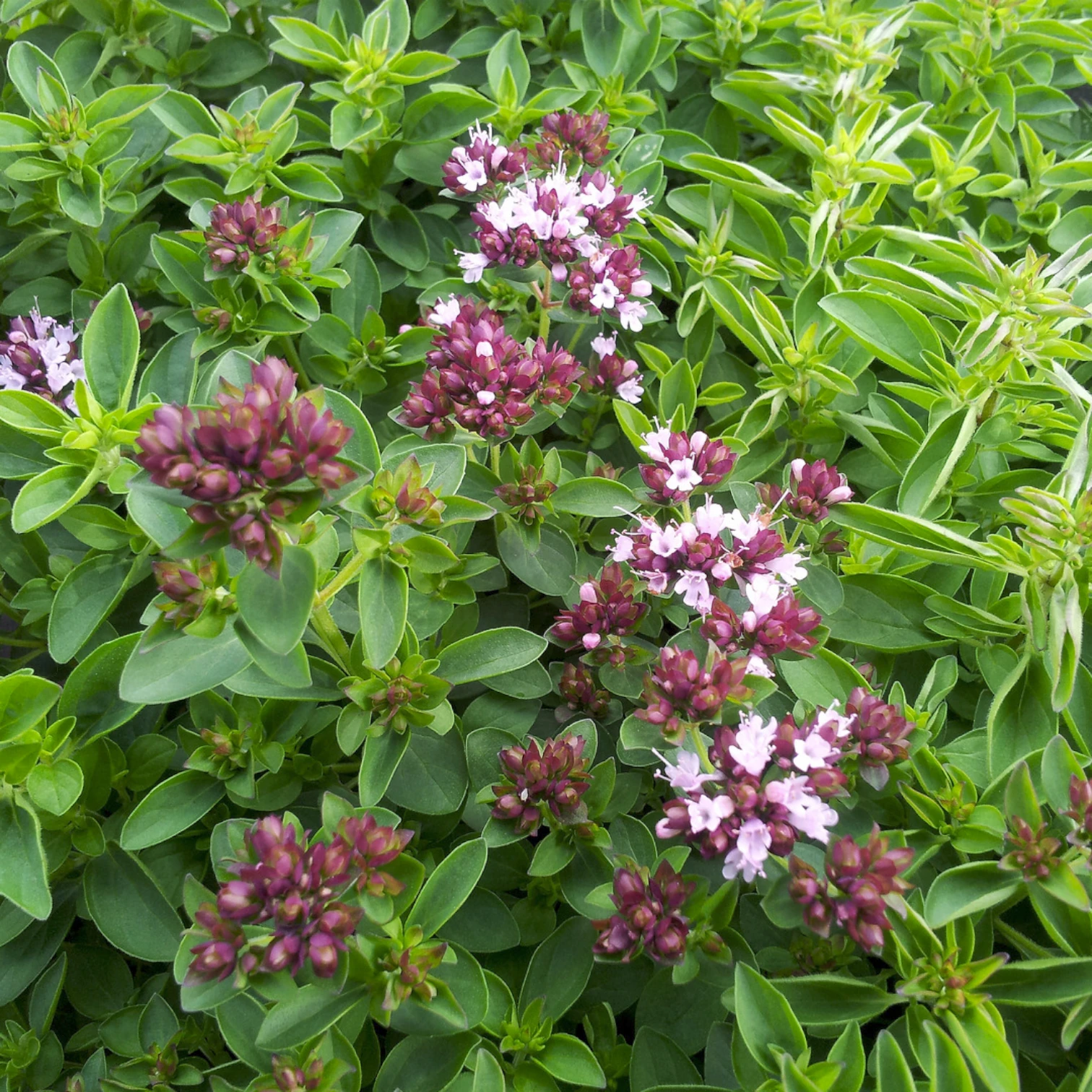
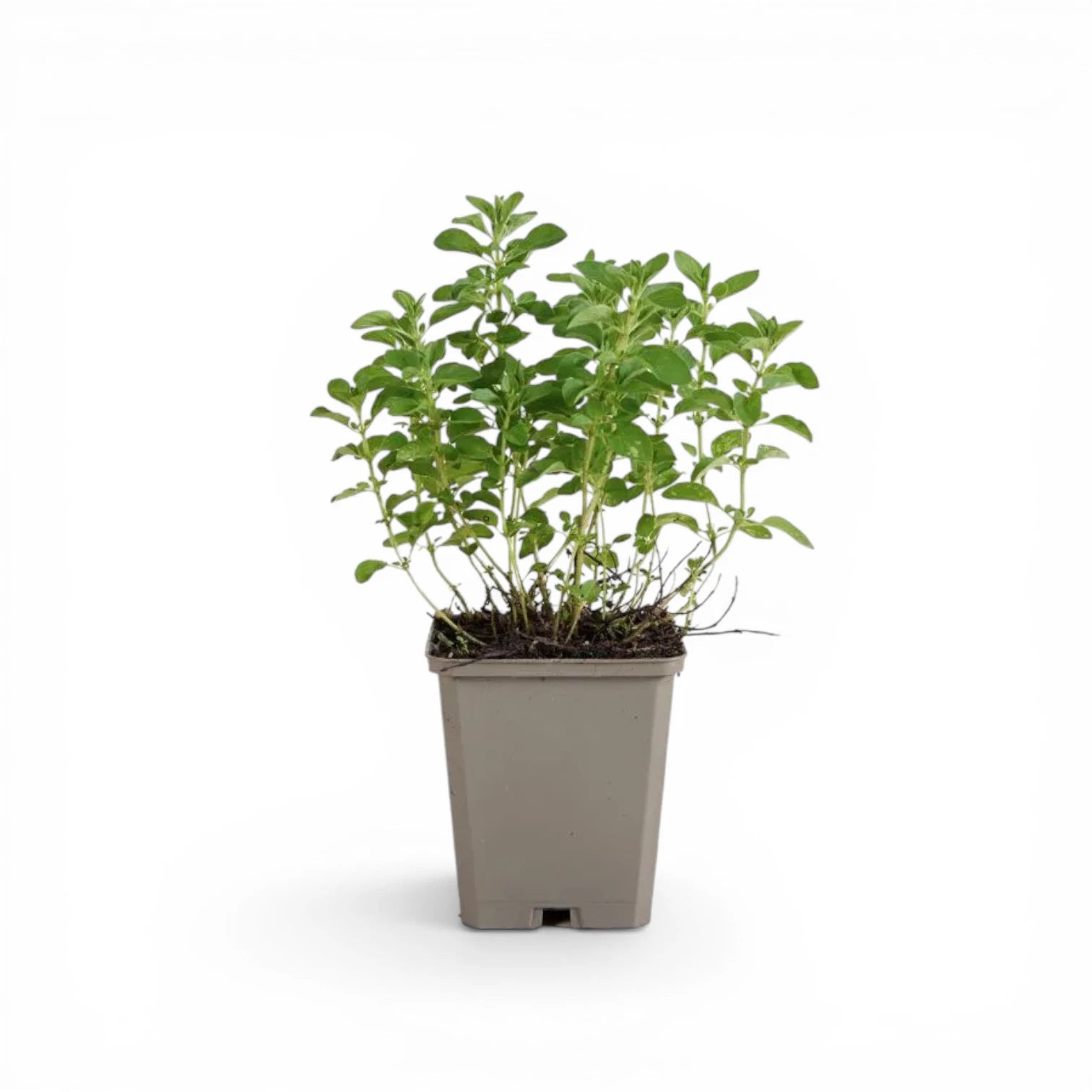
Origanum vulgare 'Compactum' is a lower, denser form of oregano grown for aromatic leaves, summer flowers and a tidy perennial habit. It brings oregano flavour into smaller herb pots, sunny edging and mixed edible borders in a low, dense clump. The leaves are small, scented and easy to harvest, while the flowers add a soft pink-purple haze that bees and other insects visit in summer.
Origanum vulgare 'Compactum' fits places where a lower oregano gives better proportion. It can sit at the front of a raised herb bed, in a trough near outdoor cooking space, along a sunny path or in a dry-style border with thyme, santolina, lavender and compact grasses. The plant is practical, but it also looks good: the low mound, small leaves and seasonal flowers give it a neat garden role beyond harvest value.
Origanum vulgare 'Compactum' stays low, often around 10 to 30 cm tall, and can spread to about 50 cm over time in open ground. Growth is densest in bright conditions and on lean, well-drained soil. The plant dies back or reduces above-ground growth in colder months, then pushes fresh shoots from the crown in spring.
Compared with open ground, containers tend to hold plants to a smaller, steadier pace. Origanum vulgare 'Compactum' is well suited to pots because the compact habit matches troughs and balcony planters. A container also helps control soil texture, which is useful for oregano. Choose a pot with drainage holes and an open mix; a broad shallow container supports the low mound well. In a mixed edible planter, give it the sunniest edge where shoots are easy to pick.
Full sun gives the best aroma and the densest plant. Light partial shade is tolerated, but flavour and flowering are strongest in warm, bright exposure. For compact oregano, chalk, loam and sand are suitable when water moves through the root zone quickly. Acid, neutral and alkaline pH ranges are all acceptable. Winter drainage is central to long-term performance, while dry summer spells are usually manageable once the plant is established.
In open ground, established plants need little water during normal weather. Pots dry faster, so they need checking during heat and wind. Water thoroughly, then let the upper part of the mix dry again. Constantly lush growth reduces the compact feel and can dilute flavour, so a lean routine suits the plant well.
Trim established plants in late spring to keep the mound dense and leafy. Flower stems can be cut back once the blooms fade, especially if you want a tidy herb pot. Regular tip harvesting also encourages branching. For drying, cut leafy shoots before flowers fully open, bundle them loosely and dry in an airy shaded place before storing the stripped leaves in a sealed jar.
After winter, remove dead stems and let new shoots rebuild from the base. Older clumps can be divided in spring or after flowering when the centre becomes woody. If leaves lose aroma, review light, feeding and moisture. If the crown thins, check drainage and pot size. A gritty top layer around the crown can help keep the plant clean after rain and reduces splash on the leaves.
Origanum vulgare 'Compactum' is ideal for edible edging, herb troughs, sunny balconies and small dry-style borders. It combines well with rosemary, thyme, sage, compact lavenders and low ornamental grasses. In a decorative bed, the plant can be repeated in small groups for a fragrant, low line. In a kitchen-focused pot, it provides harvestable shoots and seasonal flowers from the same footprint.
Choose Origanum vulgare 'Compactum' when you want oregano flavour in a neat, low-growing plant. Give it full sun, well-drained soil and careful watering in pots, and it stays compact, aromatic and easy to harvest. Add Origanum vulgare 'Compactum' to sunny edible planting when compact growth, aromatic leaves and summer flowers need to share one small space.
Origanum vulgare 'Compactum' is useful for edible planting because it keeps harvest close to the edge of the bed. Shoots can be clipped little and often, which keeps the plant branching and delays a woody centre. If flowers are wanted for insects and ornamental value, let part of the plant bloom and harvest from the remaining leafy stems. This gives both summer flowers and kitchen shoots from one compact clump.
After flowering, trim back the spent stems and tidy the mound. In colder months, the plant may look sparse above ground, especially in exposed pots. The crown is the important part, so keep the surface open and let winter rain move away freely. In spring, a light tidy and a small amount of fresh compost around the edge of a container support firm, aromatic new shoots.

Choose options
Sign up for Foliage Factory newsletter for early access to new arrivals and practical care tips that work in real homes.