Position
Full sun

Origanum
VAT included · plus
Your outdoor plant has just been packed, transported and unpacked, so give it a calm start before planting or placing it permanently. Remove all packaging carefully, check the pot, stems, visible roots and substrate moisture, and settle any loose growing medium back around the root ball. Water if the root ball feels dry, but do not leave the pot standing in water. For the first few days, keep the plant in a sheltered spot suited to its light needs, away from strong midday sun, heavy wind, frost and heat stress.
Do not move the plant straight into full exposure, especially if it is young, newly flushed, evergreen, recently pruned or greenhouse-grown. Gradually introduce more sun, wind and temperature variation over several days. If cold nights, storms, intense sun or hot dry weather are expected, keep the plant protected until conditions are more stable. Do not fertilize immediately after delivery; let the plant settle first and resume feeding only when it is actively growing and conditions are suitable.
Outdoor plants may arrive in different seasonal stages. Depending on the time of year, your plant may be leafy, flowering, newly sprouting, recently pruned, dormant, partly bare or leafless. Adjust care to what the plant is doing: actively growing plants need closer moisture checks, while dormant plants usually need protection from extremes and only light moisture management until growth resumes.
Plant outdoors when the soil is workable and weather conditions suit the plant type. Avoid planting during frost, heatwaves, waterlogged soil or very dry windy periods. It is better to keep the plant protected in its pot for a short time than to plant into stressful conditions. After planting, water thoroughly so the root ball and surrounding soil connect properly, then monitor moisture while the plant establishes.
Secure shipping, carefully packed orders with safe delivery across the EU, UK and Switzerland.
28-day plant guarantee, if a plant arrives damaged or fails soon after delivery, we help you make it right.
Free returns, simple, cost-free returns according to our policy.
For full details, please see:
Please head to our FAQ Page or Contact us.
Herbaceous perennial herb
Position
Full sun
Moisture
Dry to average
Drainage
Moisture-retentive, Well-drained
Hardiness
Fully hardy · -20°C
Mature size
30–50 × 40–50 cm
Winter habit
Semi-evergreen
Bloom time
Summer, Autumn
Containers
Good in pots
Pruning
Late spring, After flowering
Dry grassland, rocky ground and open scrub across Europe, western Asia and the Mediterranean.
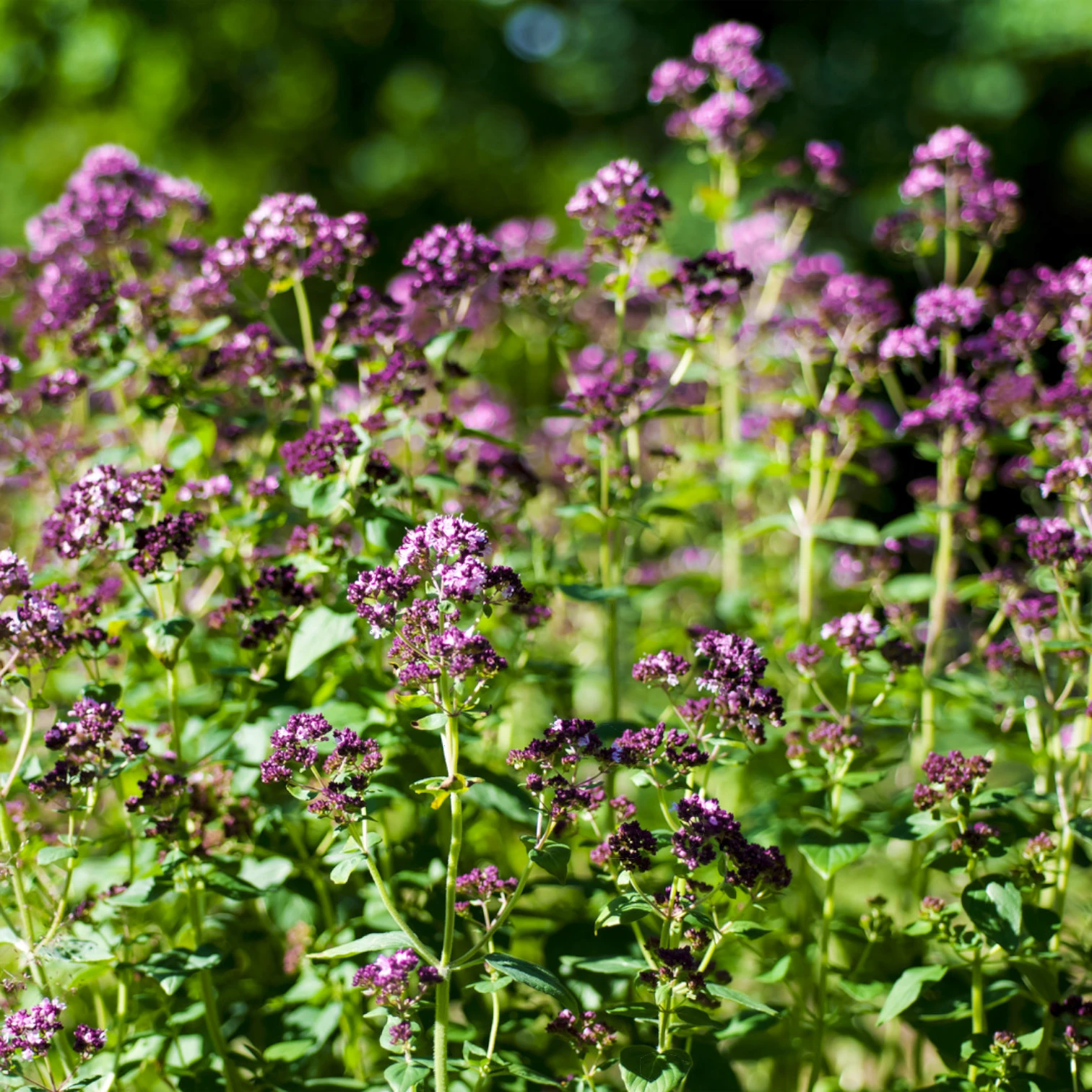
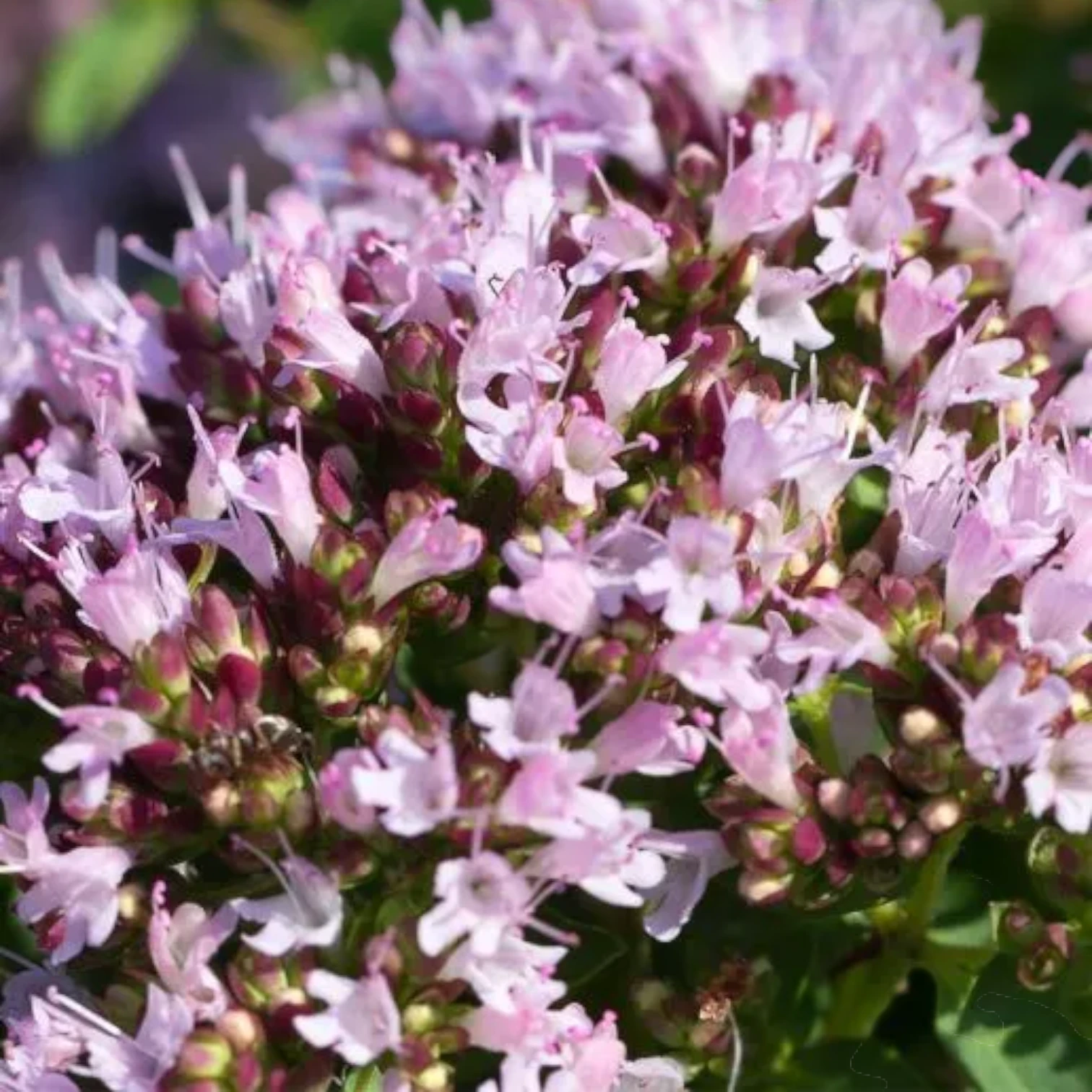
Origanum vulgare is common oregano, a hardy perennial herb grown for strongly aromatic leaves and loose clusters of summer flowers. It is useful in the kitchen, but it also earns its place as an outdoor border plant. The foliage forms a leafy clump, then flower stems rise in summer with pale pink, mauve or white flowers. Bees and other insects visit the blooms, so oregano can link edible planting with ornamental and insect-friendly beds.
This plant suits sunny herb gardens, raised beds, gravel-style borders, terracotta pots and dry mixed planting. It has a Mediterranean feel, but it is hardy enough for many European gardens when drainage is good. Leaves can be harvested fresh through the growing season and dried for storage. The plant also has a soft, natural look that works around vegetables, perennials and small shrubs.
Origanum vulgare typically sits around 30 to 50 cm tall, with a spread that can reach about 40 to 50 cm in open ground. Growth begins as fresh basal shoots in spring. Flowering follows from midsummer into early autumn, then stems can be trimmed and the plant gradually retreats as weather cools.
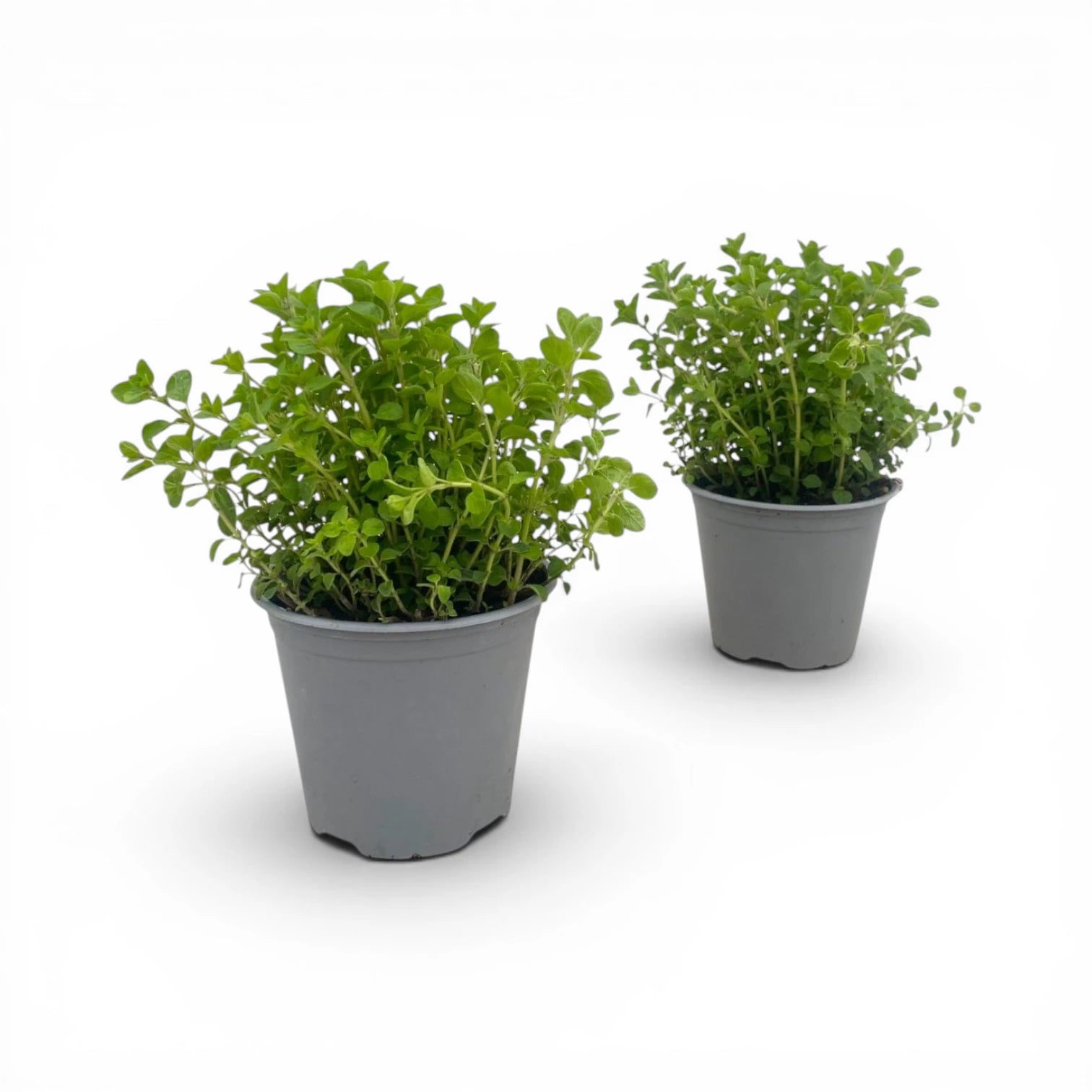
Expect a tighter, slower build in containers than in the ground. In pots, Origanum vulgare usually stays tighter and compact for harvest, while exposed containers dry quickly in warm weather. A pot of at least 25 to 30 cm width gives roots enough volume for repeated picking. Raised planters and balcony troughs work well when the mix is open and the site is sunny.
Full sun is the main ingredient for strong flavour. Warm exposure helps leaves develop their rich oregano scent and keeps growth compact. Oregano does best in sun with soil that drains well and does not stay heavy; moderate fertility is plenty. This means the best setup is soil that holds enough moisture during establishment but releases winter water freely. Loam, sandy loam and improved raised beds are all suitable.
Established oregano in open ground is tolerant of drier weather, but young plants need help during their first season. In containers, soak thoroughly when watering and let the upper part of the mix dry again before the next round. A gritty component in the potting mix is helpful, especially where rain is frequent in autumn and winter.
Harvest leafy shoots from late spring through autumn. The strongest flavour usually comes before flowers fully open, so regular picking keeps shoots fresh. Trim established plants in late spring to keep them compact, and cut back flower stems once blooms fade. This keeps the clump tidy and encourages fresh growth for later harvests. For dried oregano, cut stems in small bunches and dry them in a shaded, airy place before storing the leaves.
Older clumps can be divided every few years in spring to refresh vigour. After winter, clear dead stems and let new shoots emerge from the crown. If leaves become sparse, check sun level, pot size and cutting routine. If stems collapse at the base, review drainage and crown wetness. Oregano performs best with modest care, bright light and a soil structure that keeps roots aerated.
Origanum vulgare is useful in herb beds, kitchen gardens, sunny containers, mixed edible borders and relaxed perennial planting. It combines well with thyme, rosemary, sage, lavender, compact grasses and drought-tolerant perennials. In a naturalistic edible border, the flowers give a light summer haze above the foliage. In a pot, it stays close to hand for cooking and still brings seasonal flowers.
Choose Origanum vulgare when you want a hardy oregano that can work as both herb and border perennial. Give it sun, well-drained soil and a simple trim after flowering, and it returns with fresh aromatic shoots each year. Add Origanum vulgare to sunny outdoor planting when flavour, flowers and durable perennial growth need to come from the same plant.
Origanum vulgare is one of the easiest herbs to blend into ornamental planting. Let some stems flower for bees, butterflies and hoverflies, and harvest other stems before bloom for stronger flavour. This split approach keeps the plant useful in the kitchen while still providing summer flowers. In a productive bed, repeat oregano near tomatoes, beans, peppers or Mediterranean herbs; in a decorative border, use it with grasses, salvias and silver foliage for a dry, aromatic feel.
Cutting style changes the plant’s look. Frequent tip harvesting keeps the clump leafy and compact. Allowing the stems to flower gives a looser, more meadow-like effect. After the flowers fade, a trim brings the plant back into shape and reduces old stems before autumn. In pots, refresh the top layer of mix each spring and divide crowded clumps when growth becomes thin in the centre.
Choose options


Sign up for Foliage Factory newsletter for early access to new arrivals and practical care tips that work in real homes.