Position
Full sun to part shade

Nepeta
VAT included · plus
Your outdoor plant has just been packed, transported and unpacked, so give it a calm start before planting or placing it permanently. Remove all packaging carefully, check the pot, stems, visible roots and substrate moisture, and settle any loose growing medium back around the root ball. Water if the root ball feels dry, but do not leave the pot standing in water. For the first few days, keep the plant in a sheltered spot suited to its light needs, away from strong midday sun, heavy wind, frost and heat stress.
Do not move the plant straight into full exposure, especially if it is young, newly flushed, evergreen, recently pruned or greenhouse-grown. Gradually introduce more sun, wind and temperature variation over several days. If cold nights, storms, intense sun or hot dry weather are expected, keep the plant protected until conditions are more stable. Do not fertilize immediately after delivery; let the plant settle first and resume feeding only when it is actively growing and conditions are suitable.
Outdoor plants may arrive in different seasonal stages. Depending on the time of year, your plant may be leafy, flowering, newly sprouting, recently pruned, dormant, partly bare or leafless. Adjust care to what the plant is doing: actively growing plants need closer moisture checks, while dormant plants usually need protection from extremes and only light moisture management until growth resumes.
Plant outdoors when the soil is workable and weather conditions suit the plant type. Avoid planting during frost, heatwaves, waterlogged soil or very dry windy periods. It is better to keep the plant protected in its pot for a short time than to plant into stressful conditions. After planting, water thoroughly so the root ball and surrounding soil connect properly, then monitor moisture while the plant establishes.
Secure shipping, carefully packed orders with safe delivery across the EU, UK and Switzerland.
28-day plant guarantee, if a plant arrives damaged or fails soon after delivery, we help you make it right.
Free returns, simple, cost-free returns according to our policy.
For full details, please see:
Please head to our FAQ Page or Contact us.
Herbaceous perennial
Position
Full sun to part shade
Moisture
Dry to average
Drainage
Well-drained
Hardiness
Fully hardy · -20°C
Mature size
30–50 × 40–50 cm
Winter habit
Herbaceous die-back
Bloom time
Spring, Summer, Autumn
Containers
Good in pots
Pruning
After flowering, Late winter
Garden hybrid catmint bred for long flowering, grey-green foliage and tidy mounding habit.
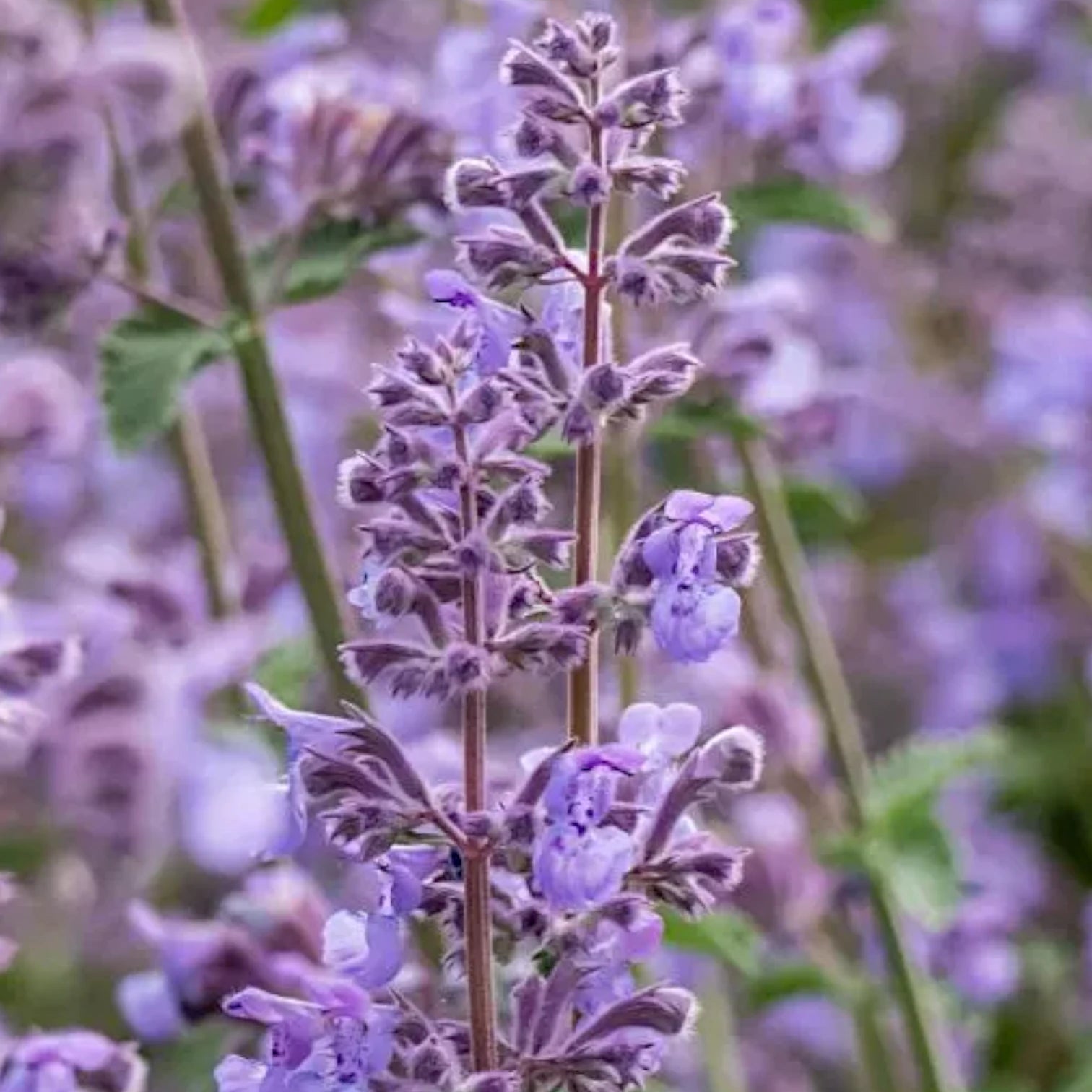
Nepeta × faassenii is a hardy perennial catmint grown for scented foliage, violet-blue flowers and a loose mound that settles naturally into border edges. The grey-green leaves give the plant a dry-garden tone even before the flower stems open. In early summer, upright spikes rise above the mound and keep the planting light, soft and busy with insect activity. The overall effect is low, generous and easy to repeat along paths, at the front of mixed borders or around taller shrubs.
This is a useful plant when a border needs continuity at knee height. It fills gaps between structural plants, softens paving edges and gives a long flowering season in modest, freely drained soil. The aromatic leaves are part of its value: they bring texture and scent when brushed, and they help the plant feel right in Mediterranean-style, gravel-style and cottage planting. Nepeta × faassenii is also a practical container plant for sunny terraces when drainage is good and the pot is broad enough for the clump to widen.
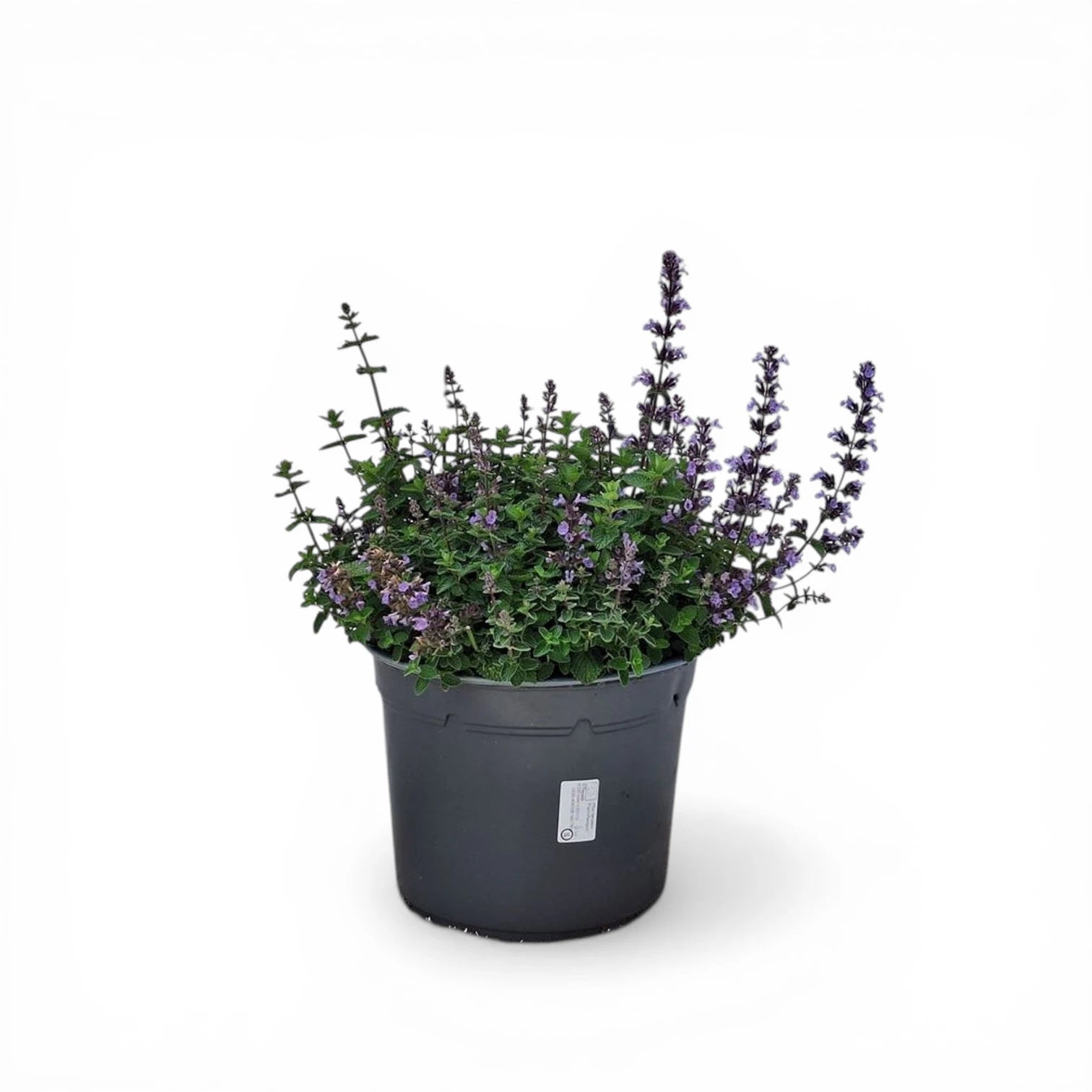
Expect a rounded, bushy clump that usually reaches about 30 to 50 cm high and 40 to 50 cm wide in open ground. Flower stems lift above the leafy mound, giving the plant its fullest shape during the main bloom period. New shoots emerge fresh from the crown, then the mound thickens quickly as temperatures rise. In open, leaner ground the habit stays more compact. In richer sites the stems can become softer and benefit from a firm trim once the first flowering wave has passed.
A pot will generally keep final size more compact than planting into a bed. A pot-grown Nepeta × faassenii still flowers well, but the clump expands at a steadier pace and reacts more quickly to drying. Use a wide container that supports the plant’s broad mound and gives the crown room to widen. In a mixed planter, give it the front or shoulder of the display so the flowers can spill gently over the rim and the leaves stay clear of heavy shade from taller companions.
A sunny position gives the densest mound and strongest flowering. Light partial shade is acceptable, especially in hot courtyard conditions, but deep shade weakens the flower display and lengthens stems. Soil should drain well through winter. Chalk, clay, loam and sand can all suit the plant when the structure lets excess water move away from the crown. Heavy clay is usable when improved by raised planting, grit, composted bark or a sloped position that sheds winter rain.
New plants need regular watering through the first establishment period. Once rooted into the border, Nepeta × faassenii copes well with drier summer spells. In pots, the plant still depends on the container volume, so check moisture during warm windy weather. The aim is even rehydration followed by a clear drying phase, with air returning to the mix between waterings.
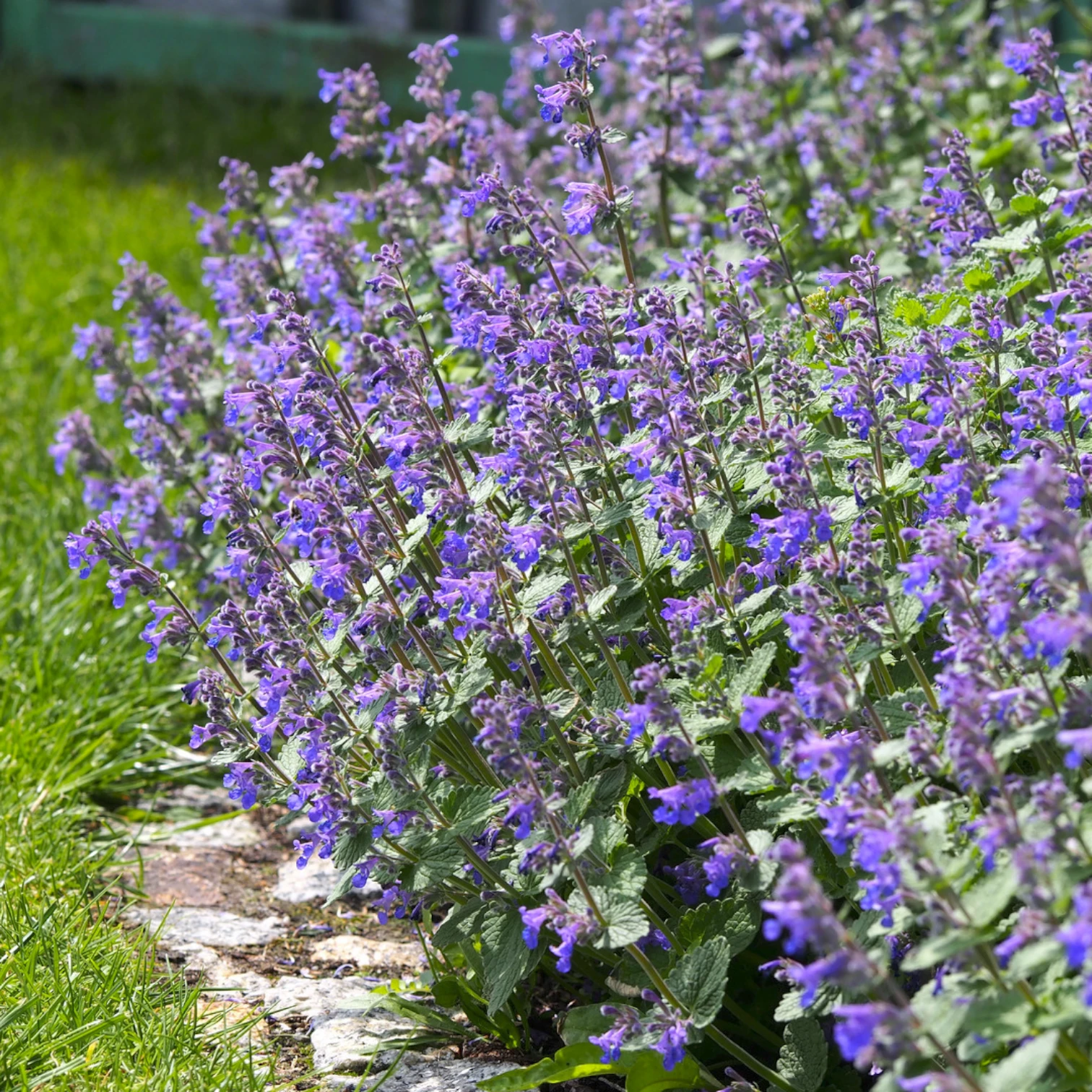
Plant at about 50 cm spacing for an edge that closes into a soft band. Single plants work well beside steps, in a gravel bed or at the corner of a sunny raised planter. For a more natural rhythm, repeat three to five plants with gaps for bulbs, grasses or compact perennials. The first flush of flowers can be trimmed back hard enough to remove the tired stems and part of the leafy mound; fresh foliage follows quickly and often brings a second display later in summer.
In late winter or early spring, clear old stems close to the crown before new shoots stretch. This keeps the plant open and prevents a thatch of old growth from trapping damp at soil level. Main problems are usually linked to heavy wet soil, overly rich growth or poor air movement. Sparse flowering points to shade or late trimming. A collapsing centre on an older clump means division in spring is useful. Young growth can draw slug attention, and dry summer mildew may appear on stressed plants.
Nepeta × faassenii is strongest as a repeat plant. It frames paths, lightens the base of roses, thfeels through sunny perennial borders and gives containers a softer edge. The flower colour is easy to place with white, pink, purple, silver and warm apricot tones. Because the foliage is aromatic and the flowers are visited by bees and other insects, it adds sensory value with a simple care routine.
Choose Nepeta × faassenii when you want a hardy, low mound with long summer colour and a natural feel. Give it drainage, sun and a confident trim after the first flower peak, and it becomes one of those plants that quietly makes a border look more settled every year. Add Nepeta × faassenii to a sunny outdoor scheme when you want softness, scent and a reliable blue-violet season from a compact perennial.
For a continuous edge, plant Nepeta × faassenii close enough that mature mounds touch lightly, but leave enough space for air to pass after rain. The plant is especially good where bulbs or early perennials leave gaps by summer, because the catmint expands just as spring displays fade. A row of plants can guide the eye along a path, while scattered groups make a border feel more relaxed. The grey-green foliage also helps link bright flower colours that might otherwise feel separate.
In containers, one plant can fill the front of a medium pot, or several can make a soft trough display. The best results come from a bright position, a mix that drains freely and a trim when the first flush becomes tired. If the plant is cut evenly, the next leafy mound returns with a fresh, balanced outline.

Choose options


Sign up for Foliage Factory newsletter for early access to new arrivals and practical care tips that work in real homes.