Position
Full sun to part shade

Nepeta
VAT included · plus
Your outdoor plant has just been packed, transported and unpacked, so give it a calm start before planting or placing it permanently. Remove all packaging carefully, check the pot, stems, visible roots and substrate moisture, and settle any loose growing medium back around the root ball. Water if the root ball feels dry, but do not leave the pot standing in water. For the first few days, keep the plant in a sheltered spot suited to its light needs, away from strong midday sun, heavy wind, frost and heat stress.
Do not move the plant straight into full exposure, especially if it is young, newly flushed, evergreen, recently pruned or greenhouse-grown. Gradually introduce more sun, wind and temperature variation over several days. If cold nights, storms, intense sun or hot dry weather are expected, keep the plant protected until conditions are more stable. Do not fertilize immediately after delivery; let the plant settle first and resume feeding only when it is actively growing and conditions are suitable.
Outdoor plants may arrive in different seasonal stages. Depending on the time of year, your plant may be leafy, flowering, newly sprouting, recently pruned, dormant, partly bare or leafless. Adjust care to what the plant is doing: actively growing plants need closer moisture checks, while dormant plants usually need protection from extremes and only light moisture management until growth resumes.
Plant outdoors when the soil is workable and weather conditions suit the plant type. Avoid planting during frost, heatwaves, waterlogged soil or very dry windy periods. It is better to keep the plant protected in its pot for a short time than to plant into stressful conditions. After planting, water thoroughly so the root ball and surrounding soil connect properly, then monitor moisture while the plant establishes.
Secure shipping, carefully packed orders with safe delivery across the EU, UK and Switzerland.
28-day plant guarantee, if a plant arrives damaged or fails soon after delivery, we help you make it right.
Free returns, simple, cost-free returns according to our policy.
For full details, please see:
Please head to our FAQ Page or Contact us.
Herbaceous perennial
Position
Full sun to part shade
Moisture
Dry to average
Drainage
Moisture-retentive, Well-drained
Hardiness
Fully hardy · -20°C
Mature size
30–45 × 40–50 cm
Winter habit
Herbaceous die-back
Bloom time
Spring, Summer, Autumn
Containers
Good in pots
Pruning
After flowering, Late winter
Garden hybrid catmint bred for long flowering, grey-green foliage and tidy mounding habit.
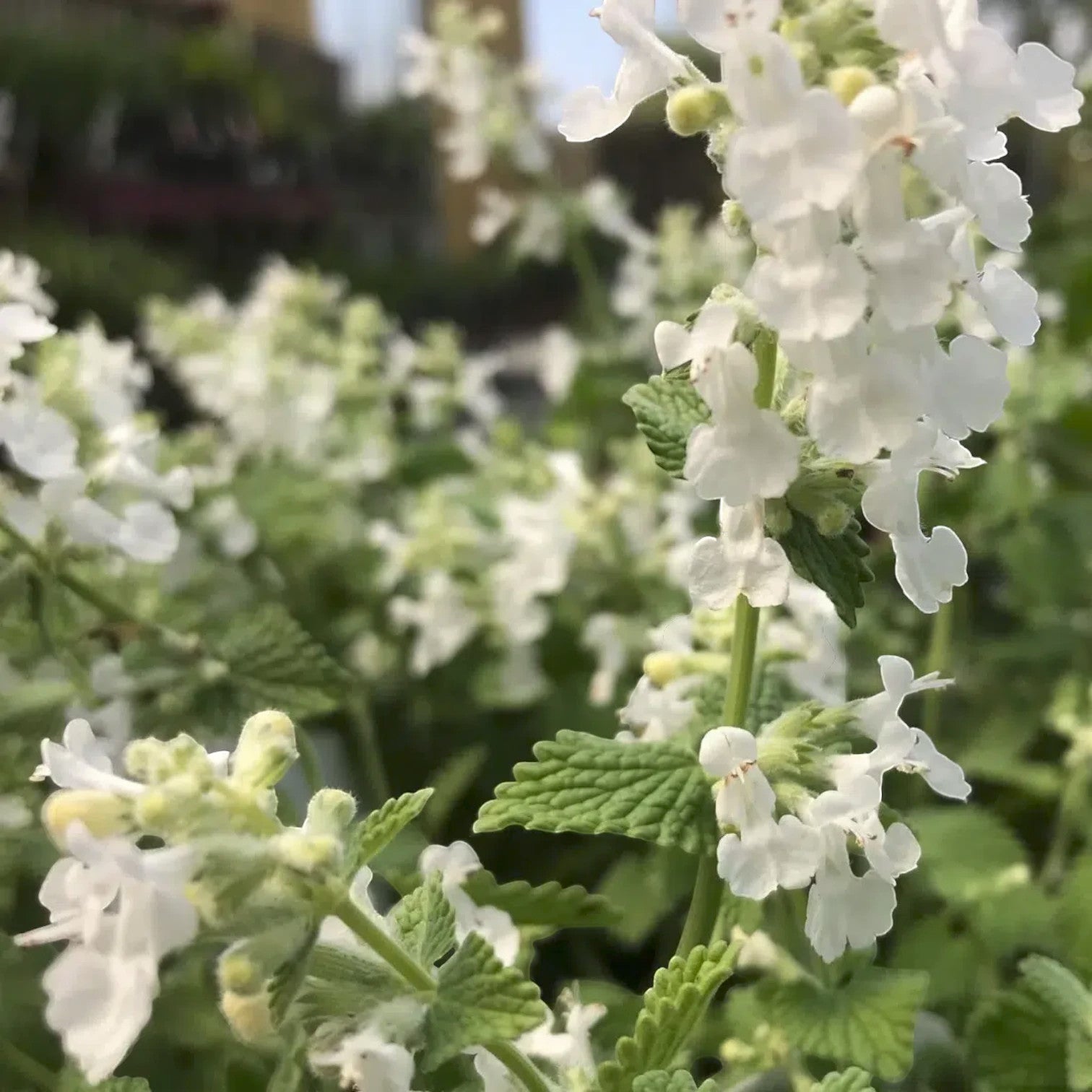
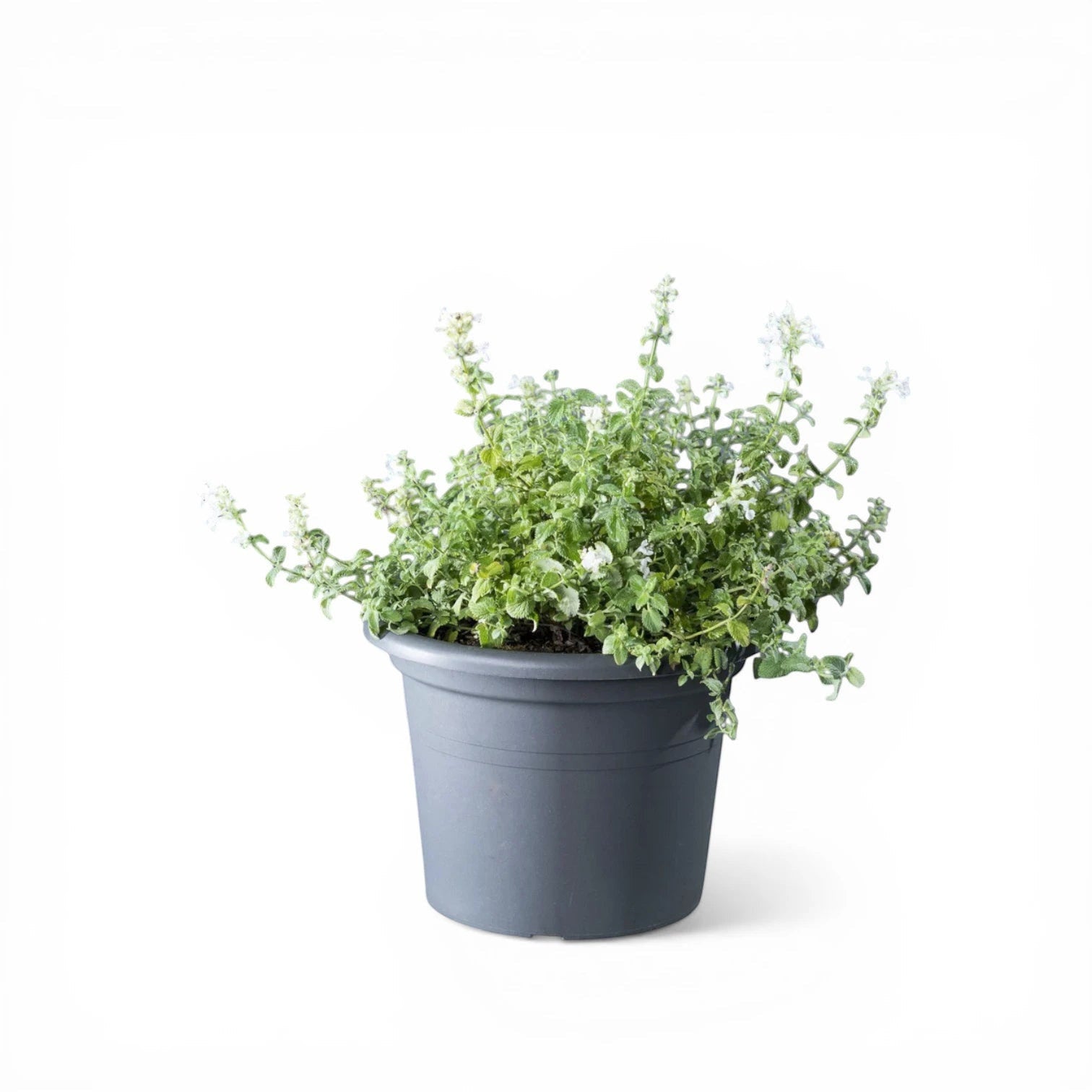
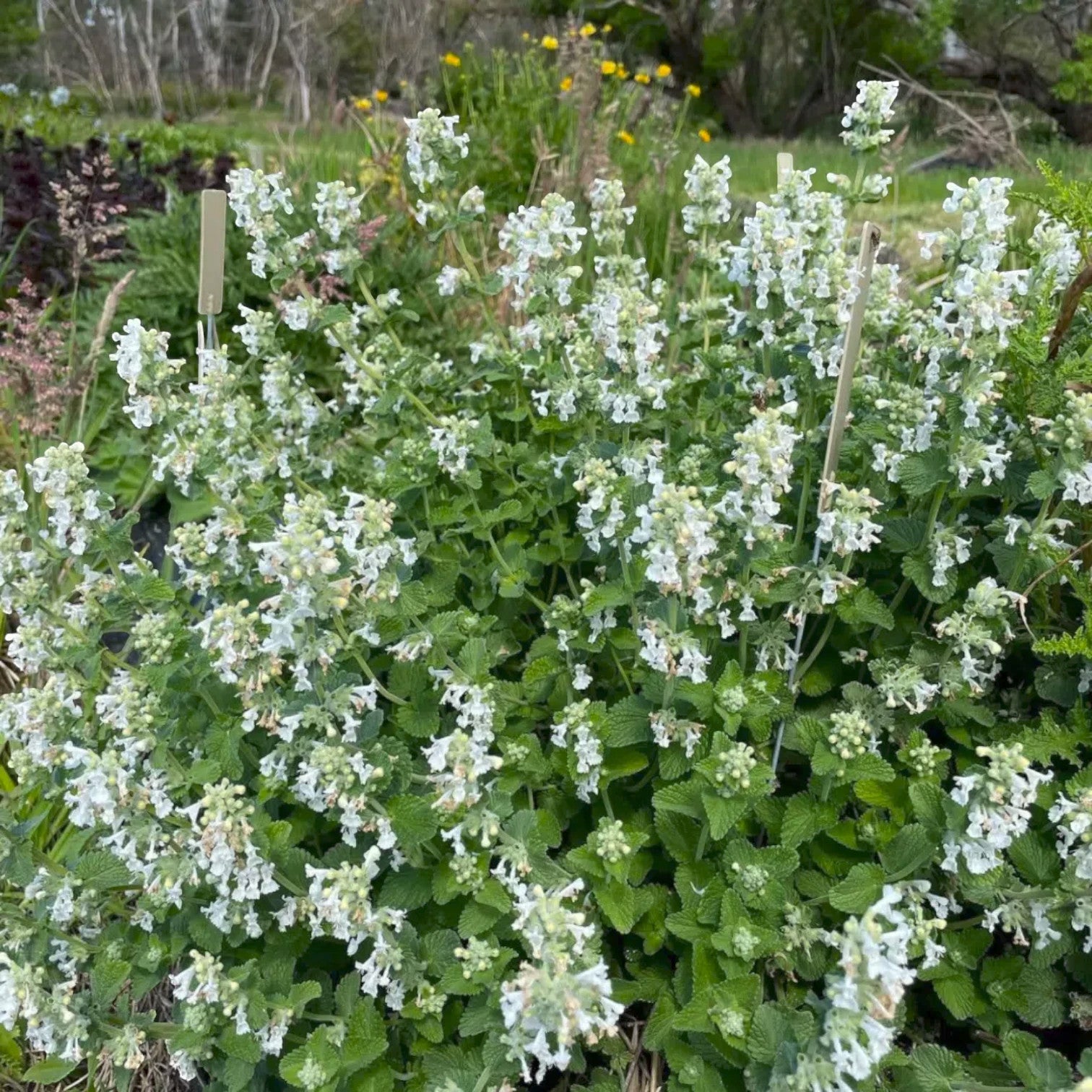
Nepeta racemosa 'Snowflake' brings aromatic leaves, low mounding growth and white summer flowers that give catmint planting a lighter mood. The flowers sit in light spires above grey-green foliage, so the plant feels fresh and airy in sunny borders. It is especially useful where violet-blue catmints would feel too cool or too strong beside pale planting schemes.
Use Nepeta racemosa 'Snowflake' along border fronts, path edges, cottage-style beds and containers that need a relaxed perennial with a lighter flower tone. It pairs well with silver leaves, soft pink perennials, compact grasses, pale salvias and small roses. Bees and other insects visit the flowers in summer, and the foliage adds scent when brushed. The plant has enough seasonal value for decorative use while staying practical for low, repeated planting.
Mature Nepeta racemosa 'Snowflake' usually reaches roughly 30 to 45 cm high with a spread around 40 to 50 cm when established. Spring growth begins as a fresh mound of scented foliage. Flower stems then rise in summer and create a light haze of white above the leaves. After trimming, new foliage gives the plant a second clean phase that can carry the border into later summer.
In pots, growth usually stays more restrained than in open ground. In a pot, Nepeta racemosa 'Snowflake' becomes a neat rounded filler with a soft edge. A broad container suits the naturally domed shape and gives the crown room to widen. Give it room at the front of a mixed display, where the white flowers can sit just above the rim and the leaves receive good light.
Full sun gives the strongest flowering, but partial shade is also suitable where the site remains bright. Moist but well-drained soil suits this plant well, especially where summer moisture is moderate and winter drainage stays open. Chalk, clay and loam can suit it when the surface sheds water cleanly around the crown. A raised edge, amended clay bed or sloped border can all work when water drains away after rain.
In open ground, established plants cope with some dry summer weather, but flowering is better when the plant is kept away from severe drought. For containers, soak the root ball fully when watering, then let the upper layer dry again. A gritty component in the potting mix keeps oxygen around the roots and helps the crown stay firm after wet spells.
Space plants about 50 cm apart when using Nepeta racemosa 'Snowflake' as a border edge. A single plant also works well in a sunny pot or beside a small shrub. After the first main flower flush, shear back spent stems and lightly shape the mound. Fresh leaves follow quickly, and later flowers may appear when summer remains warm. In late winter or early spring, remove old stems before new growth extends.
Weak flowering usually means the site is too shaded or the plant was left carrying tired stems after the first display. Floppy growth often points to rich soil, excess feeding or a sheltered site with low air movement. Browning at the crown is usually a drainage warning. Older clumps can be lifted and divided in spring if they become woody, open in the middle or less flower-rich.
Nepeta racemosa 'Snowflake' is useful where a white-flowered plant can soften an edge at low height. It gives contrast beside blue salvias, pink geraniums, silver stachys, low grasses and darker-leaved heucheras. In a container, it can calm brighter annuals and give a perennial base that returns each year. The pale flowers also show well at dusk, especially near seating or along a walkway.
Choose Nepeta racemosa 'Snowflake' for sunny planting that needs catmint ease with a lighter colour palette. Give it a bright site, well-drained soil with some moisture and a trim after flowering, and it rewards with scented foliage and a clean white summer display. Add Nepeta racemosa 'Snowflake' to borders or pots when you want airy flowers, aromatic leaves and a soft, low perennial shape.
White catmint is especially helpful in plantings built around softer colours. Nepeta racemosa 'Snowflake' can lift dusk borders, brighten the front of a bed and make pink, blue or purple flowers feel cleaner. It also works beside darker foliage, where the white flowers create contrast in a light, open way. Use it in small groups if you want a repeated pale rhythm, or as a single plant in a container where the flower stems can hover above the rim.
In pots, the plant appreciates a steady moisture rhythm with good drainage after each watering. A mix that holds some water but drains cleanly is ideal. During hot weeks, water thoroughly once the upper 20 to 30% of pot depth is dry, then let air return to the upper mix. A light trim after flowering keeps the plant from carrying tired stems and helps the white-flowered mound look fresh again.

Choose options


Sign up for Foliage Factory newsletter for early access to new arrivals and practical care tips that work in real homes.