Position
Full sun

Miscanthus
VAT included · plus
Your outdoor plant has just been packed, transported and unpacked, so give it a calm start before planting or placing it permanently. Remove all packaging carefully, check the pot, stems, visible roots and substrate moisture, and settle any loose growing medium back around the root ball. Water if the root ball feels dry, but do not leave the pot standing in water. For the first few days, keep the plant in a sheltered spot suited to its light needs, away from strong midday sun, heavy wind, frost and heat stress.
Do not move the plant straight into full exposure, especially if it is young, newly flushed, evergreen, recently pruned or greenhouse-grown. Gradually introduce more sun, wind and temperature variation over several days. If cold nights, storms, intense sun or hot dry weather are expected, keep the plant protected until conditions are more stable. Do not fertilize immediately after delivery; let the plant settle first and resume feeding only when it is actively growing and conditions are suitable.
Outdoor plants may arrive in different seasonal stages. Depending on the time of year, your plant may be leafy, flowering, newly sprouting, recently pruned, dormant, partly bare or leafless. Adjust care to what the plant is doing: actively growing plants need closer moisture checks, while dormant plants usually need protection from extremes and only light moisture management until growth resumes.
Plant outdoors when the soil is workable and weather conditions suit the plant type. Avoid planting during frost, heatwaves, waterlogged soil or very dry windy periods. It is better to keep the plant protected in its pot for a short time than to plant into stressful conditions. After planting, water thoroughly so the root ball and surrounding soil connect properly, then monitor moisture while the plant establishes.
Secure shipping, carefully packed orders with safe delivery across the EU, UK and Switzerland.
28-day plant guarantee, if a plant arrives damaged or fails soon after delivery, we help you make it right.
Free returns, simple, cost-free returns according to our policy.
For full details, please see:
Please head to our FAQ Page or Contact us.
Deciduous grass
Position
Full sun
Moisture
Average to moist
Drainage
Moisture-retentive, Well-drained
Hardiness
Fully hardy · -20°C
Mature size
150–300 × 100–150 cm
Winter habit
Herbaceous die-back
Bloom time
Autumn
Containers
Pots with winter protection
Pruning
Spring
Open grassland, slopes and woodland margins of East Asia.
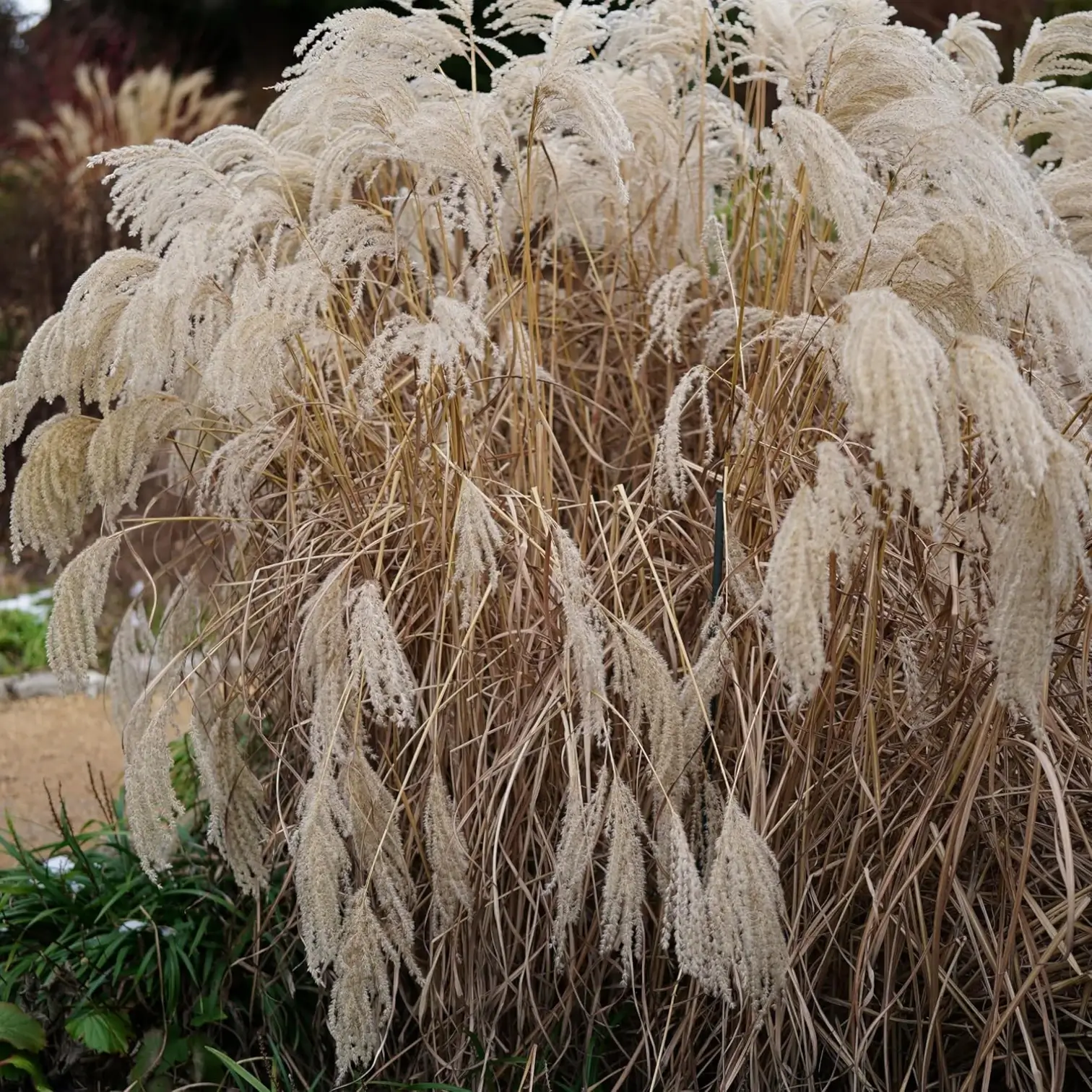
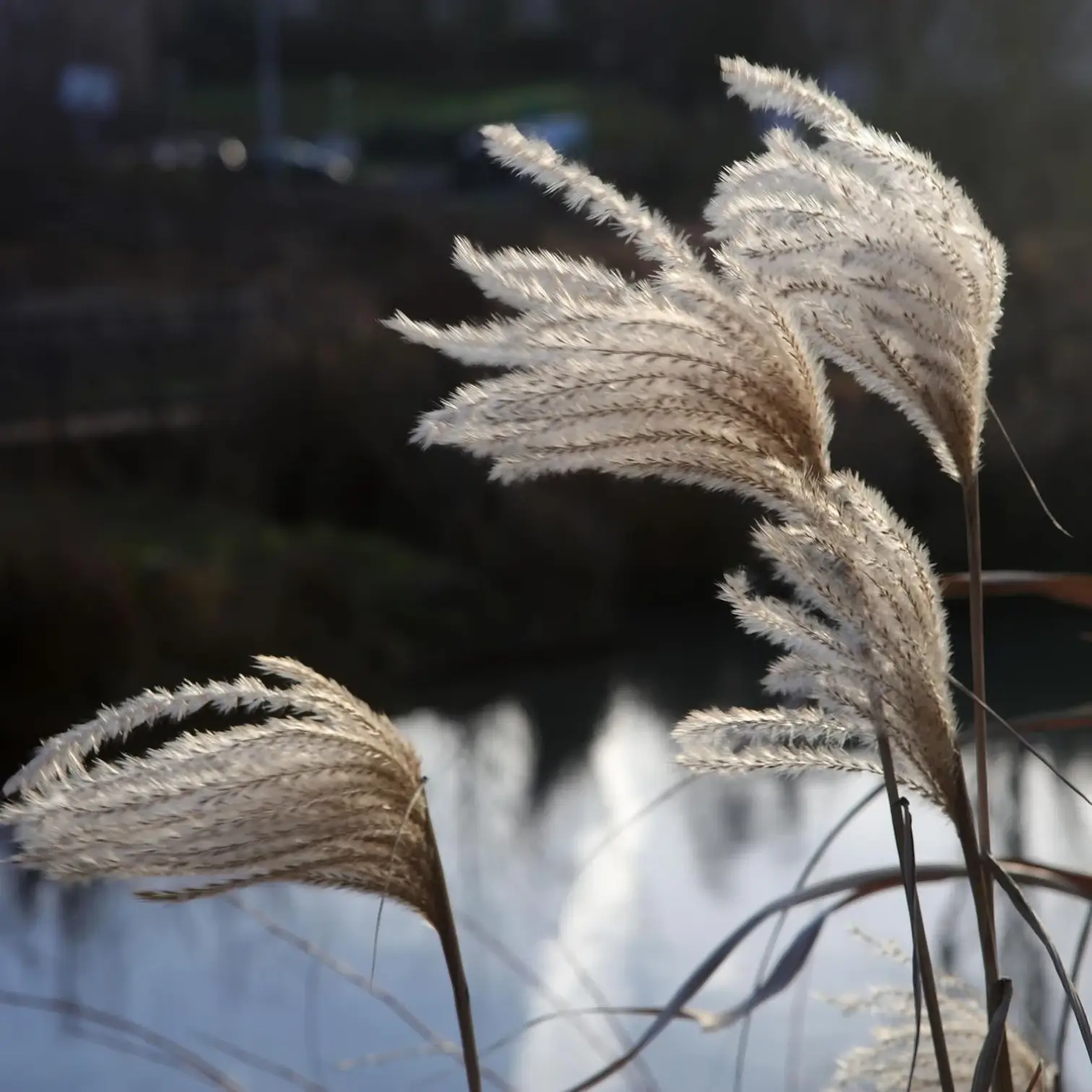
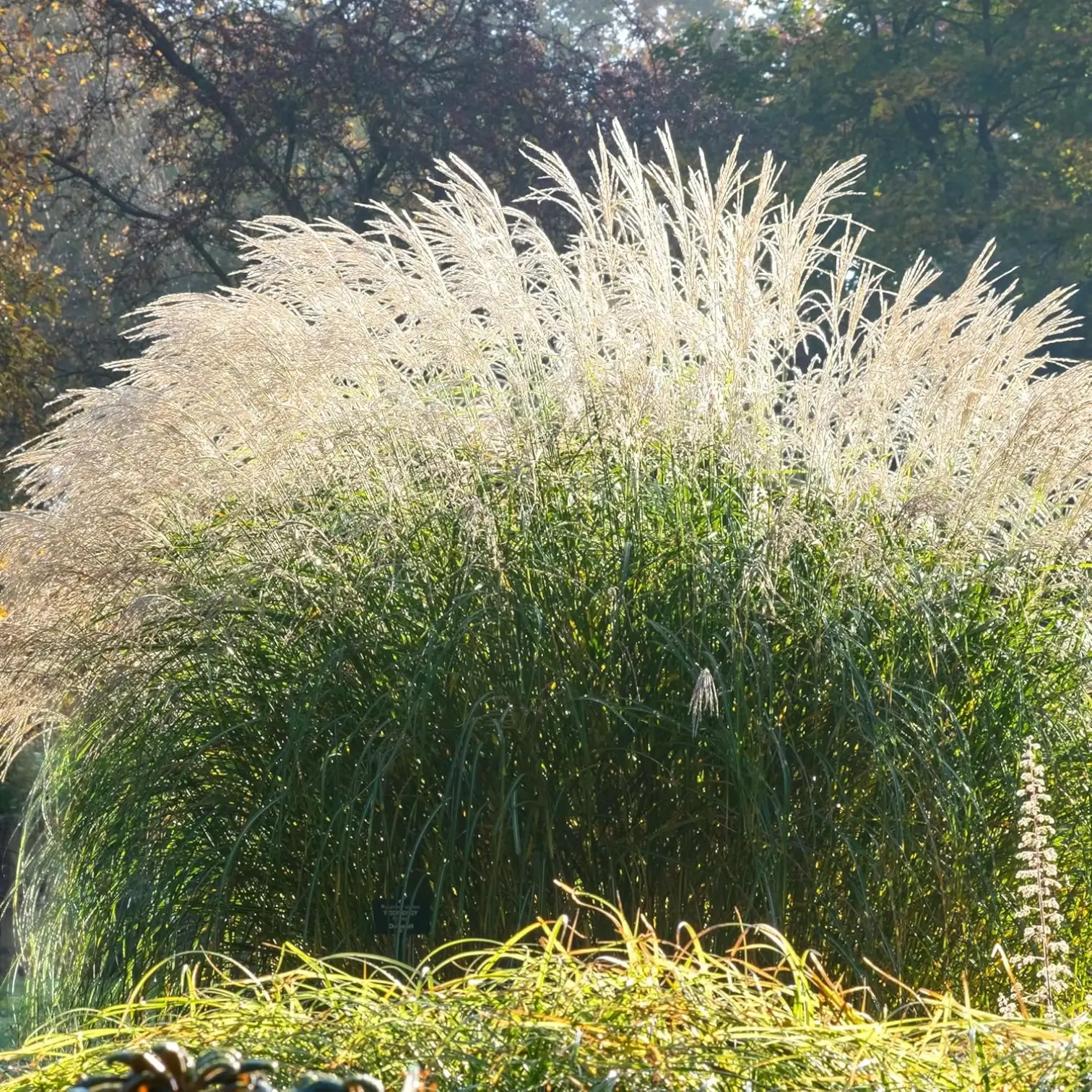
Miscanthus sinensis is a tall clump-forming ornamental grass with arching green leaves and airy plumes in late summer and autumn. It brings height, movement and a soft vertical outline to sunny borders, gravel gardens, prairie-style planting and naturalistic perennial schemes. Through summer it builds a fountain of foliage; later, flower plumes rise above the leaves and age into pale winter stems.
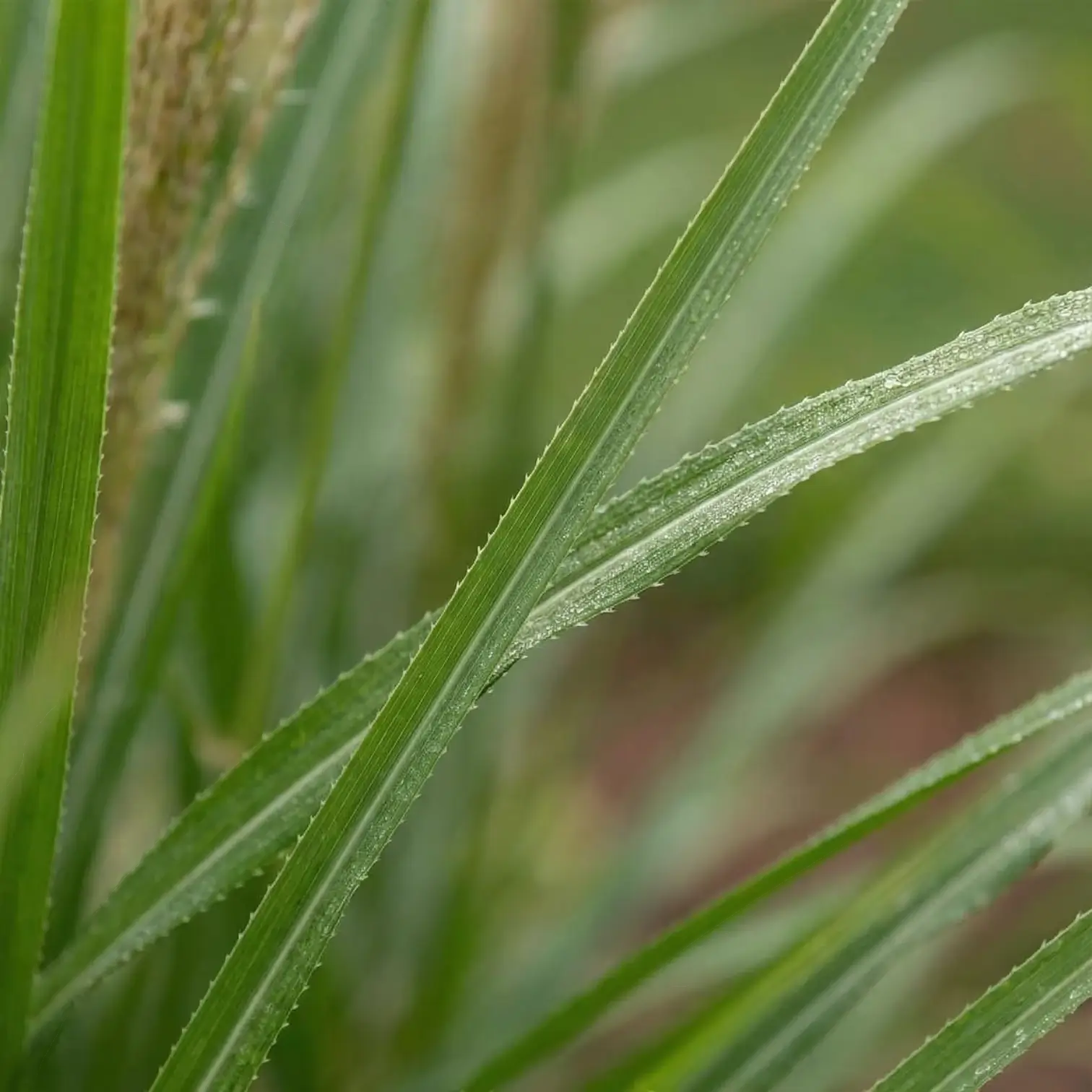
This is a species with variable garden size. In favourable ground, mature plants can reach around 150-300 cm depending on form, site and climate. The leaves are narrow and arching, often with a pale midrib, and the whole clump becomes more impressive after the crown has had time to establish. Miscanthus develops as a long-term grass for places where scale is useful.
Miscanthus sinensis is at its strongest from late summer onward. Early growth rises steadily from the base, then the clump gains height and volume as the season warms. Flower plumes appear in late summer or autumn and bring a fine, hazy texture above the foliage. In winter, the dried stems and seedheads can remain attractive, especially in low sun or frost.
Use this grass where its mature size can be part of the design: at the back of a sunny border, between shrubs, as a loose screen, or repeated through a wide perennial bed. It pairs well with late-flowering perennials, seedhead plants and evergreen shapes. The moving foliage helps soften hard lines along fences, paths and terraces.
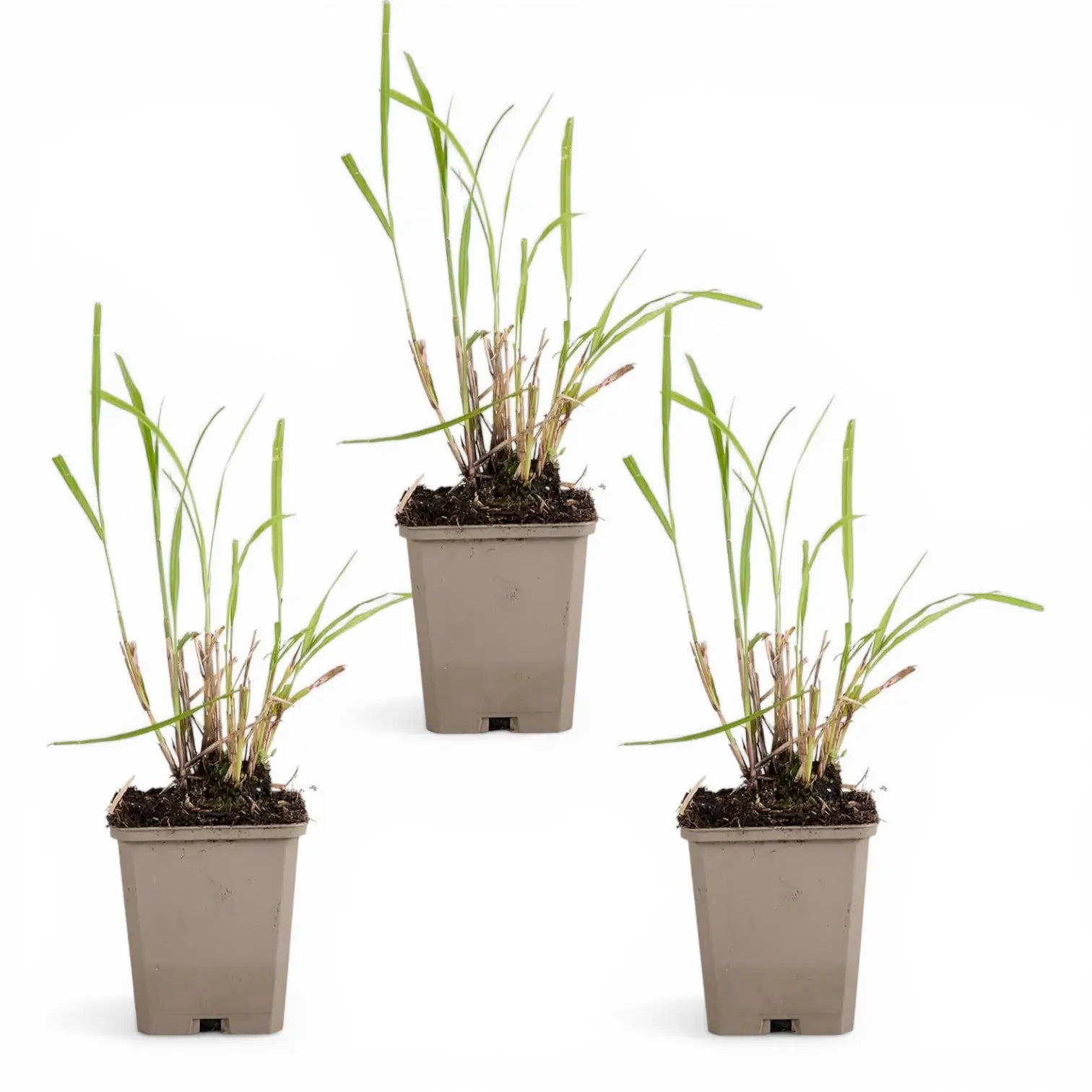
Allow about 150 cm spacing for a mature clump. Young plants may take a year or two to show their full scale, so early gaps are normal. Generous spacing preserves the clean fountain shape and leaves room for future division. A set of several plants can be spaced as a rhythm through a border, with enough room between clumps for air and visual separation.
Full sun is the best position for strong flowering. Light shade may still produce foliage, but plumes are usually fewer and the clump can lean more. The warm-season growth pattern means the plant responds well to heat and long bright days. In cooler summers, flowering may be lighter, especially on young plants.
Open sites are suitable, but constant wind can fray leaf tips. If using Miscanthus sinensis as a screen on a balcony or terrace, choose a large stable container and give the plant shelter from the strongest wind funnels.
Miscanthus sinensis grows in many soil types when drainage is reliable. Moderately fertile, moist but well-drained soil gives the best balance of height and resilience. It can grow in heavier ground when drainage remains open and the crown stays above prolonged winter wet.
Compost can be added to poor soil before planting, but heavy feeding is rarely needed. Too much nitrogen can push soft, leafy growth that bends more easily. The plant’s best shape comes from sun, room, moderate fertility and steady establishment moisture.
During the first growing season, keep moisture consistent so roots establish deeply. Once settled in the ground, Miscanthus sinensis can cope with short dry periods, but prolonged drought may lead to brown tips and reduced plume quality. Deep occasional watering is better than frequent shallow sprinkling.
For pot watering cues, use % of pot depth: water when the top 25-35% of the mix has dried, then soak through until water drains from the base. Containers keep plants smaller and slower than open ground, and large grasses in pots dry quickly during warm, windy weather. A deep pot with a moisture-holding but well-drained mix is essential.
Leave stems standing through winter if they remain tidy. They protect the crown, hold visual interest and provide a pale seasonal outline when many perennials have collapsed. Cut the old growth back in spring before new shoots rise strongly. Tie the clump loosely first, then cut old stems close to the base and clear loose debris from the crown.
Division is best done in spring. Older clumps can become very dense, and division helps control size or produce new plants. Use a sharp spade on smaller crowns and heavier tools for mature clumps. Replant divisions into prepared soil and water well through the first season.
Miscanthus sinensis can grow in large containers, but it is not a small-pot grass. The container should be deep, stable and wide enough to resist wind. Root volume controls height, plume production and summer water demand. In a container, the plant may stay shorter than its open-ground size, but it still needs space to form an attractive clump.
Refresh the top layer of compost each spring and divide or repot when the crown fills the pot tightly. If water runs straight down the sides without wetting the root ball, the plant needs a soak and likely a larger container or division.
Miscanthus belongs to Poaceae, the grass family. The genus name is commonly linked with Greek elements for stalk and flower, referring to the flowering stems. The epithet sinensis means Chinese or from China, matching the species’ East Asian range. In gardens, Miscanthus sinensis has become a key ornamental grass because it combines warm-season growth, late plumes and a winter silhouette.
Choose Miscanthus sinensis when a sunny planting needs height, movement and a long seasonal arc. Give it room, moist but well-drained soil and a spring cut-back, and it will become a strong perennial grass clump for years.
Choose options
Sign up for Foliage Factory newsletter for early access to new arrivals and practical care tips that work in real homes.