Position
Full sun, Part shade

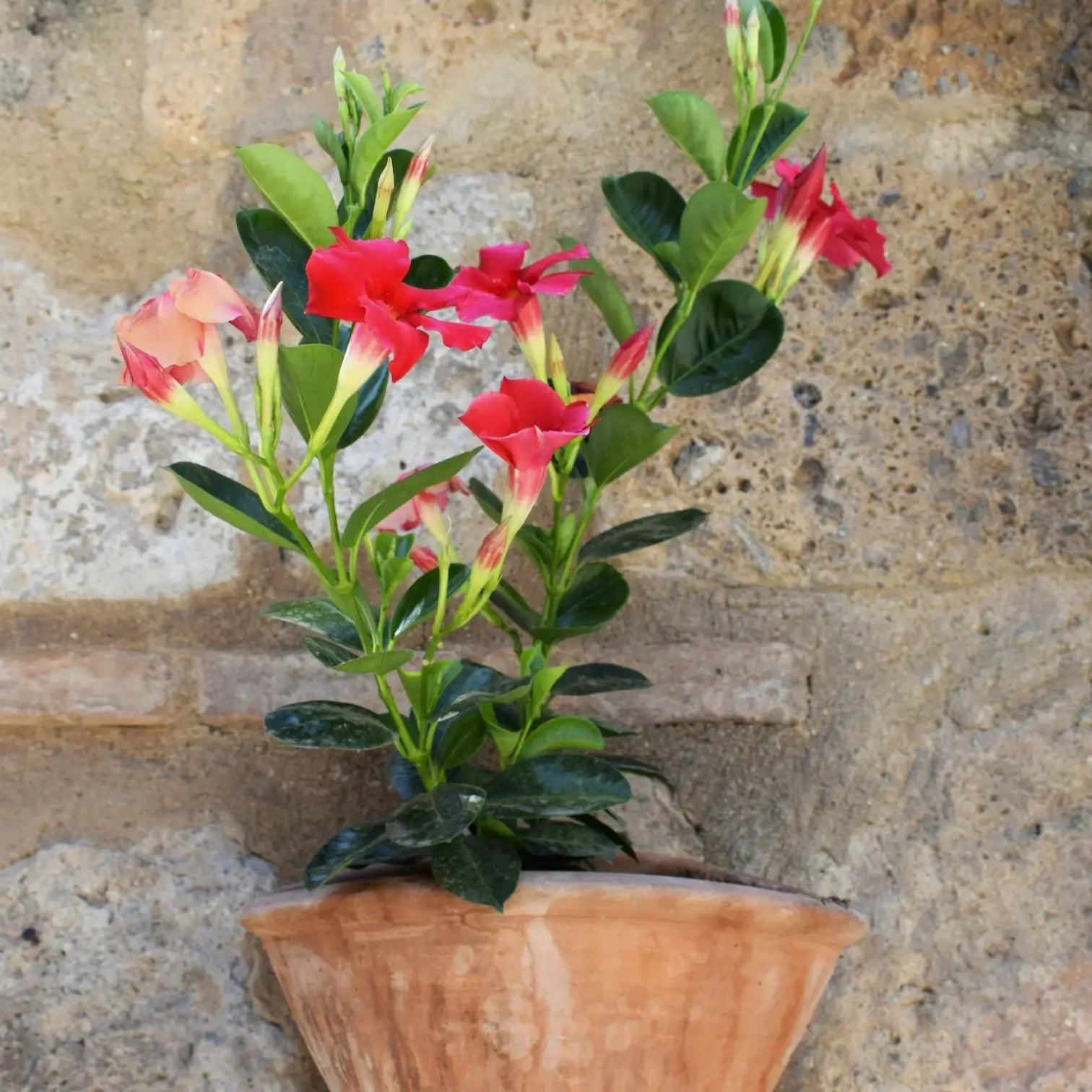
Mandevilla
VAT included · plus
Your outdoor plant has just been packed, transported and unpacked, so give it a calm start before planting or placing it permanently. Remove all packaging carefully, check the pot, stems, visible roots and substrate moisture, and settle any loose growing medium back around the root ball. Water if the root ball feels dry, but do not leave the pot standing in water. For the first few days, keep the plant in a sheltered spot suited to its light needs, away from strong midday sun, heavy wind, frost and heat stress.
Do not move the plant straight into full exposure, especially if it is young, newly flushed, evergreen, recently pruned or greenhouse-grown. Gradually introduce more sun, wind and temperature variation over several days. If cold nights, storms, intense sun or hot dry weather are expected, keep the plant protected until conditions are more stable. Do not fertilize immediately after delivery; let the plant settle first and resume feeding only when it is actively growing and conditions are suitable.
Outdoor plants may arrive in different seasonal stages. Depending on the time of year, your plant may be leafy, flowering, newly sprouting, recently pruned, dormant, partly bare or leafless. Adjust care to what the plant is doing: actively growing plants need closer moisture checks, while dormant plants usually need protection from extremes and only light moisture management until growth resumes.
Plant outdoors when the soil is workable and weather conditions suit the plant type. Avoid planting during frost, heatwaves, waterlogged soil or very dry windy periods. It is better to keep the plant protected in its pot for a short time than to plant into stressful conditions. After planting, water thoroughly so the root ball and surrounding soil connect properly, then monitor moisture while the plant establishes.
Secure shipping, carefully packed orders with safe delivery across the EU, UK and Switzerland.
28-day plant guarantee, if a plant arrives damaged or fails soon after delivery, we help you make it right.
Free returns, simple, cost-free returns according to our policy.
For full details, please see:
Please head to our FAQ Page or Contact us.
Tender evergreen climber
Position
Full sun, Part shade
Moisture
Average to moist
Drainage
Free-draining
Hardiness
Frost tender · 5°C
Mature size
100–200 × 40–50 cm
Winter habit
Evergreen
Bloom time
Spring, Summer, Autumn
Winter care
Bring indoors frost-free
Containers
Good in pots
Pruning
Late winter, Early spring
Tropical South American mandevilla breeding selected for compact container flowering and controlled climbing growth.
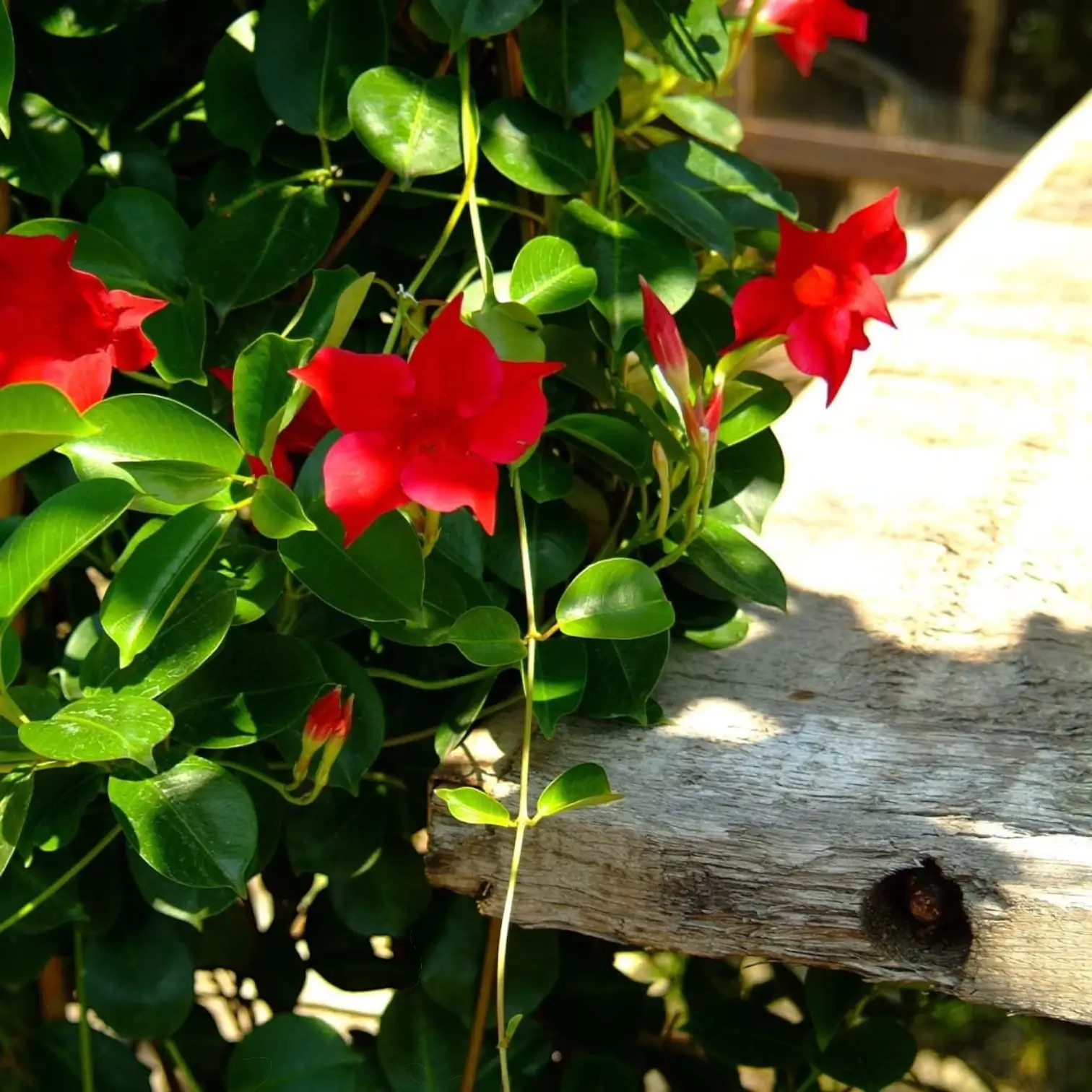
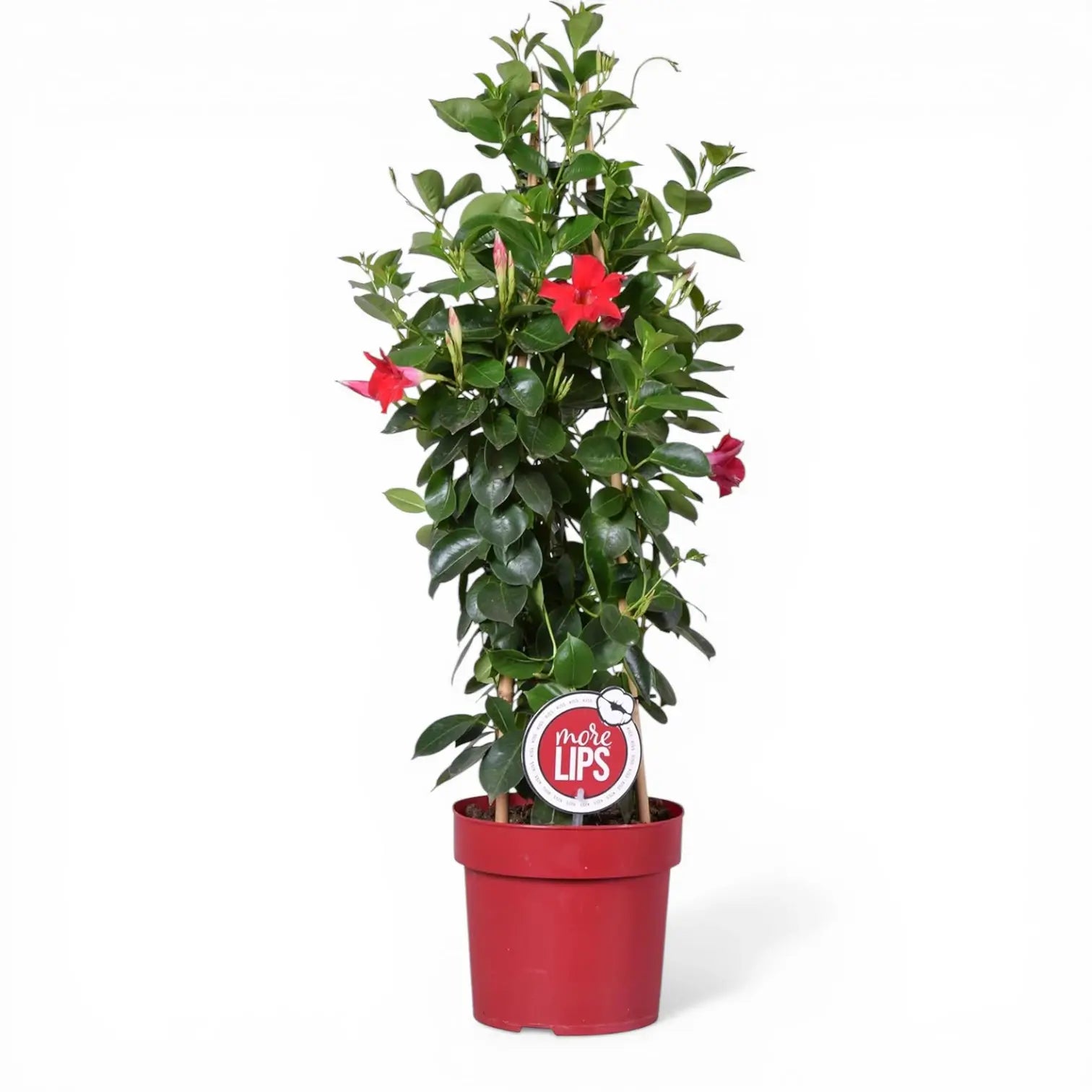
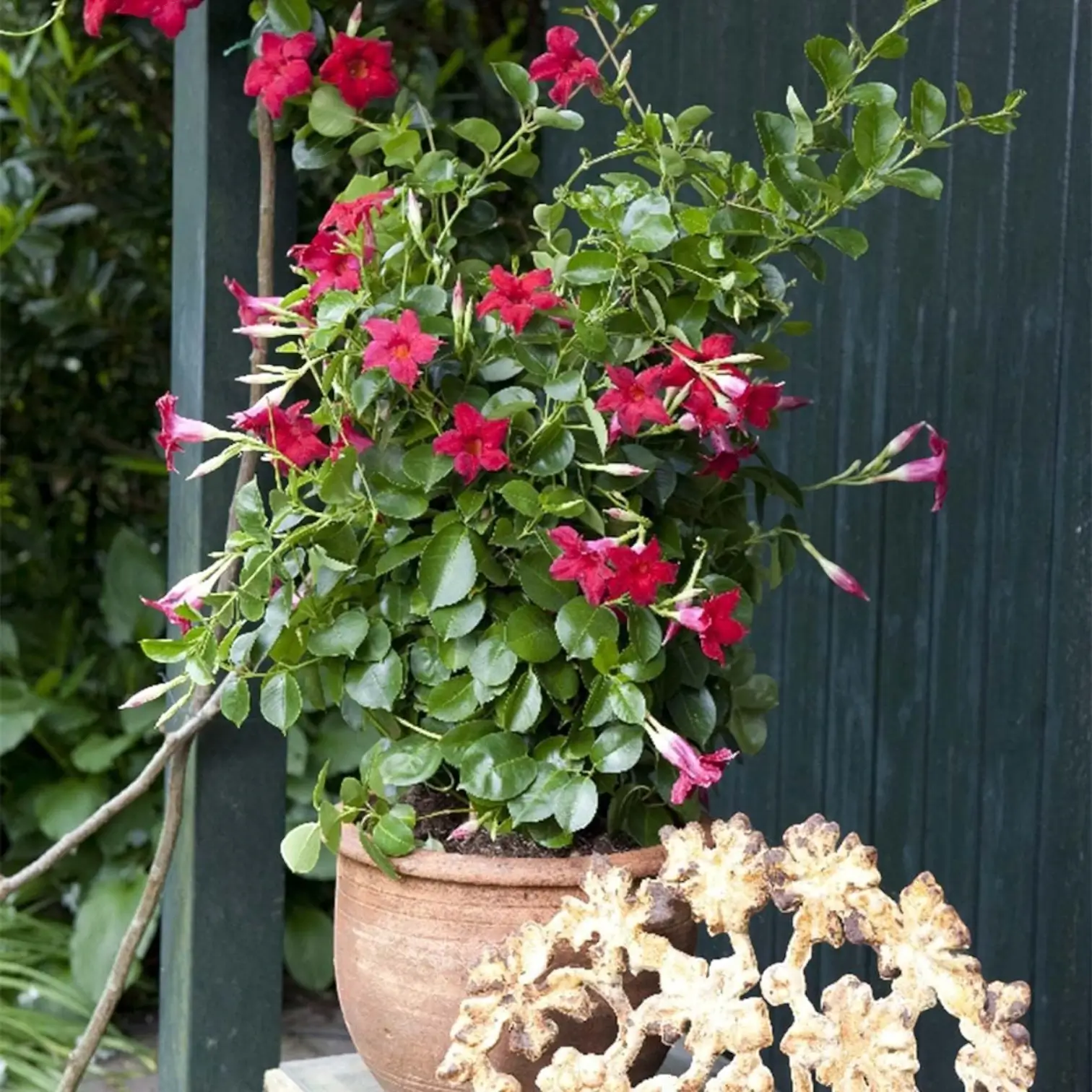
Mandevilla Sundaville® Red is a tender evergreen climber grown for glossy leaves, flexible twining stems and red trumpet flowers in warm weather. It is a patio and conservatory plant first, with outdoor use limited to the frost-free part of the year in most European gardens. The plant looks lush quickly when it has heat, a stable pot and a simple support, yet its root system still needs air and careful watering. Treat it as a warm-season feature plant that moves between summer display and protected winter holding.
The Sundaville line is bred for container display, so the growth is manageable compared with older, very vigorous mandevilla types. The red flowers appear on new growth, which makes warmth and light more important than heavy pruning. A plant that receives bright light, steady moisture and regular feed can carry buds for a long summer run. A plant kept cold, crowded or constantly wet will pause growth quickly.
This is a twining climber with soft young stems that need direction. Set a small trellis, hoop, cane frame or obelisk in the pot early, then tie young shoots loosely as they lengthen. Once a few main stems are set, side growth builds the display and new buds form along active shoots. The plant can also soften the edge of a tall pot, but a support keeps flowers visible and reduces stem breakage in wind.
Ultimate outdoor size in a container is normally far lower than the scale reached by vigorous mandevillas in tropical climates. A practical patio plant is often kept around 100 to 200 cm tall with a narrow spread, shaped by support and pruning. Containers keep Mandevilla Sundaville® Red smaller and slower than open ground in a warm climate, which is useful when the plant has to move indoors before autumn temperatures fall.
Mandevilla responds to warmth. Bright light drives flowering, but the plant also appreciates some filtering during the hottest part of glasshouse or balcony conditions. Outdoors, choose a sheltered place with warm air, reflected heat and low wind. A courtyard, covered balcony or sunny terrace near a wall can give the plant the steady microclimate it needs. Indoors or under glass, keep the plant in high light and leave enough space for air movement around the leaves.
Flowering is strongest when daytime warmth and mild nights are consistent. In early summer, wait until cold nights have passed before placing the plant outside. Sudden exposure to cold spring weather can cause leaf yellowing, bud drop and a slow restart. In late summer, move the pot under cover before nights become chilly. This timing matters more than the calendar.
Use a loam-based, free-draining potting mix with a drainage layer only if the pot design needs it. The mix should hold enough moisture for summer growth while still letting air return to the roots after watering. A pot around 25 to 30 cm wide works well for many plants, with a step up only when the rootball is genuinely full. A large pot filled with cool wet compost slows the roots and makes winter care harder.
For pots, water when the upper 20 to 30% of pot depth feels dry, then water thoroughly until the rootball is evenly moistened. Let surplus water drain away. During hot spells this may be frequent, while cool weather and indoor winter holding need far less. A steady rhythm supports buds and leaves; sharp swings from dry rootball to saturated compost create stress.
Long flowering in a container uses nutrients quickly. Feed during active growth with a balanced liquid feed or a flowering-plant feed at sensible strength. Pale new growth during warm active weather often points to weak nutrition, exhausted compost or roots sitting too cold. Refreshing the top layer of compost and keeping the plant warm can help the plant return to active flowering.
Flowers form on current growth, so a plant that is actively extending shoots has the best chance of repeating bloom. Pinching one or two long tips early can encourage branching, but constant trimming removes potential flowering points. A clean framework with a few active shoots usually gives a fuller display than repeated clipping.
Mandevilla Sundaville® Red is frost tender. Bring the pot under cover before nights fall below the safe range for warm tropical climbers. A bright, frost-free indoor space, cool conservatory or heated greenhouse is suitable. Growth slows in winter, so watering must also slow. Keep the compost just lightly moist and keep the pot away from cold floors where roots chill quickly.
In late winter or early spring, remove weak or congested shoots and shorten side shoots to restart the framework. Wear gloves when pruning because the milky sap can irritate skin. Once new growth starts, increase watering gradually and return to feeding. Move the plant outside again only after warm nights return, with a few days of acclimation to stronger light.
Bud drop usually links to cold nights, wind, repeated dry-outs or root stress. Yellowing leaves often point to cool wet compost or nutrient depletion. Spider mites, whitefly and mealybug can appear when plants spend winter indoors, so check leaf undersides and shoot tips regularly. Early action keeps the plant tidy and prevents a small pest issue from becoming a spring setback.
Use Mandevilla Sundaville® Red where a movable summer climber makes sense: a bright balcony, sheltered patio, greenhouse entrance or warm conservatory. It is at its best when treated as a seasonal container plant with serious winter protection. With warmth, a simple support and disciplined watering, it gives a long red-flowered display in a compact footprint.

Choose options
Sign up for Foliage Factory newsletter for early access to new arrivals and practical care tips that work in real homes.