Position
Sun to part shade

Levisticum
VAT included · plus
Your outdoor plant has just been packed, transported and unpacked, so give it a calm start before planting or placing it permanently. Remove all packaging carefully, check the pot, stems, visible roots and substrate moisture, and settle any loose growing medium back around the root ball. Water if the root ball feels dry, but do not leave the pot standing in water. For the first few days, keep the plant in a sheltered spot suited to its light needs, away from strong midday sun, heavy wind, frost and heat stress.
Do not move the plant straight into full exposure, especially if it is young, newly flushed, evergreen, recently pruned or greenhouse-grown. Gradually introduce more sun, wind and temperature variation over several days. If cold nights, storms, intense sun or hot dry weather are expected, keep the plant protected until conditions are more stable. Do not fertilize immediately after delivery; let the plant settle first and resume feeding only when it is actively growing and conditions are suitable.
Outdoor plants may arrive in different seasonal stages. Depending on the time of year, your plant may be leafy, flowering, newly sprouting, recently pruned, dormant, partly bare or leafless. Adjust care to what the plant is doing: actively growing plants need closer moisture checks, while dormant plants usually need protection from extremes and only light moisture management until growth resumes.
Plant outdoors when the soil is workable and weather conditions suit the plant type. Avoid planting during frost, heatwaves, waterlogged soil or very dry windy periods. It is better to keep the plant protected in its pot for a short time than to plant into stressful conditions. After planting, water thoroughly so the root ball and surrounding soil connect properly, then monitor moisture while the plant establishes.
Secure shipping, carefully packed orders with safe delivery across the EU, UK and Switzerland.
28-day plant guarantee, if a plant arrives damaged or fails soon after delivery, we help you make it right.
Free returns, simple, cost-free returns according to our policy.
For full details, please see:
Please head to our FAQ Page or Contact us.
Herbaceous perennial herb
Position
Sun to part shade
Moisture
Average to moist
Drainage
Moisture-retentive, Well-drained
Hardiness
Fully hardy · -20°C
Mature size
150–200 × 60–100 cm
Winter habit
Herbaceous die-back
Bloom time
Summer
Containers
Good in pots
Pruning
Summer
Mountain meadows, damp edges and streamside ground of southern Europe and southwest Asia.
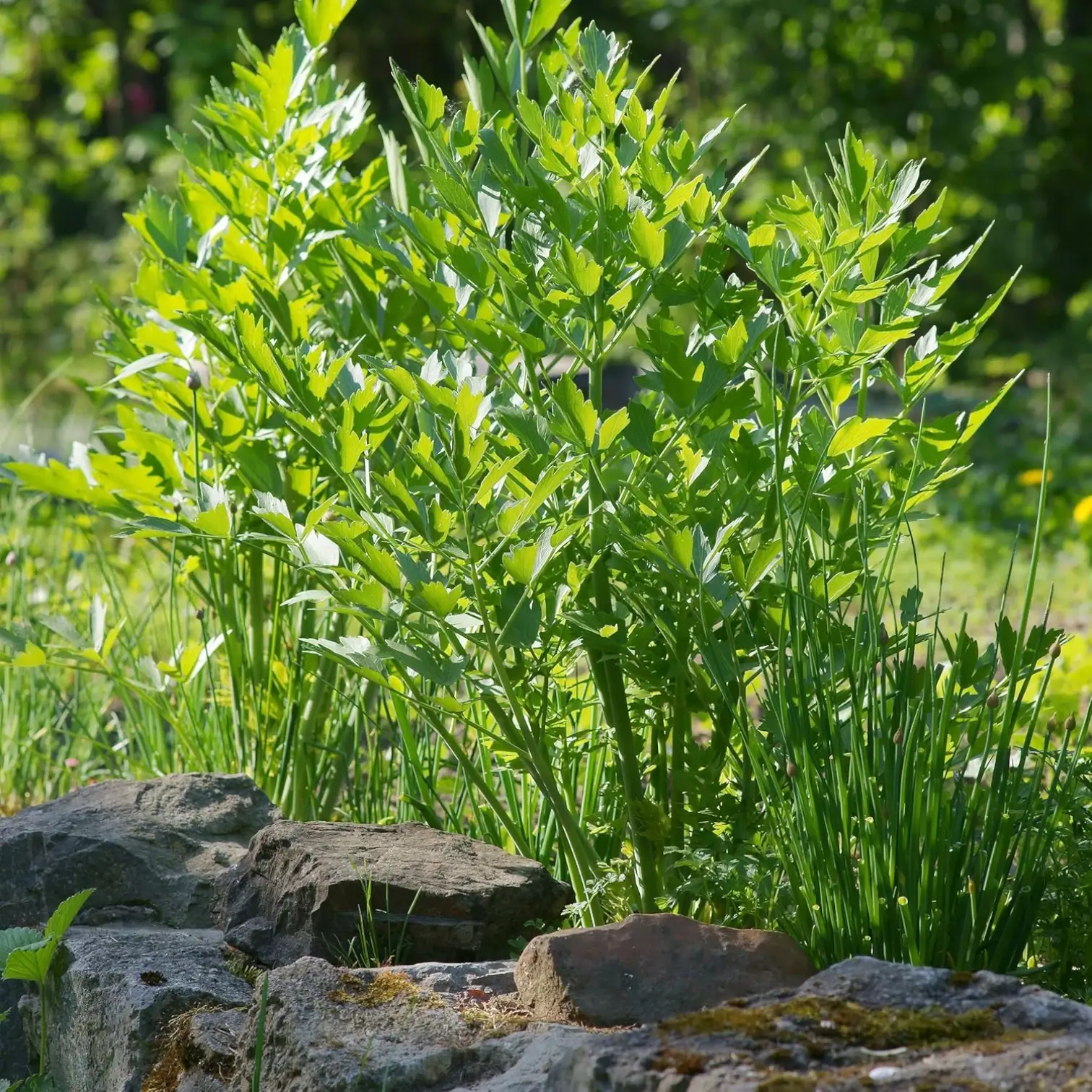
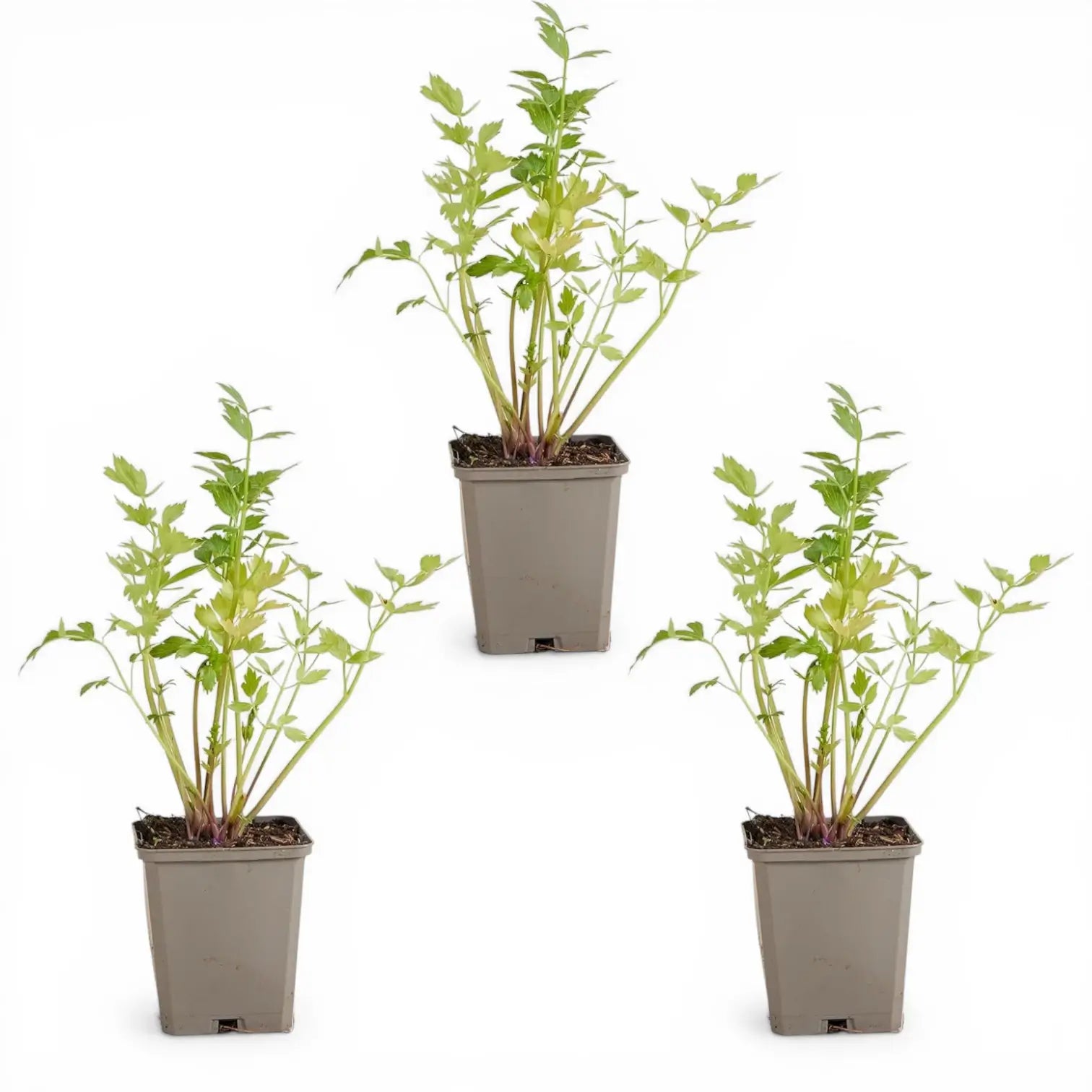
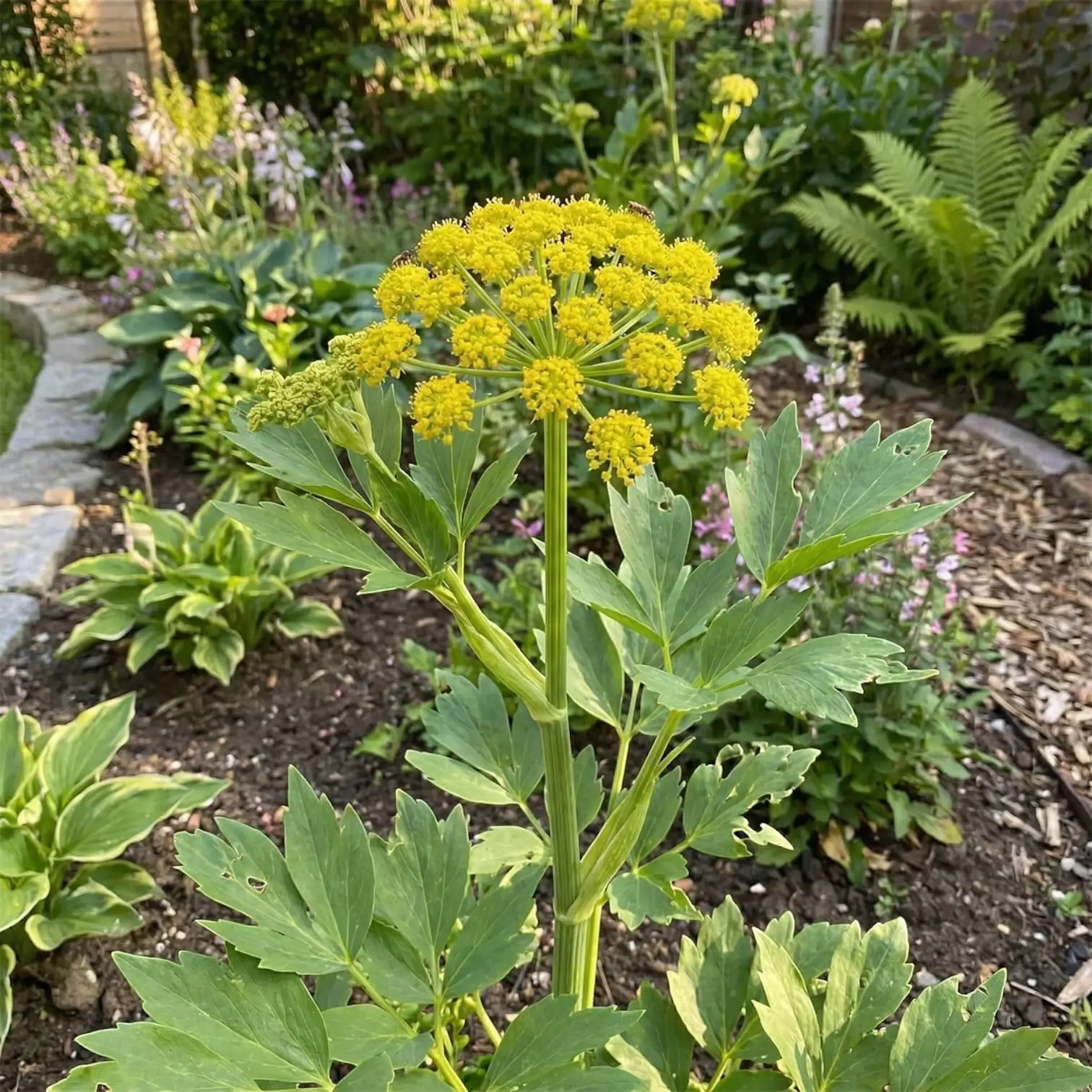
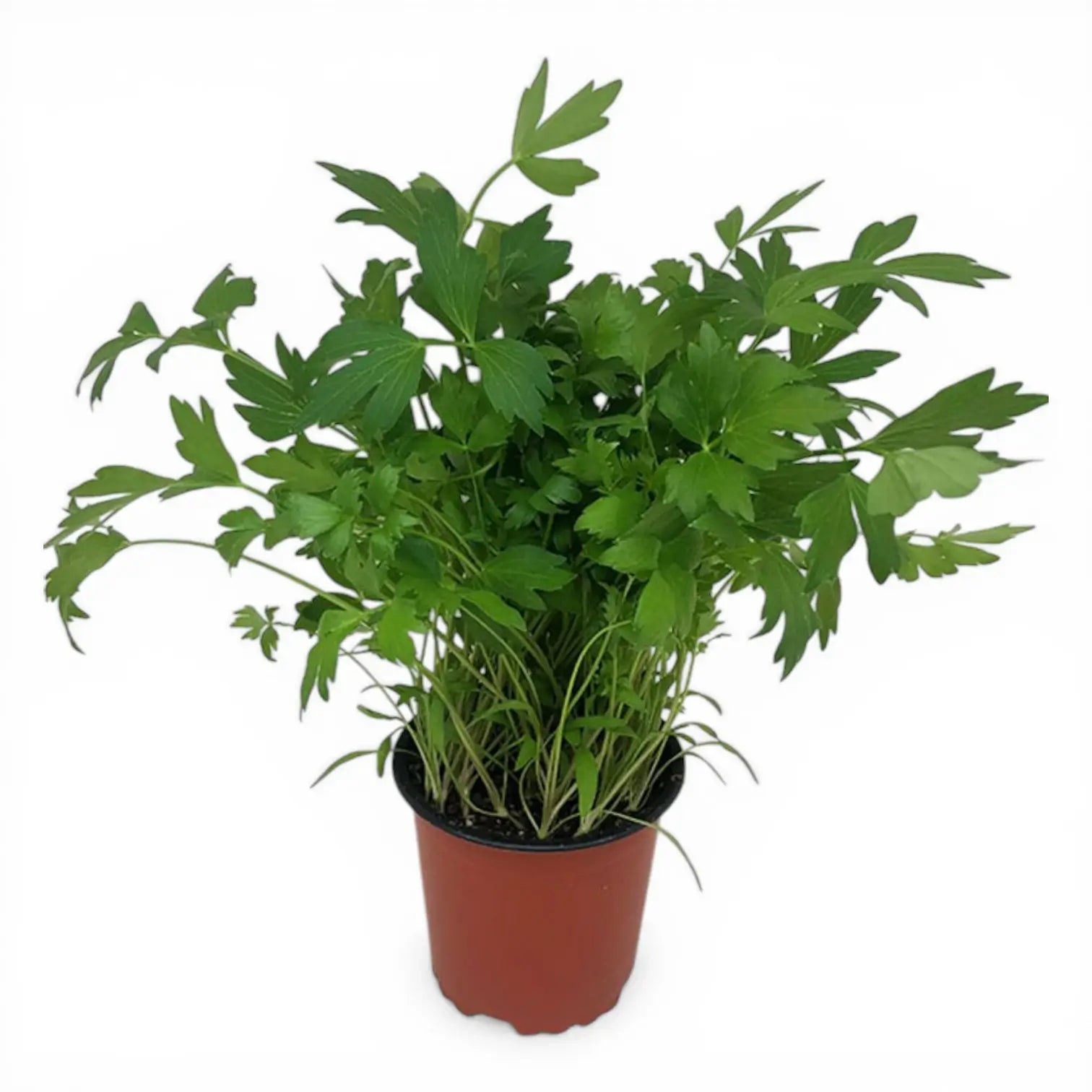
Levisticum officinale is lovage, a hardy perennial herb grown for tall leafy growth, celery-like flavour and umbels of yellow-green flowers in summer. It has the scale of a border perennial and the usefulness of a kitchen herb, so give it generous space from the start. In the right place, one plant can become a generous clump that returns every spring from a dormant crown.
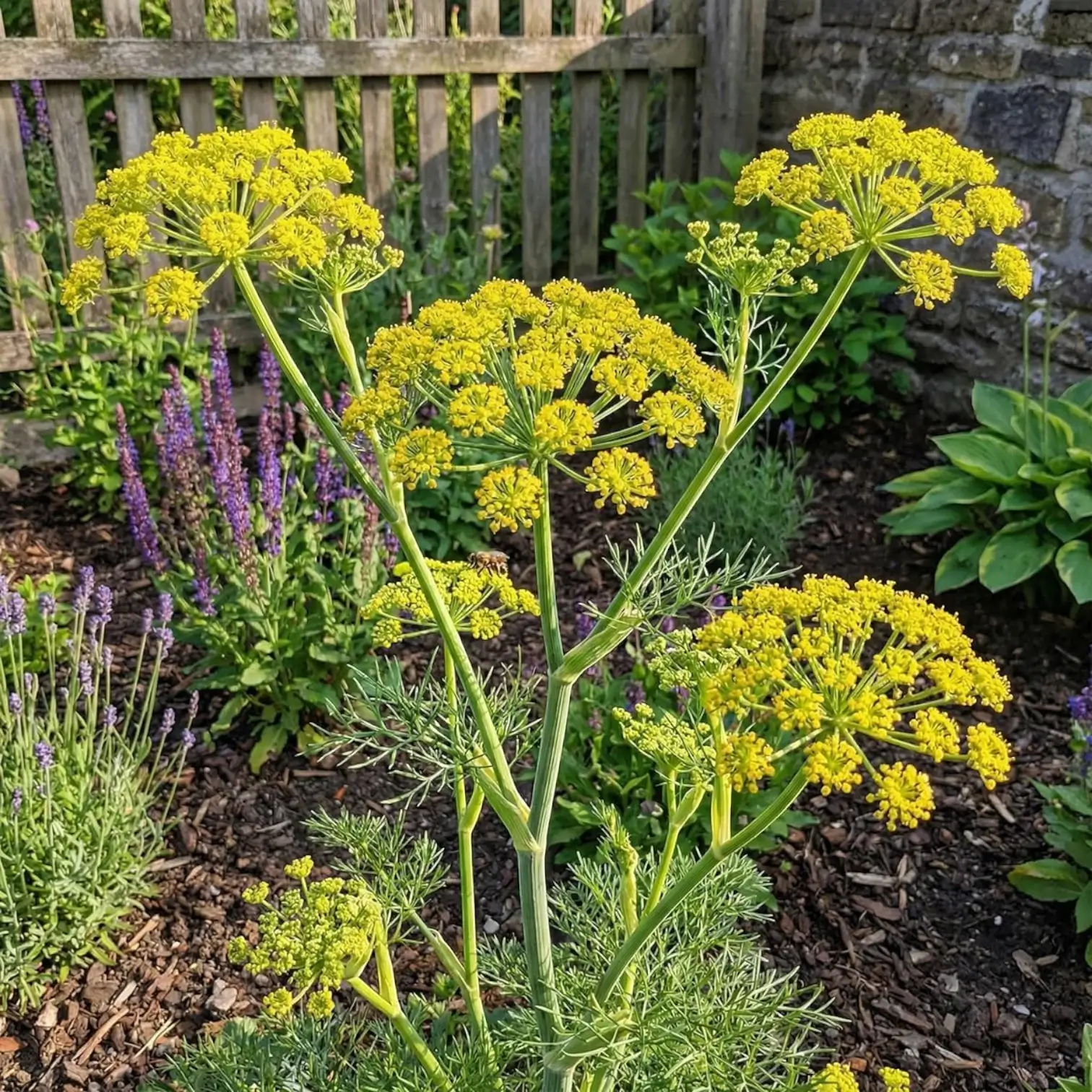
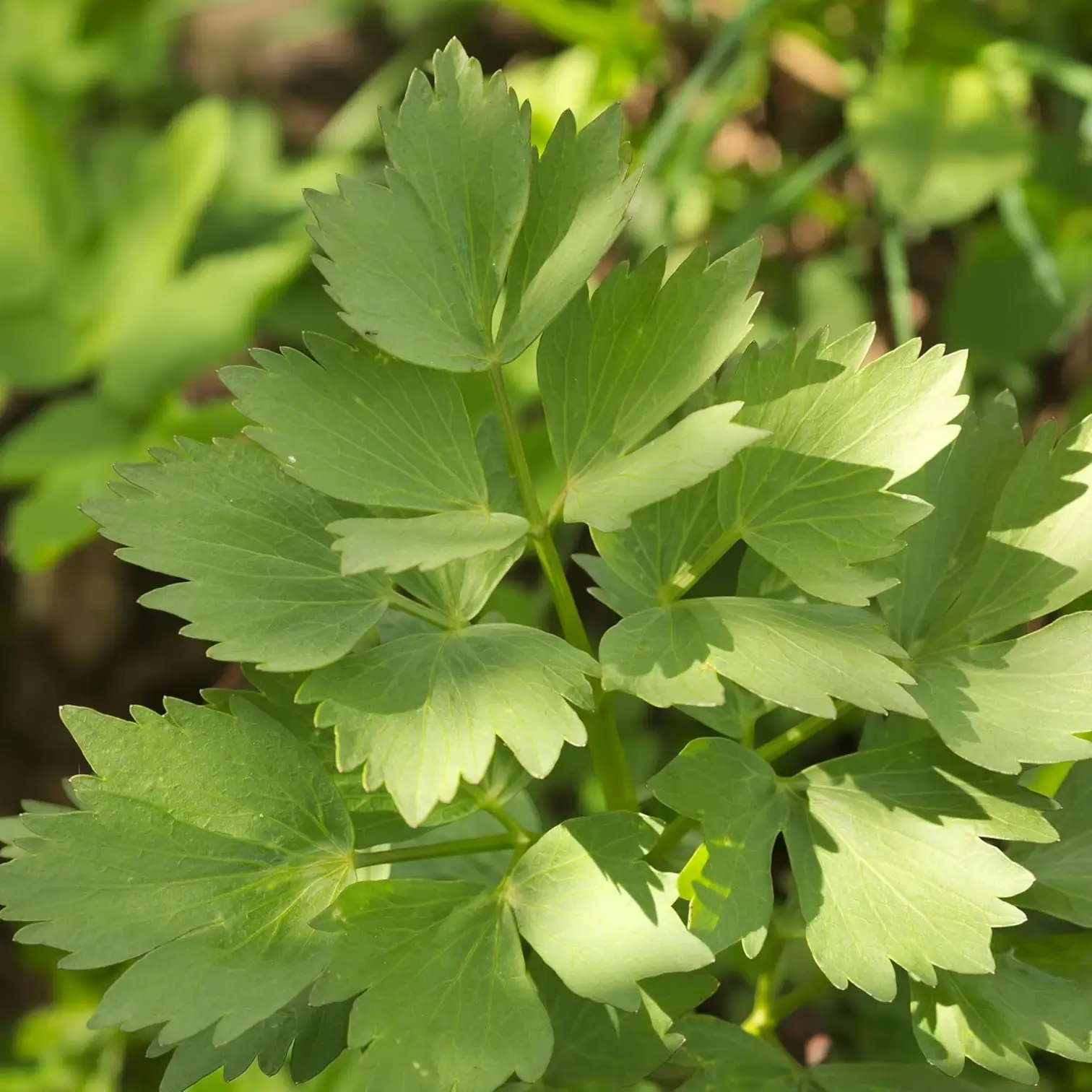
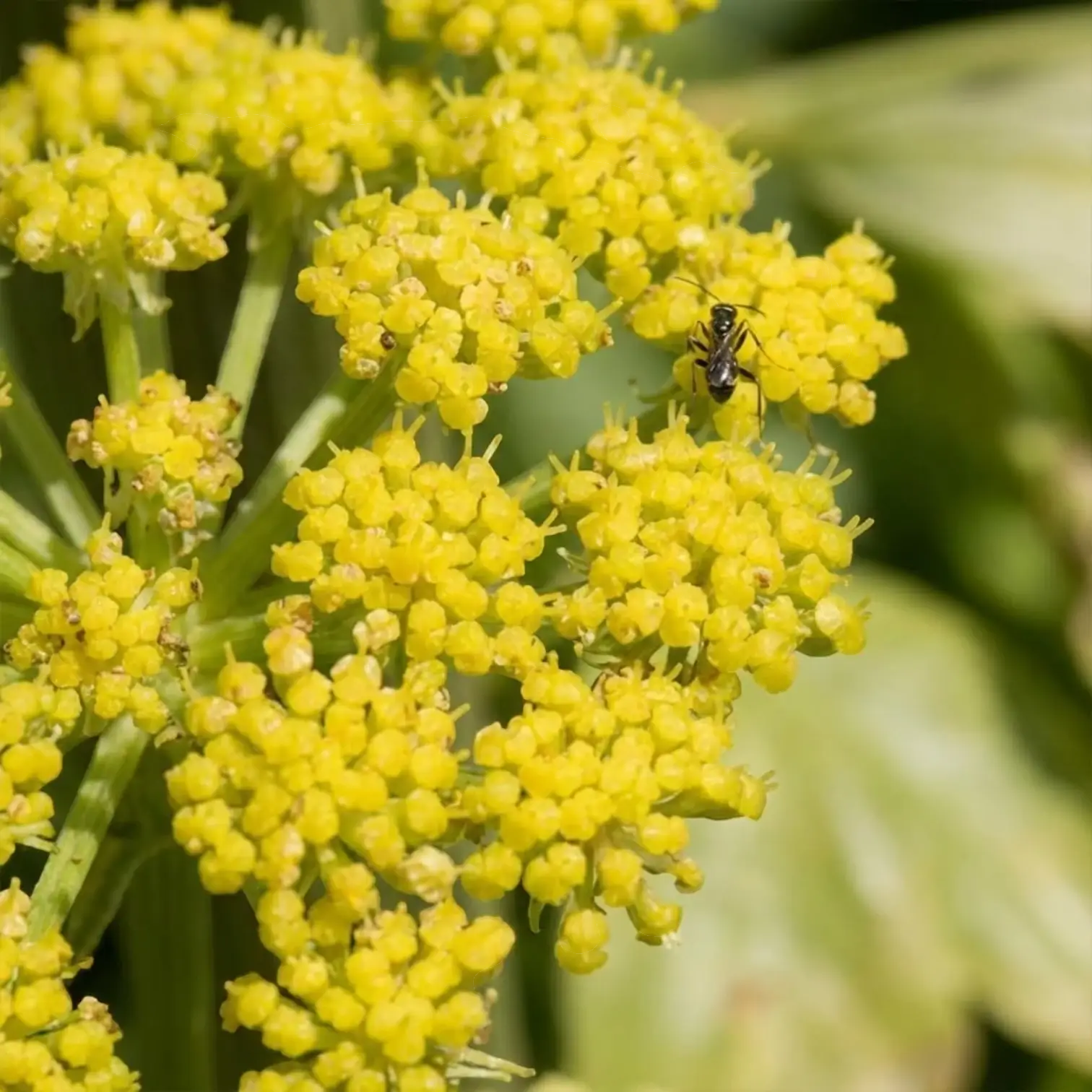
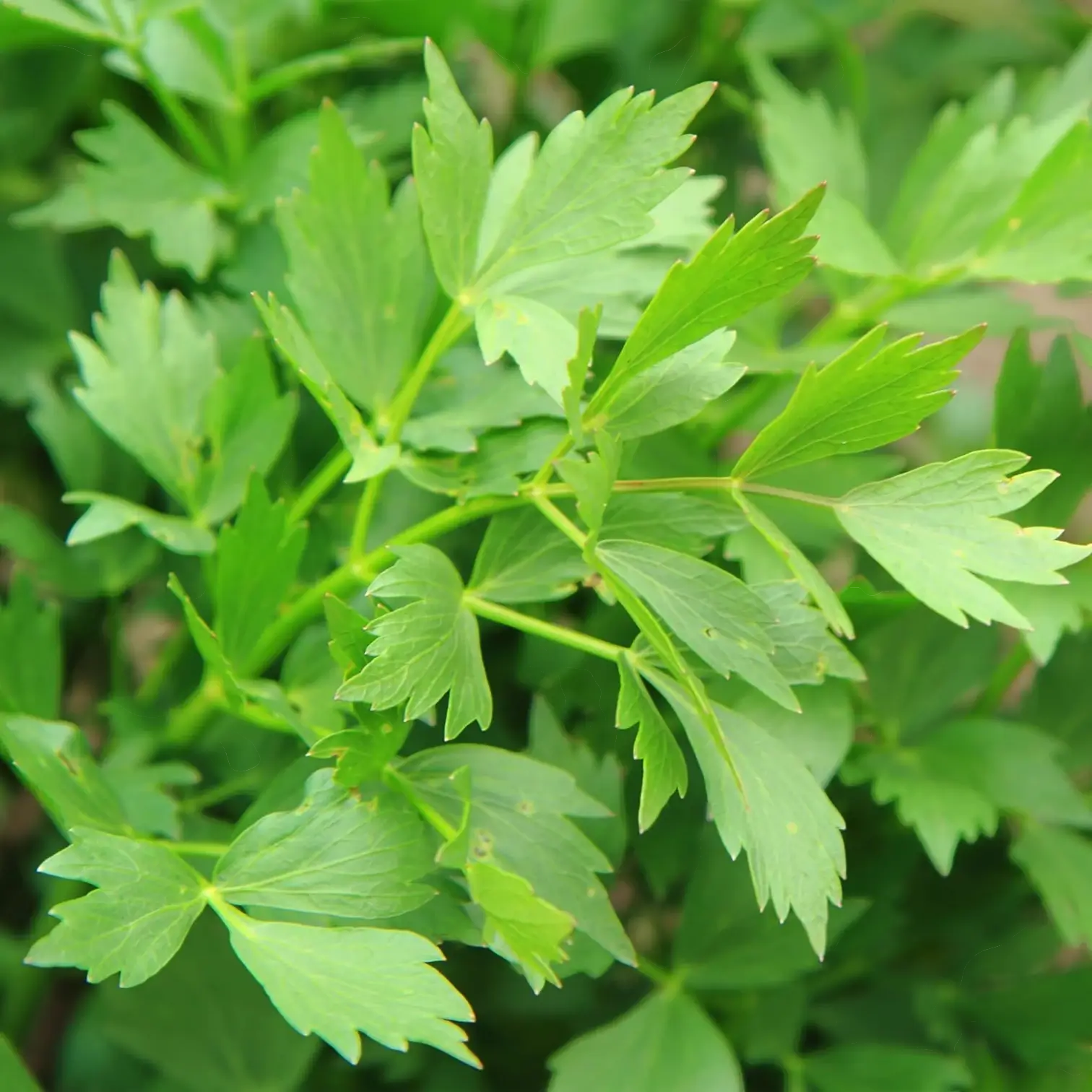
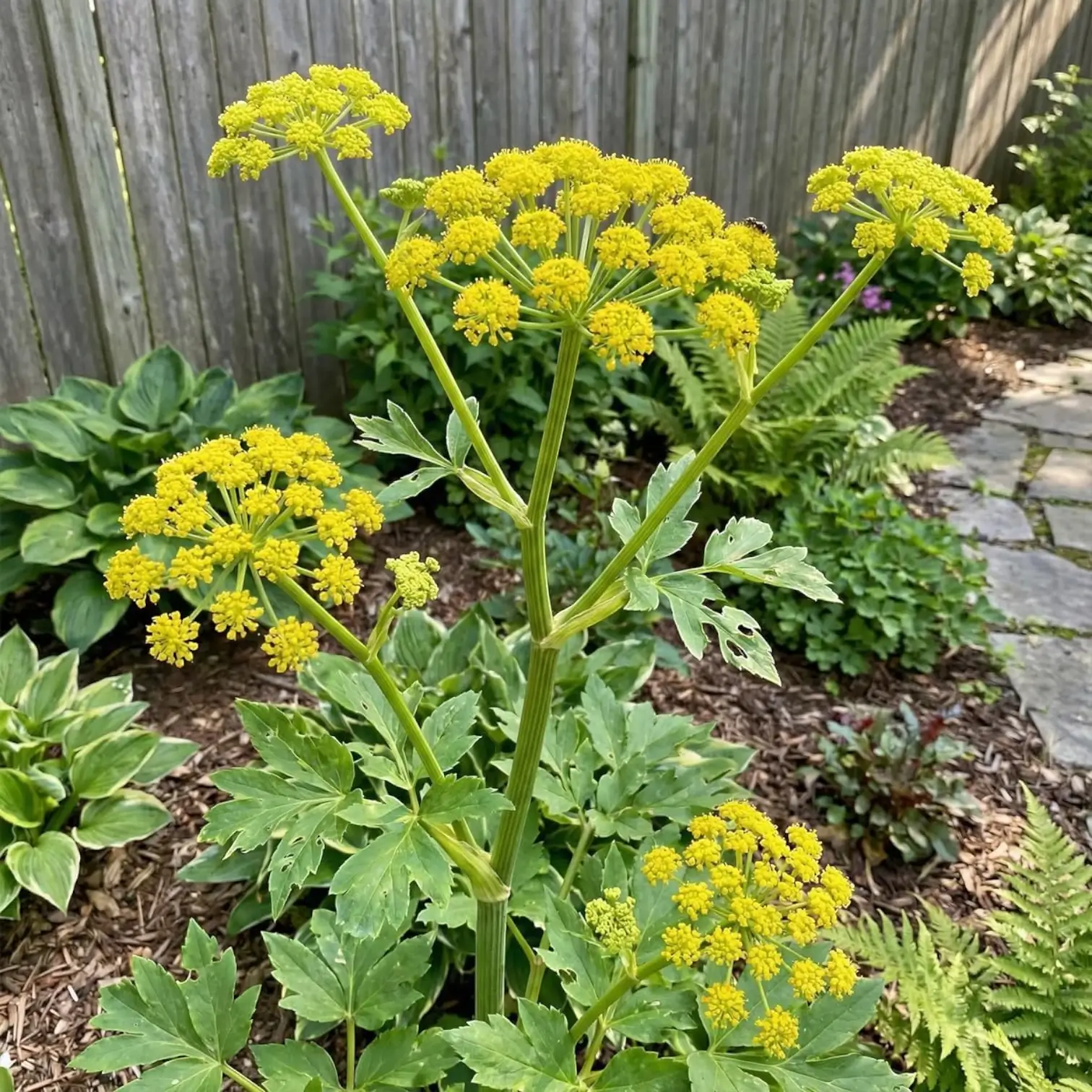
The young leaves are the main harvest. They have a strong savoury aroma, often compared with celery and parsley, and are used sparingly in soups, stocks, salads, sauces and herb butters. Later in the season, hollow stems rise above the foliage and carry broad umbels of small yellow-green flowers. The flowers add a light, natural look to herb gardens, vegetable plots and mixed borders, while the plant’s height gives it a strong vertical role.
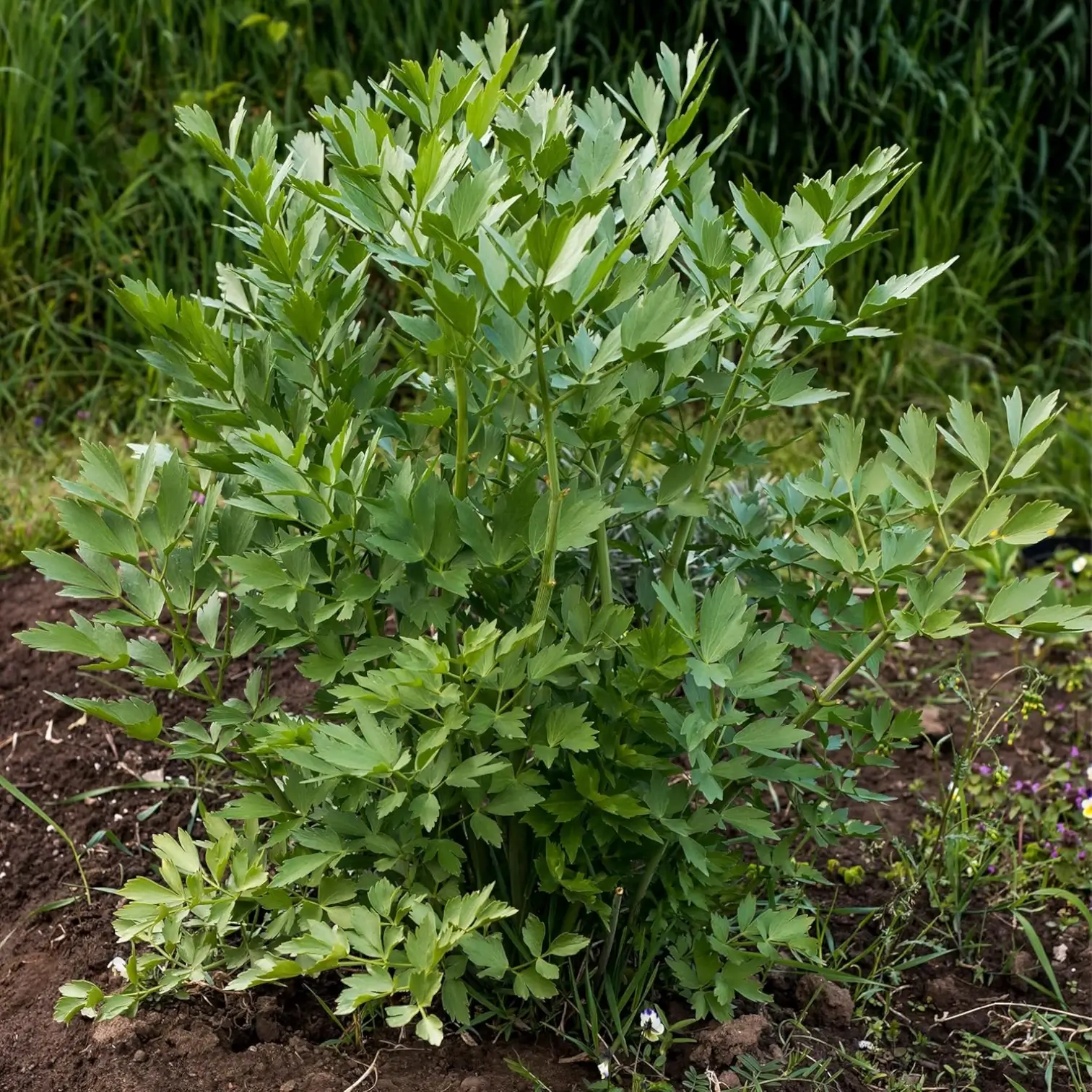
Lovage starts with fresh divided leaves in spring, then builds into a tall clump as temperatures rise. Mature plants can reach about 2 m in flower and roughly 1 m across after a few years. The lower leafy mound is already useful for harvesting before the tallest stems form. By late autumn the top growth dies back, leaving a crown that rests through winter and shoots again the following year.
Levisticum officinale needs a position where height is an asset. It suits the back of a herb bed, the edge of a vegetable garden, a generous mixed border or a large container placed where the tall stems can rise freely. The plant is handsome enough to sit among ornamentals, especially when its flower umbels appear above lower foliage. In smaller gardens, container growing can control the footprint while still allowing harvest.
Allow mature spacing of around 100 cm. Young plants may look small at first, but established lovage has a wide crown and broad leaf mass. Wider spacing keeps harvesting accessible and leaves air around the base after rain.
Full sun produces strong growth where soil moisture is reliable. Light shade is also suitable, especially in warmer gardens or where afternoon sun would dry the soil too fast. Lovage performs best when the root zone stays evenly moist and still drains cleanly after rain.
A sheltered position helps the tallest flower stems stay upright. In exposed places, the plant may lean after heavy rain or wind. If a very neat outline matters, place it where nearby planting or a low support can steady the stems.
Fertile, moisture-retentive and well-drained soil is the best match. Lovage likes a richer root run than thyme, rosemary or lavender. Garden compost worked into the planting area helps hold moisture and feed the spring flush of leaves. The soil should still drain after heavy rain, because a crown sitting in stagnant winter wet is more vulnerable.
In containers, choose a deep heavy pot with a soil-based, peat-free mix that holds water but drains cleanly. A lightweight pot is less suitable for a plant that sends up tall stems. Containers keep plants smaller and slower than open ground, but lovage still needs root depth and regular moisture to produce a useful crop.
Newly planted lovage needs steady moisture while roots move into the surrounding soil. Once established, it copes better, but leafy quality is still best when drought stress is limited. In the ground, water during prolonged dry spells. In pots, check more often because the large leaves and tall stems use water quickly.
For pot watering cues, use % of pot depth: water when the top 20-30% of the potting mix has dried, then soak the whole root ball. A deep container may feel dry at the surface while the lower part is still moist, so check below the top layer before watering again.
Harvest young leaves from spring into summer by cutting individual stems near the base. Regular light picking encourages fresh growth and keeps the clump productive. The flavour is strong, so small harvests are usually enough. Older leaves can become tougher and stronger in taste as the plant prepares to flower.
Flower stems can be left for visual interest or removed if leaf production is the priority. After flowering, cut tired stems back to encourage cleaner basal growth. In late autumn, once the top growth has collapsed, cut the plant down to the crown and clear old stems from the area. Established clumps can be divided in spring if they become too large or if you want to refresh the planting.
Lovage can grow in a large container, but the pot needs enough depth, weight and moisture reserve. A single plant in its own pot is the cleanest option. Mixed herb planters are usually better for smaller herbs, because lovage grows tall and broad once it settles. A container also gives control over spread and makes it easier to place the plant close to a kitchen door or outdoor preparation area.
Feed lightly during active growth if the plant is cropped often. A rich mix and seasonal compost top-dress may be enough. Soft, overfed growth can bend more easily, so moderate fertility is better than constant heavy feeding.
Levisticum officinale belongs to Apiaceae, the same family as celery, parsley and angelica. The species is widely grown as lovage, a long-used European kitchen and herb-garden plant. The epithet officinale is a traditional botanical term often applied to plants historically associated with herbal or apothecary use. The plant’s flavour explains its staying power: it brings a concentrated celery-like note from a perennial crown that returns year after year.
Choose Levisticum officinale if you want a large, hardy herb with substantial seasonal height and practical harvest value. Give it space, fertile moist soil and a clean cut-back after die-back, and it becomes a reliable herb-garden anchor.
Choose options


Sign up for Foliage Factory newsletter for early access to new arrivals and practical care tips that work in real homes.