Position
Full sun

Lavandula
VAT included · plus
Your outdoor plant has just been packed, transported and unpacked, so give it a calm start before planting or placing it permanently. Remove all packaging carefully, check the pot, stems, visible roots and substrate moisture, and settle any loose growing medium back around the root ball. Water if the root ball feels dry, but do not leave the pot standing in water. For the first few days, keep the plant in a sheltered spot suited to its light needs, away from strong midday sun, heavy wind, frost and heat stress.
Do not move the plant straight into full exposure, especially if it is young, newly flushed, evergreen, recently pruned or greenhouse-grown. Gradually introduce more sun, wind and temperature variation over several days. If cold nights, storms, intense sun or hot dry weather are expected, keep the plant protected until conditions are more stable. Do not fertilize immediately after delivery; let the plant settle first and resume feeding only when it is actively growing and conditions are suitable.
Outdoor plants may arrive in different seasonal stages. Depending on the time of year, your plant may be leafy, flowering, newly sprouting, recently pruned, dormant, partly bare or leafless. Adjust care to what the plant is doing: actively growing plants need closer moisture checks, while dormant plants usually need protection from extremes and only light moisture management until growth resumes.
Plant outdoors when the soil is workable and weather conditions suit the plant type. Avoid planting during frost, heatwaves, waterlogged soil or very dry windy periods. It is better to keep the plant protected in its pot for a short time than to plant into stressful conditions. After planting, water thoroughly so the root ball and surrounding soil connect properly, then monitor moisture while the plant establishes.
Secure shipping, carefully packed orders with safe delivery across the EU, UK and Switzerland.
28-day plant guarantee, if a plant arrives damaged or fails soon after delivery, we help you make it right.
Free returns, simple, cost-free returns according to our policy.
For full details, please see:
Please head to our FAQ Page or Contact us.
Evergreen subshrub
Position
Full sun
Moisture
Dry to average
Drainage
Free-draining
Hardiness
Fully hardy · -15°C
Mature size
40–50 × 45–50 cm
Winter habit
Evergreen
Bloom time
Summer
Containers
Good in pots
Pruning
After flowering, Spring
Dry sunny slopes and scrub of the western Mediterranean.
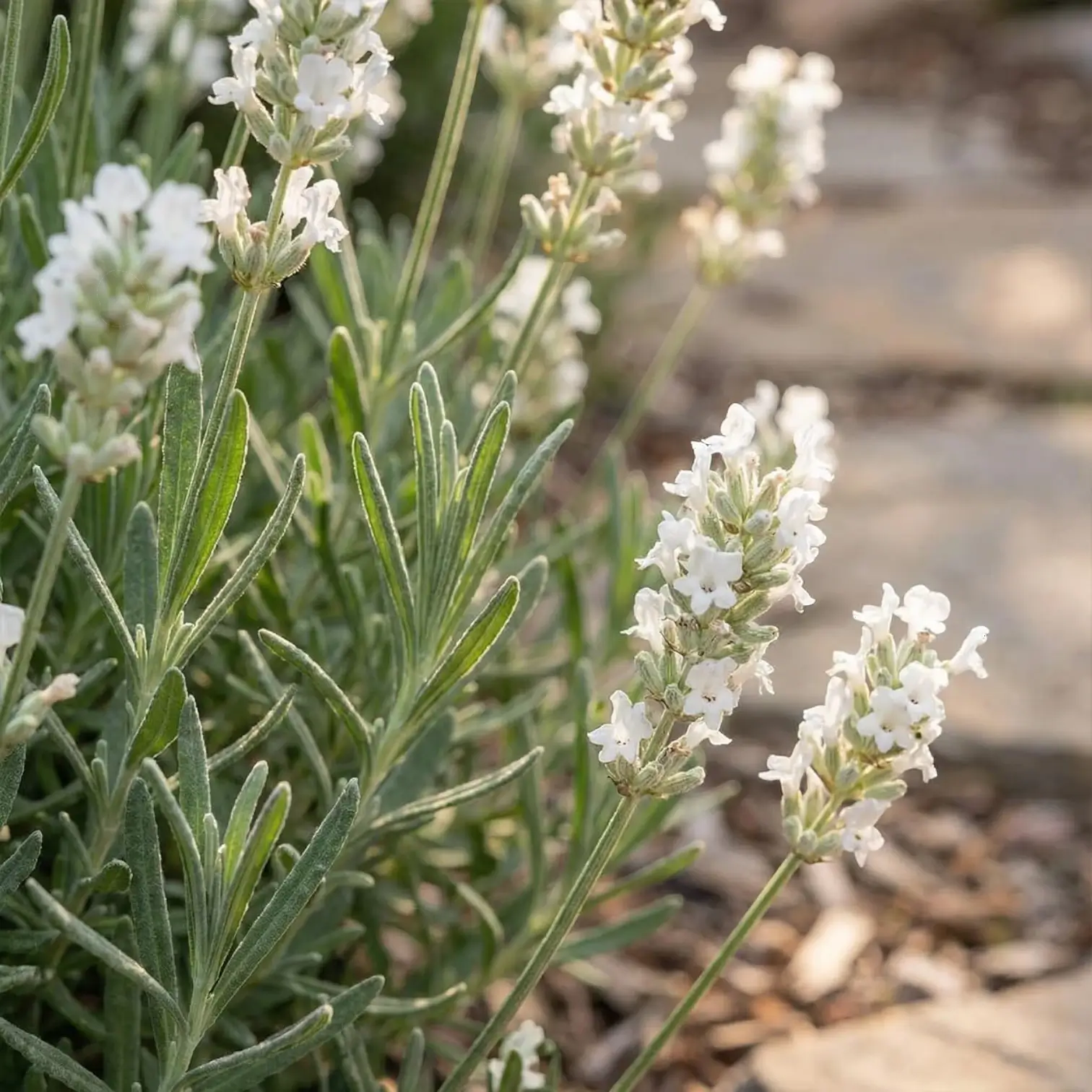
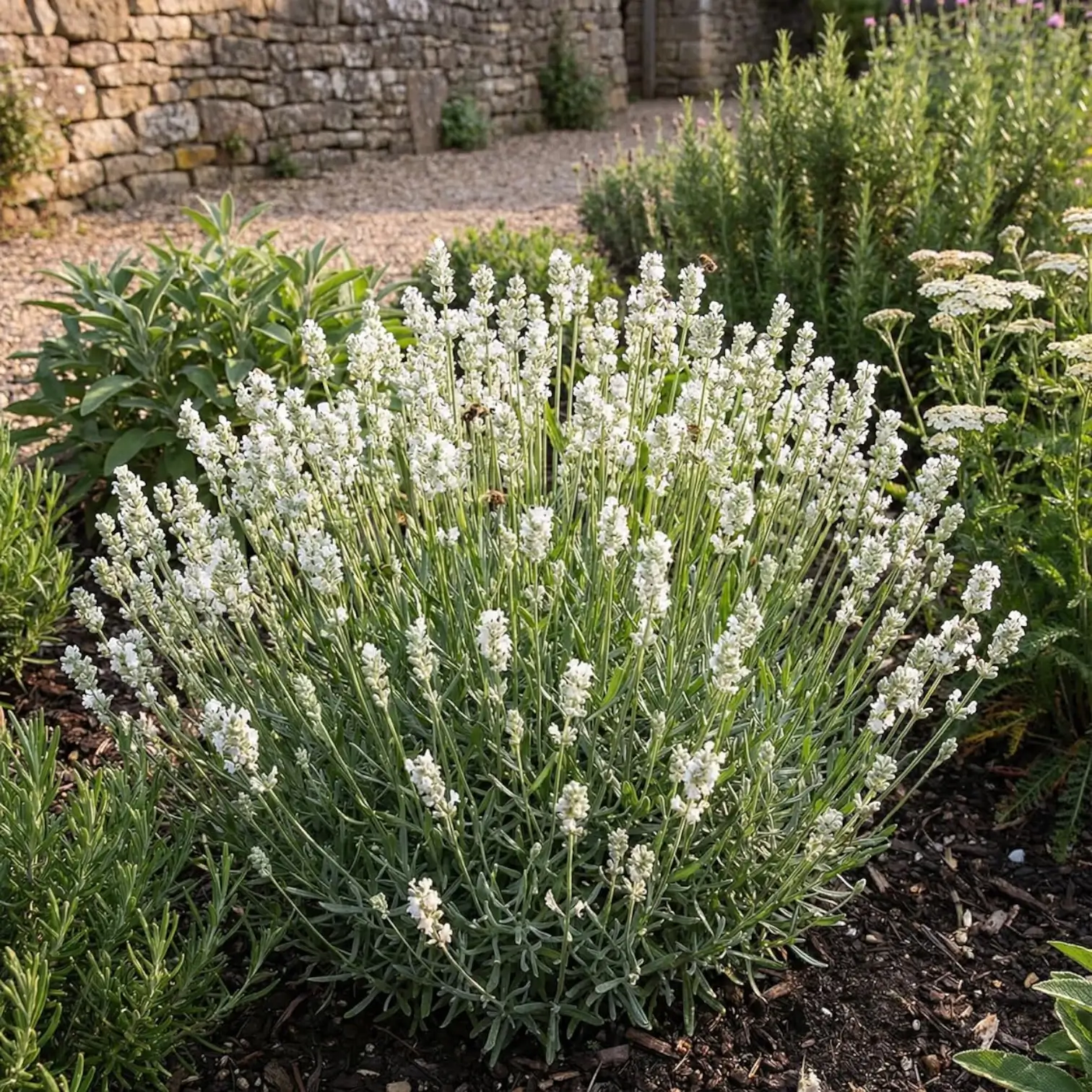
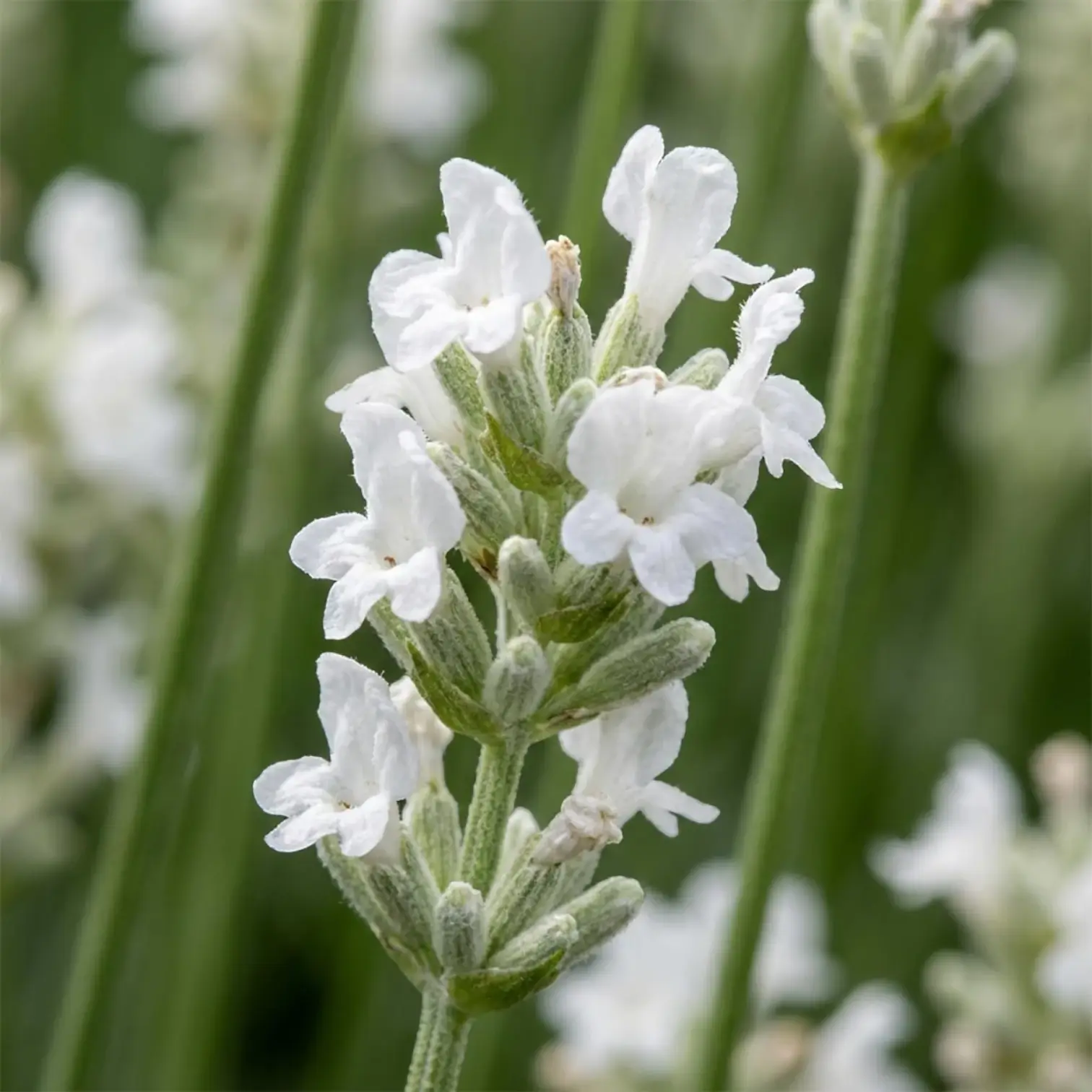
Lavandula angustifolia 'Edelweiss' keeps the classic English lavender form but swaps the usual purple for creamy white flower spikes. The pale bloom lifts planting schemes built around silvers, whites, and soft pastels, while the foliage stays aromatic and evergreen through much of the year.
Used in repetition, the colour reads as a calm highlight rather than a loud accent. The plant keeps a woody framework, so it brings structure in winter and clean texture in summer once the flower stems rise.
'Edelweiss' forms a compact mound with narrow, scented leaves and upright flower stems that open into white spikes through summer. The flower colour tends to look brightest in full sun and against darker foliage nearby.
A settled plant often reaches around 40-50 cm tall and about 50 cm wide. In containers, expect a slightly smaller, tighter outline, which can be useful when you want the white bloom close to seating or paths.
Full exposure keeps growth firm and supports better flowering. A lean, gritty soil is more important than feeding: lavender performs best when the root zone drains freely and the crown dries quickly after rain.
Many soil types are suitable, including chalk and sandy loam, as long as structure stays open. On heavier ground, mix in grit through the planting area and avoid sinking the crown below the surrounding surface level.
Once established in open ground, watering is mainly needed during prolonged dry spells. Deep watering followed by a proper dry-down encourages a resilient root system.
In pots, check moisture by depth rather than by surface dryness. Water thoroughly when the top third has dried, then drain fully. A permanently damp centre is the fastest way to shorten the life of a container-grown lavender.
Shaping after flowering helps the mound stay dense and keeps new shoots close to the framework. The goal is a rounded plant with plenty of leafy points, not a severe cutback.
If stems flop or the centre turns dull and soft, look first at drainage and how long the crown stays wet. In containers, blocked drainage holes and waterlogged mixes are common triggers.
Thin flowering usually points to reduced sun or late pruning that removed developing buds. If the mound opens, earlier shaping and slightly leaner conditions usually restore a tighter outline.
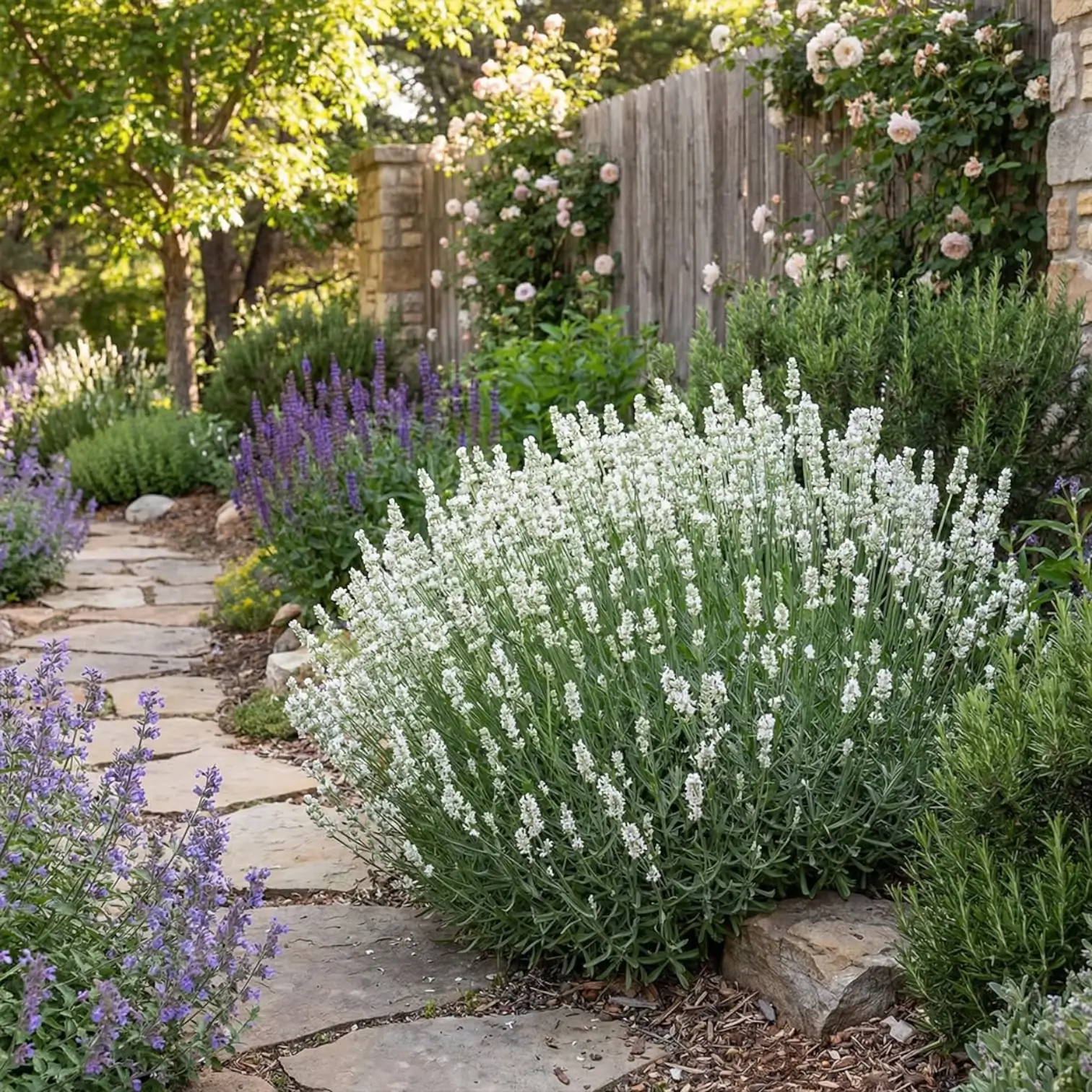
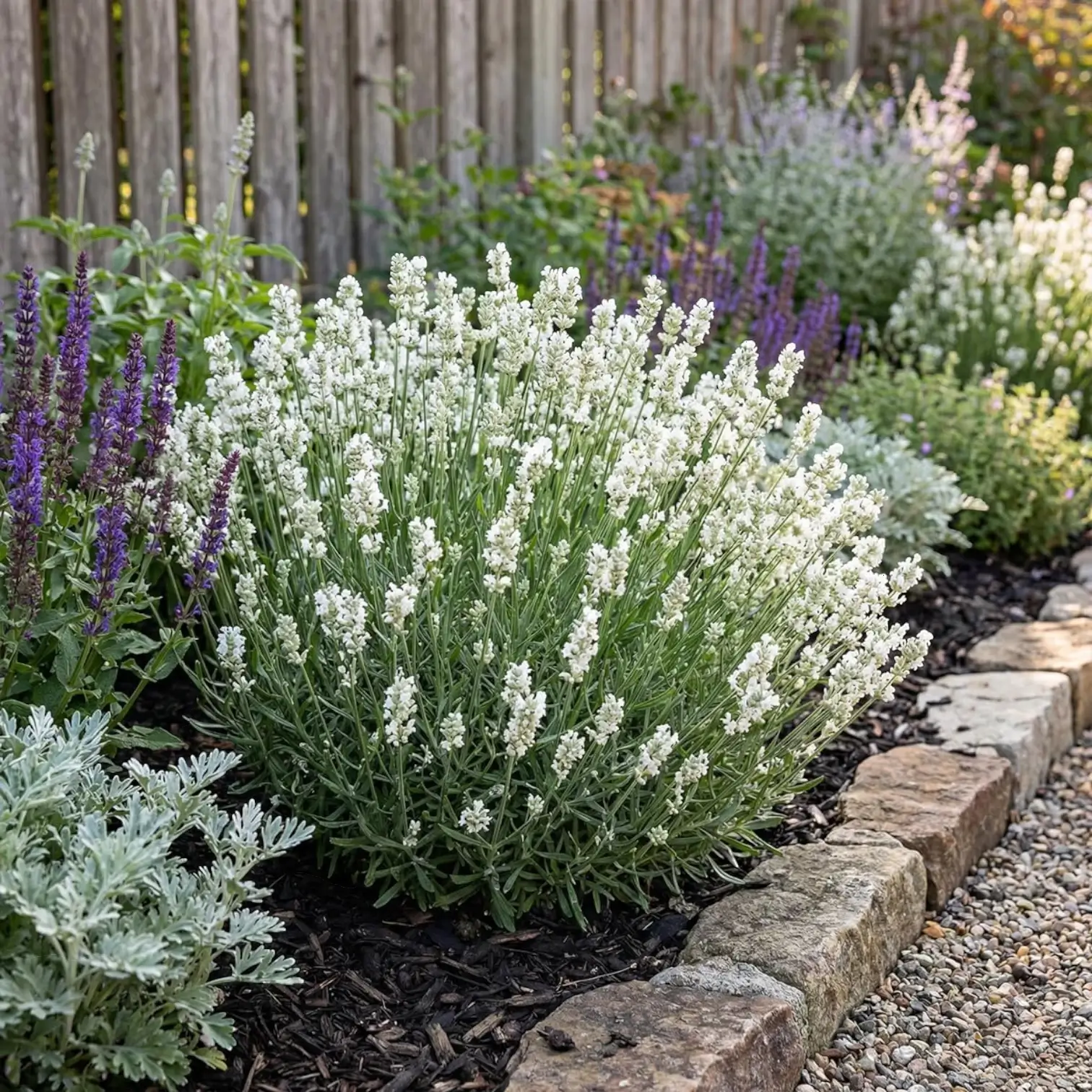
Lavandula angustifolia 'Edelweiss' works well as pale edging, in herb gardens, and in gravel-style borders where white flower spikes can echo stone and silver foliage. It also pairs cleanly with deep purple salvias, dark-leaved shrubs, and ornamental grasses for contrast that still feels restrained.

Choose options
Sign up for Foliage Factory newsletter for early access to new arrivals and practical care tips that work in real homes.