Position
Full sun to part shade

Hydrangea
VAT included · plus
Your outdoor plant has just been packed, transported and unpacked, so give it a calm start before planting or placing it permanently. Remove all packaging carefully, check the pot, stems, visible roots and substrate moisture, and settle any loose growing medium back around the root ball. Water if the root ball feels dry, but do not leave the pot standing in water. For the first few days, keep the plant in a sheltered spot suited to its light needs, away from strong midday sun, heavy wind, frost and heat stress.
Do not move the plant straight into full exposure, especially if it is young, newly flushed, evergreen, recently pruned or greenhouse-grown. Gradually introduce more sun, wind and temperature variation over several days. If cold nights, storms, intense sun or hot dry weather are expected, keep the plant protected until conditions are more stable. Do not fertilize immediately after delivery; let the plant settle first and resume feeding only when it is actively growing and conditions are suitable.
Outdoor plants may arrive in different seasonal stages. Depending on the time of year, your plant may be leafy, flowering, newly sprouting, recently pruned, dormant, partly bare or leafless. Adjust care to what the plant is doing: actively growing plants need closer moisture checks, while dormant plants usually need protection from extremes and only light moisture management until growth resumes.
Plant outdoors when the soil is workable and weather conditions suit the plant type. Avoid planting during frost, heatwaves, waterlogged soil or very dry windy periods. It is better to keep the plant protected in its pot for a short time than to plant into stressful conditions. After planting, water thoroughly so the root ball and surrounding soil connect properly, then monitor moisture while the plant establishes.
Secure shipping, carefully packed orders with safe delivery across the EU, UK and Switzerland.
28-day plant guarantee, if a plant arrives damaged or fails soon after delivery, we help you make it right.
Free returns, simple, cost-free returns according to our policy.
For full details, please see:
Please head to our FAQ Page or Contact us.
Deciduous shrub
Position
Full sun to part shade
Moisture
Moist
Drainage
Moisture-retentive, Well-drained
Hardiness
Fully hardy · -25°C
Mature size
50–90 × 50–90 cm
Winter habit
Deciduous
Bloom time
Summer, Autumn
Containers
Good in pots
Pruning
Late winter, Early spring
Woodland and scrub of China, Korea, Japan and the Russian Far East.
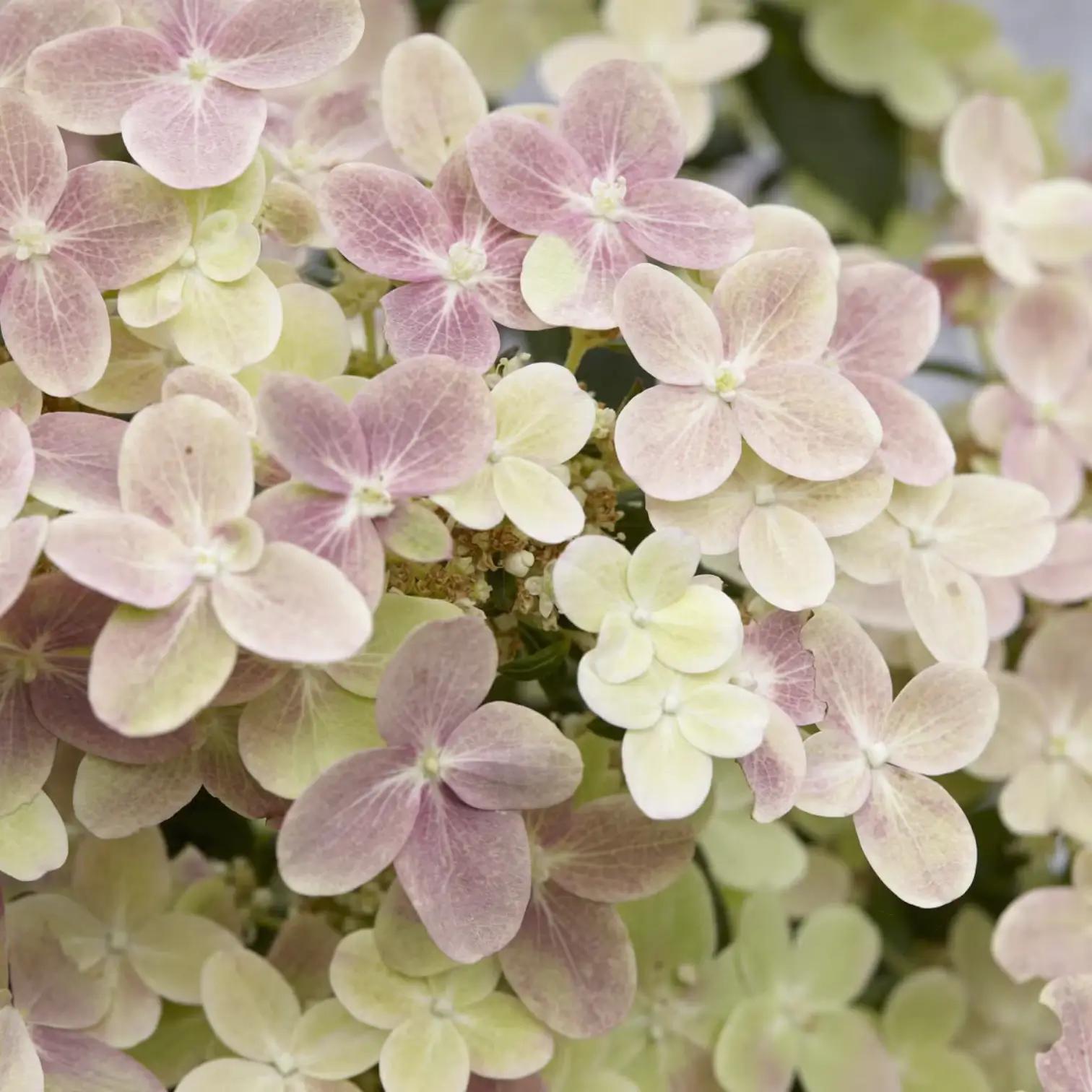
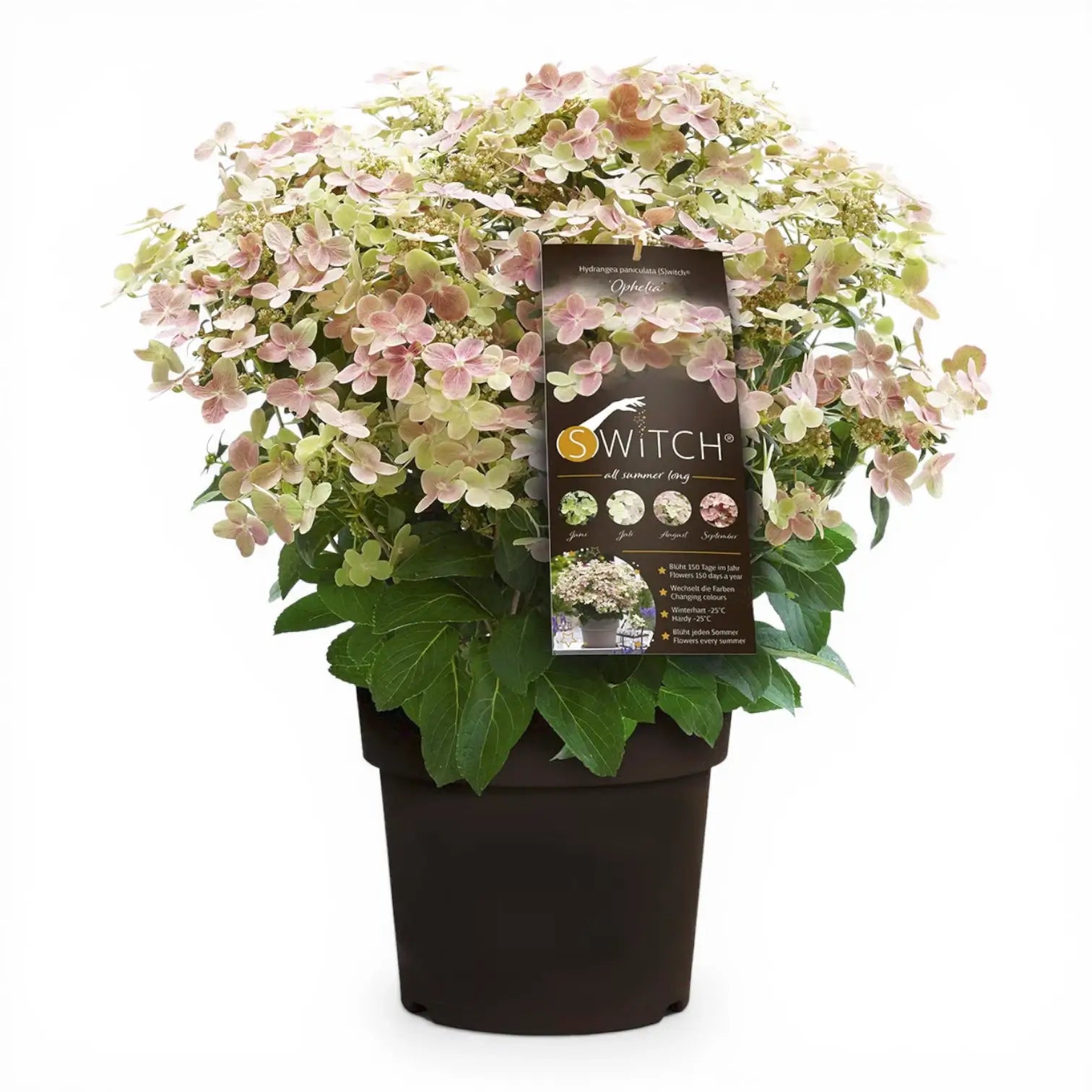
Hydrangea paniculata 'Switch Ophelia' is a small panicle hydrangea bred for generous flower colour on a plant that stays manageable. It has the familiar panicle hydrangea rhythm of fresh green growth, upright shoots and cone-shaped flower heads, but the mature plant remains low enough for patios, front borders and container displays. Its flower heads move through a soft sequence of pale green, creamy white, blush pink and deeper late-season tones, so one plant can shift visually from early summer into autumn.
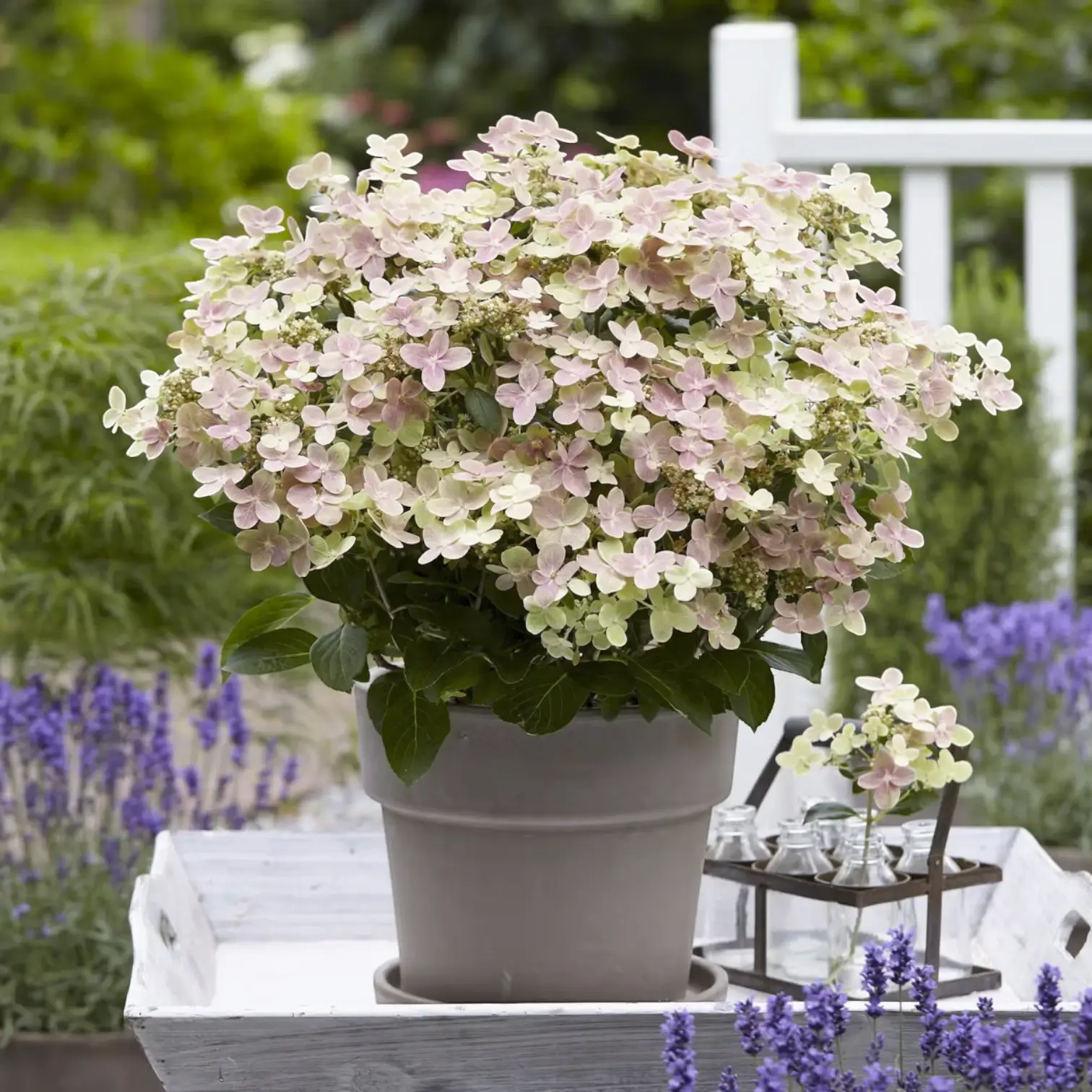
The main appeal is scale. Many panicle hydrangeas become large shrubs in open ground, while 'Switch Ophelia' sits in the compact end of the group. That makes it useful where a flowering shrub is wanted without giving over a deep bed. It can sit near a seating area, soften a terrace edge, fill a wide pot, or repeat along a low boundary where the flowers can be seen close up. The dried flower heads can also remain decorative after the main colour has faded, especially in calm, dry autumn weather.
This cultivar grows as a deciduous shrub with a rounded framework. Leaves are green, broadly oval and toothed, held along upright stems that carry flower panicles at their tips. Young plants look neat from the start, then gain a fuller dome as the root system settles. In open ground, a realistic mature size is about 50-90 cm high and wide, depending on soil, moisture and pruning. Containers keep Hydrangea paniculata 'Switch Ophelia' smaller and slower than open ground, especially when root space is limited.
The flowers are the reason to place this plant where it can be viewed often. Each panicle opens light and clean, then takes on warmer shades as the florets age. Colour depth depends on temperature, moisture, sunlight and the maturity of each flower head. Use it as a changing seasonal display with cream, blush and aged pink tones across the season. In a pot, that shifting tone works well with neutral planters, ornamental grasses, clipped evergreens and late perennials.
A bright position with some protection from harsh afternoon heat gives reliable growth. Full sun is suitable where the soil remains evenly moist; light shade suits hotter patios and exposed container groups. The soil should be fertile, moisture-retentive and well-drained. A good garden loam improved with compost gives the roots steady moisture while still letting excess water move away. Chalky or very alkaline soil can make growth less comfortable, so an acid to neutral range is the safer target.
Watering is most important during establishment and through warm flowering weather. In a container, water when the upper 20-30% of the pot depth has dried, then water thoroughly so the full rootball is moistened. In open ground, slow deep watering during dry spells helps moisture reach the full root zone. Mulch over the root area after planting, leaving the stem base clear, to moderate summer drying and support root activity.
Panicle hydrangeas flower on the current season's growth, so shaping is best done in late winter or early spring before new shoots extend strongly. For a compact plant, shorten last year's flowering stems back to a neat framework and remove weak or congested shoots. A light annual cut keeps the shrub balanced; a stronger cut can produce larger new shoots on an established plant. Fresh growth then carries the new panicles for the coming season.
Limp leaves in summer usually point to water demand exceeding root uptake. Check the pot depth or soil below the surface before watering. Brown flower edges can follow hot wind, dry root conditions or a very exposed paved site. Pale leaves with weak growth may mean the soil is too alkaline, compacted or short of available nutrients. A container plant that flowers less after several years may need a larger pot or rootball refresh in spring.
Good air movement helps keep foliage clean, especially where plants are grouped closely. Spacing around the shrub also makes pruning easier. For planting in a bed, allow around 90 cm for the mature width. For a patio pot, use the same size expectation as a guide to how much space the crown may eventually need, then scale the container up gradually as the plant develops.
Hydrangea paniculata 'Switch Ophelia' is strongest where a long-flowering shrub is needed at modest scale. It suits terrace corners, balcony containers with enough root volume, low mixed borders, front-of-house planting and small gardens where larger hydrangeas would quickly dominate. A sheltered container can also be underplanted sparsely with spring bulbs or low trailing plants, as long as they share the same moisture rhythm and leave the shrub crown open. Check drainage after heavy rain, because a waterlogged saucer can undo otherwise careful watering. Pair it with plants that like similar moisture, such as compact grasses, hardy ferns in brighter shade, or late perennials that keep the display going after the first hydrangea flush. Add Hydrangea paniculata 'Switch Ophelia' when you want panicle hydrangea flowers in a smaller, pot-friendly format.
Choose options
Sign up for Foliage Factory newsletter for early access to new arrivals and practical care tips that work in real homes.