Position
Full sun, Part shade

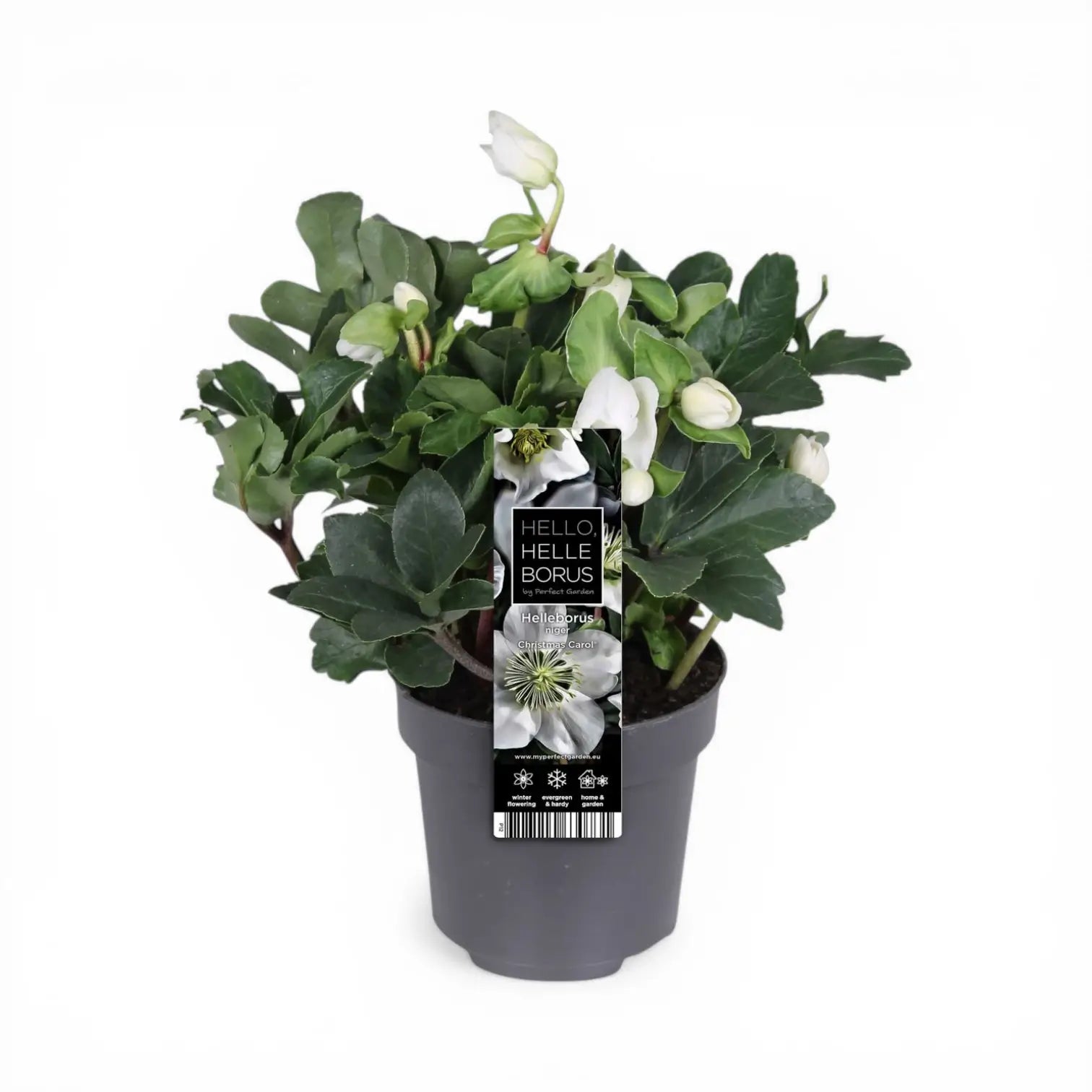
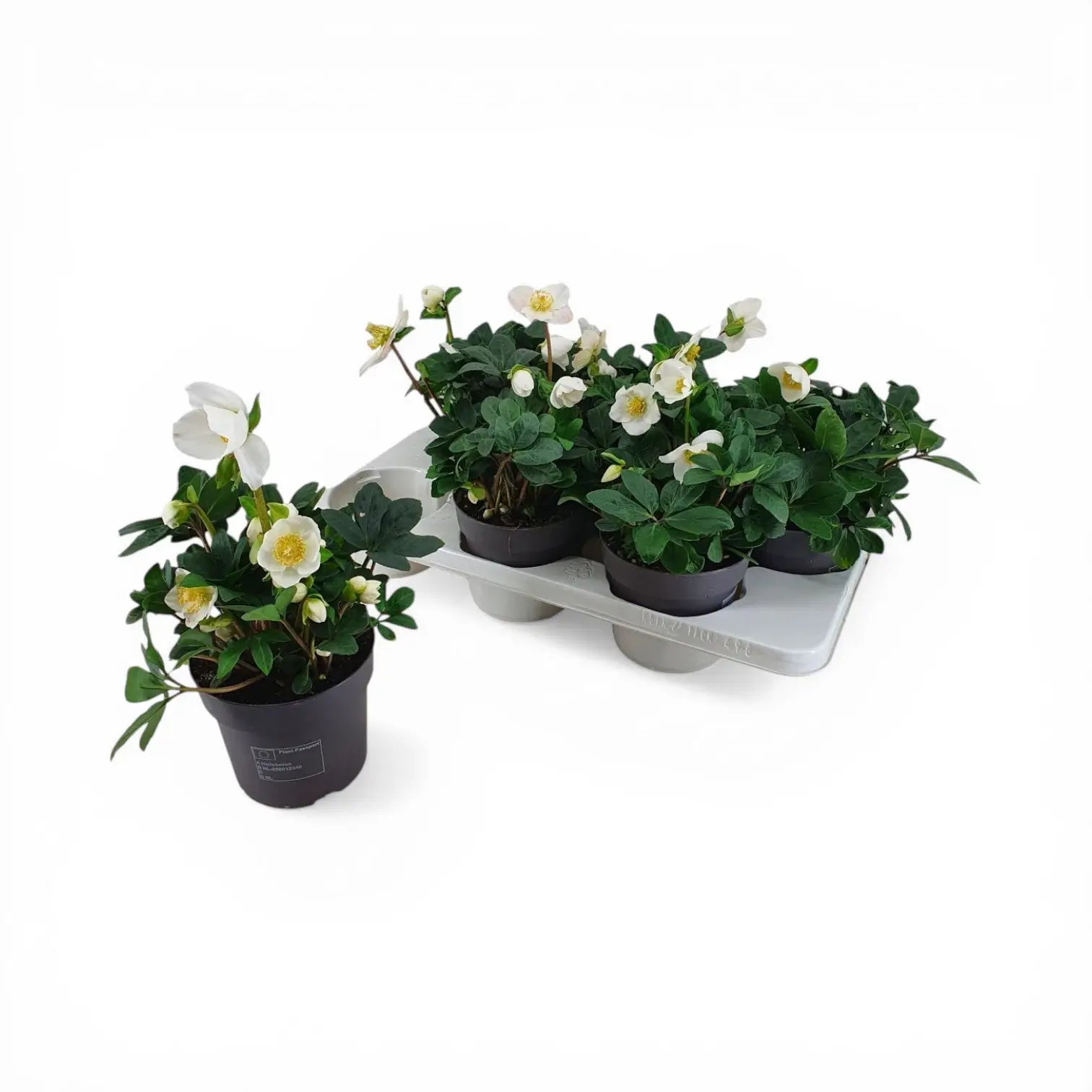
Helleborus
VAT included · plus
Your outdoor plant has just been packed, transported and unpacked, so give it a calm start before planting or placing it permanently. Remove all packaging carefully, check the pot, stems, visible roots and substrate moisture, and settle any loose growing medium back around the root ball. Water if the root ball feels dry, but do not leave the pot standing in water. For the first few days, keep the plant in a sheltered spot suited to its light needs, away from strong midday sun, heavy wind, frost and heat stress.
Do not move the plant straight into full exposure, especially if it is young, newly flushed, evergreen, recently pruned or greenhouse-grown. Gradually introduce more sun, wind and temperature variation over several days. If cold nights, storms, intense sun or hot dry weather are expected, keep the plant protected until conditions are more stable. Do not fertilize immediately after delivery; let the plant settle first and resume feeding only when it is actively growing and conditions are suitable.
Outdoor plants may arrive in different seasonal stages. Depending on the time of year, your plant may be leafy, flowering, newly sprouting, recently pruned, dormant, partly bare or leafless. Adjust care to what the plant is doing: actively growing plants need closer moisture checks, while dormant plants usually need protection from extremes and only light moisture management until growth resumes.
Plant outdoors when the soil is workable and weather conditions suit the plant type. Avoid planting during frost, heatwaves, waterlogged soil or very dry windy periods. It is better to keep the plant protected in its pot for a short time than to plant into stressful conditions. After planting, water thoroughly so the root ball and surrounding soil connect properly, then monitor moisture while the plant establishes.
Secure shipping, carefully packed orders with safe delivery across the EU, UK and Switzerland.
28-day plant guarantee, if a plant arrives damaged or fails soon after delivery, we help you make it right.
Free returns, simple, cost-free returns according to our policy.
For full details, please see:
Please head to our FAQ Page or Contact us.
Evergreen perennial
Position
Full sun, Part shade
Moisture
Moist
Drainage
Moisture-retentive, Well-drained
Hardiness
Fully hardy · -20°C
Mature size
30–40 × 35–45 cm
Winter habit
Evergreen
Containers
Good in pots
Pruning
Late winter
Woodland margins and limestone slopes in Europe.
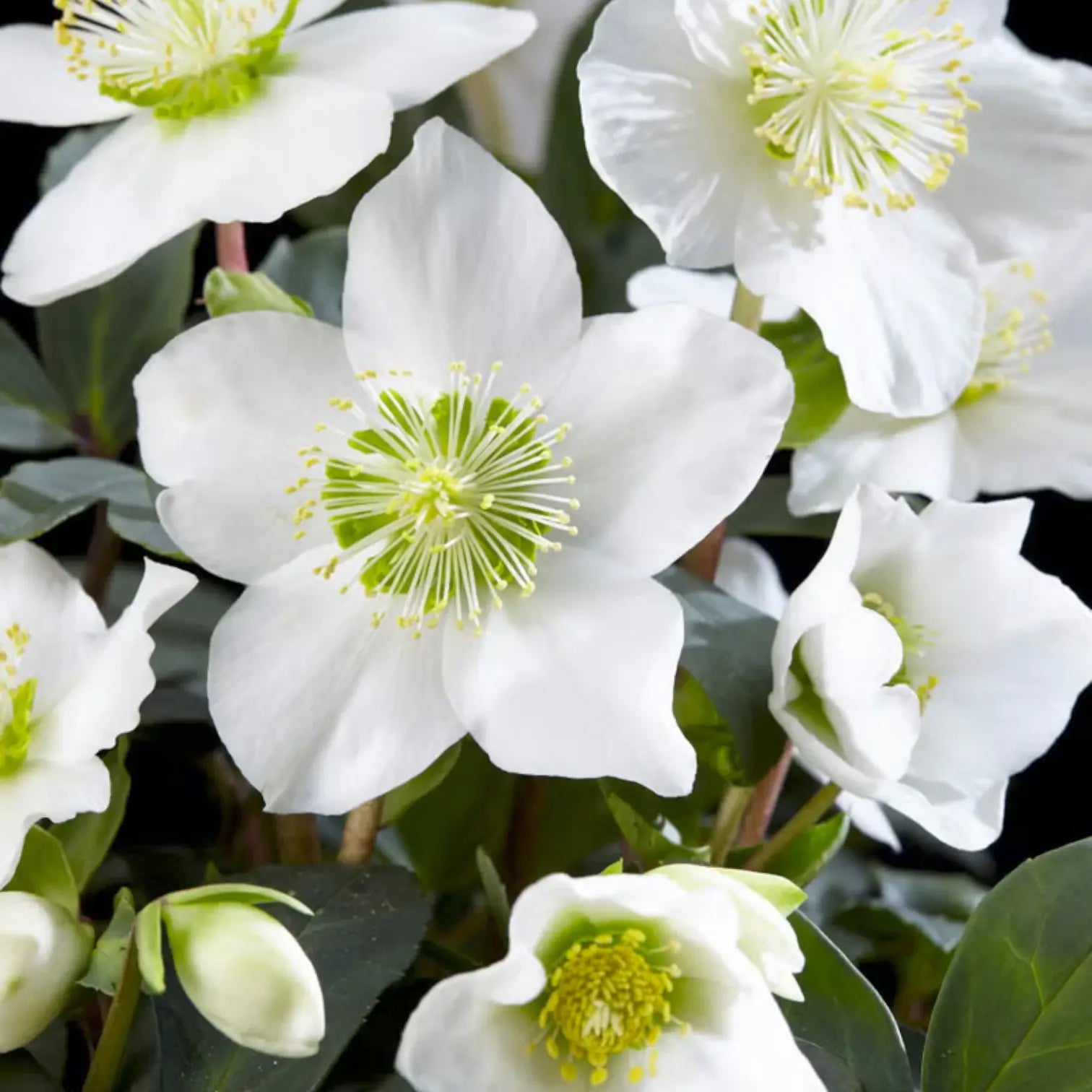
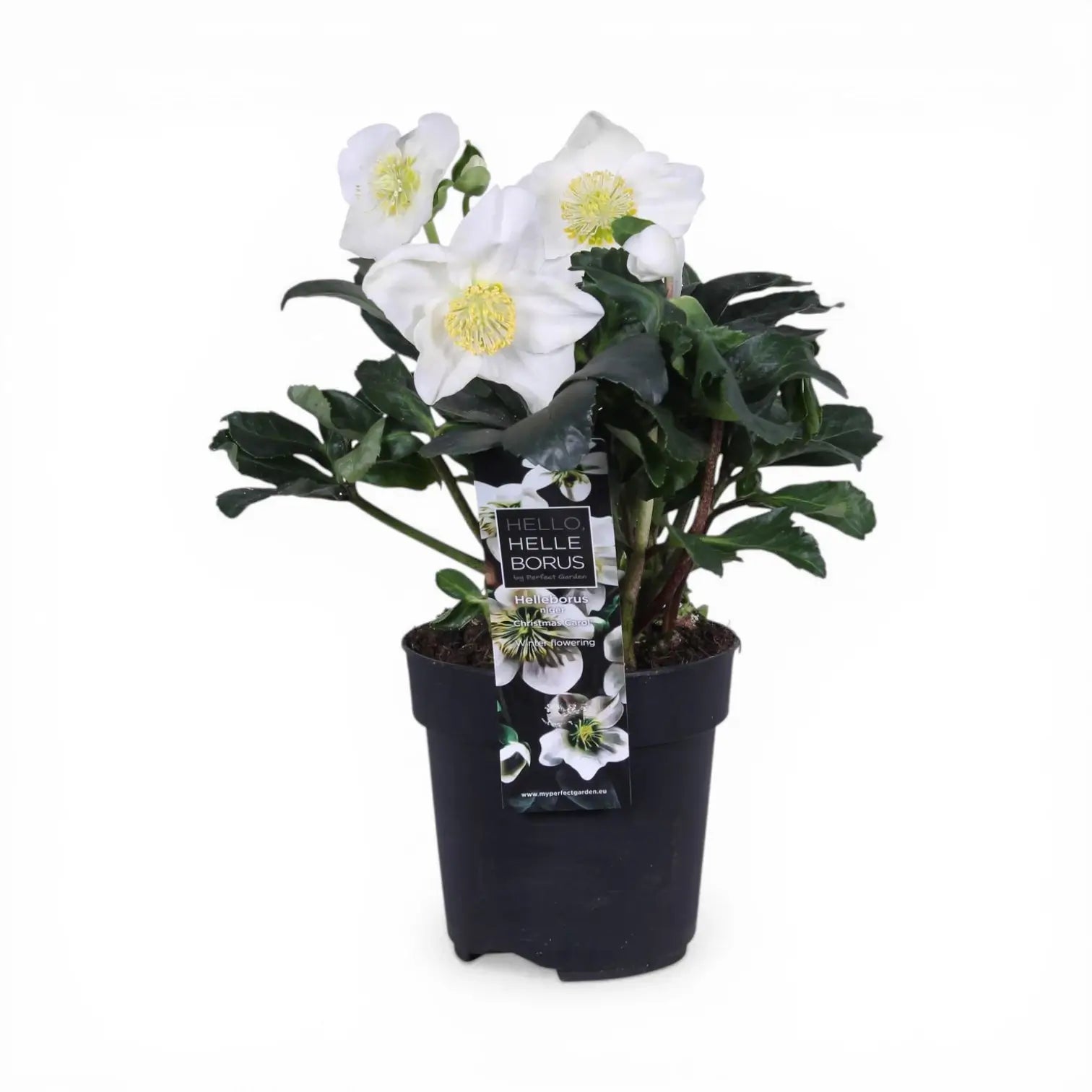
Helleborus niger 'Christmas Carol' earns its place by flowering when little else is in bloom. The flowers sit on sturdy stems above evergreen foliage, and the clump becomes more substantial over time. Moist, humus-rich soil supports strong growth, but water should not sit around the crown in winter. Removing old leaves before flowering improves the display and reduces leaf spot carryover. If the plant sulks, it is usually about summer drought or a compacted, airless root zone.
Partial shade is ideal. Morning sun with afternoon shade is reliable, as does bright dappled shade under open shrubs. Deep shade reduces flowering and can keep foliage damp for longer, which is where leaf spotting becomes more likely.
Helleborus niger prefers soil that holds moisture but stays stay saturated. Neutral to slightly alkaline ground is often the most straightforward, but the bigger deal is structure: roots want air as much as they want moisture.
Plant with the crown at soil level. Too deep and the crown can struggle; too high and roots dry out quickly. Water in thoroughly after planting and keep moisture steady through the first growing season.
Once established, Helleborus niger is fairly tolerant, but it resents being pushed from very dry to very wet - especially in containers. During flowering and in dry winters, a deep soak can make the difference between a tired, short display and a plant that keeps going.
A thin layer of compost or leaf mould in spring is usually enough. Feeding is rarely dramatic - this plant responds to soil structure and consistent moisture in typical garden conditions.
Remove old, marked leaves to keep the plant looking clean and to show off the flowers. Many gardeners do this in late winter, just as buds and flowers become easy to see. After flowering, leave the healthy foliage in place so the plant can recharge for next season.
If flowers and leaves droop during hard frost, that’s a normal protective response. As temperatures rise, stems often lift again. What is what usually decides how it settles in. A cold night is whether the root zone stays healthy and aerated tends to matter less once drainage, light, and moisture are in line.
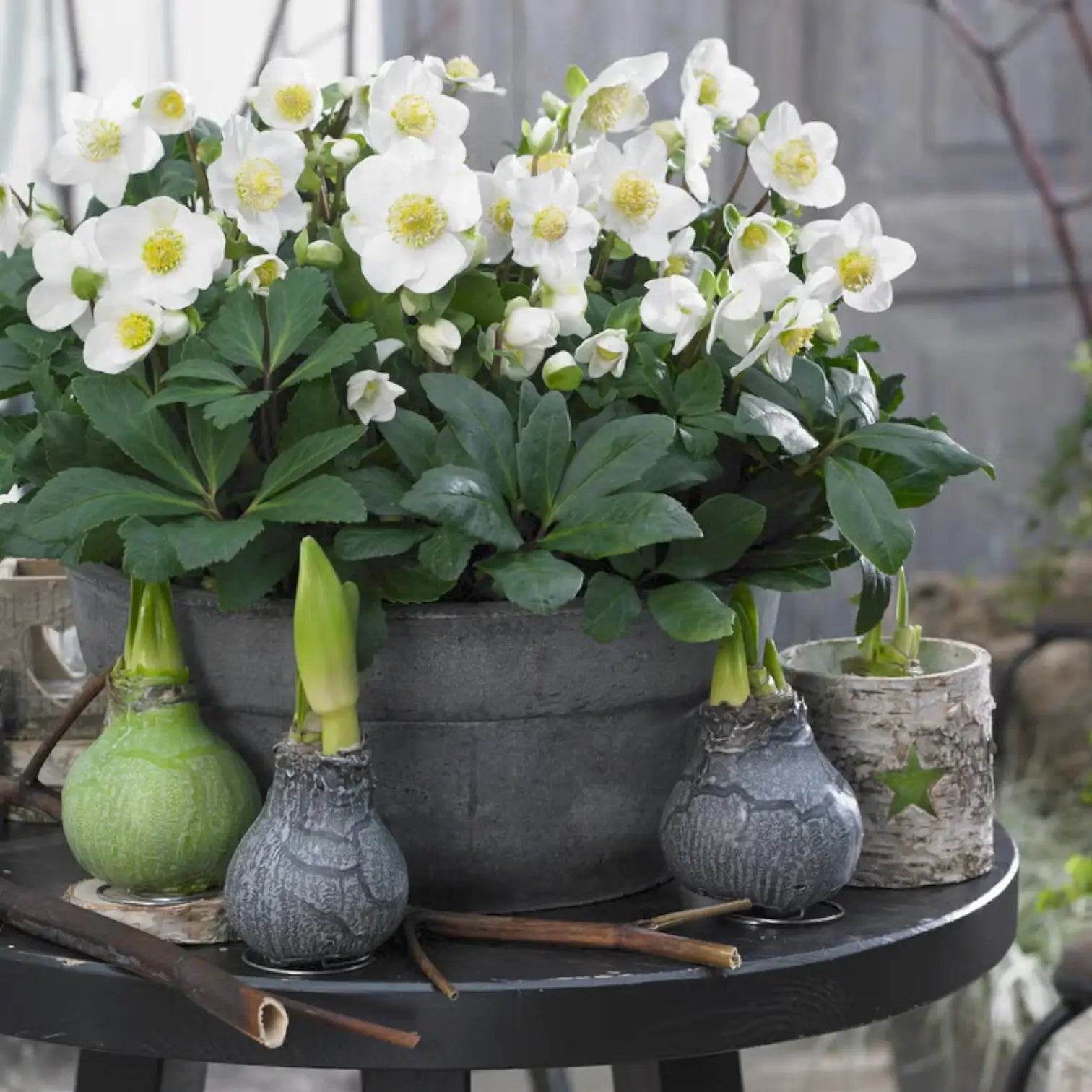
Helleborus niger 'Christmas Carol' can be grown in pots if you keep moisture steady. A dense, airless compost is a common trigger for decline. Use a deep container so the root zone stays steadier through wet and dry cycles, and protect the pot from harsh wind in winter.
Hellebores dislike being moved once established, so it’s worth choosing the spot carefully. In the first year the plant may look quiet while roots settle; flowering and leaf volume usually improve as the clump thickens. Keep weeds down around the crown so it isn’t competing for moisture.
Pair it with plants that enjoy similar ‘moist but drained’ soil in light shade - spring bulbs, low ferns, hardy geraniums, and small shrubs that give dappled cover. Overcrowding right up against the crown; a little space keeps foliage healthier is a common reason plants stall or fail.
A few stems can be brought indoors. Cut when buds have started to open, then split the stem ends and stand them in water for a short time before arranging - this helps uptake in thick stems.
Helleborus plants are toxic if eaten. If pets or small children are likely to sample foliage, place the plant out of reach.
Plant it near paths, steps, or the places you actually walk in winter. A compact hellebore has most impact up close, and it also gets more light and air there than at the back of a dense border.
For early winter colour with a calm, evergreen base, place Helleborus niger 'Christmas Carol' in bright shade, drained soil, and steady moisture. Older leaves can be removed as buds rise, which keeps flowers visible and improves airflow around the crown.
Expect a tighter, slower build in containers than in the ground. In pots, water when the top 25-35% of the pot depth feels dry, then water thoroughly and let the container drain. Deep pots are better than shallow bowls because hellebore roots appreciate cool, steady conditions.
Choose options


Sign up for Foliage Factory newsletter for early access to new arrivals and practical care tips that work in real homes.